‘Summertime’ by J. M. Coetzee
“Oh wad the power the giftie gie us, to see oursels as ithers see us” – Robert Burns- Scottish poet.
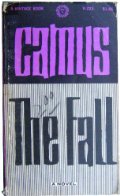
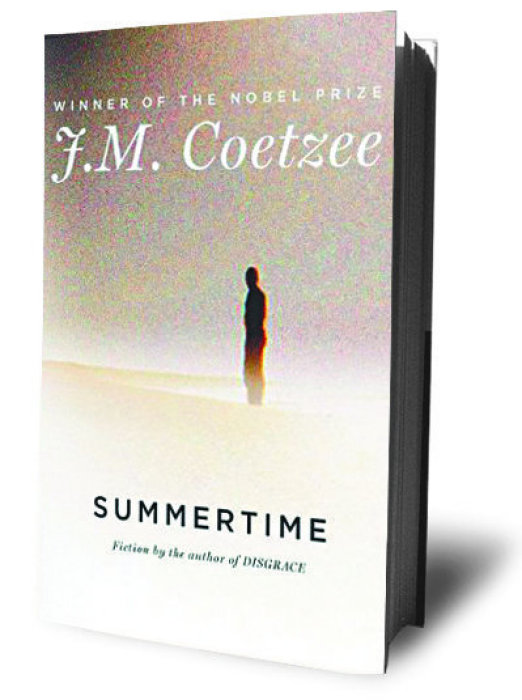 ‘Summertime’ is probably my favorite J. M. Coetzee novel so far. Before I had read ‘Waiting for the Barbarians’, ‘Life and Times of Michael K’, and ‘Disgrace’. Coetzee has a very readable style, direct and succinct. I guess what had kept me from reading more of his books is that the writing seemed rather dour, gloomy, and somewhat humorless.
The plot of ‘Summertime’ is that a young writer is putting together a biography of John Coetzee, the famous author. He has never met John Coetzee who is now dead, so he interviews five people from South Africa, four women and one man, to get information about Coetzee for his book.
Is J. M. Coetzee, John Coetzee? That is the question.
The time period in Coetzee’s life that the biographer is covering is the early 1970s. This is just after Coetzee had spent time in the United States. He had sought permanent residence there, but was denied during the Nixon administration due to his involvement in anti-Vietnam War protests. In the early Seventies, Coetzee is living with his rather worn out father Jack out in a rural area of South Africa.
I liked these five separate interviews, the variety of these different narrators in ‘Summertime’. The first interview is with Julia a married woman who had a sort of an affair with Coetzee. It could not be called a love affair, because John is much too cautious at this point to get into a love affair. Here are some of the words that Julia uses to describe John Coetzee.
-
“A loner, socially inept, repressed in the wider sense of the word.”
-
“He was not what most people would call attractive. He was scrawny, he had a beard, he wore horn-rimmed glasses and sandals. He looked out of place like a bird, one of those flightless birds, or like an abstracted scientist who had wandered by mistake out of his laboratory.”
“He had no sexual presence whatsoever.”
“He gave a smile, the first smile I had had from him. Not an attractive smile, too tight lipped. He was self-conscious about his teeth which were in bad shape.”
“In his lovemaking I think now there was an autistic quality…sex with him lacked all thrill.”
“He was what I call a gentle person, a gentleperson. That was part of his problem. His life project was to be gentle.”
“I know he had a reputation for being dour, but John Coetzee was actually quite funny. A figure of comedy. Dour comedy. Which, in an obscure way he knew, even accepted. That is why I still look back on him with affection if you want to know.”
“In the middle of the night John woke up and saw me sleeping beside him with no doubt a look of peace on my face, even of bliss, bliss is not unattainable in this world. He saw me – saw me as I was at that moment – took fright, hurriedly strapped the armor back over his heart, this time with chains and a double padlock, and stole out into the darkness. Do you think I find it easy to forgive him for that? Do you?”
 I can’t help but laugh when I think of the author, J. M. Coetzee, writing this section of the book where this woman Julia describes all these quite unflattering intimate love-making details. Imagine the real Julia reading her descriptions of John Coetzee as written by the author J. M. Coetzee. Do you think perhaps J. M. Coetzee, through the eyes of Julia, is being awfully hard on John Coetzee?
The other sections of the book contain similar insights, but for me the high point of the novel is this first section. Is this the first time someone has attempted to write his own biography through the severe objective eyes of others, rather than an all too forgiving autobiography?











 Tony's Book World
Recent Comments