A List of my Favorite Novels in Verse

goldengate

At first they were called epic poems; now they are likely to be called novels in verse. Usually I find that when a story is told in verse, that provides an extra dimension to the work, an added attraction. The discipline of rhyme causes the author to try harder to find the exact wording to convey their thoughts more precisely, more rhythmically. Kat at mirabile dictu has entirely convinced me to read  ‘The Aeneid’ by Virgil, the Robert Fagles translation. In the meantime, these are the novels in verse that I have liked the best.

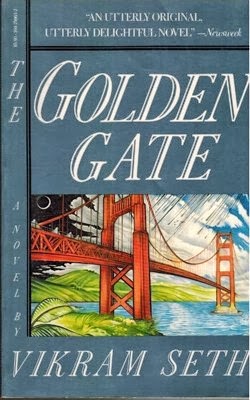
The Golden Gate by Vikram Seth (1986) – This San Francisco story was my first novel in verse, a complete delight. The entire novel is 690 sonnets. I still look back warmly on the humor and style of this book.

      Only her cats provide distraction,
      Twin paradigms of lazy action.
      It’s Friday night. The unfettered city
      Resounds with hedonistic glee
      John holds a cold cast of self pity.

If you appreciate the above, you will enjoy ‘The Golden Gate’.

The Inferno by Dante Aleghieri (1308 – 1321) Translated by Robert Pinsky – A guided tour through the nine circles of hell, all in verse. This epic poem is very readable and enjoyable, even though it is a trip through hell. Someday I’ll read the entire Divine Comedy.

31ERNCE3TXLAutobiography of Red by Anne Carson (1999 ) A story from the Greek myth of Herakles and the monster Geryon. This is an original work by Anne Carson, not a translation. This book is both humorous and moving.

Don Juan by Lord Byron (1819 – 1824) – Most of the poetry of Keats and Shelley just flies over my head, but this satiric epic poem by Lord Byron is very easy to follow and a complete joy.

Fredy Neptune by Les Murray (1998) – an action packed Australian adventure novel in verse. This novel covers so much ground, I won’t try to summarize it.

Eugene Onegin by Alexander Pushkin (1825 – 1932) Translated by Vladimir Nabokov. I came to this book after about covering the rest of 19th century Russian literature. Originally the fact that it was in verse kept me from reading this book. When I finally did read it, the verse only made the book more interesting.

Beowulf (8th to 11th century) translated by Seamus Heaney – Believed to be composed by Anglo-Saxons during the Viking age, our hero fights monsters like Grendel and dragons. Seamus Heaney did a great job re-creating this work.

Ludlow by David Mason (2007) – a true American story in a verse novel. The coal miners of Ludlow, Colorado go on strike in 1914, one of the cruelest, bloodiest chapters in the history of American labor. The verse novel strategy works brilliantly. This book which I only read two years ago makes me long for new verse novels.

th_play_1999_oresteia_paperback_webThe Oresteia by Aeschylus translated by Ted Hughes (5th century BC) – I’ve read both the Anne Carson version and the Ted Hughes version of the Oresteia, and I loved them both. Since Anne Carson already has a place on my list, I want to also give a place to Ted Hughes who is also a poet I really like.

As you can see, I’ve only come up with nine favorite verse novels. I hope some of you out there can recommend more.

The Dawn Powell Revival Continues

    February 7, 1944: “Went out today for a little while. Letter today from Hemingway very cheering. Said I was his favorite living writer”.

                                                      Dawn Powell – The Diaries of Dawn Powell

The world is coming around to Ernest Hemingway’s view of Dawn Powell.  After a long career as a fiction writer and barely supporting her alcoholic husband and autistic son, Dawn Powell died in 1965 and was buried anonymously in a potter’s field near New York City.  At that time all her books were out of print, and they stayed out of print for over twenty years. 

The rediscovery of Dawn Powell began in 1987 when Gore Vidal wrote a long article in the New York Review of Books titled “Dawn Powell: The American Writer” in which Vidal calls Powell “our best comic novelist” and goes through in detail every book that she wrote.  Note that Vidal does not qualify his remark with “our best comic novelist since Mark Twain”.

The next step in the rediscovery of Dawn Powell occurred in 1988 when Steerforth Press published three of her New York Greenwich Village novels, “Angels on Toast”, “The Wicked Pavilion”, and “The Golden Spur”.  This is when I discovered Dawn Powell.  These novels amazed me with their scenes from New York parties where the conversation at these parties was some of the wittiest talk I’d ever read. At that point I didn’t know that whatever room she was in, Dawn Powell was always the wittiest person in the room. 

The first three books were so successful that Steerforth released more and more of her books in the 1990s including “A Time to be Born”, “The Locusts have no King”, “Turn, Magic Wheel”, “Dance Night”,  and her great Ohio novel about her childhood “My Home is Far Away”.

Much of the revival of Dawn Powell is attributable to music critic Tim Page who has worked tirelessly to get this important writer back in print and in the spotlight.  He prepared her diaries and letters for publishing and also wrote the biography of Powell.  The diaries of Dawn Powell are a fascinating day-to-day account of Powell struggling to write these novels and plays.  The diaries have achieved the status of Flannery O’Connor’s collection of letters, “The Habit of Being”.

In 2001, the Library of America chose to collect nine of Dawn Powell’s novels and publish them in two volumes.  By that time, I had already read all nine of these novels.  In these volumes Powell’s work is collected along side volumes of Twain, Melville, Wharton, and Hawthorne. Lisa Zeidner, wrote in The New York Times Book Review that Powell “is wittier than Dorothy Parker, dissects the rich better than F. Scott Fitzgerald, is more plaintive than Willa Cather in her evocation of the heartland, and has a more supple control of satirical voice than Evelyn Waugh.”   

Here are some words from her diaries that provide some insight into Powell’s art.

    “Wit is the cry of pain, the true word that pierces the heart. If it does not pierce, then it is not true wit. True wit should break a good man’s heart.

    I find no gaiety or wit that is not based on truth. For me there is nothing delightful in blindness, in people being gay because they do not admit facts… Gaiety should be brave, it should have stout legs of truth, not a gelatine base of dreams and wishes.

    The artist who really loves people loves them so well the way they are he sees no need to disguise their characteristics—he loves them whole, without retouching. Yet the word always used for this unqualifying affection is ‘cynicism’.”

One gets the sense that Dawn Powell’s wit was too sharp and honest for many in her lifetime.

Finally, I will end with Powell’s own list of her favorite books from her diaries.

    March 29, 1953: What novels I have liked best—

      Sister Carrie – Dreiser

      Dodsworth – Lewis

      Sentimental Education – Flaubert

      Satyricon – Petronius

      Daniel Deronda – Eliot (partly)

      Dead Souls – Gogol

      Lost Illusions – Balzac

      Distinguished Provincial – Balzac

      Our Mutual Friend – Dickens

      David Copperfield – Dickens

      Jenny – Undset

The Dawn Powell revival is still in an early stage.

“Brodeck” by Philippe Claudel

“Brodeck” by Philippe Claudel (2010), 313 pages  – Translated by John Cullen

‘Brodeck’  takes place in a small village on the French side of the French and German border.  But ‘borders are only pencil strokes on maps’, and in many ways these villagers have more in common with the people across the border than the French.

I highly anticipated reading ‘Brodeck’ (published as Brodeck’s Report in England and other places).  A few months ago I watched the excellent movie “I Loved You for So Long”, written and directed by Philippe Claudel, which was one of the high points of my movie watching of the last few years.  ‘Brodeck’ has received uniformly good reviews, won the top French literary prize (the Prix Goncourt in 2007), and was the much praised focus of the Not the TV Book Group.  This is one of those rare times where my expectations were not disappointed.

‘Brodeck’ has the quality of a folk tale more than anything else.  The villagers are presented vividly but with a sense of timelessness.  Most of the scenes in the book could have occurred hundreds of years ago, with only a few objects such as a typewriter giving the more recent time away.   Since Brodeck’s regular occupation is to write down descriptions of nature, he goes for long walks on the paths through the hills near the village, and it is very easy to believe that cars have not been invented yet.  The novel is filled with scenes and descriptions from nature which evoke a primal atmosphere.

Early in the novel, the leaders of the village give Brodeck the task of writing a report on the murder of a strange fellow in their village called “The Anderer” (The Other), since Brodeck is the only one in the village who writes for a living.

Time within this novel shifts constantly.  We might start a chapter in the present, and without our realizing it the narration shifts to something that happened years ago or visa versa.  At first this was somewhat disorienting, but I soon realized that the time shifts give the novel the aura of an eternal folk tale. This is one of those novels where the force of the story keeps growing so that by the last one hundred pages I was hanging on to and treasuring every sentence.

    “To be innocent in the midst of the guilty is, after all, the same as being guilty in the midst of the innocent.”

This novel deals with large and ever-prevalent issues of good and evil.  I won’t go into any more detail than that.   Framing the tale as a folk tale, Claudel shows us how even recent events fit into the ongoing struggle to be human and to be good.  Reading this novel was a completely satisfying experience, and I am happy to have discovered an excellent writer who I was unfamiliar with.

“It Can’t Happen Here” by Sinclair Lewis

 
“It Can’t Happen Here”  by Sinclair Lewis (1935)

The year was 1935.  The fascists under Mussolini had been in power in Italy a long time, and the Nazis under Adolf Hitler had taken power in Germany in 1933.  Poland, Hungary, and Turkey either had or were leaning toward fascist governments.  The following year there would be civil war in Spain with the fascists under Frnacisco Franco ultimately winning.  In the Far East, Japan had installed a fascist dictatorship.   The United States and the world had been in economic depression for six years, and many of especially the upper classes in both England and the United States admired and praised these fascist governments for keeping order in their countries.

Given the strong democratic tradition of the United States, many in the States claimed “It Can’t Happen Here”.  Sinclair Lewis decided to write a book called “It Can’t Happen Here” showing how the United States could end up with a fascist government.

Here is how Sinclair Lewis saw it happening.  By opposing unions,  a presidential candidate wins the support of big business and many of the major religious leaders.  Appealing to the patriotism of the people, the candidate gets elected President.  As soon as he takes office, he immediately gets the country involved in a foreign war.  Thousands of families send their sons or daughters off to fight for their country in the war.  Then political and religious leaders throughout the country and the newspapers and radio commentators denounce anyone who disagrees with the administration or opposes the war as un-patriotic and un-American.   Meanwhile  citizen militia groups, known as Minute Men, are set up in the towns and cities to take care of those who speak out against the administration.   Originally they beat up the ones who disagree, but later the administration sets up ‘re-education’ camps for these recalcitrants. These militia are well-armed with their own guns and thus some of the dissentors are murdered.   Besides the recalcitrants, the administration sends members of the ethnic groups they don’t like to these camps.  As conditions in the United States worsen, people start moving their families to Canada to get away. However, some of these militia groups are statiioned at the borders to prevent people from leaving.

Sinclair Lewis shows us that it could happen here all too easily. 

By the time Lewis wrote this novel in 1935, he had already won the Nobel prize for literature in 1930.  He had written ‘Main Street’ and ‘Babbitt’, both novels of which I have read and admired.  He had also written several other novels I haven’t read, including ‘Arrowsmith’ and ‘Elmer Gantry’.

There are several things that lessen the impact of “It Can’t Happen Here’.  First most of the characters are given folksy names like ‘Doremus Jessup’ or ‘Brezilius Windrip’, as if the intent were satirical rather than ominous.  The entire novel is entirely too good-natured considering the terrible things that happen to people.   Also there are many references to specific people or events that occurred in the Thirties that don’t have much significance today.  One wonders if Lewis would have had more impact if he had written the novel as an allegory.  Of course, Lewis is more of a realist in his novels than a writer of allegories.  I think what Lewis was aiming for was to show that a fascist regime could be established amongst even plain old ordinary U.S. people at that time, and at that time the people of the United States were still pretty good-natured and respectful of each other despite the Depression    That makes  the fascist takeover at that time seem not so threatening.   

I don’t think this novel is anywhere near as good as Lewis’  “Main Street”.  “Main Street” is an outstanding realistic novel about a small town in Minnesota.   One gets the impression that Lewis dashed “It Can’t Happen Here”  off quickly with little regard for lasting value.  But the book does strike one as quite unique in American literature, and is somewhat useful as a potential warning.

‘In Parenthesis’ by David Jones

‘In Parenthesis’ by David Jones (1937)

In his introduction to ‘In Parenthesis’, David Jones describes himself as a soldier: “not only amateur, but grotesquely incompetent, a knocker-over of piles, a parade’s despair.” – hey, that sounds like me if I had ever been a soldier. I couldn’t march in step in formation to save my life. David Jones was an artist and a poet. He had no business being a soldier, but there he was, a private in his platoon marching through northern France and Belgium during World War I.

There is one statistic about World War I that I find absolutely devastating. In one single day during a battle and a German poison gas attack at the Somme, more than 19,000 English soldiers died. It’s hard to imagine that many soldiers dying in a single day, considering only about 3,500 people died on 9/11.

‘In Parenthesis’ is probably the best description ever of what it was like to be a platoon private in World War I. It’s all there. Marching in the heavy rain through the trenches with the water sometimes coming up to their waists, the camaraderie with their fellow soldiers, the mustard gas and clumsy gas masks, the wire everywhere, the sudden random enemy explosions killing and maiming members of the platoon.

      The repeated passing back of aidful messages assumes a cadence.
      Mind the hole
      Mind the hole
      Mind the hole to left
      Hole right
      Step Over
      Keep left, left
      One groveling, precipitated, with his gear tangled, struggles to feet again
      Left be buggered
      Sorry mate – you all right china? – lift us yer rifle, and don’t take on so, Honey – but rather mind
      The wire here
      Mind the wire
      Mind the wire
      Mind the wire.
    Extricate with some care that taut strand – it may well be you’ll sweat on its unbrokenness.

T. S. Eliot and W. H. Auden considered this book a masterpiece, the greatest book about the First World War. Auden wrote that David Jones had done for the British and the Germans what Homer did for the Greeks and the Trojans.

I discovered the book, because The Complete Review gave it a grade of A. I agree with that grade. However I’m hesitant to recommend it to everybody. Why not? It is a difficult book. Although much of the book is easy to follow as the platoon makes their way through northern France and Belgium, It is also filled with allusions to obscure ancient Welsh, Arthurian, Greek, and Roman legends. Scholars cannot decide whether ‘In Parenthesis’ is a novel or an epic poem. This is not a book for the casual follower of literature.

Self Portrait (c)The David Jones Estate

I consider ‘In Parenthesis’ a stranded-on-a-desert-island book. If I were stranded on a desert island with only five books, this would be one I would want. There is so much in this book, it would take years to understand it all, and it would still be interesting after several readings.

‘In Parenthesis’ would be a great book for anyone who has read so many modern novels that they are sick of the sameness of them, for anyone who can appreciate good poetry as well as good prose, for anyone willing to challenge their brain to the utmost. The limitations are not in ‘In Parenthesis’, the limitations are in us as readers.

Oxymoron or Paradox ?

Deep down, he’s shallow.
Anonymous

Oxymoron or Paradox?  Here are the two definitions. Dictionary.com defines an oxymoron as “a figure of speech by which a locution produces an incongruous, seemingly self-contradictory effect, as in ‘cruel kindness’ or ‘to make haste slowly’.” It defines paradox as “a statement or proposition that seems self-contradictory or absurd but in reality expresses a possible truth”.  From what I get from these definitiions, an oxymoron is a phrase while a paradox is a sentence.   The following seem more like paradoxes to me, but they all are from a compilation book called “Oxymoronica” by Dr. Mardy Grothe. There are hundreds more of these oxymorons / paradoxes in the book.

Two from the master.

    I can resist everything but temptation.

      Oscar Wilde

    I love acting. It is so much more real than life.

      Oscar Wilde

Now one from my favorite movie director

Don’t be too clever for an audience. Make it obvious. Make the subtleties obvious also.
Billy Wilder

And one from my favorite actress

Just be truthful – If you can fake that, you’ve got it made.
Barbara Stanwyck

Another from a great comedienne.

Comedy is tragedy plus time.
Carol Burnett

Here are some ancient paradoxes.

    Please all, and you will please none.
    Aesop – 6th century BC
    It is a profitable thing, if one is wise, to seem foolish.
    Aeschylus – 5 th century BC
    Nothing is permanent, except change.
    Heraclitus – 4th century BC
    Woe unto you, when all men shall speak well of you.
    The Bible – Luke 6:26
    As a rule, what is out of sight disturbs men’s minds more seriously than what they see.
    Julius Ceasar – 1st century AD
    Real knowledge is to know the extent of one’s ignorance.
    Confucious – 6th century BC

Here are some oxymoronic insults.

    I learned an awful lot from him by doing the opposite.
    Howard Hawkes on Cecil B. De Mille
    He’s the kind of guy that can brighten a room by leaving it.
    Milton Berle

A couple literary oxymorons.

    The only way to not think about money is to have a great deal of it.
    Edith Wharton – ‘The House of Mirth’
    She usually liked everyone most when they weren’t there.
    Elizabeth Von Arnim – ‘’The Enchanted April’

Finally, a line we all can use in our reviews

    If it were better, it wouldn’t be as good.
    Brendan Gill

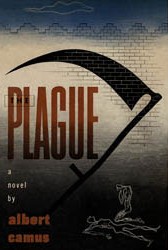
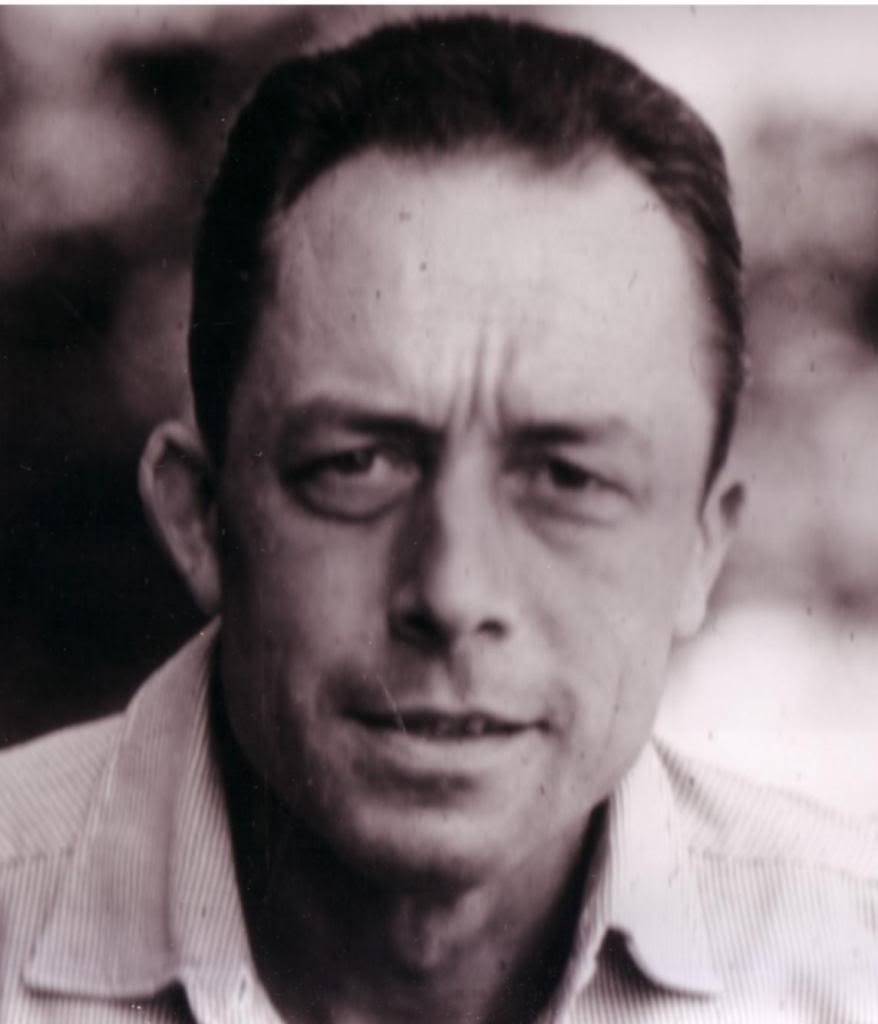
“The Plague” by Albert Camus

“The Plague” by Albert Camus (1948) Translated by Stuart Gilbert

In “The Plague” by Albert Camus, first the rats start dying in Oran, Algeria.  Dead rats are everywhere, in the streets, on doorsteps, in basements.  Then the rats stop dying, and everyone breathes a sigh of relief, only to find that soon some of the people start to die in similar fashion.

Earlier this year, I read Camus’ ‘The Fall’ which impressed me with its deep philosophy, dramatic dialogue, and the vivid character at the center of the story.  Thus I was keen to read another Camus novel.  I decided to read ‘The Plague’.

    “They would plunge together into the dark crowds filling the streets at nightfall; how they mingled, shoulder to shoulder, in the black-and-white moving mass lit here and there by the fitful gleam of a street-lamp; and how they let themselves be swept along with the human herd toward resorts of pleasure whose companionable warmth seemed a safeguard from the plague’s cold breath.”

‘The Plague’ is a much different type of novel from ‘The Fall’.  The style of ‘The Plague’ struck me as very much like reportage, the bare stating of the facts.  It did not strike me at all as a philosophical novel.  I note that some reviewers thought the plague in this book was an allegory for fascism, but I didn’t find any indication of that whatsoever.  I’d be happy if someone explained to me how this novel is an allegory, but as far as I could see, the plague in this book was just the plague.  Besides, all the rats in this book die at the beginning, while the Nazi rats didn’t die until the war’s end.

I found much of the novel dismal and bleak.  You might  ask how anyone could find a story about thousands of people dying a hideous, disfiguring, horrible, and painful death dreary and depressing, but I did.

Parts of the novel were moving.  There is the good doctor Rieux who tirelessly devotes himself to caring for the plague victims, the young man Rambert whose only goal is to get out of the city and back to his girl friend, the priest Father Paneloux who sees the plague as God’s punishment for the people’s misbehavior until his own son is stricken.  As I wrote this last sentence these characters seemed more vivid than they seemed while I read the novel, so maybe this is one of those books that grows on you as you think about it over time.

In ‘The Plague’, they quarantine the entire city of Oran by putting armed sentries at the city gates.  A major plot issue is people who are stuck in the city who would do anything to get out.  In most cities today, there would be no way to impose any sort of quarantine to keep people from leaving, because there are just too many ways out of town.

I much preferred ‘The Fall’ over ‘The Plague’.  In ‘The Fall’, I was completely involved in the story all the way.  In ‘The Plague’, I felt detached from the story, so that it seemed more like news reporting than personally involving for me.  There were many reviews of this novel on the Internet, most praising it highly.   Only a few found the novel less than wonderful.  For me, the last section, Section 5, was very good, but there were many stretches before that which I found less than compelling.

Cheesy Americana

‘The Mammoth Cheese’ by Sheri Holman  (2003)

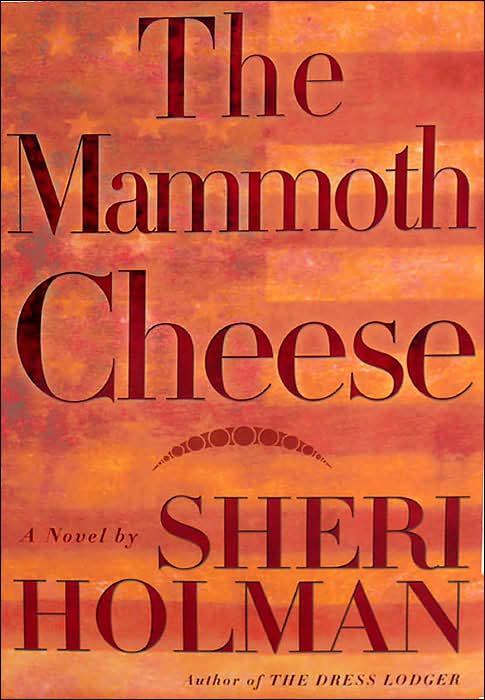
I have read on the Internet a couple of paeans to the ugliness of the cover of the novel ‘The Mammoth Cheese’ by Sheri Holman.  On the cover, we have a United States flag encrusted with cheese so that the stars and stripes barely show through the cheese.  Given the ugliness of the cover as well as the Young Adult sounding title, I think more than a few readers may have stayed away from this novel.

But ‘The Mammoth Cheese’ is not without its supporters.  It was on the 2005 shortlist for the Orange Prize. 

A few years back, I read Sheri Holman’s ‘The Dress Lodger’ which was one of my favorite novels I read that year.  ‘The Dress Lodger’ is an historical novel taking place in a cholera-stricken town in England during the 1830s.  Now, seven years after its publication, I’ve finally gotten to Sheri Holman’s next novel, ‘The Mammoth Cheese’.

This time out, Sheri Holman goes the modern United States realistic fiction route.  This is Anne Tyler territory.  It takes place in a small town in Virginia, Sheri Holman’s birthplace, not far from Tyler’s Maryland.  Here we have a modern American family with the enterprising mother, the drunk ex-husband, the possible boyfriend who helps on the farm and is secretly in love with her, and the hapless growing up daughter.  As friends of the family, we have the homespun but wise Episcopal priest and his adoring homebody wife as well as a bunch of other gawky neighbors.

Sheri Holman is somewhat edgier than Anne Tyler.  One of the plot lines in ‘The Mammoth Cheese’ deals with the 8th grader daughter getting inappropriately involved with her 33-year old teacher.

The characters in this novel seemed too familiar and stereotypical to me.  They all fit together a little too neatly into the tapestry of the novel, leaving out what mystery there might have been.  For me, the most annoying characters were the homespun Episcopal priest and his homebody wife and their Jefferson-imitating son.  There ought to be a law banning walking cliches from novels.  In other words, the good characters (the minister’s family, etc), are too good, and the bad characters (the school teacher and the ex-husband) are too bad.   

Before I mentioned Anne Tyler.  Even though Tyler’s stories are even less provocative than this one, Tyler’s characters are more mysterious.  You get the sense that Tyler’s main characters are too odd to fit in at all in their neighborhoods, yet by the end you appreciate their uniqueness and dignity.  In ‘The Mammoth Cheese’, a short phrase can wrap up each character, and there’s nothing more to say about them.       

There is a political component to the story, because Margaret, the mother in the family, is making the mammoth cheese which they are hauling to Washington to show her support for the guy she helped elect to be President who has vowed to save family farms.  Her possible boyfriend in the novel likes to dress up and speak as Thomas Jefferson, so there are a lot of references to Jeffersonian ideals. In the United States, the time is right for a strong political satire that would get to the root of the severe problems of the new century, and I hope there is someone out there courageous and talented enough to write that book.   This novel is not it, but rather this novel is a small town romance and tragedy with a sprinkle of politics thrown in for good measure.

The novel did hold my interest throughout, and Sheri Holman is a talented writer.  I would have appreciated a deeper more profound insight into the people of a small town in the United States today.

“My novels point out that the world consists entirely of exceptions.” – Joyce Cary

“Herself Surprised” by Joyce Cary (1941)

Newest Cover

In “Herself Surprised”, Irish author Joyce Cary performs a high-wire act.  The entire novel is narrated by Sara Monday, a lively high-spirited maid.  I suppose it would be easier for a man to write a novel in a woman’s voice if the woman were perfect (a Madonna) in every way.  Sara Monday is by no means perfect.  In Sara’s own words, “I too was one of those who can put their conscience to  sleep when they like, just to please themselves.”  Thus Sara gets involved with a series of men throughout the novel, sometimes marrying them, sometimes not, sometimes on the side.

“But since Mr. Hickson had flirted so with me once, touching me, he had to do it again.  And this is the great difficulty for a woman.  How to put an uppish kind of man into his place without hurting him more than he deserves.  For after all, it was no great crime in Mr. Hickson to be a man and like me as a woman.  Or if it was so, then providence must answer for our shapes.”

Maybe now is the time to discuss the author Joyce Cary’s strategy.  ‘Herself Surpirsed’ is the first novel in Joyce Cary’s ‘First Trilogy’.  His idea was to take three people who knew each other well and have each one narrate their own novel.  In their own novel, perhaps the narrator won’t be completely truthful about their own behavior or they might minimize the extent of the problems caused by their behavior.  But by reading another novel narrated by someone close to them, we get a fuller picture.  Thus after reading all three novels we will have a full picture of all three people, faults and all.  Joyce Cary called this a “three-dimensional’ approach to novel writing.

I think this ‘three dimensional’ approach is very valid.  How many times have we read a novel where the narrator seems almost too good to be true, because we do not see this person as others see them but only through their own eyes with their own self-justifications for everything they do?

Not being a woman myself, I’m not the person to judge whether or not Joyce Cary captures a woman’s essence and being in Sara Monday.  Sara Monday has lots of faults not only with men but in her work as a maid where she sometimes steals stuff from the houses and sells it at pawn shops.  But I can say on Sara Monday’s behalf that one would be hard-pressed finding someone more likeable and appealing than Sara Monday.  Sara Monday says about one of her friends,

“Love was the source of all the trouble in the world, and she wished God had left Adam and Eve plain and not stuck the odd bits on them.”

Sara Monday has her own way of putting things.   She also has profound insights into the man and woman situation :

Original Paperback Cover

“Then we said no more for some time, and I saw that I had talked too much and abused him too much.  For to abuse a man is a lover-like thing and gives him rights, which Jimson felt very well.”

Will I read the other two books in the trilogy?  Yes, for sure, after some time spent recovering from and thinking about “Herself Surprised”. I will end with one more quote from Sara Monday.

“We were young together and did not know how to relish the sweet joys of only walking and talking and looking about us, and eating and sleeping in amity and kindness.”

The Fernando Pessoa Way of Looking at Things

Four Short Poems by Fernando Pessoa

Here are four short poems by Fernando Pessoa, one of  my favorite intelligent fellows.  Fernando Pessoa (1888 – 1935) was a poet from Lisbon, Portugal who besides writing many brilliant poems, wrote “The Book of Disquietude” which has been described as “a factless autobiography” and is one of the landmarks of the twentieth century.  It might be a good idea to approach Fernando Pessoa with some care rather than jumping into “The Book of Disquietude”.  Besides reading his short poems, another approach to Pessoa is to read Jose Saramago’s novel ‘The Year of the Death of Ricardo Reis’ which led me to become a full-scale Fernando Pessoa addict.


.

This Morning I Went Out Very Early

    This morning I went out very early,
    Because I woke up even earlier
    And had nothing I wanted to do.
    I didn’t know which way to go,
    But the wind blew hard to one side,
    And I followed in the way it pushed me.
    So has my life always been, and so would I like it always to be –
    I go where the wind takes me and don’t need to think.

.
.
.

I Lie Down in the Grass

    I lie down in the grass
    And forget all I was taught.
    What I was taught never made me any warmer or cooler.
    What I was told exists never changed the shape of a thing.
    What I was made to see never touched my eyes.
    What was pointed out to me was never there: only what was there  was there.

.

.

To See the Fields and the River

    To see the fields and the river
    It isn’t enough to open the window.
    To see the trees and the flowers
    It isn’t enough not to be blind.
    It is also necessary to have no philosophy.
    With philosophy, there are no trees, just ideas.
    There is only each one of us, like a cave.
    There is only a shut window, and the whole world outside,
    And a dream of what could be seen if the window were opened,
    Which is never what is seen when the window is opened.

.

.

Your Eyes Go Sad

    Your eyes go sad. You’re not
    Listening to what I say.
    They doze, dream, fade out.
    Not listening. I talk away.
    I tell what I’ve told, out of listless
    Sadness, so often before…
    I think you never listened,
    So you’re away you are.
    All of a sudden, an absent
    Stare, you look at me, still
    Immeasurably distant,
    You begin a smile.
    I go on talking
    You go on listening – your own
    Thoughts you listen to,
    The smile as good as gone,
    Until, through the loafing
    Afternoon’s waste of while,
    The silence self-unleafing
    Of your useless smile.
 

‘Ransom’ by David Malouf

‘Ransom’ by David Malouf

The novels of David Malouf  have ranged from recent historical Australian settings as in ‘The Great World’ and ‘Harland’s Half Acre’ to ancient Rome at the time of Ovid in ‘An Imaginary Life’. In his latest novel ‘Ransom’, David Malouf takes us back to the time of Achilles, Hector, King Priam and the Trojan War.   It is a simple story.

It is the last year of the Trojan War, the year of the heaviest fighting.  Hector, the son of King Priam of Troy, kills Petroclus, the childhood friend of Greek soldier Achilles.  In revenge, Achilles seeks Hector out and kills him in a fight.  Achilles is so angry about the murder of his friend Petroclus that he ropes Hector’s body to his horse and drags his body back and forth through the streets of Troy for twelve days in a row.  In Troy, King Priam mourns for his son and only wants to give him a decent burial.  So he puts together a king’s ransom of gold and other precious metals to take to Achilles to get Hector’s body back.  Priam figures if he goes not as a king but as one plain man to another, Achilles will relent and give him the body.  Priam hires an ordinary cart driver, Somax, to be his driver for this arduous trip.

King Priam has fifty sons, many of them killed during the Trojan War.  Being king, he has been quite remote from his children, leaving the bringing up of the children to other people.  The cart driver Somax had seven sons, all of them dead by the time of this story.  Somax, being a poor man, has been close to all his children, and now his own children are gone, he takes delight in his only surviving grandchild, a lively crippled four year old girl.  Somax is the kind of person who takes pleasure in all of life, whereas King Priam is a more reserved figure.   Somax with his humor and good nature lightens the tone of this novel.

Stories that go all the way back to the Greek myths and the Trojan War strike me as eternal.  These are our first known stories, and they contain our earliest surviving ideas on what it means to be human. The Greek myths contain so many facets of life within them that even today many writers can create stories around them.  Besides David Malouf, Barry Unsworth and Michel Tournier have written novels based on the Greek myths.   Anne Carson of Canada has done a fine job translating and interpreting for a modern audience the plays of Euripides, Aeschylus, and Sophocles which are based on Greek myths.  Also a few decades ago, Mary Renault and Robert Graves produced some excellent novels using the Greek myths as their starting point.

The writing in ‘Ransom’ is never less than clear, lucid, and lyrical.  Although this is a quite short novel, it covers a lot of territory.  Two of the three main characters in the novel are old men.  Both King Priam and Somax have seen at least their share of troubles, and it is moving to see the interaction between these two men who are so different, one a king and one a cart-driver.  In this respect, ‘Ransom’ is an old person’s novel, necessarily somber,as these two men come to terms and share their common grief over the deaths of their sons.

There is room for so much of human life within the stories contained in the Greek myths.  Can you name other modern or recent novels based on the Greek myths?

The Trojan War, Homer, and the Beginnings of Literature

It all started about thirty two hundred years ago with a quarrel between the goddesses Athena, Hera, and Aphrodite.  The goddess of strife and discord, Eris, wanted to give one of  these three goddesses a golden apple meant for “the fairest”.  The three goddesses couldn’t agree on who was the fairest, so they went to Zeus.  Zeus sent the goddesses to Paris who was the son of Priam, the King of Troy.   Each of the goddesses offered Paris a reward for picking her to be “the fairest”.  Athena offered to make Paris a great general and hero.  Hera offered to make Paris a ruler of a rich and powerful kingdom.  Aphrodite offered Paris the most beautiful woman in the world in marriage. Paris decided that Aphrodite was “the fairest” and should receive the golden apple.  Aphrodite in return caused one of Zeus’ many, many daughters Helen of Sparta, the most beautiful woman in the world, to fall in love with Paris who then brought her to Troy. The trouble was that Helen at the time was married to Menelaus, king of the Greek city state of Sparta.  Agamemnon, Menelaus’ brother and king of Mycenae, then led a huge expedition of Greek ships to Troy to reclaim Helen for his brother.  Thus Helen of Troy was the “face that launched a thousand ships”.

The Greek forces’ first expedition led by Agamemnon to Troy was scattered by a severe storm before it reached Troy, and it took the forces eight years to re-gather.  After that the Greek forces besieged Troy for nine years, culminating in the ploy of the hollow wooden Trojan horse filled with Greek Soldiers.  After the Greeks entered Troy, they perpetrated a massacre of Troy’s sleeping population and the burning of the city.

After the archaeological discovery of the remains of Troy in 1867, many historians now believe there was an actual Trojan War between the Greeks and Troy.  But the story of the Trojan War is now inextricably tied up in myth and legends of the gods.

There was a strong tradition of oral poetry in Greece, and after the Trojan War, it was only natural to place the events of the Trojan War into these oral poems.  These oral poems were passed down from generation to generation.  No one knows if Homer was a real person or a composite of oral poets.  At some point some of these oral poems got written down into what we now call ‘The Iliad’ and ‘The Odyssey’ which are attributed to someone we call Homer.  Some scholars see the name Homer as meaning ‘he who fits the songs together’.   Many scholars believe ‘The Iliad’ and ‘The Odyssey’ did not become fixed texts until six centuries after the Trojan War was supposed to have taken place.  Besides ‘The Iliad’ and ‘The Odyssey’, there is an entire Epic Cycle of poems about the Greek gods and the Trojan War that got written down between the 8th and 6th century BC.  These are the sources for all of the stories that make up Greek myths.

The great Greek dramatists of the 4th century BC, Aeschylus, Sophocles, Aristophanes, and Euripides, built many of their finest plays around these Greek myths.  Greek mythology later became the basis for Roman mythology.

In 1930, Edith Hamilton, an author from the United States, wrote ‘The Greek Way’ which was her earliest expression of her belief in “the calm lucidity of the Greek mind” and ‘that the great thinkers of Athens were unsurpassed in their mastery of truth and enlightenment’.  In 1942 she wrote ‘Mythology: Timeless Tales of Gods and Heroes’ which is now the standard source for the Greek myths.  King Paul of Greece awarded Edith Hamilton the Golden Cross of the Order of Benefaction, making her an honorary citizen of Athens, even though she had never been to Greece before.  Edith Hamilton travelled to Athens to accept the award in a theatre where nodding to the applause, she said, “I am an Athenian citizen! I am an Athenian citizen! This is the proudest moment in all my life.”

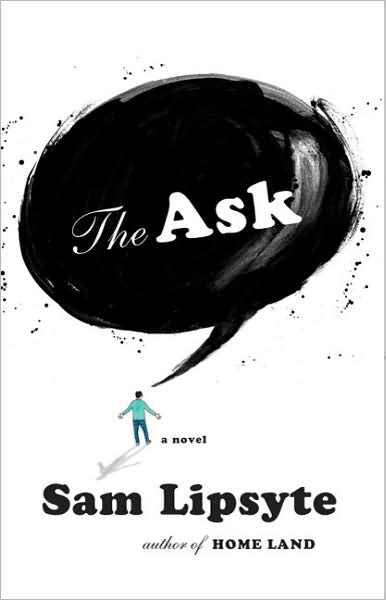
‘The Ask’ by Sam Lipsyte

‘The Ask’ by Sam Lipsyte

Things I learned from “The Ask” by Sam Lipsyte

How to politely call someone an idiot

    “You’re like an idiot savant without the savant part.”

A theory on the inevitability of time

    “Time goes by,” said Purdy.
    “Having no alternative.”

Some helpful motherly advice.

    “It’s when they stop trying to destroy you, my mother once said, that you really should worry.”

A new definition of a ‘Change Agent’

    “A change agent brings in the loose change of the rich folks.”

A great tee shirt slogan

    “Thanks for not sharing”

‘The Ask’ by Sam Lipsyte is a novel in the grand tradition of slob fiction and black humor of such books as ‘The Confederacy of Dunces’ and ‘The Good Soldier Schweik’.  Our hero in this novel, Milo Burke, works for a New York University (affectionately called Mediocre U) raising money.  ‘The Ask’ is the newspeak his group uses for asking someone to contribute money to the University.  ‘The Give’ is when the person who has been asked for a contribution actually donates money to the University.

Early on, Milo Burke loses his job by mouthing off to the daughter of a potential donor after he loses his temper.   I think the author missed a huge opportunity when the narrator says , “What I said to MacKenzie , there is no point in repeating”.  There is a point in repeating what Milo Burke said to this woman. This could have been a memorable humorous scene considering what Lipsyte is capable of.  It could have been the high point of the novel.  Why did Lipsyte just let it slide by?

Thus the novel deals with the contemporary issue of unemployment and the United States economic miseries, and later on it deals with the after-effects of the United States’ continuing wars.  These issues are treated with black humor, and ‘The Ask’ is a quite humorous novel.

Nearly all of the characters in ‘The Ask’ are cynical, coarse, bitter, and sarcastic with our hero Milo Burke being the most cynical, coarse, bitter, and sarcastic of all.  Milo Burke is all of these things except in regard to his four year old son Bernie and sometimes his wife Maura.  Even Bernie is pretty cynical.  The novel could have used a straight man or woman, someone who is not cynical, coarse, bitter, and sarcastic, someone for the rest of the characters to play off of.  As it was it was difficult to keep track of all the characters, because they all sounded pretty much the same.  If I put the book down and picked it up later, it was difficult to tell which character was talking, because they all sounded so similar.  The same was kind of true of the plot also.  One wild and crazy event followed after another.  If there had been somewhat reasonable events that occurred between these wild and crazy events, we’d appreciate the wild and crazy events even more.  As it was, the action seemed rather frenetic.

I’d like to see Sam Lipsyte write a novel with just a few characters, perhaps five or so, each character sharply defined and with his or her own distinctive way of talking.  I would want the main character or narrator to be a straight man or woman so we would see the wild antics of the other characters through that calm main person’s eyes.


One Reason Why I’m Not A Poet – ‘This Be the Verse’

‘This Be the Verse’ by Philip Larkin

This poem by Philip Larkin is probably as famous by now as Robert Frost’s classic poems “Stopping by the Woods on a Snowy Evening” and “The Road Not Taken”, but it hasn’t been widely anthologized in high school poetry collections. 

.

.

.

.

                     This Be The Verse

They fuck you up, your mum and dad.
  They may not mean to, but they do.
They fill you with the faults they had
  And add some extra, just for you.

But they were fucked up in their turn
  By fools in old-style hats and coats,
Who half the time were soppy-stern
  And half at one another's throats.

Man hands on misery to man.
  It deepens like a coastal shelf.
Get out as early as you can,
  And don't have any kids yourself.

                                                 Philip Larkin                                                                                          ‘

How could I possibly say it better than Larkin does in this poem?

Some Almost Forgotten 1920s Novels that are Exceptionally Good

Here are some wonderful novels from the 1920s that are hardly remembered.

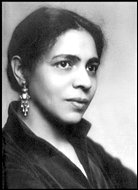
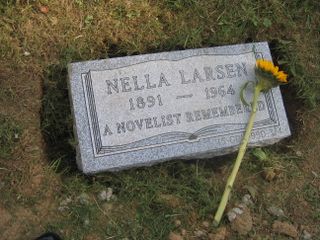
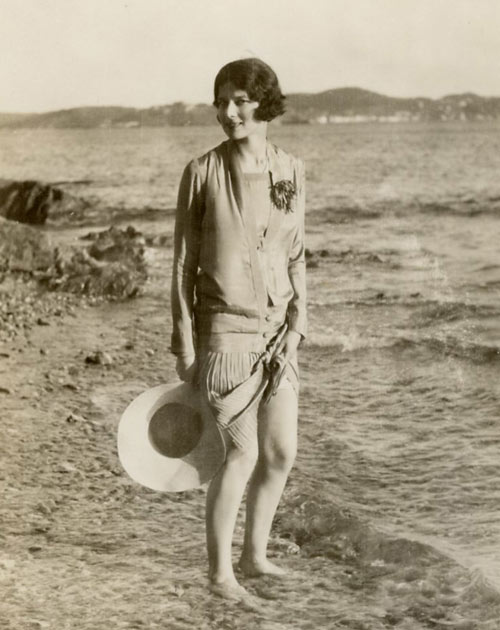
Passing by Nella Larsen (1929)   Nella Larsen, both Danish and black, was born and raised in obscurity, showed up at the New York Harlem Renaissance, wrote the two incredible short novels ‘Quicksand’ and ‘Passing’, and then returned to obscurity as a nurse.  This novel is the story of two light-skinned  women and the confusion of being between two worlds.  Here is a quote from Nella Larsen:

    If sex isn’t a joke, what is?

.

.

Read about the valuable, moving, and successful effort by Light-Skinned-ed Girl to provide a suitable gravestone for Nella Larsen.

.

.

.

.

The Desert of Love by Francois Mauriac (1925)  –  This is one of Mauriac’s unregenerate novels before his conversion to Christianity.  It is about a love triangle between a woman, her doctor, and the doctor’s son.  This is a wicked good book, a sexy French novel.  I’ve read most of Mauriac’s unregenerate novels.  Here is a quote from Mauriac:

    I believe that only poetry counts, and that only through the poetical elements enclosed in a work of art of any genre does that work last.  A great novelist is first of all a great poet.

I agree, because it is easier for a camel to pass through an eye of a  needle than for a writer who writes clumsy sentences to become a great novelist.

Dusty Answer by Rosamond Lehmann (1927) – There are several novels mentioned in ‘When Things of the Spirit Come First’ by Simone de Beauvoir, but only one novel is mentioned twice.  That novel is ‘Dusty Answer’, Rosamond Lehmann’s first novel which was both a critical and popular success.  Rosamond Lehmann was a beautiful woman who kept making the wrong choices in men over and over and over.  Before I knew hardly anything about Rosamond Lehmann, I read all her work, so I can attest that her novels ‘Dusty Answer’, ‘Invitation to the Waltz’, and ‘The Ballad and the Source’ are superb.  I think England should put up a monument which says, “England is the home of Rosamond Lehmann, world-class novelist – we have lots of writers who claim to be world-class novelists, but Rosamond Lehmann is the real thing.”

Riceyman Steps by Arnold Bennett (1923)  Arnold Bennett was a professional writer who now doesn’t get the recognition he deserves.  ‘Riceyman Steps’ takes place in a second-hand bookstore.  I will leave it to Margaret Drabble who says of Arnold Bennett :

    Bennett’s books I think are very fine indeed, on the highest level, deeply moving, original and dealing with material that I had never before encountered in fiction, but only in life: I feel they have been underrated, and my response to them is so constant, even after years of work on them and constant re-readings, that I want to communicate enthusiasm.’

I agree, I’ve read several of Bennett’s novels including ‘The Card’, ‘Anna of the Five Towns’, and ‘The Old Wives Tale’, and haven’t been disappointed yet.   Riceyman Steps is one of his best.

‘Grand Hotel’ by Vicki Baum (1929) – This is the great hotel novel about the people staying in a nice hotel in Austria.  This is a simple idea for a novel, but a fine idea.  Somebody should try it now.  Of course, the movie of this novel with Greta Garbo is wonderful, but I read the novel first which is exceptionally fine.  Vicki Baum wrote over 50 novels and left us some great quotes:

    Marriage always demands the greatest understanding of the art of insincerity possible between two human beings.
    .
    Fame always brings loneliness. Success is as ice cold and lonely as the North Pole.
    There are shortcuts to happiness and dancing is one of them.


‘When Things of the Spirit Come First’ by Simone de Beauvoir

‘When Things of the Spirit Come First’ by Simone de Beauvoir – stories – Translated by Patrick O’Brian

The five stories in ‘When Things of the Spirit Come First’ are about several college-age young women who all know each other.  Each story focuses on one of the young women for whom the story is named – ‘Marcelle’, ‘Chantal’, ‘Lisa’, ‘Anne’, and ‘Marguerite’.  Marcelle and Marguerite are sisters, and all five of these women float in and out of each of the five stories.

The stories, written by de Beauvoir in her late twenties, all take place in the 1920s.  The traditional cultural values persist, the huge influence of the church, arranged marriages, etc.  But France has just been through the devastating World War I, and people are questioning the old values.  The young women in these stories are on the front lines of these social changes.  I use the term ‘front lines’ advisedly, because aren’t dating, mating, procreation, and new life at least as important if not more important than politics, war, destruction, and death?

Arranged marriage.  In many respects, this seems like a very sensible way to do things.  The parents can objectively determine what is at stake, the financial position and prospects as well as some inside background information about the family of the prospective groom and/or prospective bride.  But by the Twenties, arranged marriages were beginning to be replaced by the individual choices of the young men and women themselves.  One of the recurring events in these stories is the charming young man misleading the young woman and even intentionally getting her pregnant in order to get at her family’s money.  These young women all come from middle class families, so this is a concern.  And several of the young women in these stories have no idea at all of their self worth.

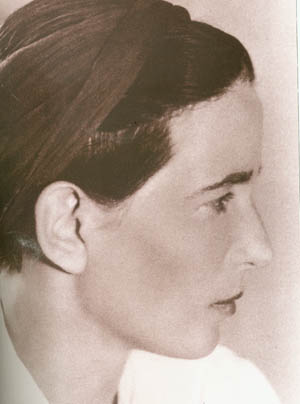
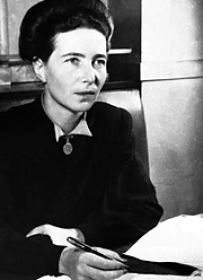
The main character of the last story, ‘Marguerite’, is apparently Simone de Beauvoir herself.  This story is written in the first person.  She wants to expand her freedom in ways that are brazen far beyond what the other young women would consider, and she uses her older sister Marcelle’s free-spirited erring poet husband Denis as her guide.  This story is by far the most unconventional of the five.  But all of the stories have unexpected twists in them.  My personal favorite is the first story, ‘Marcelle’ about how Marcelle wound up with Denis as her husband.  This story is one of my favorite stories I’ve read in the past few years.

Simone de Beauvoir impresses as a writer because of the vital interest she takes in these young women’s lives, her intelligence, and her insight.  For a long time I thought of Simone de Beauvoir as a feminist scholar and philosopher, but not as a fiction writer.  Even after I found out that she wrote fiction, I avoided her work, because I was afraid it would be too dogmatic, predictable, and didactic due to her feminist viewpoint.  It was only after Kerry at Hungry Like the Woolf strongly recommended her work earlier this year that I decided to read de Beauvoir’s work.  This book was none of the things I was afraid it would be; instead I was struck by the vitality and originality of these five long stories.  This book is an excellent place to begin to appreciate this author. I should have known, because I made a similar mistake with her long-time companion Jean Paul Sartre.  I thought he was mainly a philosopher and didn’t read his fiction for many years.  Finally when I did read his trilogy ‘The Roads to Freedom’ (‘The Age of Reason’, The Reprieve’, and ‘Troubled Sleep’) and ‘Nausea’, I discovered he wrote great fiction.

Now if I weren’t running a regular book blog, I would probably choose the 600+ page ‘The Mandarins’ as my next Simone de Beauvoir book to read, but as it is I’ll probably pick one of her shorter books.

How I Became a Nun and Came to Terms with my Limitations as a Book Reviewer

How I Became A Nun’ by Cesar Aira (1993)
Translated by Chris Andrews

After reading Roberto Bolano with decidedly mixed results, I decided to read Cesar Aira after seeing that ‘How I Became a Nun’ got a grade of A- in Complete Review and was positively reviewed by The Mookse and the Gripes. My ultimate quest is to find a contemporary South American writer that I like as much as the many South American writers I discovered and loved in the 1980s, writers such as Manuel Puig, Mario Vargas Llosa, Gabriel Garcia Marquez, Jorge Amado, Julio Cortazar, and extending all the way back to Joaquim Maria Machado de Assis (perhaps the greatest of them all). There are too many fine South American novelists to list all.
Cesar Aira is an Argentine writer like Manuel Puig and Julio Cortazar in the above list. Even though he has published more than fifty books, only recently has his work been getting translated into English.
‘How I Became a Nun’ starts and ends vividly. The main character in the novel is a seven year old girl (boy?) This short novel starts out innocently enough with the father buying her/him an ice cream cone. From there the rest of the story follows.
On the back cover Cesar Aira is quoted as being “firmly in the tradition of W. G. Sebald and Jorge Luis Borges.” These are two writers I have not had much success with. Sebald has gotten incredible press in recent years, but ‘The Emigrants’ didn’t have much of an impact for me. I have the same problem with ‘How I Became a Nun’ as I do with Sebald. Sandwiched between the vivid beginning and vivid ending of ‘How I Became a Nun’ are about eighty pages of what I call ‘time and remembrance’ writing. When I read fiction, I guess I need dramatic immediacy, urgent confrontational situations and emotional impact. Strong characters. I love dialogue, because that usually means the characters are reacting intently to each other. Reminiscing or even the most profound memory just does not interest me that much.
After watching a TV show or movie, my father used to say, “It’s good, but I don’t like it.” I wouldn’t say that I didn’t like ‘How I Became a Nun’, I’m sure for many, like Complete Review, this would be a wonderful novel.  My quest for new South American writers continues.

A Vision of Hell – Trapped in a Cracker Barrel Restaurant

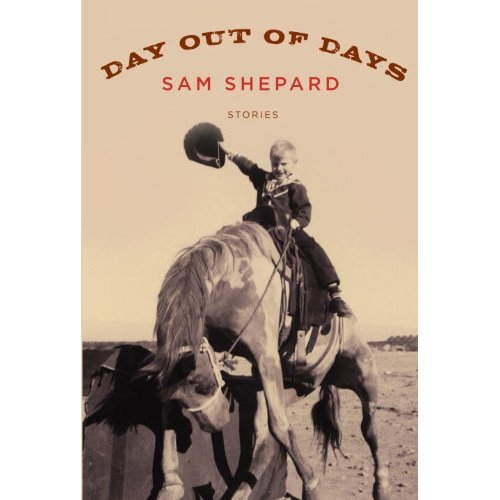
‘Day Out of Days’  by Sam Shepard  – stories (2010)

One of the stories in Sam Shepard’s new book ‘Day Out of Days’ is about a man trapped in a Cracker Barrel Restaurant all night having to listen to Shania Twain songs on an endless loop.  This vision  closely fits my personal picture of hell.  Trapped in the potpourri infested aisles of kitschy merchandise for sale including hand-stitched samplers of home-grown wisdom, horehound licorice lozenges, and other fake rural nostalgia-inducing items.  I can think of several artists much more nauseating than Shania Twain to listen to on an endless loop, but Twain will do.

‘Day Out of Days’  is a book of stories  of a man looking back on his past more than forty years from his high school days.  The book is divided up into about one hundred and twenty five sections, many less than a half page long, others up to fourteen pages long.  Many are memories called up by highways all over the west and south and midwest of the United States.  These vignettes evoke in striking detail different parts of the United States.  Some evoke old girlfriends or other old friends from more than forty years ago. 

What a career / life Sam Shepard has had. From off off Broadway actor/writer/director in the Sixties to renowned playwright in the Seventies to Academy Award winning leading actor in the Eighties to Hollywood director and short story writer.

Here is one of these sections from the book in its entirety.

    They say, these days, standing out on the rim of the Grand Canyon, the brightest lights in the night sky are not the stars in the heavens but the glow from casino neon in Las Vegas – one hundred and seventy five miles away.

Many of these pieces are short, hardly more than fragments rather than complete stories.  In a way, I prefer Shepard’s previous book ‘Great Dream of Heaven’, because it consisted of fully-developed stories.  But the very short vignettes in this book always held my interest.  Many relate to famous people such as Hank Williams, Fats Domino, Casey Jones, or Man O’ War, the famous racing horse.  One of the nice things about ‘Day Out of Days’ is its way of moving on, never getting tied to one scene or person for too long.    Another feature of the book I liked was the rich variety of styles and subjects for the many sections of the book.  At the same time, they all blended together into a compeling whole.

“Women” by Charles Bukowski

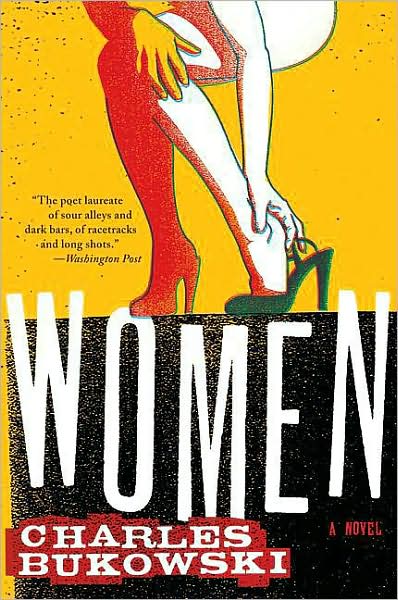
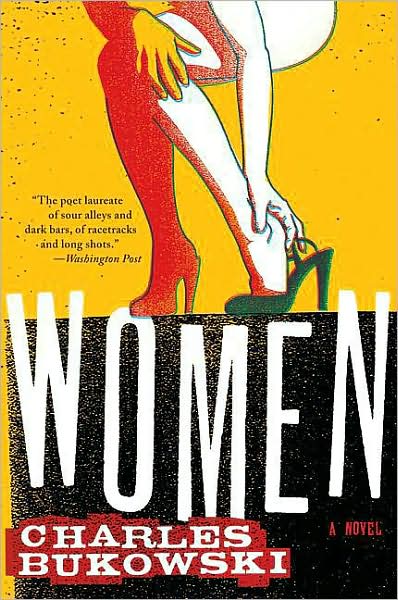
“Women” by Charles Bukowski (1978)

There’s enough hagiography of Charles Bukowski already on the Internet. I won’t be adding to it. “Women” is not a very well-written or interesting book. Most women won’t like it because of its vulgarity, its mean contempt. Men over-praise it because “It says what men are really thinking”.

    “It’s possible to love a human being if you don’t know them too well.”
    Charles Bukowski

“Women” is a novel of the 1970s. Disco, waterbeds, one night stands. It was a crazy time for men; it was a crazy time for women; it was a crazy time for men together with women. The main character of “Women” is Henry Chinanski, a thinly veiled double of the author himself. Henry Chinanski likes only two things in life, alcohol and sleeping with women. Writing poems and novels are just a means of paying for the rest. For all else Chinanski has only contempt, and after he has slept with a woman, he’s pretty much done with her too.

    “I never knew what to say to the ladies. But she had a behind. I watched that beautiful behind as she walked away. The seat of her blue jeans cradled it, and I watched it as she walked away.”

That is one of the milder less mean quotes in the book. Chinanski is a poet / novelist. His publisher sends him all over the country and Canada to give readings. Some of the women who attend these readings want to get close to him. He invites them to come out to his apartment, she has a few drinks, he has a ton of drinks. He ends up going to bed with her. He usually is too drunk to perform that night, but the next morning…. Then after a few days he sends her on her way so he can get on to the next one. But frequently these women will keep coming back. Henry doesn’t mind as long as they don’t mess up his next conquest. One thing Henry is very proud of is the age difference between him and his women. He is in his fifties, and the women keep getting younger, 32, 25, 22, 18.

After about 20 such trysts, the book gets very repetitive, especially since the women are essentially interchangeable parts to him whether they be Lydia, Sara, Katherine, Cassie, Joanna, Cecelia, Debra, Tessie, and so on. The same situation keeps recurring until it becomes terribly dull to read. Perhaps this endless repetition was meant to be humorous, but it comes off as relentless obsession. If Chinanski had some great insight into what he’s doing, that could be interesting, but he doesn’t. His only insights are how he hates most people besides himself, and how these women just keep coming back no matter what he does to them, so he must be a great lover.

In this novel, someone asks Chinanski who his favorite writer is. Chinanski says “Fante”. I’ve read John Fante; his novels have charm, but this novel has no charm whatsoever.

So what’s with the Charles Bukowski cult? Why are his novels rated four stars on Amazon? Why do some critics call his books classics? Bukowski does have a very conversational, easy to read way of writing. One of his books was made into the movie ‘Barfly’. Bukowski writes “the way men really think”. It wouldn’t be very macho for a man to criticize Charles Bukowski, no matter how poorly written his books are. Bukowski basically writes like someone who has had too much to drink.

Sister Carrie in Chicago and New York

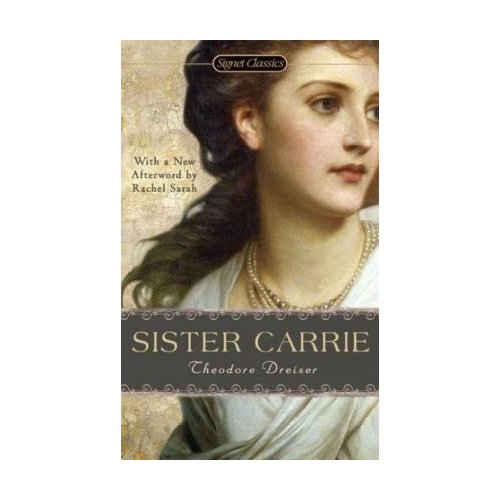
‘Sister Carrie’ by Theodore Dreiser (1900)

‘Sister Carrie’ is about an eighteen year old young woman who leaves her family and small town in Wisconsin to go to the booming city of Chicago in the 1890s. Her family is so poor that they can’t give her any money beyond the train ticket, but she does have a married sister who lives in Chicago with whom she moves in. Her married sister and husband are also extremely poor, so Carrie must get a job. She gets a job with one of the magnificent new department stores in Chicago at the time, but they pay her so little she can’t buy anything in the store. All Carrie’s experience at the luxurious department store does is make Carrie want more out of her poverty-stricken life. Her sister’s husband expects Carrie to give most of her meager income to him and his wife. She escapes from her sister’s family by moving in with a pleasant young man she had met on the train to Chicago named Drouet. Later she meets a married man named Hurstwood who has a devastating impact on her life.

Theodore Dreiser wrote ‘Sister Carrie’ in 1900, but it was withheld from publication until 1912 because of its ‘sordid’ subject matter. It wasn’t published in its original form the way Dreiser actually wrote it until 1981. Here is our heroine, Carrie, living with a man without the benefit of marriage. I had read ‘Sister Carrie’ a long time ago before I discovered what a compelling writer Theodore Dreiser is. Since then I’ve come to treasure Theodore Dreiser’s novels and short stories. Thus when I had a chance to listen to the audiodisk of ‘Sister Carrie’, I went for it. This novel turned out to be perfect for listening on audiodisk, because Dreiser tells his story in direct straightforward prose, and there was no chance of getting lost between listenings. It held my attention throughout.

Theodore Dreiser’s background was as a journalist, and one facet of ‘Sister Carrie’ I liked was the attention to details about both the rich side of life with its department stores, horse races, and theatrical performances and the poor side of life with its hunger, grinding poverty, and violent labor strife. Theodore Dreiser started the school of naturalism in United States fiction, which can be described as telling things the way they really are rather than the way they could be or should be.

I can’t imagine two writers more different from each other than Theodore Dreiser and Henry James. Henry James is exquisite, and Theodore Dreiser is a barbarian. So far, I’m still very much in the Dreiser camp rather than the Henry James camp when it comes to early 1900s writers. Of course, both Willa Cather and Edith Wharton may be better writers than these two gentlemen. Opinions on Dreiser range from “among the American giants, one of the very few American giants we have had” (Irving Howe) to “If  he’s the great American novelist, give me the Marx Brothers every time” (Rupert Hart-Davis).

If you want an easy way to appreciate Theodore Dreiser, watch the 1951 film, ‘A Place in the Sun’, starring Montgomery Clift, Elizabeth Taylor, and Shelley Winters. This movie is based on another excellent Dreiser novel, ‘An American Tragedy’. This movie is one of my favorite movies of all time.