The Top Ten List of Fiction I’ve Read in 2010

It’s that time of year again.  This year I’m changing the Top Ten list to only include books that were first published since the year 2000.  I just don’t think these newly hatched chicks should have to compete against the big old roosters and hens of past centuries.  I wouldn’t want to have to compete against ‘War and Peace’, ‘Middlemarch’, ‘Don Quixote’, and Jane Austen.  After my Top Ten list, I will list a few of the fiction works from previous centuries that I enjoyed the most and that affected me most deeply this year.

 The year 2010 was a year of the short story for me.  Not only two short story collections but also four novels which are made up of interrelated short stories made my Top Ten list this year.  One of the biggest trends of 2010 was in fact these novels consisting of linked short stories.  Only four ‘novel’ novels made the Top Ten list this year.

Here is the list.

1.  The Imperfectionists by Tom Rachman (2010) A novel of linked stories about people working for an English-speaking newspaper in Italy. 

2.  Ether by Evgenia Citkowitz – (2010) From Hollywood and New York, a collection of stories with a sharp edge.

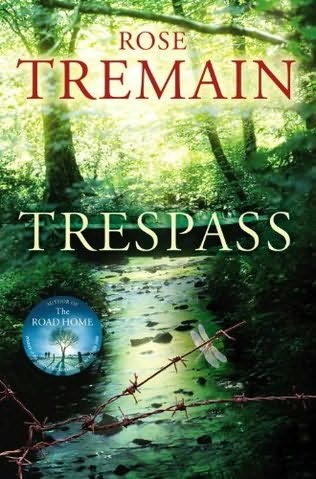
3.  Trespass by Rose Tremain – (2010) A wicked novel about buying a house in southern France.

4.  Summertime by J. M. Coetzee (2009)  a novel of stories about a writer named John Coetzee

5.  Memory Wall by Anthony Doerr (2010) – A story collection so original and moving it was unlike anything else I read this year. 

6.  A Visit from the Goon Squad by Jennifer Egan (2010) a novel of connected stories about the rock-and-roll life.

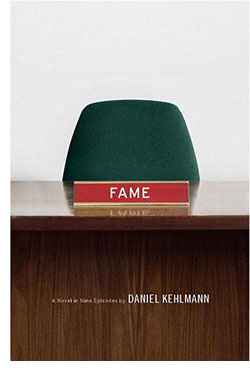
7.  Fame by Daniel Kehlmann (2009)  A playful novel in 9 episodes (stories) about fame. 

8.  Carry Me Down by M. J. Hyland (2006) A moving novel about an eleven year old boy and his family in Ireland.

9.  Tamara Drewe by Posy Simmonds (2007) A graphic novel about a writers’ retreat in rural England.

10. Freedom by Jonathan Franzen (2010) a novel of a modern hapless United States family from Minnesota to Virginia

                                                                                .   .   .   .   .   

As I promised before, here are some excellent fiction works that I read this year that were first published before 2000.

    When Things of the Spirit Come First by Simone de Beauvoir (1928) A group of five interrelated stories about a group of young women in France.
    The Fall by Albert Camus (1956) The most philosophical novel I’ve read, many lines worth quoting,
    Harp in the South by Ruth Park (1948) – Dramatic and warm life in the slums of Sydney, Australia.
    The Midnight Bell by Patrick Hamilton (1929) –A novel wherein a bartender falls in love with a prostitute.
    Comedy in a Minor Key by Hans Keilson – A brave young Dutch couple hide a Jewish man in their house during World War II.
    Herself Surprised by Joyce Cary (1941) The life of Sara Monday told in her own voice.
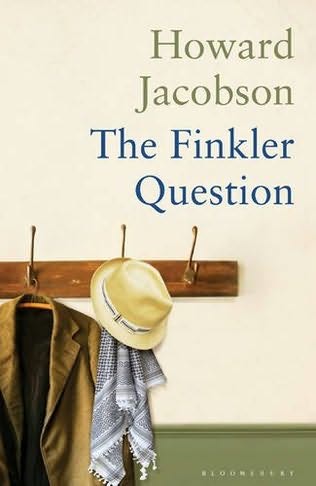
“The Finkler Question” by Howard Jacobson

“The Finkler Question” by Howard Jacobson (2010) – 307 pages

“The Finkler Question” has the trappings of a comic novel, but it really is a grim political diatribe.  There are a lot of puns (“crying Wolfowitz”).  There are some good lines.

    “He’s always been in denial,” Josephine said. “He’s in denial that he’s a bastard.”

One of the jokes of this Booker prize-winning novel is that one of the main characters is named Samuel Finkler, and soon into the novel the word “Finkler” is used interchangeably with the word “Jewish”, thus “The Finkler Question”.  Finkler is a humorous name, and according to the main protagonist it ‘takes away the stigma’, ‘sucks out the toxins’.

The novel centers on Jewish identity in England with the various characters being Jewish in their own way.  The main protagonist Treslove is not a Jew but very much wants to become one.    Despite his Jewish friend’s words “you can’t be us”, Treslove studies Yiddish, keeps a kosher diet, and moves in with a Jewish woman named Hephzibah.     

The main issue in ‘The Finkler Question’ is a political dispute between two camps.  In one camp are those Jewish people who believe that no matter what Israel does to the Palestinians and other Arabs, Israel is always right.  In the other camp are those Jewish people who don’t think so and question some of the actions Israel has taken.  Howard Jacobson is clearly in the ‘Israel is always right’ camp.  In “The Finkler Question’, Jacobson has the other camp organizing a group called ASHamed Jews.  He even goes so far as to call those Jewish people who disagree with him anti-Semitic.  It was at that point that any sense of fun or comedy in the novel completely deflated for me just like a balloon that has been pricked with a needle.  ‘The Finkler Question’ at that point became a grim un-funny tirade with a few jokes tossed in to somewhat disguise the venom.  Throughout the novel Jacobson stacks the deck so that his ‘Israel is always right’ camp is shown in the most positive light and the questioning Jewish people are shown in the worst possible light.  Jacobson uses the story and his stock characters to relentlessly pursue his political goal, and the result is a lame novel.  

I am not Jewish.  I have read and enjoyed many novels by Jewish writers.  As a young child, I was completely devoted to Mad magazine which had and has mostly Jewish writers.  “The Finkler Question” would not make the ‘Top One Hundred’ list of my favorite novels by Jewish writers.   If you are looking for a great novel written by a Jewish writer, read “Call It Sleep” by Henry Roth which is one of the finest novels of the twentieth century.  Read any work by Cynthia Ozick who is one of the best living fiction writers.  Read “Enemies, A Love Story” by Isaac Bashevis Singer.  Read Joseph Heller, Nathanial West, and Anita Brookner.   Read A.B. Yehoshua and Alberto Moravia.   There are a lot of wonderful alternatives.  Italo Svevo, E. L. Doctorow, Joseph Roth, Stefan Zweig, David Grossman, Irene Nemirovsky, Mordecai Richler, Evgenia Citkowitz, Hans Keilson…

Of course, Howard Jacobson might claim some of these Jewish writers are anti-Semitic, but that is his problem.

“Fame” by Daniel Kehlmann

“Fame” by Daniel Kehlmann   (2009) – 175 pages  –  Translated by Carol Brown Janeway

The word I would use to describe “Fame” by writer Daniel Kehlmann from Austria is ‘playful’  This is the type of book where the female main character of a story argues with the story writer about what is going to happen to her next in the story.  At one point she says, “You and your clever words, you can stick them up your ass!”

The subtitle of the book is ‘A Novel in Nine Episodes’ but these are really nine separate stories in which some of the characters float in and out.  Most of the stories are about people who are somewhat famous.  There is Miguel Aristos Blanco, the self-help writer who is “venerated by half the planet and mildly despised by the other, author of books on serenity, inner grace, and the wandering journey in quest of the meaning of life across hills, meadows, and valleys”.  There is Ralf Tanner, the famous actor who  “googled his own name several times a day, corrected the Wikipedia entry on himself that was riddled with errors, checked the casting in his films in various databanks, and laboriously translated the opinions of participants in forums about them in Spanish, Italian, and Dutch”.  (This story must have been written before Google Translate.)    Then there is the most obnoxious, pathetic character of all, an international fiction writer named Leo Richter who I suppose is a stand-in for Daniel Kehlmann.  This guy throws a hissy fit in front of his wife when their plane is a little late.  Of course all planes are always late, so he is constantly throwing hissy fits. 

There is one absolute stunner of a story in “Fame”, “Rosalie Goes Off to Die”.  This is one of those stories that will make you cry and laugh; it is poignant and funny at the same time.

“Fame” is a short book that doesn’t take itself too seriously, yet it contains a lot of wisdom.  From now on I will be watching for any new works of fiction by this young thirty-five year old writer, and I will read them as they are published.  Daniel Kehlmann is certainly a writer to watch.  I usually try not to use too long quotes from books, but this one I really liked.

    “People, even those closest to us who know us best, don’t notice when we lie. The cliché holds the opposite, that you always betray yourself somehow and begin to stutter and sweat when you utter a falsehood, that you sound odd, that your voice changes. But friends, it’s not true. And the fact that it is not true surprises nobody more than the liar. Besides even if it were true, even if your voice tightened, even if we did sweat and blush and twitch, none of it would give us away because nobody notices. People are credulous, they don’t anticipate being deceived. Who truly listens to other people, who concentrates on the chatter of his nearest and dearest? Everyone’s mind is somewhere else.”

 “Fame” is a playful fun trip.

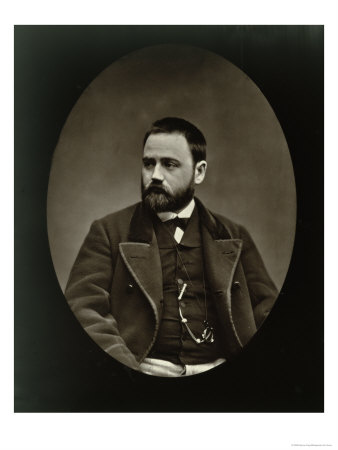
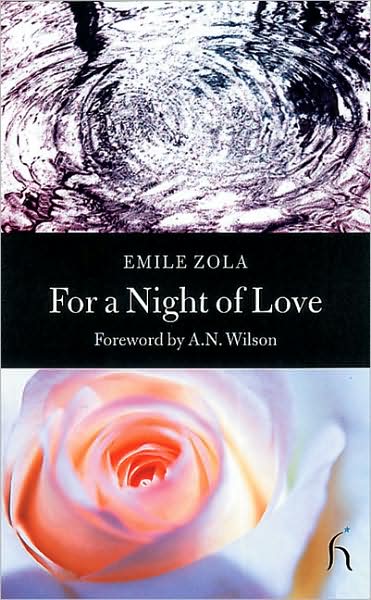
“For a Night of Love” stories by Emile Zola

 “For a Night of Love”  stories by Emile Zola (1880-1883)  – 97 pages

    “I am an artist…I am here to live out loud.” – Emile Zola

 Emile Zola is a prime example of a strong intellectual who was not afraid to speak out.  Many of his statements were blunt, harsh, and controversial.  Perhaps his most famous newspaper article was “J’accuse” which was published in the French newspapers in 1898 as an open letter to the French President accusing the highest levels of the French army of obstruction of justice and anti-Semitism for having wrongfully convicted Alfred Dreyfus of espionage.

I have read several of Emile Zola’s major novels including ‘Nana’, “Germinal”, “La Bete Humaine”, and “The Debacle” as well as his short novel “Therese Raquin”.  These novels are deeply involving, because they contain nearly a complete picture of Parisian society in the middle of the nineteenth century.  The portrayal of the main characters is so vividly detailed that you become intensely involved in their stories almost as if you were there.  Zola does not bypass the rough seamy side of life, and his novels were always in trouble with the censors.  Despite or because his novels were racy and sordid, the novels were extremely popular.

Emile Zola was the primary advocate of literary naturalism which according to Wikipedia was a movement that “used detailed realism to suggest that social conditions, heredity, and environment had inescapable force in shaping human character.”  Naturalism is not only realistic; it attempts to show how the underlying forces of heredity and environment influence the actions of individuals.  Frequently these underlying forces lead to brutal consequences such as poverty, racism, disease, alcoholism, and prostitution.   Zola’s fiction contained them all. 

Emile Zola was not usually a short story writer.  The strength of his novels is in the vivid detail and the complete depiction of a society.  However, he did write a few stories, three of which are collected in the book “For a Night of Love”.  The first two of these stories, “For a Night of Love” and “”Nantas”, are small examples of Zola’s larger technique.  I don’t want to give away the details of these stories, but I can say they are very much in the style of the novels depicting characters operating within the Parisian society and driven to extreme circumstances.  The last story, “Fasting”, is more a sketch than a story

Although these stories give you a small dose of the Zola technique, I think you need to read one of his great novels to undergo the full brilliant effect.  These novels are about a specific place, Paris, at a specific time, the Second Empire. However the novels cover the Parisian society so completely and in such depth that they are universal and timeless.  They are still a pleasure and well worth reading today. 

The major United States writer who was most influenced by Emile Zola was Theodore Dreiser.  Especially in his novels “Sister Carrie” and “An American Tragedy”, Dreiser gives a full and colorful picture of his society that doesn’t back away from the tragic and gruesome details.

“Trespass” by Rose Tremain

“Trespass” by Rose Tremain  (2010) – 253 pages

 When we read about famous people or celebrities on the Internet or in magazines and newspapers, I don’t think we are necessarily reading to figure out how to bring our own lives up to their high level.  Instead we are usually reading to see how these luckiest of lucky people can screw up their lives or have miseries just as we occasionally do.   We are not reading to figure out how these people are superior to us.

 When reading “Trespass” by Rose Tremain, you need never worry about her characters being better than you are.  These characters, the women as much as the men, are usually wishing for the serious injury or death of someone else if not planning outright murder.  No one in “Trespass” is very good in any standard definition of the word. 

 I’ve been a fan of Rose Tremain for a long time.   After reading her two spectacularly good novels of the early Nineties, “Restoration” and “Sacred Country”,  I searched out her early work including “Sadler’s Birthday” and “The Swimming Pool Season”.   Sometimes Tremain gets written up and off as a writer of historical fiction, probably because of “Restoration” and “The Way I Found Her”.  That just is not the case – there is so much more nuance and depth of characterization in her novels than in most historical fiction.  Tremain is definitely one of the finest novelists writing in the world today. 

 “Trespass” will not be mistaken for historical fiction.  It is a modern story of a brother and his sister, the sister’s live-in girlfriend as well as a French brother and sister.  Most of the story takes place in southern France.  Besides the interactions of these five colorful characters, the novel centers on the buying and selling of an old rural French family estate.

One aspect of “Trespass” I particularly enjoyed was the structure of the chapters.  The novel has short chapters of only five to seven pages.  What I found special was that every chapter has some weird surprising twist that I wasn’t expecting,  Each chapter is a delight in itself, and the chapters fit together into a strong complete novel. 

“Trespass” is a ‘novel’ novel, only one entire story told in depth, not a series of somewhat related vignettes as so many novels have been this year.  I admire Tremain’s skill in imagining an entire novel and in developing these five characters.  Rose Tremain can imagine the entire world-view and get completely inside the heads of each of these characters.  There are not many writers today who could fully imagine such differing ways of looking at the world.   Not only the story but each character in “Trespass” is twisted in their own special way. 

I highly recommend “Trespass” as a novel for you to read and then if you like it as much as I did, search out more of Rose Tremain’s work.  I know I’m going to soon read “The Road Home”, an award-winning novel I somehow missed.  In the near future I will be reading “The Finkler Question” by Howard Jacobson, and that Booker prizewinning novel will need to be extraordinarily fine to surpass “Trespass”. 

    “I’m not very interested in charting a day-to-day familiar reality. I’m always looking for territory in which to explore the BIG subjects, the life-or-death stories.”

Rose Tremain

    “Life is not a dress rehearsal.”

Rose Tremain

Prometheus Bound

“Prometheus Bound” by Aeschylus?  approx. 480 BC   –  79 pages

 Zeus, Olympian god of the gods, had already created and destroyed five races.  Now Zeus was ready to crush the sixth race, the human race.  Only Prometheus stood in his way.

 Prometheus was one god of an older generation of gods, the Titans, whom the gods from Olympus had overthrown.  As a Titan, Prometheus took pity on the poor humans and taught them mathematics, agriculture, medicine, and science.  The greatest gift that Prometheus gave humans was the gift of fire which he stole from the Olympian gods.  With fire, humans could cook their food and melt metals to fashion their tools and weapons.  It was fire that saved the human race from destruction by Zeus.

 Zeus was absolutely furious.  Zeus ordered his son Hephaestus, blacksmith to the gods, to mold the first human woman Pandora out of the earth.  All of the other Olympian gods joined in to give her “seductive gifts” which they put in a jar.  When Pandora opened this jar (often mistakenly called “Pandora’s box”), it released all of the evils onto mankind.  Only the good gift of ‘Hope’ remained in the jar. 

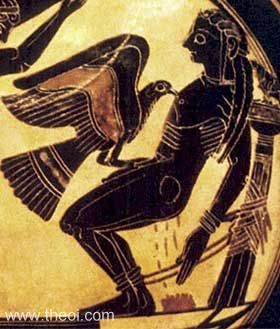
Zeus also punished Prometheus. He ordered some of his warriors including Might and Force to take Prometheus up to the highest reaches of the Caucasus Mountains and bind him to a rock pillar. As further punishment, Zeus sent a giant eagle to peck out Prometheus’ liver.  Since Prometheus was a god and thus immortal, his liver grew back at night.  Every day the eagle would return to eat Prometheus’ liver, and every night the liver would grow back again.  Immortality isn’t everything it is cracked up to be.   

There is some question whether or not the playwright Aeschylus actually wrote the play ‘Prometheus Bound’.   The main question is stylistic.  Aeschylus was a true innovator of the theatre.  Greek theatre started out as only choruses, no actors.  Over the centuries, an actor who could interact with the chorus was added to the cast.  Aeschylus was the playwright who added a second actor as well as the chorus.  This allowed much more exchange between the actors as well as the chorus. 

I tend to agree with those who think that Aeschylus did not write ‘Prometheus Bound’.  From other plays of Aeschylus which I have read, I expected more sharp interplay and dialogue than there is in ‘Prometheus Bound’.  Of course the plot of ‘Prometheus Bound’ is quite static with Prometheus tied to a rock unable to move from his place.  The dialogue in ‘Prometheus Bound’ consists of heavy somber pronouncements rather than the lively interplay I’ve come to expect in Aeschylus’ plays.

The Adversary – A True Story of Monstrous Deception

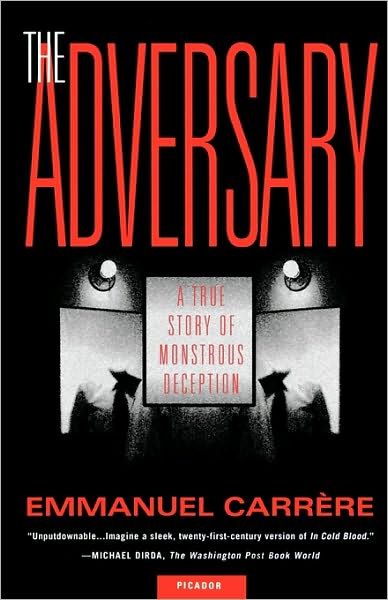
“The Adversary – A True Story of Monstrous Deception” by Emmanuel Carrere  (2000) – 191 pages – Translated by Linda Coverdale

 “The Adversary” has the most audacious opening sentence of any book I’ve read this year. 

    “On the Saturday morning of January 9, 1993 , while Jean-Claude Romand was killing his wife and children, I was with mine in a parent-teacher meeting at the school attended by Gabriel, our eldest son.”

This is a true story.  Jean-Claude Romand actually did kill his wife and children that day in southern France near the Swiss border.  A day later he killed his father and mother. 

Jean-Claude Romand was a really nice guy.  He was a doctor who had a job as a medical researcher and director for the World Health Organization.  He had a beautiful wife Florence with two lovely little children, Antoine and Caroline.  He was well-liked and honest, someone whom his parents and other relatives could trust to invest their money.

Jean-Claude Romand was living a total lie.  He had never completed medical school, never passed his medical examination.  He drove off to work every morning in his sporty car to his big director’s job at the World Health Organization, but in fact he had no job.  He instead spent his entire work day reading in coffee shops and walking in the woods. 

Romand used all the money that people gave him for investments to pay for his house and car, his family expenses.  Later he used some of this money to buy presents for a mistress.

In the end, Romand was caught up in his lies.  People started asking for some of the money he supposedly had invested for them, and he had no money to give them.  That is when he resorted to murdering his family.  He tried to make it look like he too was severely wounded in a home break-in, but when the bodies of his parents were also discovered at their home, suspicions fell on him. 

While reading this story, I became skeptical on a couple of points.  First, would someone really go to all this trouble of getting up every workday morning and dressing up, to pretend he was a doctor and director at WHO, and then just sit in coffee shops and wander in the woods all day?   Carrere never expresses any skepticism about this, but I can’t help thinking there must have been more to Romand’s secret life.  Second, could a person who will ultimately kill his wife, children and parents come across to everyone as so calm, cool, and collected, so well-liked?   Wouldn’t such a murderer come across as more deeply troubled?

Recently a seventeen year old boy from St Louis Park, the same Minneapolis suburb where my daughter and her husband live, drove down to Iowa and robbed a couple of convenience stores for money cigarettes, and candy.  After successfully completing the robberies, he shot the woman clerks in the face, murdering them.  The women were in their early forties; one of the women had eleven children.   The police caught up with this young man.  As the police led him away, this young man had the biggest, brightest smile on his face that I had seen in a long time.   Maybe someone will write a book about him.

“The Weekend” by Bernhard Schlink – A Reunion of German Leftists

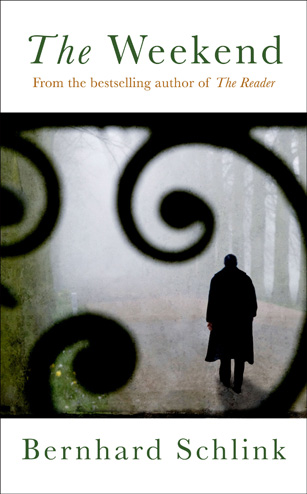
“The Weekend” by Bernhard Schlink (2008) – 211 pages

 Translated by Shaun Whiteside

I have often read and thought about what would have happened if someone had assassinated Adolf Hitler in 1936 or 1937. That one act might have spared everyone World War II and the Holocaust. Yet I can picture someone sitting at their breakfast table twenty years after that saying “You remember that insane leftist who murdered Adolf Hitler? We never did get a chance to see what kind of leader Hitler would have been. It’s a good thing they locked that crazy assassin away for good.”

In “The Weekend” by Bernhard Schlink, Jorg is finally being released from prison after spending 24 years there for his involvement with a radical leftist group in the 1970s. His sister Christiane has a little weekend release party at her house for him to which she has invited several of their old friends. Each of the guests has a different take on Jorg. Ilse is writing a novel about the movement. Marko, a young radical, wants to use Jorg to advance the cause. Jorg’s son Ferdinand has some angry father/son issues. And so on. Mostly there is a feeling of faint embarrassment for Jorg among these friends because over the years they have moved away from the radical politics of their younger days. They never did get caught up in the violence of the movement the way Jorg did and now they are well into their adult careers. Mainly what they remember are the newspaper headlines of several innocent people getting killed in these violent radical acts.

One of the problems of this novel is that the conversation between the guests does not seem natural at all; rather the talk is wooden like each character is making pronouncements stating his or her case. There are also just too many guests to keep track of. I think the novel would have been better if instead of eleven or twelve people, there would have been only four or five characters who would have been more fully developed. Sections of Ilse’s novel about a radical named Jan are also included in “The Weekend”. These ‘novel within a novel’ sections don’t work at all, because they are about the violent physical acts themselves rather than the passions that went into the acts in the first place. Politics without the passion is tiresome.

Jorg gets the closest of anyone to remembering the passions of the past with the following quotes.

    “He couldn’t accept the badness of the world. He wanted to fight for justice, confront the oppressors and exploiters and help the hurt and the humiliated.”
    “Our parents conformed and shirked resistance – we couldn’t repeat that. We couldn’t simply watch children being burned by napalm in Vietnam, starving in Africa, being broken in institutions in Germany.”

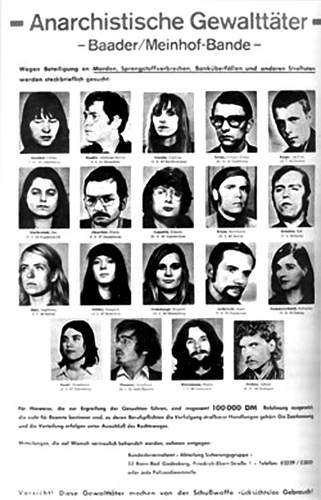
By not dealing more with the history of the radical movement, the book stacks the deck against Jorg. If we don’t know the reasons for what he did, it is hard to view his actions with anything but disdain and embarrassment. The radical leftist movement in Germany began in the late Sixties when the Unites States was using Germany as a staging area for its war in Vietnam where the United States was burning whole villages and pouring Napalm on the villagers to make sure they died a horrible death. In the Sixties and Seventies, some people would become radical after hearing about things like that. Also some people in Germany were concerned because some of the leaders of Germany at that time were ex-Nazis; the leftist movement was virulently anti-fascist. At least as many women joined the radical movement as men. Later some of these groups got into heavy duty criminal operations, bank robberies, kidnapppings, etc., and it was discovered later that much of their funding came from Communist East Germany sources.

There were reasons groups like the Red Army Faction and the Revolutionary Cells formed. If the reasons are forgotten, the groups don’t make sense at all. In 2007 the movie “The Baader Meinhof Complex” was released to much acclaim. In his positive review in the New York Times, Fred Kaplan said :

    “When the film opened in Germany last year, some younger viewers came out of theaters crestfallen that the Red Army Faction members, still mythologized, were such dead-enders. Some who were older complained that the film had made the gang look too attractive. But they were dead-enders, and they were attractive.”

What I think is missing from “The Weekend” is an insight into the attractive qualities of these leftists which probably would have come out if we had gotten to know the characters better. As the novel is, I had trouble caring about any of the characters.

.

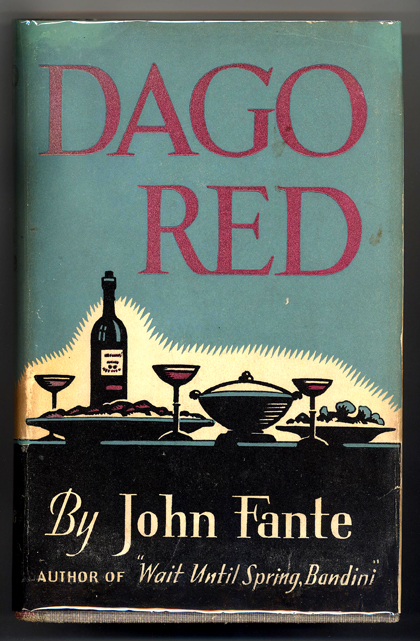
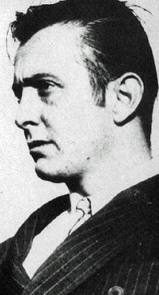
“The Wine of Youth” by John Fante – Stories from Fante’s Childhood

“The Wine of Youth” by John Fante (1940) – 211 pages

Southern California novelist John Fante’s most popular novel by far was “Ask the Dust” which was published in 1939.  At that point in order to cash in on his popularity, his publishers asked him to put together all the stories he had written, so that they could publish a collection in 1940. This collection of stories was published as “Dago Red”.  Over time, the title “Dago Red” fell victim to political correctness, even though Fante, an Italian-American himself, used the term “Dago” with affection.  In 1985 “Dago Red” with a few additional stories was republished as “The Wine of Youth”. 

In order to get enough stories for a collection, Fante had to reach back to his very earliest stories.  For a more literary person, these stories would probably be called juvenilia, but Fante’s father was a brick layer, and books were not a big part of Fante’s childhood home.  Fante must at some point have realized that he was a born storyteller, yet he did not have the writing skills at that point to accomplish that goal.   I believe these early stories were written in his twenties.  In the early stories in this book, the writing is very basic, almost crude, made up of short sentences consisting of subject, verb, and object.  There is no attempt to fictionalize the stories; they are reminiscences from his early childhood.

Here is an example from one of these early stories, “First Communion”.

    “How well I remember my first Confession and Communion! I was nine years old then. The day is high and clear in my mind. I remember that I had six sins to confess. I had to tell my confessor that I had used bad words six times. I didn’t want to tell him. I didn’t want to name the words. He was a holy man.”

I suppose one could argue that since the story is about a boy of nine at school, a more sophisticated sentence structure would be inappropriate   But it’s excruciating to read an entire story, indeed several stories, where the sentences are primitive and have such little variety.  Still even with the rough short sentences, Fante’s honesty and vivacity as a storyteller partially shine through.

Around page 80, something extraordinary happens to the writing in this book.  The sentences become longer and more well developed and convey more subtlety and energy.  Fante must have worked hard to develop his writing to the level of his storytelling. 

Here is an example from “Home, Sweet Home”.  

      “And of course then we will all listen to my father’s story of his boyhood when he had nothing to eat but garlic for a week, and long before he has finished we will have gone ahead of him in his story and said aloud the words which he will laboriously, eventually come to, and he will threaten to kill us, and my mother will try to be composed and impartial, but she will not be able to resist the feathers which tickle all but my father, and soon the table will shake with our laughter, and my father will roar like a wild beast.”

Ultimately the enthusiasm, simplicity, and honesty of these stories of his childhood win out over the primitive writing at the beginning of this book, but if you are new to John Fante, I would still recommend starting with “Ask the Dust” or “Wait Until Spring, Bandini” rather than “The Wine of Youth”.

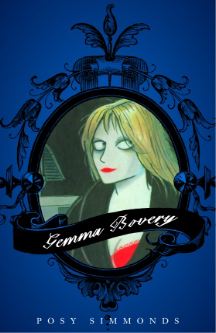
“Gemma Bovery” vs. “Tamara Drewe” – Similarities and Differences

“Gemma Bovery” by Posy Simmonds  (1999)

“Tamara Drewe” by Posy Simmonds (2008)

“Gemma Bovery” and “Tamara Drewe” are both graphic novels.  The artwork increases the pleasure. 

All of the pictures in “Gemma Bovery” are black and white.  All of the pictures in “Tamara Drewe” are color.   As a writer becomes more and more popular, her publisher will go all out for her.  Now it is nothing but the best for Posy Simmonds.

 “Tamara Drewe” all takes place in rural England, while “Gemma Bovery” mostly takes place in rural Normandy in France.   “Tamara Drewe” is all in English, while “Gemma Bovery” has much in French, nearly always re-phrased in English.  “Mais qu’est ce que tu fals?…Tu viens de courir?…Alors, tu as bien travaille aujourdhui?” means “What’re you doing?  Have you been running?  Have you done some work today?”

Both “Gemma Bovery” and “Tamara Drewe”  have a lot of sex in them.  Self-explanatory.

“Gemma Bovery” and “Tamara Drewe” both have a chubby middle-aged man in them who doesn’t have any sex, is very nosy, and is integral to the plot of the stories.  Glenn in “Tamara Drewe” is a United States writer, while Jourbert in “Gemma Bovery” is a French baker.

In both “Gemma Bovery” and “Tamara Drewe”, one of the main characters dies mysteriously.   It’s all part of the fun.

 “Gemma Bovery” is of course based on the classic novel “Madame Bovary” by Gustave Flaubert, while “Tamara Drewe” is based on “Far from the Madding Crowd” by Thomas Hardy.  “Tamara Drewe” never mentions “Far from the Madding Crowd” while “Gemma Bovery” constantly mentions “Madame Bovary”.

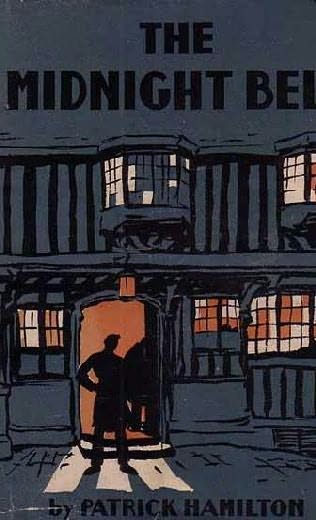
“The Midnight Bell” by Patrick Hamilton

 “The Midnight Bell” by Patrick Hamilton   (1930) – 307 pages

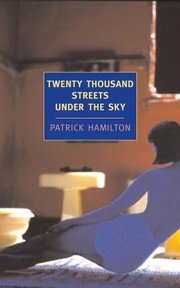
 “The Midnight Bell” is the first book of a trilogy called “Twenty Thousand Streets under the Sky” by Patrick Hamilton that has just been republished by New York Review Books (NYRB).        

 “The Midnight Bell” is a little bar in London near Euston Road.  Bob, a young man of twenty five, is the waiter at the bar, and Ella, a young woman in her early twenties, is the barmaid.  Together Bob and Ella keep the bar running smoothly, making sure the regulars are taken care of and keeping the place as neat as a pin.  Bob’s dream is to someday be a writer, and he has managed to save eighty pounds in his bank account.  Ella, a placid, sensible, and efficient girl, secretly is attracted to Bob.

    “The slightly mocking and non-committal demeanor which she (Ella) employed as her professional manner toward those who leered and laughed at her across the bar was carried into ordinary life.”

One day, two girls not yet twenty come in to the bar and sit at a table.  Everyone in the bar including Bob and Ella can tell by looking at them that they are prostitutes, but Bob has a strong fascination for one of them, Jenny.  Jenny is very pretty, and Bob is flattered to be seen in her company.  After accidentally running into Jenny on the streets a couple of times, Bob falls deeply and hopelessly in love with her.  In this case, “falling” is definitely the operative word.   From her place behind the bar, Ella wryly observes. 

Bob is so in love with Jenny he doesn’t even want to have sex with her, unlike most every other man on the streets.  Bob wants to save her from the life of streetwalking.  He tells Jenny how much he loves her, and looks for any and all signs that she is returning his emotion.  Yet she is always standing him up on their next “date”.

Everything Jenny says to him is calibrated to extract as much money from Bob as possible.  Thus she mentions she doesn’t have any money for her rent, but says she can earn it.  Then Bob says, “Yes. But it’s not a pleasant way of getting it.”  Soon he is making regular withdrawals from his bank account savings. 

The Atlantic describes “The Mitnight Bell” as a “Thoroughly Unhappy Love Story”.  I would simply describe it as a “She done him wrong.” novel.

According to Wikipedia, “The Midnight Bell” is based on a true story.  Patrick Hamilton actually did fall in love with a prostitute.   This is probably why Jenny is portrayed much more subtly and skillfully than prostitutes are usually depicted in novels and stories.  Usually prostitutes are presented with broad strokes either as evil or as a joke, but here Jenny is credibly human.  The scenes in the bar are also meticulously realistic down to the smallest details.  Patrick Hamilton must have spent many, many hours of research in bars for this novel. 

I admire Patrick Hamilton as a writer, because he has the courage to deal with utterly realistic human stories that most writers shy away from.  Graham Greene, another strong realist, was an admirer of Patrick Hamilton.  I have read “Hangover Square” and watched the movie “Gaslight” for which Hamilton wrote the screenplay.  I would describe the style of Patrick Hamilton as sensitive street-level realism.  “The Midnight Bell” is an excellent novel which at least equals the level of achievement of “Hangover Square”.

Patrick Hamilton died of cirrhosis of the liver in 1962 at the age of 58.        

.          .

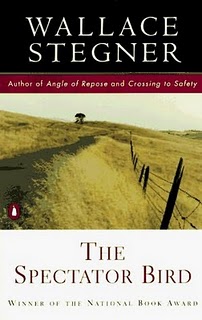
“The Spectator Bird” by Wallace Stegner

“The Spectator Bird” by Wallace Stegner (1976) – 214 pages

 I’m sure most of you have had this experience.  You hear about a book through an ecstatic review that makes the book seem like it is only somewhat better than “War and Peace”, “Pride and Prejudice“, and “Middlemarch” put together.  You read some other reviews of the book, and these are all overwhelmingly positive.  Then you do what it takes to get the book, but after reading the book you can’t help but ask, “What’s the big deal?  This is pretty ordinary stuff.”

 In “The Spectator Bird”, Joe Alston is an ex-literary agent now retired and living in California with his wife Ruth.   The Alstons seem quite satisfied with their retired life.  Joe spent his work life hobnobbing with the famous writers, and now they are leading the good life in California.  In one chapter of the book, one of his former clients, a libidinous Italian author, comes out to visit the Alstons and brings his college-age girlfriend.  This libertine Italian writer is a rather stock character, and the entire scene did not seem as humorous as the author intended it to be.

There is a self-satisfied aura that seems to permeate everything Joe Alston does and says.   It’s sort of like someone laughing at their own jokes, only worse. Of course that would be a boring book about a man who is content with his entire life.  There was one terrible thing that has happened in the Alstons’ past.  Their son, their only child, died in a surfing accident twenty years ago.  Joe still feels guilt about his relationship with his son.  This is certainly understandable and believable.

A postcard from an old friend from Denmark, Astrid, causes Joe to get out his diary from a trip to Denmark that the Alstons took twenty years ago as a way to recover from their grief over the death of their son.  At his wife’s insistence, Joe reads the diary aloud.

I’m not going to elaborate any more on the plot, but instead will express my dissatisfactions with the book.   The death of their son and its effects on the Alstons twenty years later could have been a moving and involving theme in the book.  However it seemed more like a plot device to add some turbulence into the couple’s extremely smooth life and as a means to add meaning to their trip to Denmark.  Then it is dropped.   This trip to Denmark itself seemed rather unremarkable; perhaps it was the pedestrian language by which it is described in the diary.  The people they meet in Denmark come across as unexceptional, even the writer Karen Blixen (Isak Dinesen).   Because none of the people including the Alstons captured my interest, the supposedly dramatic ending to the book seemed unearned.    

 “The Spectator Bird” won the National Book Award for 1976.

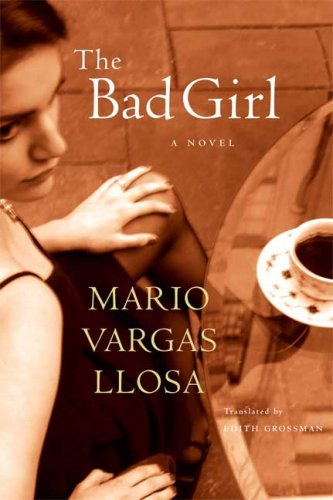
“The Bad Girl” by Mario Vargas Llosa

 “The Bad Girl” by Mario Vargas Llosa (2006)  – 276 pages  Translated by Edith Grossman

In the early 1980s I discovered Latin American literature in a big way.  As with so many United States readers, it all started for me with Gabriel Garcia Marquez of Columbia and his novel of magical realism, “One Hundred Years of Solitude”, one of those books you must read if you haven’t already done so.  I won’t try to be at all comprehensive and will mention only a few of the novels I read after that.  Some of the novels I most appreciated were “We Love Glenda So Much” by Julio Cortazar from Argentina,  “Betrayed by Rita Hayworth” by Manuel Puig also from Argentina,  “The House of the Spirits” by Isabel Allende from Chile, “El Senor Presidente” by Miguel Angel Asturias from Guatamala, and  “Gabriela, Clove, and Cinnamon” by Jorge Amado from Brazil. Actually I could mention about seven or eight novels by Jorge Amado, because he was my favorite.  

That era was a Renaissance for Latin American literature.  I read so many great novels that it led me to some of the classical Latin American writers such as Ciro Alegria from Peru whose “The Golden Serpent” was superb and finally to Joaquin Maria Machado de Assis from Brazil who wrote several novels including “Epitaph for a Small Winner” and “Don Casmurro” and is probably one of the greatest writers who ever lived. 

Another writer I discovered at the same time as Cortazar, Puig, and Amado was Mario Vargas Llosa from Peru.  I was lucky to discover him fairly early in his career.  I started with the novel that sort of made Vargas Llosa’s career, “Aunt Julia and the Scriptwriter”.  At the time, that book fairly blended in with all the others, a rich combination of the political and the romantic.   Since this was in the early Eighties, the only way to read more of his novels was to read his earlier work.  Two of these early works that I really admired were “Captain Pantoja and the Secret Service” and “The Green House”.

At some point, I started to tell people that Mario Vargas Lllosa was probably as deserving of a Nobel Prize as Gabriel Garcia Marquez.  At that time I suppose it was a fairly obnoxious thing to say.  Still Vargas Llosa seemed like a guy who was born to write,whose delight in creating stories shined through in all his work.  His books dealt with dramatic political situations, but at the same time they always contained romance and humor, everything I had come to expect from South American novels.   In some ways, Vargas Llosa’s enthusiasm for writing reminds me of the Japanese writer Haruki Murakami.   

Over the years, I’ve kept up with his work, so when he won the Nobel Prize himself, I decided to read his novel “The Bad Girl”.  “The Bad Girl” is a story that starts out in Peru when the good boy Ricardo and bad girl Lily are kids and follows them around the world from Paris to swinging London to Japan to Spain for the next forty years.  Ricardo’s life as a translator and interpreter is constant while the bad girl switches from rich husband to richer husband to even richer husband and gets involved in ever more compromising situations.  Yet Ricardo’s love is enduring from their first school yard romance when they were thirteen years old.  Along the way we sometimes hear about peripheral serious dramas, but mostly it is a playful silly little novel, maybe a good one to read if you haven’t read Vargas Llosa before and are afraid you might be intimidated by his work.  

    “To the bad girl, with the unchanging affection of the little pissant who translated these stories.”

Nothing intimidating here.  For me, the novel is perhaps too long for what there is of the story.    I suppose I would have preferred a novel with more substance, more edge such as Vargas Llosa’s novel about the dictator Trujillo, “The Feast of the Goat” which I haven’t read yet.  Reading “The Bad Girl” was a pleasant little interlude, very good but not great.   Maybe new readers of Vargas Llosa should start with “Aunt Julia and the Scriptwriter”.

Now if only I could develop the same level of enthusiasm for more recent Latin American writers such as Roberto Bolano, Cesar Aira, and Junot Diaz.        

.

More Oxymorons or Paradoxes?

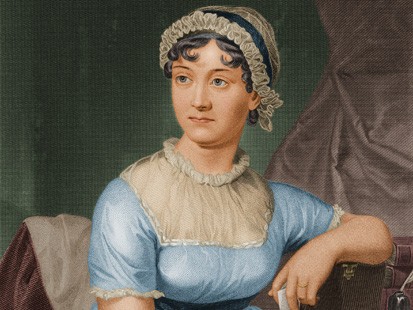
She may have written messy manuscripts, but Jane Austen was quick to use neat paradoxes in her writing. How does a host tell a guest it may be time to leave, perhaps the way that Mr. Bennett does in “Pride and Prejudice”?

You have delighted us long enough.

In the same vein, here from “Emma”.

It was a delightful visit – perfect in being much too short.

Jane A. liked paradoxes so much she even used them in her correspondence.

I do not want people to be very agreeable, as it saves me the trouble of liking them a great deal.

If you think the use of paradox is relegated to woman authors from two centuries ago, here are two from Catch-22 by Joseph Heller.

The Texan turned out to be good-natured, generous, and likeable. In three days no one could stand him.

 Even among men lacking all distinction he inevitably stood out as a man lacking all distinction more than the rest, and people who met him were always impressed by how unimpressive he was.

William Shakespeare in his play Henry VI had a paradox similar to those of Jane A.

Unbidden guests are often welcomest when they are gone.

In my previous blog entry, I quoted an impressive if rather rude crude paradox from Samuel Beckett

Nothing is funnier than unhappiness.

Now switching from the writing business to the cynical movie business, here are some paradoxes from movie-making.

The whole essence of learning lines is to forget them so you can make them sound like you thought of them that instant.
Glenda Jackson


We pay him too much, but he’s worth it.

– Samuel Goldwyn

I wasn’t naked, I simply didn’t have any clothes on.

– Josephine Baker

When people tell you how young you look, they are telling you how old you are.

 – Cary Grant.

Now we will wind up with some oxymoronic advice you are welcome to take.

Never speak ill of yourself. You can count on your friends for that!

– Charles-Maurice de Talleyrand

Never let your sense of morals get in the way of doing what’s right.

 – Isaac Asimov

Never take anybody’s advice.
– George Bernard Shaw

If a person begins by telling you,
“Do not be offended at what I am going to say,”
Prepare yourself for something
That she knows will certainly offend you.

    Eliza Leslie

Last, but not least, avoid clichés like the plague.

– Anonymous

Most of these oxymorons or paradoxes and many, many more are in the book, “Oxymoronica” by Mardy Grothe.

“The Duel” by Anton Chekhov

“The Duel” by Anton Chekhov  (1891) – 123 pages

Translated by Richard Pevear and Larissa Volokhonsky

    “Nothing is funnier than unhappiness” – Samuel Beckett

 Let me ask a not very jolly question.  Have you ever known someone who has total contempt for you, who utterly dismisses you and despises you as a person?

In Anton Chekhov’s novella “The Duel”,  Von Koren absolutely despises Laevsky.   Why?  Let us discuss these two vivid characters.

Laevsky moved down here to this resort on the Black Sea from St. Petersburg bringing along his mistress Nadya who is another man’s wife.  Laevsky is what you would call an intellectual dilettante   He doesn’t have a job, borrows money from his friends and gets money from his mother back in St. Petersburg.  He likes to drink and gamble.  Lately he’s been whining to his friends about Nadya, how he’s growing tired of her and will have to leave her soon.  Laevsky is a sociable enough fellow, but he wallows in self pity. His unhappiness would be almost laughable if it were not so real.

Von Koren does not find Laevsky funny at all. Von Koren is a scientist and a strict moralist, a disciple of Darwin and a believer of the “survival of the fittest”.  He maintains a rigid military discipline and expects that of others too.  He is planning to lead a scientific expedition into the far eastern regions of Russia near Vladivostok. 

Von Koren’s contempt of Laevsky is philosophical and not personal since Von Koren has no personal reason to hate Laevsky. Here are some of the things Von Koren says about Laevsky.

    “Whether he (Laevsky) walks, sits, gets angry, writes, rejoices, everything comes down to drink, cards, slippers, and women.”
    “His (Laevsky’s) harmfulness consists first of all in the fact that he has success with women and thus threatens to have progeny, that is, to give the world a dozen Laevskys as feeble and perverted as himself. “
    “Whatever vileness he (Laevsky) may commit, everyone will believe that it’s good, that it should be so, since he is an intellectual, a liberal, and a university man.”

So here we have the rigid disciplinarian and the lazy immoral intellectual dilettante.  What could possibly go wrong between these two guys?  Somehow Laevsky stumbles into a duel with Von Koren which Von Koren is only too happy to oblige.  By this time even in Russia duels are disappearing.  The people barely remember the rules.  The duel between Von Koren and Laevsky could almost be called the last duel.    

 Anton Chekhov is famous for having said (although there is some question as to whether or not he actually did say it) that if there is a pistol hanging on the wall in the first act, it better go off in the last act.  I suppose the quote applies more directly to “The Duel” than most of his stories.  There is a direct straightforward quality to Chekhov’s stories and novellas that make them have a vivid and dramatic impact that I’ve always appreciated.   I love the Chekhov stories and novellas, but I’ve had my troubles appreciating the plays.  I keep watching Chekhov’s plays in the hope that I will come to fully appreciate them in time.    

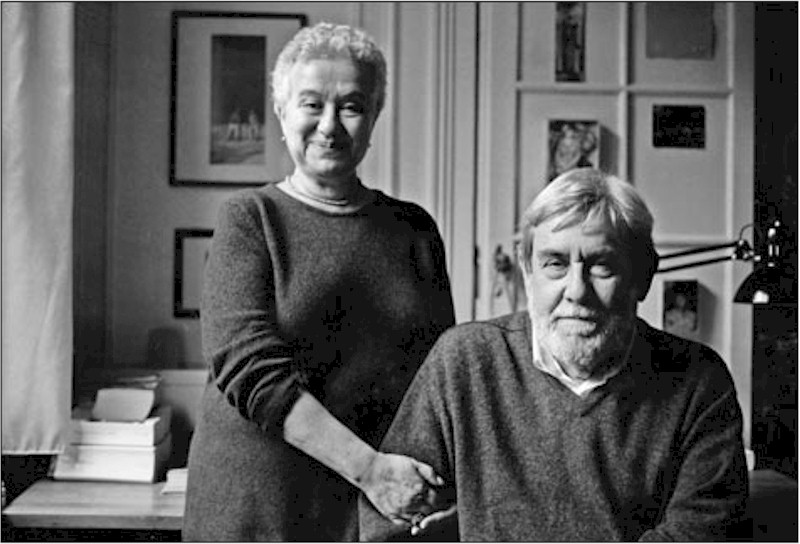
Have you ever wondered like I did what famous Russian translators Richard Pevear and Larissa Volokhonsky look like?  Wonder no more.  Here is another excellent translation of a classic Russian writer.

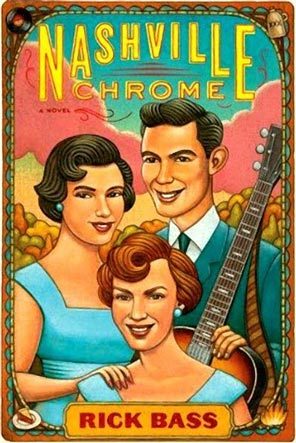
“Nashville Chrome” by Rick Bass – The Story of The Browns

“Nashville Chrome” by Rick Bass (2010) – 253 pages

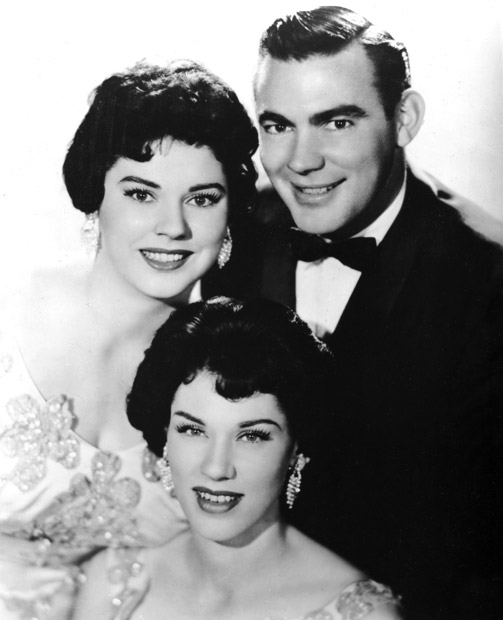
“Nashville Chrome” is the fictionalized story of the real music group the Browns.  The Browns were a brother and sisters act from southern Arkansas consisting of Maxine, Jim Ed, and Bonnie Brown who were popular in the Fifties and Sixties.  Before reading the rest of this article, you may want to listen to and watch the Browns sing their 1959 worldwide number one hit “The Three Bells” .  Much later the Browns found out that “The Three Bells” was one of John Lennon’s favorite songs and that he was actually playing “The Three Bells” in his studio the day he was killed.   

 I first discovered the Browns a few years ago and own their greatest hits album.   I particularly enjoy music with three part vocal harmony whether it is sung by the Hollies, Crosby, Stills, and Nash, or the Browns.  The idea of a novel about the Browns intrigued me. 

The Browns’ story starts in the early Fifties in the backwoods of southern Arkansas where the family is trying to make a go of it, their father running a sawmill.  The father drinks a bit too much, the mother holds the family together.  Whenever people got together, making music was always a part of the party.  The three oldest kids soon wind up in the music business.  Being from the backwoods, they sign up with a manager who is pretty much a crook.  The Browns had some early songs during that time which went to the top of the country charts and were popular all over the United States, yet this manager gave them next to nothing, keeping all the money for himself. 

In order to support their records during these early years, they travelled to the live shows such as the Louisiana Hayride, the Ozark Jubilee, and the Grand Ole Opry.   There was another young fellow from neighboring northern Mississippi who was trying to make a name for himself in the music business.  His name was Elvis Presley.  Elvis soon became close friends with the entire Brown family, Bonnie becoming Elvis’ girlfriend.  In the novel we see close at hand the transformation of Elvis from unspoiled country boy to superstar.  One particularly interesting story in “Nashville Chrome” occurs in the late Fifties when Elvis was already a big star.  Elvis and his band had some car trouble down in Louisiana and called up the Browns to get some help.  When the Browns got there, they saw that Elvis and the band were drunk, so the Browns drove them back to their place to sober them up.  After they had recovered, Elvis needed to get back to Nashville quick, so the Browns’ father lent him the family car to drive to Nashville.  At that point Elvis must have got busy and forgot about the car, because he didn’t return the car for two months.

According to the book, Bonnie broke off her relationship with Elvis, not the other way around.  Later Bonnie did make a very fortunate choice in husbands. 

 “Nashville Chrome” is as much about not being famous anymore as it is about having fame in the first place.  Most music stars at some point lose their popularity, and what do they do then?   In some ways the Browns were lucky, because they all survived; they are still alive today. 

As you can see, I was fascinated with the details of this story of the Browns.  I’m not going to try to do a literary critique of this novel except to say that it held my interest throughout.   

 If you want to find out more about the Browns, see a great early picture of the Browns with Elvis, and watch the excellent video “I Was Looking Back”, you can visit the Maxine Brown site.

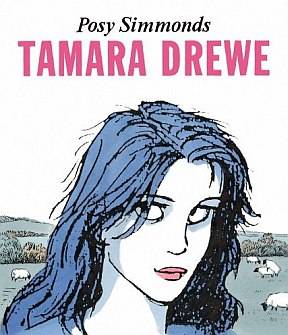
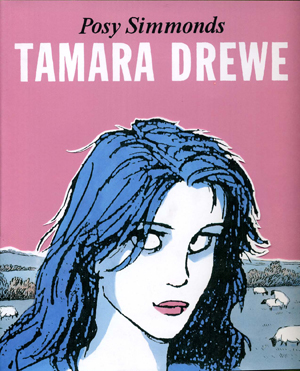
“Tamara Drewe” by Posy Simmonds

 “Tamara Drewe” by Posy Simmonds (2008)   

 Posy Simmonds.  Has there ever been a name more English?

 As far as graphic novels go, I’ve read the usual suspects, the “Maus” books, the “Persepolis” books.  These were excellent, and I must say I’ve developed a strong fondness for these books where the artwork accentuates the story.  I loved comic books as a kid, guess I still do.

 “Tamara Drewe” is a true novel, one long story, not a series of vignettes.  It’s an adult novel with lots, lots of messing around.  The story is centered around Stonefield, an English country manor where people can drive into London for the day, but sometimes depending on the traffic they might have to stay overnight, or at least it’s a good excuse.  Husband and wife Nick and Beth, the proprietors of the manor, run it as a working retreat for writers.  Nick himself is a best-selling author of crime fiction.   Beth is kept busy running the retreat, but Nick is busy doing a lot of other things besides writing his books.

A young woman named Tamara Drewe has moved back to her family estate.  She recently had a nose job, likes to wear short shorts, and drives most of the men crazy.  The fun begins.

The only American in the story is a cute chubby stumblebum writer named Glen who always seems to be in the wrong place at the wrong time, or for us readers, in the right place at the right time.        

The English countryside, indeed.  While reading “Tamara Drewe” you can almost see the barns, the fields, the cows, the dogs, the disaffected teenagers hanging around.  Actually you do see all of these with the wonderful illustrations.  While you are reading “Tamara Drewe”, it is almost like you are living at the manor, perhaps another writer at the retreat.  I’m not all that familiar with rural England, but the tone here seems just right.  The people seem to have stepped out of real life into this comic book.

One thing about comic books, you need to keep the dialog short; otherewise the words crowd out the pictures.  Posy Simmonds is great at conveying snideness, rudeness, or humiliation in just a few spoken words.  When Simmonds has something to tell us that doesn’t involve dialogue, she simply writes a couple of paragraphs in non-comic form.  That is just fine with me.  It’s all a matter of what works best.

“Tamara Drewe” is supposed to have been inspired by Thomas Hardy’s “Far from the Madding Crowd”.  I read “Far from the Madding Crowd” a long time ago and can’t remember any of the details to compare with “Tamara Drewe”.  However for sure “Tamara Drewe” and Stonefield do resemble Peyton Place.

“The Painted Drum” by Louise Erdrich, A Well-Versed Storyteller

 “The Painted Drum” by Louise Erdrich (2005) – 276 pages

“The Master Butchers’ Singing Club” – a play at the Guthrie Theatre, Minneapolis, Minnesota

    “Of course, I’m ambivalent, I’m human. There are times I wish that I were one thing or the other, but I am a mixed-blood. Psychically doomed, another mixed-blood friend once joked. The truth is that my background is such a rich mixed bag I’d be crazy to want to be anything else. . . . Through the difficulty of embracing our own contradictions we gain sympathy for the range of ordinary failures and marvels.” – Louise Erdrich

In “The Painted Drum”, Louise Erdrich again does what she does best, juxtaposing the lives of native Americans with the lives of people whose ancestors arrived here much later.     Louise Erdrich is a tremendous storyteller who learned the lessons of William Faulkner and Flannery O’Connor very well.

“The Painted Drum” begins in New Hampshire, which happens to be the home of Dartmouth College where Erdrich graduated from college.  In the house of the recently died son of an ex-Indian agent, an antique dealer discovers a large Indian drum.  She knows the Indian agent took the drum without the tribe’s consent, and since she is one quarter Indian herself she realizes how valuable this ceremonial drum would be to the Ojibwe people it was taken from.  She takes the drum all the way to North Dakota to return it to them.  The novel then tells the story of the creation of the drum and then a story of the Indians living there today.

As time goes on, the stories that are part of our lives accumulate.   Some are joyous stories, some not so happy, even tragic.  People being human, they sometimes make major mistakes.   Some of the stories necessarily involve human weakness and maliciousness.  Erdrich, by juxtaposing the stories of Native Americans with the stories of others, allows us to consider the similarities rather than the differences between people. The following passage from “The Painted Drum” sums this up quite well.

    “Life will break you. Nobody can protect you from that, and living alone won’t either, for solitude will also break you with its yearning. You have to love. You have to feel. It is the reason you are here on earth. You are here to risk your heart. You are here to be swallowed up. And when it happens that you are broken, or betrayed, or left, or hurt, or death brushes near, let yourself sit by an apple tree and listen to the apples falling all around you in heaps, wasting their sweetness. Tell yourself that you tasted as many as you could.”

I’ve read several Louise Erdrich novels over the years, including “Love Medicine”, “The Beet Queen”, “Tracks”, and “The Bingo Palace”  She is a reliable and exciting teller of stories that have an eloquent insight into our lives.

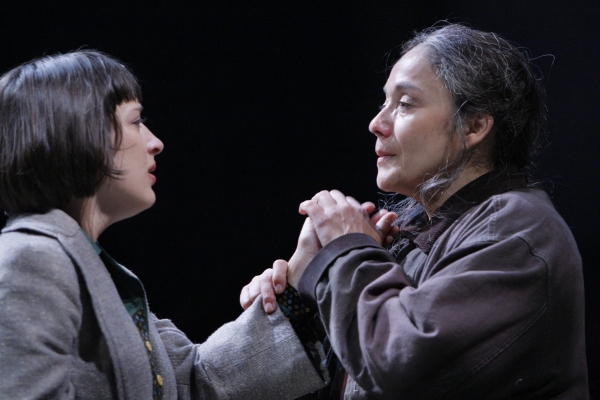
I also recently had the pleasure of seeing the theatre adaptation of “The “Master Butchers’ Singing Club”, another of Erdrich’s novels, at the Guthrie Theatre in Minneapolis.  This play, although it does have its Native American elements, is mainly about the German immigrants living in a small town in North Dakota in the early Twentieth century. 

     
    “Here I am, where I ought to be. A writer must have a place where he or she feels this, a place to love and be irritated with.” – Louise Erdrich

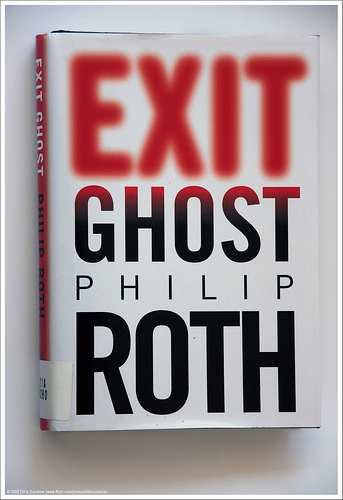
“Exit Ghost” by Philip Roth

“Exit Ghost” by Philip Roth (2007) – 292 pages

I’ve been reading Philip Roth for many years, ever since “Portnoy’s Complaint” came out in paperback, and his writing has given me a lot of highs and lows over the years,  He is a writer whom I have loved to hate, hated to love.   Roth’s books have been for me very uneven, not like those of Mario Vargas Llosa whose entire collection of novels I’ve admired. 

In “Exit Ghost”, Roth’s Nathan Zuckerman is now 71 years old.  After living in the far outer suburbs of Connecticut, he decides to swap living in his rural place for living in an apartment in downtown New York City.  The young couple he is swapping with are writers as well, and Nathan is tremendously attracted to the young woman of the couple, Jamie, whom he slightly knew from when she was a student in one of his classes. 

 In this novel Roth does not at all downplay the problems of old age.  Over the last ten years Nathan has dealt with cancer, impotence, incontinence, and loss of memory.  Yet Nathan is still robust, even lustful, to the point of reminding one of  Alexander Portnoy.

 One of the major plot lines of “Exit Ghost” concerns a young man named Kliman who is possibly a lover of Jamie and who wants to write a biography of Zuckerman’s long-dead writer friend Lonoff and so he pumps Zuckerman as well as Lonoff’s ex-girlfriend Amy for the inside goods.   Kliman is a pushy obnoxious guy, and Nathan can’t stand him.   

The novel takes place in 2004, and all the characters except Zuckerman are loudly lamenting the re-election of George W. Bush.  For the sake of his own peace of mind, Zuckerman has renounced political involvement.  Whenever you read about Nathan Zuckerman, you always wonder if you are actually reading about Philip Roth.  Roth has an offhand conversational style that makes you think he’s writing about his own life.   

As I mentioned earlier, I have a long history of reading Philip Roth.  Despite its scandalous subject matter, my opinion of “Portnoy’s Complaint” was somewhat lukewarm,   It was extremely self-indulgent, but maybe that was the point, the point of several of his books.  It was only after reading the books that followed “Portnoy’s Complaint” that I came to actively dislike Roth’s novels.    I read “Our Gang”, “The Breast”, and what was for me the nadir of his books, “My Life as a Man”.  After that, I gave up reading Roth.   But then I came across some very positive reviews of Roth’s novel “The Professor of Desire.  That novel was excellent as well as the next one, “The Ghost Writer”.   Then I went back to his early work “Goodbye, Columbus” which was very fine.    Although my opinion of Roth was then quite high, I rather lost track of Roth and again didn’t read him for a long time. 

I didn’t return to Philip Roth until “Everyman” a few years ago which for me is his finest work of all.  After that  “The Plot Against America”  and “Indignation” both left me underwelmed.    

So where does “Exit Ghost” fit in this continuum?  It was too scattershot to be in the top rank, but it was interesting enough to not be in the bottom rank.

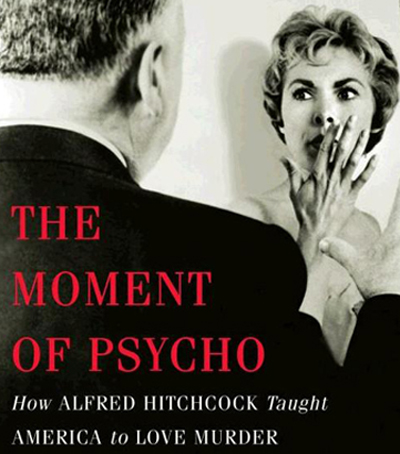
“The Moment of Psycho – How Alfred Hitchcock taught America to love Murder” by David Thomson

“The Moment of Psycho – How Alfred Hitchcock taught America to love Murder” by David Thomson  (2010) – 167 pages

When I first saw this book, I knew I had to read it and write about it, even though “Psycho” has never been anywhere near my favorite Alfred Hitchcock movie.  My three favorite Alfred Hitchcock movies are “Shadow of a Doubt”, “Strangers on a Train”, and “Rear Window”.  “Psycho” always seemed and still seems like lesser Hitchcock to me.  The first half hour of the movie where Janet Leigh steals the money from her office and takes off for northern California hardly holds my interest.  Then there is the gruesome stopover at the Bates Motel, the infamous shower scene, then the police trying to solve the case.   The movie seems disjointed since the main character and the entire focus of the first part of the movie is eliminated from the rest of the movie.  There really would be little reason to watch “Psycho” except for the performances of Janet Leigh and Anthony Perkins.

The main reason I wanted to read *The Moment of Psycho” was the author, David Thomson.  David Thomson is the author of “The New Biographical Dictionary of Film”.   I own this book, and it is my go-to book for the movies.  Like any good critic, Thomson is highly opinionated.  I don’t always agree with his opinions, but these opinions are always eloquently stated and solidly backed up so they are a pleasure to encounter.  In a concise and to-the-point style, he discusses the entire history of the movies. The book also contains a plentitude of detail information about actors’ and directors’ careers and the making of movies.  The Atlantic Monthly has called him “the greatest living film critic and historian”.     

“Psycho” is a prime example of a movie where Thomson and I disagree.  I think he attaches way too much importance to a movie that is little more than the first slasher movie.    After making several elegant thrillers such as “Vertigo” and “North by Northwest”, Hitchcock decided to make this cheap little movie using the same crew he used for his weekly TV shows.  The film was shot in black and white, and the whole movie was completed in three weeks.   Hitchcock’s studio, Paramount, was squeamish about distributing it, so Hitchcock bought over half the movie and distributed it himself. The movie was a popular success, and Hitchcock himself wound up making over six million dollars from the movie.  Over the years, the movie has also become somewhat of a critical success. 

In the first part of his book, Thomson devotes minute attention to each scene in the movie, explaining every camera shot in excruciating detail.  To someone like me who has always been rather bored especially by the first part of the movie, this was way too much.  Late in the book even David Thomson concedes his favorite Hitchcock film is not “Psycho” but “Rear Window”.

    “The extended significance of ‘the moment of Psycho’ is not just the significance of an isolated sensation but the spreading influence it exerted on other films, especially in the treatment of sex and violence, and the room it opened up for the ironic (or mocking) treatment of both.”

In a chapter called “Other Bodies in the Swamp”, Thomson discusses other movies that were affected by the legacy of “Psycho”.  Some of the movies mentioned are “Dr. No” (for its tongue-in-check attitudes toward sex and violence), “Whatever Happened to Baby Jane (for its macabre comedy), “Bonnie and Clyde” (for its association of comedy and murder), “Taxi Driver” (for its lone-wolf outsider), “Red Riding” (a TV movie that Thomson has praised to the hilt for its treatment of psychotic crime in a dysfunctional society), and of course the hundreds of slasher movies.

I’m going to watch “Psycho” again to see if I like it any better this time.