The Dark Stuff

“The Dark Stuff” by Nick Kent (1994) – 343 pages

“I read this nasty book with an unusual degree of interest.”
Iggy Pop, foreword to “The Dark Stuff”
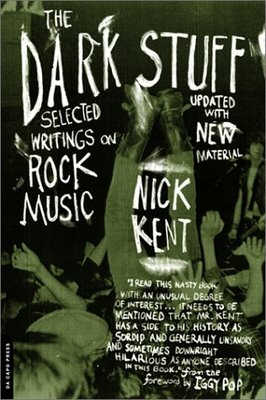
Published 17 years ago, “The Dark Stuff” contains exactly what the title indicates, the dark stuff about famous rock and roll stars and groups. Sections are devoted to the Rolling Stones, Guns’N’Roses, Roy Orbison, and Neil Young as well as several others, but it is that sunniest of United States groups, the Beach Boys, to which the most pages are devoted.

I imagine even today people still drive around in their cars during summer listening to ‘I Get Around’, “Help Me, Rhonda”, “Don’t Worry, Baby”, and “Good Vibrations” as well as many other Beach Boys songs. When the Beatles toured the United States to win over its teens, the Beach Boys went over to England and won over their teens. This set up a competition between the Beatles and the Beach Boys at least in Brian Wilson’s mind and spurred Wilson on to producing the most acclaimed of the Beach Boys’ albums, “Pet Sounds”. By this time Brian Wilson was no longer touring with the Beach Boys so he could spend full time in the studio. After “Pet Sounds”, Wilson decided to put together a full concept album called “Smile” to compete against the Beatles’ “Sergeant Pepper’s Lonely Hearts’ Club Band”. He spent more and more time isolated in his studio getting strung out and paranoid on LSD, hashish, and cocaine. The music he was writing now was not at all like the simple harmonies which he wrote that made the Beach Boys famous. Meanwhile Beach Boy Mike Love hated the new music because he couldn’t sing it, and the members of the group got into arguments and fights about the music.
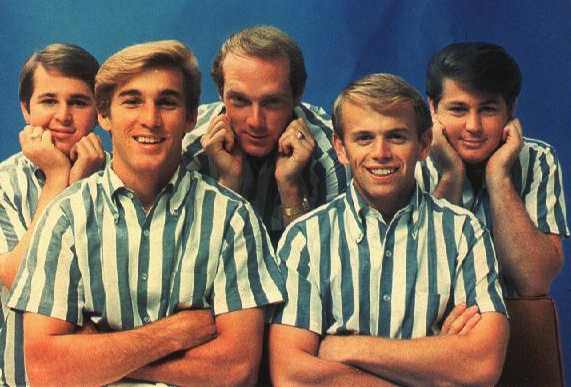
Meanwhile Brian’s brother Dennis, the Beach Boys’ drummer, was also getting heavy into drugs. He divorced his wife and started hanging out with this little ex-convict guy, Charlie Manson, who had a crowd of hippie girls hanging with him and doing his bidding. Soon the Manson family was living in Dennis Wilson’s house. Finally Dennis Wilson’s managers kicked the Manson family out of the house, and they went out to the Spahn ranch. Manson was also obsessed with the Beatles and had his own eerie interpretations of their lyrics. Manson had some musical talent, and Dennis Wilson arranged an audition for him with record producer Terry Melcher who happened to be Doris Day’s son. Melcher refused to sign him.

Then Dennis arranged an audition for Manson with Neil Young who was forming his own group then. Charlie Manson came over to Young’s place for the audition. Young said, “The girls were around, too, Linda (Kasabian) and the other one (Patricia Krenwinkel) – they were always there.  They’d be right there on the couch with me.”

What did Neil Young think of Charlie Manson’s music?

    “Listen, he was great. He was unreal. He was really, really good. Scary; Put him in a band that was as free as he was… see, that was the problem right there… But he was never gonna get that band, because there was something about him that stopped anybody from being around him too long…I was always thinking, ‘What’s he gonna do next? I’d better get out this guy’s way before he explodes’.  So I did.”

Young actually went to the head of Warner Brothers and suggested they sign him.

In August, 1969, Charlie Manson went back to what he thought was Terry Melcher’s house. Melcher wasn’t living there, but the pregnant actress Sharon Tate who had become famous in the movie “The Valley of the Dolls” was living there with her entourage. Manson sent three members of his family – Tex Watson, Patricia Krenwinkel, and Susan Atkins into the house, while Manson waited in the car and Linda Kasabian guarded the entrance. The ritualistic knife and gun murders were part of Manson’s plan for Helter Skelter which was related only in Manson’s mind to the Beatles song. Two nights later the Manson family murdered the LaBianca couple.

If this kind of nasty dark stuff interests you, you should read this book.
“Emily, Alone” by Stewart O’Nan – The Ordinary Made Extraordinary ?

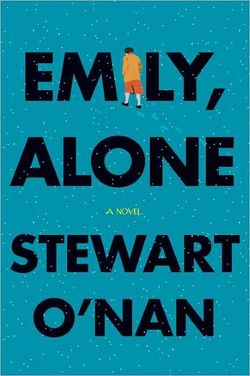
“Emily, Alone” by Stewart O’Nan (2011) – 255 pages

 Stewart O’Nan has chosen a quite wonderful quote to open “Emily, Alone”.
 

    “Could it be, even for older people, that this was life – startling, unexpected, unknown.”

                         Virginia Woolf

 Each time Stewart O’Nan writes a novel he must set up a dare to himself.  How can I make this very ordinary story that I’m going to tell seem extraordinary? 

 For the reader of O’Nan, his novels require a certain patience.  A reader’s first reaction is that this story is quite quotidian and mundane.  The first time I read one of his novels which was “A Prayer for Dying”, I had not developed the needed patience, and I rushed through it.  I didn’t read O’Nan for a long time after that.  Then last December almost by accident I picked up his short novel “Last Night at the Lobster”, because I wanted something with a Christmas theme to write about.  The novel had a quite ordinary story, the closing down of a Red Lobster at Christmastime told from its manager’s point of view.  This time I totally got into the spirit of this novel as my review shows.  The closing of this Red Lobster was an extremely significant event in the lives of all the people that worked there.  The novel showed all that went into making this ordinary restaurant run smoothly and all the manager had to consider to keep it running smoothly.  I was very impressed with “Last Night at the Lobster”. 

 “Emily, Alone” is a novel about the daily life of a widowed woman in her eighties living in her long-time home in Pittsburgh.  The novel is dedicated to his mother with the following words.


    “For my mother, who took me to the bookmobile.”

 Emily’s life after her husband died has ground down to only a few significant events, taking care of her dog Rufus, trips downtown with her quirky friend Arlene, visits from her children and grandchildren, her garden.    Emily’s true best friend Louise also died a few years ago, and Emily now has become friends with Arlene even though they aren’t entirely suited for each other.  Arlene’s driving is a constant worry, and Arlene has her own health problems. 

 If you are looking for a hugely exciting novel with thrilling events of derring-do and glamorous beautiful people, don’t go to “Emily, Alone”.  For Emily, an amazing act of derring-do is getting her husband’s old car out of the garage so she can drive it downtown and not have to ride with the erratic Arlene. 

 So what are the pleasures of “Emily, Alone”?  In the novel, you completely enter the mind of Emily.  These unremarkable events become vivid as Emily plans them and follows through with her plans.  Even in reduced circumstances daily life is still involving.  We keep going along.  In Emily’s words, a trip downtown to the annual Garden Show is as exciting as a car chase in other novels.  In “Emily, Alone”, Stewart O’Nan has complete empathy for his characters, and that makes all the difference.

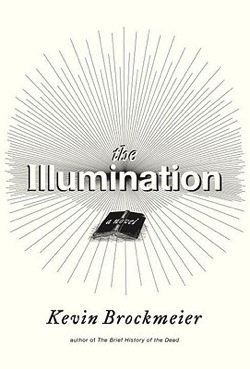
“The Illumination” by Kevin Brockmeier

“The Illumination” by Kevin Brockmeier (2011) – 257 pages

I read several strong positive reviews of “The Illumination” by Kevin Brockmeier including a glowing one in the Guardian Observer by Julie Myerson. That is why I decided to read this novel. But it was only after I read the novel that I read a review that described it as ‘painterly’

I generally do not care for ‘painterly’ novels. I’m much more an ‘aural’ reader rather than a ‘visual’ reader. I enjoy witty dialogue and sharp repartee and grow impatient with lengthy visual description. From the name, “The Illumination”, alone I should have realized this might not be the novel for me.

“The Illumination” is built around two main conceits. One conceit is that suddenly all human pain becomes illuminated and visible. Thus we get descriptions of different parts of people’s bodies lighting up as they are injured in accidents or by illness. Now I need to explain another quirky thing about me. I’m terribly medically squeamish. Sores are bad enough without them lighting up. I really don’t want painterly descriptions of wounds or sores.

The other conceit of the novel is this book of love notes that a husband wrote for his wife which is passed from person to person in the novel. The novel is actually made up of six separate unrelated stories about people who somehow came into possession of this book of love notes. Here is an example of these love notes.

“I love sensing you beside me on long road trips. I love the idea of growing old and forgetful together.  I love the way you shake your head when you yawn.  I love how skillfully you use a pair of scissors. I love watching TV and shelling sunflower seeds with you.   I love the mess I made of braiding your hair. I love your ten fingers and love your ten toes.”

Some people may think these love notes are cute, meaningful, and thoughtful. Other people may think like me that these love notes are cute and sappy.

One of the stories in “The Illumination” is about a young boy named Chuck Carter and about eleven pages into the story there is the following line.

“There were ten words in every sentence – yet another rule.”

The first thing I noticed was that all the sentences immediately after that line had exactly ten words in each sentence. From then on in this 40 page story, I stopped reading every few lines in order to count how many words there were in each sentence and every time it was exactly 10 words. This counting of words in each sentence became rather an annoyance. Up to the very end of the story every sentence had 10 words. Then I went back to the beginning of the story and found that every sentence in the entire story had exactly 10 words. This seemed to be a rather annoying gimmick.  Also I did not develop a strong interest in the characters in these six stories.   

As I mentioned before, “The Illumination” has received some glowing reviews. Thus you should read some of these glowing reviews before making your decision to read or not read this novel.

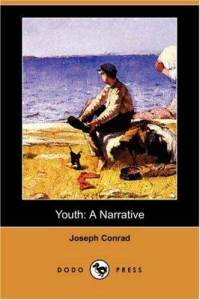
“Youth: A Narrative” by Joseph Conrad

“Youth: A Narrative”  by Joseph Conrad (1902) – 53 pages

 About 16 years ago, on the occasion of their 60th anniversary, Penguin Books published these small books in a series they called ‘Penguin 60s’ which they sold for 95 cents.  Most of the books were by famous authors, were no longer subject to copyright, and were less than 100 pages.   For some reason they did not sell very well, because I picked up about twenty of these on remainder for 50 cents each.  That probably gives you some indication of what a cheap guy I am, but I don’t care because these short books are by many of my favorite classic writers such as Collette, Oscar Wilde, Edith Wharton, Henry James, and Joseph Conrad.   The only thing I can’t figure out is why so many of them still sit here unread.

 “Youth: A Narrative” was the first tale in Joseph Conrad’s Marlow series.  Probably the most famous tale of the series is “Heart of Darkness” which is almost allegorical and has a deeper meaning than just another sea tale.  “Youth: A Narrative” has no deeper meaning than  three old men sitting around listening to a story told by another old man, Marlow, about his first sea voyage as a second mate when he was only twenty years old.  Most of the story takes place in the seas near Southeast Asia with the ultimate destination being Bangkok.  The ship is beset by storms, rammed by another ship, and engulfed in a major fire.  This exciting sea story is about being young and how youth doesn’t last. 

    “Oh, the glamour of youth! Oh the fire of it, more dazzling than the flames of the burning ship, throwing a major light on the wide earth, leaping audaciously to the sky, presently to be quenched by time, more cruel, more pitiless, more bitter than the sea – and like the flames of the burning ship surrounded by an impenetrable night.”

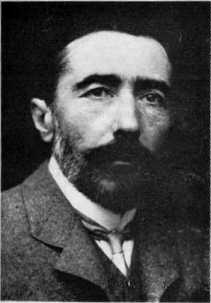
When it came to the sea, Joseph Conrad knew what he was talking about having served sixteen years in the British navy.  I originally learned that Conrad was Polish, but just while researching for this article I found out that he was actually born in the Ukraine.  I can’t remember being as exuberant in youth as Marlow was, but it does frame a good story.  The main thing about “Youth: A Narrative” is that the writing is impressive.    

    “I remember my youth and the feeling that will never come back any more – the feeling that I could last forever, outlast the sea, the earth, and all men, the deceitful feeling that lures us on to joys, to perils, to love, to vain effort, to death, the triumphant conviction of strength.”

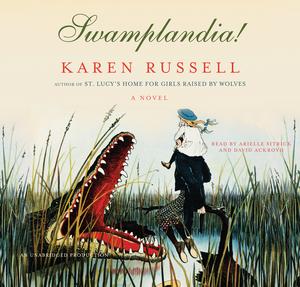
“Swamplandia!” by Karen Russell

“Swamplandia!”  by Karen Russell (2011) – 316 pages

 The BigTree family in “Swamplandia!” are not real Indians; they dress like Indians and have fake Indian names all for the show.  They are originally from southern Alabama.  About ten years ago, they bought this rundown shabby alligator farm in the Everglade swamps of southern Florida.  They opened it to the public and even put together a daily show for the people who came.  For quite a while they did all right and even had a souvenir store where they sold alligator caps, t-shirts, and toys. 

 There is Chief BigTree, the father.  There is the mother Lola BigTree who is billed as “the foremost lady alligator wrestler in the world”.  Then there are the three children, the 17-year old boy Kiwi,  the 16-year old girl Osceola, and the youngest daughter 13-year old Ava who tells much of the story.  Early on in the story, the mother Lola gets cancer, and one day when she is starting her alligator wrestling show, she dives into the black swamp pond and doesn’t comes up.  Ava wants to take over the alligator wrestling, since her mother had taught her the techniques.

 Soon a new more modern amusement park called “The World of Darkness” opens up on the mainland of Florida, and it quickly takes most of the customers away from Swamplandia!  Soon Kiwi leaves home and gets a job at The World of Darkness.

 To me the Swamplandia! story is irresistible.  Some of the reviews I’ve read refer to the story as magical realism.  I disagree.  I’m here to tell you that there really are woman alligator wrestlers, and there are families running alligator farms.  The daughter Osceola believes in ghosts, but there are a lot of real people who believe in ghosts.  There is talk of ghosts in the novel, but no actual ghosts. I would call Swamplandia “improbable but not impossible” realism.   Between that and magical realism, there is a world of difference.

 Karen Russell makes this story come alive and since she provides all the details, I had no trouble believing this story.  Each member of the family is skillfully depicted as a unique person with their own peculiarities.  So we have this colorful family living a very exciting life.  This is a spectacularly vivid debut novel by Russell. 

As I read “Swamplandia!”, I kept thinking about another writer I discovered almost 35 years ago, that world class juggernaut from Baltimore, Maryland, Anne Tyler.  What do Karen Russell and Anne Tyler have in common?  They both write about strange oddball families and they seemingly effortlessly make each member of these families come alive.  Both of these writers got published at a young age. Tyler had her first novel published at age 23 which is actually younger than Russell who got her first book published at age 26. 

 I remember reading the reviews of Anne Tyler back then, and her writing stunned the critics just like Karen Russell’s writing does today.  First I read Tyler’s “Celestial Navigation” and “Searching for Caleb”, two of her best, and I knew I had to go back and read her early novels.  I read Tyler’s early “A Slipping-Down Life” which was kind of rough and jagged, but it was powerful.  One of the many pitfalls for Karen Russell to avoid is to not become too smooth and polished.  A good story needs some rough edges. 

 There are some differences between Tyler and Russell. Tyler has written only a few short stories, not enough to fill a book, while Russell has already written a highly regarded book of stories, “St. Lucy’s Home for Girls Raised by Wolves”.  There are scenes in “Swamplandia” that are darker and more troubling than anything Anne Tyler has ever written.

 In “Swamplandia!”, Karen Russell has written a fully imagined novel that will last.

Cataract, Wisconsin

I spent my early years on our family dairy farm three miles from the unincorporated village of Cataract in western Wisconsin (See picture). The farm was small enough so that our family could run it by ourselves. Next to our farm my uncle had a bigger farm, and he had two hired men living at his house who worked on his farm. These hired farm men were usually single, and many of them had a drinking problem.

One of my uncle’s hired men who worked there a long time was named Harry. If there is one word that described Harry, it is the word ‘ornery’. If anyone teased him or took his stuff, he would get angry and fly off the handle. So of course some of the jokers among the neighborhood farmers and farm boys picked on him mercilessly.

Every summer we had the oats ‘thrashing’; I suppose more refined places called it ‘threshing’. This required a large crew, so all the neighborhood farmers worked together and harvested each farm consecutively.

This was the great time of year when the neighbors got together, and the farm wives would prepare these wonderful meals for the farmers to eat between working. Thrashing was hard work and after the huge meal, the farmers would sit out on the lawn under a tree for a few minutes before resuming the job. Harry would be sitting out there too, and pretty soon one of the jokers would grab the cap off of his head. Harry would get up, start swearing, and chase after the guy who had the cap, The guy with the cap would then toss it to another one of the jokers, and Harry would go chasing after that guy. So the cap would get passed around, and Harry would get madder and madder. Harry was a good worker when he was sober, and he always had his pitchfork with him, so when he got mad enough he’d start waving the pitchfork around. I don’t believe anyone ever got hurt by that pitchfork, but the way Harry was swinging it around, it was a dangerous weapon.

Even when we got out in the fields, the teasing of Harry didn’t stop. Each wagon that went out to pick up the oats bundles had a crew of four people. There would be two pitchers who pitched the bundles on to the wagon, one loader who arranged the bundles on the wagon, and the tractor driver who was usually a nine or ten year old boy. Pitching was the hardest job, especially since it was always late July or early August, and often the temperature was approaching 100 degrees, and there were no trees or shade out in the fields. The hired men were always pitchers, because they got paid to work hard. The loader had it a little easier arranging the bundles, but this was more exacting work, and usually the farm owners themselves would be the loaders.

Sometimes Harry would be out there pitching bundles, and the joker loading would start throwing the bundles back down on top of him. Harry would throw the bundle up again, and the loader would throw it back down again. By this time Harry would be so angry, he would be threatening the loader with his pitchfork.

Also in summer, the Cataract Rod and Gun Club had their annual get-together. There would be shooting target ranges, pick-up softball games, pony rides for the little kids, a beer tent, and lots of food.

Our man Harry always took part in one event there to get a little extra beer money. They would hang up this large canvas with a hole in the middle like a movie screen. Harry would stick his head through that hole. Then people attending would buy either raw eggs or ripe tomatoes for a nickel and throw them at Harry’s head. The throwers would have to stand behind a line that was at least twenty five feet away from the canvas, so often the raw egg or ripe tomato would miss and just smash on the canvas, But every once in a while there would be a good throw, and Harry would get splattered in the face or head by the raw egg or tomato. Some of the more artful throwers would aim just above Harry’s head, so the egg or tomato stuff would drip down on Harry’s head and neck. I can’t remember if a prize were given out for a direct hit, or if the pride in accomplishment was enough of a prize.

By the time I was eight or nine the Cataract Rod and Gun Club stopped doing this event out of human considerations, or maybe it was because Harry wouldn’t do it anymore, and they couldn’t find anybody else who would.

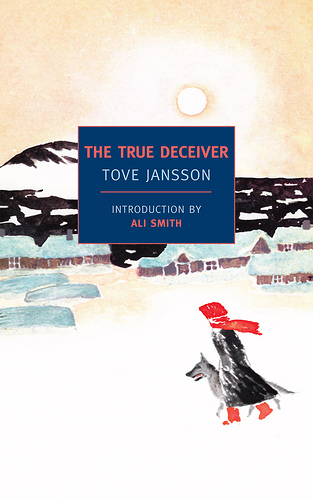
“The True Deceiver” by Tove Jansson

“The True Deceiver” by Tove Jansson (1982) – 181 pages     Translated by Thomas Teal

 I checked the list of Finnish writers in Wikipedia and found out that “The True Deceiver” is the first novel and Tove Jansson the first novelist from Finland I have read.

Tove Jansson was mainly a children’s book writer, famous for her MoominTroll fantasy series, until she took up writing novels for adults when she was in her sixties.   The short sentences in “The True Deceiver” have that simple clear quality of writing for children.  However it would be a mistake to consider this novel otherwise at all related to children’s fiction.  This is a menacing deep psychologically complex novel for adults.    The writing here is like a dark cold winter morning in a Finland village.

This story is about two women who come into conflict.  One of the women is Anna who is a best-selling children’s author.  She also paints the pictures which illustrate her books.  She has many drawings of the forest floor to which she always adds a lot of cute bunny rabbits which the little children especially adore.   The other woman, Katri, is a menacing figure with yellow eyes.  The people in the village say she doesn’t care about anything except numbers, her slow younger brother Mats, and her dog which also has yellow eyes.

    “Her (Katri’s) perpetual distrust, so easily roused, could cause her eyes to open in a sudden straight stare, and in a certain light they were actually yellow and made people very uneasy.”

 Katri, uninvited, insinuates herself into Anna’s house and life.  Soon she is doing the bookkeeping for Anna who, being the artistic type, is hopeless about finances.  Katri points out how Anna is being cheated by the woman who cleans her house, the storekeeper, and her publishing company.  Soon Katri stages a fake break-in of Anna’s house which opens the door for Katri and Mats to move in.

 So far this novel seems like a simple battle between good and evil, but we are just getting started.  Remember that even though Anna the artist has next to no interest in money she has a goodly amount of it through her books, while the coldly practical Katri has no money saved up.  Also remember that Katri is strictly honest in her accounting.  At this point we still do not know who the true deceiver is.  The simple language and dramatic events give this story the power of a mysterious allegory.  Even after completing the book, I still have unanswered questions about what is going on between these two women, and that is a good thing.

“The True Deceiver”  is very easy to read, and you will think about this story for a long time after finishing it.  This book is highly recommended by me.

    .   .            .

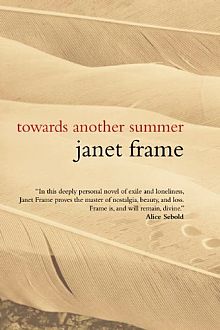
“Towards Another Summer” by Janet Frame

“Towards Another Summer” by Janet Frame (2009) – 213 pages

a

“Grace was used to not being visited. There was always a flurry of it’s great to know you, then disappointment that the woman who wrote books had difficulty in speaking one coherent sentence, then silence, silence.”

a

The same qualities that made Janet Frame a remarkable writer also made it painful for her to live everyday life.  Her relentless objective honesty about herself, her flights of imagination, her obsessive wonder and worry about what others thought about her, and her struggle to reach a visceral depth that was almost beyond words wore her out, especially around others.  “It needed courage to go among people, even for five or ten minutes.”

“Towards Another Summer” was written in the early 1960s, but Frame thought it was too personal to publish during her lifetime.  It was finally published in 2009, five years after her death.

This novel is so personal, a reader can’t help thinking it is about Janet Frame herself rather than Grace Cleave, the main character in the novel.  Grace Cleave is a quite famous novelist living by herself in a small apartment in London having moved from New Zealand.  In one scene the Overseas Service of the BBC radio station asks her for an interview.  The producer and interviewer are expecting an eloquent, elegant young woman novelist.  Instead Grace Cleave with her frizzy too-curly hair shows up.

The producer was crisp, the interviewer efficient. Both had notes. Grace held only a glass of water which she twirled in her hand, answering or not answering the questions, breaking off in mid-sentence, her mind blank. She sighed, repeated Sorry, sorry in a whisper, shaking her head.“—I don’t know, I don’t know. What are my books about? How should I be able to tell? My style? What does it matter?” The interview is finished at last. Humiliated, inarticulate, Grace sat twirling her glass of water. Why couldn’t she speak? Why couldn’t she speak?

I love these short sentences that express so much pain.

The main story of the novel is about Grace Cleave going on a weekend trip to visit the Thirkettle family, husband and wife and two children.  She doesn’t want to go, but she can’t get out of it.  Nothing important happens, but just being around people is a high-wire act for Grace.  She constantly watches every word she says.  Children are almost too much for her.  Every chance she gets she retreats to her room.  In her room she escapes to her memories of her early years in New Zealand.  For me these reminiscences of New Zealand are the weakest part of the novel.   It’s probably somewhat brutish of me, but the parts of the novel that most interested me were her interactions with other people, painful as they are.

So far I’ve read three books by Janet Frame including her autobiography “An Angel at my Table” and another novel, “Faces in the Water”.  I consider “”Towards Another Summer” a worthy addition to the Janet Frame library, because it is so personal, honest, and painful.

To find out more about Janet Frame, go to the dovegreyreader interviews with her niece Pamela Gordon at dovegreyreader asks…Janet Frame  and  dovegreyreader asks…Janet Frame Some More  and dovegreyreader asks…Janet Frame Even More   and Mona Minim and the Smell of the Sun.

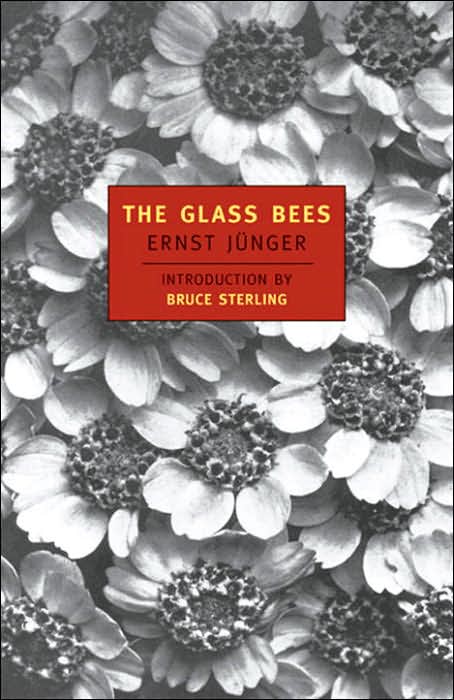
“The Glass Bees” by Ernst Junger

“The Glass Bees”  by Ernst Junger (1957) – 209 pages
 

    “He (Ernst Junger) was a war hero, Weimar dandy, fiery nationalist, but not a Nazi, and loved by the French; he was a hermit, a recluse, an LSD tripper, world traveler, insect collector, controversial Goethe Prize winner, he was loved and hated, an Olympian sage, a witness of the century.”

         “A Dubious Past: Ernst Junger and the Politics of Nazism”  by Eliot Y. Neaman

The life of Ernst Junger is a mass of contradictions.  His politics were extreme right-wing, and he was anti-Semitic.  Yet he severely criticized the Nazis and was banned by the Nazis from writing.  Nazi thugs beat unconscious his former lover Else Lasker-Schüler, because she won a literary award in 1932.  In Paris during World War II he hung around with artists including Pablo Picasso.  Later he experimented with LSD and other drugs.      

“The Glass Bees” by Junger is about a battle-hardened veteran of World War I, Captain Richard, applying for work as a security officer at the factory and mansion of the technical genius and entrepreneur Zapparoni.  Zapparoni’s specialty is electronics.  Since this novel takes place in the indefinite future, it can be considered an allegory and science fiction.  While many science fiction writers of that era wrote of human-size robots, Junger was prescient in the realization that the future belonged to miniaturization.  “In the beginning, probably it was less difficult to create a whale than a hummingbird.”   What is the Internet but billions and billions of tiny circuits?  In the novel, the devices of Zapparoni are thousands of electronic circuits which fly around forming and separating as needed, and they look like glass bees.   Junger was also prescient to have Zapparoni work in the entertainment industry. 

    “Zapparoni created novels which could not only be read, heard, and seen, but could be entered as one enters a garden.”

Sounds like a video game to me.  

In this novel, the digressions are more interesting than the main story.  This is a good thing, because the digressions make up at least two thirds of the novel.  Captain Richard is constantly reminiscing about his schooling, his military service, and people he had met early in his career.  He has good memories of his time in the cavalry when the soldiers rode real horses and you got to look your enemy in the eye before you shot him.  He is very negative about modern warfare where tanks replaced horses, and you hardly saw what you were shooting at.  He is worried that he won’t get the security job with Zapparoni, because of his ‘defeatist’ attitude, which showed itself when he got disgusted when he saw a group of thugs beat up a lone man.  There is much wisdom in these digressions about the tactics for living that Captain Richard has learned along the way.

The set up for the main story here is well done, but the main story itself is not very interesting.  The main story is Captain Richard’s interview with Zapparoni and whether or not he gets the job.  Junger tells but does not show what happens, and the story did not hold my interest.  Some of the digressions from the main story go on for a dozen pages or more, and by the time we got back to the story, I’d lost interest.  I cannot recommend this book.
However some of the digressions are brilliant. 
 

    “Human perfection and technical perfection are incompatible. If we strive for one, we must sacrifice the other: there is, in any case, a parting of the ways. Whoever realizes this will do cleaner work one way or the other.
    Technical perfection strives towards the calculable, human perfection towards the incalculable. Perfect mechanisms – around which, therefore, stands an uncanny but fascinating halo of brilliance – evoke both fear and Titanic pride which will be humbled not by insight but only by catastrophe.
    The fear and enthusiasm we experience at the sight of perfect mechanisms are in exact contrast to the happiness we feel at the sight of a perfect work of art. We sense an attack on our integrity, on our wholeness. That arms and legs are lost or harmed is not yet the greatest danger.”

I would have preferred this book more without the attempt at a story which was less than compelling.

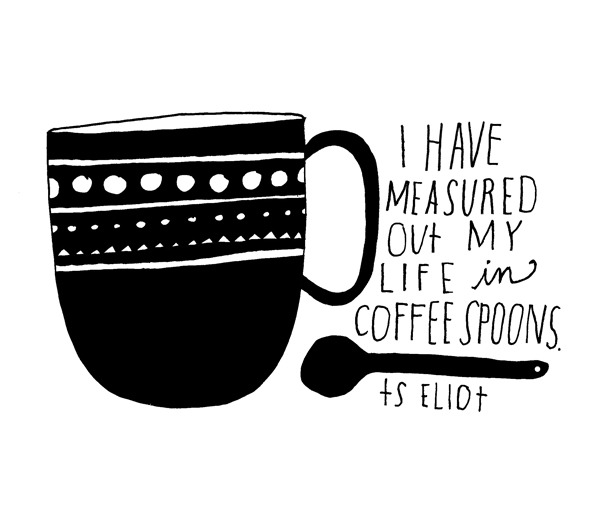
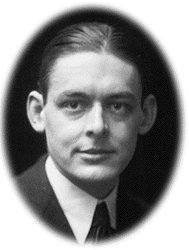
“The Love Song of J. Alfred Prufrock” – Do I Dare Disturb the Universe?

“The Love Song of J. Alfred Prufrock” by T’S Eliot (1915) – 6 pages

Let us go then, you and I,
When the evening is spread out against the sky
Like a patient etherized on a table.

K426When I was in college, “The Waste Land”, that poem with the opening line ‘April is the cruelest month…”, was considered T. S. Eliot’s greatest poem. Today, I think “The Love Song of J. Alfred Prufrock” has surpassed “The Waste Land” in critical acclaim. Since “The Love Song of J. Alfred Prufrock” is my favorite poem of all time, I may just be projecting my own idea on to the world.

Where “The Waste Land” is deep and serious, “The Love Song of J. Alfred Prufrock” is deep and playful. Prufrock is a fellow, let’s say in his mid-thirties, walking along the city streets on his way to a party. He is single, but he is considering asking a woman who will be at the party to marry him. That is the overwhelming question.

In the room women come and go
Talking of Michelangelo
And indeed there will be time
To wonder “Do I dare” and “Do I dare”
Time to turn back and descend the stair,
With a bald spot in the middle of my hair –
(They will say, ‘How his hair is growing thin’)

Prufrock is picturing the party ahead of him; these self-assured women are discussing art while he is trying to build up his courage to ask this one woman to marry him. He gets self-conscious about his bald spot, and considers turning around and not going to the party. The world is going along just fine; how presumptuous of him to upset everything by asking this woman to marry him, and what if she should say ‘No’ ? “Do I dare disturb the Universe?”

Should I, after tea and cake and ices,
Have the strength to force the moment to its crisis?

He ends up not asking the overwhelming question, doesn’t even go to the party.

And would it have been worth it after all,
After the cups, the marmalade, the tea,
Among the porcelain, among some talk of you and me,
Would have it been worth while,
To have bitten the matter off with a smile

He walks wearily back the way he came.

I grow old…I grow old…
I shall wear the bottoms of my trousers rolled.

I have heard the mermaids singing, each to each

I do not think they will sing for me.

“The Love Song of J. Alfred Prufrock”, written almost a hundred years ago, is often considered the first modernist poem. Some of the techniques used in the poem were not used in poetry before, but the poem is also about the modern man. Whereas men in the past acted without hesitation, the modern man over-thinks the situation and may end up not doing anything at all

At one point in my life I identified strongly with J. Alfred Prufrock. I’m not at all sure if the post-modern men of today are still self-conscious and indecisive like J. Alfred Prufrock.

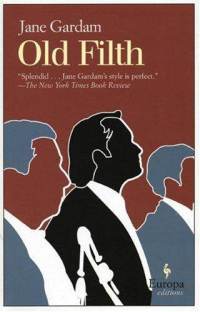
“Old Filth” by Jane Gardam

“Old Filth” by Jane Gardam  (2004) – 290 pages

 In this novel FILTH is an acronym for ‘Failed In London Try Hong Kong’.  “Old Filth” is the nickname for Sir Edward Feathers who was born in Malaya and later spent most of his work career as a respected lawyer and judge in Hong Kong.  One might say that “Old Filth” by Jane Gardam is the last British colonial novel.   This deliberately old-fashioned novel is still quite popular seven years after its publication.  

The novel is Sir Edward’s life story starting with his birth to a mother who dies three days later all the way up to the time he becomes a widower in his eighties living in London.  After serving in Hong Kong, Sir Edward and his wife moved back to London only to find his bitter enemy Veneering moving in next door.  It turns out that Veneering has been the lover of Sir Edward’s wife and has given her an expensive set of pearls.  One of the blurbs on the back cover from The Times says “Jane Gardam’s beautiful, vivid, defiantly funny novel”.  There are parts of the story that are beautiful and vivid, but somehow I mostly failed to catch the humor in this novel.  I expect it is my fault, especially because for me Graham Greene’s colonial novels are laugh riots while others see no humor at all in them.   I’m just not that tuned into colonial British upper class life as it is portrayed in “Old Filth” where most of the characters have a stiff upper lip.   I suppose if I were British I could better appreciate the humor in this novel. 

One feature of this novel that I do appreciate is that it does not attempt to tell the whole story of Sir Edward Feathers; instead it darts backward and forward presenting scenes the author considers important for the story.  Thus all the years in Hong Kong are hardly mentioned at all while his years as a child and young man are examined closely. 

Along the way we meet many quirky characters, not least of all Sir Edward Feathers himself.  Nearly everyone in the novel is odd and either hateful or endearing.

OK, this is the novel that all of the reviews without exception praised lavishly, and it is generally regarded as Jane Gardam’s masterpiece, yet my reaction toward the book was only lukewarm.  I just can’t wax passionate about this book one way or the other. This was bound to happen sooner or later.  Not every book is for every person, and this one apparently wasn’t for me.  Maybe I approached the book with the wrong attitude or read it under the wrong circumstances.  You should not take my words about this novel as a final verdict, because the rest of the world apparently loves the book.

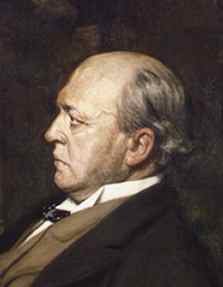
“The Old Maid” by Edith Wharton vs. “The Real Thing” by Henry James

“The Old Maid” by Edith Wharton  (1924) – 96 pages

“The Real Thing” by Henry James (1892) – 40 pages

 I’m doing so poorly in the Tournament of Books 2011 shadow contest at Hungry Like the Woolf, that to exact my revenge I’m writing up my own judge’s report facing off two books against each other. In this case, the two novellas in question were re-published together in one volume called “Inventing the Real”. The two novellas are “The Old Maid” by Edith Wharton and “The Real Thing” by Henry James.

At first glance this would appear to be no contest for me since Edith Wharton is one of my favorite novelists while Henry James’ novels, especially his later novels, have seemed stuffy, snobbish, and peopled with characters with over-refined sensibilities to the point where they are nearly incomprehensible. I’ve always been an admirer of T’S. Eliot’s quip that Henry James “had a mind so fine no idea could violate it.”

First I will discuss Wharton’s “The Old Maid”. To some extent this novella is hampered by the out-moded concept of its title, the old maid, even though Wharton is using the term ironically. I doubt single women today look upon themselves as old maids. The woman who is called ‘the old maid’ in Wharton’s novella actually has a daughter, a daughter who cannot be acknowledged in public. Even in the highest reaches of New York society there were illegitimate children. Her married friend, the narrator of the story, agrees to bring up the child as her own daughter. In order to see her daughter frequently, the real mother plays the role of the maiden aunt who visits often.

Once I got past the construct of the old maid, I found this story had all of the elements of Edith Wharton‘s writing that I’ve come to expect and admire. There is the dramatic irony of the situation which Wharton treats with discerning empathy. As always Edith Wharton captures upper class society with elegance and precision, not just the everyday events but also the crises. While reading Edith Wharton even upper class life makes sense. I guarantee that the last sentence of “The Old Maid” will bring a tear to your eye.

In “The Real Thing” by Henry James, the main protagonist and narrator is a commercial photographer. This protagonist is fine with me, a down-to-earth guy who works for a living, not some over-refined society leech. This photographer takes pictures for magazine and newspaper advertisements. He usually hires poor unemployed actors and actresses who model whatever roles are need for the advertisement. Then he meets this middle-aged couple who want to work for him. This couple looks like the perfect upper middle-class couple required by so many advertisements. They are the real thing, not actors.

I was favorably impressed with “The Real Thing”. The narrator is very matter-of-fact relating his story. There is nothing pompous, abstruse, or obtuse about him. The characters in this novella are portrayed with psychological acuteness and all are portrayed sympathetically. This story reminded me of the early Henry James novels I’ve read and enjoyed such as “Washington Square”, and “The Spoils of Poynton”. One interesting side note to “The Real Thing” is that the idea of the story was suggested to Henry James by George du Maurier, a novelist himself and father of Daphne du Maurier.

So which novella is the winner of this competition? The decision was very close for me as both stories were strong examples of their creators’ talents. In the end, the winner is “The Old Maid”. That last sentence really got to me.

 WINNER

The Old Maid

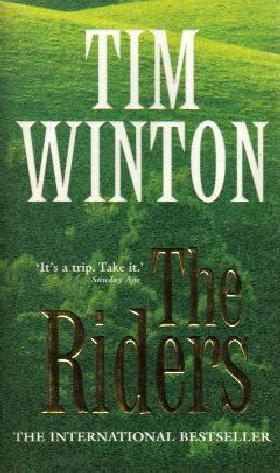
“The Riders” by Tim Winton

“The Riders” by Tim Winton (1994) – 377 pages

 To say I was disappointed with “The Riders” would be an understatement. Only a month ago, I finished reading “cloudstreet”, the Australian story of the Pickle and Lamb families, which I consider one of the finest novels I’ve read in recent years. I was expecting much more from “The Riders” than it delivered. Let me itemize the reasons for my disappointment.

1. Tim Winton as a writer can do charm and / or cuteness 25 hours a day. In “cloudstreet” the charm is somewhat evenly spread out around the dozen or so main characters of the novel. In “The Riders” all the charm is mostly centered on the one character Scully. Scully suffers from a severe charm overload. I would have preferred a real human being, obnoxious and annoying but with depth.

2. “cloudstreet” takes place in Australia, a country Winton clearly loves, faults and all. “The Riders” takes place in Ireland, Greece, Rome, Paris, and Amsterdam. Scully in “The Riders” has a nostalgia for Ireland, considers himself ‘desert Irish’ being from Australia, but the Ireland here is too cute for its own good. As for the other places, Scully feels only contempt for these European spots, and his contempt shows in how shabby his description of these places is. This is definitely not a travelogue. Since he finds these places unattractive, they are not described in a compelling way.

3. As mentioned before, “cloudstreet” has about a dozen main characters whose stories are interleaved. “The Rider” has only Scully and his almost speechless daughter, Billie, who did not sustain my interest.

4. All of the characters Scully and Billie meet on their European trip are unlikeable. Their European trip is about two-thirds of the novel. So with unlikeable characters and mostly shabby scenery, this trip is a long slog. I guess we’re supposed to like Scully enough to make up for the lack of other likeable characters, but I didn’t by a long shot.

5. One of the main characters in the “The Riders” is the missing wife and mother Jennifer whom husband and daughter are searching for, but we never get any details about what she really is like until nearly the last scene. About all we get from Scully up until then is how good looking she is. Scully has no insight into her whatsoever even though they have been married at least seven years.

6. Can someone explain the metaphor or imagery of the riders on white horses?

Maybe I read these two Tim Winton novels too close together. It’s time for me to take a vacation from Tim Winton novels.

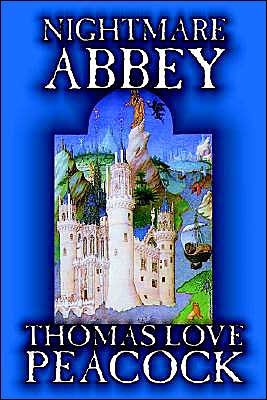
“Nightmare Abbey” by Thomas Love Peacock

“Nightmare Abbey” by Thomas Love Peacock (1818) – 109 pages

Imagine a gathering of some of the most poetic and philosophical minds in England for a weekend in 1818.  There’s Samuel Taylor Coleridge (renamed Flosky), there’s Lord Byron (renamed Cypress) there’s Percy Blythe Shelley (renamed Scythrop), there’s Thomas Love Peacock (renamed Hilary).  Also at the gathering are a leading scientist (renamed Asturias), a religious leader (renamed Larynx), a philosopher (renamed Toobad), an exhausted intellectual (renamed Listless), and Shelley’s father (renamed Glowry) as well as a niece of Hilary (renamed Marionetta O’Carroll) and a daughter of Toobad (renamed Celinda, aka Stella).  Then imagine that Thomas Love Peacock wrote an affectionate satire of the gathering.  He actually did write this satire, and it is called “Nightmare Abbey”.  All of the main characters were based on real people, but some of the real people are no longer famous. 

 The gathering takes place at the Glowry (Shelley) mansion which is called Nightmare Abbey.  The drink of choice is Madiera wine, a drink they can all be enthusiastic about.  The conversation is about all the significant ideas, books, and events of the time including Kantian metaphysics, Manichaean philosophy, transcendentalism, “The Sorrows of Young Werther” by Goethe, and the French Revolution.  The Romantic era was a somewhat gloomy time for intellectual thought, especially after France killed one tyrant Louis XVI only to replace him with worse tyrants Robespierre and Napoleon.  The optimism of the Classical era was gone.

    “A Frenchman is born in harness, ready saddled, bitted, and bridled for any tyrant to ride. He will fawn under his rider one moment, and throw him and kick him to death the next; but another adventurer springs on his back, and by dint of whip and spur on he goes as before. We may, without much vanity, hope better of ourselves.” – Scythrop

The youngest man at this party is Scythrop (Percy Blythe Shelley), and much of “Nightmare Abbey” is devoted to his romantic attachments, plural.  Marionetta plays him like a harpsichord, showing an inverse amount of interest in him as he is showing in her.  Thus when he is warm toward her, she is cool, and when he is cool toward her she is warm.  Then there is Stella who is passionate and rich and on vacation from her education at a German convent.

Meanwhile the scientist Asturias is on the hunt for a mermaid which at one point he spots in the mansion’s moat.

“Nightmare Abbey” resembles a period play with its set pieces and highly-worked dialogue more than a naturalistic novel.  One gets the sense that Peacock is being a little hard on especially the Coleridge character (Flosky) who can take any clear idea and cloud it with too many words.  Flosky “never gave a plain answer to a question in my life.”  But Peacock’s satire is all in good fun, and I doubt if any of the real people who were at this gathering were offended. 

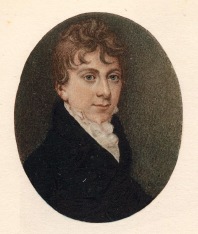
Thomas Love Peacock

“Nightmare Abbey” is filled with ideas, interesting characters, and parodic situations.  It is a veritable grab-bag of everything that was going on in intellectual circles around 1818.  I read this book once and listened to it on audio twice in order to fully appeciate it.  This novel is definitely not for everyone because there are tons of obscure references, but I enjoyed reading a novel that has too much going on rather than too little. It’s really not necessary to understand all of the references to appreciate this novel. The Romantic era in England was quite unknown to me, and this novel was a humorous and likeable introduction to this era. 

In case you are wondering, Jane Austen was still mostly unknown at this time, and there is no evidence that Thomas Love Peacock had heard of her. 

“Nightmare Abbey” is available free in MP3 audiobook form at Books Should be Free.  “Nightmare Abbey” is ranked number 11 on The Observer’s list of the “Top One Hundred Novels of all Time”.

 .

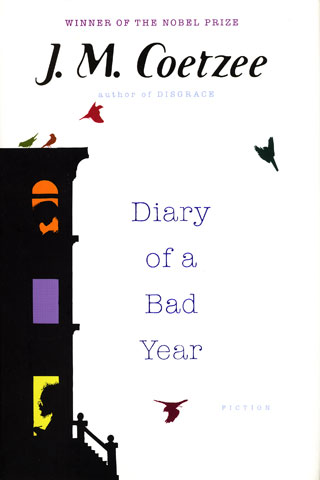
“Diary of a Bad Year” by J. M. Coetzee

Diary of a Bad Year” by J. M. Coetzee  (2007) – 227 pages

What to make of this novel?  It is surely unique in its design.  Each page is divided into three parts. The top third of each page is given over to opinions that the main character, affectionately named Senor C by his typist Anya, is writing as part of a compilation book for a German publisher.  The middle part of each page is Senor C’ thinking about Anya.  The bottom part of each page has Anya’s thoughts about Senor C and about her boyfriend Alan.    So if you read this book the traditional way, page by page, there is no continuity whatsoever.

I will discuss each of the three parts of this novel separately.  First will be the top of the page and the opinions of Senor C (Coetzee?).  “Diary of a Bad Year” was published in 2007, and thus many of the strong opinions are about “the war on terror”.  “To the bullying, authoritarian, militaristic strand in western political life,” he writes, “the bogeyman” Osama bin Laden “has been a gift from the gods”.  I found myself largely in agreement with his opinions, but Senor C is a very serious fellow.  I found the opinions somewhat lacking in humor or originality.  I would have struggled with this book if it were entirely these.  I was expecting fiction.

The second part of each page is Senor C’s thinking regarding Anya.  He first sees her in the laundry room where he first notices her short skirt and “a derriere so near to perfect to be angelic”, and he convinces her to become his typist.  If you’ve read “Summertime”, you will know that J. M. Coetzee is merciless when it comes to making fun of himself   I enjoy this humorous aspect of his writing; it lightens things up.

The bottom part of each page is Anya’s.  She knows what effect “my delicious behind” has on Senor C.  It is her boyfriend Alan who has all these schemes to get Senor C’s money either by suing him or by defrauding him.  Senor C, being an intellectual, pays scant attention to his finances, and Alan sees a perfect opportunity. 

Anya does have an effect on the opinions Senor C is writing.  The book starts with all of these strong strident opinions of Senor C, but they change to softer opinions as the book progresses.

Back to the original question, what to make of this book.  I must say I much preferred “Summertime” which is my favorite Coetzee book so far.  “Diary of a Bad Year” certainly gets bonus points for its original design, but it did make for a severely disjointed book. The expressed opinions of Senor C did not completely intrigue me, and I thought the fictional story of Senor C, his typist Anya, and her boyfriend Alan was somewhat routine also. .
The Veterinarian from Hell

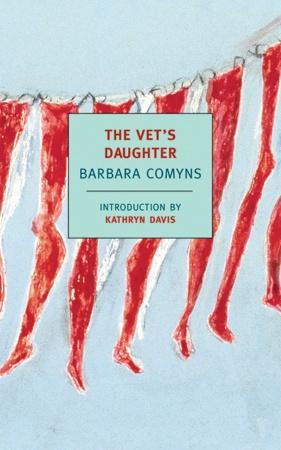
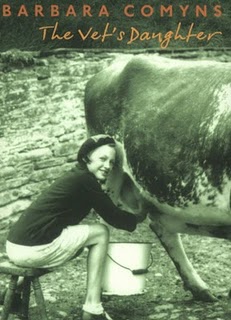
The Vet’s Daughter” by Barbara Comyns   (1959) – 133 pages

This year looks like it will be the year of the re-discovery of Barbara Comyns, an English writer who died about 22 years ago.  Interest in Barbara Comyns has been mounting over the past few years, and this year there have been several postings on the blogs regarding her novels, and only two weeks ago, in The Observer Rachel Cooke named “The Vet’s Daughter” one of the 10 Best Neglected Literary Classics.

I had not heard of Barbara Comyns until January of this year, and after reading this odd little novel, all I can say is it is about time Comyns became famous.   This novel is wonderful and horrible at the same time.   The suspense is intense and excruciating.     If you are looking for a comforting sentimental novel about English town life, this is not the novel for you.    

Never has family evil been portrayed with such vivid devastating honesty as when daughter Alice Rowlands talks about her father, the veterinarian.  She implies that he became a veterinarian because he liked torturing animals. After he settles down to family life, he only gets worse.  Imagine a daughter having to worry that her father will kick her in the face and break her teeth the same way he did to his wife, her mother.

“The Vet’s Daughter” does have some respites from horror, times Alice spends with her mother and other good people when her father is not around.  These times away from her father show in contrast how good life could be for Alice.  Alice can appreciate the good side of life in spite of her miserable home life.      

 This novel could have been an incredible horror movie for Alfred Hitchcock, although the art of special effects may not have advanced enough at that point to adequately portray the story.   It would make an excellent movie today. 

 I would describe Barbara Comyns as a primitive.  Graham Greene, in praising her, spoke of her “strange offbeat talent”, her “innocent eye which observes with childlike simplicity the most fantastic or the most ominous circumstances”.  This novel is about as far as you can get from the well-wrought intellectual writing of, say, an A.S. Byatt.   There is room for both kinds of writing. Comyns captures nature and life in this town with an intensity and simplicity that is missing from more intellectual writers. 

Somehow it feels like I’ve spent much of my reading life discovering under-appreciated English woman authors.  Add Barbara Comyns to the list.  “The Vet’s Daughter” is a must-read.

A Close Analysis of William Shakespeare’s Sonnet #129

                         Sonnet #129

The expense of spirit in a waste of shame

Is lust in action, and till action, lust

Is perjured, murderous, bloody, full of blame,

Savage, extreme, rude, cruel, not to trust,

Enjoyed no sooner but despised straight;

Past reason hunted, and no sooner had,

Past reason  hated as a swallowed bait,

On purpose laid to make the taker mad-

Mad in pursuit and possession so,

Had, having, and in quest to have, extreme;

A bliss in proof, and proved, a very woe,

Before a joy proposed; behind a dream.

 All this the world well knows, yet none knows well

To shun the heaven that leads men to this hell.

————————————————————————-

There were 154 published Shakespeare sonnets.  Of these, the first 126 are addressed to a young man, the Fair Youth.  The last 28 are addressed to the Dark Lady.  Sonnet #129 is the third sonnet addressed to the Dark Lady.  Sonnet #127 is an introduction to the Dark Lady, and Sonnet #128 is a seductive verse addressed to her.  By sonnet #129, apparently the seduction was successful, because he feels terrible guilt and shame.

The sonnet starts with a negative definition of lust, “The expense of spirit in a waste of shame is lust in action.”  He then lists all of the destructive qualities of lust. “Lust is perjur’d, murderous, bloody, full of blame, savage, extreme, rude, cruel, not to trust, enjoy’d no sooner but despised straight.”   Decrying bad old lust, the man is on a full-scale guilt trip.

Up until this point lust is portrayed as purely evil.  In the next lines, his attitude toward lust is tempered somewhat because of its conclusion.   Lust drives the taker mad, past reason, in pursuit and possession of its quarry, but can lust be evil when it leads to bliss?

The poem has an upbeat and somewhat humorous and ironic ending concluding with the following two-lines.

      “All this the world well knows, yet none knows well
      To shun the heaven that leads men to this hell.”

The world well knows that all the above regarding lust is true, yet no one gives up the chase to reach ‘heaven’.  William Shakespeare’s candor in exposing his guilt and shame about lust in this short poem impresses in his honesty and his willingness to face his own devils.

“Christine Falls”, an Irish Crime Novel

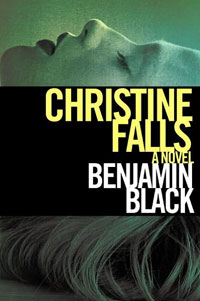
“Christine Falls” by Benjamin Black (John Banville)  (2006) – 340 pages

Ireland probably has had more than its share of great fiction writers, and I have read many of them.  However, by the early 1990s, I had over-dosed on Irish fiction.  I read a few novels where it felt like I was supposed to be enchanted just because the characters were Irish and where it seemed the writers were unduly impressed with their own charm.  Then there were the clichés,  the wise old priest, the helpful feisty convent nuns, McGonagle’s Pub, the pretty lass, and so on.   The effect was similar to listening to the Irish Rovers’ “The Unicorn” two hundred times in a row. 

So I decided to stop reading Irish fiction.  For about ten years I did not read Irish novels. Sometimes it is just as much fun to decide what not to read as it is to decide what to read.  Then a few years ago, I decided this Irish prohibition was ridiculous, so I eased my way back into Irish fiction.  In the past few years I’ve discovered some excellent Irish writers including Sebastian Barry and Emma Donoghue.  But then there were setbacks like the short story collection “The Deportees” by Roddy Doyle which nearly put me off again.

I had read one of John Banville’s non-genre novels a long time ago, before the prohibition.  I believe it was “The Book of Evidence”.  For whatever reason, I did not care much for the novel at the time.  As he wins more and more awards, Banville is becoming a novelist it is hard to ignore.  My strategy was to approach him this time with a genre novel before attempting one of his “serious” novels.  This strategy appears to be working because I found “Christine Falls” very readable and entertaining as a crime thriller.    

“Christine Falls” by Benjamin Black (aka John Banville) is most definitely an Irish novel.  It takes place in Dublin in the 1950s, the Church is a major player, and the pub is still McGonagles.  The local convent might be running a black market in babies.  There is a pretty young woman called Phoebe, fortunately never called a ‘pretty lass’.  “Christine Falls” is a murder mystery, a crime thriller starring Quirke Griifin who is a middle-aged heavy drinking pathologist.  It is genre fiction, and a lot of the Irish stereotypes are there,   These stereotypes put me off at first, but I got so involved in the story that they were not a problem by the end. 

“Christine Falls” was a very entertaining read as genre fiction and will cause no impediment to my continued reading of Irish fiction.  Any suggestions on what non-genre John Banville novel I should read?

.

The City Man and the Country Man

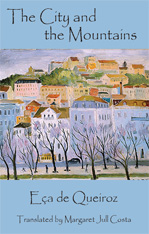
“The City and the Mountains” by Jose Maria Eca de Queiros (1901) – 277 pages    Translated by Margaret Jull Costa

The plot of “The City and the Mountains” is very similar to the plot of Aesop’s famous fable, The Town Mouse and the Country Mouse, except the protagonists are humans instead of mice.

Jacinto lives in sheer luxury at 202 Champs Elysees in Paris at the end of the nineteenth century.  His conviction is, “a man can only be superlatively happy when he is superlatively civilized.”  What better place than Paris at that time?   He has the world’s finest chefs prepare his meals.  His house has every form of expensive drapings, furniture, and technical gadgets imaginable.  He puts on lavish parties and invites the most stylish cocottes in Paris.  Books of every sort, dictionaries, manuals, guides, even some novels are piled everywhere.  But over time, none of these possessions or his full social calendar gives him any satisfaction.  He becomes neurasthenic and bored, over-sated with everything.   

Jacinto’s friend de Fernandes was born in Paris, but had the good fortune to spend 7 years working in the rural mountains of Portugal with his farmer uncle Alfonso who in the end “died as easily – and may God be praised for this grace – as a little bird falls silent at the end of a day spent in full song and full flight.”

Having spent my first 18 years on the farm, I am very skeptical about these paeans to the simple idyllic rural life.  Hell, I was even skeptical of the city mouse and the country mouse fable.  I suppose the rural life might be good if you can stand the boredom, but already by the age of 5 all I wanted to do was get away from the farm.   And a life without books?  You’ve got to be kidding me.

“The City and the Mountain’ is not one of Eca de Queiros’ best books.  In fact I would recommend that readers not familiar with Eca de Queiros start with his novel “The Relic” which is a true masterpiece.  “The City and the Mountains” is fairly good, but I always try to start with the best.  The premise to “The City and the Mountain” is just too thin to sustain this long of a novel.  Also Eca de Queiros tries to set up a Don Quixote and Sancho Panza relation between Jacinto and de Fernandes which only shows how much better Cervantes did it. After you have read “The Relic” and a couple of his other novels, you might want to pick up “The City and the Mountain” to prove I was wrong. 

Jose Saramago has called Eca de Queiros “Portugal’s greatest novelist.”  Of course, Saramago was no slouch as a novelist himself.  When I talk about Portuguese literature, I like to refer to Portugal’s magnificent triumvirate of Eca de Queiros, Fernando Pessoa, and Jose Saramago.  I’m sure by reducing Portuguese literature to these three, I’m omitting some other great Portuguese writers, so I would appreciate the names of other Portuguese writers I should consider.

“cloudstreet” by Tim Winton – The Pickles and the Lambs

“cloudstreet” by Tim Winton (1991) – 426 pages

 When I was a kid, there were two kinds of relatives and neighbors. There were the respectable families about whom you usually did not hear a whisper of gossip; their lives were to all appearances very proper and boring.  Then there were those I will call the “ne’er do wells” about whom you heard just about every wild and crazy story imaginable.  “cloudstreet” is about this second group of people. 

 In “cloudstreet”, two families divide up this big old house, the Pickles and the Lambs.  But Oriel Lamb, the Lamb wife and mother and also an enterprising storekeeper, moves out to a big white tent in the front yard.

    “She’s ad enough kids, said the women of the street.
     She’s caught him out, said the blokes.
    But the real reason remained a mystery, even to Oriel Lamb.”

A while back Whispering Gums printed the results of several different polls of the top ten Australian novels of all time.  On three of the four lists, “cloudstreet” was Number One. I decided then and there that I must read Tim Winton and especially “cloudstreet” as soon as possible.

“cloudstreet” is written in a language I will call Australian.   Take the following sentence. 

    “A few days of this and they’d be chookraffling him to the nut house.”

I have no idea what ‘chookraffling’ means, not sure I want to know, but I totally understand the sentence and the sentiment.  It says on the cover that “cloudstreet” has been translated into 12 languages, and I’m curious on how they translated “chookraffling”.  Maybe someone from Australia can also explain what ‘carn’ means as in “Carn, then, let’s go home, I’m stranglin for a cuppa.”

There are very few books that I’ve had as much fun reading as “cloudstreet”. It’s a real crowd pleaser.  There are about eight stories involving Pickle and Lamb family members going on all the time, madcap and hysterical.  It’s extremely humorous in places, but also very moving in places.  There is always another story to hold your interest.

    “As the days cannoned on, and the heat got meaner, everybody did things crazier than normal. They bought things, they heard things, they moved things, they joined things and left things. They were mad, loony, loopy with summer.”

 This novel was a tremendous reading experience, and soon I will read “The Riders”.  Coming from a family which somewhat resembles the Pickles and the Lambs, how could I resist?  I am tempted to compare Tim Winton with another great Australian writer Patrick White, but it would be like comparing apples to claw-hammers or visa versa.