“Moominpappa at Sea” by Tove Jansson

 “Moominpappa at Sea” by Tove Jansson (1965) – 220 pages
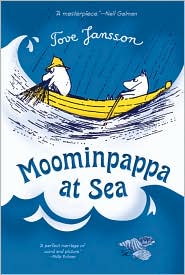
 No, I did not accidentally mistake “Moominpappa at Sea” for one of Tove Jansson’s adult novels.  Earlier this year I read Jansson’s “The True Deceiver”, and I was much impressed with this short novel.  There was a powerful quietness in her writing as if she were attempting to ‘explain the inexplicable’.   I felt there was something going on in this novel that went beyond the words on the page.  Surely it was in her children’s books where she developed this enigmatic quality.

 Knowing nothing about the Moomin books, I chose “Moominpappa at Sea” pretty much at random mostly because I liked the sound of the title. 


    “He was a little odd, wasn’t he?” said Moominpappa uncertainly.

    “Very odd, if you ask me,” said Little My. “Quite nuts.”

    Moominmamma sighed to straighten her legs. “But so are most of the people we know – more or less,” she said.

 This quote is exactly why I admire Jansson’s writing.  Other writers would point out the oddness of a character without stating the obvious, that we are each of us odd in our own ways. 

 There are four main characters in the Moomin family.  There is Moominpappa who often has grandiose visions such as relocating the family from their happy home in Moominvalley to this isolated island.  Then there is Moominmamma who doesn’t always agree with these grandiose ideas, but goes along with them anyway just to keep him happy.  Then there is the son Moomintroll who pursues his own visions.  Then there is adopted daughter Little My who is the most self-reliant and sharpest and always says exactly what is on her mind.  Little My is my favorite of the characters here. 


    “Hello,” said Moominpappa, “I’m angry.”

    “Good,” said Little My with approval. “You look as though you’ve made a proper enemy of someone. It always helps.”
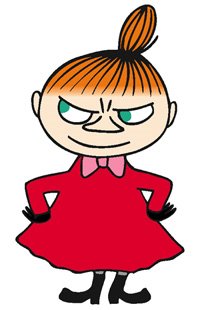
 The best way to describe  Little My is to say  she is annoyingly precocious.    

 Having picked “Moominpappa at Sea” to read, I don’t think this particular book is the best introduction to the Moomin series.   Some of the writing is sharp like the examples I quote above.  However there were long stretches of the book that didn’t hold my interest and were kind of a slog.  I know Tove Jansson is a great children’s author as her huge world-wide popularity attests.  However I see two reasons this book might not measure up to her best.  First there were two main English translators of the Moomintroll books who translated all but one of the books, “Moominpappa at Sea”, which was instead translated by Kingsley Hart.  For Jansson’s understated style of writing, the translation is critical, and I have a sense that this one-off translation loses some of Jansson’s edge. 

 Second this is the next to last Moomin book that Tove Jansson wrote before she switched to writing adult novels. She may have been feeling the constraints of children’s books at this point. Some of the themes in “Moominpappa at Sea” really don’t fit in a children’s book.  Moominpappa having a mid-life crisis, Moominmamma getting depressed about the family’s new circumstances, these are matters that go beyond a book for children. 

 “Moominpappa at Sea” is a solid book.  I just think that one of the other Moomin books might be a better expression of Jansson’s talent.  Even with my favorite children’s author, Robert McCloskey, I’ve learned there are certain books that are must-reads including ‘Make Way for Ducklings’, ‘Blueberries for Sal’, ‘Lentil’, and above all ‘One Morning in Maine’, while there are certain of his books to avoid including ‘Time of Wonder’.
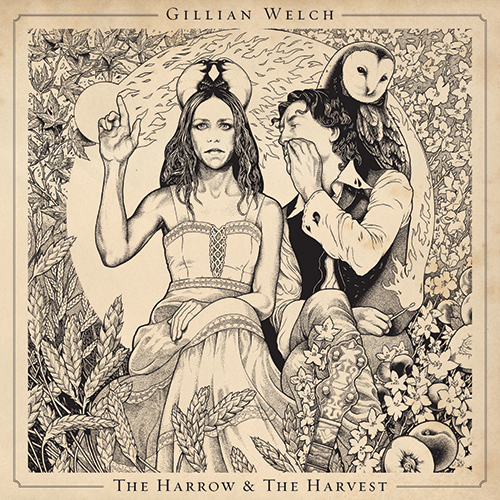

“The Harrow and the Harvest” by Gillian Welch

Some girls are as bright as the morning,
Some girls are blessed with a dark turn of mind.
                 “Dark Turn of Mind”
                  Gillian Welch

This is the first time that I have devoted an entry to a musical album rather than to a book. No apologies, since “The Harrow and the Harvest” is very much an album of music for people who can appreciate literature. Each song tells a story, and the lyrics of these songs will resonate in your mind for a long time. This is Americana music or folk music at its best.

It has been eight long years since the last Gillian Welch album, and “The Harrow and the Harvest” is well worth the long wait; it very well could be her best album ever. Gillian Welch is in incredible voice on this album, and sings as she always does, like someone from the southern Dust Bowl region of the United States during the Great Depression eighty years ago. The guitar interplay between Gillian and long-time musical partner Dave Rawlings provides a subtle background for the vocals.  The arrangements are poignant and simple.

Early on in her career, I read some criticism of Welch to the effect of how could this California girl whose adoptive parents wrote music for the Carol Burnett show sound so ruggedly early American? During her career Gillian Welch has proven to be an authentic voice, as recognizable in her approach to a song as Johnny Cash.

I am amazed that one person could have written all these excellent songs. I keep looking for some other writer to have written a few of these songs, but they were all written by Gillian Welch.

Fa la la la
Fa la la lee
Now let me go, my honey oh
Back to Tennessee
It’s beef steak when I’m working
Whiskey when I’m dry
Sweet heaven when I die,
             “Tennessee”
              Gillian Welch

I have never seen a Gillian Welch and Dave Rawlings concert live, but I’ve heard it is an incredible experience. Even from You Tube, I can tell that it is inspiring to see these two perform their songs together. I believe Dave Rawlings produces all the albums, so he is integral to their music.

I don’t want to over-praise “The Harrow and the Harvest”, but with the release of this album the twenty-first century is now complete.

Now if only Iris Dement would also release a new album.

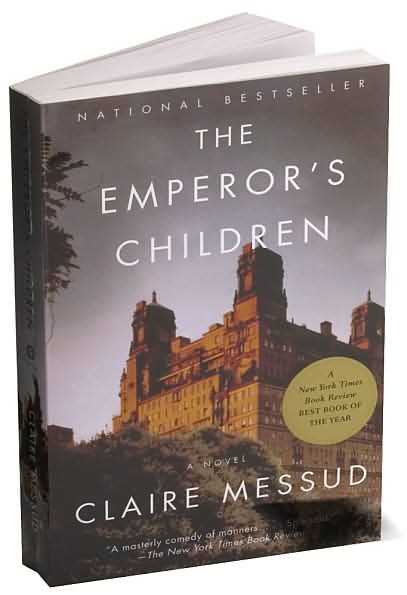
“The Emperor’s Children” by Claire Messud

“The Emperor’s Children” by Claire Messud (2006) – 431 pages

 I’ve been reading Claire Messud’s novels from the very start of her career with “When the World was Steady’, then ‘The Last Life’, then ‘The Hunters’.  I admit I was late in getting to “The Emperor’s Children”, not because I ever intended not to read it, but being a bigger book than her others, it took me a few years to work it in.  There is an articulate effervescent quality to her writing that makes reading her novels a pleasure.   

 “The Emperor’s Children” is a novel about the New York publishing life.  Most of the characters in the novel are involved in the publishing business in one way or another.   I got the impression that Claire Messud could take any small group of disparate characters and make a fascinating novel out of their lives.  Messud has the literary bona fides, yet her novels are a lot of fun to read, and I noticed that ‘The Emperor’s Children’ made it to the best-sellers lists which is quite an accomplishment for a literary writer. Of the characters in “The Emperor’s Children”, there is the famous journalist Murray Thwaite, his beautiful daughter Marina who is writing a book, her best friend Danielle Minkoff, their gay friend Julius who also writes columns, and aspiring publishing magnate Ludovic Seeley from Australia.  Finally there is Bootie Tubb who Murray hires as his young aide-de-camp, because Bootie is his nephew and has been at loose ends since he dropped out of college.  The characters in this small group interact in various combinations in various settings.  This novel has no overriding large ideas; you read this book purely because you become fascinated with these people.    

 For most of the novel nothing momentous occurs, but Claire Messud is good at writing dialogue that moves the separate stories along and the stories held my interest throughout.  The dialogue does not draw attention to itself; it’s not the kind of dialogue where I want to quote outstanding nuggets of repartee.  Instead it is the kind of dialogue that draws you into the story of these individuals without you even realizing it.       

 The novel takes place in 2001, and it culminates in the 9/11 destruction of the World Trade Center, and after that everything for everyone in New York changes.

 I will continue to read Claire Messud, because she is one of the best novelists around, and sentence-for-sentence her writing is never less than fascinating.  She is confident enough so that her writing doesn’t have to unnaturally call attention to itself.

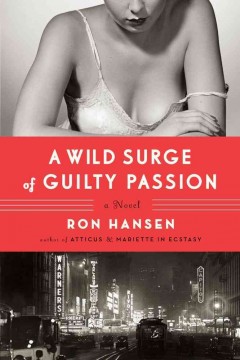
“A Wild Surge of Guilty Passion” by Ron Hansen

“A Wild Surge of Guilty Passion” by Ron Hansen (2011) – 256 pages

    Judd whispered, “This is sheer happiness, just being with you”. She took the fleeting opportunity to kiss him, and Judd’s palm cherished his lover’s sensuous hip as they went down to the dining room.

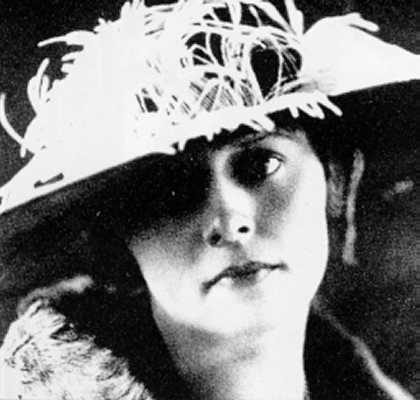
I had never heard of Ruth Snyder and Judd Gray until recently, but these two were the perpetrators of what many considered the crime of the twentieth century. Their crime was the basis of two novels by James Cain, ‘Double Indemnity’ and ‘The Postman Always Ring’s Twice’ which were both made into popular movies. Now this couple is the inspiration for ‘A Wild Surge of Guilty Passion’ by Ron Hansen.

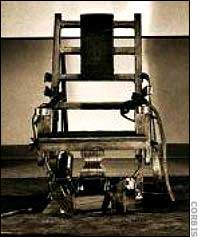
Since in this novel the murder occurs in the very first chapter, I can discuss it without giving away the plot. Ruth Snyder was an exceptionally good looking vivacious housewife from suburban New York City who meets successful lingerie salesman Judd Gray, and they quickly fall in love. However both of them are married to someone else, and both have a young child. A year and a half later Ruth’s husband Albert Snyder, the art editor for Motor Boating magazine, is found murdered in his home in what appears at first glance to be a house robbery. However the robbery story quickly falls apart, and both Ruth Snyder and Judd Gray are arrested, tried, and finally executed in an electric chair at Sing Sing prison for the murder. A famous picture of Ruth Snyder strapped into the electric chair was taken.

In order to tell this story well, Ron Hansen needed to recreate the time and place of the murder as well as to capture these two lovers to understand the passion that led them to murder. The murder took place on March 20, 1927. This was the height of the Twenties when business and prosperity were at their peak just before the complete collapse and the Great Depression. Scott Fitzgerald named the Twenties “the Jazz Age”, and noted that it “raced along under its own power served by great filling stations full of money”. Hansen catches the details of the dress, the hair styles, the restaurants, the dances, the cars, the party life, the ubiquitous alcohol drinking despite prohibition. Ruth Snyder and Judd Gray were by no means the only ones doing afternoon trysts.

After the end of the novel in the Acknowledgments, Ron Hansen states, “This is a work of fiction based on fact, and though I hew closely to the history of the events, the majority of the narrative is, of course, invented.”              

 While awaiting trial and in prison, Ruth Snyder received 168 proposals for marriage.

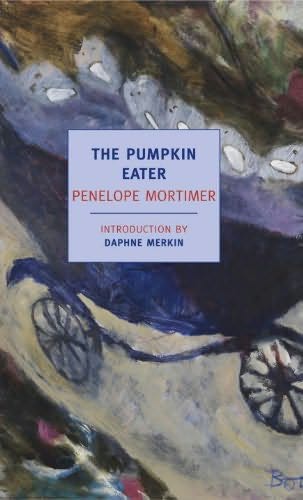
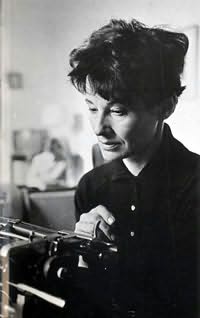
“The Pumpkin Eater” by Penelope Mortimer

“The Pumpkin Eater” by Penelope Mortimer (1962) – 222 pages


    “I liked her, because she was lonely and eccentric and kept making little rushes at life which were, as she swore she had always known, doomed to failure.”

 This is the description of Philpot, the live-in young woman who takes care of all Mrs. Armitage’s children   That is how Mrs. Armitage describes Philpot before Philpot goes to the movies with Mrs. Armitage and her husband, and her husband holds hands with the two of them, one on each side, in the movie theater.

 “The Pumpkin Eater” by Penelope Mortimer is perhaps the first modern novel about a woman’s life.  It is an on-the-scene sharp-edged account of the family battlefront, the war between man and woman.    It was written almost fifty years ago in 1962, a year before the Beatles hit it big in England and two years before they it big it the United States.  Some of the novel takes place in Mrs. Armitage’s psychiatrist’s office where she describes her life.  She has a lot of kids.  She is married to her third husband Jake.  Here is how Jake’s father described him to Mrs. Armitage before she marries him.

    “He’ll be a frightful husband. You’re bound to be ill, for instance. You won’t get the slightest sympathy from him, he hates illness. He’s got no money, and he’s bone-lazy. Also he drinks too much.”

 He also chases women.  Mrs. Armitage’s father also tells Jake about his daughter. 

    “I must say that for a young man with his life in front of him to saddle himself with a brood of children and a wife as feckless as this daughter of mine seems to me lunacy. . . . I think you’re a fool, but I’d like to help you make a go of it.”

 As you can tell by the previous samples, the dialogue and description in “The Pumpkin Eater” are unsparing, and that is one of the great pleasures of this novel.   Parts of this novel are brutally funny, and other parts will almost make you cry.  One could describe the writing as caustic, but Mrs. Armitage is just as relentless about herself as she is about everyone else.

 There was a movie made of “The Pumpkin Eater” in 1964 with Anne Bancroft, Peter Finch, and James Mason.  IMDB rates the movie quite highly (7.2), but unfortunately the movie has still not been released on DVD. 

 Being almost fifty years old, the novel’s view on some family issues was a bit hard for me to follow.  Mrs. Armitage has a lot of children.  Everyone blames her for having so many.  She has someone to do most of the caring for them.  She wants to have another child, because that might be the answer to her problems, even if everyone else including her husband will be mad at her for getting pregnant.  I expect that despite my own difficulties, most women will follow Mrs. Armitage’s outlook perfectly.

 Much of “The Pumpkin Eater” is dialogue, and dialogue this sharp, funny, and cruel is magnificent.     .

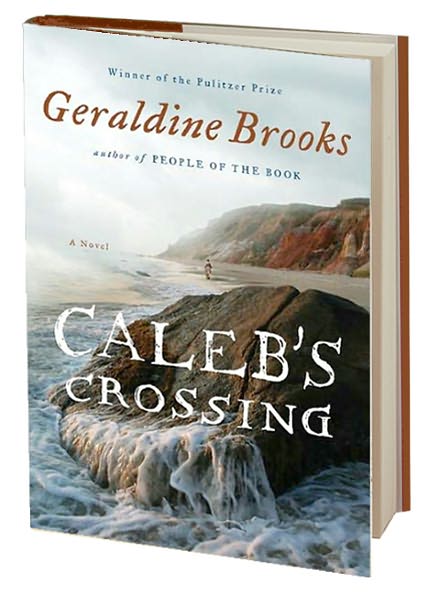
“Caleb’s Crossing” by Geraldine Brooks

“Caleb’s Crossing” by Geraldine Brooks (2011) – 320 pages

 “Caleb’s Crossing” is the dramatic story of Caleb Cheshahteaumuck, the first Native American to graduate from Harvard in 1665, but the main character in the novel is Bethia Mayfield, the daughter of a Puritan minister. The family lives on the island of Martha’s Vineyard off the coast of Massachusetts.

Bethia has a brother, Makepeace, who is a year older than she is. Each night the minister father tutors his son Makepeace to prepare him for Harvard College. Bethia, being a female, cannot go to Harvard. However she listens in on the tutoring lessons and soon discovers that Makepeace is a somewhat slow, indifferent student, while she picks up all the lessons she overhears including the Greek and the Hebrew quickly. How many times has this scene been repeated throughout history where the brother is given every opportunity while it is the sister who is actually the sharper of the two? Should we follow what our elders and religions tell us, or should we follow our own eyes and ears? “Caleb’s Crossing” is quite passionate and eloquent on the subject of women in the Puritan society, especially since women did about two-thirds of the work.

The novel is also passionate and eloquent on the relations between the Puritans and the Native Americans who are the original residents of Martha’s Vineyard. Ultimately hostilities between the Native Americans and Puritans would result in the King Philip’s War, but at this point in 1660, the Puritans were encouraged by their English backers to try to convert and educate the ‘salvages’. Thus two Native Americans, Caleb and Joel, are added to the minister’s tutoring sessions. As it happens both of them prove to be better students than the son Makepeace.

“Caleb’s Crossing” is written in a forceful straightforward style that may seem somewhat old-fashioned to some. There is no modern cool irony or edge; those devices probably wouldn’t work in a novel about the Puritans anyway. There are just enough Puritan touches to the language (“It was somewhen later…”) to make the writing seem authentic. I found the story gripping and engrossing. The novel is based on historical fact, but there is little existing documentation of that time and most of the main characters are entirely made up. The characters of Bethia Mayfield and Caleb are strong, intelligent young people and make good role models. I can see high school teachers throughout the United States assigning this novel to read as part of the study of Puritan society. It will be a pleasant way to get the inside story of the Puritans. The novel belongs up on the shelf with “The Scarlet Letter” as another great Puritan novel. It is somewhat surprising that it was written by Geraldine Brooks, a writer from Australia.

“Caleb’s Crossing” is outstanding historical fiction that presents the entire Puritan and Native American society of that time with insight and compassion.

“The Death of the Adversary” by Hans Keilson

 “The Death of the Adversary”  by Hans Keilson  (1959) – 208 pages – Translated by Ivo Jarosy

 “The Death of the Adversary” is about a man’s personal enemy.

 This personal enemy is a powerful person.  In fact, he is the leader of a country.    He rules the country with an iron fist and is hugely influential.  A huge number of people are under his sway.  He convinces these followers to mistreat an entire other race with hatred, contempt, and violence.   With his passionate speeches he stirs his followers to humiliate, torture, and finally murder millions of innocent men, women, and children. 

 I’m sure by now all of you have figured out who this personal enemy is, but the name is never mentioned in the novel.  Now I will discuss the main character of this novel, the ‘I’ of this novel, who has the above personal enemy.   As a small boy, he is unaware of the personal enemy except for overheard whispers between his parents   His first real indication he has an enemy, is when the boys choose sides for teams, he is chosen last even though he is one of the better players.  Soon the other boys subject him to gratuitous beatings during the football games.   

 Later he gets a job in a department store and meets a young woman who works at the store.  They seem to get along well, until her brother’s friend tells his vivid detailed account of when his gang desecrates a cemetery .  Our main protagonist decides never to see this young woman again. 

 Soon he and everyone of his race are forcibly removed from their jobs. The personal enemy’s underlings start rounding up people and sending them to concentration camps.  Our main protagonist’s parents have saved enough to sneak him out of the country.  He asks his parents about what is going to happen to them, and his mother says they are old.   As he leaves the country, he knows that is the last he will ever see of them because of his personal enemy.    He questions if he should have killed his personal enemy.   

 Last year I read Hans Keilson’s novella “Comedy on a Minor Key” which seemed to me a perfect well-constructed moving little novel that ultimately makes you feel good about life.  “Death of an Adversary” is much larger in scope and messier.  A lot of the novel consists of tortuous reasoning as our main protagonist tries to come to philosophical terms with his personal enemy on the day that enemy is to die.  The set pieces are emotionally powerful. These set pieces include the little boy playing sports with the neighborhood kids, the harrowing account of the desecration of the cemetery, and his father packing his rucksack in anticipation of being taken away.   My suggestion would be to first read “Comedy in a Minor Key’, and if you want to read more Keilson (and you will), read ‘Death of the Adversary’ which is somewhat muddled but powerful. 

 Hans Keilson died this past May 31 at age 101, rest in peace.

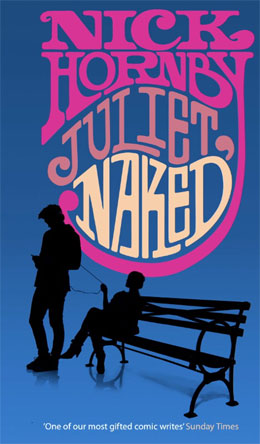
“Juliet, Naked” by Nick Hornby

“Juliet, Naked” by Nick Hornby  (2009) – 416 pages

 Is there one music artist whose music you are obsessed with, some person or group that you own every one of their albums, even the throwaway ones?  An artist or group whose music speaks directly to you?

 Obsession with a music artist is the subject of the novel “Juliet, Naked” by Nick Hornby.  I can’t say that I have one artist that I’m totally addicted to, but I can remember watching Alison Krauss and Union Station play “When You Say Nothing At All” over and over and over.  But I was already addicted to that song when Keith Whitley performed it.

 “They had flown from England to Minneapolis to look at a toilet.” 

 This is no ordinary toilet; this is the bathroom where singer/songwriter Tucker Crowe ducked out on his band in 1986 never to return. Duncan is totally obsessed with Tucker Crowe and the entire purpose of this trip to the US with his longtime girlfriend Annie is to visit sites that are meaningful in Tucker Crowe’s career. 

 When  Duncan and Annie are back home in the English seaside town of Gooleness,  Duncan spends most of his spare time on the Tucker Crowe message board on the web. Duncan is  one of the world’s leading Crowologists, familiar with every little detail of Tucker Crowe’s recording career including all six of the albums.  ‘Juliet’, an album written when Crowe broke up with his model girlfriend Juliet, is unquestionably Ticker Crowe’s masterpiece.  Now after all these years, they are releasing an acoustic version of ‘Juliet’ which has the title ‘Juliet, Naked’.

 Of course, Nick Hornby, being a popular music critic, is very familiar with this type of super-fandom, and he has a lot of fun with the music obsessive Duncan.  When Tucker Crowe finally does enter the novel, his character is a bit of a letdown.  Nick Hornby’s point seems to be that no matter how much these obsessive fans build up certain performers, the performers themselves are pretty much normal and nothing special, I found Tucker Crowe a somewhat boring and uninteresting character .  I would have preferred an outrageous over-the-top Tucker Crowe.  Much of the novel is about Crowe dealing with the five children he fathered with four different girlfriends.    

 ‘Juliet, Naked’ is a humorous entertaining novel.  What the novel does not have are a sharp edge or depth.  Obsessive music fans are an easy target, I did not find it as clever as Hornby’s ‘High Fidelity’, but ‘Juliet, Naked’ is diverting light fare, a pleasant way to pass the time.

In the Garden of Beasts : Love, Terror, and an American Family in Hitler’s Berlin

“In the Garden of Beasts: Love, Terror, and an American Family in Hitler’s Berlin” by Erik Larson (2011) – 448 pages

 I usually don’t read much non-fiction.  There are at least two reasons why not.

  1.  Frequently the prose in non-fiction is kind of wooden.
  2.  A lot of non-fiction, while claiming to be factual, is actually self-serving.  Political memoirs are a complete loss in this respect, but even in history and other subjects, the author might be shaping the facts to promote his or her own view.  Ironically, I find fiction to be more honest and trustworthy than non-fiction in many cases.  Perhaps fiction gives the author the necessary shelter and distance so the author can be more genuine and true.


However I’ve heard so many good things about Erik Larson’s book ‘The Devil in the White City’ I decided to read his latest, ‘In the Garden of Beasts’.  The critics have even come up with a new genre for Erik Larson’s work which is ‘novelistic history’.  While still being history, his books have many of the qualities of fiction. 

   “In the Garden of Beasts” is the story of William Dodd when he became ambassador to Germany in 1933 soon after Adolf Hitler became President of Germany.  Actually the two main characters of this book are William Dodd and his soon-to-be divorced daughter Martha Dodd Stern, both of whom left a large amount of detailed written documentation about their time in Germany.

 As an ambassador William Dodd was kind of a stumblebum.  When Dodd first got to Germany, occasionally a tourist from the United States would get beaten up by over-fervent Nazi party members, because they weren’t paying proper attention to a Nazi rally or did not give the ‘Sieg Heil’ salute.  At first Dodd sought to quiet the news coverage of these so as not to embarrass the German leadership. 

One time radio commentator H. V. Kaltenborn visited Germany and was very impressed with the Nazi government until towards the end of his visit when his own son got severely beaten up for not paying enough attention to a Nazi rally. 

 Ambassador Dodd also complained about the large number of Jews on his embassy staff, because it might look bad to the German government.  Both Dodd and his daughter had the garden variety of United States anti-Semitism common at the time.           

 If William Dodd was a stumblebum as an ambassador, his daughter Martha was a major embarrassment.  She had just separated from her husband, and she was ready to party and date.  She dated and slept with several prominent Nazis including Rudolf Diels, head of the Gestapo.  She also dated a Russian spy.  When she first arrived she was quite excited by the Berlin nightlife and social life. 

 “In the Garden of Beasts”, by showing the less than good side of ambassador Dodd and Martha, achieves a level of veracity it might not otherwise have had.  If these people had been excellent from the beginning, the account would have been questionable.  As it was, these were just plain people dealing with an impossible situation. 

 As the months went by, the Ambassador met many of the Nazi leaders including Goering, Rohm, and Hitler himself.  The rabid vicious contempt these leaders expressed for Jews and the accounts of organized Nazi violence against Jews soon sickened both Ambassador Dodd and Martha.  It got to the point where ambassador Dodd wouldn’t even meet with the German leaders. 

 The climax of the book is the Night of the Long Knives, the night of June 30, 1934 when Ernst Rohm was purged as leader of the “SturmAbteilung”, the Nazi militia also known as the SA.  That night several hundred others within and outside the government were murdered so that Hitler could consolidate his power. 

 This is very readable history.  Erik Larson does bring the qualities of fiction to the history.  Certainly the documentation was extensive, but still certain liberties are taken  At one point the book states that ‘He took hold of Martha’s hand and looked into her eyes.’  There are many of these kinds of descriptions which really didn’t bother me. 

 “In the Garden of Beasts” is probably the best argument for reading history I’ve read in a long time.

Professor Unrat visits the Blue Angel Club

“Professor Unrat” by Heinrich Mann (1905) – 255 pages

 I’ve read and admired several of Thomas Mann’s novels, but up until now I had never read any of the novels of his older brother Heinrich Mann.  I read that the Nazis had burned both Thomas and Heinrich Mann’s books as “contrary to the German spirit” during their book burning of May 10, 1933 instigated by Joseph Goebbels.  What could be a higher recommendation for Heinrich Mann than that?  Heinrich Mann had already left Germany for California by that time leaving as soon as Adolf Hitler took over.   I decided to read his most famous novel “Professor Unrat” which was made into the movie “The Blue Angel” starring Emil Jannings and Marlene Dietrich.   

 Professor Raath has been teaching his high school class in the same small German town for over 25 years.  From the beginning, there were some unruly students who, when they thought he wasn’t listening, called him “Professor Unrat” which means in English “Professor Filth”.  Even now there are students that call him “Professor Unrat”, and the Professor is out to punish them.  When he finds out that three of his biggest troublemakers are sneaking into a club called the Blue Angel after school, he goes there to track them down.  At the Blue Angel, he meets dancer Rosa Froelich, and the rest is history.

 To prepare for this entry, I also watched the 1930 movie “The Blue Angel” directed by Josef Von Sternberg. It is a fine old musical movie, but as so often happens, the movie simplified the novel leaving out much of the story.  “The movie “The Blue Angel” is solely a cautionary tale about what can happen when a respectable man starts going to a nightclub to visit a scantily clad dancer.  The novel is much more complex, and the life of Professor Unrat after visiting the Blue Angel is much more ambiguous and three dimensional.   

Both the novel and the movie capture the grubby ambience of the Blue Angel, this working man’s club.  The magician and the dancers see themselves as show performers putting on an act for the men, but they know they are really there to sell more beer and drinks before moving on to the next town.   

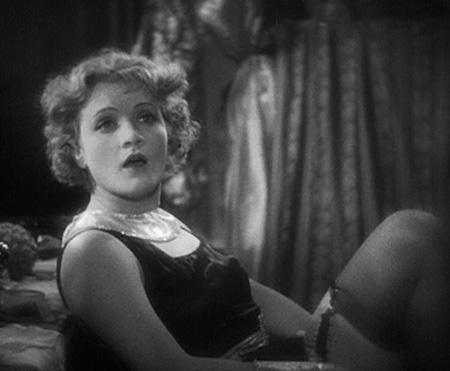
Marlene Dietrich in The Blue Angel

How does Heinrich Mann’s “Professor Unrat” compare with Thomas Mann’s novels?  First, it is not in the same league as a novel as “Buddenbrooks” or “The Magic Mountain”.  Those two novels are  masterpieces that can change your life.  “Professor Unrat” is a down-to-earth earthy story that held my interest throughout, but  is by no means transcendent.

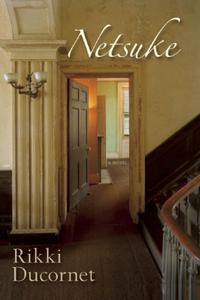
A Novella of Sexual Obsession by Rikki Ducornet

“Netsuke” by Rikki Ducornet (2011) – 127 pages

The main character in the new novella “Netsuke” by Rikki Ducornet has a seemingly very good life. He is a psychoanalyst, lives in a big suburban house on a large property with his artist wife Akiko, no children. The couple frequently goes out to expensive restaurants. In his practice he makes a good living and his wife is quite renowned as an artist.

Yet this guy is sure to outrage most readers. He is driven by sex. Apparently he is quite attractive, because when he is out jogging, just by making eye contact he can convince a young woman to turn off the path into a secluded area with him. He gets involved with store clerks, waitresses, and cleaners who come to his house. But the most outrageous thing about him is that he has sex with his patients. His patients, who he calls clients, come to him ‘thwarted, famished, and lonely’. “If the client is attractive, I cannot help but wonder is she/he fuckable.”   He has two offices on his property, one called Drear for the patients he isn’t interested in and one called Spells which is devoted to “the pleasures of transgression”. His wife Akiko is busy designing and making her works of art, she usually doesn’t notice what is going on with her husband. Or maybe she does not want to notice?

A ‘netsuke’ is a Japanese toggle made of wood or ivory used to attach objects such as a tobacco pouch, a pipe, or a medicine box to a man’s obi. Akiko collects these miniature works of art.

In “Netsuke”, we have a tale of relentless sexual obsession. The entire story is told by this driven man. To me this novel seemed almost continental European in its matter-of-factness about these matters, and I was surprised to discover that Rikki Ducornet is from the United States. According to Wikipedia, she did live in France for seventeen years. Did I expect a United States or even an English writer to be more shrill and moralistic writing about sexual obsession?

I was extremely impressed with Rikki Ducornet’s style of writing for this outrageous obsessive man’s monologue about his life. “Netsuke” is a true tour de force that will leave you transfixed. The writer that first comes to mind when I think of Rikki Ducornet is Elena Ferrante which is high praise indeed.

Now a bit of trivia. Rikki Ducornet went to Bard College, and the singer-songwriter Donald Fagen of Steely Dan was also going there, and they became friends. Ducornet remembers Fagen giving her his phone number at a college party. How many of you remember the Steely Dan song, “Rikki Don’t Lose that Number”?

This is an excellent novella. I want to read more of Rikki Ducornet’s work.

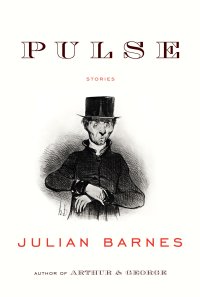
“Pulse” stories by Julian Barnes

Pulse”  – stories by Julian Barnes (2011) – 227 pages

 Four of the stories in Julian Barnes’ new collection, “Pulse” are almost entirely dialogue.  These stories are called “At Phil and Joanna’s: 1,2 3 , and 4″.  These take place at a dinner party made up of at least two couples.  After a short paragraph setting the scene, the rest of the story is completely dialogue.  Here is a sample.
 

    “Plastic’s replacing money, the Internet’s replacing everything else. And more and more people speak English, which makes it even easier. So why not admit the reality?”

    “But that’s another British trait we cling to. Not accepting reality.”

    “Like hypocrisy.”

    “Don’t get her started on that. You rode that hobbyhorse to death last time, darling.”

    “Did I?”

    “Riding a hobbyhorse to death is flogging a dead metaphor.”

    “What is the difference between a metaphor and a simile, by the way?”

    “Marmelade.

 Notice the dialogue is unattributed.  The conversation is quite witty and interesting in itself about such things as smoking, the Euro, cooking, and so on.  However it doesn’t go anywhere.  To me, these were conversations, but  however witty, these were not stories.  I have read real stories made up entirely of dialogue that have conflict and progress to a resolution, but the “At Phil and Joanna” dialogues in this collection do not progress, and thus are just witty talk strung together.   

 “Pulse” is divided into two sections.  The first section is made up with stories that take place in a contemporary setting, while the second section contains stories which take place in the near or distant past.  Besides the dialogues I discussed above, there are some real stories in this collection.

 The writing is always entertaining, very readable, and does not get in the way of the story itself.  My main concern with these stories is their lack of ambition.  The really great story writers like William Trevor, Alice Munro, Elizabeth Taylor, and John Updike could fill entire collections with near-perfect stories.  Using a baseball metaphor nearly every story in their collections would be a home run.  In “Pulse”, none of the stories is bad; there are some singles, a few doubles, and maybe even a triple or two, but no home runs. 

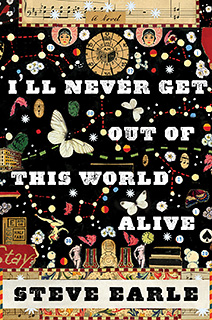
“I’ll Never Get Out of This World Alive” by Steve Earle

“I’ll Never Get Out of This World Alive” by Steve Earle (2011) – 243 pages

I’ve been a fan of singer-songwriter Steve Earle for a long time. His music is a combination of rockabilly, country and western, Americana, and folk. He hit the big time on the Country charts in the mid-1980s, got addicted to heroin, kicked the drug habit, and has now been recording albums regularly for about 17 years. Here are links to two of my favorite Steve Earle performances on You Tube. In ‘The Mountain’ he performs with the Del McCoury Band and in “Still In Love with You” he sings a duet with legend Iris Dement.

Earle wrote a book of short stories in 2001 called “Doghouse Roses”. Now he’s published this novel, “I’ll Never Get Out of this World Alive”, and released an album with the same name at the same time. “I’ll Never get Out of this World Alive” is actually the name of a Hank Williams song.

This novel is about a guy named Doc, and it takes place in the early 1960s. Doc used to be a doctor but lost his license somewhere along the way while he became addicted to morphine. He still operates as a doctor illegally in his rundown apartment in San Antonio in order to support his morphine habit.

Some novels about drug addiction are quite grim and dismal affairs, but Earle keeps this story rolling along in jaunty and humorous fashion. You get to meet several of the outrageous colorful characters who live in this drug-end neighborhood in San Antonio. Also Doc frequently sees the ghost of Hank Williams. Maybe Doc treated Hank Williams on that New Years Eve night back in 1952/1953 when Hank Williams died from alcohol and drug poisoning at the age of 29 while riding in a car which was taking him to his next show. Now Hank won’t leave Doc alone; Hank wants to drag Doc over to the other side. The ghost of Han Williams is played for fun, a good-natured comic touch.

Then there is Graciela, the Mexican girl-woman who first sees Doc as his patient, and then lives with him. Soon the people in the neighborhood realize she has special powers which the Church is interested in too.

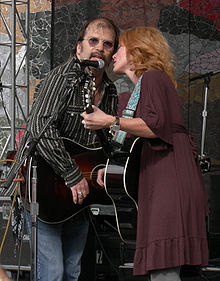
Steve Earle and Alison Moorer at Bumbershoot, 2007

The year is 1963, and in one scene John and Jackie (Yah-kee in Mexican pronunciation) Kennedy come to San Antonio, and all these motley down-and-outers pile in the car to see them up close at the airport. With its San Antonio flavor, “I’ll Never Get Out of this World Alive” has a definite Sixties feel to it. It’s about as far as you can get from Mad Men, but it is still the Sixties.

With the story bouncing along,“I’ll Never Get Out of this World Alive” is a quick and fun book to read.

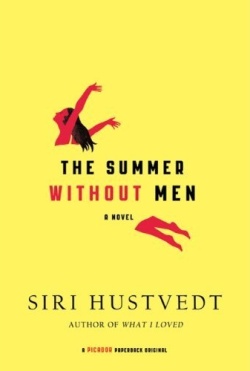
“The Summer Without Men” by Siri Hustvedt

“The Summer Without Men” by Siri Hustvedt (2011) – 182 pages

    “And who among us would deny Jane Austen her happy endings or insist that Cary Grant and Irene Dunne should not get back together at the end of ‘The Awful Truth’? There are tragedies and comedies, aren’t there? And they are more often the same than different, rather like men and women, if you ask me. A comedy depends on stopping the story at exactly the right moment.”

I remember reading with much excitement the first novel by Siri Hustvedt. The novel was called “The Blindfold”, It was edgy, intelligent, and not housewife-y at all. Here was an intense new United States writer to follow.

Over the years , I’ve continued to read her novels. The novels have been somewhat hit and miss with “The Blindfold” still being my favorite and “What I Loved” being a close second.

At the beginning of “The Summer Without Men”, Mia Fredrickson’s husband asks for “a Pause” in their marriage so he can pursue a relationship with a younger female colleague. Mia then has a nervous breakdown which is diagnosed as a Brief Psychotic Disorder. Mia is in her early fifties and has a grown daughter pursuing an acting career in another city. After the worst, Mia decides to return to her Minnesota hometown where she grew up and where her mother is still living in an old people’s home. This is a time of recuperation for Mia. While Mia is staying in town, she meets the group of old women, ‘The Five Swans”, who are the friends of her mother. Mia also teaches a poetry class to a group of 7 twelve and thirteen year old girls which Mia dubs “The Coven”.

One of the problems with “The Summer Without Men” for me was all these peripheral characters. Certain writers such as Muriel Spark in “The Prime of Miss Jean Brodie” or “The Girls of Slender Means” and Angela Huth in “The Land Girls” can quickly sketch endearing traits or quirks for a large cast of walk-on characters, making each one memorable. However Siri Hustvedt seems to lose interest in sketching these groups of peripheral characters after describing just one character. These side characters are under-developed and of scant interest to the reader. I think Siri Hustvedt is best when she sticks to a very small number of characters in which she is intensely interested. This worked very well for her in “What I Loved” where the entire focus was on four people, two couples.

One thing that Siri Hustvedt does well that not many United States writers are good at is putting a story in the context of interesting minds of other people such as Emily Dickinson or Ezra Pound or Sigmund Freud. The absence of this kind of framework from other United States writers makes you wonder if they are even familiar with other people’s work. In Hustvedt’s work these ideas are just part of the conversation with you the reader, not at all tacked on.

Although the novel is quite good in places, overall “The Summer Without Me4n” did not completely work for me. It did not have the intensity of some of her other novels, probably because there were just too many characters, too many characters that Hustvedt wasn’t all that interested in. Siri Hustvedt is much better at the intensely focused psychological novel rather than the wide panorama.

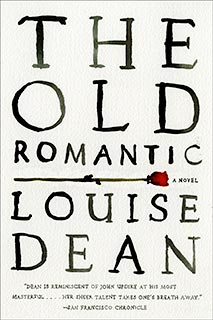
“The Old Romantic” by Louise Dean

“The Old Romantic” by Louise Dean (2011) –  338 pages

    “You never imagine your husband will get a thing for an embalmer and an outsize one at that – that’s one thing you don’t imagine.”

 As you can tell from the above quote, “The Old Romantic” is darkly comic in attitude.  It is the story of the Goodyew family which consists of grandpa Ken, his girlfriend June, his son Nick who has a girl friend named Astrid, his other son Dave, and Ken’s ex-wife Pearl.

 Reading  “The Old Romantic” is a wicked joy.  There may be one or two novels this year as good as “The Old Romantic”, but I can’t imagine one that will be better. Here is a chance for the Booker to honor Louise Dean while she is at her best.

 Every sentence of “The Old Romantic” expresses an attitude, and that attitude is sustained for the entire novel,   I am going to quote several lines from this novel, because I admire the way Louise Dean writes, and the more I quote, the more likely you will read and enjoy this novel.  At the beginning the Goodyew family individuals, especially grandpa Ken, are portrayed as outlandish and ridiculous. As the novel progresses, you begin to see the strong resemblance between the members of Ken’s family and the members of your own family.  Could it be that when you look at the individuals in your own family with open eyes, they are quite ridiculous too?  As it turns out, these Goodyews have their surprising winning sides too.          

    ’I can see now that I could be accused of being rather callow.’ He looked at her. “Do you know what I mean?’

    ‘Yes she said through gritted teeth. I know what fucking callow means. I wish you would stop using your words like you get a triple-letter score every time.’

 Did I mention that Louise Dean writes about the meanest and sharpest dialogue of anyone around?   Any writer would give their first born to have her ear for dialogue. 

 The following sentence in the novel struck me as brilliant, but I’m not sure how you will react to it.
 

    “She dispensed with the cleaning lady and thereby scuppered that woman’s plan for a breast enlargement.”

 For me, that sentence says a lot about our times.  Also Louise Dean should get the award for best use of the word ‘scuppered’ in a work of fiction along with the many other prizes she should receive for “The Old Romantic”.

 It’s always a pleasure to discover a major talent.  Louise Dean is one of those writers that someone will read many years from now, and will wonder why she didn’t get even more recognition while she was still writing.  She is tremendously talented, and the writing in “The Old Romantic” is so sparkling, I would guess she had as much fun writing this book as we have reading it.  “The Old Romantic” is a novel you read with a perpetual grin.

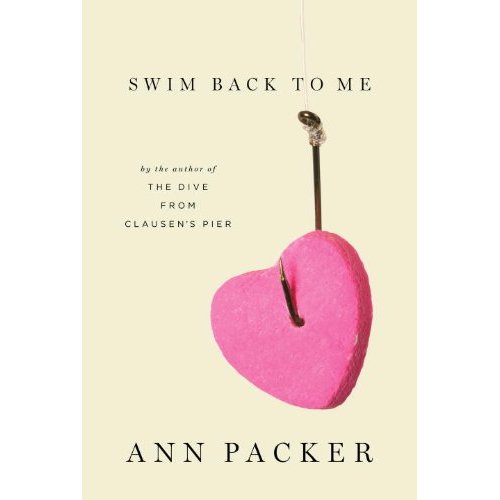
United States Fiction vs British Isles Fiction and “Swim Back to Me” by Ann Packer

“Swim Back to Me” by Ann Packer – Stories  (2011)

 Fiction is much more valued in the British Isles than it is in the United States   I’m using the term ‘British Isles’ geographically, to mean all the countries in that group of islands including Ireland. 

 In the British Isles, fiction is thriving. Reading groups and a large number of reading blogs flourish.  Speculation as to which author and book is going to win each of the major literary prizes including the Booker, the Orange, and the IMPAC is a major sport.       The demand for high quality fiction in the British Isles has led to a substantial number of authors who work to develop their own delightful unique style, their own voice, in order to supply this demand.

 Contrast this with the situation of fiction in the United States.  In the United States there is not much interest in literary fiction among the general public at all.  The various book prizes come and go, and only a few of us pay any attention to them.  A lot of books of fiction are sold in the United States, but these are mainly “bestsellers” which make no pretense to literary style whatsoever.  Among most of the authors in the United States, the goal is to sell a lot of books, not to create a work of art with its own distinctive style.  The literary is distrusted in the Unites States, and the public only puts up with the most simple and direct fiction writing that doesn’t call attention to itself.

 All of which brings me to today’s book, “Swim Back to Me” by Ann Packer. “Swim Back to Me” is a collection of two novellas and four stories which take place in the academic community around the Stanford area of northern California.  Each of the novellas and stories is about a major problem within a family or between families. I won’t go into the individual story plot lines, but will say that all of the stories genuinely held my interest. 

Ann Packer writes each of these stories in simple and direct prose.  She carefully relates all the details so the reader fully understands what is at stake in each story, and her style does not interfere or distract the reader from feeling empathy for the characters in the story.  I remember reading some of John Updike’s novels about family situations, and I would be struck by the style and perfection of a particular sentence, but the admiration of that sentence would distract me from the empathy that I was supposed to be developing for the characters.  John Updike, although from the United States, had developed a distinctive literary style.  In these Updike novels, his literary art actually got in the way of the story.  Sometimes to be artless is the better policy, especially when you want your readers to identify with your characters. That is why Ann Packer’s simple and direct style works well for these stories.  .

I should mention that John Updike did write some stories, the Maple stories. that do have the immediacy of “Swim Back to Me”.  It was only in a couple of the novels that the ‘artful’ problem occurred.

Ann Packer’s stories are not completely artless.  One technique that Packer uses effectively is the abrupt ending.  I would be immersed in the story, and suddenly it would end.  The story quits in an unexpected place, no summarizing, no looking back on what has occurred.  Most of the stories occur in the immediate here and now, even if the events occurred 3o years ago as does “Walk for Mankind”.  What I mean is that the story does not have any nostalgic tinge or any sense of looking back to an older time.  Instead the story unfolds as if it were happening right now.  One of the positive qualities of “Swim Back to Me” is its immediacy.

As I said before, here in  the United States simple and direct is the preferred style of writing.  The people here for the most part like their fiction plain and clear without literary devices getting in the way.  Here it is difficult to tell one author’s style from another’s. 

The bottom line.  The stories in “Swim Back to Me” are fine examples of United States stories.  However I’ve read so many British Isles novels and stories which have a strong distinctive style and voice, and I’ve come to prefer these.  The writing voices of such writers as Louise Dean, M. J. Hyland, and A. L. Kennedy are so unique and individual, they transport you into their own singular world.  You feel at least as much empathy for the characters in these women’s novels and stories as you do in those simple and direct United States stories,  but the unique voice and style these women put into every sentence  makes their fiction  superior to the United States kind.

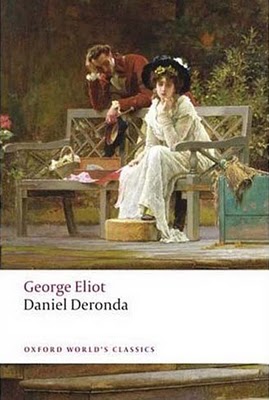
“Daniel Deronda” by George Eliot

“Daniel Deronda” by George Eliot (1876) – 737 pages

 “Daniel Deronda” has been at or near the top of my list of classical novels I’ve wanted to read ever since I read “Middlemarch” back in the late Nineties. “Middlemarch” was one of the finest novels I’ve ever read. So when I discovered that“Daniel Deronda” was available in audio book form, I went for it. I downloaded all 30 hours of Daniel Deronda on to my MP3 player and listened to it during my long commutes to and from work.

From the BBC Daniel Deronda Mini-Series

I must say that listening to the novel in the car was a very pleasant experience. The novel is filled with characters and events like the rest of George Eliot’s work. You get a good sense of middle nineteenth century provincial English life, both those fortunate enough to be titled as well as all of the commoners. Scenes and characters in “Daniel Deronda are sharply delineated; I had no problem following the story, and I stopped listening each car trip wondering what was going to happen next in the novel.

 Before discussing “Daniel Deronda” further, I want to relate my history of reading George Eliot novels. The first novel I read probably more than thirty years ago was “Silas Marner”. For some reason, I found this story of an old man and the little girl he rescued from the snow rather melodramatic and fulsome at the time. I avoided further George Eliot novels for a number of years. Then in the mid-Nineties I crept back. I read “The Mill on the Floss” and enjoyed it immensely; then I read “Adam Bede” and that novel also seemed excellent to me. Then I read “Middlemarch”. After “Middlemarch”, George Eliot became one of my two favorite writers, up there with Patrick White. The only George Eliot work I read between “Middlemarch” and “Daniel Deronda” was one of the stories in “Scenes of Clerical Life”, ‘Janet’s Repentance’ which did seem rather melodramatic to me.

“Daniel Deronda” has some similarities to “Middlemarch”. They both have an unhappy marriage as a main story line. No writer is better than George Eliot in describing an unhappy marriage from the woman’s point of view. If Jane Austen is the novelist of the courtships, George Eliot is the novel of the subsequent unhappy marriages. In “Middlemarch”, who can forget the cold Casaubon and his treatment of Dorothea Brooke? In “Daniel Deronda” the villain is the aristocratic cold fish Lord Grandcourt. Here is another unforgettable portrait of a bad husband.

Just as in “Middlemarch”, there are multiple story lines in “Daniel Deronda” to hold the reader’s interest.

I must say that “Daniel Deronda” does not quite soar to the high level of “Middlemarch” as a novel, at least in my estimation. There are a couple of reasons for this. The heroine of “Middlemarch “, Dorothea Brooke, has formidable intelligence, and she is almost a stand-in for George Eliot herself in her eloquence. The main heroine of “Daniel Deronda”, Gwendolen Harleth, in comparison is more the high-spirited airhead.

The second reason “Daniel Deronda” is not quite as good as “Middlemarch” has to do with its theme. The theme of “Daniel Deronda” is Semitism and British anti-Semitism. This is an admirable theme. However the main Jewish characters in the novel are just too good to be true. One can understand George Eliot’s reasons for depicting these characters in such a positive light, but some of the scenes in the novel become reminiscent of a “Movie of the Week” where a problem is highlighted, and the victims of the problem are depicted in an all too noble light. Except for these two or three characters, George Eliot had no problem seeing the bad side of her characters as well as their good side. The bad side only makes them more human.

 My evaluation would be that if you’ve read “Middlemarch” and really liked it, read “Daniel Deronda”. You will most likely enjoy “Daniel Deronda”.   However, by all means read “Middlemarch” first.  For me, my next George Eliot novel will probably be a re-read of Silas Marner to find out what I missed the first time.

Excellent Novels about Writers and the Writing Life

One would think that there would be many, many novels about writers and writing. The advice to writers is always to write about what you know, and what does a writer know better than writing? However there are not many of these novels. These self-referential novels are favorites of mine if they are well done, not over-cooked. The below list are novels about writers and writing that I have found outstanding.

If you have your own favorites of novels about writers, the writing life, or literature, I’d sure like to hear about them.

“Possession” by A. S. Byatt (1990) – “Possession” took over the world about twenty years ago, dragging A. S Byatt out of semi-obscurity. This novel is about two modern-day academics researching two Victorian poets. It is made up of poetry, journal entries, and letters, juxtaposing the Victorian with the modern. This material sounds unpromising but is entirely compelling and captivating. I don’t believe any novel since “Possession” has had its impact.

“Flaubert’s Parrot” – Julian Barnes (1984) – a retired doctor goes to France to track down Gustave Flaubert’s stuffed parrot. Along the way, we find out all things Flaubert. This is a strong homage to this French writer.

“Pale Fire” by Vladimir Nabokov (1962) – John Shade’s 999-line poem with Charles Kinbote’s commentary. This is Nabokov’s comedic masterpiece; those who think it is “Lolita” are only fooling themselves. “Pale Fire” is one of the most humorous novels ever.

“Loitering with Intent” by Muriel Spark (1981) – This is the story of a struggling novelist who in order to get source material for her fiction gets a job working with the “Autobiographical Association”, an organization dedicated to helping people write their memoirs. Are the sleazy words “Loitering with Intent” a good description of the act of writing?

“Gertrude and Claudius” by John Updike (2000) This novel is a prequel to Hamlet. It tells the story of Gertrude and Claudius frolicking in the forest behind old father Hamlet’s back. Of all John Updike’s novels, this is my favorite.

“Wonder Boys” by Michael Chabon (1995) – Novelist Grady Tripp is trying to write a follow-up to his award winning novel; so far he has 2611 pages. This playful novel is great fun to read with many wacky scenes as well as insights into a writer’s life.

“The Wicked Pavillion” by Dawn Powell (1946) – Many of the aspiring writers in New York City hang out at the Café Julien where they drink too much and fall in and out of love. This is a wickedly funny satire. There is even a character in “The Wicked Pavilion” who is a thinly disguised Ernest Hemingway. This is one of Dawn Powell’s best. At one party one of the partygoers says, “There are some people here who have been dead twenty years.”

“The Tragedy of Arthur” by Arthur Phillips (2011) – Whose play is this anyway? A previously unknown play, “The Tragedy of Arthur” by William Shakespeare?, turns up in Minneapolis of all places. This is a shaggy dog story told in grand fashion.

“Nazi Literature in the Americas” by Roberto Bolano (1996) – a made-up compendium of Nazi writers in the Americas with short entries for each writer. These invented biographies are sometimes hilarious and sometimes mawkish and always interesting. This is unlike any other novel you’ve read.

“The Ghost Writer” by Phillip Roth (1979) – Promising young writer Nathan Zuckerman spends a night at the home of the famous novelist he idolizes. Insights into a writer’s life seen through Phillip Roth’s irreverent and wise-ass attitude.

Some Words (of Non-Fiction) from George Eliot

In 1856, Mary Anne Evans, better known by her pen name George Eliot, wrote an essay titled “Silly Novels by Lady Novelists”. No, she was not referring to Chick Lit. In the essay she elaborates different types of silly novels. I’ll let you read the essay for yourself, but will include the following quote.
“But it is precisely this absence of rigid requirement which constitutes the fatal seduction of novel-writing to incompetent women. Ladies are not wont to be very grossly deceived as to their power of playing on the piano; here certain positive difficulties of execution have to be conquered, and incompetence inevitably breaks down. Every art which has its absolute technique is, to a certain extent, guarded from the intrusions of mere left-handed imbecility. But in novel-writing there are no barriers for incapacity to stumble against, no external criteria to prevent a writer from mistaking foolish facility for mastery.”

 I’m sure she could just as easily have written an essay called “Silly Novels by Gentleman Novelists” at the time. Perhaps this calls for another quote from George Eliot.

    “I’m not denying the women are foolish: God almighty made ’em to match the men.”

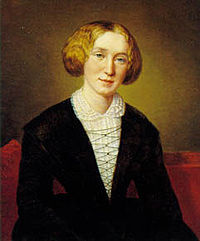
George Eliot’s novels are still widely read because, among other things, of her formidable intelligence, courage, and insight into people. She brought a psychological realism to her novels that previously was not there. Virginia Woolf characterized “Middlemarch” as “one of the few English novels written for grown-up people”. Eliot was quite a subversive for her time, living with George Lewes quite happily for 24 years without the benefit of marriage. She dealt with uncomfortable subjects in her novels such as British anti-semitism. Aristocrats were at least as likely to be the villains in her novels as common people. She was not buried in Westminster Abbey because of her denial of the Christian faith and her ‘irregular’ relationship with Lewes.
I recently read the George Eliot quotes at ThinkExist.com, and found many of them that I liked a lot. The following are my favorites.

    “Life began with waking up and loving my mother’s face.”

    “I think I should have no other mortal wants, if I could always have plenty of music. It seems to infuse strength into my limbs and ideas into my brain. Life seems to go on without effort, when I am filled with music.”

    “Perhaps the most delightful friendships are those in which there is much agreement, much disputation, and yet more personal liking”

    “Cruelty, like every other vice, requires no motive outside of itself; it only requires opportunity”

    “Blessed is the influence of one true, loving human soul on another.”

    “Falsehood is easy, truth so difficult.”

    “Knowledge slowly builds up what Ignorance in an hour pulls down”

    “Any coward can fight a battle when he’s sure of winning, but give me the man who has pluck to fight when he’s sure of losing. That’s my way, sir; and there are many victories worse than a defeat.” Amen!

    “Delicious autumn! My very soul is wedded to it, and if I were a bird I would fly about the earth seeking the successive autumns.”

    “If we had a keen vision of all that is ordinary in human life, it would be like hearing the grass grow or the squirrel’s heart beat, and we should die of that roar which is the other side of silence.”

    “It is never too late to become what you might have been.”

OK, enough already.

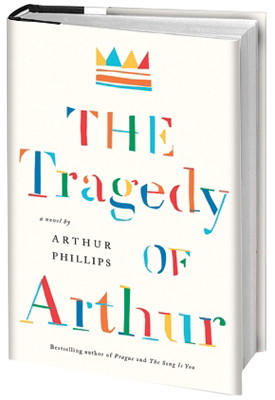
“The Tragedy of Arthur” by Arthur Phillips and William Shakespeare

“The Tragedy of Arthur” by Arthur Phillips and William Shakespeare (1597, 2011) – 368 pages

“The remarkable thing about Shakespeare is that he is really very good – in spite of all the people who say he is very good.” – Robert Graves

“If it didn’t have his name on it, half his work would be booed off the stage”. – “Arthur Phillips”

This is the novel where Arthur Phillips one ups William Shakespeare.  For “The Tragedy of Arthur”, I’m going to forsake any pretence to objectivity.   I loved this novel.

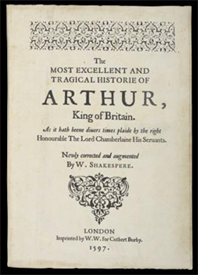
The book consists of the entire play “The Tragedy of Arthur” by William Shakespeare and the play’s introduction by Arthur Phillips.  The introduction is 256 pages long.  It tells the wild and woolly story how this unknown Shakespeare play winds up in Minneapolis and in Arthur Phillips’ hands.  The character “Arthur Phillips” has very personal and family reasons to be down on all things Shakespeare – his Shakespeare-loving con-man father and his Shakespeare-loving twin sister Dana.   Parts of this story are real and parts are made up, and there is no good way to tell which is which.  The story is told with élan, high energy and humor throughout.

In the quotes above, I put the name “Arthur Phillips” in quotation marks, because this “Arthur Phillips” is the character in the novel and not the author.  I don’t know for sure what the actual novelist Arthur Phillips thinks of William Shakespeare, but do keep in mind that imitation is the sincerest form of flattery.

I’ve read three of Arthur Phillips’ previous novels, “Prague”, “Angelica”, and “The Song is You”.  He is one of the writers on my must-read list.  But even given that his previous novels have delighted me, “The Tragedy of Arthur” is still a revelation.  Of course I’ve had a thirty year interest in Shakespeare’s plays, and I’ve read, heard, and seen a lot of them, some of them many times.  Being familiar with Shakespeare helped me appreciate “The Tragedy of Arthur” even more, but I could also see how someone not familiar with Shakespeare’s work could like this novel as well.   It just takes a good sense of humor to appreciate the shaggy dog story about Arthur and his family.

And what of the play “The Tragedy of Arthur” itself?  The play is much more than a pastiche; For all intents and purposes it is a Shakespeare play. All the elements are there, the iambic pentameter, the trials and tribulations of a King and his court, the dramatic battles, the wicked villain, the playful romantic bantering, the nauseating English super-patriotism, plenty of footnotes,  Just like in Skakespeare, there are highly detailed elaborate footnote explanations for lines I completely understood anyhow.  Then for lines I didn’t understand  there usually were no footnotes at all..

Some of the lines in the “The Tragedy of Arthur” are simply superb.

NURSE :           You yielded comfort nine full moons ago.

                             There, there, sit quiet now, you jar the prince.

GUENHERA : What ancient sage first wond’ring marked that line

                                 Of moons ‘twixt lover’s smile and labor’s cries?

NURSE :           Twas known when Adam first leered eyes at Eve. 

The entire story of the play coheres in a very Shakespearean way. I’d really like to see “The Tragedy of Arthur” performed on stage. It was written by Shakespeare in 1597, very early in his playwriting career.   To me it resonates more as one of Shakespeare’s historical plays which were written early in his career rather than as one of his major tragedies.

The dueling footnotes between Roland Verre the Shakespeare ‘expert’ and “Arthur Phillips” alone  are worth the price of admission.

Arthur Phillips, how presumptuous of you and Thank You!