“Mr. Wonderful” by Daniel Clowes

“Mr. Wonderful” by Daniel Clowes (2011) – 77 pages

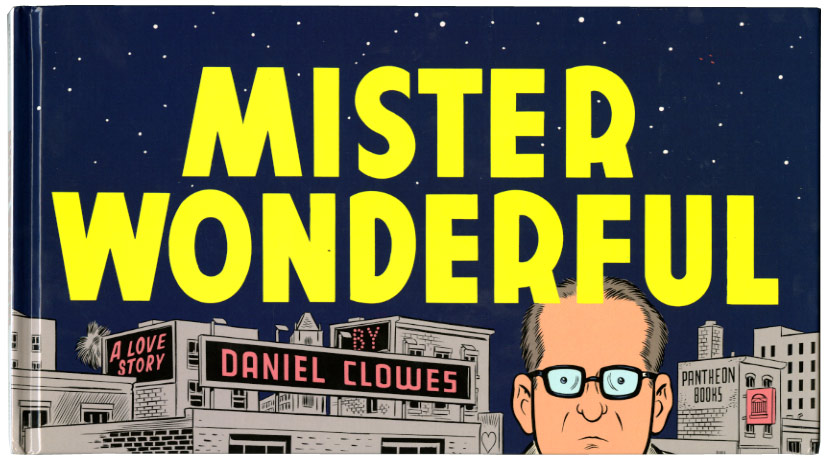
 “Mr. Wonderful” is the ironic title of this graphic novel about a blind first date between Marshall and Natalie, both in their thirties.  Much of the book was originally serialized in the New York Times Magazine. 

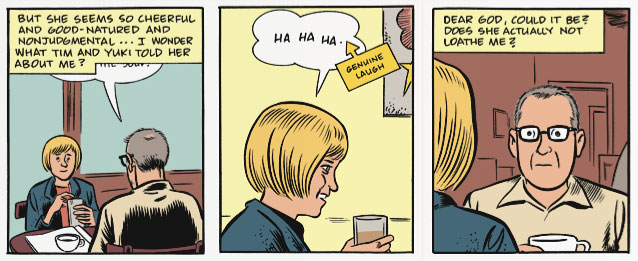
 Marshall hasn’t had a date for the six years since the divorce from his wife who “had some issues with fidelity”.  His friends Yuki and Ted set him up with Natalie, and while waiting for her in the designated restaurant meeting place, Marshall is filled with self doubts and grandiose dreams.  Natalie arrives forty minutes late, apologizes, and the date begins. 

.

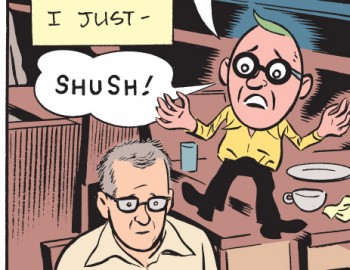
Much of the story is taken up with Marshall’s interior monologue.  Just how honest and truthful should he be and still not scare her away?  Natalie tells Marshall her back story. Marshall is ready to go into his story when the little mediator inside his head, who is actually pictured as a small fairy version of himself in a cloud above his head, says “Schmuck!  What are you doing?!  Don’t bum her out with your sob sister crap!  What’s wrong with you?”

 One of the nice things about “Mr. Wonderful” is the variety of the artwork which spices the story up to a considerable extent.

 Marshall, with all his self-doubts and inner criticisms and self-consciousness, is reminiscent of the Woody Allen character in the early Woody Allen movies like ‘Play It Again Sam’.  It does lend even more humor and realism to the dating situation.  However we’ve seen this first date setup a thousand times before.  Many events occur during the date which I won’t go into.  You can find out for yourselves. 

“Mr. Wonderful” is neither great literature nor a great graphic novel.  However, it is a pleasant diversion, and being a graphic novel, the book does not require much time or effort to complete.

The Top Ten List of Fiction I’ve Read in 2011

Last year was the year of the short story with six entries either short story collections or novels made up of linked stories.  This year the novel returns with a vengeance with no short story fiction in the list at all.  This list is not a random list; it is a ranked list with #1 my number 1 choice, #2 my number 2 choice, etc. 

These are the same rules as last year.  I’m restricting the Top 10 list to books which were published since 2000 and then listing afterwards a few of the older books which I found rewarding during the year.  Like last year, I don’t think the newly published fiction should have to compete with time-tested classics.

Here is the Top Ten list.

1.  “The Old Romantic” by Louise Dean  (2010) – This novel is a wicked joy with the meanest and sharpest dialogue of the year.

 2.  “Rules of Civility” by Amor Towles  (2011) – I guarantee that this most charming of novels will make you wish you were in New York City in 1937-38.

 3.  “Room” by Emma Donoghue (2010) –  What can I say that hasn’t already been said?  A five-year old boy and his mother locked in ‘Room’.

 4.  The Sense of an Ending” by Julian Barnes (2011) – A London schoolboy grows up and learns not to trust the life story he’s been telling himself for many years.

 5.  “Swamplandia” by Karen Russell (2011) –  A delightful story of the BigTree family and their alligator wrestling amusement park in Florida. 

 6.  “We the Animals” by Justin Torres (2011) – A dramatic family story that has a visceral impact which will leave you thinking about your own family.

 7.  “Netsuke” by Rikki DuCornet (2011) –  A novella of relentless sexual obsession from the viewpoint of the guilty party.

 8.  “The Tragedy of Arthur” by Arthur Phillips (2011) – If imitation is the sincerest form of flattery, then this humorous novel flatters William Shakespeare..     

 9.  “In the Garden of Beasts” by Eric Larson (2011) – Not fiction, a “novelistic history”; a story of love, terror, and a United States family in Hitler’s Berlin. 

 10.  “The Girl Who Fell From the Sky” by Heidi W. Durrow (2010)  – A compelling original coming-of-age story that takes place in both Chicago and Portland.


Now as promised here are some excellent novels I read in 2011 that were first published before the year 2000.

“cloudstreet” by Tim Winton (1991) – The crowd-pleasing wild story of two Australian families, the Pickles and the Lambs, who share the same house. 

 “After Claude” by Iris Owens (1973) –  Perhaps the bitchiest novel ever written about an anti-heroine named Harriet.

 “Hard Rain Falling” by Don Carpenter (1966) – A tough realistic novel about two young guys in Portland, Oregon who are outside society, outside the law.    

 “The Vet’s Daughter” by Barbara Comyns (1959) – A unique primitive novel about the veterinarian from Hell and the rest of the family.

 “The True Deceiver” by Tove Jansson (1982) – A simple menacing novel which is like a cold dark morning in Finland.

That’s all, Folks..

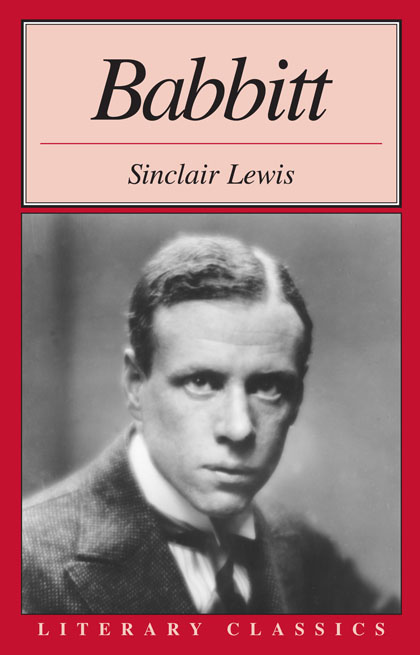
“Babbitt” by Sinclair Lewis, Occupy Zenith

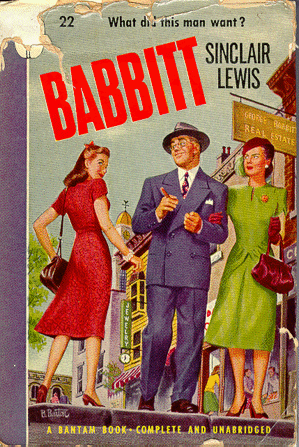
“Babbitt” by Sinclair Lewis   (1922)  –   391 pages

The cocktail filled him with a whirling exhilaration behind which he was aware of devastating desires—to rush places in fast motors, to kiss girls, to sing, to be witty. He perceived that he had gifts of profligacy which had been neglected.”

 During this ‘too close to Christmas’ lull in fiction publishing, I decided to re-read the old Sinclair Lewis classic “Babbitt”.  “Babbitt” is frequently called a satire on the emptiness of middle-class United States life and its pressure toward conformity, but the story is so realistic in its details that sometimes it seems deadly serious.

“Babbitt” tells the story of about a year in the life of George Babbitt who is a successful realtor and a strong booster of his home city, the fictitious Zenith.  The time is the 1920s when the slogan was “the business of America is business”.  George is a member of several civic organizations and is well-respected as long as his every thought conforms closely to those of all the other business leaders of the city.  He has the typical middle-class family, a wife and three kids.  George is a really good public speaker and is ready to assume a greater leadership role.

Then a violent event occurs which changes everything for George.  His close friend and old college roommate Paul Reisling murders his argumentative wife by shooting her during an argument.  George questions his current life and goes bohemian, partying with flappers, taking up with an artistic mistress, and becoming a  socialist.  Of course he is ostracized and shunned by all his old business leader friends.

I suppose since the changes to George are quite broad and occur so rapidly, the novel could qualify as satire.  However having worked for an insurance company, a retail company, and several other private companies, I can testify to the absolute compliance to conformity of ideas required to be successful in the United States business world even today.   I remember my first job after college working for a private auto insurance company sitting at the break table when I was called a Communist ‘pinko’ by a couple of the other insurance underwriters.  I, being young at the time, probably did spur that reaction on purpose.

.

Which brings us to the Occupy movement.  Only time will tell if the young people of today and others of the Occupy movement will have any success against the Robber Barons of the 21st century, the Kochs, the Murdochs, etc. Or as the Occupy movement itself would say, “Can the ninety-nine percent of the people reclaim their share from the one percent who own and control everything?”

Sinclair Lewis knew the crushing conformity of the business world through and through, and he had considered Socialism while young.  Is there any fiction writer today who is as familiar with the current business world as Lewis?

“In other countries, art and literature are left to a lot of shabby bums living in attics and feeding on booze and spaghetti, but in America the successful writer or picture-painter is indistinguishable from any other decent      business man.”

                                      Sinclair Lewis

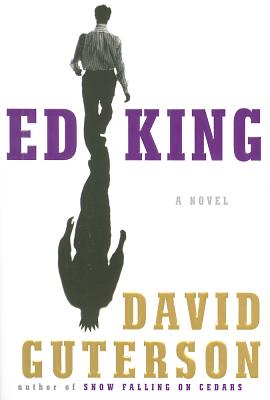
“Ed King” by David Guterson, Oedipus Today

“Ed King” by David Guterson  (2011) – 304 pages

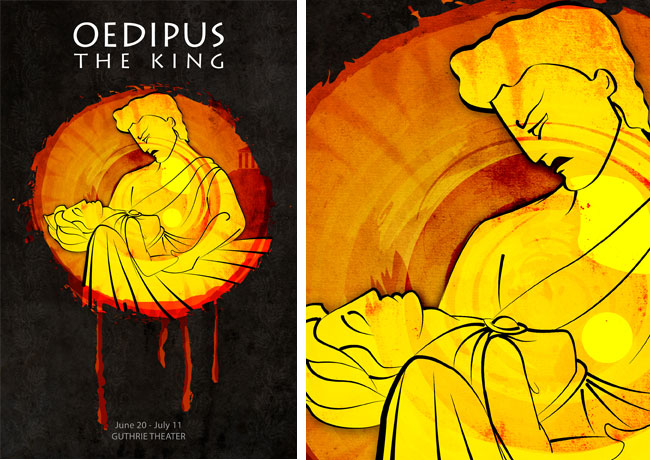
 As many of you have probably heard by now, “Ed King” is a modern retelling of the Sophocles play Oedipus Rex, that ancient tragedy of a doomed family. 

 This is a great idea for a novel, because the idea of fate is just as valid today as it was in ancient Greece.  We still haven’t pinned down the exact link between one’s behavior and one’s destiny and one’s family’s destiny   Many believe there is a link, and that fate is not just a random series of events.  Many believe we are sinners in the hands of an angry god.    

 This new novel takes place in the three West Coast states of Washington, Oregon, and California.  The story begins in 1962, the year of the Seattle World’s Fair, and continues through the beginning of the personal computer up to the Internet era of today and beyond.   It’s the life story of Ed King from his conception.

 So what is the sin in “Ed King” that sets off the events that occur over the next fifty years?  The answer is in the first sentence of the novel.  “In 1962, Walter Cousins made the biggest mistake of his life: he slept with the au pair for a month.”  She is the fifteen-year old English au pair girl, Diane, who was hired to take care of Walter’s kids while his wife is in the hospital for a nervous breakdown.   As with ‘Oedipus Rex’ the key to the Ed King story is the adoption of the baby, so the kid cannot recognize his real parents.  Even today it is not that far-fetched that an adopted child could sooner or later run into his real parents.

 In Sophocles’ play, Oedipus solves the riddle of the Sphinx.  “What is the creature who walks on four legs in the morning, two legs at noon, and three in the evening?” Oedipus replies, “Man, who crawls on all fours as an infant, walks upright later, and needs a walking stick in old age.”   In the novel, Ed King invents a new search algorithm, starts an Internet company Pythia, and becomes a billionaire.  Just as people now say, ”I googled ‘Sophocles’”, in the novel they say ‘I pythed ‘Aristophanes’”.

 So does David Guterson succeed in his re-telling of the Oedipus story?  To a large extent he does succeed.  The events in the novel are vivid and well-told, and I will probably remember this novel long after I’ve forgotten many others.

The long winding road of Ed King’s life fits together well as a story, though somehow the prosaic events of the last fifty years do not resonate with the same tragic drama as the Oedipus story.   The original Oedipus is a risqué, tragic sex story, yet that part of the story in this American re-telling seems almost banal without the catastrophic implications.

  The ideas of an individual fate and a family fate are not as powerful as they once were.

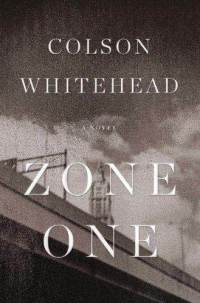
“Zone One” by Colson Whitehead, A Zombie Novel

“Zone One” by Colson Whitehead (2011) – 259 pages

 “All the writers were busy pouring jugs of kerosene on heaps of the dead, pitching in for a change.”

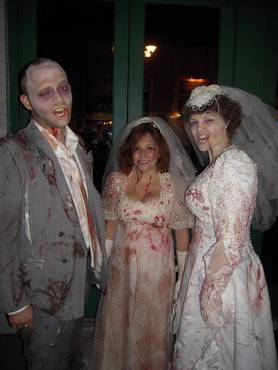
Zombie Pub Crawl in Minneapolis

I remember thinking, “If I ever, ever were to read a zombie novel, it would have to be by Colson Whitehead.”  Well here it is, “Zone One”. Colson Whitehead established himself, in my mind, as one of the finest novelists around with his first two books, “The Intuitionist” and “John Henry Days”.

 Zombies or fighting zombies has never been one of my main areas of interest, although it has been fun to see those out for the annual Zombie Pub Crawl in Minneapolis.  I did figure if anyone could make a zombie novel come alive, it would be Whitehead. 

 There are three well-defined characters in “Zone One”.  There is the main character Mark Spitz who is “the most likely not to be named the most likely anything.”  There is Gary who brings an extra enthusiastic elan to zombie defacing and beheading.  Finally there is their yuppie leader Kaitlyn who brings some much-needed professionalism to their straggler disposal unit.        

 As long as the novel is in the Here and Now with our three well-defined characters decapitating zombies, the novel works to some extent. Whitehead has a lot of fun both making ironic commentary on the upper class life style in New York City now turned into zombie land and also deriding Connecticut.

 What kills the novel are the interminable flashbacks.  Many, many characters are introduced during these flashbacks who really have nothing to do with the main plot.  Also the language used for these flashbacks is convoluted and not at all direct.   Reading the novel became somewhat of a long slog for me.  I must admit I had more difficulty finishing this novel than any other I’ve completed this year.  I just totally lost interest in the story, and it actually became painful to read on.   

 “Zone One” is walking dead on arrival.

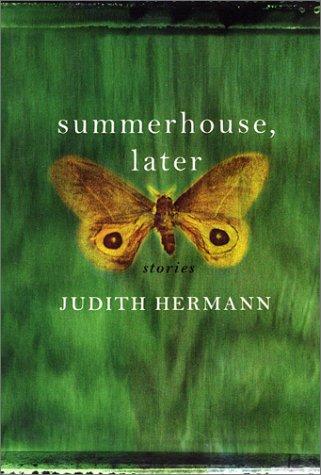
“summerhouse, later” by Judith Hermann – Luminous Stories with an Emotional Depth Charge

“summerhouse, later” by Judith Hermann (1998) – 205 pages
Translated from the German by Margot Bettauer Dembo

I first heard of Judith Hermann at Beauty is a Sleeping Cat in an article called ’14 German Women Writers You Shouldn’t Miss’ which was written as part of German Literature Month. What spurred me to read this collection of short stories was because the article said that Hermann has refrained from writing about World War II. Over the years I’ve read so many novels about different aspects of World War II that I have become somewhat burned out on the subject and am ready for something else.

Something else is exactly what I got with “Summerhouse, Later”. It is difficult to summarize these stories, because each story is completely different from the others. The stories defy your expectations and are outside the comfort zone. They are easy to read because the words and sentences are simple, but there is a hidden depth charge

Many of the stories are about the interaction between men and women. The stories are not about sex. Three of the stories had quite different plots but had the same emotional setup. Here is the setup. A man, in order to live in peace, has carefully built up a wall of solitude and isolation over the years. A woman comes along who somehow begins to break through this wall. The man is quite irritated at first and expresses his annoyance. Then it becomes obvious to the man that this woman has broken through his wall, and for the man this is a momentous occasion. By this time the woman sees the man as a bit of a bother, and she has casually moved on to something or someone else. That seems about right.

As I mentioned before, the sentences are short and easy to follow. Judith Hermann is not the kind of writer where there are a lot of grand quotable sentences. However I want to give you a sample of the art of Judith Hermann. The following from the story “Sonja” will do.

Sonja never talked. Practically never. To this day I don’t know anything about her family, her childhood, where she was born, her friends. I have no idea what she lived on, whether she had a paying job or whether someone kept her, whether she had professional ambitions, where she was headed, and what she wanted. The one person she spoke of was the small red-haired woman I had seen at her party; otherwise she mentioned no one, certainly not men, even though I was sure there were plenty.

If you want something different, something with a sharp edge, that tells emotional truths, read Judith Hermann.

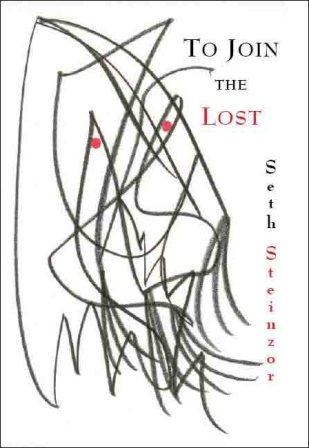
“To Join the Lost” by Seth Steinzor – A Guided Tour through Hell

“To Join the Lost” by Seth Steinzor  (2010) – 209 pages

 “To Join the Lost” is an epic poem that is a modern version of Dante Alighieri’s Inferno from the early 1300s, that famous tour through Hell.  In this new version, the tour guide is Dante, and the follower is the author himself looking for his  lost love, Victoria.  Since he is still alive, he cannot touch the dead, only see them and hear them. 

 Dante’s Inferno is a religious allegory discussing sin, virtue, and theology.  It presents a vivid picture of those sinners inhabiting the various parts of Hell and the just punishments they must endure eternally.  I can certainly see why a writer would want to try a modern version of the Inferno, the danger being that it would be compared against the original by Dante.  Who wouldn’t want to populate their own Hell and choose the just punishments for those we put there? 

 Certainly Dante populated his Hell with the names of contemporaries who have long since been forgotten as well as people from ancient history and mythology, but their sins are so clearly described and their punishments so fitting, the result is still timeless.   In “To Join the Lost”, many of the specific names seem already outdated such as Robert Dornan, Anita Bryant, Ahmed Chalabi, and Robert McNamara.  However the actual sins and the resulting punishments do not come across at all as distinctly as they do in Dante.   “To Join the Lost” is more of a secular allegory rather than a religious allegory, and thus Hell here does not have its moral force.

    So now the nation cowers the way it was taught to.

    Fear is the heritage we share. The

    puritans’ god was a wrathful god, and in the

    land of spacious skies and amber

    waves of grain the anthem we sing before

    they throw the first pitch is not ‘Take

    Me Out to the Ballgame’ but a celebration

    of having endured bombs bursting in air.

    Slaves and slaveholders, natives and immigrants bound by

    Ropes of fear, whose children fling missiles

    into shelters full of fearful Baghdadis.

I agree with the sentiments expressed in the above passage from the poem and agree with most throughout.  I did sometimes want the ideas to be more original and surprising. 

I have no problem with free verse, don’t count syllables or stresses or rhymes.  It makes no difference if the poem is divided into the traditional fourteen line sonnets or twelve lines or ten lines as it is here.  However I do have one personal requirement.  However the lines are divided, at the end of a section, there should be a period so that the section represents a complete thought.  In ‘To Join the Lost’ there is no attempt to complete a thought in a section, and sentences frequently run on for several lines into the next section.   It is good discipline for a writer to work to find just the right words to fit into the structure chosen.  That is the advantage poetry has over prose.

Ten Excellent Novels that Take Place in the Historical United States

Before I became addicted to fiction, I was interested in history.  When I was ten years old and still living on the farm, I belonged to a History Club my older brother started.  The few members would present a report on some historical event, usually related to United States history such as the Battle  of New Orleans or the inventions of Thomas Edison.  I still enjoy historical fiction as long as it has the qualities of good fiction.  The following novels do have these qualities. 

 “Libra” by Don DeLillo (1988) – This is a novel about the John F. Kennedy assassination.  It focuses on the life of the assassin Lee Harvey Oswald following him from early youth to the Marines to Russia and back.  DeLillo’s speculations about the events are controversial.  This is my favorite DeLillo novel.   

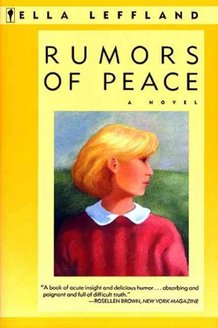
  “Rumors of Peace” by Ella Leffland (1979) – To 10 year old Suse Hanson of rural California, the events of World War II seemed far away until Pearl Harbor.  Then the Japanese-American families living in her neighborhood disappear overnight.  Only later does she discover they have been forcibly moved into internment camps.  She grows up to be an aware teenager during these four years of World War II.  Ella Leffland is not much heard of today, but I’ve read several of her novels and they have been excellent.

  “Killer Angels” by Michael Shaara (1974) –  A novel that attempts to tell the full story of the 4-day battle of Gettysburg in the United States Civil War from the perspective of various protagonists from both sides, North and South.  The novel was later made into the movie “Gettysburg”. 

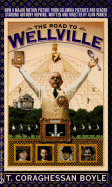
“The Road to Wellville” by T. Coraghessan Boyle (1993) – the fall-down hilarious story that takes place in the health resort in Battle Creek, Michigan run by John Harvey Kellogg, inventor of corn flakes.  Here you want to read the book, not watch the movie.  The movie is supposed to be terrible.      

“Caleb’s Crossing” by Geraldine Brooks (2011) – The inspiring story of Caleb Cheeshahteaumuck, the first native American to graduate from Harvard College in 1665.

“The March” by E. L. Doctorow (2005) – a fictionalized account of the ‘scorched earth’ march of William Tecumseh Sherman and his troops through  Georgia and South Carolina. 

“I Should be Extremely Happy in Your Company” by Brian Hall (2003) – This is a fictionalized account of the Lewis and Clark expedition of 1804-06 based on Meriwether Lewis’ extensive meticulous notes.  Thomas Jefferson had completed the Louisiana Purchase in 1803 and needed someone to explore this huge new territory the United States now owned.  The expedition was very successful making it all the way to the Pacific Ocean and back.  They were accompanied by a fifteen year old Shoshone Indian woman Sacagawea, wife of a French fur trader, who translated conversations between the expedition and the various Indian tribes.  This is a captivating story told well.    

  “Death Comes to the Archbishop” by Willa Cather (1927) – This western novel is about the attempts of a Catholic bishop and a priest to establish a diocese in the then New Mexico territory among the Hopi and Navajo Indians in the 1860s.  As always with Cather, this is a great story.

 “Burr” by Gore Vidal (1973) – An imaginary memoir of the United States anti-hero Aaron Burr, ex US Senator and Vice-President who killed Alexander Hamilton in a duel and was later tried for treason

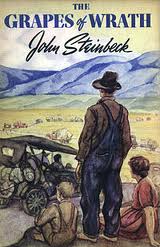
“Grapes of Wrath” by John Steinbeck (1939) – A tremendously moving novel of the Great Depression.  The novel is about the Joad family who are driven from their rural Oklahoma home by economic hardship and drought.   They pack up all their belongings and head to California where things aren’t very good either.

“Lightning” by Jean Echenoz – The Man Who Out-Smarted Thomas Edison

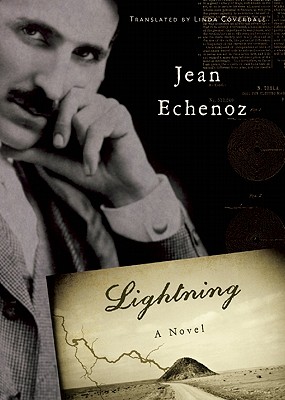
“Lightning” by Jean Echenoz  (2010) – 142 pages   Translated by Linda Coverdale

“The mind is sharper and keener in seclusion and uninterrupted solitude. No big laboratory is needed in which to think. Originality thrives in seclusion free of outside influences beating upon us to cripple the creative mind. Be alone, that is the secret of invention; be alone, that is when ideas are born.”

                                                        Nikola Tesla         
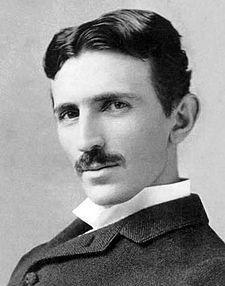
 First we will discuss the man, Nikola Tesla, and then the novel about his life. 

 Nikola Tesla was born in a Serbian village in 1856 which was then a part of the Austrian empire.  After a haphazard education and a couple of engineering jobs, he immigrated to New York City in the United States with little more than a letter of recommendation to Thomas Edison.  The letter of recommendation may have said, “I know two great men.  You are one of them, the other is this young man.” Edison hired Tesla to help solve some of the problems the Edison Company was having with their electric generators.  Tesla claimed that Edison offered him $50,000 to redesign Edison’s inefficient motor and electric generators which could only send the electricity 2 miles.  Tesla did so and asked Edison for the money, and Edison said,  “Tesla, you don’t understand our American humor” and did not pay him the $50,000.  Tesla immediately quit. 

 The Edison Company’s electric generators used direct current in their power plants; Tesla had the idea and came up with the design to use alternating current (AC) which was much more efficient and could transmit electricity long distances.  He ran his own small company for a few years until he signed a contract with George Westinghouse.  At the 1893 World’s Columbian Exposition, Westinghouse and Tesla introduced visitors to AC power.  Within a few years, Westinghouse was installing power plants and selling electricity all over the world.  Westinghouse asked Tesla to release Westinghouse from a contract signed earlier that would have made Tesla the world’s first billionaire, and Tesla tore it up.  Meanwhile Thomas Edison stubbornly stuck to his inefficient direct current generators

 Alternating current was only one of the many brilliant ideas Tesla had.  Tesla’s genius was the restless kind.  He also developed the ideas of radio, radio control, the wireless telegraph, radar, X-Rays, guided missiles.   That is why people say, “Nikola Tesla invented the Twentieth Century’.

A little-known fact about Tesla is that he was good friends with Mark Twain.
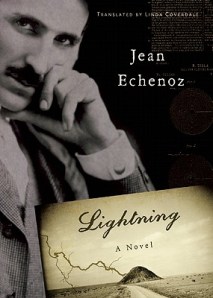
 The life story of Nikola Tesla is ‘can’t miss’ material for a biography or a fictionalized biography as far as I’m concerned.  The story has everything, drama, humor, later scenes of great poignancy.  After his huge success with alternating current, Tesla still had many excellent ideas, but they were so advanced, so off the beaten path, that many considered him a crackpot, a mad scientist.   Jean Echenoz, a French writer, does a fine job in this short little book dramatizing the life of Nikola Tesla.  “Lightning” the book has charm and a simple direct style that makes it a pleasure to read.  After reading “Lightning”, I want to read more of Echenoz’s novels.   Schools could use “Lightning” to introduce their students to probably the United States’ greatest scientist.    

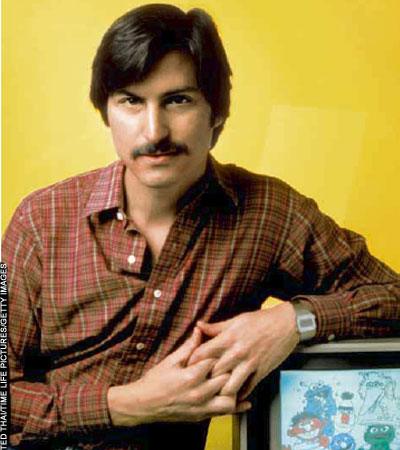
 When I think of Nikola Tesla, I can’t help but think of Steven Jobs.  Here are two men whose ideas were so far beyond their time they transformed the world, yet both had to contend with adversity.

 “That is the trouble with many inventors; they lack patience. They lack the willingness to work a thing out slowly and clearly and sharply in their mind, so that they can actually ‘feel it work.’ They want to try their first idea right off; and the result is they use up lots of money and lots of good material, only to find eventually that they are working in the wrong direction. We all make mistakes, and it is better to make them before we begin.”

                                                        Nikola Tesla
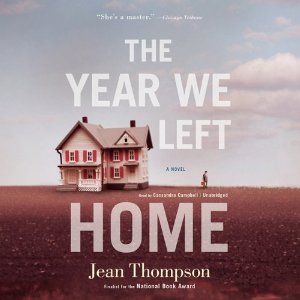
“The Year We Left Home” by Jean Thompson, An Iowa Family through 30 Years

“The Year We Left Home” by Jean Thompson (2011) – 323 pages

I have admired Jean Thompson’s short stories for a long time. She is a strong voice from the Midwest who can bring out the drama in plain ordinary small town people. “The Year We Left Home” is a novel of inter-connected realistic stories which follow members of the Erickson family from Granada, Iowa through thirty years. The four main characters are son Ryan whom we first meet in high school, daughter Anita whom we first meet getting married, daughter Torrie who is only ten when we meet her, and their Vietnam vet cousin Chip who is five years older than Ryan.

This is the kind of book that causes you to think of your own extended family, all those brothers, sisters, cousins, uncles, aunts, grandparents, nephews, nieces and so on. When you’re talking twenty or thirty people in an extended family, you’re going to get all kinds even if you’re all related. That is what the Erickson family is like. None of them are exceptionally successful.  There are a couple of hard workers who stayed close to home, there are the ne’er-do-wells, there are the drunk and the wife who must contend with him,  there are the college boys who moved away, there’s the victim of an unfortunate childhood disease or accident.

Most of the stories in ‘The Year We Left Home’ start with a fairly normal event such as a wedding, a visit home from college, or a trip to Italy, and as the story progresses, there is some dramatic development that occurs. The drama increases until it reaches its highest point, and then the story abruptly ends. This is an effective technique for holding the reader’s interest . Jean Thompson knows her way around a story.

The Erickson family members may travel all over the country and even to Italy in Europe, but they always come back to the center which is the old home in Granada, Iowa.

Some of the reviews of this novel see this as Jean Thompson’s breakout book, the book which will finally bring renown to this much under-rated author. My main cavil about this novel of stories is that it is almost too realistic. . It’s like the stories you hear about your distant relatives, most of which are sad; otherwise you wouldn’t be hearing anything at all about these people. When you do go to a family reunion, some of the people at your family reunion are quite difficult to talk to, because their lives are so different from yours. A couple of times a year, it might be nice to see all these relatives, to talk to them a little, and so on, but that’s about it. I’m not a member of Facebook and don’t want to be inundated with thousands of pictures of shoestring relatives, but that’s just me.  For the great majority of people who like Facebook, these stories will be fine.

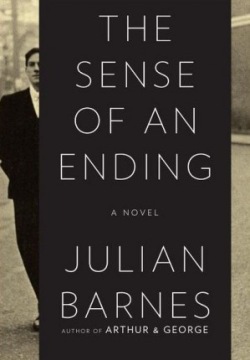
“The Sense of an Ending” by Julian Barnes, a London Schoolboy Grows Up

“The Sense of an Ending” by Julian Barnes (2011) – 163 pages

    “Yes, of course we were pretentious – what else is youth for?”

 When I started “The Sense of an Ending” while reading the amazing first chapter which takes place mostly in London classrooms, I started writing down quotations from that chapter.  At the rate I was writing down quotes, it seemed like I would be copying out nearly the entire novel.  It is important that the reader pay attention to these early classroom discussions for they set the framework for the entire novel.

 Much of the discussion centers on the study of history.
 

    “That’s one of the central problems with history, isn’t it sir? The question of subjective versus objective interpretation, the fact that we need to know the history of the historian to understand the version that is being put in front of us.”

 This is a statement by Adrian Finn, the acknowledged genius of the class.  Later during the classroom discussion, Adrian makes a statement that can serve as the premise of the entire novel. 

    “History is that certainty produced at that point where the imperfections of memory meet the inadequacies of documentation.”

In the classroom, the students and their teacher are discussing the study of history as an academic subject.   After the first chapter, Julian Barnes, for the rest of the novel, applies this premise to his main character’s own personal history.   Here we have an unreliable narrator, but one who is somewhat aware of his own unreliability. 

 Our memories of people and events that happened years and years ago are faulty.  You might say we remember what we want to remember; we recall a version of events that fits into our own carefully built life story.  We block out from our memory occasions where we ourselves were cruel and mean, especially those times we were extremely mean to someone who was very close to us.   There may be letters and diaries related to these events, but they are usually not very revealing and may have been written to conceal what actually happened. 

 It is not very often today where a novel starts with a premise and follows that premise through to its logical conclusion.  We live in a dumbed down world, a world of Rupert Murdoch, the Koch brothers, and George W. Bush.  That’s why it is such a pleasure to read a novel that is smarter than we are.

 Besides this fascinating plot, “The Sense of an Ending” offers a comprehensive definition of literature. 
 

    “That was another of our fears: that Life wouldn’t turn out to be like Literature. Look at our parents – were they the stuff of Literature? At best they might aspire to the condition of onlookers and by-standers, part of a social backdrop against which real, true, important things might happen. Like what? The things Literature was all about: love, sex, morality, friendship, happiness, suffering, betrayal, adultery, good and evil, heroes and villains, guilt and innocence, ambition, power, justice, revolution, war, fathers and sons, mothers and daughters, the individual against society, success and failure, murder, suicide, death, God. And barn owls.”

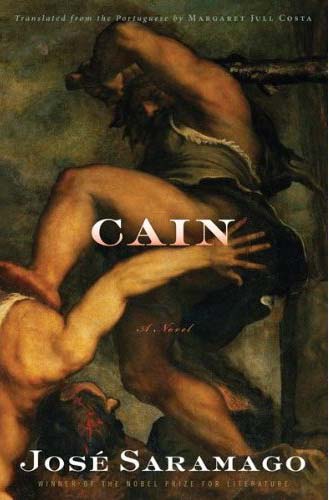
“Cain” by Jose Saramago, Divinely Inspired Blasphemy

“Cain” by Jose Saramago   (2011) –  159 pages

 Most of you new readers and book bloggers are familiar with Jose Saramago, if at all, through his brilliant fairly recent novel, “Blindness”.  However those of us who have been in the literature-reading rackets for a long time realize that Saramago wrote at least two novels which are even better than “Blindness”.  One is “The Year of the Death of Ricardo Reis” which is Saramago’s masterpiece in homage to that Portuguese genius of geniuses, Fernando Pessoa.  The other is “The Gospel According to Jesus Christ” which is of course based on the New Testament of the Bible.  In 1969, when ‘Gospel’ was published, the government of Portugal, pressured by the Catholic Church, refused to allow “Gospel” to compete for the European Literary Prize.  At that point Saramago self-exiled himself to the island of Lanzarote in the Spanish Canary islands. 

 “Cain”, Saramago’s last book published posthumously,   is also based on the Bible, this time the book of Genesis in the Old Testament.  You probably recall the story of Cain and Abel, the first two sons of Adam and Eve.  Both sons provide an offering to God.  God accepts Abel’s offering of a killed lamb, but God rejects Cain’s offering of fruits and vegetables.  Then Cain murders Abel out of envy.  But isn’t it terribly arbitrary of God to accept the one offering but reject the other?.  God sentences Cain to wander alone on the earth, and in the atheist Saramago’s novel, Cain shows up at most of the significant events that occur in Genesis including the Tower of  Babel, Sodom and Gomorrah, Abraham’s offering up of his son Isaac, and Noah and the Great Flood.  In all these places Cain is in a unique position to see and question the arbitrariness of god.    Cain takes every opportunity to point out the injustices caused by God’s harsh judgment.  Thus God destroys Sodom and Gomorrah for their wickedness, killing not only the wicked, but everyone including the little children. 

Quoting from “Cain” itself, here is another fine example of Cain’s sceptical attitude.

“Cain could barely believe what he was seeing.  Burning sodom and gomorrah to the ground had evidently not been enough for the lord, for here, at the foot of mount sinai, was clear irrefutable proof of his wickedness, three thousand men killed simply because he was angered by the creation of a supposed rival in the form of a golden calf.  I killed one brother and the lord punished me, who, I’d like to know, is going to punish the lord for all these deaths, thought cain, Lucifer was quite right when he rebelled against god, and those who say he did so out of envy are wrong, he simply recognized god’s evil nature.”

There is a lot of humor in “Cain” which is told in Saramago’s inimitable folksy style from Cain’s point of view.   Besides entertaining us, one of the main purposes of the novel seems to be to undermine Biblical faith and belief.    Saramago has Noah married to that mythical woman Lilith, and the insatiable Lilith immediately adopts Cain as her sex slave.  Noah, in a jealous rage, gets two men to follow Cain and attempt to murder him.  That’s not in the Bible; that’s blasphemy.

It’s good to have this atheist and towering figure in the literary world, Jose Saramago, stick to his beliefs or un-beliefs up until the very end.  “Cain” is a very enjoyable and fascinating read, a strong novel to end his career.  For religious people, this novel would be the perfect way to test their beliefs, as it makes a strong case for the other side .

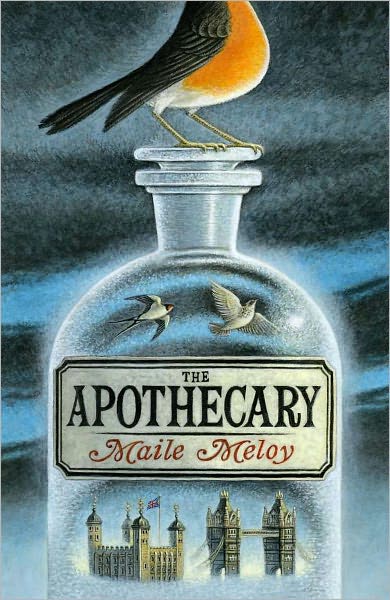
“The Apothecary” by Maile Meloy, Her Young Adult Novel

“The Apothecary” by Maile Meloy (2011) – 353 pages

“The Apothecary” is the new young adult magical adventure novel by Maile Meloy.  So far I had read three of Meloy’s adult realistic novels and story collections and have been much impressed with her work.  Her last story collection “Both Ways is the Only Way I Want It” – love that title! – made my best of the year list for 2009.  If I like an author’s work in one genre, I will read their work in another genre, because literary talent is literary talent. 

 “The Apothecary” is about a band of early teens involved in a fantastic and magical adventure in England. Does that sound familiar?  If one were cynical, one might think that Meloy is going for the Harry Potter market now that Harry Potter is winding down.

 In these magical adventure stories, one of the main things a writer must do is establish the main character’s credibility early on so that when the events turn extraordinary the reader accepts them.  As “The Apothecary” begins, our hero (or heroine) Janie is living with her screenwriter parents near Hollywood in 1952.  This was the time when the House Un-American Activities Committee was holding hearings into alleged communist propaganda and influence in Hollywood. Many friends of Janie’s parents were being forced to testify against others in the movie industry, many of whom would then be blacklisted.   Janie’s parents were worried that they would soon be called to testify and might even lose their own passports, so before that happens they relocate to England.   This is all realistic, since many actual Hollywood careers were destroyed and families were dislocated by the House Un-American Activities Committee.  This back story establishes the credibility of our main character Janie for what is to follow.   

  At first Janie feels like a fish out of water attending her English grammar school St. Bedens, but she soon becomes friends with a boy in her class named Benjamin whose father is an apothecary or, in American-ese, a druggist.  Benjamin’s father has a special book called the Pharmacopoeia. 

There follows a story of spies and counter-spies and international intrigue and magic.  There is even a sly boy named Pip who is borrowed from Charles Dickens.

 Young adult adventure stories are not my usual reading fare.  I’ve never read any Harry Potter, so I really can’t judge how this story compares.  All I can say is that the characters in “The Apothecary” are well developed and there is always some wild occurrence going on in the story to hold my interest.  I prefer Maile Meloy’s much different adult work, so if you want to get a real evaluation of “The Apothecary”,  you may have to ask a fourteen year old to read it and ask her or him for an evaluation.

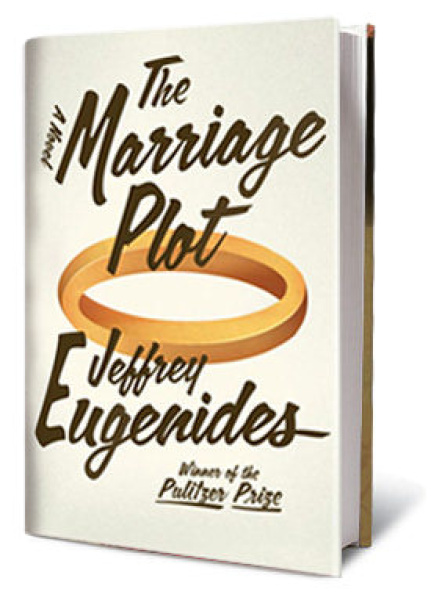
“The Marriage Plot” by Jeffrey Eugenides, It Sure is not Jane Austen

“The Marriage Plot” by Jeffrey Eugenides  (2011) –  416 pages

 My first problem with “The Marriage Plot” is that I didn’t like any of the three main characters, these three Brown University graduating seniors.  Not the privileged Madeleine or the manic-depressive Leonard.  Not even Mitchell who, inspired by Mother Teresa, travels to India to work in one of her hospitals only to be grossed out by the huge staph infections and large tumors he finds on patients’ bodies there.  All three characters seem to see themselves as enormously self-entitled, perhaps typical 1980s college graduates.


Madeleine is majoring in English Literature.  The early eighties was the time when the literary theory of deconstruction and its proponents Derrida, Lacan, and Roland Barthes had taken over the academic literary world.  At that time semiotics (which I’ve always considered a branch of the academic study of idiotics) was in full flower.  Madeleine is more interested in Jane Austen, Henry James, and other Victorian novelists who frequently wrote ‘the Marriage Plot’.  The marriage plot centers on marriages of the main characters. 

 The novel ‘The Marriage Plot’ is itself a marriage plot, but  I can tell you that Jane Austen has not a thing to worry about.  Whereas in Jane Austen’s novels the heroine gradually comes to see the positive qualities of her suitor usually culminating in their marriage,  in ‘The Marriage Plot’ the marriage is the result of the mania induced when the suitor stops taking his lithium.   Up until this point our heroine was turned off by his bad breath, the digestive/alimentary disturbances, and the lethargy caused by the suitor’s lithium dose.  Modern times. 

 Maybe I appreciate the discretion of Jane Austen and the Victorians, but I really don’t need or want a lot of detail about trips to the bathroom or graphic descriptions about specific sexual acts.  There’s a lot of that kind of detail in ‘The Marriage Plot’.

 One thing that is missing in the plot is a central character who is a little older, who can look at these graduating college seniors with a little distance, a little irony. As it is I felt mostly claustrophobic disdain for these youthful characters.  One wishes that Madeleine were a stronger character, that Leonard was not so psychologically messed up as to virtually have no free will in his actions,  

 I read Eugenides’ ‘The Virgin Suicides’ quite a few years ago, and I was charmed by that novel.  However I found this latest novel ‘The Marriage Plot’ to be utterly charmless.

“We the Animals” by Justin Torres, Families are not All Alike

“We the Animals” by Justin Torres   (2011) – 125 pages

Sadly, none of us gets to choose which family we are born into.  And when we arrive here, we are babies and don’t know anything.  It will take us years and years to figure out exactly what kind of family we’ve been put into and even more years to figure out how our family is different from other families.

The three boys in ‘We the Animals’ have a mother and a father.  The father was 16 when he married the mother who was only 14.  They had to drive down to Texas from New York to get married legally.  Soon they have the three little boys.  The father sometimes cooks for the boys, jokes with them, dances with them, spanks them hard while the mother works.  The mother works all night, so she has to sleep during the day, and the little boys run into the bedroom and try to wake her up.

One day the father carries the mother into the house.  Her cheeks are purple, and she has been beaten up.  The father tells the boys that the dentist had to punch on her to loosen up her teeth before pulling them out.  Little boys will believe anything.  For three days the boys are forbidden to go into the bedroom, and when they do, the mother lifts her head off the bed and says ‘My beautiful baby boys’.

After a couple of weeks they go on family outings again, swimming and so on.  But then the father leaves.  Someone tells one of the boys they saw him leave with a girlfriend.  The mother stops going to work, stops cooking, stops eating.

The three boys have to fend for themselves a lot of the time.  One time they got into their neighbor’s, the Old Man’s, garden.  They taste the food, trample the plants, and lay waste to the entire garden.  Old Man watches them from his porch and calls them ‘Animals’ and comes into the garden to try to fix some of the broken plants.    A lesser writer would have made Old Man mean, angry, perhaps given him a gun to carry.  Here Old Man brings the boys up on the porch and talks to them.

The father of the three boys comes back after a few months, and things go decently for a while.  The family needs a new car, and the father takes the three boys along with him, and he buys a new big truck.  When they get home from the dealer, the mother asks, “How many seat belts does it have?”  The truck has only three seatbelts, and there are five of them.  “… she kept screaming at him, right up in his face, ‘Big-dick truck! Big-dick truck!”  Her neck and cheeks were flushed red, and she was lost in tears, in rage…”

The three boys grow up.  Only later do they discover that they are not all the same, that there are huge differences between them.

Someone had to write this brilliant novel, a must-read book.

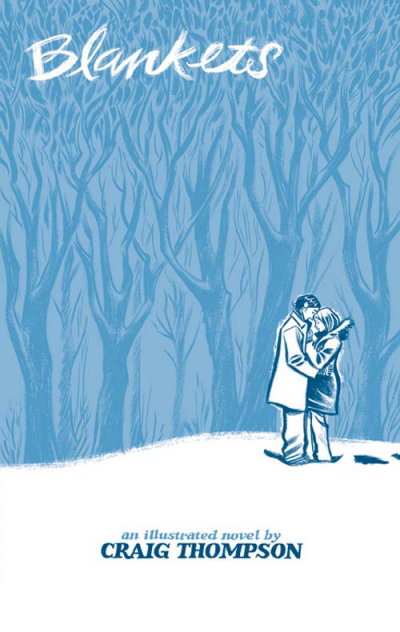
“Blankets” by Craig Thompson, A Graphic Novel

“Blankets” by Craig Thompson  (2003) – 582 pages

 I suppose in the world of graphic novels, when Art Spiegelman, author of Maus and Maus II, sends you a long letter of praise for your own book, you know you’ve reached the top of the graphics world.  That’s what happened to Craig Thompson and his graphic novel “Blankets”.   I looked all over the Internet to find out exactly what Spiegelman said in this letter of praise, but apparently the letter was private.  That didn’t stop most reviewers from mentioning Spiegelman’s letter in their reviews of “Blankets”.  Me neither. 

 “Blankets” is 582 pages, but being a graphic novel with very few words on each page, it reads rapidly.

 “Blankets” is a sweet and not-so-innocent story of first love.  Teenager Craig meets teenager Raina at a Baptist Christian winter camp, and the two hit it off immediately.  The two become inseparable and a little later Craig goes to stay at Raina’s home in Michigan for two weeks.  He gets to know Raina’s family which consists of her father and mother who are separated and getting a divorce, her adopted brother Ben and adopted sister Laura who are both retarded, and her biological sister who is married and has a baby Sarah. 

 Craig’s stay at Raina’s home is like a winter idyll, almost dream-like in its perfection.  There is a simple charm to these scenes of Craig and Raina together in the cozy house and the snowy outdoors.

 There is much about Jesus and the Christian religion in this novel, but it is not the harsh extreme right-wing evangelical Christianity so prevalent today.  Here the religion is gentler and more accepting and fits in with the story.

 While the story is sweet and simple, the book has also gotten into trouble for the explicitness of some of its pictures. 

 Once again I find myself committing that cardinal sin of book blogging, discussing one of the author’s previous books just when he is releasing a brand new book.  Craig Thompson has just released a new book this month called ‘Habibi’. I must be nearly the last person on earth to have discovered “Blankets”. 

 In a world where so many graphic novels and anime are cynical and ultra-violent, “Blankets” is a quiet peaceful life-affirming exception.

“God of Carnage” by Yasmina Reza, Coming to a Theatre near You

“God of Carnage” by Yasmina Reza  (2008) – 67 pages   Translated by Christopher Hampton

 As of now you may not have heard of Yasmina Reza or her play “God of Carnage”, but you soon will, you will.  The play has just been turned into a movie “Carnage” directed by Roman Polanski and starring Kate Winslet, John C. Reilly, Jodie Foster, and Christoph Waltz. The movie opened the New York Film Festival on September 30 and is scheduled for general distribution before Christmas. 

 I had the good fortune of seeing the live  “God of Carnage” production  at the Guthrie Theatre in Minneapolis, Minnesota this summer, and after that I read the written version of the play. 

 The setup of the play is quite simple.  One boy punched another boy on the school playground requiring some dental work to fix.  The parents of the boy who got punched invite the parents of the boy who landed the punch over to discuss the incident civilly.  The parents of the boy who got punched are well meaning and expect other people will be good-intentioned also.  The father of the boy who punched is a cutthroat lawyer who is constantly on his cell phone advising his clients, drug companies, on how they can get out of sticky legal situations.  Soon interactions between the two sets of parents become chaos.

'God of Carnage' at the Guthrie Theatre, Minneapolis, MN

These four characters are the only characters in the play, and the entire play takes place in the one living room.  There are no intermissions.  This is a perfect play for actors and actresses.  The entire play is the dialogue between these four. 

 This play is a comedy, outrageously humorous, yet never leaves the concrete situation at hand.  Each of the four roles is well-defined, and each stays in character for the play.   Brooke Allen in a review of “God of Carnage” described the play as follows. “What is really clever in this play is the way the alliances between the four characters keep shifting: sometimes its men against women, sometimes couple against couple.  Sometimes we the audience, find ourselves sympathizing with a particular character…only to be repelled by that same character the very next moment.” 

 I have high expectations for the movie, even though I don’t believe Roman Polanski has directed a comedy before.

 The playwright Yasmina Reza is already famous in France, originally as an actress and now for her many plays.

 “Laughter is always a problem… Laughter is very dangerous.  The way people laugh changes  the way you see a play.  A very profound play may seem very light.  My plays have always been described as comedy but I think they’re tragedy.  They are funny tragedy, but they are tragedy.  Maybe it’s a new genre.”

      Yasmina Reza, in “Art and artifice” by Simon Hattenstone, The Guardian, January 1, 2001   

“Snowdrops” by AD Miller, A Moscow Story

“Snowdrops” by AD Miller (2011) – 262 pages

 “Moscow is Moscow,” Masha said.  “Bad roads and many fools.”

 “Snowdrops” by AD Miller is an amiable novel about Moscow and Russia in the late 1990s and the early 2000s, the Putin years.  Russia was still in the early stages of its transition from Communism to capitalism, and at that point at least, capitalism seemed to the Russians to be little more than a form of organized crime.

 I remember in my grade school days when everyone here in the US was worried that the Soviet Union was passing the United States in the Space Race.  The United States media propaganda made out the Soviet Union to be entirely drab and the people there, especially the women, to be hopelessly dumpy. Later I discovered that Russia had a colorful literary tradition that puts that of the United States to shame.  And only later did we discover that the Soviet Union had more than their share of the most beautiful women in the world.

 Which brings us back to “Snowdrops”.  Our thirty-eight year-old lawyer hero from England gets involved with a young pretty Moscow woman, Masha, who is in her early twenties and her ‘sister’ Katya whom he meets on the Moscow Metro.    Our lawyer guy is in Russia to close an oil deal taking place in Murmansk, a small city up near the Arctic Circle.

 “Snowdrops” reminded me of one of my favorite authors, Graham Greene.  Greene also wrote novels situated in exotic locations.  Another quality I believe that Miller shares with Greene is that even though he is writing from the point of view of an outsider looking in at this foreign culture, the outsider just by being there is complicit in whatever happens in this foreign place.  In this case our lawyer is more than complicit.  He adores the attentions of these two young women who impress his work mates and the other Russian men when they are out in public with him.      

 I am always interested in reading about what is happening in Russia since the fall of Communism.  It did seem the description of Moscow was a bit outdated and familiar, the same picture we got in the Putin era.    The beggars and the drunks laying in the streets, the capitalist businessmen who dress and act like gangsters, the exotic erotic nightclubs.  We’ve seen this picture before. 

 I enjoyed “Snowdrops”, this Man Booker shortlisted novel.  I’m not sure whether or not this novel should win the Man Booker.  It has no pretensions to greatness or profundity, but to read it is a pleasant way to spend some time in Moscow.

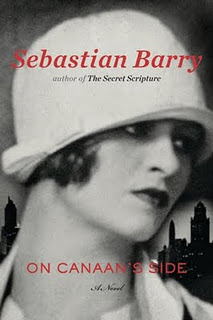
“On Canaan’s Side” by Sebastian Barry – This Novel Did NOT Work for Me

“On Canaan’s Side” by Sebastian Barry (2011) – 262 pages

 Has this ever happened to you in your reading experience?  You read two novels by a writer, and you are impressed with both of them, and both of them wind up on your ‘Best of’ year-end lists.  You eagerly anticipate the next novel from this writer.  The next novel finally arrives, and it is a complete disaster. 

 That is my reading experience with Sebastian Barry.  I read ‘A Long, Long Way’ and ‘A Secret Scripture’ and considered both excellent novels.  I awaited the next.  Then “On Canaan’s Side’ arrived, I read it, and it was indeed a complete fiasco for me. 

 “On Canaan’s Side” contains the memoirs of Lilly, an old, old woman who has out-survived all the people in her life. It seems like every week or so another writer writes another story about the old woman who has survived everything looking back on her life.  

 All of the people in her life have fallen victim to Unearned Tragic Situations.   By my estimate, an Unearned Tragic Situation occurs about every twenty pages.  An Unearned Tragic Situation befalls the heroine’s father, the heroine’s boyfriend, the heroine’s husband, the heroine’s best friend, the heroine’s son, and the heroine’s grandson.     After slogging through one Unearned Tragic Situation after another, it becomes very difficult to slog through the next.  

 An Irish novel should probably never have a young single woman expecting a baby as part of its plot.  This plot line must have been used billions of times in Irish novels.  We really don’t care about the machinations of the priests, monks, and nuns anymore. This is like English writers putting queens, kings, princes, or princesses into their plots.  What a bore. 

 “On Canaan’s Side” starts out on an estate in Ireland, but most of the novel takes place in the United States.  I suppose Canaan is supposed to be meant as ‘The Promised Land’, but at least as much misery occurs in the United States as in Ireland where things are miserable enough.   Lilly lives in Chicago,  Cleveland, Washington DC, and New York State, but the descriptions of these places are so murky and nondescript it really doesn’t matter where she lives.

 By the end of the novel Lilly has lived through so many other people’s Unearned Tragic Situations.   What could be more fitting than she have her very own Unearned Tragic Situation?

“All Our Worldly Goods” by Irene Nemirovsky, a Devotee of Leo Tolstoy

“All Our Worldly Goods” by Irene Nemirovsky (1947) – 264 pages   Translated by Sandra Smith

 “As far as Russia is concerned, I place no one above Tolstoy.  He has everything.”  Irene Nemirovsky

 It is well to remember that Irene Nemirovsky was not originally from France.  She was born in Kiev in the Ukraine and spent her childhood in St. Petersburg; thus she was well-acquainted with Russian literature.  

 Before writing “All Our Worldly Goods” and her last major novel, “Suite Francaise”, she re-read ‘War and Peace”.  Tolstoy’s novel served as a large-scale model for both of these Nemirovsky novels.  Her notes indicate that she was trying to capture that same dichotomy between war and peace in the lives of ordinary people as Tolstoy.  Whereas Tolstoy’s war occurred fifty years before his novel was written, ‘Suite Francaise’ describes World War II as it was happening.     

 “All Our Worldly Goods” is a story of an extended family living in a small village in northern France near the Belgian border, and its timeframe spans from before World War I up to the re-invasion of France in World War II. So the novel covers one war, a twenty-year respite of peace, and then the start of another war.  In both wars Germany captures, occupies, and destroys their small village, and the family is forced to leave.   Before the start of World War II, the French villagers can’t believe that war could possibly happen again, but it does.   At the end of “All Our Worldly Goods”, World War II appears to be a repetition of World War I.  Only later did World War II turn horribly worse than World War I, which was the time when Nemirovsky was writing “Suite Francaise”.

 I think the primary quality that Irene Nemirovsky shares with Leo Tolstoy is the vividness of their writing.  Both writers are able to make their people and events come alive, and you deeply care what happens to these people.    I remember reading “Anna Karenina” and “War and Peace” and being fascinated at how adeptly Tolstoy handled both the larger matters of nations and cities and the smaller matters of family life and individuals.  Nemirovsky brings that same quality to her own writing. As Helen Dunmore put it so well in the Guardian, “Némirovsky comes across as an intensely Russian writer, lyrical, forceful, earthy, idealistic and yet without illusions.”

 I’ve kept up with all of her novels as they’ve been released in English, because I believe Irene Nemirovsky is the major European writer of the twentieth century.   I can think of no other writer who captured events and people with such poignancy and vividness.  Sadly we may be nearing the end of the novels she wrote in her 39 years.