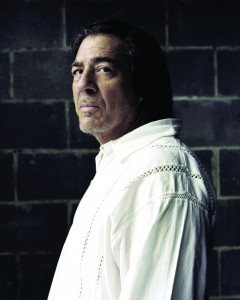
“Dancing Lessons for the Advanced in Age” by Bohumil Hrabal, A Raucous NYRB Classic

Dancing Lessons for the Advanced in Age” by Bohumil Hrabal (1964) – 117 pages

Translated from the Czech by Michael Henry Heim
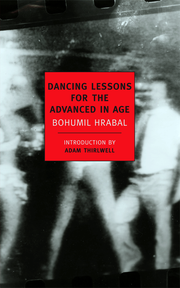
  In order to give a good picture of a writer’s style, I usually like to quote a sentence or two from the book I’m discussing.  However, I won’t be doing that in this case, because the entire book, all 117 pages, is just one sentence.  Czech writer Bohumil Hrabal has been called one of the greatest of European writers by Philip Roth and Milan Kundera, no slouches at writing themselves.   “Dancing Lessons for the Advanced in Age” is another in the New York Review of Books (NYRB) Classics series.     

 Hrabal was an admirer of James Joyce, and Joyce’s most famous technique was the ‘stream of consciousness’.  This technique is where the writer simulates the workings of an individual’s mind. When we are thinking about things, we rarely come to a full stop, we just go from one subject to another somewhat related subject to an entirely something else, so there is no room for a period or full stop in ‘stream of consciousness’.  Many, many pages of Joyce’s Ulysses are devoted to this method.  What Hrabal does in “Dancing Lessons for the Advanced in Age” is not exactly ‘stream of consciousness’ but what Hrabal himself called ‘palavering’.  This is when the main character is talking to someone, probably one of his beautiful ladies, and he is doing all the talking.  Hrabal did a lot of ‘palavering’ himself, telling stories in his favorite pub.   

 So what does this man who is advanced in age talk about?  Beautiful ladies, old military feats and maneuvers, romantic trysts, paintings, violent acts especially suicides, drinking exploits, and women.

    “…, It’s interesting how young poets think of death while old fogies think of girls,…”

 I would call Bohumil Hrabal a Primitive.  After graduating from college, he worked at many odd jobs for many years, writing  in his spare time.  After the Communist crackdown in Czechoslovakia in 1968, he was prohibited from publishing, and two of his books were banned  It wasn’t until 1976 that he was again allowed to publish, and his novels were edited by the Communist censors who would actually add pro-Communist phrases to his work (‘editorial insertions’).   “Dancing Lessons for the Advanced in Age” was written before the Communist crackdown, so it does not have this censorship problem.   

 I still want to give you a sample.  For obvious reasons I won’t quote the entire sentence, but here is a part of that sentence which is the book. 

    “,… and when she asked me what I wanted for it I said I wanted her to go for a walk with me, and she laughed and asked why, and I told her my hygiene manual said that a person suffering from heat prostration – she suffered from heat prostration – should rub lukewarm water directly on the exposed chest, and she said, Oh you men and your one track minds! The world is a beautiful place don’t you think? Not because it is but because I see it that way, the way Pushkin saw it in that movie , poor Pushkin, to die in a duel, and so young, his last poems gushing from a bullet hole in his head, I could tell from the picture that he admired the European Renaissance too, he had fantastic muttonchops, you know the whiskers our own Franz Joseph wore, and Strauss the composer,…”

 So there are a lot of references to a world of different things which is fun. One of the difficulties with an entire book consisting of only one sentence is that there is no convenient stopping point.  I usually stopped at the first comma after I turned the page.  But then there is the difficulty of taking up where I left off.  This bothered me at first, not being able to pick up what was happening where I left off, but then I thought it was sort of like waking up in the morning and your mind is completely somewhere else. 

 If you are in the mood for something different and off the beaten path, you might like “Dancing Lessons for the Advanced in Age”. It is a quick read, and I did enjoy the book.


I’m Guest Posting in Australia

Today I have the privilege of guest posting at Whispering Gums for the continuing series of “Monday Musings on Australian Literature”. My guest post is about one of my favorite Australian writers.

To get to the post, just click on “Monday Musings on Australian Literature”. If my post isn’t there yet, it should be shortly. Meanwhile you can check out some of the other fine postings at Whispering Gums.

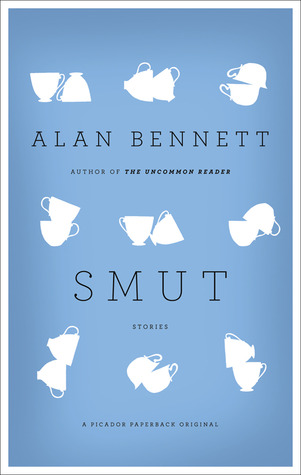
“Smut” by Alan Bennett, Two Unseemly Stories

“Smut” by Alan Bennett (2011)  – 152 pages

 What can I say about “Smut” ? It is different from anything I’ve read before which is a good thing.  The author of “Smut”, Alan Bennett, is a playwright, and it shows.

 Each of the stories in “Smut” has high sexual content but completely different from what you might expect.  I see “Smut” as a fun bright breezy bauble, in no way to be taken seriously but fun.  

 In the first story, “The Greening of Mrs. Donaldson”, the recently widowed sixty-ish Mrs. Donaldson gets bored with her new single life and gets a job play-acting the roles of patients and relatives in a hospital training room for medical students, so the students can practice their bedside manners and diagnostic skills.  This role-playing loosens Mrs. Donaldson up for some sexy fun with her two college-age lodgers.  I won’t tell you what the fun is, but it isn’t what you are expecting.  Here is a short passage from the story with Mrs. Donaldson and her pretend husband Terry preparing for the medical role-playing.

    “Trouble in the back passage,” he said cheerfully.

    “No,” said Mrs. Donaldson. “I don’t think so.”

    “Mine not yours, dear,” said Terry. “You’re just my wife.”

    “I was given to understand.” said Mrs. Donaldson, “that it was your waterworks.”

    “No fear.” Terry hitched up his Y-fronts. “No way.”

    “Frequency,” said Mrs. Donaldson. “Waking at night”

    “Absolutely not. I go before I come to bed and then first thing in a morning. Well you know that.” And he sniggered. “You’re my wife.”

    Mrs. Donaldson took out a folder.

    “I think you’ll find,” said Terry, “it’s the other department. Stools hard and difficult to pass. Occasional blood. All that. I thought I could be very shy, which is why you’re here to hold my hand.”

    “Well, I’m a nurse,” admitted Mrs. Donaldson. “I’m au fait with all the technical terms…bowel, colon, prostate.”

 Anyone who can be this bright and breezy about such unmentionable subjects is a real writer.      

 In the second story, “The Shielding of Mrs. Forbes”, Graham Forbes gets married to a gal named Betty much to the disappointment of his mother and much to the surprise of his boyfriend lovers. 

It is impossible to take either of these stories seriously, and that is a lot of the fun.  I don’t see either of these stories as among the world’s great stories.  They are way too contrived and unbelievable for that.  On their own terms, the stories are enjoyable and quickly read.

 On a scale of 1 to 5, I give “Smut” a ‘5’ for originality, a ‘1’ for sincerity, a ‘4’ for humor, a ‘4’ for construction, and a ‘1’ for realism.

“The Quality of Mercy” by Barry Unsworth, A ‘Stand-Alone Sequel’

“The Quality of Mercy” by Barry Unsworth (2011) – 319 pages

 The English publisher of “The Quality of Mercy” calls it a ‘stand-alone sequel’ to Barry Unsworth’s Booker prize-winning novel “Sacred Hunger’.  This is rather a funny way to refer to the novel, but it fits.  I read “Sacred Hunger” many years ago and don’t remember any of the details beyond that it was a tremendously moving novel about the English slave trade in the middle of the eighteenth century.   However my non-memory did not stop me from being entirely captivated by “The Quality of Mercy”. 

 In 1767, black slaves taken from Africa were considered property just like cotton bales or tobacco bales.  One of the legal cases that “The Quality of Mercy” deals with is a situation where the captain of the slave ship orders the crew of the ship to throw all the slaves overboard into the ocean.  Many of the slaves had gotten extremely sick while chained in the hold of the ship and were no longer of value as property.  Fourteen years later, the owner of the slave ship is suing to collect insurance money for the value of the slaves thrown overboard,   The owner claims that the slaves were thrown overboard because there was a shortage of water for the ship’s crew.  However some of the ship’s crew remember it was raining while the throwing of the slaves overboard was happening. 

 Property rights were not up against human rights in this particular case.  Instead the case came down to the property rights of the owner of the slave ship versus the property rights of the insurance company.

 One of the main characters of this novel is a lawyer whose goal is to abolish slavery.  Of course he is a figure of contempt and is derided by the businessmen of London.  The only reason the owner of the slave ship puts up with this abolitionist at all is because the ship owner has a thing for the abolitionist’s sister.  But England did ultimately abolish slavery.  By 1783, an anti-slavery movement had begun among the public, and in 1834 slavery was abolished throughout most of the British empire, a tremendous victory for human rights.  However once again today we are living in a time when, due to the influence of the Murdochs, the Koch brothers, and their paid and unpaid followers, property rights are in danger of again trumping human rights. 

 I’ve read many of the novels of Barry Unsworth and consider him one of the best novelists working today.  He has been shortlisted for the Booker prize three times, winning the one time with “Sacred Hunger”.  His other Booker shortlisted books are “Pascali’s Island” and “Morality Play”, both of which I’ve also read and do admire. 

 In his fiction, Unsworth has a spectacular way of getting you into any scene he depicts.  In  “The Quality of Mercy” he follows not only the lawyers and their upper class parties, but also the poor men who were part of the ship’s crew. One of the crew is an Irish guy who escapes from prison by pretending he is a member of the music band. You get vivid scenes with him at a local fair and in a town pub and inside a local coal mine.  “The Quality of Mercy” gives you a full perspective on what English life was like in 1767.  Unsworth makes each scene come alive so that you care deeply about the characters and what happens to them. 

I’m expecting this novel will be in the running for the Booker this year, perhaps Unsworth’s fourth shortlist.  When it comes to historical fiction,  Barry Unsworth is simply the best.

“Trio” by Dorothy Baker, An Unusual Love Triangle

“Trio” by Dorothy Baker (1943) – 234 pages

“It’s a simple formula; do your best and somebody might like it.”
Dorothy Baker

“Trio” is a novel about a love triangle but not the usual love triangle. This love triangle is not two men competing for one woman or two women vying for the same man. In “Trio”, Pauline Maury, the first woman full professor at her college, is in danger of losing her live-in young academic ward Janet Logan to young Ray Mackenzie who wants to marry Janet.

Before “Trio”, I had read two novels by Dorothy Baker, “Young Man With a Horn” and “Cassandra at the Wedding”, both of them excellent. “Young Man with a Horn”, Baker’s first novel written in 1938, is about a young jazz musician who is much like the real Bix Beiderbecke. “Young Man with a Horn” was an immediate bestseller and was later in 1950 turned into a movie starring Kirk Douglas. “Cassandra at the Wedding”, a late novel by Baker written in 1962, is a tragicomic story about a young woman trying to sabotage the wedding of her twin sister. It has recently been republished by NYRB Classics, enough said.

After reading these two superior novels, I’ve wanted to read another novel by Dorothy Baker for a long time. The only other Dorothy Baker novel available at the Minneapolis Public Library was “Trio”. “Trio” was Dorothy Baker’s second novel published in 1943. According to Wikipedia, “She and her husband made it (“Trio”) into a play which was quickly taken off Broadway because of its lesbian theme after a protest by a group of Protestant clergymen. At this time, Dorothy was reportedly beginning to show her own lesbian inclinations.”

Apparently Dorothy Baker and her husband thought well enough of “Trio” to turn the novel into a Broadway play. “Trio” was rejected for decidedly non-literary reasons. After finding all this out I absolutely had to read “Trio”. The only copy of “Trio” which the Minneapolis library had was the original which was published in 1943, so the physical book I read was almost 70 years old.

Besides being a ‘love triangle’ novel, “Trio” is also a California novel. Being a French professor, Pauline has many faculty and academic tea parties and cocktail parties at her modern designed apartment she shares with Janet. The novel is divided into three crisp scenes or chapters, the first of which takes place at one of Pauline’s tea parties.

Most of “Trio” is dialogue, although its sharp descriptions vividly crystalize and set the scenes well. I’m partial to novels that have strong dialogue because of the immediacy and the dramatic intensity it lends to the interaction between the characters, and Dorothy Baker writes spectacular dialogue which drives the story. I can well see why Baker and her husband turned this novel into a play.

As it turned out, “Trio” completely won me over.   All three of the main characters come across vividly and ultimately sympathetic.  The story was not at all out of date, and it would be easy to visualize the same situation occurring today.  The novel is as fine a read as Dorothy Baker’s other more famous two novels. It must have been devastating for Baker to have her most personal novel rejected on non-literary grounds, because she was serious about her fiction writing.

Dorothy Baker jokingly said that her own writing career “was severely hampered by an abject admiration for Ernest Hemingway”. I do see the qualities of Hemingway in Baker’s novels in that both writers do not waste a lot of verbiage getting into their stories, and that gives their stories an intensity they otherwise would not have.

Unfortunately “Trio” has not been republished since 1977, and only used copies are available, sometimes ar exorbitant prices. Large city or university libraries usually will have a copy of it. I’d like to see NYRB classics consider republishing “Trio”, the novel is that good. Dorothy Baker belongs up there with the great woman United States writers of that era including Dawn Powell, Carson McCullers, Mary McCarthy, Jean Shepherd, and Harper Lee.

“The Tiger’s Wife” by Tea Obreht, The Zoo gets Bombed

“The Tiger’s Wife” by Tea Obreht  (2011) – 338 pages

 “The Tiger’s Wife” takes place in towns where when you walk up to the doors of the town medical clinic, a bunch of chickens scatter.  These backwater towns in the novel are located in the Balkans of southeastern Europe.

 Even backwater towns need doctors, and the two young women Natalia and Zora are two dedicated doctors.  Zora is a wisecracking modern young woman who advises the monks overseeing a makeshift orphanage to give the older girls living there birth control pills.  Natalia became a doctor, because her grandfather who brought her up and whom she loves and admires was a doctor.   “The Tiger’s Wife” begins with a moving scene of the grandfather taking the five-year old Natalia to the zoo to see the animals, especially the tiger.

 This grandfather of Natalia’s is one of the main characters in “The Tiger’s Wife” both in modern times as an elderly doctor and in separate stories when he was a little boy or young man.  Among this doctor’s most precious possessions is a copy of Kipling’s “The Jungle Book” which he carries with him at all times.  As the novel’s title indicates, a tiger plays a major role, and there are many references to Shere Khan from “The Jungle Book”.  Animals of all sorts play a big role in this novel.      

 I can guarantee you that if on January 1, 2011, anyone in the publishing industry had been asked if a first novel about the Balkan wars and Balkan folk tales would be one of the best reviewed and prize-winning novels of the year, they would have said ‘No way, you’re out of your mind’.  But truth is stranger than fiction, although “The Tiger’s Wife’ is a quite unusual novel.

 Among the many hardships of wartime was a shortage of pig fetuses for these aspiring young woman doctors to examine while they were still training in school.  There is also a shortage of human skulls.
 

    “You’d think that, after the war, they would have had enough real skulls to go around,” the narrator, a young doctor named Natalia Stefanovic, tells us about the rigors of her medical training; “but they were bullet-riddled skulls, or skulls that needed to be buried so they could wait underground to be dug up, washed, buried again by their loved ones.”

 This novel is a combination of the modern realistic story with the two young woman doctors and the mythic tales that go back in time as far as the grandfather’s childhood.   These set pieces even have their own titles such as ‘The Deathless Man’, ’The Tiger’s Wife’, and ‘Darisa the Bear’.  In the stories both people and animals can have magical qualities.  The stories have the wide-eyed wonder of little children’s stories.  Both in the modern story and the folk tales, a zoo gets bombed during a war. War and the magic of animals are two of the novel’s constant themes.

 There is no question that “The Tiger’s Wife” is a well written novel.  I myself preferred the modern story with the young irreverent doctor Zora being my favorite character of the novel.  The old mythical folk stories are set pieces that can stand alone, and  I’m sure that Tea Obreht is making some point of how the past determines the future,  Somehow I did not find the set piece folk tales as involving as the modern story.  The point of these folktales did not seem to relate to the modern story.  The characters in the modern realistic story including Natalia, Zora, and the grandfather are strong and vivid enough to carry the novel.  The folk stories were somewhat interesting but seemed more like children’s stories that were entirely separate from the modern story.  The story of ‘The Deathless Man’ became somewhat humorous and tiresome because he wouldn’t go away or die.

“Murder in Mount Holly” by Paul Theroux who was an Early Favorite

“Murder in Mount Holly” by Paul Theroux (1969, 2011)  –  148 pages

In England, fiction writing is an honorable profession.  There are many writers there plying the fiction trade, turning out fine novels and story collections every few years.  In the United States things are different.  There is no honor at all in writing fiction in the United States.  The only hope for anyone who writes a novel or story in the United States is that he or she can hit the big time and sell it as a movie script. 

 Although Paul Theroux was born in Massachusetts and now resides in Hawaii and Massachusetts, I consider him more of an English writer than a United States writer.  He turns out a fine book of fiction every few years, and he doesn’t try to set the world on fire every time he publishes a book.   He is a professional writer. 

 If there is one model for Paul Theroux as a fiction writer, I would say it is Graham Greene.  A Paul Theroux novel or story can take place anywhere in the world and always tells an interesting story. Also, like Greene, many of Theroux’s books are non-fiction travel writing. 

 When I first started reading fiction, I cautiously stuck to the classics not venturing far from their safe shores.  Paul Theroux was really the first writer besides Anne Tyler whom I discovered while he and she and I were still young.   Thus some of his early novels such as ‘Saint Jack’, ‘The Black House’, “Picture Palace”, and ‘The Family Arsenal’ have stayed vividly in my mind.  Soon after, I would discover other young writers such as William Boyd and Ian McEwan and Alice Munro

 “Murder in Mount Holly” was written by Theroux in 1969 which makes this his first novel.  He was living in, you guessed it, England at that time, and the novel was only published in England then.  Apparently someone now decided the novel was good enough that it should finally be published in the United States in 2011.     

 “Murder” is a cartoonish comic romp of a novel set in 1965 in Mount Holly which is a fictitious town somewhere in the United States.  I won’t go in to any of the details of the plot, because the plot is an outlandish old thing of not much interest to anyone and certainly not to me.  As well as being outlandish, it seemed terribly out of date as if written by someone who had no feel whatsoever for the 1960s in the United States.  Although I consider “Murder” more or less an author’s juvenilia, it does have a certain energy, a zest for writing that causes me to return again  and again to Paul Theroux novels.  Of all his novels though, “Murder in Mount Holly” is my least favorite.

 Instead of publishing this novel, I would have preferred that they had published one of Paul Theroux’s better developed novels from the 1970s which still have that youthful energy and which I have listed above.

“Ugly to Start With” by John Michael Cummings, A Dysfunctional Family

“Ugly to Start With” by John Michael Cummings  (2011) – 169 pages

Somewhere I read that the Stevens family in “Ugly to Start With” is dysfunctional.   Dysfunctional? Compared to what?  Compared to your own family?  Ha, Ha.  Is there some dividing line that separates functional families from the rest of us? See for yourselves. 

 “Ugly to Start With” is about the Stevens family of Harpers Ferry, West Virginia in the 1970s told in connected stories all from teenage son Jason’s point of view. 

 Jason’s parents are in a mixed marriage.  His father is Irish, his mother is English.  His father is a vehement racist who uses the ‘N word’ when talking about black people who mostly live in the adjoining town of Bolivar  Perhaps it is because his father is a little guy explains why he is so angry and belligerent. He has no use for his ‘artistic’ son Jason either.

 . On the other hand, Jason’s mother and her family are civil to everyone.  The relatives in Jason’s mother’s family say that ‘Mom was the unlucky daughter in her family, marrying Dad’.  The Stevens family lives in the worst house of any white family in Harper’s Ferry, and his father won’t let any guests inside the house.

Jason’s father does have his charms especially when he plays music on his steel guitar.  With his music and his colorful words, he manages to have a thing going on with a neighborhood woman.  By the middle of the book, Jason’s parents are divorced, but Jason continues to see more than enough of his father. You get a really good picture of the family situation here.

 This situation may seem kind of extreme to you, but nearly always when two people marry, there are going to be differences between the two and their two families.   They may be subtle differences, but they can become major at any time.   

John Michael Cummings has a simple unadorned writing style that makes these stories more powerful than they otherwise would be.  He captures the details of this eastern West Virginia tourist town of Harpers Ferry and the mountain area surrounding it and still conveys the charged emotional life of this family through provocative vignettes. Cummings previously published a well-regarded young adult novel called ”The Night I Freed John Brown”.

Within the last twelve months, I’ve read three story collections by men which strive to tell the honest painful truth about their fictional broken families, “Greetings From Below” by David Phillip Mullins in Las Vegas, “We the Animals” by Justin Torres in New York, and now “Ugly to Start With” in West Virginia.  All three of these collections achieve a deeper honesty about family life than we have had before.  

“Ugly to Start With” is a fine addition to the literature of the broken family. Happy families may all be alike, but dysfunctional families are way more interesting.

My Continuing Quest to find Roberto Bolano

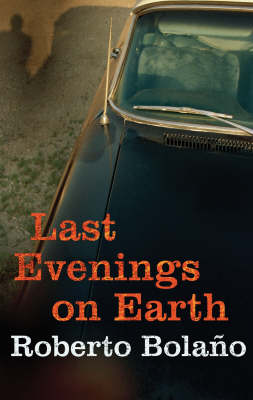
“Last Evenings on Earth” by Roberto Bolano (1997, 2001) stories –  219 pages  Translated by Chris Andrews

 Among my many reading goals is a strong desire to understand and appreciate the fiction of Chilean writer Roberto Bolano.  I’ve read quite a few reviews of Bolano’s work where the critics fall all over themselves in praising his work and calling him an important author, and I’ve been trying to figure this phenomenon out for a long time.

 I have been a huge fan of Latin American literature starting with Gabriel Garcia Marquez’s  ‘A Hundred Years of Solitude’ and going from there to Mario Vargas Llosa to Manuel Puig to Julio Cortazar to Isabel Allende to Jorge Amado to many other writers.   I also reached back in time to the early writings of Joaquin Maria Machado de Assis and Ciro Alegria which were both excellent .  I’ve been on the lookout for new Latin American writers for quite some time.  When I first read the high praise for Roberto Bolano, I was all ready to jump into his work.

 When I saw that the Complete Review had given an A- to “The Savage Detectives”, I jumped right in and started reading that novel, even though it was 577 pages.  However after reading 143 pages, I gave up in frustration, annoyed by the seemingly endless repetition of the young Mexican writers hanging around and talking about whatever.  Later I was told that it gets better after that.  

I waited a couple of years before my next excursion into Bolano territory which was ‘Nazi Literature in the Americas”.  This novel is a totally imaginary encyclopedia of Nazi writers in North and South America.  I had a much better experience with this book, actually enjoyed reading it.  However this book seemed to me a one-off humorous pastiche rather than a novel of any sort of depth.

This time I thought it would be best to turn to shorter works by Bolano.  His collected stories are available in two books, “Last Evenings on Earth” and ‘The Return”.  Since ‘Last Evenings on Earth’ was published first I selected this book figuring the other might be leftovers. 

I enjoyed most of the stories in this book.  Probably my favorite is ‘Anne Moore’s Life’ which is the most traditional story in the collection.  Not that this story is all that traditional, since it follows the entire life and travels of this woman until middle age and then ends with ‘and then I never saw her again’. 

Bolano does not make it easy for the reader to like his work.  In several of the stories in “Last Evenings on Earth”, the characters are called by the first letter of their names such as K, U, V, and of course B who is a stand-in for the author himself.  Even with this obstacle to empathy, I was able to get involved in these stories.  Another difficult modern feature of Bolano’s writing is that many of these stories leave the reader with no closure.   The story just stops.

Many of the stories in this collection are about writers.  One gets the sense that for Bolano reading and writing was everything there is to life.       

At the beginning of this article I mentioned all these South American writers.    Even though there were dictators back in the old days, there was still an underlying sunny optimism in these writers’ writing. Roberto Bolano is a more ‘modern’ type of writer. Bolano is writing after the brutal Pinochet dictatorship in Chile and the ruthless dictatorships in Argentina. The writing of Roberto Bolano reflects these darker times often referring to the tortures and terrors associated with these governments. 

“In order to get free from boredom, to escape the dead zone, all we have at hand….. is horror, that’s to say evil.”  

One additional roadblock for me with Bolano’s work for me is that Jorge Luis Borges was his favorite writer.  Borges happens to be the one Latin American writer that I have not successfully been able to much value so far.   Both Bolano and Borges share an almost religious devotion to literature that does not necessarily make their writing easy for the reader to follow or understand.            

 Despite everything, I liked the majority of the stories in “Last Evenings on Earth”, and would give the collection a B grade.  This is still a long way from adoration, so I will return to Roberto Bolano in a couple of years probably with “By Night in Chile”.

“Fiction Ruined My Family”

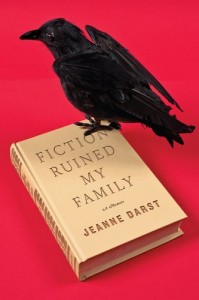
“Fiction Ruined My Family” by Jeanne Darst (2011) – 303 pages

 This is a catchy title, perfect especially for a fiction blog entry.

Here is a humorous memoir of a family where the father is an aspiring novelist.  He received a lot of encouragement at a young age, and it went straight to his head.  Soon he quits his job in St. Louis to write his novel, and after a couple of years he moves to New York with his wife and three daughters to live in a literary community  This memoir is written by one of his daughters, Jeanne Darst.  As she writes, she found herself “living on a farm, which I would quickly discover had more New Yorker writers on it than cows and chickens.”  As a child, she believed that “things aren’t going that great now, but it’s all about to change, drastically, because Dad’s gonna sell this novel…”

After a few years, the first novel is ready.  The publishers look it over, and although they all praise it highly none of them decide to publish it.     By now even though the family was formerly part of the St’ Louis aristocracy, they can keep barely afloat financially.   The father starts his next novel.

 “Writers talk a lot about how tough they have it – what with the excessive drinking and three-hour workday and philandering and constantly borrowing money from people they’re so much better than.  But what about the people married to writers?  Their kids? Their friends?  Their labradoodles?   What happens to them?  I’ll tell you what happens to them.”

The mother has problems with depression and alcohol.   The daughters run free; Jeanne has her own problems with alcohol in high school.  After a few years no one is sure if the father is still writing anything or not.  “My Dad doesn’t have an iota of the depressive in him.  He just depresses other people.”  Jeanne’s father must be a kind person to allow her to publish many of these lines,  But it is these lines that make this memoir a success.

One gets the sense that “Fiction Ruined My Family” is a story that would hurt too much if we weren’t laughing.   In time the father and mother divorce but later they live together for long periods of time.   As Jeanne Darst graduates from high school and goes to college, she has problems with alcohol herself, and she wants to be a writer like her father.

“For a long time I was worried about becoming my father. Then I was worried about becoming my mother. Now I was worried about becoming myself.”

 “Ultimately, I sobered up and began actually writing instead of just talking about it, ever so narrowly avoiding repeating the exact—and I mean exact—mistakes of my mother and father. I became very much like them without becoming exactly like them. This was possible, I believe, through no moral superiority of mine and certainly no more talent than my father, but through the odd fortune of being able to see the truth and, having done that, use it to move forward. I have managed to become an artist and not lose my mind or cause others to lose theirs. I work in stories but I live in reality. Or at least, that the tale I tell myself now.”

The previous lines are about as serious as “Fiction Ruined My Family” gets.   This memoir is full of wisecracks and funny stories about her family.

“The Angel Esmeralda” Nine Stories by Don DeLillo

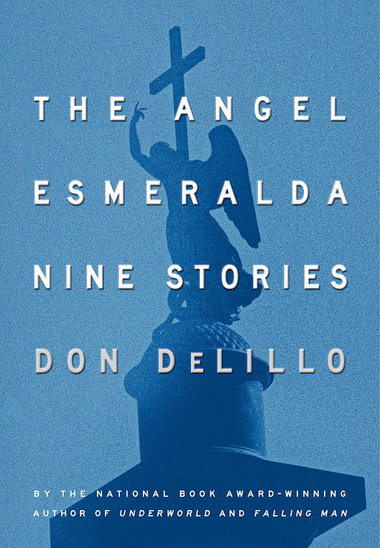
“The Angel Esmeralda”  Nine Stories by Don DeLillo  (2011) – 211 pages

Once in a while I come across a phrase that perfectly describes an author.  Henry Clayton Wickham, in a review of “The Angel Esmeralda in the Daily Texan, had the following line in regard to Don DeLillo.

 “People in his stories grope for one another to suppress the deep unease of human life.”

 Don DeLillo is a fiction writer who makes you feel ‘the deep unease of life’.  He keeps us readers off balance, and thus he is a ‘difficult’ writer.  His interests are wide ranging, and a reader can never guess what subject he is going to write about next.  He is the opposite of those comfortable writers from whom you know exactly what to expect when you pick up one of their books. 

 My first foray into DeLillo’s work was somewhat disastrous.  I remember how much I hated ‘Great Jones Street’.  My reaction to that novel kept me from reading DeLillo for several years.  However by the mid-Eighties I had read enough appreciative reviews of his novels that I returned to his work.  The three novels ‘White Noise’ and ‘Libra’ and ‘Mao II’ were all excellent, perhaps the finest modern novels I read during that time.  In 1997 DeLillo wrote what critics consider his masterpiece, the 827 page ‘Underworld’.  Unfortunately I haven’t gotten around yet to reading ‘Underworld’ which is considered one of the great novels of the Twentieth century, so I settled for this new book of short stories instead.

 Don DeLillo is not naturally a short story writer.  “The Angel Esmeralda” with its nine stories contains all the stories he has written over the last thirty years, and he had to write three of them in 2011 just to have enough.  The stories are certainly wide ranging in subject matter from nuns caring for the hopeless in a rundown drug-infested Bronx neighborhood (‘The Angel Esmeralda’) to a man in prison for investment fraud (‘Hammer and Sickle’) to two college student guys imagining a life for an old man they see on the street everyday (Midnight in Dostoyevsky’).  Probably my favorite edgy story in the collection is ‘The Baader-Meinhof Gang’ about a young woman’s encounter with a young man in an art museum. 

 Most of the stories in ‘The Angel Esmeralda’ I ‘got’, but there were a couple that I didn’t ‘get’.  I listened to the last story, ‘The Starveling’ three times.  It is the story of a man who goes to the movies all day long every day.  The details of this story were interesting, but I’m pretty sure that I could listen to this story a hundred times and still not figure out what DeLillo means.

 Don DeLillo is a writer who isn’t afraid to take the risk of not being understood.   He doesn’t patronize his readers by giving them what they want.  I value Don DeLillo extremely highly, because he has written modern contemporary novels that have had a profound effect on me.  I think he does work better for the reader in novel form than the short form, because in the novel the reader can settle in and finally understand what DeLillo is getting at.           

 “The Angel Esmeralda” is one of three finalists for the Story Prize which awards a $20,000 prize to a collection of short fiction.

“A Good Man” on the Canada / United States Border

“A Good Man” by Guy Vanderhaeghe  (2011)  –  464 pages

 I caught the Guy Vanderhaeghe express quite early in his writing career.  In 1985, I read a combined review of his book of short stories ‘Man Descending’ and his first novel ‘My Present Age’.  The review was meant as a kind of an introduction of this Canadian writer to United States readers.   The review was very positive, and I went out and got ‘Man Descending’.  It was as fine as the reviewer indicated it was, so soon I got ‘My Present Age’ which was also fine.  I have read all of his fiction books since then.  Here is another novelist who became a ‘go to’ writer for me, because I always trust that Vanderhaeghe will provide excellent fiction.  I am so enamored of his writing, I even learned to spell his last name.

 Those first two books were contemporary in setting, as were all of his books up until 1996 when his “The Englishman’s Boy” was published.  With that novel Vanderhaeghe switched to historical fiction, a genre he has stuck to since then.  At first I was skeptical, because historical fiction is not one of my most liked types, but as it turned out “The Englishman’s Boy” is one of my favorites of his novels.  Although the novel has an historical setting, the story allowed a lot of leeway for Vanderhaeghe’s vivid imagination.  When Vanderhaeghe next published “The Last Crossing”, I figured there was no way it could be as good as “The Englishman’s Boy”, but it was.  Only recently have I discovered that Vanderhaeghe is a trained historian.

 Last fall the third novel of this ‘trilogy’, “A Good Man” was published.  I don’t know why they call these three novels a ‘trilogy’.  The novels don’t share any characters, and they don’t even share the same setting.  All they have in common is that all three novels are historical novels which take place in the Old West.  Each of these novels stands alone and can be read independently in any order. 

 “A Good Man” takes place in Montana and Saskatchewan immediately after the Battle of Little Bighorn or as commonly known Custer’s Last Stand in 1876.  In the battle, the United States 7th Cavalry suffered a severe defeat with 268 of their soldiers killed.  The people of the United States were in the midst of celebrating the centennial of the Declaration of Independence when they heard the news, and they were shocked and humiliated.  The United States continued their war to force the Indian tribes into submission with a two-pronged strategy.  First the military continued to pursue and attack the various Indian tribes.  The other strategy was to cut off all supplies and thus starve the Indians on to the reservation.   Several of the tribes including Sitting Bull and his Lakota Sioux tribe were able to escape to Canada.

 One of the threads of “A Good Man” concerns these delicate negotiations between the United States, Canada, and the Indian tribes.  Sitting Bull is one of the main characters of the novel.   Since several of the characters are Canadians, we see events from Canada’s point of view. 

 Besides the historical context, the novel is also the story of Wesley Case, former soldier and Mounty and aspiring farmer, and school teacher, Ada Tarr, school marm.  Yes, there is a good love story as well as a crime thriller. 

Sitting Bull

How does “A Good Man” compare with the other novels in this ‘trilogy’?  I think Vanderhaeghe was a bit hampered by the necessity of sticking to the facts in “A Good Man”, because he is dealing with well-known history.  I believe this muzzled his imagination to some extent.  Especially relating to the Sitting Bull storyline, Vanderhaeghe had to steer carefully. Still it is disgusting enough how the military on both sides, especially the US side, treated the Indian tribes.  I do believe “A Good Man” is a very good novel, but not quite at the superior level of the other two novels.  If I were grading the three books, here are the grades I would give.

                                  The Englishman’s Boy   A

                                  The Last Crossing          A

                                  A Good Man                    B+

The Stories of F. Scott Fitzgerald

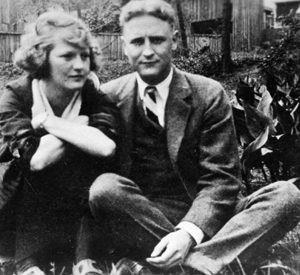
F. Scott and Zelda Fitzgerald (1921)

No writer has ever defined a decade more vividly than F. Scott Fitzgerald did the 1920s.    He even coined the name for the decade, the Jazz Age  

 “The uncertainties of 1919 were over – there seemed little doubt about what was going to happen –America was going on the greatest gaudiest spree in history and there was going to be plenty to tell about it.  The whole golden boom was in the air – its splendid generosities, its outrageous corruptions and the tortuous death struggle of the old American prohibition.  All the stories that came into my head had a touch of disaster in them – the lovely young creatures in my novels went to ruin, the diamond mountains of my short stories blew up, my millionaires were as beautiful and damned as Thomas Hardy’s peasants.”

 In the year 1920, Fitzgerald hit the big time.  His first novel ‘This Side of Paradise’ was a tremendous success.  In 1919 Fitzgerald had made $800 by writing; in 1920 he made $18,000.  His stories were in demand everywhere.  Now that he earned enough money, Zelda married him, and together they lived the high life.  Ironically those were also the years of Prohibition in the United States.

 I recently listened to an audio book of five Fitzgerald stories:  ‘The Curious Case of Benjamin Button’ (1921),  ‘The Bridal Party’ (1930) , ‘Babylon Revisited’ (1931),  ‘The Lost Decade’ (1938), and ‘Three Hours Between Planes’ (1941).. 

 ‘The Curious Case of Benjamin Button’ may be the most contrived story I’ve ever read.   Benjamin Button is born a 70-year old man, and as time passes he becomes progressively younger until he becomes a baby.  Aging backward…  The story reminds me of the Bob Dylan lines “I was so much older then; I’m younger than that now.”  While the Dylan lines have deep meaning, the Fitzgerald story is mainly for laughs.  I found this the least effective story. 

 ‘The Bridal Party’ is probably the most quintessential Twenties story.  A rich American guy is getting married and rents a ship to take the whole wedding party to Paris for a celebration that lasts five days.  There an ex-American who happens to be an old childhood friend of the bride hooks up with the wedding party.  The ending of this story is also quite contrived but somehow plausible for both the groom and the old boyfriend. 

 ‘Babylon Revisited’ also takes place in Paris.  It is about a father who due to excessive drinking and partying loses his daughter, and he has now given up the party life and wants his daughter back after her mother has died. 

 “The Lost Decade” is about a man who basically lost ten years of his life due to excessive drinking.  It is a rueful story written and published near the end of Fitzgerald’s life

 ‘Three Hours Between Flights’ – During the three hours between flights, a man tries to re-ignite an old flame.  This story was published posthumously. 

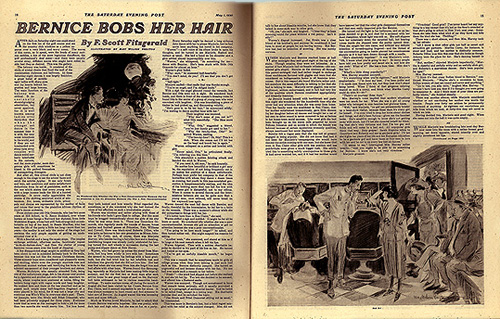
 F. Scott Fitzgerald wrote hundreds of stories, most of them published in popular magazines such as the Saturday Evening Post and Esquire. Although many of these stories were written mainly to pay for the Fitzgeralds’ extravagant spending, many are close to their own lives and have a bittersweet effect.  They cover not only the excitement of the era but also its excesses.  The later stories are very much about the after-effects of the high-living Twenties.  At the time of his death, Fitzgerald considered himself a failure.  Eight years later, there was a Fitzgerald revival, and he then was considered one of the United States’ great writers.

Almost Everything You Should Know About Fiction Written in English

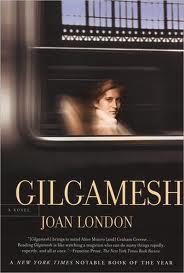
“Gilgamesh” by Joan London  (2001) – 256 pages

Writers from various nations write various types of fiction.  Here is almost everything you should know about fiction written in English.

 Writers from England will give you stories told in smooth  refined Royal fashion.  If you want just the opposite, read Irish writers.  Writing from Scotland is crude, lewd, and rude. United States writers will lie or mislead if there is any money in it for themselves.  But Australian writers will always tell the blunt ugly truth even if it hurts.   The Candian writers are quite lucky that I still haven’t figured out where they fit in.

Ever since I read “The Fortunes of Richard Mahony” by Henry Handel Richardson, I’ve known this truth about Australian novels.  In that novel, Richard Mahony is a respected doctor in a small Australian village who  goes insane in his thirties as the result of the syphilis he had contracted when he was young.   Richardson explores in excruciating detail his aberrant bizarre behavior resulting from his dementia and the severe effects it has on his family, the neighborhood’s ostracism of the family, and so on.  The doctor’s patients soon all drop away, and the family is reduced to poverty.  Henry Handel Richardson later wrote that the character Richard Mahony was based on her own father.

 “How I do hate the ordinary sleek biography. I’d have every wart and every pimple emphasized, every murky trait or petty meanness brought out. The great writers are great enough to bear it.”

                                                           Henry Handel Richardson

At the beginning of  the novel “Gilgamesh” by Joan London, Frank meets Ada in London.   They get married and move to Western Australia to start up a farm.  In the hands of a United States novelist or more likely scriptwriter, this would be the heartwarming story of a loving couple bravely fighting the odds to conquer the Australian wilderness, meanwhile raising a perfectly adorable family.  In the hands of Australian writer Joan London, Ada can’t ‘take the life’ and soon retreats into her own world spending her time wandering around the house talking to herself.  The two daughters Frances and Edith mostly have to raise themselves.   Frank expresses his disgust with Ada more than a few times.   “Gilgamesh” is a real Australian novel.

Much of “Gilgamesh” is taken up with the incredible journey of 19 year-old daughter Edith and her toddler son Jim to Armenia.  On the way there they stop in London to visit relatives.  I would argue that even though Western Australia is much farther from London, Armenia is the more remote place.   For one thing, Armenia, in southwestern Asia, is landlocked, so one travels by land to get there.  For another, all writing in Armenia is in Cyrillic script, and to me Cyrillic script is the most obscure thing in the world.

“I don’t believe you, Madge said.  “Where is Armenia again?” …Word got around, but nobody really believed that Edith had gone to Armenia.  Wherever on earth that was.  More likely she had taken up with some fancy man she met in the hotel.  She was a ruined girl.  They supposed she would never come back  It was as if she were dead.”

No, Edith and her little boy Jim really did go to Armenia, by bus, by ship, by train.   I want to say a few words about the writing style of Joan London in “Gilgamesh”.  The entire novel is written in blunt matter-of-fact short sentences that always convey the tough truths.  In this novel, the reader has no idea what will happen next, and the succinct objective writing style of Joan London supports this effect.

Don’t let the title “Gilgamesh” dissuade you from reading this novel.  True there are some references to the epic poem ‘Gilgamesh’, the oldest known poem written over 4500 years ago in Iraq.  However this is very much a modern novel which will leave you impressed with the style and honesty of Joan London.

“Despair” by Vladimir Nabokov, a Parody of ‘Dusty’ Dostoyevsky

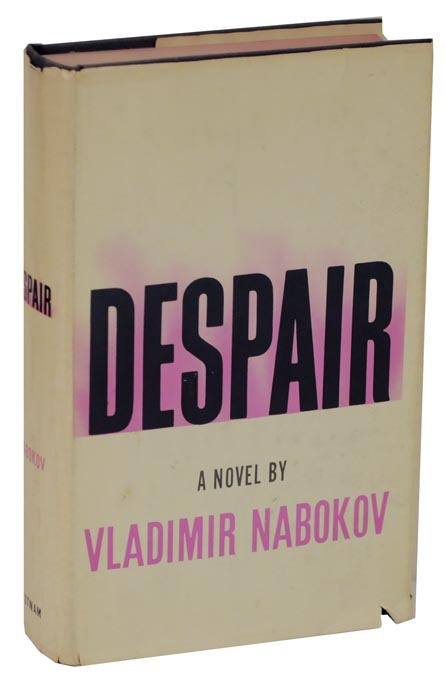
“Despair” by Vladimir Nabokov  (1965) – 222 pages

 In the mid 1960s after having published five novels in English, Nabokov went back to one of his old Russian novels, “Despair”, which was originally published in 1934.  He revised and translated it into English, and “Despair” was re-released.   A movie version of the new version of  “Despair” was made by Rainier Werner Fassbinder in 1978 which just this week is now on re-release in a restored print. 

 “Despair” is a parody of the style of Fyodor Dostoyevsky, often referred to as ‘Dusty’ in the novel.  Dostoyevsky’s prestige was rising in the Western literary world in the late Fifties and early Sixties, and Nabokov did not think this new fame and acclaim for  Dostoyevsky was merited, so he went to work revising his old “Crime and Punishment” and “The Double” parody, “Despair”.  Nabokov ranked Dostoyevsky in the category of  “mediocre and overrated people”. 

 The plot of “Despair” revolves around the false double.  Our self-deluded German hero Hermann Karlovich meets a hobo named Felix whom he believes is his exact doppelganger.  Besides the ‘double’ plot, there also is a story line involving Hermann’s not-very-discreet wife Lydia and her implied lover, the lousy artist Ardalion.  Hermann thinks he is this great observer of people, but he can’t see what’s going on right in front of him.  One of the running jokes of the novel is that Lydia and Ardalion are doing all these sleazy romantic things, and Herman never once suspects them. The humor in the novel is broad and outrageous. 

 Nabokov had very strong contrarian opinions about Dostoyevsky and a lot of other literature.  He wrote the following.

 “A good third [of readers] do not know the difference between real literature and pseudo-literature, and to such readers Dostoevsky may seem more important and more artistic than such trash as our American historical novels or things called From Here to Eternity and such like balderdash.”

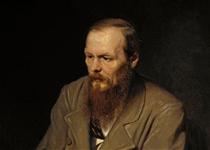
Fyodor Dostoyevsky

 The parody of Dostoyevsky’s style was lost on me, so I must be a member of the one-third of readers Nabokov was talking about. I have read a lot of Dostoyevsky but I suppose in a too reverent fashion, not as something to be joked around with.  Nabokov thought Dostoyevsky’s writing was a “melodramatic muddle and phony mysticism”.  Here is a Nabokov statement about Dostoyevsky’s novels.

 “I dislike intensely “The Karamazov Brothers” and the ghastly “Crime and Punishment” rigamarole.  No, I do not object to soul searching and self-revelation, but in those books the soul, and the sins, and the sentimentality, and the journalese, hardly warrant the tedious and muddle search.” 

 In Russia, Dostoyevsky is an old familiar face, a classic author whose style everyone knows and makes fun of.  We here in the West see Dostoyevsky as a revered literary figure, but most of us are not comfortable enough with his style to appreciate a parody of it.  Also how much of Dostoyevsky’s style in his novels is lost in translation?

In the Fifties and early Sixties, Nabokov had a spectacular run of novels in English with “Lolita”, “Pnin”, and my personal favorite “Pale Fire”.  For me, “Despair”  was not as enjoyable as these other novels.   Perhaps because I did not get into the spirit of the parody, I did not appreciate the humor as much as I otherwise would have. 

   .

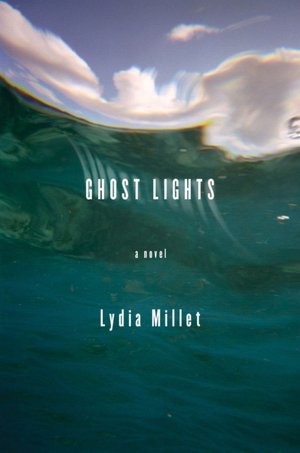
“Ghost Lights” by Lydia Millet, My Newest ‘Go To’ Writer

“Ghost Lights” by Lydia Millet  (2011) – 255 pages

 After reading “Ghost Lights”, I’ve added Lydia Millet to my short list of ‘go to’ writers.

 What is a ‘go to’ writer?  Simply these are the writers I go to when no individual other novel strikes my interest.  My prime example of a ‘go to’ writer is Graham Greene.  Greene’s novels are always reliably well-written, contain stories that are inherently interesting, and are wonderfully good natured.  They are usually a combination of the adventurous and the domestic, the humorous and the dramatic.  All is told in an even-tempered low key manner that rides well for the long run. I must have read about 25 Graham Greene novels by now.  

 Another good example of a ‘go to’ writer for me is Anne Tyler.  I’ve read nearly all her novels over 45 years and am looking forward to her next (“A Beginner’s Goodbye”. which will be published in April). 

 Lydia Millet brings these same ‘go to’ qualities to her new novel “Ghost Lights”.  It starts out as a domestic drama, but soon becomes a dark yet humorous Central American adventure story.  The main character in “Ghost Lights” is a middle-aged husband and father.  To have a main character much different from oneself is all in a day’s work for a ‘go to’ writer. 

 “Who was he? He was a middle-aged IRS employee, a father, a cuckold.  He was an idiot.”  

 Much of the novel takes place in the Central American country of Belize.  While reading the novel I learned a little known fact.  The spoken language of Belize is English. Belize, formerly British Honduras, was a British colony.  While in Belize, our main character meets a German family of tourists which are good for some comic relief.  Another quality of the ‘go to’ writer is that the writer can achieve high drama and low comedy in the same scene in a way that seems almost effortless. 

 A ‘Go to’ writer doesn’t have to go overboard to achieve his or her stories’ effects but is supremely confident, and we readers relax and let the writer’s steady hand at the wheel guide us.  Lydia Millet is comfortable enough in her own talent that she can be absurdist and realistic at the same time. 

“Novels should do anything and everything they can pull off. The pulling off is the hard part, of course, but my feeling is if you don’t walk a line where you’re struggling to make things work, struggling with the ideas and shape and tone, you’re not doing art. Art is the struggle to get beyond yourself. ” 

                  Lydia Millet, in an interview with BOMB Magazine

  I’m adding Lydia Millet to my ‘go to’ writer list on the basis of only one novel.  I could be severely disappointed by the next novel of hers I read, but I somehow don’t think that is going to happen. 

 Do you have some ‘go to’ writers?  Who are they?

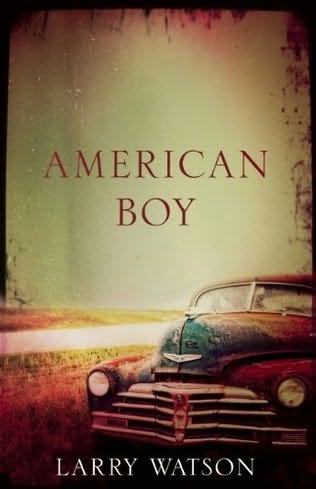
“American Boy” by Larry Watson

“American Boy” by Larry Watson (2011) – 246 pages

  Considering that Larry Watson’s most famous novel, which I have also read, is “Montana – 1948”, this new novel could have been called “Minnesota – 1962”.  Instead it is called “American Boy”, the story of a small town teenage boy who finds out that the people and events in his town aren’t always as clear and straightforward as they seem.   The story takes place in the imaginary Minnesota town of Willow Falls.   


“American Boy” is a classic coming-of-age story of youthful emulation and disillusionment.  This is a very common theme of fiction.  It is Larry Watson’s writing mastery that makes “American Boy” a superior fiction and an outstanding novel.  Each chapter of “American Boy” is only five or six pages, but each chapter can stand alone as a well-defined short story itself with its own opening, climax, and denouement.  The writing is spare, crystal-clear, and to the point. It seems almost as if the words were etched rather than typed.  Watson paints a vivid picture of what life is like in this little town of Willow Falls, the class differences, the eventful days of a small-town doctor, the dreams and desires of a teenage boy moving precariously into adulthood. 

“We were exposed to these phenomena in order that we might learn something, but then the lessons we learn are not always those we are taught. . . .”

 I do have one minor qualm with the novel, and that is with its title.  There are a lot of American boys, and most of them are not small town white boys.  The title ‘American Boy’ belongs to all of these boys, and no one has a special claim to it. 

 The writing of Larry Watson captures perfectly life as it was lived in the early 1960s.  There is a depth to these small town characters that goes way beyond any stereotypes.  The setting may be classic American, but the plot catches up to the moral ambiguity of modern times. 

“American Boy” is an excellent novel that rivals Larry Watson’s other highly praised novels which are reviewed at KFC and the Mookse.   

  “American Boy” is a quick read, well worth the time spent

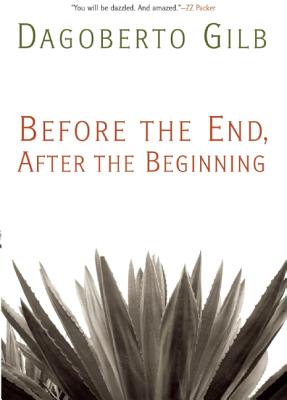
“Before the End, After the Beginning” by Dagoberto Gilb, Stories from the United States Southwest

“Before the End, After the Beginning” by Dagoberto Gilb  (2011) – 194 pages

Dagoberto Gilb is a big guy who knows his way around both a construction site and a publishing office.  He was born in 1950 in Los Angeles, his mother Mexican-American; his father German.   Before and during college, he had several laborer jobs.  He graduated from college in 1974 with a double major in Philosophy and Religious Studies and went on to complete his Masters in Religious Studies in 1976.  After that in order to make a living he worked as a carpenter in  high-rise construction.  During his off time, he wrote a novel, never published.

 Gilb was working as a carpenter in the museum of the University of Texas at El Paso when he met the late writer Raymond Carver in 1977.  Gilb switched from writing novels to short stories due to Carver’s influence.  Carver offered to sponsor Gilb at the University of Iowa Creative Writing Program, but Gilb turned the offer down.     

 “What [Carver] was telling me, what I came to learn over the next decade, was the way the system works. You go to Iowa, you turn your story into a professor, who’s a famous writer. And that famous professor-writer gets you to an editor. Whereas I was under the misconception that you put things in the mail, and some editor reads it and (something) happens, if it was good. I don’t know where my life would have been if I’d known what [Carver] was talking about. On the one hand, I suffered for not getting published. On the other hand, I wouldn’t have the material I have now.” –  Dagoberto Gilb from IdentityTheory.com

 His first full book of stories, ‘The Magic of Blood’, was published in 1993.  It won the 1994 PEN/Hemingway Foundation award and was a PEN/Faulkner finalist.  Since then he has published several books which have won various awards, and his stories have been published in the New Yorker, Harpers Magazine, and many other places. 

 Shortly before Dagoberto Gilb started writing this latest collection of stories, “Before the End, After the Beginning”, he suffered a stroke in 2009.  All of the stories in this collection are excellent, but I am going to concentrate on the first story which is based on Gilb’s experiences in the hospital immediately after his stroke.  That story is the first in the book and is called “please, thank you”.  It was first published in Harpers.   

 The story begins when the narrator arrives at the hospital after his stroke.  Some of the staff talk to him in Mexican as if his family had not been in the United States longer than most of them.  He gets mad at the hospital staff maybe because he’s upset he had this stroke in the first place. It has left him semi-paralyzed on the right side.  Gilb calls his narrative approach ‘first-person stupid’. I would say it is the interior monologue many of us would have under the same circumstances. 

 The hospital has staff members present 24 hours a day for the stroke patients, and these persons aren’t high-paid doctors but regular working people of different ethnic groups and attitudes.  One is Mexican-American, one is Chinese, etc.  Some are odd like the late-at-night guy.  Gradually our narrator realizes that they are all working to help him get better after his stroke.  As the story progresses, our narrator becomes calm and confident enough to help one of the staff to deal with her own personal and family affront.   So our narrator goes from rage to being a helpful thoughtful person again.  This is a moving transformation effectively told. 

 Many of the stories in “Before the End, After the Beginning” have this same kind of emotional kick.  Dagoberto Gilb writes stories about working people that will touch you profoundly.  One can definitely recognize the influence of Raymond Carver in this work, but the stories have their own distinctive power.

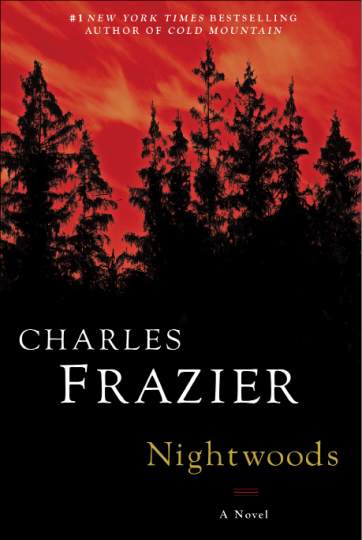
“Nightwoods” by Charles Frazier, Where the People are as Grim and Cruel as Nature

“Nightwoods” by Charles Frazier  (2011) – 259 pages

“A distressingly large portion of the world doesn’t do you any good whatsoever. In fact, it does you bad.”


The new novel by Charles Frazier is a grim Southern gothic tale set in the sparsely populated Blue Ridge Mountains of western North Carolina during the early 1960s.  Much of the action occurs in places with names like Hog Pens Gap or Picken’s Nose.   

 “ …violence is best accomplished spur-of-the-moment. Let it happen out of nowhere… like there’s no past and no future, nothing but the red right now…”

 At the center of the story is Bud, the sorry scary villain.  Bud is a one-note character with no more depth than the slasher Jason in the movie ‘Friday the 13th’.  Bud is the bogeyman; whenever Bud pops up, brutality is sure to follow.  Frazier makes no attempt to explain him; Bud is just a selfish cruel natural force who is there.  Many novels attempt to explain the motivations of the villain, but Frazier apparently was more interested in creating a creepy crawly villain.

 “Nothing changes what already happened. It will always have happened. You either let it break you down or you don’t.”

 Certainly there is a long tradition of bleak gothic novels where even the cruelty of people is depicted as a force of nature, but the danger is that a drama without motivation will turn into a melodrama.  The story may be compelling but not all that interesting.  Frazier attempts to blame the fact that Bud is not locked up on legal technicalities, but it is more likely that it’s the Southern tradition to let good ole white boys run loose with their weapons and their cruelty.  Bud isn’t the only character in ‘Nightwoods’ beset by willful stupidity and cruelty.  Both parents, Link and Lola, of the main female character Luce have their share of problems.

 “…it wasn’t even as if love factored much. Luce didn’t expect to love the children, and she sure didn’t expect them to love her ever. That was a lot to ask in either direction. But there was something she was feeling toward them, and it had to do with their survival.”

 ‘Nightwoods’ contains lyrical elegiac descriptions of the mountains, the lakes, and the natural surroundings of this western area of North Carolina; many of these descriptions depict nature to be as squalid as the people who live there.   

“At dawn, cold mist, pale metal colors. Gray and yellow and blue. Then various degrees of early light as the sun burns through the fog. Each twig and fir needle in its own case of ice. …”

  Sure, there are natural-born killers running loose in a lot of different places.  You only need to glance at the newspapers from just about anywhere to know that.  It just does not make very involving fiction to watch people being terrorized by them, because we all would be terrorized.     “Nightwoods” is not a novel of literary depth.  It reads more like the script for a lovely Southern slasher film.

A Fiction Match Game – 2011

Match each author on the left with the title of one of their novels on the right.  These authors all have in common the fact that they were all writing fiction in the middle of the twentieth century.  Also all of these authors are among my favorites.  The correct answers can be found in the first comment for this post.     

1.  Gunter Grass                                        A.  Rebecca

2. Carson McCullers                                  B.  The Wicked Pavilion

3.  Nelson Algren                                       C.  Dog Years

4.  Henry Roth                                           D.  The End of the Affair

5.  Elizabeth Taylor                                   E.  Vile Bodies

6.  Graham Greene                                    F.   The Harp in the South

7.  Daphne du Maurier                              G.  A Walk on the Wild Side

8.  Ruth Park                                              H    A Game of Hide-and-Seek

9.  Evelyn Waugh                                       I.   The Heart is a Lonely Hunter

10. Dawn Powell                                        J.   Call It Sleep


.