Four Plays by Euripides

Grief Lessons – Four Plays by Euripides
Translated by Anne Carson

As far as we know, the beginnings of literature were the classical Greek dramas from about 2500 years ago. The first famous Greek playwright whose work has survived was Aeschylus, followed by Sophocles, then Euripides. Euripides competed in 22 of the annual Athenian dramatic competitions and won the competition five times. I suppose these dramatic competitions were the classical Greek equivalent of the Booker, and like the Booker, not only Greeks were allowed to compete. Euripides was from northern Africa. Although Euripides wrote many, many plays, only 19 of his plays have survived.
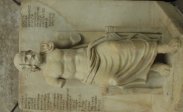
EuripedesIn these classical Greek plays all the many gods have super-human powers, but have the same emotions, the same passions, the same lusts and jealousies as humans, frequently with disastrous consequences for the humans. These gods frequently take the human shape and form. Also there are the humans, and finally there are those who are a mixture of both, being offspring of both a god and a human. These part humans / part gods are the most interesting and tragic ones of all. They have some super-human powers but have all the weaknesses of people.

Theseus : “My advice is endure it. No mortal is untouched by changes of luck, no god either – if poets tell the truth. Don’t gods sleep in one another’s beds? Don’t they throw their fathers into chains and take their power? But all the same they occupy Olympos, they hold on, criminals or not. Will you protest your fate, when gods do not? Leave Thebes then, follow me to Athens.”

The preceding is from Euripides’ play “Herakles” as translated by Anne Carson. The tone is straightforward, clear as a bell, and easy to follow. Anne Carson translating classical Greek is one of those select group of reliable translators including Gregory Rabassa for Spanish, Richard Wilbur for French, Constance Garnet and David Magarshack and Pevear / Volokhonsky for Russian, and Michael Hoffman for German. These translators always select strong works of literature to translate and then get the tone and the story exactly right. I have read many classical Greek plays translated by Anne Carson, and have enjoyed them very much. Anne Carson is also an excellent poet of her own work, including “An Autobiography of Red- A Novel in Verse”. Usually I don’t read most prefaces to works of literature, but Anne Carson’s I do, high praise indeed.
In these Euripides plays, there is the eternal question “Why does God or the gods let terrible things happen to good people?” Perhaps because the Greek gods intermingle with the people so freely and take human form, they probably lead to more dramatic possibilities than the ones in our own religions. That may be one of the reasons that these Greek plays are a high point of world literature. The only works comparable are Shakespeare’s plays. Each of these plays take about an hour to read.
Classical Greece was a high point of literature, yet I have found little from the Roman Empire to compare. I’ve read Virgil’s Aenead and the Satyricon, yet found these works wanting as drama. Can anyone name a work from the Roman empire that they treasure as literature?

Short Attention Span Theater – Rosamond Lehmann

Short Attention Span Theater is where a theater group takes an over three hour long production of Hamlet and cuts it down to five minutes by only performing the highlights. For me, the Internet is one giant Short Attention Span Theater. Sadly, I very rarely read an entire blog entry; instead scan for the highlights. .. which is impossible. This is why I keep my own blog entries short. (It is not because I’m lazy).

From time to time, I’m going to have short blog entries regarding some of my favorite authors which will only feature the highlights. These entries will be called “Short Attention Span Theater”. These short entries do not mean that I will not deal with these same authors in depth later. Here goes.

Rosamond Lehmann (1901 – 1990) – She wrote some wonderful, incredible novels including “The Ballad and the Source”, “Invitation to the Waltz”, and “Dusty Answer” – all three of which I enjoyed even more than the novel she is most noted for, “The Echoing Grove”. Whenever I go into a used book store, I look for novels by Rosamond Lehmann, and if I don’t find any, the store goes down a peg in my opinion. Her style? She was England’s answer to Jean Rhys, whenever Jean Rhys was away from England. The Thirties and Forties had many quirky woman writers including Jean Rhys, Irngard Keun, Irene Nemirovsky, and Dawn Powell. If you like any of these writers, you will probably like Rosamond Lehmann.

Let’s have a Rosamond Lehmann revival.

“The Fall” by Simon Mawer

“The Fall” by Simon Mawer
“The Fall” is a novel about mountain climbing. Here is the setup.
Guy Matthewson is an expert brave mountain climber, ie. a wonderful person. Guy is a bit of an enigmatic chap too. Guy, by divine right, meets and beds pretty young women Diana and Caroline who happen to be wonderful people too. Guy’s son, Jamie Matthewson, is also an intense, courageous mountain climber, perhaps even a bit more enigmatic than his father. Jamie’s best friend, Rob Demar, climbs mountains with Jamie, is not quite so courageous and expert and enigmatic, but both Jamie and Rob meet and bed pretty young women Eve and Ruth, wonderful in their own right.
And so it goes. You get the picture. This novel is what best sellers are made of. This story is told with no humor, no sense of irony, very little pathos. The novel alternates between the time of Guy which is the early 1940s and the time of Jamie which is the mid-1960s. Much of the novel takes place in Wales and Scotland as well as the Eiger mountain in the Alps.
Perhaps I’m the wrong person to be reviewing this novel about mountain climbing. Most of the few accidents and injuries I’ve suffered have been the result of excessive caution rather than any sense of derring-do.
Simon Mawer is a very smooth writer, perhaps too smooth for his own good. There are no rough edges here, except in the rocks on the mountains. The novel is well constructed. Everything is just a little too facile.
As a potential best seller, I would give this novel an A; as a screenplay for an exciting action-adventure movie (which I wouldn’t want to see), this novel gets an A; as literature, this novel gets a C-.
While reading this novel, I kept thinking about Thomas Bernhard, the German writer. Most of his novels were about losers. Yet he could describe a scene where one of his characters is putting their shoes on over their dirty socks more interestingly than this novel could make climbing the Eiger.

Remember Sybille Bedford

“A Favorite of the Gods” By Sybille Bedford
Sybille Bedford wrote two novels that are considered twentieth century classics, “A Legacy: A Novel”, written in 1959, and “Jigsaw: An Unsentimental Education”, written in 1989. I read these novels several years ago and was duly impressed. She is one of those writers who puts herself in every sentence, can’t write a dull sentence. She passed away in 2006. After reading these two novels which are pretty much universally acclaimed, I wanted to read more Sybille Bedford, so I read “A Compass Error”, which I had heard nothing about. That novel, for me, was just as good as her two classics. By this time, Sybille Bedford had gone to nearly the top of my list of novelists, and I had a desire to read more of her work. So I had a chance to read “A Favorite of the Gods”, a novel written in 1963.
This novel was a disappointment to me. I suppose every writer has at least one book that isn’t up to their usual standard. I was used to being charmed by her words, but for some reason, her assumptions here grated on me. In all of her novels, people travel from country to country in Europe from mansion to villa to castle, along with their large coterie of servants. Even though my circumstances have been pretty much the opposite of these, having always to concern myself with earning a living, Bedford’s charm was more than enough to bridge our differences. But here the story wasn’t strong enough, so all these servants and villas grated on me.
Should you read Sybille Bedford? Absolutely! Any of the first three novels mentioned above are marvelous, three of the best novels the late twentieth century has to offer. Save “A Favorite of the Gods” until you’ve read the rest of her work. She is also quite famous for her travel writing.

W Somerset Maugham, StoryTeller Extraordinaire

Ten by Maugham by W. Somerset Maugham
W. Somerset Maugham was a natural born storyteller. There is nothing flashy about his technique, just a straightforward telling of what happened. Frequently he put himself in the stories as a friend of the family, an outsider, who has traveled everywhere and is observant and detached.
Unlike many literary bloggers, I enjoy reading story collections. I like the variety, the relatively short time it takes to read the story. Frequently I’ll read two story collections at a time, playing one writer off another. And good luck to any novelist trying to construct an entire novel, if they cannot construct a story.
Probably Maugham’s most famous story is “Rain”, the story of Sadie Thompson, which was made into a famous movie starring Joan Crawford. The stories in this collection vary widely in subject matter. One story is about couple living in Malaysia where the husband casually shoots his wife’s lover, leaving her his hostage in their jungle home. Another story is about an English mother who lures her son away from his wife and back to her home by using his old love of kites. One can never predict what the next Maugham story will be about.
Perhaps I’m showing my age by admiring Maugham as a story writer. Maugham must be way out of fashion by this time. But good story writing is eternal. The Canterbury Tales are a story collection. Is one out of fashion for admiring them?

“Sonechka” by Ludmila Ulitskaya

Usually, I won’t start a book unless I’ve seen several positive reviews of the book.  But this one I stumbled on to, reading the back cover.   Also given the strong tradition of Russian literature and all the strong Russian novels and stories from Pushkin to Gogol to Tolstoy I’ve read, I’m always on the lookout for new Russian writers.   Ludmila Ulitskaya was the first recipient of the Russian Booker prize in the mid-1990s.

Still, I approached this book with some trepidation, being completely unfamiliar with the author.  I decided to read one story and then choose whether or not to continue.  I read “The Queen of Spades” a medium length story, first.  This was such a delightful story I decided to read the rest of the book.  This story has all the ingredients that make her stories so much fun to read.  All of the stories have several strong female characters, usually within the context of a family.  Thus you might have a grandmother, a mother, and a daughter, all strong-willed and stubborn.  Ulitskaya puts a lot of irony and humor in her stories.  She uses the “F” word often, but only where it is proper and appropriate, ie when women are talking to each other.  The men are off somewhere either getting drunk or killing each other in wars.

Also Ulitskaya puts a lot of literary references in her stories.  I believe “The Queen of Spades” is also a Pushkin story.    There are references to Bunin and Solzhenitzyn and Nabokov also.  Especially because so little great literature came out of the Soviet Union during the Communist era, Ulitskaya takes a dim view of the Soviet Communist years.  Also from her stories you get the idea that Ulitskaya is a proud unique individual who wouldn’t want to get ground down by an all-pervasive bureaucracy

All of the stories in this book are fun to read.  The title novella, “Sonechka”, is the Russian endearment for Sonya.    It is about a girl who loves reading, gets involved with a man in about as romantic a setting as possible, has a family.  Circumstances cause her to return to reading for her sustenance.  She has a long happy life.

To sum up what I see as the theme of this book, it would be that women with the right humorous slant of mind can have a happy fulfilling life in what seem miserable difficult circumstances.   But it helps to have friends and family and other interests.

I have found a Gem

Looking for an audio CD book for my commute to work, I saw many new and recent best sellers, of no interest to me whatsoever.  Then I spotted “Ten by Maugham”  – ten short stories by W. Somerset Maugham.  I have read enough Maugham to know that I have found a gem.

Jean Thompson vs Maile Meloy

Do Not Deny Me, stories, by Jean Thompson

Both Ways is the Only Way I Want It, stories, by Maile Meloy

Novels I always read one at a time, but I will frequently read two or three short story collections at a time.  I like to alternate between writers while reading story collections.  This has made for some strange juxtapositions over the years, F. Scott Fitzgerald and Joyce Carol Oates, Nicola Barker and John Updike, Theodore Dreiser and Lorrie Moore.

My latest juxtaposition is not so strange.  It is of two living United States woman writers, Jean Thompson and Maile Meloy.

I’ve been reading Jean Thompson for about five years now, and she is one of those few authors whom I actively try to keep up with all her books. She is from Illinois. On the back cover of this book, they say, “Jean Thompson has been called the United States’ Alice Munro.”  This is probably over-stating the case for Thompson, but I do find her stories very entertaining and thought provoking.    .

Her technique is to get deep inside the head of the main character in each of the stories so that for the time of the story the reader is living the life of that person.  For her, writing is an act of complete empathy.

Maile Meloy is a young rising star of the United States literary world.  This is my first acquaintance with her work.  As a side story, her brother Colin Meloy is the leader of an odd, interesting rock band called the Decemberists, who have appeared on the Stephen Colbert show several times.  I listened to one of their albums where Colin sang seriously and joyously in the character of some sort of duck.

I would classify Maile Meloy as a writer as a hard-edged realist, no families of ducks.  Her stories tend to be shorter than those of Jean Thompson, more omniscient.  She accomplishes a lot in a short number of pages.

I was amazed at the range of stories which both of these writers includes in their collections.  No two stories were similar.

Which collection is the better?  I’m going to wimp out on that question.    This is another strong book from Jean Thompson, and the Maile Meloy book was a revelation.  Maile Meloy is now on my list of must-read authors.