“Honk If you Love Aphrodite” by Daniel Evan Weiss, Underappreciated ?

“Honk If you Love Aphrodite” by Daniel Evan Weiss  (1999)  –  155 pages


One of the book sites I have long trusted the most is The Complete Review  posted by M A. Orthofer.  If a novel or story collection gets an A or A- grade at the Complete Review, I’m quite likely to read it.  The Complete Review is unique in that it tries to keep up with literature from all the countries of the world.  Recently I discovered a page I hadn’t seen there before called the Most Underappreciated Books at the Complete Review.  These are books that have not been sufficiently appreciated by other reviewers or critics.  One entry on the list is a general entry for the works of Patrick White.  Having read nearly all the works of Patrick White, I certainly agree that his work is underappreciated, even though he won the Nobel Prize for Literature.  Also on the list is “Loving Sabotage” by Amelie Nothomb, a wonderful Belgian author whom I first discovered at the Complete Review.  Another on the underappreciated list is “Honk If You Love Aphrodite” by Daniel Evan Weiss, so I decided to give it a try. 

 This novel starts when Aphrodite, goddess of love, beauty, pleasure, And procreation sends her son (Eros?) on an amorous mission to modern New York City.   There are just too many problems involving passion on the Earth today for Aphrodite to handle them all by herself, and her perfect beauty of a son is just sitting around bored out of his mind.  He is ready for a little excitement. 

 He lands at the Coney Island carnival in New York City where he meets up with three guys: Stanley short sleeves,  Lennie, and Myron who is a fat hot dog-chomping beer-swilling bear of a man.  Stanley short sleeves is constantly talking about his wife and obviously loves her, so why does he want to stay out all night and not go home?  That is the problem that Aphrodite’s son is here to solve.  In order to deal with Stanley’s problem up close, Aphrodite’s son, he of the perfect beautiful body, must take the form of  the fat slovenly Myron.      

 All night long the threesome travel the streets of New York either by subway or walking, and they encounter just about everything and everyone you might encounter on the streets of New York late at night.  They stay out until morning, because Stanley does not want to go home to his wife, while Aphrodite’s son gets mighty sick of being the ugly fat Myron. 

 As you can tell the humor in “Honk If You Love Aphrodite” is broad and low which is fine with me, the lower the better.    This novel is written in free verse, not exactly poetry but not exactly prose either.  Verse novels are one of my favorite genres, and this one is another winner.  While reading this book, I kept thinking Daniel Evan Weiss must have written for Mad magazine at some point, but I could find no connection via Internet searches. 

Easy is my rapport with Mother on every theme; but for this

I found no words.  I longed for her to know my heart;

But I was more afraid of her all-powerful spurn. 

 “Honk If You Love Aphrodite” is not deep or life-changing literature, but I had a fine humorous time reading the book in a few hours.  For what more can one ask?

 I would also like to mention The Literary Saloon which is a related book site posted by M. A. Orthofer that will quickly keep you up to date with all the news and gossip in world literature.

“The Red House” by Mark Haddon, A Two-Family Vacation House

The Red House”  by Mark Haddon  (2012)  –  264 pages

 If you want to create a situation that has all the personal interaction and dramatic tension necessary to sustain an entire novel, just put two related families together in the same vacation house for two weeks.  In this very common type of get-together you have all the elements, the family history going back to childhood, the somewhat random interplay/collisions between the various characters, the divided loyalties, the festering resentments, the sexual tensions.  And then you throw in the children, sure to do something exciting or embarrassing at any moment.  This is the exact predicament Mark Haddon has set up in his novel, “The Red House”.

 The red house where our two related families spend a week is located in Hereford, England which is in the southwestern corner of the country.  Uncle Richard has invited his sister Angela, her husband Dominic, and their three children Alex, Daisy, and Benjy, to the vacation house.  Meanwhile Uncle Richard, a doctor, has just remarried to Louise who has a willful sixteen year old daughter Melissa.  Eight people allow for all kinds of interesting and uncomfortable interactions. 

 Mark Haddon, who has previously written children’s books, hit the big time with his first adult novel “The Curious Incident of the Dog in the Night-Time”   I remember the success of this novel against all odds with it ultimately winning the Whitebread Book of the Year award in 2003. 

 “The Red House” is definitely a lively story which held my interest the entire time that I was listening to the audio book.  We are all curious how other families interact, the high points and the low points.   Mark Haddon made the decision in this novel to give each of the characters equal footing, and the viewpoint switches from person to person in each scene.  Thus we get a sliding perspective of all these various people in the two families which is probably accurate.   I do believe that perhaps each of these family members brings in a little too much of their own back story of  events that happened outside the vacation.  Some of this back story was probably necessary to set the scenes that occur during the vacation, but the main focus on a vacation usually is the here and now.  Also by shifting the viewpoint from person to person, Haddon does not give the reader a clear unified stance or attitude toward these two families.  Another writer might have included a funny bachelor uncle or maiden aunt who views these two families from their own unique perspective.    

 We are all familiar with the modern literary technique where the author includes lists of objects or places in order to establish a scene.  Haddon tends to use this device a little too much.  When the two families visit the local book store in Hereford, Haddon lists some of the books which are on the shelves.  The list of books goes on and on, interminable.

 Over the seven days, sex becomes an overriding concern of the members of these two families, and I suppose that is realistic.  Or is the obsession with sex just an authorial device?

 I would say that “The Red House” is an above average novel, but the lack of a unifying focus, attitude, or theme and the overuse of a few literary devices keep it from greatness.

“Never Any End to Paris” by Enrique Vila-Matas, Fiction or Literary Memoir?

“Never Any End to Paris” by Enrique Vila-Matas  (2003) – 197 pages – Translated by Anne McLean

 “If you are lucky enough to have lived in Paris as a young man, then wherever you go for the rest of your life, it stays with you.”    –  Ernest Hemingway


“Never Any End to Paris” begins at the Ernest Hemingway look-alike contest in Key West, Florida.  Our narrator, presumably Enrique Vila-Matas himself, believes he is getting to look more and more like Hemingway every year.

 “Since no one ever agreed with me about this and since I am rather stubborn, I wanted to teach them all a lesson, and having procured a false beard – which I thought would increase my resemblance to Hemingway – I entered the contest this summer.” 

Unfortunately he is disqualified even before the contest begins because of his “absolute lack of physical resemblance to Hemingway.”

 No style or quality endears a writer to readers more quickly than the writer laughing at his or her own expense.   Vila-Matas’ self-mockery puts his readers in a good mood from the very start.  This book is a delight, much more enjoyable and accessible than other Spanish-language writers such as Roberto Bolano and Cesar Aira.  Vila-Matas laughs not only at himself today but also at the ambitious young man he was thirty five years ago in the Seventies when he first came from Barcelona to Paris to write his novel. 

 “Sometimes sitting on the terrace of some café, as I pretended to read some maudit French poet, I played the intellectual, leaving my pipe in the ashtray (sometimes the pipe wasn’t even lit) and taking out what were apparently my reading glasses and taking off the other pair , identical to the first and with which I couldn’t read a thing either.  But this didn’t cause me too much grief, because I wasn’t trying to read the wretched French poets in public,  but rather to feign being a profound Parisian café terrace intellectual.  I was, ladies and gentlemen, a walking nightmare. “

Is “Never Any End to Paris” a fiction or a memoir?   It clearly is based on his real stay in Paris and contains many real  anecdotes and quotes of famous writers including Marguerite Duras,  Georges Perec, Jorge Luis Borges, and many others along with Ernest Hemingway himself.  However I would call this book a fiction, because of the author’s ironic and humorous attitude toward his younger self which is surely embellished.  Much fiction is based on real events, this book more than most.   In one article, I saw that the book was called a Metafiction, a dull word for such a lively book.

 I like both genres, literary memoirs and literary novels, so “Never Any End to Paris” was right up my alley.  Another aspect of the novel is its picture of Paris in the Seventies, the cafes, the nightclubs, the discos, the little garrets where would-be artists and writers live.    Despite the rumored high prices, I would like to visit Paris some day. 

 I’m surprised it took me so long to discover this excellent Spanish writer, Enrique Vila-Matas.  He was born in 1931 according to the back cover of “Never Any End to Paris”, yet Wikipedia and many other sites have him born in 1948.  His latest book, “Dublinesque”, a tribute to James Joyce, was just translated into English this year.  “Never any End to Paris” is a wonderful introduction to his work.  I certainly will be reading more books by Vila-Matas, whether fiction or not.

“The Hour of the Star” by Clarice Lispector

“The Hour of the Star” by Clarice Lispector  (1977) – 81 pages

 “Who has not asked himself at some time or other: am I a monster or is this what it means to be a person?”

                                      Clarice Lispector, “The Hour of the Star”

A Clarice Lispector stamp

 “The Hour of the Star” is probably the most philosophical novel I’ve read since Albert Camus’s “The Fall”.  There is a similarity between the two novels in that they both have at their center an apparently defeated person.  Both novels are also loaded with quotable lines.

 One thing I must point out.  When you read “The Hour of the Star”, slow your reading speed way down.  Lispector’s prose is not the kind of writing you can breeze through without complete attention.  Her sentences are short, and every word is loaded.  She leaves out all the description that would make the story easier to appreciate and understand.  There is a strangeness to the story which each reader must interpret alone.  I had attempted to read Clarice Lispector a couple of times before without success.  I knew she was an important literary figure, but just could not get into her writing.  Only now with “The Hour of the Star”, have I been able to finally complete a novel by Clarice Lispector and actually regard it as a rewarding experience.

 “The Hour of the Star” is the story of Macabea, a girl who is “incompetent for life”.  She is about twenty years old and has moved from her rural village of Alagoas to the urban center of Rio de Janeiro.  Nobody wants her, she  has ‘hardly a body to sell’; she is underfed and ugly, sickly and unlovable.  She works as a typist, but makes too many mistakes, she only has a third grade education.  She lives with several other working girls but none of them is her friend.  .Her hygiene is not very good.  “She blew her nose on the hem of her underwear.”  Clarice Lispector, through her fictional narrator Rodrigo S. M., tells Macabea’s story.

 “What can you do with the truth that everyone’s a little sad and a little alone?” 

 In Brazil today, the writer Clarice Lispector who died 35 years ago is so popular that her picture appears on postage stamps.  Say just the first name ‘Clarice’ in Brazil, and nearly everyone knows you are referring to Lispector.   In Brazil Clarice Lispector is almost a mythical figure, the Sphinx of Rio de Janeiro.  “There was an American poet who threatened to commit suicide, because I wasn’t interested.”   I have a good educated guess who that poet would be, probably Robert Lowell. 

 “The year before her death a reporter who had come all the way from Argentina tried to draw her out.  “They say you’re evasive, difficult, that you don’t talk.  It doesn’t seem that way to me.’  Clarice answered, ‘Obviously they were right.”  After extracting monosyllabic replies, the reporter filled the silence with a story about another writer.”  – Benjamin Moser, “Why This World  A biography of Clarice Lispector” 

 I encourage you to read this short, short novel and make of it what you will.  “The Hour of the Star” is quite open-ended and each reader will come to their own interpretation.

“Gold” by Chris Cleave, The 2012 London Olympics. What do you want, a Medal ?

“Gold” by Chris Cleave  (2012) – 321 pages

 The 2012 London Olympics haven’t even started, but I’m already growing nostalgic about them.

 The frequent sightings of Kate / William / Harry / Cressida / Pippa.

 The pathetic 2012 Olympics sprint race-fixing scandal perpetrated by the LIBOR bankers.

 A rare public appearance by Queen Elizabeth herself at the opening ceremony.

 The agony of victory and the thrill of defeat for the Olympians.

 Elton John and a whole boatload of other aging musicians performing their ancient songs at the closing ceremony in honor of the Olympians.

 Adele also performing ‘Someone Like You’ and ‘Rolling in the Deep’ thus proving that 2011 wasn’t a complete loss. 

 Rupert and James Murdoch and Peter Cameron glorying and delighting in their ownership of the 2012 Londom Olympic games.  

 The heartbreaking but ultimately heartwarming life stories of the athletes themselves.

As you can see from the above, the 2012 London Olympics were really very exciting.

 “Gold”, the new novel by Chris Cleave, is the story of three young competitors in the Olympic bicycle racing event.  It is also the story of their coach as well the seven-year-old daughter of two of these young competitors, Sophie, who has leukemia.    Chris Cleave has been  quite shameless in the plots for his novels, but here he takes sentimentality to a whole new higher level of shamelessness.   Thus we have scenes of exciting bicycle races juxtaposed with hospital scenes of the cute little girl fighting for her life against the disease. 

It would be difficult to read “Gold” without once having your eyes tear up.  (I know mine did.).   Some people might call “Gold” mawkish and maudlin.  Another English novelist was also accused of these qualities in an 1869 article in The Spectator by R. H. Hutton..

 “Mr. Dickens has brought people to think that there is a sort of piety in being gushing and maudlin,” and his works are heavily imbued with the “most mawkish and unreal sentimentalism”,

 These remarks were in regard to Dickens’ novel “Our Mutual Friend”.  Perhaps in his mawkishness, Chris Cleave is Charles Dickens’ true heir.  Even though the setup of “Gold” seems calculated to play with our emotions, I didn’t feel unduly manipulated while reading the novel.  However one difference between Dickens and Cleave is that Dickens brought a lot of humor to his novels whereas there is little humor in “Gold”.  Chris Cleave can write humor – parts of ‘Incendiary’ are very funny; however here he accomplishes his main goal which is to create a fast-paced exciting heart-wrenching novel at the expense of  a level of irony and sophistication that would have slowed things down.

 I do believe that in the character of Zoe, Chris Cleave has captured the single-minded obsession and dedication (perhaps over-dedication) of some Olympic athletes to their sport.   Zoe is almost Tonya Harding revisited but fortunately not quite.    

 I expect that the exciting and emotional story in “Gold” will be quite popular with people attending or watching the 2012 London Olympics.  However, as for myself after reading two Chris Cleave novels in less than two months, I believe I’ll give him a rest for a few years.  I’m ready for something more complex, deep, cynical and ironic instead of this over-sentimental drivel meant to excite Olympic fans.    

[

“When Captain Flint was Still a Good Man” by Nick Dybek

“When Captain Flint was Still a Good Man” by Nick Dybek  (2012) – 304 pages

 There is a tradition in American fiction of writing novels which are about the coming of age of a young teenager growing up in a small town who discovers that things in his town aren’t always as they seem.  Mark Twain’s Tom Sawyer and Huckleberry Finn were early fictional small town boys, and such writers as William Stafford, Norman Maclean, and Larry Watson have carried on this tradition writing novels with young small town protagonists. “When Captain Flint was Still a Good Man” by Nick Dybek is a strong new novel in that same tradition

A child believes wholeheartedly in his own family, because his is the only family he knows.  To the child, his own family is the definition of ‘normal’ and somehow his family is exempt from the rules of nature that apply to all the rest of the families in the town.  Part of growing up is to find out that no one is exempt, even those who are nearest and dearest..  One could argue that a child living in a small United States town has lives a protected and privileged young life, and thus learning this obvious truth is more devastating for him.  A good analogy is that of a young man awakening from the comfortable sleep of childhood into a hard cold troubling reality where good and evil are not so sharply delineated. 

 Most of the coming-of-age novels I’ve mentioned above take place in rural small towns scattered throughout the United States.  “When Captain Flint was Still a Good Man” is distinctive in that it takes place in a fishing community, Loyalty Island, on a peninsula in western Washington state near the ocean.  The fishermen who live there do not make a living by fishing near home but instead head to the Bering Sea near Alaska to capture salmon and are gone months at a time.   The father of our young teenage boy Cal is the captain of one of the boats that head to Alaska each year.  The title of the novel is based on a character from the novel ‘Treasure Island’.

 Two significant events affecting Cal and his family occur at the start of the novel.  The owner of his father’s fishing company dies, and Cal’s mother leaves the household to live with her sister in southern California. 

One of the many pleasures of reading “When Captain Flint was Still a Good Man” is the plain simple style of the writing.  This is the classical style of these coming-of-age novels, because the novelist must always be aware that the story is being told through the eyes and ears of a teenage boy, and thus a more sophisticated style would not be appropriate.  Nick Dybek is quite adept in this style, conveying quite complicated ideas with plain words.   

“More important two months later, when she learned she was pregnant, she’d chosen to tell him. So the problem wasn’t that she hadn’t chosen; the problem was that she’d had no idea what she was choosing.  The problem was that choice was a cruel illusion.” 

Nick Dybek is the son of a famous short story writer, Stuart Dybek.  Collections of short stories are severely neglected in the United States; I’m probably one of the few thousand who read one of his excellent story collections, “Coast of Chicago”.    His son Nick looks to be well on his way to a more lucrative career as a novelist.

“Oh Pure and Radiant Heart” by Lydia Millet, A Comic Novel about Nuclear Apocalypse

“Oh Pure and Radiant Heart” by Lydia Millet (2005) – 489 pages


In “Oh, Pure and Radiant Heart” the three nuclear scientists most responsible for developing in the early 1940s the United States atomic bomb – Robert Oppenheimer, Enrico Fermi, and Leo Szilard – mysteriously show up in Santa Fe, New Mexico in 2003.   In the Forties, there was a mad rush on the part of the United States to develop the atomic bomb.  As soon as it was developed in New Mexico, the bomb was dropped on two Japanese cities, Hiroshima and Nagasaki.  Many attribute Japan’s surrender in World War II to these two bombs.  Hundreds of thousands of people in these two cities died immediately as a result of the bombs, and many were still dying from the effects of the bombs thirty years later.   

Behold, I have set before you an open door, and no man can shut it.” – Revelations 3:8

 The above very meaningful sentence from the Bible is the prologue to the novel.

When the three nuclear scientists show up in Santa Fe in 2003, a young couple, Ann and Ben, adopt them and take them in to their home to stay.  Millet treats these scientists’ attempts to understand modern times with low comedy.  Leo Szilard is especially treated as a comic figure.   Naturally the scientists are interested in finding out what became of their invention, the atomic bomb.  Ann and Ben take them to visit Hiroshima and Nagasaki, then to testing sites in the Bikini and Marshall Islands and then to above-ground and underground testing sites in Nevada  Soon the scientists decide to become active in the nuclear non-proliferation movement.  Their movement attracts all kinds of followers: hippies, New Agers, bikers, and religious zealots. 

 Of all the people in the world, the people who probably scare me the most are those religious people, especially politicians,  who are looking forward to the Rapture, and are doing whatever they can to cause the destruction of the world so they can get to their Rapture sooner. The goals of these insane people are far from disarmament.   The crazed Rapture crowd plays a big role in “Oh Pure And Radiant Heart’.  I just hope the Rapture movement has passed into history. 

 Reading “Oh Pure and Radiant Heart” was a pleasant read, but the novel was just too much for the story it tells.  As you see from the above, “Oh Pure and Radiant Heart” deals with some large overriding issues, yet at the same time much of it is low comedy.  The characters in the novel seemed for the most part cartoonish; they did not have enough depth to carry a long novel.  Inside this fat 489-page novel “Oh Pure and Radiant Heart” is an excellent skinny 179-page novel struggling to get out. 

 This is the second Lydia Millet novel I’ve read this year.  I much preferred her latest novel “Ghost Lights”, which is a much shorter novel where I think Lydia Millet has total control of her material.   I am anticipating the publication of Millet’s new novel, “Magnificence” which is scheduled to be published in November, 2012.

Seven Reasons Why You Really Must Read Salley Vickers

“Dancing Backwards” by Salley Vickers (2010) – 264 pages


So far I’ve read three novels by Salley Vickers : “Miss Garnet’s Angel”, “”The Other Side of You”, and now “Dancing Backwards”.   All three have been a pleasure, and I encourage all of you to read her novels.  Here are seven reasons why you really must read Salley Vickers.  

 1. She can take a simple plot and make it sparkle.  “Dancing Backwards” is about a woman in her forties taking a luxury cruise ship from England to the United States by herself.  The novel relates her experiences on board the ship during the cruise, a simple idea from which Vickers obtains a lot of mileage. 

 2. She is clever in unexpected places.

His special favorite was ‘Miss Marple’. mainly because he had become expert at second-guessing the murderer.  They had a weekly prize of a bottle of wine for whoever could spot the villain first.  Edwin usually won.

“The trick is to spot the person most unlikely to have committed the crime.”

“In that case,” Vi pointed out, “surely Miss Marple should commit at least one murder.” 

.

3. Her novels are not weighty tomes about old Kings and Queens of England. 

 4. Her novels are definitely literary, yet they are as light as a soufflé.  You can earn literary brownie points, yet still have fun. 

“Vi, what happened? You really loathed Bruno, or said you did.”

“I don’t know Ed.  I can’t explain.”

“Darcy and Elizabeth Bennett”

“I wouldn’t say that fitted the situation.” 


5. Salley Vickers has got rhythm.  Dancing Backwards.  She knows how to interweave her various stories gracefully.

 6. Somehow England never seems to have a clue about its great woman novelists.  Salley Vickers reminds me of the novelist Elizabeth Taylor.  Elizabeth Taylor won no major literary prizes, but she turned our one stunning novel after another.  Each novel is distinctly literary yet is also fun to read.   I can honestly say I’ve read all Taylor’s novels and books of short stories.  Which other writer has had two of her novels turned into movies during the last five years?   So far I’ve found this same uniformity of quality in Salley Vickers’ novels.

 7. She can be profound in her novels, but the profundity comes up in ordinary casual conversation without seeming forced.   

 “As they parted Miss Foot said, “I enjoyed our meeting.  Grace and mercy are also intended for the self.”

 “How does one ‘know’ things?  Everyone knows everything, really.  We just hide it from ourselves.”


“Suddenly, A Knock on the Door” by Etgar Keret, Wildly Original Short Short Stories

“Suddenly, A Knock on the Door” by Etgar Keret   (2010) – 188 pages


There is a simple test to determine whether or not you should read “Suddenly, A Knock on the Door” by Etgar Keret.  If you really like Woody Allen movies, go ahead and read “Suddenly, A Knock on the Door”; you will enjoy it immensely.  If you do not like Woody Allen movies, forget about it; you have little chance of liking this book.  I’ve been a big fan of Woody Allen movies from the start. 

 Both Etgar Keret and Woody Allen are unrestrainedly inventive not only about story situations, but also about people.  Keret is probably even more outrageous and playful than Allen.  This is no slam against Woody Allen, because Etgar Keret probably would never have the stamina to finish a long movie.  Etgar Keret’s strong suit is the short short story from two pages to about seven pages.  What Etgar Keret can do in a few pages is a miracle.

 In the story ‘Lieland’ a man named Robbie sees all the lies he told starting from when he was seven years old come true when he is an adult.  At seven he told his mother that the money she gave him to pick up a pack of cigarettes at the corner store had been stolen by a giant red-headed kid with a missing front tooth who tackled him in the street.  Actually Robbie used the money to buy an ice cream cone for himself.  Later when Robbie is an adult, guess what?, a giant red-headed kid tackles him and takes his money.   

 In Etgar Keret stories, the devil is in the details.  Here a killer for hire justifies his contract killings of little kids in the story ‘One Step Beyond’.   

“And Maximillian Sherman and my righteous jurors can twist up their faces until the cows come home, but taking the life of a bulimic twenty-six-year-old student majoring in gender studies, or a sixty-eight-year-old limousine driver who fancies a bit of poetry on the side, that’s no more or no less all right than snuffing out the life of a runny-nosed three-year-old.”  

I suppose it was my many years of reading Mad Magazine that helped me to appreciate these off-the-wall short short stories.

 In a long story near the end of “Suddenly A Knock at the Door’ called ‘Surprise Party’, Keret achieves not only humor but also an uncomfortable poignance as a wife plans a huge birthday party for her husband, then only his dentist, his insurance agent, and the manager of his bank show up.  Several of the stories have a human twist that takes them beyond comedy into the realm of feeling.         

 Etgar Keret is already a writing star in Israel.  Now it is time for Keret’s outlandish sense of humor and emotion to be discovered here.    Some have compared Etgar Keret to Franz Kafka, calling his writing ‘Kafkaesque’.  Keret’s stories certainly have that quality of the absurd associated with Kafka, but I expect that Keret’s stories are more accessible to modern readers.  If you are looking for stories that are wildly original and humorous and emotional at the same time, you can’t go wrong by reading Etgar Keret’s stories.

“Waiting for Sunrise” by William Boyd

“Waiting for Sunrise” by William Boyd  (2012) –  353 pages

.

“Waiting for Sunrise” starts out as a picaresque novel about young Englishman Lysander Rief who in 1913 is on an extended visit to Vienna, Austria in order to get treatment for his specific sexual problem with a quite famous psychoanalyst who has studied under the master, Sigmund Freud.  These early chapters are like a leisurely stroll through Vienna at the time with this likeable young man.  However, as the novel progresses, the Great War begins, Lysander returns to London, and “Waiting for Sunrise” changes into a taut spy thriller. 

 I first started reading the novelist William Boyd in the early Eighties with his very first novels “A Good Man in Africa” and “The Ice-Cream War”.  I was bowled over by the great humor of these two novels, and Boyd immediately became one of my favorite writers.  However as the years went by, Boyd put less humor into his novels, and I became less enchanted with them.   Now it had been probably a decade since I had last read Boyd when I decided to read “Waiting for Sunrise”.

 I am not one of those who believe that novelists necessarily get more experienced and better with each novel they write.  In fact, I am more inclined to believe that the act of novel-writing is similar to chess or mathematics where the practitioners reach their peak around age 35.   Still I have encountered many, many exceptions to this rule where much older people have written great novels.  Let’s just say that I don’t believe that writers automatically improve with each novel they write. 

 Young writers are more likely to put all their energy, enthusiasm, and originality into their early works, because the whole experience of writing a novel is new to them.  Young writers are more likely to shoot for the moon.  Frequently these qualities shine through in the writers’ early work.  After a writer has written a number of novels, writing another may become a task rather than a compelling experience.   

 There is nothing very wrong with “Waiting for Sunrise”.  The transition from picaresque to spy thriller is rough, but other than that the story is well-written.   I much preferred the early picaresque part of the novel to the spy thriller, but that’s probably just me.  However my overall impression of “Waiting for Sunrise” is that Boyd probably has written several novels similar to this one before, and that a certain authorial excitement in the new and different is missing.  Been there, done that.

“The Song of Achilles” by Madeline Miller

“The Song of Achilles” by Madeline Miller  (2012) – 369 pages

The old ancient Greek myths and stories of the Trojan War are our earliest recorded literature.  The epic poem “The Iliad”, attributed to someone called “Homer”,  is a history of the Trojan War written about four hundred years after the war which occurred in the 12th or 13th century BC.  

One of the fascinating aspects of ancient Greek literature is their division of society into three distinct groups.  First there are the Gods who are all-powerful and immortal with Zeus the father of the Gods.  Then there are those who are half God and half human like Achilles who have their super powers but are vulnerable and mortal in some way.   There were many of these half God/half humans, because the Gods seemed to reproduce like crazy   Finally there are all the rest who are just mortal humans.  The world of the ancient Greeks is bigger than human life.

 Thus when I heard that “The Song of Achilles” by Madeline Miller had won the Orange Prize for fiction which is awarded to the female author of the best original novel written in English for the year, I decided to read this novel.  As the title indicates, this is the story of Achilles who is the lead soldier of the Greeks in the Trojan War.  Achilles is half human, half God with his mother being Thetis, the goddess of water.  Achilles has supreme fighting powers. 

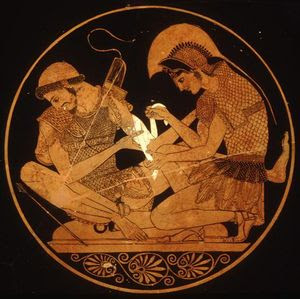
 The focus of “The Song of Achilles” is the story of the strong love between the young Achilles and the human youth Patroclus.  The two boys meet when they are thirteen and are inseparable from then on.  Their love is not only a platonic love but also a very physical love in the novel with the two boys sharing the same bed for most of the same novel.  Two pages (page 100-101) are devoted to their first sexual encounter, and some of the writing there could very well qualify for this year’s ‘Bad Sex in Fiction’ Award.  Judge for yourself.

“It was not enough.  My hand reached, found the place of his pleasure.  His eyes closed.  There was a rhythm he liked, I could feel it, the catch of his breath, the yearning.  My fingers were ceaseless, following each quickening gasp.  His eyelids were the color of the dawn sky; he smelled like earth after rain.  His mouth opened in an inarticulate cry, and we were pressed so close that I felt the spurt of his warmth against me.  He shuddered, and we lay still.”

Get a room, Achilles and Patroclus.

Patroclus and Achilles

A couple of the blurbs on the back of the book say “a book I could not put down”.  This was true for me for the last 150 pages when the Greeks are actually fighting the Trojans.  However, before the War there are 200 pages devoted to the growing up of Achilles and Patroclus.  Many of the scenes begin or end with Achilles and Patroclus wrapped up in each other’s arms in bed.   It seemed excessive while I was reading these chapters, but I wasn’t familiar with the story of these two.  Given the final resolution of the story, I’m sure the author decided to show just how close Achilles and Patroclus were to justify the conclusion.  To me while reading the novel, the depiction of the physical relationship between the two seemed overdone.

 The depiction of the Trojan War between the Greeks and Trojans is always high drama.  I just thought that the novel centered too much on the two characters when there were many other stories going on. One advantage of this modern telling of the ancient Greek story is that you become much more familiar with all of the characters and events that take place.

“Incendiary” by Chris Cleave – Obnoxious, but…

Incendiary” by Chris Cleave    (2005) – 237 pages


“Incendiary” the first novel by Chris Cleave which was written way back in 2005, is a long letter to Osama Bin Laden from a young working-class wife and mother whose husband and son have been killed in a terrorist attack at the Arsenals soccer stadium in London.  The novel had the misfortune of being published on July 7, 2005, the same day as the real London terrorist attacks on the Underground and a bus.  The book was actually banned from some bookshops which may or may not have helped its sales.

 The young woman’s husband in “Incendiary” worked for a bomb disposal unit, and the unnamed young wife worried about him constantly.   One night she goes to a bar to relieve her tension and she winds up sleeping with this young reporter guy Jasper who she meets in the bar.  She actually is fooling around with Jasper on the couch when she hears about the Arsenal stadium explosion on the television, and then she and Jasper rush to the stadium.

This is all quite obnoxious material for a novel, a terrorist explosion at a soccer stadium, a wife having sex with another guy while her husband is killed, then a long letter to Osama Bin Laden.  This plot is way over the top.  However another side of me notes that too many writers play it way too safe and are too careful not to offend.  If writers are going to be cruel, audacious and obnoxious, they better do it while they are young, because if they don’t do it then, they never will.  The first part of the novel has a lot of comic and dramatic energy, qualities of a young writer hitting his mark. 

It is the sparkling quirky personality of the young woman who is writing this letter to Bin Laden that makes “Incendiary” a fun novel.  Her voice ranges from the trivial to the humorous to the deeply moving.  I think she is intended to be the voice of the other London, not the voice of the Royal Family or the posh upper class, but the millions of others who live in London and are usually not found in novels.  The characters Jasper and his girlfriend Petra sort of represent the posh, and they are made fun of relentlessly.

“Incendiary” climaxes quite early in the novel with the stadium explosion.  Where can a writer go after that?   The novel follows our young widow as she continues her relationship with Jasper and also starts a new one with a policeman who her husband worked with.  Soon she makes friends with Petra, Jasper’s girlfriend, and a lot of time is spent in a posh clothing store making fun of modern expensive fashion.  Everything that happens after the explosion seems like a letdown in comparison.   Some of the insights about modern life in London are humorous and interesting, but somewhere toward the end of the novel the energy and dramatic tension lessen. 

Chris Cleave’s second novel which is called “The Other Hand” in England and “Little Bee” in the U.S. was a major success.  Probably if I had researched these novels more carefully beforehand, I would have read that book instead.  Anyhow his third novel, “Gold”, will be published on July 3.  If the reviews of that novel are good, I will read that novel, because Chris Cleave is an interesting venturesome writer.

Quotes about Writing and Life from Today’s Fiction Writers

We’ve all seen quotations from famous authors of the past.  I decided to limit my list of quotations only to authors who are still writing fiction.  I also tried to remove as much as possible the pomposity that frequently creeps in to authors’ quotes. 

 “Words at night were feral things.”    –   Joy Williams

 “Gain a modest reputation for being unreliable and you will never be asked to do a thing.”   –   Paul Theroux

 “I wonder why I ever bothered with sex, he thought;  There is nothing in the breathing world so gratifying as an artfully placed semicolon.”     –   Hilary Mantel in “A Place of Greater Safety”

 “Perhaps; but I am a difficult person to live with. My difficulty consists in not wanting to live with other people.”  –     J. M. Coetzee

 “Sometimes he wishes he could gather all the dogs he loved most and walk off the end of the world with them.“     –    Lydia Millet in “Love in Infant Monkeys”

 “Lists are a form of power.”     –  A. S. Byatt

 “Despite all that happens to you, you are, in the end, no better than the rest of us who must fight to stay afloat.  We want, we fight, we rage, we fail, we succeed.  Where were you when they taught us that?”    –   Edward P. Jones in “A Poor Guatamalan Dreams of a Downtown in Peru”

 “Nowadays, her life is more like a newspaper: aimless, up-to-date and full of meaningless events”     –  Michel Faber

 “That’s what careless words do. They make people love you a little less.”        –     Arundhati Roy

 “We all long for someone with whom we are able to share our peculiar burdens of being alive.”    –    Salley Vickers

 “Evil is the refusal to see one’s self in others.”    –   Richard Powers

 “I never change, I simply become more myself.”    –   Joyce Carol Oates 

“I have always felt that life was simply a series of personal humiliations relieved, occasionally, by the humiliations of others.”   –     Lorrie Moore

 “There is a limit to the amount of misery and disarray you will put up with for love, just as there is a limit to the amount of mess you can stand around a house. You can’t know the limit beforehand, but you will know when you’ve reached it. I believe this.”    –   Alice Munro

 “It wasn’t only wickedness and scheming that made people unhappy, it was confusion and misunderstanding; above all, it was the failure to grasp the simple truth that other people are as real as you.  And only in a story could you enter these different minds and show that they had equal value.”      –   Ian McEwan

 “The beginning of the end can feel a lot like the middle when you are living in it.”    –   Karen Russell in “Swamplandia”

 “I have offices all over the place and I avoid work everywhere. I don’t like to write – I like to be finished.”    –   Richard Price 


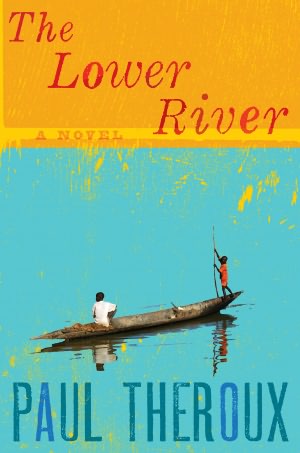
“The Lower River” by Paul Theroux – A Novel about Southeastern Africa Today

“The Lower River” by Paul Theroux  (2012) – 323 pages

 Ellis Hock, our main protagonist in “The Lower River”, is a sixty-two year-old family man living in Medford, Massachusetts, who owns and runs his own small clothing store.  There are not many customers left for his well-tailored clothes, since nearly everyone now shops for cheaper clothes at the big box stores. 

 Ellis frequently reminisces about the four years he spent with the Peace Corps in Malawi in southeastern Africa nearly forty years ago.  That was a heady time for both Ellis and Malawi.  At that time Ellis, with the help of  Malawian villagers, built a school there, and then he taught in the school.  Ellis was there for the celebration when Malawi achieved its independence from Great Britain. This was an idealistic time for Malawi, and Ellis Hock was a part of it.  He considers the years spent in Malawi as the best years of his life.   

 When his marriage falls apart unexpectedly, Ellis decides to sell his clothing store and head back to Malawi to the same village he lived in during those four Peace Corps years. 

 If you are at all interested in what is happening to the people in southeastern Africa including Malawi and Mozambique today, this is the novel for you.  Paul Theroux is entirely reliable when writing about this part of Africa.  He sugarcoats nothing.  Yes, things are as bad as we hear and read in the news.   However, the news does not tell the story of the individual people living in the villages today, and Theroux captures the people’s story exceedingly well.

 When Ellis arrives back in his old village, he finds that the village, like many in Africa, is controlled by a strong man.  The school Ellis built has been shut down for many years, and the building is sitting empty and is falling apart and rotting.  No one in the village is interested in re-building the school.  The villagers want only one thing from Ellis, and that is his money.  Who can blame the villagers, who are hungry?   

 “Speaking about the past here was like speaking about a foreign land – happier, simpler, much bigger and highly colored, seemingly above ground.”

 Yet the village Ellis is living in is one of the luckier villages.  Travelling only a short distance from this village, he encounters a village made up entirely of children.  All of the adults have died of AIDS, malaria, or other diseases.  Apparently there are many of these children’s villages in Malawi and Mozambique. These villages are called “the Place of the Thrown-Aways”.

 Certainly there are charities which are attempting to provide medical supplies, food, and clothing to these villages in Malawi.  Instead of integrating the distribution of supplies into the life of each village, some of the charities tend to use airdrops instead, perhaps because the volunteers do not want to be exposed to AIDS.  Theroux tells of one of the charity airdrops where food and supplies are lowered into the children’s village and some of the kids grab boxes lowered near them from the airplane.  However soon bigger boys take the boxes away from the littler kids, and soon adult strongmen from other villages arrive to take the boxes away from the bigger boys.  

 As I mentioned before, Paul Theroux is utterly reliable in getting the details of this story right.  One example I found particularly apt was when he describes the dress of the children in one of these children’s villages.  Most of the children are wearing only one article of clothing, a cheap T-shirt with a slogan like ‘Willow Bend Fun Run’,  ‘Rockland Lobster Festival’, or ‘Bob’s Bluegrass Bar’.  I can just picture the charity drives in suburbs all over the world, and the middle class people getting rid of all their ridiculous T-shirts. 

 “The Lower River” is definitely not an uplifting story; it is more of a horror story than anything else.  Paul Theroux has done an excellent job of making this story exciting and interesting.  I have admired many of Paul Theroux’s novels and stories, and “The Lower River’ is another strong work.

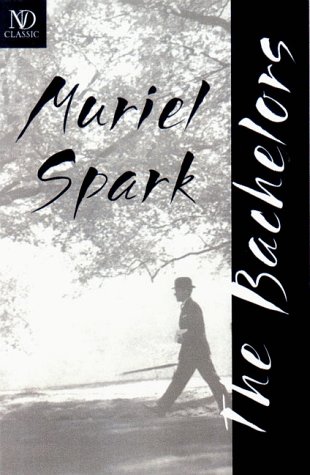
“The Bachelors” by Muriel Spark

The Bachelors” by Muriel Spark  (1960) –  202 pages

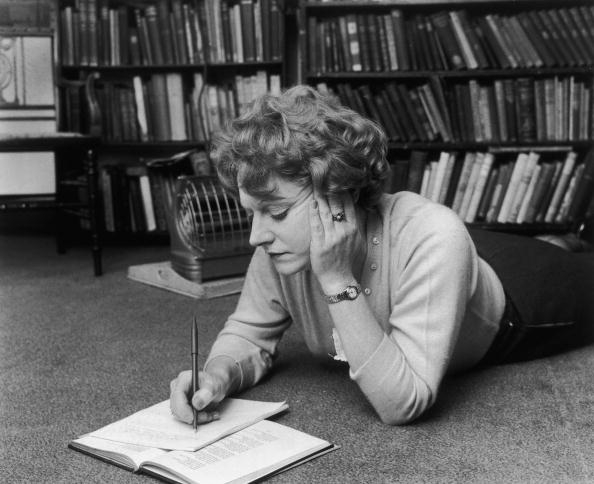
“People say my novels are cruel because cruel things happen in them and I keep this even tone. I’m often very deadpan, but there’s a moral statement too, and what it’s saying is that there’s a life beyond this, and these events are not the most important things. They’re not important in the long run. “

                                          Muriel Spark


 Like so many other bloggers, I am a huge fan of the novels of Muriel Spark.  She had a long career as a novelist, and unlike many writers, there is an evenness of quality in her work from her very earliest novels in the 1950s all the way to her last works in the 2000s.  Her short sharp novels have always been a real treat for me. 

 “The Bachelors” is a dark comedy like several of Spark’s novels. As always she brings a lot of attitude to this novel.  The conceit here is as the title suggests, a group of bachelors who live in London and run into each other on a regular basis.  They discuss their girlfriends, their efforts to get girlfriends, and their attempts to avoid entanglements with these girlfriends.  The girlfriends and potential girlfriends play a large role in “The Bachelors”. 

 Much of the novel is taken up with con-man spiritualist Patrick Seton.  a bachelor himself, who always seems to have a girlfriend who will give him money.  The last part of the novel is about his trial for defrauding a woman out of two thousand pounds.  There are even dark hints that he might commit murder.  The other bachelors in the novel are all proper respectable English gentlemen.

 “The Bachelors” is less successful than many other Muriel Spark novels.  For one thing the cast of characters is just too large.  I don’t think the average reader can follow and care about more than five or six main characters, yet here there must be about 20 or so characters which cause an overload.  In the two novels Spark wrote immediately after this novel, “The Prime of Miss Jean Brodie” and “The Girls of Slender Means”, she handles a smaller group of characters much more successfully. 

 The main subjects of the novel are the spiritualist seances and the trial which in 1960 might have been considered original topics, but by now they have become overworked and overused.  The big fraud trial takes up a lot of the novel which could probably have been better spent with more individual scenes of interaction between the main characters. 

 Finally the framing device of the novel, that these are a group of bachelors interacting with each other,  doesn’t really work.   Early on, Spark makes some references to these guys’ life as bachelors, but since these guys don’t interact that closely, the idea that they are all bachelors doesn’t set them apart as a distinct group.  Somehow the concept of bachelors seems almost out-of-date now.   

 “The Bachelors” is not a bad novel.  It did sustain my interest, and some of you are sure to like it better than I did.  However there are so many Muriel Spark novels I liked better than this one.  Since I still haven’t read all of Spark’s novels, the following is my own selective list in no particular order of her novels that I have read and are my favorites. 

     “Loitering With Intent”

     “A Far Cry from Kensington”

     “The Girls of Slender Means”

     “The Public Image”

     “Symposium”

     “Aiding and Abetting”

     “The Prime of Miss Jean Brodie”

     “The Ballad of Peckham Rye”


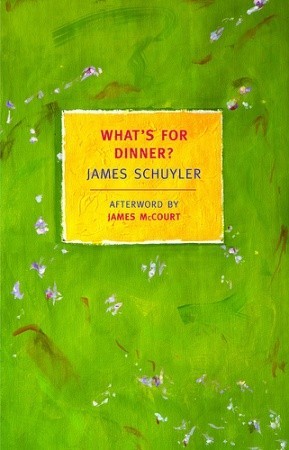
“What’s For Dinner?” by James Schuyler

“What’s For Dinner?” by James Schuyler  (1978)  –  197 pages 

Helene is restless:
leaving soon. And what then
will I do with myself? Some-
one is watching morning
TV. I’m not reduced to that
yet. I wish one could press
snowflakes in a book like flowers.”

             James Schuyler, “The Morning of the Poem”

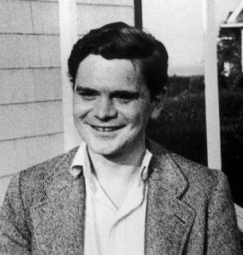
The novel “What’s For Dinner?” is a unique off-kilter quirky comedy of manners about us poor souls who live in suburbia.  The novel was written by a poet, James Schuyler, and it has a captivating rhythm all its own.

 For readers like me who are always on the lookout for something different and interesting, this novel is near perfect.  Although “What’s for Dinner” can be considered a comedy, it is a comedy with a dark biting underside. 

 New Yorker James Schuyler was a manic depressive for most of his adult life and spent years in psychoanalysis and group therapy.  In “What’s For Dinner?” he puts his group therapy experience to good use since much of the novel takes place during group therapy sessions.  A lot of the novel is the dialogue between these group members.  Group therapy talk has the potential for being very boring, but here the characters are so colorful and interesting that we care about what each character says.  The talk in the group sessions covers such weighty matters as alcoholism, adultery, drugs, insanity,  and death in an offhand conversational manner.  Dialogue is surely one of Schuyler’s strong suits.

 “Mrs. Judson,” Lottie said, “I wish you would tell me one thing that I’ve done to offend you.  Or anyone else here, for that matter.”

“How could you offend me?” Mrs. Judson said.  “I’m above that.”

“Yet you behave toward me as though I had.  I’m not trying to provoke you – I think you will feel better if you get some of what’s bothering you off your chest.”

“I’ll thank you to leave my chest out of it.”

“Very well,” Lottie said.  “I’ve tried.”

 These are just ordinary people who might have stepped out of a TV sitcom.  Being ordinary does not mean these same people can’t also be stubborn and capricious.    Some make tremendous progress in the group, and some don’t.   Also the family members of those in the group have their own things going on and their own sets of problems just like in real life.    The entire story is told with a certain elan, a kind spirit, that keeps the reader smiling the entire way.   

 This novel has caused me to be interested in James Schuyler.  I want to read more of his poetry and also his other novel which has been republished by NYRB, “Alfred and Guinevere”. 

 Once again New York Book Review (NYRB) has republished a book that puts the adjective ‘novel’ into the noun ‘novel’.  I looked up the adjective ‘novel’ and found the following meaning: ‘different from anything seen or known before”.   “What’s For Dinner?” certainly fits that definition.      

 “Your poems,”
a clunkhead said, “have grown
more open.” I don’t want to be open,
merely to say, to see and say, things
as they are.

         James Schuyler, “Dec 28, 1974”    

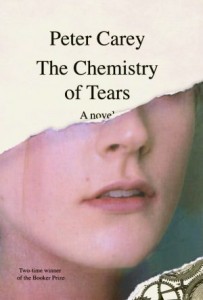
“The Chemistry of Tears” by Peter Carey

“The Chemistry of Tears” by Peter Carey   (2012) – 227 pages


“The Chemistry of Tears” is a novel that alternates between two entirely separate time periods and two main characters.  One storyline is that of Henry Brandling in the middle of the nineteenth century who wants to get a special clock toy built for his terribly ill two-year old son.  This special clock toy is a mechanical duck that can quack, eat grain, and even defecate.  He winds up in Germany among the best cuckoo clock makers of the nineteenth century.

 The other storyline involves modern day academic Catherine Gehrig who, in her early forties and mourning the death of her lover, is given the assignment of doing original research on Brandling.

 I suppose the structure of “The Chemistry of Tears” is quite similar to that of the novel “Possession” by A. S. Byatt which also alternates between a story about people in the past and the story of modern day academics studying them.  However, for me, “Possession” was a complete success, while “The Chemistry of Tears” did not work for me at all.  The two stories in “Possession” enhance each other and combine to make a deeply moving novel.  I never could see how the two stories in “The Chemistry of Tears” fit together on any emotional level. 

 The parts of “The Chemistry of Tears” that take place in nineteenth century Austria are as intricate,  complicated, and contrived as the mechanical clocks and toys that these craftsmen are building.  Very early on in the novel I realized that the payoff from this nineteenth century storyline of the novel was not going to justify the huge effort required to completely figure it out.  I grew impatient with this storyline and annoyed with my inability to figure out what was supposed to be going on.  Somehow I slogged through, but this convoluted storyline left me irritated.

 The parts of “The Chemistry of Tears” about Catherine and her modern day research are marginally better, just because Catherine is a more vivid dramatic character than Henry Brandling.  However, this modern story is dragged down by the research she is doing on this old Austrian story.   Also, even though some parts of the ‘Catherine’ story are well-written and interesting, I still haven’t figured out what the point of the whole thing is. 

 The bottom line is that I disliked “The Chemistry of Tears” more than any novel I’ve read since “The Marriage Plot”.   Whereas in “The Marriage Plot” I actively detested the three main characters, in “The Chemistry of Tears” I lacked sufficient interest in the two main characters and simply didn’t care what happened to them.  I was detached and disinterested in the stories, didn’t understand how the two stories fit together, and was irritated to spend so much time and effort trying to follow what was going on.  

 On the back cover of “The Chemistry of Tears”, the novel is described as ‘Dickensian’.  Charles Dickens is by no means my favorite novelist, but the only thing that is Dickensian in “The Chemistry of Tears” is that much of it takes place in the nineteenth century.  When I consider how moved I always am by “The Christmas Carol”, it seems almost a sacrilege to call “The Chemistry of Tears” Dickensian.

“Hark! A Vagrant” by Kate Beaton, Comic Strips Starring Jane Austen, Hamlet, etc.

“Hark! A Vagrant” by Kate Beaton  (2011) – 166 pages

Once again I feel like I must be the last person in the world to discover something new, different, and exciting.  Many of the comic strips in “Hark! A Vagrant” star historic and literary personages.  There are comic strips about F. Scott and Zelda Fitzgerald, Moses, young Ada Lovelace, and Jane Eyre, among many others.  Then there are comic strips about no one in particular such as ‘Hipsters Ruin Everything, Parts I and II’ or ‘Sitcom, Victorian Style’.  The comics have an immediate spur-of-the-moment quality that makes them fun.

Kate Beaton, originally from Cape Breton in eastern Nova Scotia, started out making fun of Canadian history and has since branched out to make fun of the rest of the world’s history and literature.  Her work can be seen also at the Hark! A Vagrant website. Her website is enormously popular with over a million hits per month.
The drawings are offhand, quick, and simple.  They give a free, spontaneous, and playful feel to the cartoons.  Many of the cartoons juxtapose modern attitudes on historical figures; the cartoons are irreverent and humorous.   You must see them for yourselves in order to really appreciate them.  Let’s just say that it is hugely refreshing to have a young person interested enough in history and literature so that she can make fun of them.    Beaton started out as a webcomic writer but now has sold her work to the New Yorker, the Paris Review, and other magazines.

These cartoons are very easy to like.  You probably will enjoy this book.

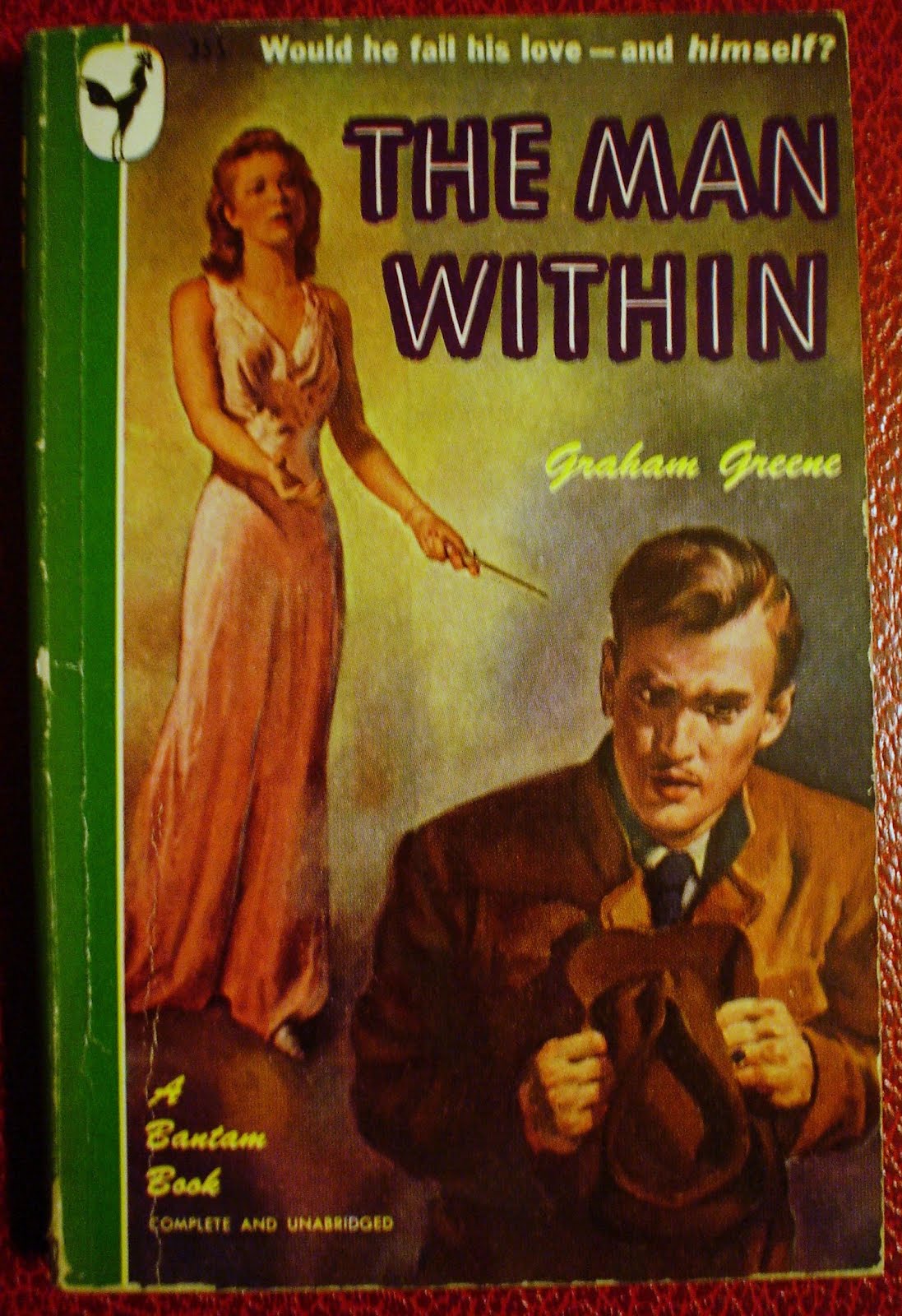
“The Man Within My Head” by Pico Iyer, One Man’s Appreciation of Graham Greene

“The Man Within My Head”  by Pico Iyer    (2012)  – 238 pages

 “I wish sometimes you had a few bad motives, you might understand a little more about human beings.”

                                   Graham Greene in “The Quiet American

 I came to Graham Greene quite late in my reading career about ten years ago, but when I finally did discover him I devoured his novels with a vengeance   Over the succeeding five years, I read just about all the fiction the prolific Greene wrote.  “Brighton Rock”, “The End of the Affair”, “The Heart of the Matter”, “The Comedians”, “Our Man in Havana”, all are wonderful novels just to mention a few of the many high spots.

The appeal of these novels is almost visceral for me.  I couldn’t not read these novels.  I think what separates Graham Greene from other writers is that his protagonists are not only acute observers of the other people around them, they are also acute observers of themselves. They are just as aware of their own failings, their own sins, as they are of those of other people.  This is liberating.  Too often writers grant their main character a special unearned dispensation from the rules that govern everyone else in their novels.

Pico Iyer also has a special affinity for Graham Greene, and he has written the non-fiction book, “The Man Within My Head” as a tribute to Graham Greene.  Iyer has some powerful insights into Graham Greene.

 “He looked unblinkingly at precisely the shadows in the self (and in the world)  that most of us try to look away from, drilling, as a dentist might, into the most tender and affected spaces because that  was where the trouble lay.  That was what allowed so many to write so venomously about Greene, he gave them all the evidence they needed in his compendious accounts of what he called his ‘evasions and deceits’.”

 The best word to describe Graham Greene as a husband and father is ‘absent’.  Although he was technically married for 65 years, he spent the last 43 years separated from his wife.  He had several young woman lovers in various places in the world.     However he did buy his daughter a huge ranch in Canada.

Iyer is no fan of everything Greene wrote.

 “I couldn’t bear reading the early stories, so bitter and cruel and thick with dissatisfaction. And his travel books were a near-perfect example of how not to write or think about travel.”

 As long as Pico Iyer is discussing Graham Greene,  I found “The Man Within My Head’ fascinating.  However Iyer loses me when he relates anecdotes from his own life.   Certainly his life has many parallels with that of Graham Greene, but his anecdotes about himself and his family only highlight for me the limitations of non-fiction compared to fiction.  Iyer’s own stories are certainly sincere and heartfelt, but I, spoiled as I am from reading many of the world’s finest novels including Greene’s own novels, need more than sincerity to hold my interest.

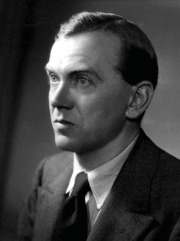
Graham Greene

One anecdote concerning Graham Greene which is in “The Man Within My Head” particularly struck me.  When Muriel Spark was struggling to write her first novel, Greene would send her a note with a couple of bottles of wine and 20 pounds each month to help her along.  He also wrote to publishers on her behalf.  Muriel Spark is a spectacularly good writer in her own right, so this story shows not only Greene’s generosity but also his good literary taste.

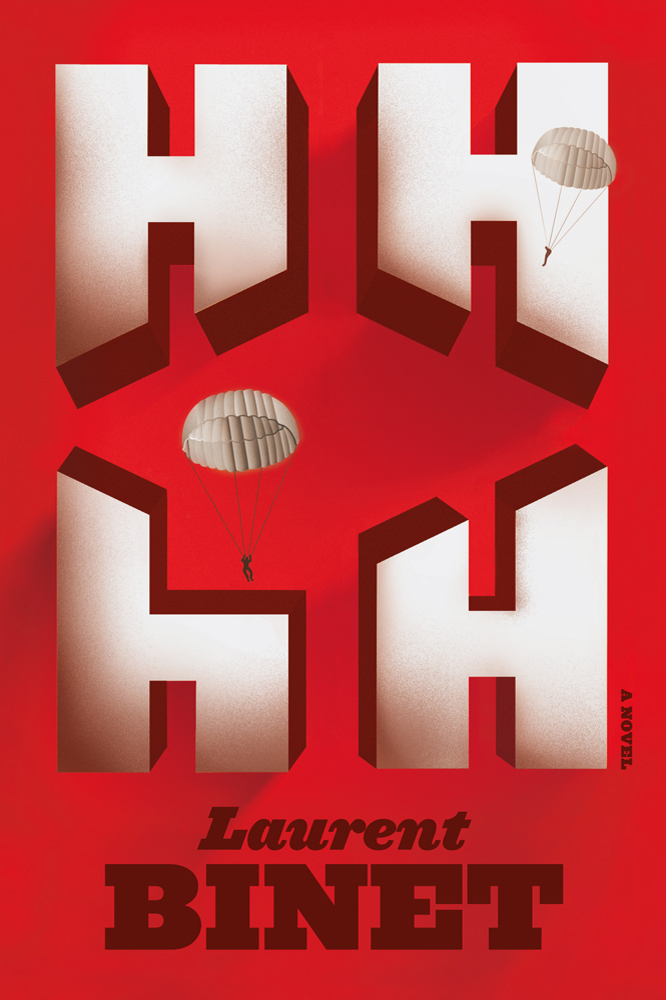
“HHhH” by Laurent Binet, the True Story of Two Heroes

“HHhH” by Laurent Binet  (2010) – 327 pages  Translated by Sam Taylor

“HHhH” is the inspiring true story of two brave heroes, Jozef Gabčík and Jan Kubiš.  It is also the story of Reinhardt Heydrich, Adolf Hitler’s golden boy, who was called the “Butcher of Prague” and was instrumental in Hitler’s evil plans for Kristallnacht and the Final Solution.

“HHhH” has already won the 2010 Prix de Goncourt and has now been wonderfully translated from French into English by Sam Taylor.  I wish to thank Kim at Reading Matters for highlighting “HHhH” for the month of May, because “HHhH” is an outstanding historical fiction novel that demonstrates how it can be done in the future.

The tone of “HHhH” is informal, relaxed, and conversational.  The narrator who is writing “HHhH” frequently mentions his conversations about the book with his girlfriend Natacha, and he mentions other novels and movies which deal with the same subject matter he is dealing with.   Throughout “HHhH”, Laurent Binet questions the conventions of historical fiction.   In most cases in actual  history we don’t know what the people really said.  So should the writer make up dialogue?

 “There is nothing more artificial in a historical narrative than this kind of dialogue – reconstructed from more or less firsthand accounts with the idea of breathing life into the dead pages of history…..When an author tries to bring a conversation back to life this way, the result is often contrived and the effect the opposite of that desired: you see too clearly the strings controlling the puppets, you hear too distinctly the author’s voice in the mouths of these historical figures.”  

 Even if your knowledge of an incident is extensive, can you, the author, add tiny details to enhance the story?

” I know pretty much everything that can be known about this flight and I refuse to write a sentence like “Automatically they checked the release boxes and static lines of their parachute harnesses.”  Even if without a doubt they did exactly that.” 

 Some might think these authorial intrusions would distract from the story, but for me they added a certain veracity and charm to the telling.  I needed no extra incentives to appreciate this history, because I would have loved this true story under any conditions.  Still I appreciated the very modern approach which only accentuated how brave our two heroes were.    Laurent Binet is an extremely talented writer, and “HHhH” is his first novel.    I highly recommend “HHhH”