“It’s Fine by Me” by Per Petterson (1992) – 199 pages
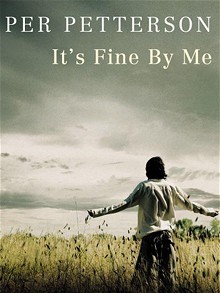
I was halfway through “It’s Fine by Me” and still wavering, still considering quitting the book. But I stuck with this short novel until the end and I am happy that I did.
This is an early work by the Norwegian novelist Per Petterson who of course wrote the hugely successful novel “Out Stealing Horses” in 2003. It is the fifth novel by Petterson to be translated into English. I thought “Out Stealing Horses” was excellent (nearly everyone did), but had not read any of his other novels until this one.
“It’s Fine by Me” is about a young Norwegian working class teen who lives with his mother. His father, a violent drunk, has moved out of the house but still hangs around the town There have been a lot of novels about sensitive young guys brought up in broken abusive homes; I liked that here the young guy, Audun, is no sensitive shrinking violet but is a tough guy willing to fight for himself. There’s a lot of fighting in this book as you would expect among the young men living in a poorer neighborhood.
The first sections of the novel switch between scenes from when Audun is 13 and scenes from when he is 18. At times I couldn’t figure out which sections were which, so the novel just seemed disjointed to me. Although some of the individual situations were stark and interesting, I couldn’t figure out where Petterson was heading with the entire story. That is when I wavered at continuing the book.
However halfway through “It’s Fine by Me”, everything fell into place for me. This is not a conventional story with a beginning, a middle, and a conclusion; this is a character study of a tough young guy who lives in a rough Norwegian working class neighborhood. It is about his transition from going to high school to working in a printing factory. I especially liked the scenes of the straight-from-high-school Audun starting to work on the factory floor, fitting in with the older workers and dealing with his bosses.
One of the strengths of “It’s Fine by Me” is that you don’t get the sense that the main protagonist Audun is just the author at a young age. That occurs too many times in novels. Here Audun stands on his own feet. No one makes excuses for him. He is not a particularly good person; he is not a particularly bad person. He’s a tough guy living in a rough neighborhood who survives at least to the end of the novel. It rings true, and that is the best thing.























 Tony's Book World
Recent Comments