Archive for the ‘Book Reviews’ Category

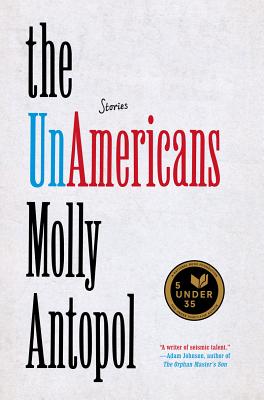
‘The UnAmericans’ by Molly Antopol

‘The UnAmericans’ by Molly Antopol  (2014) – 258 pages
9780393241136

Listen carefully to the stories you hear from your relatives and friends.  Some day a few of those stories might make great fiction.

The stories in ‘The UnAmericans’ seem to be the result of listening closely to family stories.  Some of the stories go back to the old European world while others take place in the modern world of the United States and Israel.  These stories capture the poignancy and emotion of the lives of the people in them over time.

Molly Antopol is one of the 2013 ‘5 Under 35’ fiction writers selected by the National Book Foundation.

All of the stories in ‘The UnAmericans’ are strong, but in order to give you a better idea what this collection is like, I will focus on a single story.  In ‘The Quietest Man’, a father finds out that his 24 year old daughter has written a play about her family which is to be performed in New York City.  The father is terribly anxious to find out what is in the play, because he is divorced from his wife and estranged from his daughter. When his daughter visits him, he recalls times over the years when he was less than a good father  The story goes all the way back to Prague, Czechoslovakia when he and his wife were young, and their daughter was born.   It tells about the reason they left Prague, their life in the states, the marriage falling apart, the strained relationship between father and daughter.  As the story ends, we find out the plot of the daughter’s play.

When one reads this story, one can’t help but think of the young Molly Antopol writing stories about her own family.  I suppose most authors face this dilemma of including the traits or the past of people close to them in their fiction.

Some of the stories begin in Belarus or in Kiev, Ukraine and wind up in either the United States or Israel.  Except for the Native Americans, most of us who live in the United States are UnAmericans in that the stories of our families begin long ago and far away. If there are any pictures from the old times left, these ancient family members may bear an uncanny resemblance to us.

Each of the stories has as much substance as a novella, yet is only about 30 pages long.   These stories in ‘The UnAmericans’ are so well-written and moving, they reaffirm my faith in the short story form.  Adam Johnson describes Molly Antopol as “a writer of seismic talent”, and I agree.

Molly Antopol is at work on a novel tentatively titled ‘The After Party’.

W. H. Auden and the Great Divide Between People

good-and-evil-streets-12942748772ij1vv

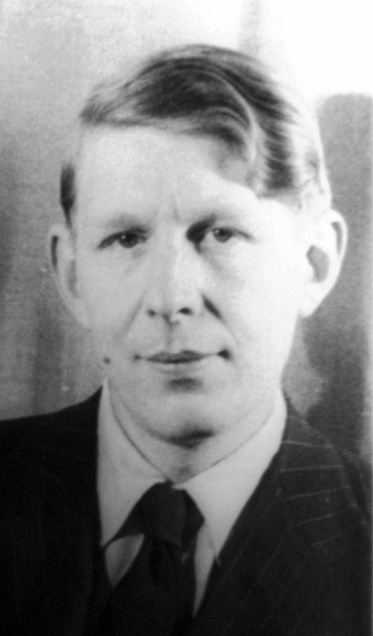
Here is a fascinating article in the New York Review of Books this week called The Secret Auden by Edward Mendelson.  Unlike so many articles today, this one does not reveal the secret vices of a famous person.  Instead this article reveals the kind acts of generosity that W. H Auden did but kept hidden from the public.

 But the main point of the article is to show us W. H. Auden’s views of life and of people.   Auden was a sensitive supremely intelligent man who was able to put the whole world into his poems.


“Evil is unspectacular and always human,
And shares our bed and eats at our own table …”
                                            ‘Herman Melville’, by W. H. Auden

The key time in our world history is just after World War II.   Civilization had just been through two major wars, the second much worse than the first. Auden said, ‘War may be necessary, but it is still murder.’  Many people were pessimistic that a third world war, much worse than the second, was inevitable.    Auden addressed this fear with the following lines.

“More than ever
life-out-there is goodly, miraculous, loveable,
but we shan’t, not since Stalin and Hitler,
trust ourselves ever again: we know that, subjectively,
all is possible.”

‘The Cave of Making’ by W. H. Auden

Somehow we have muddled through these almost seventy years since World War II without that third world war occurring, although we have built and stockpiled the weapons for it.

As Mendelson points out in his article, there are two sides to our current argument, two ways of looking at things.  Since Mendelson presents this idea so persuasively, I will let him explain.

By refusing to claim moral or personal authority, Auden placed himself firmly on one side of an argument that pervades the modern intellectual climate but is seldom explicitly stated, an argument about the nature of evil and those who commit it.

On one side are those who, like Auden, sense the furies hidden in themselves, evils they hope never to unleash, but which, they sometimes perceive, add force to their ordinary angers and resentments, especially those angers they prefer to think are righteous. On the other side are those who can say of themselves without irony, “I am a good person,” who perceive great evils only in other, evil people whose motives and actions are entirely different from their own. This view has dangerous consequences when a party or nation, having assured itself of its inherent goodness, assumes its actions are therefore justified, even when, in the eyes of everyone else, they seem murderous and oppressive.

One of many forms this argument takes is a dispute over the meaning of the great totalitarian evils of the twentieth century: whether they reveal something about all of humanity or only about the uniquely evil leaders, cultures, and nations that committed them.”

                             ‘The Secret Auden’, Edward Mendelson

So here is the great divide between people.  The members of one group say, without irony, ‘We are good persons and it is all those other evil people that are causing all the trouble’.  However the members of the second group say, ‘We ourselves, as well as everyone else, have the potential to commit evil.  It is up to each of us to curb our own evil instincts.’

AudenVanVechten1939Auden and I strongly support the second group.  If Hitler and all the Nazis could have figured out for one second that they themselves were the problem, tens of millions of people would not have had to die in World War II.

Over the last few days, I’ve discovered much more in Auden’s poems than his views of evil and good.  Only now am I beginning to realize the full extent of his accomplishment.

Another line from Auden seems appropriate here.

“You shall love your crooked neighbour, with your crooked heart.”

             ‘As I Walked Out One Evening’ by W. H. Auden

‘Strange Bodies’ by Marcel Theroux – A Novel with a Split Personality

‘Strange Bodies’ by Marcel Theroux (2014) – 292 pages

strange-bodies

‘Strange Bodies’ starts out as a literary mystery and then changes into a science fiction caper.  Somewhere during the transformation the novel lost me, because the two parts were not joined together particularly well at all.

Nicholas Slopen is a literary academic specializing in the 18th century and in particular Samuel Johnson, the great English man of letters and creator of  ‘A Dictionary of the English Language’.  Slopen is asked to authenticate some essays purportedly written by Johnson.  These are essays that have never before come to light, so Slopen is excited to have the chance to read them.  After a thorough examination of the essays, Slopen is ready to validate them as the work of Samuel Johnson only to notice that the paper they are written on would not have been available in Johnson’s time.

So who wrote these essays?  That is the central literary mystery here.  I suppose many readers would be impatient with all this talk of Samuel Johnson and such, but for me that was the most interesting part of the novel.  

Just as I was settling in, the novel turns into a futuristic science fiction chase involving wild Russian experiments into the resuscitation of human lives.  When the book left the literary world, I found that I did not care enough for the present-day characters in order to sustain my interest.   

The chief concern of the second half of the novel is the Malevin Procedure which is a wild-eyed technique for implanting the writings and thoughts of one person into another.  Samuel Johnson may be worthy of this procedure, but others in this novel are not.   We are not given a detailed enough description of how the procedure is actually implemented.  The procedure itself is incomplete, and the result is a mixture of before and after.      

I suppose that the main problem with the novel is that the chief character, Nicholas Slopen, is never developed into someone we empathize with.  First he is an academic authenticating someone else’s writings.  There is a half-hearted attempt to give him a wife and two children which is rather unconvincing.

I must admit that science fiction is usually not my genre of choice, although I have enjoyed several of the classics such as ‘The Martian Chronicles’, ‘We’, and ‘Brave New World’ in the past.   ‘Strange Bodies’ seems to have a split personality.  Somehow I don’t believe that it takes its science at all seriously beyond putting its characters in motion.

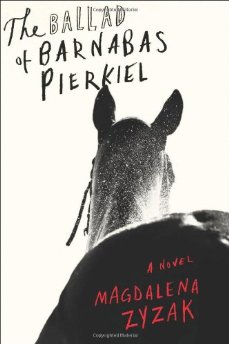
‘The Ballad of Barnabas Pierkiel’ by Magdalena Zyzak

‘The Ballad of Barnabas Pierkiel’ by Magdalena Zyzak  (2014) – 269 pages

41N4U46RSbL._SY344_

Here we have a ribald comic folk tale from the imaginary Slavic nation of Scalvusia about young pig farmer Barnabas Pierkiel and his quest for the beautiful gypsy Roosha Papusha. He first encounters Roosha in her garden bending over as she pulls out weeds, and “his beloved’s buttocks glared at him through a cloche of heaped skirts.”

What is special about ‘The Ballad of Barnabas Pierkiel’ is that it is written in the fashion of those wonderful novels from the 17th and 18th centuries such as ‘Tristam Shandy’ and ‘Don Quixote’ and ‘Candide’ and ‘Gulliver’s Travels’.  Each chapter has a subtitle such as ‘In which two friends become friendlier in a shed’ or ‘In which Apollonia divulges her secret’.  My favorite chapter subtitle is ‘In which too much transpires to be summed up’. 

To have a modern novel written in this old manner is a delight.  It has been so long since a modern novel has been written in this classic style that it comes across as new and different and unique.  Magdalena also pulls off the archaic language and the bizarre plot of a twisted folktale well.    

This absurd bawdy farce takes place in this backward town of Odolechka just before World War II, and the Germans are on the verge of invading.   We meet the mayor, the mayor’s wife, the police chief, the priest, as well as many others.  All are town characters in one way or another.        

The distinctive classical style and Magdalena Zyzak’s wicked sense of humor make this novel great fun at first.   Zyzak has pulled this madcap folk comedy off for about 150 pages. However the novel is 269 pages long. It loses some of its comic energy during the last half.  Too many characters from the town are introduced, and many are not defined sharply or rudely enough to be funny.  This is broad humor, and it probably could have been limited to 10 or 12 well-defined characters.

Despite not being entirely satisfied with ‘The Ballad of Barnabas Pierkiel’, I believe that Magdalena Zyzak is a novelist to watch in the future.  It is her willingness and ability to attempt something different from the crowd that makes her fascinating.

A Descent Due to Alcohol

The Drinker’ by Hans Fallada (1950) – 282 pages

Translated by Charlotte and A. L. Lloyd

10726669

There are two distinct sides to German writer Hans Fallada. In ‘Every Man Dies Alone’ (also called ‘Alone in Berlin’), he wrote what Primo Levi called “the greatest book ever written about German resistance to the Nazis”. That is a wrenching powerful account of what Berlin was like for working class people during the Nazi era. Fallada wrote it soon after the end of World War II shortly before he died.

‘The Drinker’, another of his novels, captures the other side of Hans Fallada. It was written in an encrypted notebook by him while he was locked up in an asylum for the criminally insane in the early 1940s. He was locked up, because he had made drunken threats with a gun against his ex-wife during an alcohol-fueled nervous breakdown.

‘The Drinker’ tells the story of one man’s descent due to alcohol. While it certainly is fiction and written as a novel, one gets the sense while reading that this is very much Fallada’s own story. The first part of the novel is about the drinking taking over this man’s life, and the second part is about life in the asylum.

“This place was horrible with its filth and meanness and envy, but that is how it was, and what was the use of rebelling against it? We prisoners, we patients, were not worth it.”

Lately the subject of American writers and alcohol has been up for discussion due to the recent book, ‘‘The Trip to Echo Spring: On Writers and Drinking” by Olivia Laing. The case of Hans Fallada would suggest that alcoholism is a problem not only for American writers.

‘The Drinker’ very much reminded me of the novel, ‘Disturbing the Peace’, by American writer Richard Yates. Like Han Fallada, Richard Yates had a form of alcoholism that went well beyond the fashionable. His alcoholism was also mixed in with bouts of psychosis and depression. At age 34, he spent one weekend in the Men’s Violence Ward of Bellevue Hospital in New York. He put that weekend into his novel ‘Disturbing the Peace’.

‘Disturbing the Peace’ was the first novel by Richard Yates that I read, so this searing account of an alcoholic has always had a special place in my memory. Since then I’ve read all of Richard Yates’ fiction. Recently I came across a critic saying that ‘Disturbing the Peace’ is one of Yates’ lesser novels, and I don’t believe that critic for a second.

falladaThe style of ‘The Drinker’ is much different from the style of ‘Disturbing the Peace’; they are very different writers. ‘The Drinker’ captures a bit of the humor of the drinking episodes, while ‘Disturbing the Peace’ is more heartfelt and sincere. What Hans Fallada and Richard Yates share is a brutal accuracy about themselves. Perhaps that honesty gave them the empathy and insight into the plights of other people so they could get beyond their walls and deceptions and reach the real story.

Staying Alive – Real Poems for Unreal Times

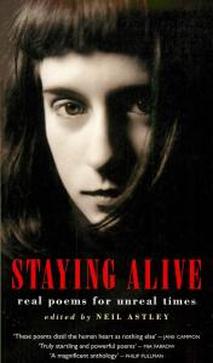
‘Staying Alive – Real Poems for Unreal Times’, a poetry anthology edited by Neil Astley (2002) – 496 pages

9553821

 ‘A good poet is someone who manages, in a lifetime of standing out in thunderstorms, to be struck by lightning five or six times; a dozen or two dozen times and he is great.’  – Randall Jarrell  

‘Publishing a volume of verse is like dropping a rose-petal down the Grand Canyon and waiting for the echo.’ – Don Marquis


I finally discovered a poetry anthology that works for me, ‘Staying Alive’ which is edited by Neil Astley,  I admit I’m late to the party, since this book was published way back in 2002 and has already sold over 200,000 copies in Great Britain alone.  However this book of poems is so powerful, I consider myself fortunate to have discovered it even now at this late point, better late than never.

Too many anthologies seem to be written more for the poets who appear in their pages rather than for the people actually reading the poems.  I’ve read anthologies where none of the poems hits home.  If I don’t discover even one poem which strikes me or stays in my mind, that anthology is a failure for me.

‘Staying Alive’ takes a different approach which can best be summed up by its subtitle: ‘Real Poems for Unreal Times’.  The focus here is on the reader.  These are contemporary poems written since 1900.  Many of the poets are justly famous like Robert Frost, T. S Eliot, Elizabeth Bishop, and Philip Larkin.  Yet there are many other lesser known poets as well. The amazing thing is that many of the poems by the less famous poets rival the classics.  This anthology gives a good sense of the continuation of poetry from the early twentieth century until now.  It may have been helpful to know the year each poem was first published, but in this book the emphasis is on the words of the poem itself.    

Neil Astley founded his poetry publishing house Bloodaxe Books in England in 1982.  At least since then he has been devoted to finding and publishing other people’s good poems. He has played a fundamental role in getting new poets published and in increasing the audience for poetry.

‘Staying Alive’ is divided into twelve sections with such section names as ‘Body and Soul’, ‘Roads and Journeys’, and ‘Bittersweet’.  Each section starts with a short explanatory note from Astley. Of course the poems don’t always fit neatly in to their categories or fit into more than one category,

I’m not going to quote individual poems here, but I will list a few from the book which particularly impressed me.

 ‘Wild Geese’ by Mary Oliver (Page 28)         (This poem has a place of honor in the book as the first poem and the only poem that is outside of all of the twelve sections of the book.)

‘And the Days Are Not Full Enough’ by Ezra Pound (Page 130)

‘I, Too’ by Langston Hughes (Page 326)

‘The Moose’ by Elizabeth Bishop  (Page 87)

   ‘The Door’ by Kapka Kassabova (Page 70)

‘Consider the Grass Growing’ by Patrick Kavanaugh (Page 455)

‘Staying Alive’ is a book that I will pick up occasionally whenever I want to discover another good poem or poems or to reread an old poem I particularly like.  It was followed by two more major anthologies also edited by Neil Astley, ‘Being Alive’ and ‘Being Human’, both of which I’ve added to my future gift wish list.

I would recommend ‘Staying Alive’ to anyone who already has an appreciation for poetry and wants to discover more poems or anyone who wants to develop a taste for poetry.

‘Dept. of Speculation’ by Jenny Offill

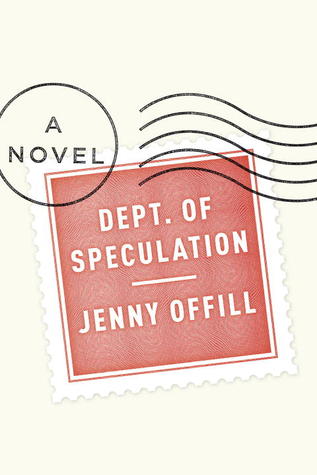
‘Dept. of Speculation’ by Jenny Offill  (2014)  – 177 pages

 ‘’Up until the seventeenth century, it was widely believed that magnets had souls.  How else could an object attract and repel?”  

17402288If you are looking for a traditional novel with a structured plot and endearing characters, avoid ‘Dept. of Speculation’ by Jenny Offill like the plague.  But if you can handle more modern offbeat fare, ‘Dept. of Speculation’ might be just the novel for you.

This novel is a collage type work with short paragraphs containing as the title indicates speculation, brief images and insights, facts, and literary tidbits on the order of ‘Speedboat’ by Renata Adler or the works of David Markson.  It is a slim novel, and I found it well worth the little time spent.

Take the following lines from ‘Dept. of Speculation’:

“What Keats said: No such thing as the world becoming an easy place to save you soul in.” 

Many people really do not care what Keats said. However I found this line and the many others like it fascinating. 

There is a story here about the birth and young childhood of a daughter and then a marriage unraveling.  Fortunately the patchwork of bits in ‘Dept of Speculation’ do add up to a coherent story, not like some of David Markson’s later novels which seem to have no point beyond the fascinating quotes and facts themselves.

 “There is a picture of my mother holding me as a baby, a look of naked love on her face.  For years, it embarrassed me.  Now there is a picture of me with my daughter looking exactly the same way.”

One of her definitions struck a little too close to home.  “Art monsters only concern themselves with art, never mundane things.  Nabokov didn’t even fold his own umbrella.”  ‘Art Monster’ fits the person I am a little too close for comfort.

I suppose ‘Dept. of Speculation’ would be classified in the category of Post-Modernism.  Some people reject even the modern, let alone the post-modern, out of hand.  All I can say is that I found ‘Dept. of Speculation’ original, insightful, and rewarding     

‘Battleborn’ by Claire Vaye Watkins

‘Battleborn’,  stories by Claire Vaye Watkins   (2012) –  283 pages

img-battleborn_152017296466.jpg_article_singleimage

What do we know about Nevada?  There’s the legal gambling, Las Vegas and Reno, and the accompanying shiny sleaze.  The huge desert and the mountains make a large part of the state breathtakingly beautiful but nearly uninhabitable.   The Comstock Lode in western Nevada was the first major discovery of silver ore in 1859.  It made some people rich but left a lot of others cursing their luck.

‘Battleborn’ is a collection of stories in which Claire Vaye Watkins captures the beauty and the desolation as well as the crassness of this place Nevada.

By now you probably know the story of Claire Vaye Watkins herself.  Her father was Paul Watkins who was a member of the Manson family, in fact at one point Charlie Manson’s right hand man and a new member recruiter for the family.  Later he became a key witness for the prosecution in the murder trials providing the Helter Skelter motive for the Manson crimes.

Of the fiction writers who write about the western United States, the one that Watkins most resembles is Denis Johnson.  Both Johnson and Watkins have that unflinching stark quality to their writing that indicates they are willing to write the truth about anything even if it reflects poorly on them selves.  

Although there are several strong stories in ‘Battleborn’, one story, ‘The Past Perfect, the Past Continuous, and the Simple Past’, stands out as particularly devastating for me.  A young guy Michele, an Italian tourist, shows up at the Cherry Patch Ranch, a brothel somewhere near Las Vegas.  His traveling companion wandered off into the desert and is missing.  Michele spends a lot of time waiting at this whorehouse for word from the police about his friend, because if the friend isn’t found in seven days, he’s probably dead.  Michele gets to know the women who work there, especially Darla, as well as the gay manager pimp Manny who also has his eyes on the young guy.  In this story, Watkins captures the desolate sleazy atmosphere inside this brothel so well, it is nearly unforgettable.   The characters here come alive, as real as real can be. This is a classic story. 

The first story in the collection, ‘Ghosts, Cowboys’, has the Manson family in it.  It features a girl called Razor Blade Baby, because Charlie Manson supposedly delivered her as a baby himself using a razor blade.

Well, these stories are like those of Denis Johnson but from the female perspective.   The world always needs more woman writers who are willing and able to deal with the seamy underside of life.

‘1914’ by Jean Echenoz – World War I for the Soldiers of France

‘1914’ by Jean Echenoz   (2012) – 109 pages    Translated by Linda Coverdale

Echenoz21

French novelist Jean Echenoz writes historical fiction the way I like it to be written.  His novels are not long epics.  ‘1914’ consists of short concise snapshots of what the war was like.   It is a pure distillation of what World War I meant for the French soldiers who fought in the war.

World War II was the worst war ever for civilians, but for the fighting soldiers themselves no war was more terrible than World War I, ‘that sordid stinking opera’.  All the gruesome particulars are in this short novel.  Here Echenoz, in two sentences describes in vivid detail what a direct hit of a troop unit was like:

“That’s when the first three shells that had flown too far exploding uselessly behind the lines, were followed by a fourth and more carefully aimed 105-millimeter percussion fuse that produced better results in the trench: after blowing the captain’s orderly into six pieces, it spun off a mess of shrapnel that decapitated a liaison officer, pinned Bossis through his solar plexus to a tunnel prop, hacked up various soldiers from various angles and bisected the body of an infantry scout lengthwise.   Stationed not far from the man, Anthime was for an instant able to see all the scout’s organs – sliced in two from his brain to his pelvis, as in an anatomical drawing – before hunkering down automatically and half off balance to protect himself, deafened by the god awful din, blinded by the torrent of rocks and dirt, the clouds of ash and debris, vomiting from fear and revulsion all over his lower legs and onto his feet, sunk up to the ankles in mud.”

The sentences in this short novel are not short themselves, but instead powerfully convey the precise effects of what is happening

As in most wars, at the beginning of World War I the soldiers go off to the battleground expecting that they will be gone only for a few weeks after which they will resume their places in society.  Here we follow a group of five soldiers.  A few are the lucky ones.  They get a ‘good wound’, the loss of an arm or a leg which means they can no longer fight and thus get sent home.  Most of the rest are not so lucky.  They either get killed or severely wounded by enemy fire or they run away and get shot for treason by French gendarmes.

 “Mowed down by your own side rather than asphyxiated, burned to a crisp, or shredded by gas, flamethrowers, or shells – that could be a choice.”

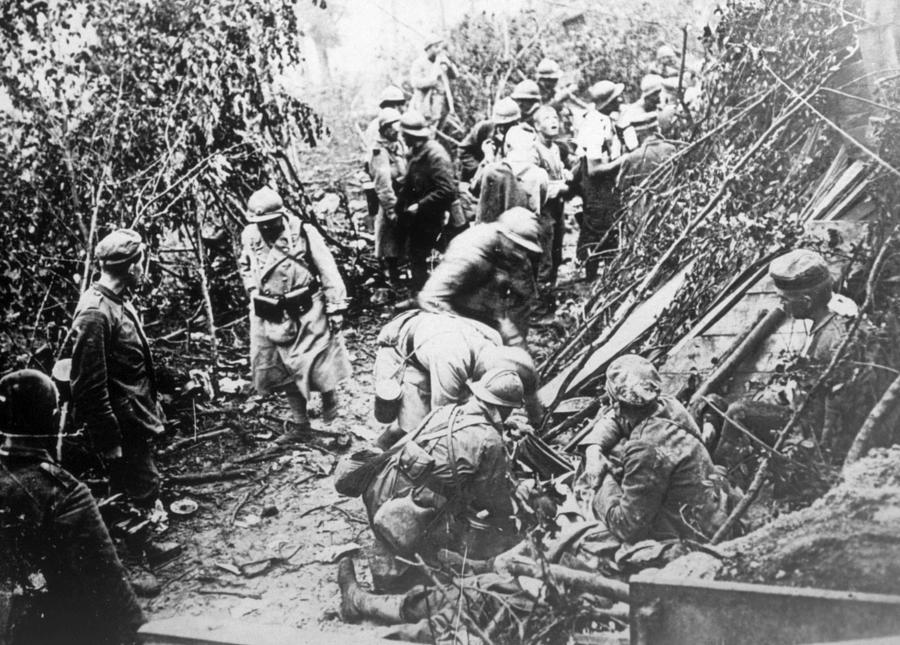
The Battle of the Marne - 1914

The Battle of the Marne – 1914

‘1914’ is up there with the best novels I have read about this awful World War I.  Other excellent World War I writings I have read are ‘The Wars’ by Canadian writer Timothy Findley, ‘The Good Soldier Schweik’ by Czech writer Juroslav Hasek, ‘In Parenthesis’ by English poet David Jones, and the memoir ‘Goodbye to All That’ by English writer Robert Graves.  Do you have a favorite World War I novel?

This is the second novel I have read by Jean Echenoz, the first being ‘Lightning’ which is a mostly non-fiction  biography of Nikola Tesla, the man who out-smarted Thomas Edison.  Echenoz is fast becoming one of my favorite writers.  He gives to historical people and situations the delicious qualities of fiction.  Very soon I will be reading more of his novels.

William Makepeace Thackeray – Cruel to be Kind

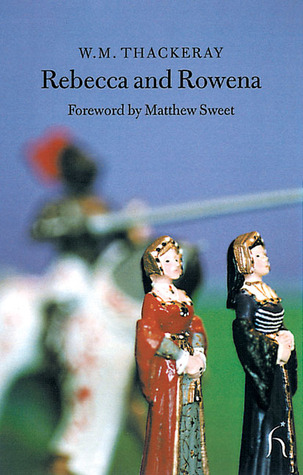
‘Rebecca and Rowena’ by William Makepeace Thackeray (1850) – 88 pages

 “The wicked are wicked, no doubt, and they go astray and they fall, and they come by their deserts; but who can tell the mischief which the very virtuous do?”  – William Makepeace Thackeray,  ‘Vanity Fair’ 

1061562

Relax.  I am not going to tell you that you must read ‘Rebecca and Rowena’ by William Thackeray.  Your lists of novels to be read are probably already bulging at the seams, and I can think of no compelling reason why you should read this book.

Not that ‘Rebecca and Rowena’ is a bad book.  There are just so many other books that deserve to be read ahead of it.  William Thackeray wrote this bright shiny little bauble of a book as a Christmas book to spur sales during the holiday season.  Thackeray’s wife Isabella had suffered severe depression after the birth of their third child, so she had to be institutionalized for the rest of her long life, and Thackeray had to pay the costs.

Thackeray wrote ‘Rebecca and Rowena’ about two years after his satirical masterpiece ‘Vanity Fair’ which came out in 1848.  ‘Vanity Fair’ had established Thackeray as Charles Dickens’ main competition for writing of serialized novels for the magazines which was a lucrative business at the time.  At this point the public was ready to read just about anything Thackeray wrote.

28‘Rebecca and Rowena’ is also a satire.  Thackeray wrote it as a parody sequel to the chivalric novel ‘Ivanhoe’ which was written by Sir Walter Scott in 1820. ‘Ivanhoe’ takes place in the time of knights in 12th century England.  At the end of ‘Ivanhoe’, Ivanhoe has courageously and soundly defeated the enemy and married the beautiful Christian Lady Rowena.  Ivanhoe is only 30 years old at the end of ‘Ivanhoe’, and Thackeray imagines what happened to Ivanhoe after that.  Does he re-encounter the bewitching Jewess Rebecca who had nursed him back to health after one of his severe battle injuries? Thackeray has great fun spoofing the conceits of this romantic novel of the Middle Ages, ‘Ivanhoe’.

‘Rebecca and Rowena’ is a humorous little read but nothing more than that.   If you like to read about knights and battles and such, you might like it.

images (2)But before we leave William Thackeray for good, there is one thing of which you should be aware.   I read ‘Vanity Fair’ about twenty years ago and consider it along with ‘Middlemarch’ by George Eliot the two finest English-language novels of all time.  Originally called ‘A Novel Without a Hero’, ‘Vanity Fair’ is set in Napoleonic times, and no novel has ever captured its tumultuous time better.  Leo Tolstoy was influenced by ‘Vanity Fair’ when he wrote ‘War and Peace’.   The cynical social climber Becky Sharp in ‘Vanity Fair’ is one of the liveliest female characters in all of fiction.   If you like biting but clever lines and wicked but loveable characters, you will love ‘Vanity Fair’ like I did.

No, I’m not going to urge you to read the 88-page ‘Rebecca and Rowena’. Instead you really must read the 800+ page ‘Vanity Fair’.  


‘Perfect’ by Rachel Joyce

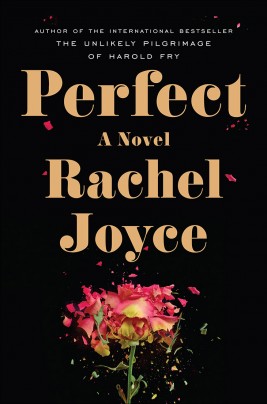
‘Perfect’ by Rachel Joyce  (2013) – 385 pages

JOYCE_Perfect

‘Perfect’ is the second novel by English writer Rachel Joyce. Usually I get a little leery of an author’s second novel especially after their first novel was a giant success like ‘Harold Fry’.  But after reading it, I don’t see any sophomore slump here with ‘Perfect’ even though it is much different from Joyce’s first novel.

That first novel, ‘The Unlikely Pilgrimage of Harold Fry’, was a rouser, a crowd pleaser.  Reading that novel, we are all pulling for Harold as he walks from the south of England to the north of England in order to save his friend Queenie.  Deep down we know that this rare act of kindness can do nothing to stop the cancer, but we cheer Harold along for every step of the way on his long trek.

‘Perfect’ is a different kind of novel. It is like a firecracker with a long fuse.  It starts out slowly as the situation is laid out in methodical fashion.   Then the story finally explodes, leaving the reader stunned and touched.

There are two parallel story lines in ‘Perfect’.  The first story line is told from the point of view of 12-year-old Byron Hemmings.  It takes place in 1972, and it concerns his mother Diana, his father Seymour, his sister Lucy, his best friend James, and their home on Cranham Moor in England. In 1972 two seconds were added to the world clock as a necessary time adjustment.  That adjustment plays a significant role. The other story line takes place over forty years later – today – and is told from the point of view of an older man known only as Jim who lives in a campervan and who earns his livelihood by cleaning up in a restaurant.

Although ‘Perfect’ is not at all similar to ‘Harold Fry’, the same qualities of storytelling make both novels successful.  There is one item in the background of Rachel Joyce that goes a long way to explain her success as a novelist.   Before she began writing novels, Rachel Joyce wrote over twenty radio plays for BBC Radio Four.  I can think of no better training for an aspiring novelist than writing radio plays.  First radio plays require framing scenes with words and sound effects only without any recourse to visuals to establish the locale.  Except for the sound effects, novelists must do the same.  Second each character in a radio play must be sharply defined based solely on the sound of their voice and the words the character is saying.  Third it goes without saying that a successful radio play requires spectacular dialogue.   Finally I suspect that a radio play gets immediate feedback, so the writer of them can quickly determine which plots work and which don’t.

Different as ‘Perfect’ and ‘Harold Fry’ are, the reader winds up in the same place with both novels, tremendously moved.  It is difficult to read either of these novels without tears forming at some point.  Some reviewers are distrustful of novels that affect the emotions too directly; they consider them manipulative.  However for me the possibility of being honestly moved is one of the main reasons I read novels in the first place. 

Coming up in October of this year, Rachel Joyce will be releasing another novel, ‘The Love Song of Queenie Hennessy’.  Given the title, this looks to be a tie-in with ‘Harold Fry’.  You really can’t blame them for cashing in on the great success of ‘Harold Fry’, but after reading ‘Perfect’ I almost wish it were another stand-alone novel.

Brandy Clark Saves United States Country Music

’12 Stories’ a music album by Brandy Clark (2013)

51jqxt7UoKL._SL500_AA280_

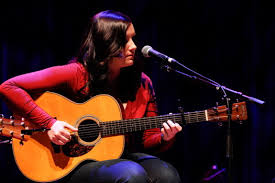
Today I want to talk about the powerful new music album ’12 Stories’ by Brandy Clark which is probably the finest United States country album in at least a quarter century. Besides performing on them, Brandy Clark wrote all the songs on this excellent album. Here is a video of her song ‘Stripes’. But first a little background.

Back on March 10, 2003, on the eve of the United States invasion of Iraq, Natalie Maines of the country group the Dixie Chicks said during a concert in London, “Just so you know, we’re on the good side with y’all. We do not want this war, this violence, and we’re ashamed that the President of the United States is from Texas.”

The powers-that-be in country music were so offended by this statement that they stomped down hard on Natalie and the Dixie Chicks, and by the end of that month Dixie Chicks songs were no longer being played on any country radio station in the United States.  The company that sponsored their concerts, Lipton Tea, dropped them.  Yet one of the true country legends, Merle Haggard, defended their right to voice an opinion and condemned the verbal witch-hunt and lynching.  His defense went to little avail.

Then it was up to the big-time radio executives and record producers to enforce right-wing conformity on country music.  Clear Channel Communications, Inc owns at least 850 radio stations in the United States, by far the most of any corporation.  Many of these stations play country music.  On their news talk stations, Clear Channel airs among others Rush Limbaugh, Glenn Beck, and Sean Hannity,

These executives succeeded beyond their wildest dreams in making sure country artists toed the line of conservative ‘Tea Party’ orthodoxy.  The only politics allowed were displays of militaristic patriotism.   Also there could be no hint of trouble in RedState land. Anything implying that the standard of living of working class whites might be declining had to be avoided.  As far as men and women were concerned, there could be no honest talk of severe problems in relationships.

Many country artists just wanted to avoid any controversy by not getting into anything controversial at all.  Thus we wind up with bubbleheads in cowboy hats singing lame party anthems and songs that don’t even sound like country songs.

images (1)Of course this went against everything that country music was in the past which frequently dealt with the real problems of real people, but this was the ‘New Country’ music.

Now along comes Brandy Clark.

She writes songs about real people with real problems.  She observes the people around her and finds that things aren’t so great in RedState land.  As the title indicates, here are twelve stories about the traditional subjects of country music like cheating, drinking, and divorce, and living in general.

We load our kids up in our new used car
And after church we hit the mini mart
Behind the counter up there on the wall
It reads 200 million on the power ball

….

So we pray to Jesus and play the Lotto.

                         From ‘Pray to Jesus’ by Brandy Clark 

The amazing thing about Brandy Clark is that she is not selling anything; she’s just carefully observing the way things are.  This is what the great country artists of the past did, but which the country artists of today are not allowed to do. 

As far as the relations between men and women, again things aren’t so good.  It’s that ‘liquored up lust’.

He was getting drunk just like the day before
The day she got divorced

Didn’t feel any different than it ever had
She wasn’t that sorry, wasn’t that sad
Couldn’t love him any less or hate him anymore
The day she got divorced

                     From ‘The Day She Got Divorced’ by Brandy Clark

I got a new job, I gave up smoking’
Changed my lipstick, and those roses opened
I let my hair grow down past my shoulders
All while you were hungover

                     From ‘Hungover’ by Brandy Clark

 Every one of these twelve songs is a classic country song that I listened to over and over.  The wording in these songs is brilliant.  It was fascinating and refreshing to get Brandy Clark’s take on life today.  It has been a long time since I’ve said that about any country artist. I suppose the closest artist from the past to Brandy Clark would be Loretta Lynn. Brandy Clark’s singing and the music on this album are excellent too.

There are other female artists who are pushing the envelope like Miranda Lambert and Kacey Musgraves, both of whom have recorded Brandy Clark songs.  It would be wonderful if some male country artist would come along and write songs with similar honesty, courage, and insight as Brandy Clark.     

All that remains for Brandy Clark to do is to say something that offends Clear Channel and the Koch Brothers. 

‘Orfeo’ by Richard Powers – Modern Classical Music, an Oxymoron?

‘Orfeo’ by Richard Powers  (2014) – 375 pages

Orfeo Mech 4p_r2.indd

It happens.  Several of the novels by American author Richard Powers have moved me to enthusiasm before, but his latest, ‘Orfeo’, has left me somewhat cool and indifferent. My lack of enthusiasm for ‘Orfeo’ may be more my fault than his.  Let me explain.

My ignorance of modern avant garde music composition is so overwhelming that only Powers could get me to read a novel about this subject.  First even the music of the great classical composers like Beethoven, Bach, and Brahms holds little interest for me.  My music tastes are so low and unformed, I need the human voice in a composition in order to appreciate it at all, and thus I can only appreciate a few operas out of the entire world of classical music. Thus the experiments in classical composition of the last fifty years have seemed to me somewhere between scams and shams.  John Cage, Philip Glass, Steve Reich, John Adams.  In my ignorance, I ask ‘Didn’t classical music stop a hundred years ago?’  Like so many others, my musical tastes run to rock-and-roll or pretty pop tunes, not this avant garde classical stuff.  However Richard Powers has a way of making ostensibly uninteresting subjects exciting, so I decided to read ‘Orfeo’.

‘Orfeo’ is about a man who has spent his entire life composing experimental classical music.  He could have had an ordinary successful life as a chemist, but instead he has devoted his life to composing music to which very few people want to listen.   Now seventy years old, he has developed a new interest in do-it-yourself genetic engineering.  He is attempting to splice a music composition into a living cell.  Googling the word ‘ricin’ has gotten him into big trouble with Homeland Security who suspect him of bio-terrorism. As he awaits apprehension, we get the story of his life in flashbacks which are in chronological order.

Thus we have the two major themes of the novel.  A man devotes his life to being creative in the field of classical music but apparently has little to show for it in the end.  The second theme is that creativity by its very nature is original, subversive and thus suspect.   The following line from ‘Orfeo’ is in regard to the Fifth Symphony of Shostakovich which he wrote after being denounced by Stalin:

“It spoke of whatever is left, after the worst that humans did to each other.”

The power of music.  Both of these themes are meaningful and resound with me   I suppose if I had had more empathy for the composers of modern classical music, I would have liked this novel much better than I did.   Not until the above vignette on Shostakovich did Powers get me excited by his subject.

There are other weaknesses to the work which I probably wouldn’t have noticed if I had been more gung ho on this novel.  The story of this man’s life is pretty standard fare with a girl friend here, a wife there, a daughter, a divorce, and so on.  I suppose the point was to make this man’s life as normal and ordinary as possible except for his obsession with creative music composition, but this made for some quite shopworn story lines.  The female characters  seemed particularly predictable. 

Despite my lack of appreciation for ‘Orfeo’, Richard Powers is a writer I will probably return to.  He is intelligent, passionate, and spirited so that even his failures are more interesting than most writers’ successes. 

‘The Constant Wife’, a Comedy by W. Somerset Maugham

‘The Constant Wife’  a play by W. Somerset Maugham  (1926)  – 67 pages

scan-110224-0001

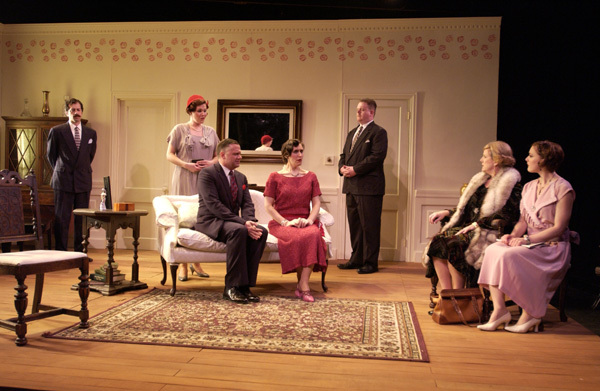
Here we have a drawing room comedy of manners about marital infidelity or, as Charles Isherwood puts it in the New York Times, ‘an unromantic comedy’.  All of the friends of Constance Middleton wonder if they should tell her that her doctor husband John is having an affair with her young best friend Marie-Louise.   Consider the following exchange between Constance’s sister Martha and their mother Mrs. Culver.

Martha: She ought to know the truth, because it is the truth.

Mrs. Culver: Of course the truth is an excellent thing, but before one tells it one should be quite sure that one does so for the advantage of the person who hears it rather than for one’s own self-satisfaction.

Martha: Mother, Constance is a very unhappy person.

Mrs. Culver: Nonsense.  She eats well, she sleeps well, dresses well, and she’s losing weight.  No woman can be unhappy in those circumstances.

When Constance asks ‘How does one know one is in love?’, her mother Mrs. Culver comes back with ‘Could you use his toothbrush?’   That would seem to be as good a practical test of love as any.

And then there are these lines from the wandering husband.

John: Women are funny.  When they’ve tired of you, they tell you so without a moment’s hesitation and if you don’t like it you can lump it.  But if you’re tired of them you’re a brute and a beast and boiling oil’s too good for you.

The dialogue in ‘The Constant Wife’ is sharp, witty, and a continual delight.  The play was written in 1926, and certain of the attitudes towards men and women and sex you may find antiquated.   But do we find the attitudes in Moliere, Jane Austen, or even William Shakespeare antiquated?  This play proves that clever repartee in the battle of the sexes can age well and still make an audience or reader laugh today.  Perhaps the fact that Maugham was a homosexual gave him an outsider’s humorous perspective on marriage, although he himself was also married for 12 years.  

The sparkling comedic playwright is a side of W. Somerset Maugham that I was unfamiliar with before.  Most of his novels and stories have a more serious point to them.  However ironic twists abound in his work, and I should have guessed he could do comedy.  In his thirties, Maugham was the toast of the London West End theatre district, and at one time he had four plays running in London simultaneously.

For a long time these plays of Maugham were considered old-fashioned and hopelessly outdated.  Perhaps most authors go through this phase where their work is somewhat ignored and replaced by newer more modern writers.  However at some point, a few people begin to recognize the real qualities of some of these writers from the past, and their works come back again into fashion despite their age.   Since 2000, three of Maugham’s novels have been made into movies (‘Up at the Villa’, ‘Being Julia’, and ‘The Painted Veil’).  Also the play ‘The Constant Wife’ lives on, having been staged several times in various places since 2000.  

4533096392          .    

‘The Hired Man’ by Aminatta Forna

‘The Hired Man’ by Aminatta Forna  (2013)  – 293 pages

the-hired-man

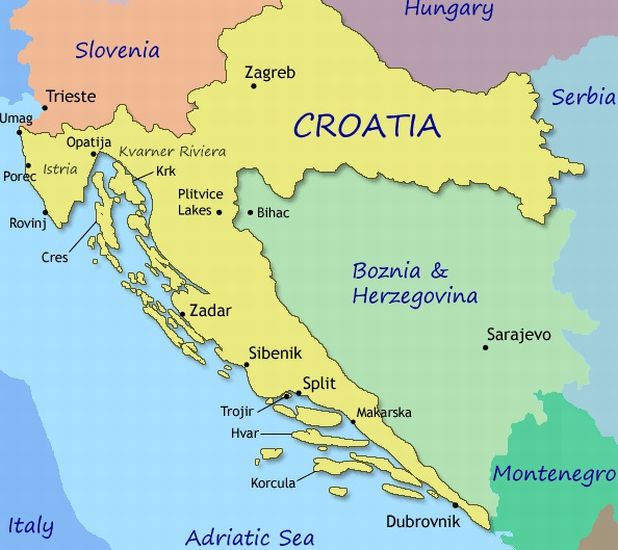
Did you know that Croatia is the 18th most popular tourist destination in the world?  As you can see from the map of Croatia, it has a long coastline with many large islands along the Adriatic Sea across from Italy.

The novel ‘The Hired Man’ by Aminatta Forna takes place in current times around the small town of Gost in Croatia.  An English family has purchased a house there to remodel and resell at a substantial profit to tourists.  The wife, Laura, and the two children, Matthew and Grace, have come for the summer to begin work on the house.  When they arrive there, they meet a local handyman Duro Kolek who lives near their purchased house.  Soon Laura hires him to help with the remodeling.  The entire novel is told from the point of view of Duro, the local Croatian.

The style of ‘The Hired Man’ reminds me very much of the style of ‘The Remains of the Day’ by Kazuo Ishiguro which I and many others consider one of the great novels of the last quarter century.  Actually all three of Ishiguro’s first three novels, ‘A Pale View of Hills’ and ‘An Artist of the Floating World’ as well as ‘The Remains of the Day’ are written in this style. (By the way how about Kazuo Ishiguro for the Nobel?)  Since ‘The Hired Man’ has the style also, let me describe it.

The story begins quite simply.  In the case of ‘The Hired Man’, Duro begins working at the house and gets to know Laura and the two children.  There is an undercurrent of an innocent attachment between Duro and Laura.  The day-to-day interaction between Duro and the family is told in methodical fashion and the tourist setting seems almost idyllic.

But then the sad complicated history of Gost and Croatia slowly begins to intrude on the idyll.  Since the story is told in allegorical form (like ‘The Remains of the Day’), don’t expect the particulars on the recent history of Croatia. ‘The Hired Man’ does not have the facts or the details about the troubles in Croatia in the 1990s.  All we learn is that there are differences between groups of people within the same neighborhood.  We can all relate to that.  These differences may be ethnic, political, racial, religious, economic, or some combination of these.  Apparently in rural Croatia it got to the point where some of these neighborhood groups formed militias to take care of the problem.

Croatia tourism destinationsApparently today in Croatia the problems have subsided, and they are intent on turning their country into a world-class tourist destination.  However sometimes the conflicts of the past come back to haunt. 

For me to compare ‘The Hired Man’ to ‘The Remains of the Day’ is high praise, and ‘The Hired Man’ is indeed an impressive novel.  Originally I wondered why Aminatta Forna, a Scottish-born English writer, would write a novel set in Croatia.  However just as Kazuo Ishiguro as an outsider had strong insight into upper class English society, Forna as an outsider has strong insight into modern Croatia.    If you’ve liked the work of Kazuo Ishiguro before, you will definitely like ‘The Hired Man’.     

‘The Tortoise and the Hare’ by Elizabeth Jenkins – For the Love of an Older Woman

‘The Tortoise and the Hare’ by Elizabeth Jenkins  (1954)  –  252 pages

9781844084944

One could make an entire literary career just by rediscovering excellent but overlooked English woman writers from the previous century.   Elizabeth Jenkins was another fine writer who merits being highlighted.  What fame she has mostly rests upon her twelve biographies including her 1958 biography of Elizabeth I, ‘Elizabeth the Great’.  She also penned a biography of Jane Austen in 1938, was involved in the establishment of the Jane Austen Society, and worked to purchase Austen’s home in Chawton which later became the Jane Austen’s House Museum.

Besides the biographies, Jenkins also wrote twelve novels of which ‘The Tortoise and the Hare’ is perhaps the most noted.  In the introduction to this novel, Hilary Mantel writes of Elizabeth Jenkins, “What she offers us does not date: descriptive grace and narrative pulse, dry humour and moral discrimination, tempered elegance and emotional force.”

‘The Tortoise and the Hare’ is the story of a love triangle with an unusual twist.  It takes place in a well-to-do neighborhood of lawyers and doctors. After long years spent of education and apprenticeship in their twenties and early thirties, these professional men finally could marry, settle down, and live in a prosperous area.   They would marry a young pretty trophy wife to go with their hard-won affluence.  Only later would they discover that their trophy was somewhat tarnished when these men found they had nothing in common with their young wives and they could hardly talk to each other.

The novel is written from the perspective of 38-year-old Imogen Gresham, wife of 52-year-old lawyer Evelyn. They and their 11-year-old son Gavin live in a fine estate.  With the fourteen years difference in age between husband and wife, Imogen is one of these beautiful trophy wives.

In this story the husband forsakes the younger woman who is his wife for an older woman he can be buddies with.  One day Imogen discovers that her husband has taken an interest in a neighbor woman Blanche.  Imogen can’t figure out why Evelyn has become enamored of Blanche, because Blanche is as old as he is and not attractive; stout and tweedy.  But Blanche is a ‘sport’. She shares the same interests as Evelyn, she shares his business and right-wing political views, and she is very rich.  Soon he is looking for every excuse to go to Blanche’s house leaving Imogen home taking care of their obnoxious kid Gavin.   Blanche knows she has the upper hand in  Evelyn’s attentions, and she rubs it in by doing everything possible to make Imogen’s life miserable.

The story in ‘The Tortoise and the Hare’ rings true. One can feel the pain of Imogen’s predicament of being left behind while her husband runs off on fishing trips and horse races with this older woman Blanche.  Imogen does have her small coterie of friends with whom she can confide her problems.  These conversations further our insight and empathy for the situation.  As for the character Blanche, Elizabeth Jenkins does an excellent portrayal of a mean ruthless husband-stealer who is still true to life.

I believe one of the reasons this novel was a hard-sell and not that popular in the United States was simply a matter of character names.  In the United States, ‘Evelyn’ is solely a woman’s name.  We are not accustomed to men named Evelyn.  Even for me it took a number of pages to adapt to a man named Evelyn.  Also one of Imogen’s closest woman friends is Cecil.  In the United States ‘Cecil’ is solely a man’s name.

‘The Tortoise and the Hare’ held my interest throughout which is quite an accomplishment for a novel that is sixty years old.  It kept me turning the pages.

‘How the Light Gets In’ by Louise Penny

‘How the Light Gets In’ by Louise Penny (2013) – 404 pages

“There’s a crack in everything; that’s how the light gets in” – ‘Anthem’ by Leonard Cohen

how the light gets in (1)

I don’t read a lot of mysteries, but I keep my eyes and ears open for superior books of any genre.  When I saw that the mystery ‘How the Light Gets In’ was appearing on many of the lists for Best Fiction of 2013, I decided this was a novel I would read.  As it turns out, ‘How the Light Gets In’ is an excellent book of fiction regardless of category.

First, this novel has several eccentric colorful characters and an exotic location in the small (fictional?) town of Three Pines in French-speaking Quebec.  The murder mystery is a mash up on probably the most famous true story to come out of this area of Canada, the Dionne quintuplets.  The story of the Dionne quintuplets and how the Canadian government took them over is intriguing in itself.      

However the main reason to read this book is the strong lead of Chief Inspector Armond Gamache. He is not only trying to solve a murder case.  Rot and corruption have beset the very top executive levels of his own department, the crime investigation unit.  His bosses are out to destroy Inspector Gamache.  His department  “was now a culture that rewarded cruelty. That promoted it.”  Gamache must fight his own bosses in order to save himself, his friends, his family and even the city of Montreal.

 “Armand Gamache had always held unfashionable beliefs. He believed that light would banish the shadows. That kindness was more powerful than cruelty, and that goodness existed, even in the most desperate places.”

 The ‘corruption in high places’ storyline leads this novel to go well beyond its mystery genre.  The stakes are high; this is a suspenseful page-turner.

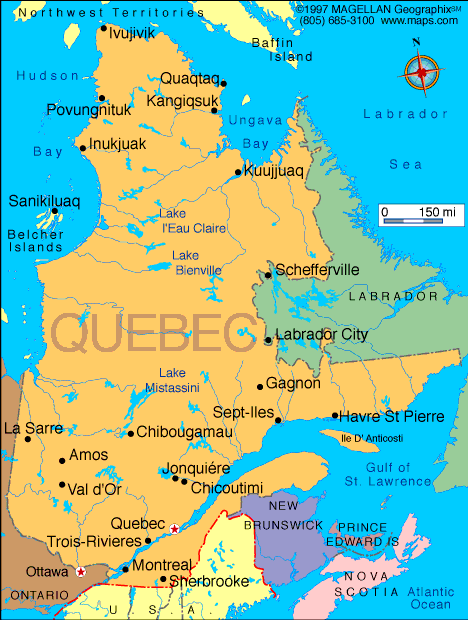
mquebecQuebec is the largest province in Canada extending from the Arctic Circle to the border of the United States.  The area where ‘How the Light Gets In’ takes place, the picturesque little village of Three Pines, is actually south of much of Maine.  The influence of the French culture and language makes this a fascinating different locale for the story.  The local characters including Ruth and her pet duck Rosa will stay in your mind.   

This is a gripping thriller of a man and his friends fighting against nearly insurmountable odds in a life-and-death struggle with powerful enemies.  It is not necessary to have read the other Inspector Gamache books to appreciate this story.  I have not read any other of the works of Louise Penny, but after reading ‘How the Light Gets In’, I will certainly come back to her.

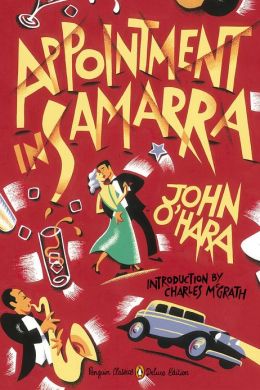
‘Appointment in Samarra’ by John O’Hara – Tacky but Real

‘Appointment in Samarra’ by John O’Hara   (1934) – 251 pages

9780143107071_p0_v1_s260x420

Have you ever taken such an active dislike of someone that you get an uncontrollable urge to severely embarrass that person in public?  That is how Julian English, the protagonist of “Appointment in Samarra”, first gets into trouble.

 “Why, he wondered, did he hate Harry Reilly?  Why couldn’t he stand him? What was there about Reilly that caused him to say to himself: ‘If he starts one more of those moth-eaten stories I’ll throw this drink in his face.’  But he knew he would not throw this drink or any other drink in Harry Reilly’s face.  Still it was fun to think about it.”

 But later that night he does throw the drink in his face.  This is only the first incident in the two-day downfall of Julian English.

The title ‘Appointment in Samarra’ sounds like a foreign thriller filled with adventure and intrigue, an exotic story of spies.  Nothing could be further from the truth.  Instead, as John Updike wrote in his introduction, this novel is “a picture of a man destroyed by drink and pride”.  The novel takes place in the year 1930, a year after the stock market crashed and three years before the end of Prohibition.

Julian English is a successful young businessman in the fictional small town of Gibbsville, Pennsylvania.    He is the director of the Cadillac dealership and is a member of the local country club.

 “In a town the size of Gibbsville — 24,032, estimated 1930 census — the children of the rich live within two or three squares of the children of parents who are not rich, not even by Gibbsville standards. This makes for a spurious democracy, especially among boys, which may or may not be better than no democracy at all.”

 He has a loving wife Caroline    But Julian’s own worst enemy is himself.  And alcohol.  John O’Hara’s story here is a lot raunchier and lowdown than Fitzgerald or Hemingway,   Julian has a couple of tacky sexual encounters on his way to the bottom.  Perhaps these sleazy encounters were included to paint a real picture of the times, although they did ruffle the feathers of a lot of critics and readers.

According to Fran Lebowitz, the author John O’Hara is underrated, “because every single person who knew him hated him.”  His personality was abrasive and unpleasant, but he managed to have over 200 stories published in the New Yorker. Many consider his short stories his greatest accomplishment, although five of his novels were turned into movies.    He is known for his strong dialogue and insights into the night life of the socially ambitious.  As opposed to other writers of his time, O’Hara wrote about the crude and nasty side of his characters.  Lorin Stein writes in the New Yorker, “O’Hara’s tackiness is his great advantage over more respectable writers of his time.”

To find out what life was like in the United States in the 1920s and 1930s, during Prohibition and the Great Depression, read F. Scott Fitzgerald, Sinclair Lewis, John Steinbeck, and, yes, John O’Hara.

My Misgivings about ‘My Struggle – Book One’ by Karl Ove Knausgaard

‘My Struggle – Book One’ by Karl Ove Knausgaard (2009) – 441 pages          Translated by Don Bartlett

9780374711122.340x340-75

‘My Struggle’ is a book that individual readers either love or hate.  Considering the high expectations I had. I’m surprised to find myself in the second category. This novel / memoir was a severe disappointment for me. 

The first five pages of ‘My Struggle’ are spectacularly good, a tour de force on the subject of death.  It is the next 436 pages that disappoint.  After those first few pages, I expected a book with plenty of depth and many insights about life and the human condition.   Instead the rest of the novel / memoir is banal and mundane with the author making no attempt to shape his material into a meaningful story.

I believe a large part of the problem lies in the title the author has chosen.  It is ‘My Struggle’, not ‘Our Struggle’ or ‘Their Struggle’.  The writing here is self-centered, self-absorbed, and self-indulgent.  None of the other characters besides the author is developed to any extent, and any characterizations they are given are due to the pet peeves or personal aversions of the author himself.     

The main character in ‘My Struggle’ is named Karl Ove Knausgaard, the same name as the author himself.  That is why I hesitate to call this book a novel.   Besides there is no organized plot, just a couple of remembrances told in great detail.  The exact wording of conversations that occurred twenty years ago is given, and the precise weather conditions and visual descriptions of nature and buildings then are given.  No one could remember scenes in such detail, so I hesitate to call this book a memoir.  That is why I’m calling it a novel / memoir. 

Knausgaard’s memory of events is detailed in the extreme.  Every little item is recalled regardless of any relation to the story.  I found these meanderings irritating; nothing is too small or irrelevant to be included in ‘My Struggle’.  Even though all the stuff here is very readable, it is annoying to have to plow through all this meaningless junk.

There are two main story lines in Book 1.  First we have the sixteen year old boy Karl Ove Knausgaard celebrating New Year’s Eve by hiding some bottles of beer in the woods which he and his friends will drink later that night.  I could not figure out what the point of this story was except to show Karl Ove as a red-blooded normal Scandinavian boy. Nothing about this boy indicates he is worthy of our attention. There certainly is no struggle or conflict in this story.  That story goes on interminably for about 150 pages. 

The next storyline is 200 pages devoted to Karl Ove returning to his grandmother’s house after his father dies.  Apparently in real life, his family is suing the author for the depiction of the grandmother here as a nearly senile incontinent alcoholic. I did find the depiction of the grandmother in the book particularly nasty and heavy-handed.   If Knausgaard had taken the trouble to turn this book into fiction, he wouldn’t have this lawsuit problem.

norwegian-wood-organicI can’t figure out why critics are falling all over themselves praising ‘My Struggle’ which in its entirety is six books and 3600 pages.  Judging from my reading of Book One, the book seems to be unshaped memoir with little or no effort made to leave out irrelevant or mundane details.  I would have much preferred a 500 page novel with a strong plot and several well-defined characters rather than these unformed self-important memories, but I doubt the author would be capable of that.         

‘The Property’ by Rutu Modan – Her Return to Warsaw, Poland

‘The Property’ by Rutu Modan   (2013) – 222 pages – Translated by Jessica Cohen

                 .

.

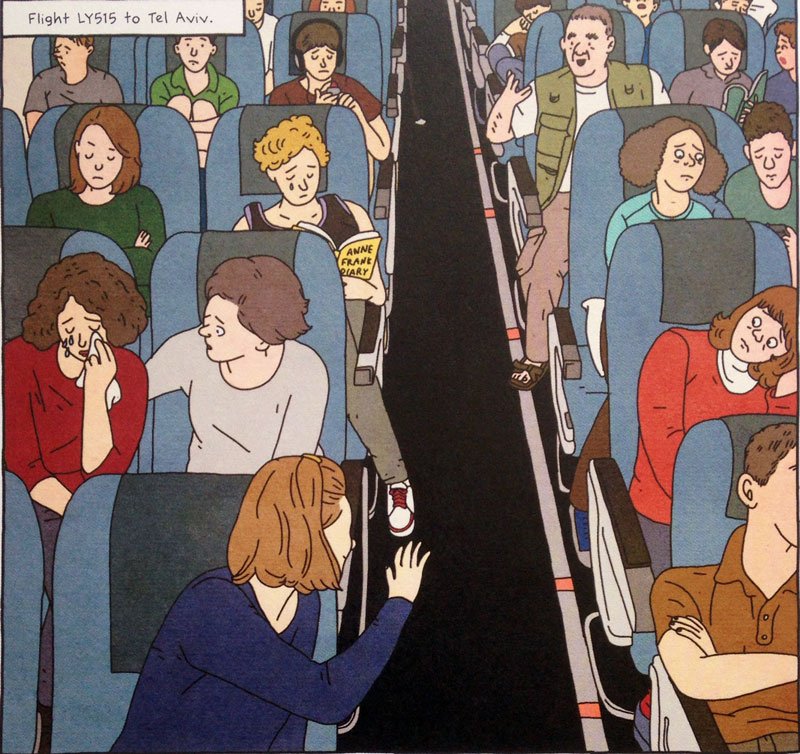
Here is another graphic novel meant for adults, not children.  The cover depicts an old Warsaw cemetery where the aged monuments are festooned with candles.  Mrs. Regina Segal is returning to Warsaw, the place of her birth, from Israel where she has lived for more than 70 years.  The rest of her whole family was murdered in the Holocaust, and Mrs. Segal is going to Warsaw to take back her family’s property.   She is accompanied by her granddaughter Mica.

Despite its subject, this is a warm and humorous story.  The drawings in this graphic novel are subdued, meant for adults, and not the wild and crazy stuff put in comics for young people.  The realistic tale is also for adults with no superheroes or ultra-violence.  It is a pleasant good-humored story about a grandmother and her granddaughter on their visit to Warsaw.   I liked it a lot.  Graphic novels should not only be for young people; the artwork can add another dimension to adults’ enjoyment of fiction as well.

Among the pleasures of this book are the characters they meet on their trip.  There is the annoying family friend Avram Yagodnik, the helpful young man Tomasz from Warsaw, and the old man from the old neighborhood Mr. Gorski.  The tone of ‘The Property’ is amiable and romantic.  For the grandmother this is a trip back to her past, but for the granddaughter it is a new adventure.   

The setting is Warsaw, Poland, a city still recovering, still dealing with events that occurred seventy years ago.   

p220-plane-shots-with-the-children ‘The Property’ contains one attribute that is missing from most comic books, subtlety.  In how many comic books is the main character a grandmother?

Being no artist myself, I hope this trend of graphic novels for adults continues.  I’ve read several in the past few years including ‘Tamara Drewe’, ‘Dotter of Her Father’s Eyes’, ‘Gemma Bovary’, ‘Journalism’, ‘Blankets’, and ‘Poem Strip’ as well as ‘The Property’.  Each one of these graphic novels has been an original delight for me.