‘Perfect’ by Rachel Joyce (2013) – 385 pages
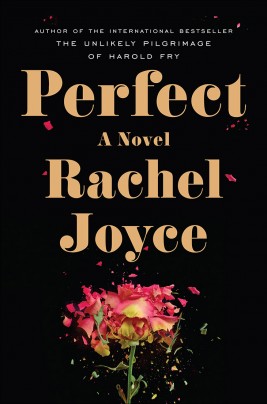
‘Perfect’ is the second novel by English writer Rachel Joyce. Usually I get a little leery of an author’s second novel especially after their first novel was a giant success like ‘Harold Fry’. But after reading it, I don’t see any sophomore slump here with ‘Perfect’ even though it is much different from Joyce’s first novel.
That first novel, ‘The Unlikely Pilgrimage of Harold Fry’, was a rouser, a crowd pleaser. Reading that novel, we are all pulling for Harold as he walks from the south of England to the north of England in order to save his friend Queenie. Deep down we know that this rare act of kindness can do nothing to stop the cancer, but we cheer Harold along for every step of the way on his long trek.
‘Perfect’ is a different kind of novel. It is like a firecracker with a long fuse. It starts out slowly as the situation is laid out in methodical fashion. Then the story finally explodes, leaving the reader stunned and touched.
There are two parallel story lines in ‘Perfect’. The first story line is told from the point of view of 12-year-old Byron Hemmings. It takes place in 1972, and it concerns his mother Diana, his father Seymour, his sister Lucy, his best friend James, and their home on Cranham Moor in England. In 1972 two seconds were added to the world clock as a necessary time adjustment. That adjustment plays a significant role. The other story line takes place over forty years later – today – and is told from the point of view of an older man known only as Jim who lives in a campervan and who earns his livelihood by cleaning up in a restaurant.
Although ‘Perfect’ is not at all similar to ‘Harold Fry’, the same qualities of storytelling make both novels successful. There is one item in the background of Rachel Joyce that goes a long way to explain her success as a novelist. Before she began writing novels, Rachel Joyce wrote over twenty radio plays for BBC Radio Four. I can think of no better training for an aspiring novelist than writing radio plays. First radio plays require framing scenes with words and sound effects only without any recourse to visuals to establish the locale. Except for the sound effects, novelists must do the same. Second each character in a radio play must be sharply defined based solely on the sound of their voice and the words the character is saying. Third it goes without saying that a successful radio play requires spectacular dialogue. Finally I suspect that a radio play gets immediate feedback, so the writer of them can quickly determine which plots work and which don’t.
Different as ‘Perfect’ and ‘Harold Fry’ are, the reader winds up in the same place with both novels, tremendously moved. It is difficult to read either of these novels without tears forming at some point. Some reviewers are distrustful of novels that affect the emotions too directly; they consider them manipulative. However for me the possibility of being honestly moved is one of the main reasons I read novels in the first place.
Coming up in October of this year, Rachel Joyce will be releasing another novel, ‘The Love Song of Queenie Hennessy’. Given the title, this looks to be a tie-in with ‘Harold Fry’. You really can’t blame them for cashing in on the great success of ‘Harold Fry’, but after reading ‘Perfect’ I almost wish it were another stand-alone novel.


Posted by Kat on February 2, 2014 at 9:35 PM
Sounds like a really interesting book, and I remember your mentioning Harold Fry (last year? or the year before?). I like the idea of the two-second add-on. And I am fascinated that she’s coming out with a sequel. I love having two or three “reliable” books about the same characters. Will have to read the first one first!
LikeLike
Posted by Anokatony on February 2, 2014 at 10:23 PM
Hi Kat,
Yes, we will see ‘Queenie’ late this year, and I’m sure it will generate a lot of publicity in the book world. Apparently it will be a novella. However ‘Perfect’, no sequel, is a fine novel itself.
LikeLike
Posted by acommonreaderuk on February 3, 2014 at 10:15 AM
I’ve been thinking about reading this one because I enjoyed Harold Frye but like you I am a little wary of second novel syndrome. Having read your review I’ve put it on the list. I am not worried about being “moved”!
LikeLike
Posted by Anokatony on February 4, 2014 at 3:02 AM
Hi Tom,
No second novel syndrome here. A couple reviewers thought that Joyce expanded her talents with Perfect, but it is difficult to argue with the success of Harold Fry.
LikeLike