Posts Tagged ‘Yan Lianke’

‘The Years, Months, Days’ – Two Unusual and Amusing Novellas by Yan Lianke


‘The Years, Months, Days’ – Two Novellas by Yan Lianke  (1997, 2001) – 192 pages        Translated from the Chinese by Carlos Rojas
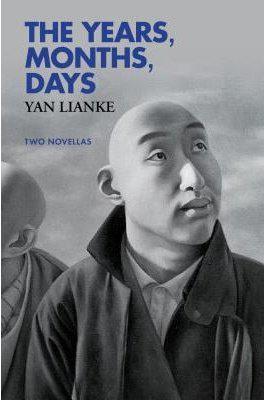
Here are two novellas by Yan Lianke, “China’s most feted and banned author” (Financial Times).  Yan Lianke is also rapidly becoming one of my own favorite authors.  Lianke tells some of the most honest tragic strange stories of all, yet lightens things up with irony and sarcasm and ridicule making his stories a pleasure to read.  His ‘’The Four Books’ is a powerful novel about China’s disastrous Great Leap Forward, and with these two novellas he again succeeds.

Both of these novellas use the power of allegory to tell a simple strange story with humor.

In the first novella, ‘The Years, Months, Days’, a major drought has hit this Chinese town, and everyone has left except for one man, the Elder, and his blind dog Blindy. Even the animals had left.  There are no livestock, no sparrows, and even the crows had fled the drought.  The only animals that remain are hundreds of rats, and the Elder and his dog Blindy must do battle against the rats for the few grains of corn that are left as well as for the tiny amount of water still in the city well.

The Elder has one grand objective. He does everything he possibly can to keep his one stalk of corn growing so that he will have some seed corn to give to the villagers when they return.

There is no lack of conversation as the Elder talks to himself as well as to his dog Blindy.

Blindy, the Elder said, What do you think? Are we going to starve to death? 

The blind dog stared into the sky with its eyes that were as dark as the bottom of a well.

The Elder said, “I don’t think this stalk will ever mature.”

It is a simple poignant story of a man and his dog fighting against nature for survival.  What puts this drought disaster story over the top is the humor that Lianke brings to the story.

In the second novella, ‘Marrow’, the mother Fourth Wife You is also on a grand quest to find mates for her four idiot children.   Her husband Stone You kills himself when he finds out that his side of the family’s genetics caused the idiocy of all his kids. However his spirit continues to show up sporadically to give his wife unneeded advice.  She complains,

“Dead one, where are you? When I want you to talk to me, you really are dead; but when I don’t want you to keep talking, you come back to life.” 

So here we have a spooky yet funny dead husband ghost.

The idiocy of the four children takes some bizarre unexpected turns, but the mother is constantly on the lookout for a way out of her dilemma.

Both of these novellas are like folk tales, only stranger and more surprising and more amusing.


Grade:   A  
 

‘The Four Books’ by Yan Lianke – The Great Leap Backward


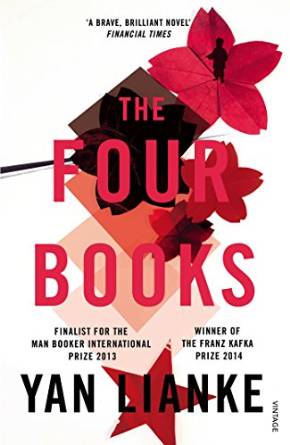
‘The Four Books’ by Yan Lianke    (2010) – 358 pages    Translated by Carlos Rojas

510VTGJoSnL._SY445_QL70_

So as it turns out, I have read the following three of the six novels on the 2016 Man Booker International shortlist:  ‘The Story of the Lost Child’ by Elena Ferrante, ‘The Vegetarian’ by Han Kang, and ‘The Four Books’ by Yan Lianke.  I did not set out to read so many from the shortlist intentionally; it just worked out that way.  The Ferrante is my sentimental favorite, but I don’t want my sentimental favorite to win.  I want ‘The Four Books’ to win because it is one of the most powerful, ridiculing, and devastating of all the novels I have ever read.

‘The Four Books’ is a novel about the Great Leap Forward which was an economic and social campaign of the People’s Republic of China from 1958 to 1961.  The Great Leap Forward started by Chairman Mao Zedong is widely considered to have caused the following massive Great Chinese Famine which resulted in tens of millions of starvation deaths.  ‘The Four Books’ is the first fictional account of the Great Leap Forward ever published.  It is set in one of the forced labor camps that were set up to improve agricultural productivity.

At first, people were encouraged to speak their minds during the Hundred Flowers Campaign, but when they did speak up, these scientists, engineers, professors, musicians, and writers were forcibly taken away from their families for their rightest views and sent to these labor camps to work on the farm. ‘The Four Books’ is narrated by one of these intellectuals, and he ironically refers to himself and his fellow inmates as ‘Criminals’.

They all just want to get out of the camp and go home to their families if only even for a few days.  The leader of the camp who I expect is a stand-in for Mao Zedong is known as The Child for his youthful appearance.  He sets up a reward system based on flowers so when someone accumulates enough flowers he or she can go home for a few days.  One of the main ways to get flowers is to report bad stuff on your fellow inmates.  Sexual liaisons are particularly forbidden.  So then you have all these inmates spying on each other in order to win flowers.  Also the campers must watch over their flowers very closely or someone else might steal them.

Even though the Great Leap Forward was a deadly business, Yan Lianke sees the humor of all these campers behaving childishly in order to impress their leader, get some flowers, and at least be able to leave the camp for a few days.  One of the points Lianke makes is that the simplistic rules of the camp caused the inmates to revert to childish behavior.

Later we get into the ‘home’ steel production fiasco and then the discovery of a startling new way to fertilize the crops.

One would think reading about forced labor camps and famines would be brutal and gruesome heavy reading, but Yan Lianke lightens the story up with irony and sarcasm and ridicule.  The mood of ‘The Four Books’ could best be described as “bitter laughter”.  I admire the way Lianke uses humor to tell the inside story about these forced labor camps.  Humor does not make a horrible situation any brighter, but it can help point the way as to what went wrong.

This is a story that absolutely needed to be told.  Yan Lianke worked twenty years on this novel, and it was rejected by 20 publishers for political reasons.  Now that it has finally been published and translated, the world can see that he has succeeded brilliantly in telling the awful story of the Great Leap Forward.


Grade:    A