This year I was again tempted to expand my favorites list beyond 12 to 15 or 20 but finally had the good sense to keep it at 12.
Click on either the bold-faced title or the book cover image to see my original review for each work.
 ‘The Land at the End of the World’ by Antonio Lobo Antunes (1979) – Nothing of the many, many works of fiction I have read before has prepared me for the brilliant and devastating expressiveness of Portuguese writer Antonio Lobo Antunes.
 ‘The Promise’ by Damon Galgut (2021) – There is something special in the way Damon Galgut continuously and quickly shifts the focus from person to person here, each with their own vivid, frequently shocking, insights into what is happening.
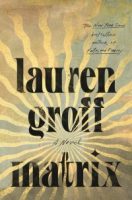 ‘Matrix’ by Lauren Groff (2021) – I did not expect a novel about an abbey of nuns in 12th century England to be this high on the list, but it totally fascinated me. Here we have an eloquent and persuasive depiction of a successful society composed entirely of women.
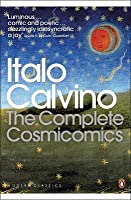 ‘‘Cosmicomics’ by Italo Calvino (1965) – Italo Calvino’s playful conceit is that there were people, a family, around to witness the creation of the Universe, the Sun, the moon, the stars, and the planets. There’s Grandma, Grandpa, and Mother and Father, as well as the boy Qfwfq and his sister as well as some of their neighbors, and especially there is always a lady or girl friend to help Qfwfq on his way through the Universe.
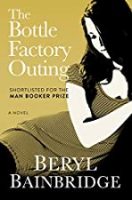 ‘The Bottle Factory Outing’ by Beryl Bainbridge (1974) – This is a deadpan comedy like nothing you have ever read before. Somehow Beryl Bainbridge manages to keep a straight face while telling us this outrageous story.
 ‘Agua Viva’ by Clarice Lispector (1973) – If ‘Agua Viva’ made complete sense to someone, I would worry about that person. But the fragments are deeper and make more visceral sense than most writers’ complete thoughts.
 ‘The Passenger’ by Ulrich Alexander Boschwitz (1938) – A novel which vividly captures the terrors of Kristallnacht in Germany, the Night of Broken Glass.
 ‘The Inquisitors’ Manual’ by Antonio Lobo Antunes (2004) – This year will be remembered as the year I discovered Antonio Lobo Antunes. What impresses is the striking use of words and images throughout.
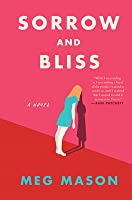 ‘Sorrow and Bliss’ by Meg Mason (2021) – Meg Mason maintains a wry deadpan tone throughout this emotional roller coaster of a novel.
 ‘Au Bonheur des Dames (The Ladies’ Delight)’ by Emile Zola (1883) – Here is Zola on Octave Moiret who runs the department store in Paris: “He made an absolute rule that no corner of Au Bonheur des Dames should remain empty; everywhere, he demanded noise, people, life…because life, he said, attracts life, breeds and multiplies.”
 ‘A Calling for Charlie Barnes’ by Joshua Ferris (2021) – There are many, many novels where the main characters are just too good to be true. However ‘A Calling for Charlie Barnes’ is not one of them, and that’s quite a high bar to attain in novel writing, especially when you are writing about your parents.
 ‘Mrs. March’ by Virginia Feito (2021) – The Mrs. March in this novel is quite repellent. It takes real talent for a writer to pull this off, and this is Virginia Feito’s first novel.
Happy Reading!
 Tony's Book World
Recent Comments