‘Effi Briest’ by Theodor Fontane (1896) – 235 pages Translated by William A. Cooper
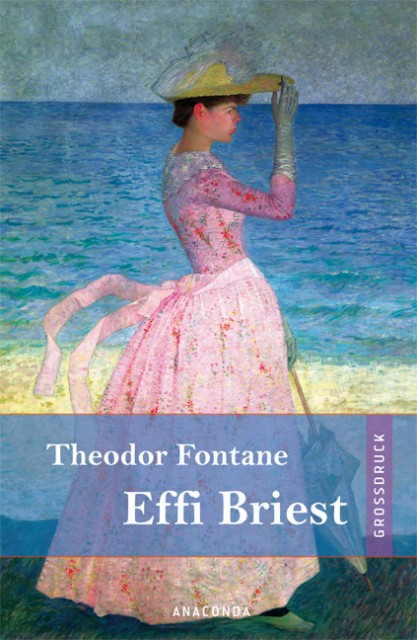
Having read ‘Effi Briest’ now and re-read ‘Madame Bovary’ quite recently, I am in the somewhat fortunate position to be able to compare and contrast these two young women with the same initials and quite similar fates.
‘Effi Briest’ begins with seventeen year old Effi in the backyard playing with her friends Bertha, Hertha, and Hulda. Effi is a high-spirited and fun loving girl. Parents usually want the best for their daughters, and the parents of Effi are no exception. So when a financially well-established man, Innstetten, asks the parents for Effi’s hand in marriage, they agree. Innstetten is an old friend of the family, in fact a former suitor of the mother. He is more than twenty years older than Effi, and the parents do have doubts about the arrangement, but they do decide it is for the best.
 For me one of the most poignant scenes in ‘Effi Briest’ is after the wedding when her parents sit around the kitchen table discussing the suitability of this arranged marriage. I wonder how often today parents pause to discuss the quality of their children’s marriages.
Meanwhile the marriage in ‘Madame Bovary’ is not an arranged one as Charles Bovary actively courts Emma Rouault before they marry. Still he too is about twenty years older than Emma. Charles Bovary is a doctor who is dedicated to his work, and soon Emma is making fun of him behind his back. She regards him as boring and a stick-in-the-mud, and her contempt for him grows. She is fascinated with Parisian high society and has little use for the dull doctor, her husband. She also spends a lot of the good doctor’s hard-earned money.
At the same time Effi Briest admires her husband even though he is somewhat cold and distant. ‘Innstetten was kind and good but he was not a lover.’ The problem here is that he lives far to the north in Germany in the seaport town of Kessin. Effi must leave her parents and friends, and she is somewhat lost and lonely in her new surroundings.
So here is a major difference between Effi and Emma. Effi is essentially a good girl who is overwhelmed and distracted by her severe isolation. However Emma is mischievous and ready for trouble from the very beginning.
Trouble does arrive for both Emma and Effi in the form of a young man. I suppose there has never been a shortage of young men out to seduce pretty young women. Rodolphe of ‘Madame Bovary’ and Major Crampas in ‘Effi Briest’ are both womanizers of the first order.

Hanna Schygulla as Effi Briest
Theodor Fontane is quite discreet about Effi’s affair with Major Crampas. Effi goes off alone for long walks in the woods or along the river and comes back alone a couple of hours later. We never have a scene of the two of them by themselves together. Meanwhile in ‘Madame Bovary’, Rodolphe is not Emma’s first affair, and we do actually see them getting it on in the woods during their horse riding. Although ‘Effi Briest’ was written nearly forty years after ‘Madame Bovary’, ‘Madame Bovary’ is the much more explicit novel.
Since both Effi and Emma have committed that most heinous of crimes, adultery, they both must be punished severely. In both cases the adultery is found out by hidden secret letters several years later. In Emma’s case, adultery didn’t bring her down; it was her spendthrift ways. Effi Briest remains a kind worthy person until the bitter end.
The difference between Effi Briest and Emma Bovary is as follows. Effi is a good young woman driven by loneliness to temporarily go bad. Emma is a forever mischievous troublemaker but loveable.
My review of ‘Madame Bovary’ can be found here.
 Tony's Book World
Recent Comments