‘The Buried Giant’ by Kazuo Ishiguro (2015) – 317 pages Grade: B+
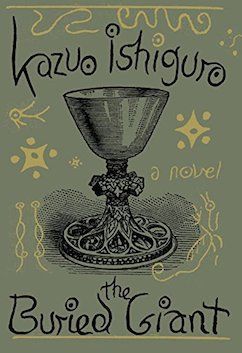 ‘The Buried Giant’ has all the trappings of Old English romantic fantasy: knights in armor, dragons, Sir Gawain who was King Arthur’s nephew, ogres, and pixies. It takes place sometime after King Arthur supposedly died which would place it early in the 6th century. The Romans are long gone; many Saxons from Germany have moved in. There is an uneasy tension between the native Britons and the Saxons, but currently they are at peace.
Kazuo Ishiguro has much bigger fish to fry than a knighthood idyll. He raises the eternal questions of how two distinct groups of people, in this case the Britons and the Saxons, get along or not. He may be writing about the post-Roman Britain, but you know he is talking directly to us modern people who have our own problems getting along with the different groups of people we encounter.
I finally found the key to Kazuo Ishiguro, and it is the late great Portuguese novelist Jose Saramago. Both of these writers use allegory to take us deeper into understanding the human condition.
For example Jose Saramago used ‘Blindness’ as an allegory to depict the state of people on earth. In ‘The Buried Giant’ Kazuo Ishiguro uses forgetting and remembering as necessary skills for surviving. Sometimes we must forget our chaotic pasts in order to continue forward. What kind of things do we forget? For soldiers, it may be inhumane acts committed during battles. In times of peace we forget the hatred and atrocities that caused us to murder and destroy in war. In ‘The Buried Giant’, it is the slaughter of innocent children. For others it may be youthful flings or other indiscretions that would upset a marriage. Forgetting things may be just as important a survival skill as remembering things.
“I know my god looks uneasily on our deeds of that day. Yet it’s long past and the bones lie sheltered beneath a pleasant green carpet. The young know nothing of them.”
Some reviewers have taken Ishiguro to task for not fulfilling the requirements of fantasy fiction. Those who criticize ‘The Buried Giant’ as not being very good fantasy are totally missing the point. Fantasy fiction is an escapist form of fiction, and Ishiguro’s intention is the exact opposite of escape. His goal is that we confront our reality more directly. You might even say that he is subverting the fantasy genre in ‘The Buried Giant’.
Kazuo Ishiguro, in all his novels, has dealt with people repressing memories or suppressing the larger implications as we go about the details of our daily lives. Thus the butler Stevens in ‘The Remains of the Day’ can run the manor to perfection while he knows his boss is plotting with the Nazis for a German takeover of England. This same theme of our intentional obliviousness to the overwhelming truth suffuses all of Ishiguro’s novels.
There are many lively and exciting novels that stay on the surface of things. However, if you want to go deeper and have a more profound experience, read Jose Saramago and Kazuo Ishiguro.
 Tony's Book World
Recent Comments