Posts Tagged ‘Sofi Oksanen’

‘Purge’ by Sofi Oksanen – Free Estonia!

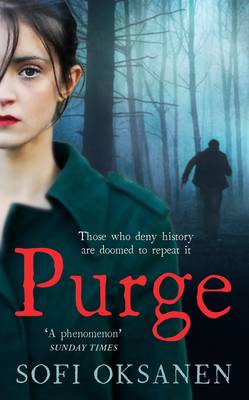
‘Purge’ by Sofi Oksanen   (2010) – 390 pages    Translated by Lola Rogers
imagerepository

After reading ‘When the Doves Disappeared’ earlier this summer, I had no choice.  That novel was so dramatic and intense, I absolutely had to read Sofi Oksanen’s earlier novel ‘Purge’.  ‘Purge’ is perhaps an even stronger novel than ‘When the Doves Disappeared’, but it is a close call between the two books.

Here is the setup of the story in ‘Purge’.  In 1992, An old woman, Aliide Truu, living in the Estonian countryside finds a young woman, Zara, lying in her yard and brings her into her house.  Oksanen sets the situation up nicely as the two women develop a relationship so that Zara acts more like a daughter to Aliide than her own daughter.

Two ruthless men are pursuing Zara who was forced to work for them at sex trafficking and has now escaped.

The young woman Zara is hardly more than a girl.  Zara wanted to get money for college, but instead she was taken up by two violent young Russian male pimps, Pasha and Lavrenti, who drove her to Berlin, Germany and peddled her for sex.

The old woman Aliide had to face her own brutal interrogation in the 1940s after the Russians took over Estonia from the Germans.

Oksanen pursues her usual technique of presenting short scenes out of order.  The present time of the novel is 1992, but we are presented flashbacks for both Zara and Aliide.

Let’s talk a bit about this method of Sofi Oksanen, the method she has used effectively in both ‘Purge’ and ‘When the Doves Disappeared’.  ‘Purge’ started out as a play. And I believe that fact was crucial to Oksanen in arriving at her technique.

Instead of presenting her scenes in chronological order, she skips around from time to time, from place to place.  Thus one scene might be from 1992 in Estonia, and the next scene might be from 1991 in Vladivostok, and the next scene might be from 1945 in Estonia.  This allows each scene to be presented in real time rather than as a memory.  Real-times scenes in the here and now are much more vivid than memories.  I find this technique increases the impact of the story.  We are given the separate pieces of the puzzle as they are needed until they all fit together into a complete picture.  The method also allows Oksanen to tell complex stories using simple dramatic single scene building blocks.

Gradually the full stories of both women are revealed, and all the pieces of the mosaic fit together into a compelling story.

Oksanen deals with the totality of these two women’s situations, the bad as well as the good.  The author never veers away from any subject because it is just too awful or disgusting whether it be political torture or sex trafficking.  Evil as these subjects are, they are a part of the lives of these people and must be dealt with.  That is why ‘Purge’ gets to deeper truths than other novels do.  In the presence of overwhelming evil, one must make allowances for ordinary people in order for them to survive.


Grade:   A
‘When the Doves Disappeared’ by Sofi Oksanen – An Outstanding Novel of Estonia

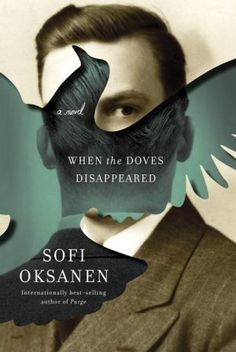
‘When the Doves Disappeared’ by Sofi Oksanen  (2012) –  296 pages  Translated by Lola Rogers     Grade: A

e63a74088b795cca1ff46651304e3c22

In 2009, my family and I visited Tallinn, Estonia as part of a tour package which included St. Petersburg in Russia, Riga in Latvia, and Tallinn.  During the three short days we spent in Tallinn, I developed a quite optimistic impression of Estonia.  Finland has an informal partnership with Estonia which works to the betterment of both countries.  We learned that there is a Finno-Ugric language and cultural bond between the people of the two countries.  During the time there, we took a ferry to Helsinki, Finland across the Baltic Sea and back. I got the impression that Estonia was a small country which really has its act together.   Even the buildings seemed more brightly painted than in the other countries.

The following interesting fact about Estonia is from Wikipedia:

In 1936, the British based Jewish newspaper The Jewish Chronicle reported that “Estonia is the only country in Eastern Europe where neither the Government nor the people practice any discrimination against Jews and where Jews are left in peace and are allowed to lead a free and unmolested life and fashion it in accord with their national and cultural principles.

‘When the Doves Disappeared’ is about two much less optimistic times for Estonia. The early 1940s were a despicable time for middle Europe with those two brutal dictators Adolf Hitler and Joseph Stalin strutting their stuff.  First Russia occupied Estonia during World War II, then the Germans took over, then Russia again for 45 years.  Scenes in ‘When the Doves Disappeared’ switch back and forth between the German occupation in the early 1940s to the Russian occupation in the 1960s.

The title ‘When the Doves Disappeared’ refers to the fact that the occupying Germans liked to eat doves, and thus they disappeared from the city.

The novel centers on three Estonian people who know each other well.  Roland is part of the Estonian underground who helps smuggle people in danger out of the country to Finland.   His cousin Edgar collaborates first with the Russians, then with the Germans, and then again with the Russians.  The same people like Edgar who tried to advance themselves under the Germans behaved similarly with the Russians.  The best way to advance under both the German and Russian regimes is to report to the authorities negative information on your neighbors and relatives.

The third main character is Edgar’s wife Juudit.  Juudit is dissatisfied with her marriage and dates a German officer while Edgar is gone during the German occupation.  However Edgar and Juudit get back together after the war and are still living together twenty years later under the Russian occupation.

Sofi Oksanen

Sofi Oksanen

So we get the stories of three people: the hero Roland, the collaborator Edgar, and the damaged Juudit.  One particular strong thing I liked about this novel is that it tells its story with as much moral ambiguity and  mystery as the events probably actually occurred.   Yes, people do collaborate with the enemy, and, yes, local women do date the occupying officers.  Those who try to do the right thing look like losers in the short run and perhaps even in the long run.  They pay a price.

I was much impressed with the writing in ‘When the Doves Disappeared’.  It clearly and methodically tells the unique story of the interactions of these three intriguing main characters.  Sofi Oksanen has done a fine job of bringing these characters to life in a tale of politics and psychology that is never predictable.

Grade:   A