Posts Tagged ‘Sebastian Barry’

‘Old God’s Time’ by Sebastian Barry – An Irish Garda Policeman, Retired


‘Old God’s Time’ by Sebastian Barry    (2023) – 261 pages
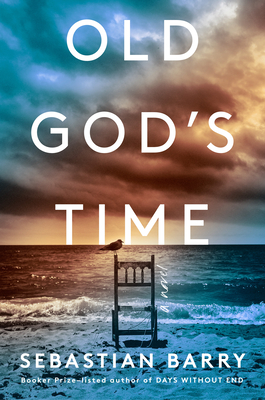


In ‘Old God’s Time’, ex-Garda Tom Kettle is rejoicing in his retirement from the force. He lives alone in an apartment by the ocean, happy to be done with police work.

There were no saints in any era, Tom knew, just good men and bad, and sometimes both in the same bottle.”

Tom’s wife June, daughter Winnie, and son Joe have all died, so he lives alone.

Tom often waxes lyrical about his current life in retirement as well as about his previous family life.

These were the gifts given to him in his life, there was no reason to mourn or complain.”

We have the juxtaposition of this Irish lyricism with some truly awful episodes in Ireland’s recent past including the child sex crimes in the Church orphanages, the Magdalene Laundry scandals, etc.

As a policeman, Tom Kettle was on the front lines in confronting these scandals. Actually both Tom and his wife June were both in Church orphanages as little children. So both of them had an intimate knowledge of what was going on inside these Church-run orphanages. For one priest in particular, there is no forgiveness.

Better to have been born dead, the Brother used to shout, than the filthy melt of a prostitute.”

Perhaps that was the rationalization for some of the priests and brothers for the crimes they committed against these little children. Worst of all is Father Thaddeus :

I’ve come for my kisses, June.”

Sometimes Tom Kettle applies his colorful language and lyricism to some very ugly things :

Father Joseph Byrne and Father Thaddeus Matthews, two jackals in a coop devouring little chickens. Filthy, relentless, feckless men who never paused a moment in their evil.”

There is no ambiguity in ‘Old God’s Time’. The good men are all good, and the bad men are horrible. It is like the old TV Westerns in that sense. Perhaps in these circumstances ambiguity is unwarranted.

The entire novel is made up of Tom Kettles reminiscing about his family life and his life on the job as a policeman. Along the way he divulges some closely held family secrets.

But oftentimes, the unlikely was the truth, as you might find out, in the end, when it was too late.”


Grade :    A-


‘Days Without End’ by Sebastian Barry – The Cruel Past


‘Days Without End’ by Sebastian Barry   (2016) – 259 pages

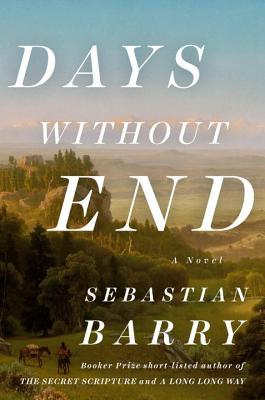
In his newest novel, ‘Days Without End’, Sebastian Barry turns his eyes on the United States. Barry has been capturing much of Irish social history in several of his novels through the exploits and tribulations of various members of the McNulty and Dunne families.  In this new novel Thomas McNulty winds up in the United States after leaving Ireland as a young teenager after many in his family have starved to death in the Irish potato famine in the late 1840s.

His first job is as a dancer in a mining camp town in Missouri.  There is a shortage of women in the town, so the bar owner has these two young boys dress up like women and dance for the miners.  The other boy dancing, John Cole, becomes the love of Thomas McNulty’s life.

“You had to love John Cole for what he chose never to say.”    

After the boys grow too old to play passable women, they join up with the United States army to fight Indians along the Oregon trail.  Some of the soldiers in their unit have a rabid hatred for any Indians, all Indians.  There are scenes where the soldiers commit atrocities against villages of Indians, murdering the women and children when the Indian men can’t be found.  ‘Days Without End’ is not a novel to make you proud to be a United States citizen, just the opposite.  The novel is not like the heroic United States history stories I read when I was young; if anything this novel is anti-heroic.

“Everything bad gets shot in America, say John Cole, and everything good too.”

And then we move on to the Civil War, and Thomas McNulty and John Cole are fighting for the Union Army.  Many on both the Union side and Rebel side are young poor Irish immigrant guys, cannon fodder.

On and off the battlefield they witness atrocities committed against black people.  In one horrifying episode victorious Rebel troops line up all the soldiers in a black company who had already surrendered, more than a hundred, along a ditch and shoot them all.  The guys wind up in the Confederate prison in Andersonville where conditions are gruesome enough for the white soldiers, but the Rebels don’t feed the black soldiers there anything at all.

Atrocities against Indians, atrocities against black people.  It used to be that the United States was usually depicted as a shining beacon of liberty and hope.  Not anymore.

“The world got a lot of people in it, and when it comes to slaughter and famine, whether we’re to live or die, it don’t care much either way. The world got so many it don’t need to.”

I did have problems with the writing style of ‘Days Without End’.  The entire novel is written as the diary of Thomas McNulty, and it is written in a kind of diary shorthand.  Some of the paragraphs are up to three pages long.  I suppose this is not unusual for first-hand accounts, but it does make reading the novel slow going.   The other complaint I have is that there are no new or original insights into this violent cruel past of the United States, but perhaps to document it is enough.


Grade:     B