Posts Tagged ‘Richard Powers’

‘Playground’ by Richard Powers – Wondrous Life in the Ocean and on Land


‘Playground’ by Richard Powers     (2024) – 381 pages
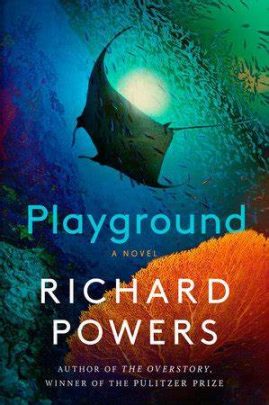
 

One of the conceits in the novel ‘Playground’ is that it was written by an artificial intelligence (AI) device called Profunda. Therefore I will address my critique of ‘Playground’ to Profunda.

Profunda, I was very impressed with your knowledge of the Big Picture concerning life in the ocean and on land, as well as your insights into the individual characters who play a part in your story.

I was first impressed with the vivid descriptions of fascinating ocean life provided by that intrepid undersea explorer Evelynne from Montreal.

The ocean teemed with primordial life – monsters left behind from evolution’s back alleys – ring-shaped, tube-shaped, shapeless, impossible plant-animal mashups with no right to exist, beasts so unlikely I wondered if my beloved author invented them.”

I was particularly impressed with your “impossible plant-animal mashups” since as I look at pictures of deep sea life it is indeed often difficult to tell the animals from the plants.

Or consider the following when Evelynne sees a group of oceanic manta rays. She tells that the manta ray has flippers that could be called wings that span more than 18 feet and that it weighs more than a ton and a half.

Mantas had a brain-to-body ratio far higher than most fish, as high as many mammals. A giant oceanic manta ray brain was the largest and heaviest of any animal that breathed water.”

Left to themselves they might live for four decades or more. But life span was plummeting.”

When the humans finally destroy themselves with their nuclear and other weapons, the magnificent life in the oceans will continue to go on. I suppose that is some consolation.

I thought these vivid descriptions of strange ocean life were extremely well done. However, especially when you are describing technical processes and issues, your enthusiasm level goes too high and you provide us with too much unwarranted information. There was the danger, Profunda, that you would come across as a facile know-it-all. Also that Wow-Gee-Whiz attitude sometimes gets tiresome. Yet you deal so well with these large-scale issues, we don’t want to lose that.

Yes, there are your striking pictures of the wondrous but strange animals/plants in the ocean and your easy comfortable knowing analysis of extremely complex technical techniques and issues. But your real strength as a writer is when you get down to your individual characters and tell affecting stories about them.

There are four main characters in ‘Playground’. Evelynne, whom I have already mentioned, is an undersea explorer in a wet suit. Todd is a Silicon Valley tech wonder and a billionaire. Rafi is Todd’s Go-playing friend and often inspiration. Ina is Rafi’s wife and an artist.

You present the stories of these four individuals and their interactions in a fashion that held my interest throughout.

Profunda, I realize that you, as a computer, can read thousands of books rapidly, and you can take things from these books and use them with so much subtlety that you cannot be accused of plagiarism.

However one thing you lack is that you cannot really feel human emotions. I’m talking about not only the good ones like love and compassion and devotion which you seem to have some intellectual insight into already, but also the bad ones like jealousy, doubt, anxiety, and shame. Sure, you can read about guilt in Dostoevsky and others. However until you can actually feel guilty about your own abysmal behavior, you will not achieve that profound depth found in great literature or movies or music.


Grade:     A-


Quoting Richard Powers

Author Richard Powers has a new novel, ‘Playground’, coming out on September 24 which I am looking forward to reading. So this would be a good time to share with you some of the quotes from his previous works and interviews which I have found to be enlightening or entertaining.


Here goes:


“People, Robbie. They’re a questionable species.” – from ‘Bewilderment’


“What you make from a tree should be at least as miraculous as what you cut down.” – from ‘The Overstory’


“The search for truth is a lifelong journey, filled with twists and turns.”


“Only keep still, wait, and hear, and the world will open.”


“Maybe happiness is like a virus. Maybe it’s one of those bugs that sits for a long time, so we don’t even know that we are infected.” – from ‘Generosity: An Enhancement’


“Anyone who gets righteous…doesn’t understand.”
“Understand what?”
“How hopelessly fragile and wrong we all are. About everything.”

      • from ‘The Overstory’

“A moment of awe has the power to change the course of a lifetime.”


“Evil is the refusal to see one’s self in others.”


“Nobody’s perfect, but, man, we all fall short so beautifully.” – Richard Powers, ‘Bewilderment’


That’s all, Folks.


‘Bewilderment’ by Richard Powers – 100,000,000,000,000,000,000,000,000 Stars in 2 Trillion Galaxies


‘Bewilderment’ by Richard Powers      (2021) – 278 pages


OK, ‘Bewilderment’ brought me up to date on current thinking in astronomy. Thanks to the Hubble telescope and dozens of other super powerful telescopes in outer space outside the Earth’s atmosphere, astronomers now believe there are 100 octillion ( 100,000,000,000, 000,000,000,000,000 ) stars in 2 trillion galaxies. There are more stars than there are grains of sand on Earth. Many, many of these stars have planetary systems. The chances that there are conditions that support so-called intelligent life on many other planets are very, very good.

I told him what some astronomers now thought: a billion or more planets at least as lucky as ours in the Milky Way alone.”

In his novels, Richard Powers goes big. Instead of a guy who feeds the birds over winter, the main protagonist is an astrobiologist. Instead of going for short walks in the forest, he and his son go for full survivalist expeditions in the Smoky Mountains with the full camping regalia. Sometimes I wish Powers would just keep things small, so I could identify with the people in his novels more. However I keep reading Richard Powers so he must be doing something right.

Nobody’s perfect, but, man, we all fall short so beautifully.”

I wanted so much to love ‘Bewilderment’ as much as I have loved several of Richard Powers’ other novels in the past (‘Galatea 2.2’, ‘Gain’, ‘Generosity: An Enhancement’ – maybe I should stick to his novels that start with the letter “G”). Here I came close, but not quite.

First there is the precocious but troubled 9 year-old kid Robin whose mother Alyssa was killed in a traffic accident avoiding an opossum in the road. Alyssa studied animal law and was an expert on what constitutes legal cruelty to animals. Another major theme of this novel is avoiding cruelty to animals. Both Robin and his father Theo are vegans. The father who is an astrobiologist professor at the University of Wisconsin-Madison is bringing up his son alone.

Son Robin is deeply troubled, and his father makes arrangements with another professor at the University to use a new behavior technique, Decoded Neurofeedback, to help the son deal with his psychological problems. However both professors feel the pressure since critically important scientific projects are being shut down by political caprice.

An Image from the Hubble Telescope

There is an issue when the main person telling the story is also the chief advocate for the story’s line of reasoning. We readers are naturally skeptical, always on the lookout for a stacked deck. It would be more convincing to have someone who is originally skeptical tell the story and be slowly won over to the positions being advocated.

I suppose I react to environmental polemics like a spoiled kid would react when told by a parent, “Eat it, it’s good for you.” I stubbornly pigheadedly resist.

People, Robbie. They’re a questionable species.”

One optimistic way to look at it is if nuclear explosions or climate changes destroy life on Earth, it won’t be so bad because so-called intelligent life would probably continue to exist in many other places elsewhere in the massive Universe.


Grade:    B+


Some Fiction From the First Decade of the 2000s (2000-2009) That is Too Good to be Forgotten


Below are ten works of fiction from the early 2000s all about which I became enthusiastic and which led me to put these writers in my Must-Read category.


‘The Other Side of You’ by Salley Vickers (2006) – Salley Vickers connects the great works of art, in this case the art of Caravaggio, with the conscious daily lives of her characters in a compelling way. Her novels are definitely literary, yet are as light as a soufflé.


‘Ludlow’ by David Mason (2007) – Here is a novel-in-verse but not with the subject matter you would expect for a novel in verse. The coal miners of Ludlow, Colorado go on strike in 1914, one of the cruelest, bloodiest chapters in the history of American labor. The verse novel strategy works brilliantly to describe scenes that are not always pretty.


‘The Beauty of the Husband’ – A Fictional Essay in 29 Tangos by Anne Carson (2001) – In lyrical lines that suggest the movements of tango dancers, Carson describes scenes from a doomed marriage. This is a modern take on the intimate cruelties of marriage.

Three minutes of reality

All I ever asked

She stands looking out at rain on the roof.”

‘The Inheritance of Loss’ by Kiran Desai (2006) – I read much of the work of her mother Anita Desai, and daughter Kiran Desai carries on brilliantly. ‘The Inheritance of Loss’ has depth, emotion, hilarity, and imagination; what more can you ask for?. But why hasn’t Kiran Desai published any fiction since 2006?


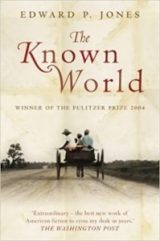
‘The Known World’ by Edward P. Jones (2003) – By focusing on a black slave owner, Edward P. Jones avoids turning this novel into a morality play of good and evil. There is no one preaching. The matter-of-fact tone only intensifies the reader’s reaction to this story.


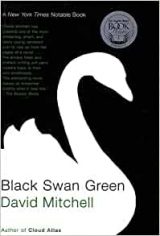
‘Black Swan Green’ by David Mitchell (2006) – This is David Mitchell’s lightest most engaging novel, and it is my favorite of his work.

These jokes the world plays, they’re not funny at all.”


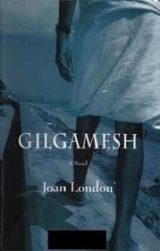
‘Gilgamesh’ by Joan London (2001) – A teenage woman and her young child take an amazing trip from rural Western Australia to Armenia and back. This is a blunt and beautifully written novel that deals with life’s tough truths.


‘John Henry Days’ by Colson Whitehead (2001) – Even before ‘Underground Railroad’, Colson Whitehead wrote wonderful novels. This novel is more humorous and thus more fun for me than ‘Underground Railroad’. Sometimes it seems writers lose their lightness as they get older.


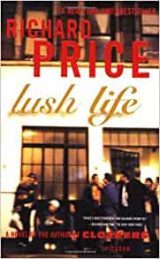
‘Lush Life’ by Richard Price (2008) – Richard Price is the excellent writer of novels that take place on the streets of New York. He lived in a housing project as a child and knows all about the city street life. He has branched out to writing for TV and the movies, but I have followed his written fiction from the beginning.


‘How the Light Gets In’ by M. J. Hyland (2004) In 2004, M. J. Hyland was the new female novelist who burst on the scene with this her first wonderful novel and got much of the attention and some awards. After reading this novel and her next, ‘Carry Me Down’, I put her in my must-read category. However she has not published a novel since 2009.


Generosity’ by Richard Powers (2009) – A likable and passionate novel about the search for happiness and the Happiness gene. And you thought our state of mind was the result of happy or sad events in our lives?


Happy Reading!

‘The Overstory’ by Richard Powers – The Trees of Life


‘The Overstory’ by Richard Powers   (2018) – 502 pages


Trees play a bigger role in our lives than most people realize.  We take them for granted and allow lumber companies to cut down forests of thousand year old trees just so they can make a nice profit. The original forest in the eastern part of the United States is long gone, and in the west it is being rapidly depleted.

 “A tree is a wondrous thing that shelters, feeds, and protects all living things.  It even offers shade to the axmen who destroy it.”   

Demand for wood products continues to rise and old-growth forests are often the main source of much desired hardwoods.  Since 1600, 90% of the virgin forests that once covered much of the lower 48 states have been cleared away. Most of the remaining old-growth forests in the lower 48 states and Alaska are on public lands. In the Pacific Northwest about 80% of this forestland is slated for logging.  Elsewhere the widespread destruction of the original Amazon rainforest as well as other old forests is causing rapid global warming.

“This is not our world with trees in it.  It’s a world of trees, where humans have just arrived.” 

Of all the modern writers, only Richard Powers could turn this appreciation of trees into a more than readable novel.  Only Richard Powers could make this compendium of stories about trees entirely fascinating.  His prose is always refreshing, fascinating in its intelligence, and exhilarating in its seeming magical ability to make unlikely connections between natural phenomena and our man-made lives.

‘The Overstory’ is mainly about a small group of people who come together in order to save old forests from the loggers.  First we get the early biographies of each of these persons, what caused them to love trees in the first place.

“There’s a Chinese saying: ‘When is the best time to plant a tree?’ ‘Twenty years ago.’”  

They wind up in the Pacific Northwest.  First they attempt to disrupt the loggers’ activity by sitting in trees that are designated to be cut. Thus the protesters will stay in a tree for weeks or months at a time while the loggers, especially the logging company owners, get more and more angry.  Protecting these trees is a hopeless cause for these tree protestors as the police are on the side of the loggers and arrest the tree protesters when they can.  Just because a cause is lost doesn’t make it wrong.  Later the tree protesters resort to more desperate means.

You may have noticed above that this novel is over 500 pages long.  I have no problem with long novels that are fully engaged, but ‘The Overstory’ seemed scattered, diffuse, and unfocused at times to me. We readers could have done without a few of the eight characters or couples that are the main protagonists, especially those who are not directly related to the main plot. There is one couple, Ray Brinkman and Dorothy Cazaly, who could have been entirely omitted, and it would have made the novel better.  There is also the video game designer Neelay Mehta who really didn’t add anything to the story for me.  If the author had concentrated on a few less characters, he could have given those few more depth and thus made them more interesting.  Only one character, Patricia Westerford, was fully developed and therefore fascinating to me. It seemed like Powers was more interested in the trees than the people who populate this story.

As a polemic for the importance of trees for human life and for all life on Earth, ‘The Overstory’ is excellent; as a fiction not quite so much.


Grade:   B