‘Second Place’ by Rachel Cusk (2021) – 180 pages
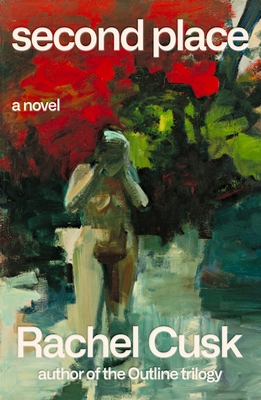 Here is the first sentence of the narrative by the woman M in ‘Second Place’ that really stood out for me:
“I had spent the evening in the company of a famous writer, who was actually nothing more significant than a very lucky man.”
This is one plain-spoken sentence that particularly resonated with me. I’m wishing that more sentences in this novel were as easy to follow. Often it was difficult for me to figure out the sophisticated and abstract reasoning of our M.
M, now in her late forties, lives in the coastal southern part of France. M is married to Tony, a supremely practical, successful, and even-tempered man. M herself has artistic longings and has been enthralled with the work of the artist L for a long time. She invites him to stay with them in the building which she calls their second place. She describes L as “wiry and small, dapper and goatish”, nearly the opposite of her husband. However, she is struck by his paintings. Unbeknownst to M and Tony, L brings along his quite young girlfriend Brett.
Throughout the novel, It is a struggle to follow our narrator M’s sophisticated speculations and ruminations, but I suppose I prefer this mental struggle to the overly simplistic reasoning often found in much other fiction.
Rachel Cusk is a special case. Her style of writing is so finely tuned, she can get away with a level of lofty abstraction that most writers wouldn’t dare.
“The pattern of change and repetition is so deeply bound to the particular harmony of life, and the exercise of freedom is subject to it, as to a discipline. One has to serve out one’s changes moderately, like strong wine.”
Just when you think M is going to go wandering off into the cosmos with her thoughts, she brings them back to Earth with strong wine.
However there are many other sentences from M that if you can comprehend and appreciate their full meaning, you are a more perceptive reader than I am.
“An image is also eternal, but it has no dealings with time – it disowns it, as it has to do, for how could one ever in the practical world scrutinize or comprehend the balance sheet of time that brought about the image’s unending moment? Yet the spirituality of the image beckons us, as our own sight does, with the promise to free us from ourselves.”
All this dense theorizing about art camouflages the rather simple theme of the novel which I assume to be the never-ending conflict between the practical and the artistic or, in terms of this novel, the practical Tony and the artistic L.
In a final note to the novel, Rachel Cusk says she owes a debt to ‘Lorenzo in Taos’, a memoir by Mabel Dodge Luhan. and that L is the D. H. Lawrence figure in the story. ‘Second Place’ did make me curious about that memoir.
Grade: B
.


 Tony's Book World
Recent Comments