Posts Tagged ‘Patrick Modiano’

‘Honeymoon’ by Patrick Modiano – A Honeymoon in France During the German Occupation


‘Honeymoon’ by Patrick Modiano    (1990) – 120 pages                        Translated from the French by Barbara Wright

During World War II, from June of 1940 until August of 1944, France was occupied by German forces. During this time it was extremely dangerous to be Jewish or for the authorities to find out that you were Jewish. ‘Honeymoon’ is a novella about those perilous times in France.

The year is 1942, and Ingrid and Rigaud are staying at the Dodds Hotel and pretending to be on their honeymoon. That reassures the other guests and hotel staff.

If young people still went on their honeymoon, it meant that the situation wasn’t as tragic as all that and that the earth was still going around.”

Complicating matters, Ingrid is only 16 years old, Austrian-born, and a Jew.

While exploring the streets near the Dodds Hotel, they see this man in a city suit sitting on a bench reading a newspaper. They repeatedly run into this man, who is often seen writing things into his notebook. Was this man spying on the hotel guests, in particular on Ingrid and Rigaud?

The story in ‘Honeymoon’ is told from the point of view of someone from the outside, 40 year-old Jean who later becomes friends with Ingrid and Rigaud. Jean has problems of his own. His wife Annette is having a long-term affair with his best friend Cavanaugh. Jean is by nature an explorer and has spent most of his adult life exploring Brazil. However now he is pretending to his wife to again visit Brazil, but is actually staying in Paris.

Later in the story, it is several years after 1942, and Jean has found out about the suicide of Ingrid. He secretly investigates what happened to Ingrid and find, if possible, the whereabouts of Rigaud.

What a strange idea to come and commit suicide here, when friends are waiting for you in Capri. . . What caused her to do it I might never know.”

I have read three of these short novellas by Patrick Modiano, and ‘Honeymoon’ is my favorite so far. Modiano has a natural way with stories. ‘Honeymoon’ is very much in the style of Modiano’s other works, remembering the people we meet along our own winding, twisting way and wondering whatever happened to those we have lost contact with.

I know the life stories of these shadows is of no great interest to anyone, but if I didn’t write it down, no one else would do it,” – Patrick Modiano, ‘Ring Roads’.


Grade :   A


‘Dora Bruder’ by Patrick Modiano – In Search of Dora Bruder

‘Dora Bruder’ by Patrick Modiano  (1997) – 119 pages   Translated by Joanna Kilmartin   Grade: B+

B171E682-AA83-4D5A-A8F7-10636849A96C

If ‘Dora Bruder’ were a film, it would be a documentary.

In ‘Dora Bruder’, Patrick Modiano traces the life of an actual young Jewish victim of the Nazi concentration camps, a fifteen year-old girl.  By documenting as much information in detail as he could find, Modiano makes the story of what happened to Dora Bruder more real and even more horrible.

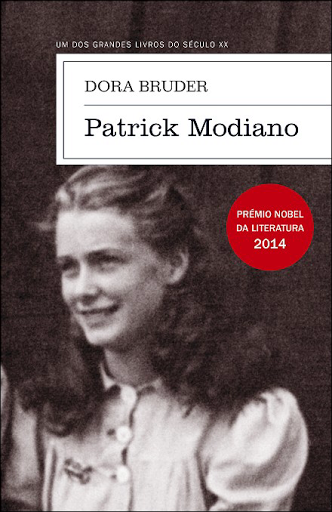
Modiano describes several photographs that were taken of Dora Bruder and her family in Paris. The version of the book I read reprinted two of the photographs, and these photographs serve to give a personality to Dora Bruder and her family.

The language in ‘Dora Bruder’ is clipped and laconic with no extraneous words of description, because it is important for Modiano not to go beyond the limited factual information he has.  Nothing here is invented.

Many key documents relating to Dora Bruder are missing, probably destroyed by officials trying to cover up their crimes.  In these cases Modiano relies on actual documents which are similar but relate to other individuals.

Most of the German officials as well as some of the French officials overseeing the deportations in Paris were shot in 1945 during the liberation of Paris.

There is one case mentioned in this book of a suspected Jew being fired at in Paris for not wearing the required Jewish insignia, a yellow star, which the Nazis had required.  This is only another brutal example of these outlaw Nazis.

As literature, there is just not enough known about Dora Bruder to write a compelling story about her life.  This Modiano does not attempt to do.  All we have left of Dora are a few documents with her name on it and a few pictures.

At one point Dora Bruder ran away from school.  There is just not enough factual information to determine why she ran away, where she lived during that time, or how she survived.  Modiano states some of his conjectures about this time.

I think Patrick Modiano is doing something of the utmost importance here, securing the documentation of these atrocities in a somewhat permanent form.  Otherwise the entire world will forget, and we will be subject to lies about those involved and about what really happened.

‘Out of the Dark’ by Patrick Modiano

‘Out of the Dark’ by Patrick Modiano   (1996) – 139 pages  Translated by Jordan Stump   Grade: B+

323529 (1)

What to make of the newest Nobel literary prize winner, Patrick Modiano?

Modiano writes in a clean lucid prose style that is simple for me to enjoy.  He writes with the casual easy-going spirit of a Parisian boulevardier who might be sitting at a café table in a Renoir painting.   I found ‘Out of the Dark’ a delight.

However readers who like their plots or stories big, crowded, and important will be disappointed.  The writing of Patrick Modiano is moody, dream-like, and seemingly inconsequential.  His life-long theme has been the shadowy interplay between what we remember and what actually happened.

“I think we still hear in the entrances of buildings echoes of the footsteps of those who used to cross and which have since disappeared. Something continues to vibrate after their passage, waves increasingly weak, but that is captured if one is careful. “

Here is the basic setup of ‘Out of the Dark’.  A guy meets a couple on the streets of Paris.  The young woman, Jacqueline, spends her time playing pinball at the Café Dante.   Her boyfriend Gerard is a small-time gambler.  On weekends the couple goes to London to play the roulette tables there and then return to Paris with their winnings.  Jacqueline comes up with this scheme to embezzle a suitcase of money from a gambling friend of Gerard’s and take off to the island of Majorca not with Gerard but with our narrator guy.  However in mid-trip Jacqueline disappears.  Fifteen years later our narrator sees Jacqueline on the streets of Paris.  She pretends not to recognize him, but they spend a few hours together.  The next day the narrator discovers that Jacqueline and her new husband have suddenly left for Majorca.   He doesn’t see Jacqueline again for another fifteen years, and when he does he avoids an encounter with her.

51IJtK9-JVL._SY344_BO1,204,203,200_Not much of a story.  Here is what I make of it.  When we are young most of us encounter people to whom circumstances bring us very close for a short time in our lives.  For a few months or a year these individuals are more central to us than anyone else.  But for whatever reason these people drop out of our lives just as quickly as they had arrived.  We may or may not encounter them years later, but circumstances have totally changed.  Any sense of closeness is gone, and we may just wish to avoid meeting up with them at all again.

 “We had no real qualities, except the one that youth gives to everyone for a very brief time, like a vague promise that will never be kept.”

Apparently all of the novels of Patrick Modiano are like this, French existential noir.  He has worked this same shadowy theme in short novels for his entire writing career.  I find myself quite attuned to Modiano’s writing style and will definitely be reading more of his novels in the months and years to come.