–
‘Godwin’ by Joseph O’Neill (2024) – 277 pages
–
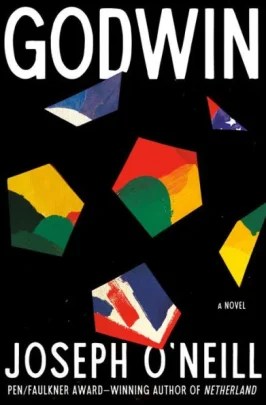 Despite getting some rave reviews elsewhere, the novel ‘Godwin’ never quite worked for me. Neither of the two main strands of the plot – the search for the young African soccer player Godwin and a United States office politics situation – fully captured my interest. The only character holding these two strands together is the main character Mark Wolfe and he does not come alive in either part. Even after reading the entire ‘Godwin’, I hardly understood anything about and had little insight into its main character, Mark Wolfe. When the main character of the novel is not fully developed, the novel is going to have problems holding one’s interest.
The sections that take place in a technical writing consortium of which Mark Wolfe is a member are especially lacking in interest. These sections seem intentionally convoluted to reflect the sorry United States office politics.
Those sections that take place overseas involving the locating of the young African soccer player Godwin do have one fully developed character named Lefebvre who is a long-time French soccer scout and agent. He always refers to soccer as football as Europeans do. He has a video of the young African Godwin playing a full game of soccer, and he is mightily impressed. When Lefebvre speaks, he often spouts cliches about the sport.
“What is this fact? It is this: football is its own religion. It has its own gods and priests, its own traditions and doctrines and churches. It has its own reality.”
Lefebvre has spent much of his adult life searching for African soccer talent, and he now bad mouths nearly everything African except these young soccer phenoms.
“Italy is a paradise. Benin is a hell.”
At one point, Lefebvre makes the following comment:
“Terrorists, jihadists, criminal gangs – in short backward types from the world over – would disfigure the gentle streets of Germany.”
I guess after World War I and World War II, I would never speak of “the gentle streets of Germany”.
I did read with interest Lefebvre’s detailed account of the absolute horrors of the Slave Trade in the historical Kingdom of Dahomey (which was part of the modern day country of Benin). The English, the Dutch, and the French colonialists in Africa all participated in this Slave Trade. Humans from the interior of Africa were hunted down, captured and put in chains, then auctioned off. In chains, they were then marched to the sea and put on ships headed for North or South America where they would be forced to work as slaves. At one point, Lefebvre compares this Slave Trade to the Holocaust.
However overall I did not find the situations in the novel ‘Godwin’ compelling or convincing. It might have helped if Godwin were actually a character in the novel instead of only described by others.
–
Grade: C
–
–
 Tony's Book World
Recent Comments