‘The Illustrious House of Ramires’ by José Maria de Eça de Queirós (1900) 346 pages
Translated from the Portuguese by Margaret Jull Costa
 I have become an Eça de Queirós aficionado, and I believe a lot of others would do well to be Eça de Queirós aficionados also.
Consider the renowned Portuguese fiction translator Margaret Jull Costa. She has made an excellent career of translating the best in Portuguese fiction. So far she has translated 12 works of José Saramago and 12 works of Javier Marias and has translated other works of such writers in Portuguese as Machado de Assis, Paulo Coelho, and António Lobo Antunes. She won the Portuguese translation prize for translating ‘The Book of Disquiet’ by Fernando Pessoa. ‘The Illustrious House of Ramires’ is the eleventh fiction by José Maria de Eça de Queirós she has translated.
José Saramago who was no slouch of a novelist himself has called Eça de Queirós “Portugal’s finest novelist”. I tend to agree with Saramago.
Here is a line from ‘The Illustrious House of Ramires’:
“None of us can really be judged guilty by a God who made us such fickle, fragile creatures, so dependent on forces over which we have even less control than the wind or the sun!”
Goncalo Mendes Ramires, the Nobleman of the Tower, is the scion of the Ramires family which has been prominent in Portuguese history since the 10th century, even before the Portuguese kings. He is writing an heroic novella about one of his ancestors and has come to the conclusion that the main occupation of those glorified legendary ancestors had been murdering people.
A childhood friend of Goncalo has risen to be an influential Portuguese politician, and much to Goncalo’s chagrin and dismay, this guy is pursuing an affair with Goncalo’s married sister. It is a fictional case history of how political power debases people, how men (and women) are so easily corrupted by a despot.
“Your letters? What did you say in your letters? That the governor is a despot and a Don Juan? Do you really think he was wounded by that? No, he was delighted.”
I must say that ‘Illustrious’ did give me some valuable insight into recent United States history.
But what happens when Goncalo himself is offered an influential position by this governor scoundrel? Will he himself succumb to the temptations of power?
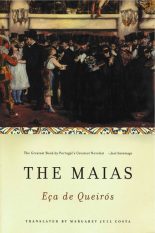
 Although I found ‘The Illustrious House of Ramires’ to be quite impressive, I would not recommend it as the place to start with Eça de Queirós. It starts out somewhat slowly before building up to its rousing climax. You probably won’t want to start with ‘Eça de Queirós’s masterpiece ‘The Maias’ either since it is over 600 pages, but I would recommend either the short novel ‘The Relic’ or the even shorter novella ‘The Yellow Sofa’ as a good starting point for this outstanding writer.
Grade: A-

















 Tony's Book World
Recent Comments