Posts Tagged ‘Henry Handel Richardson’

‘ The Fortunes of Richard Mahony’ by Henry Handel Richardson – The Very First Article I Wrote for the Internet

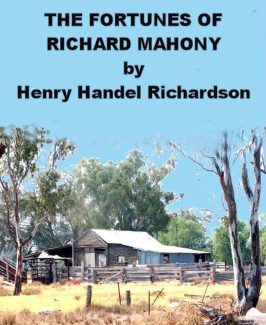
The Fortunes of Richard Mahony, a trilogy by Henry Handel Richardson   (1930)


I wrote this article in 2007 for “The Neglected Books Page”, a site that is still going strong 15 years later. This was long before I had a site of my own. I didn’t change one word for this reprint, and I still believe every word in it.

Here goes:

An Appreciation of “The Fortunes of Richard Mahony,” by Henry Handel Richardson

9 December 2007
How I do hate the ordinary sleek biography. I’d have every wart and every pimple emphasized, every murky trait or petty meanness brought out. The great writers are great enough to bear it.” These are the words of Henry Handel Richardson, a woman writer from Australia who lived from 1870 to 1946. Yes, woman writer, for like George Eliot, she wrote under a male pseudonym.

Mrs. Richardson applied this principle of exact unrelenting truth she stated above to her own fiction. Her masterpiece, completed in 1929, is ‘The Fortunes of Richard Mahony’, a trilogy of novels, which tells the story of a family living in the gold fields of frontier Australia, immigrated from Ireland, having to cope with the devastating effects of the young doctor father’s severe mental and physical deterioration from syphilis. I’ve read it is based quite closely on Mrs. Richardson’s own childhood.
I read this trilogy of novels about at the same time in my life as I was reading the great Russian novels of Tolstoy and Dostoyevsky. The trilogy, being over 900 pages, is related to these Russian novels in size. But more importantly ‘The Fortunes of Richard Mahony’, is similar to these Russian novels in its penetrating psychological realism Not often will you find a novel written almost eighty years ago that deals this honestly with no sugar coating or sentimentality with the severe mental illness of a young doctor head of a family. You can feel for the young mother and her children having to face the growing ostracism by her neighbors caused by her husband’s bizarre behavior. Of course, the doctor’s patients drop away after several of his episodes, and the family is reduced to poverty.
But not only is this family’s story courageous. Henry Handel Richardson is a writer of the very top rank. Although here in the United States she is little known beyond the movie of her novel ‘The Getting of Wisdom’ which was made by Bruce Beresford in 1978, in Australia Henry Handel Richardson is considered a classic novelist. Sentence for sentence, the writing holds your interest as only the best novels do. Here is a writer in English we can read without the filter of translation.
Later in my reading life, I discovered Patrick White, another writer from Australia, whom I consider probably the greatest novelist ever to write. I can’t help but think he must have read Henry Handel Richardson in his youth. If you like one of these writers, you will probably like the other.

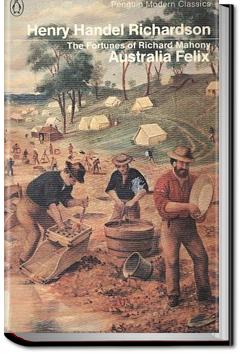
Since ‘The Fortunes of Richard Mahony’ is divided into three separate novels, I would recommend a reader start with the first volume, ‘Australia Felix’, and see if you are not hooked as I was into reading the other two volumes, ‘The Way Home’ and ‘Ultima Thule’.


I must say this was not a bad start.


‘The End of a Childhood’ by Ethel Florence Lindesay Richardson…I Mean Henry Handel Richardson


‘The End of a Childhood’ by Henry Handel Richardson (Ethel Florence Lindesay Richardson)   (1934) – 76 pages


How I do hate the ordinary sleek biography. I’d have every wart and every pimple emphasized, every murky trait or petty meanness brought out. The great writers are great enough to bear it.”

These are the words of Henry Handel Richardson, a woman writer from Australia who lived from 1870 to 1946. Yes, woman writer, for like George Eliot, she wrote under a male pseudonym.

Mrs. Richardson applied this principle of exact unrelenting truth she stated above to her own fiction. Her masterpiece, completed in 1929, is ‘The Fortunes of Richard Mahony’, a trilogy of novels, which tells the story of a family living in the gold fields of frontier Australia, immigrated from Ireland, having to cope with the devastating effects of the young doctor father’s severe mental and physical deterioration from syphilis. You can feel for the young mother and her children having to face the growing ostracism by her neighbors caused by her husband’s bizarre behavior. Of course, the doctor’s patients drop away after several of his episodes, and the family is reduced to poverty. I’ve read It is based quite closely on Mrs. Richardson’s own childhood. This is one of the world’s greatest works of literature.

The stories in ‘The End of a Childhood’ are about this same mother Mary and her two children Cuffy and Lucie after the husband and father Richard Mahony has died. A reader unfamiliar with the work of Richardson can fully appreciate these related stories in ‘The End of a Childhood’ without knowing the background of the characters, but for those of us who have read ‘The Fortunes of Richard Mahony’ trilogy these stories are extra special. The stories bring back characters we know and care about.

Mary Mahony speaks of her children thus:

In other words, they both were very highly strung, and in consequence, the strain of his illness, and the unhappy years preceding it, had told on them more severely than if they had been ordinary children.”

No writer is better than Richardson at capturing the poignancy of those tragic and not-so-tragic incidents that occur during a normal lifetime. A neighbor lady caring for the children during their mother’s sickness, says the following to Cuffy:

Well I know this, my boy, there’s precious little of your poor Ma in either of you. It’s your Pa you take after, both of you, more’s the pity. He was just such another. What she had to put up with, her life long, simply doesn’t bear telling.”

I can never get enough of the story from the ‘Fortunes of Richard Mahony’ trilogy. It is amazing how vividly I remember the plight of the Irish family of Richard Mahony out in the Australian bush in Ballarat.


Grade:    A


Some More Fiction Writers Who Were Too Good to be Forgotten


Here are some more fiction writers whom I consider just too good for us to forget about them.


Henry Handel Richardson (Real Name: Ethel Florence Lindesay Richardson) (1870 – 1946) She chose a male nom de plume, because woman fiction writers weren’t accepted in her time. The trilogy ‘The Fortunes of Richard Mahony’ (comprising the novels: Australia Felix, The Way Home and Ultima Thule), which is based on her traumatic but colorful early years and her childhood family in Australia, is up there as one of the finest works of fiction in English ever written.

Her Must-Read Fiction: The Fortunes of Richard Mahony, The Getting of Wisdom

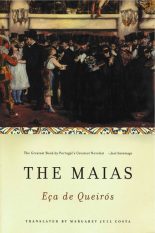
José Maria de Eça de Queirós (1845 – 1900) He was the first of Portugal’s great triumvirate of literary virtuosos: Eca de Queirós, Fernando Pessoa, and Jose Saramago. He had a wicked sense of humor. Himself a Portuguese diplomat, he wrote the following: “The number of dolts, dullards and nincompoops who represent us overseas is enough to make one weep. This really is a most unfortunate country.” But you can tell by his writing that he loves Portugal and especially its women.

His Must Read Fiction: The Maias, The Relic, The Sin of Father Amaro

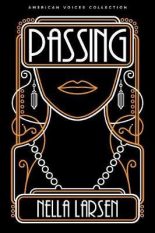
Nella Larsen (1891 – 1964) She worked as a nurse and a librarian in New York, but Nella Larsen got caught up in the Harlem Renaissance of the 1920s, and she wrote and published two short novels and a few short stories. Then she went back to being a nurse. She died in obscurity, but her work has now achieved the status of classic and is taught in many literature courses. I have read all of her fiction and consider it wonderful. ‘Passing’ was probably the first novel ever to deal with being of mixed race in the United States. I was moved by the efforts of Heidi Durrow to get a proper gravestone for Nella Larsen which you can read about here.

Her Must-Read Fiction:  Passing, Quicksand, The Short Fiction of Nella Larsen

Theodore Dreiser (1871 – 1945) If you have ever watched the great classic movie ‘A Place in The Sun’ starring Elizabeth Taylor and Montgomery Clift and Shelley Winters, you are familiar with Theodore Dreiser’s work. That movie is based on Dreiser’s novel, ‘An American Tragedy’. Who can ever forget the scene in the movie where he rows his fiancée out to the middle of the lake and then pushes her out of the boat into the water, knowing she cannot swim? All because he had found a beautiful new love from a rich family. Some critics found Dreiser’s work crude and rude, but I have found his fiction to be vivid and powerful.

His Must-Read Fiction:  Sister Carrie, The Financier, An American Tragedy

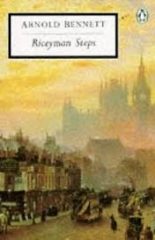
Arnold Bennett (1867 – 1931) – He wrote the best novel ever about a second-hand bookstore, ‘Riceyman Steps’. To the Bloomsbury Group including Virginia Woolf, Arnold Bennett was considered one of the Old Guard whose work was so prosaic that they were rebelling against it. However from my later vantage point I recommend Bennett’s work for its fine eye for detail and his strong empathy for the lower classes.

His Must-Read Fiction: Riceyman Steps, Anna of the Five Towns, The Card, An Old Wives Tale

Jean Stafford (1915 – 1979) – She was seriously injured and facially disfigured when she was 23 in a car accident in 1938. The reckless, angry, and intoxicated driver was the mentally unstable poet Robert Lowell whom she would soon marry and 8 years later divorce. She suffered from alcoholism and depression for much of her life. After publishing only three novels, all of which won critical acclaim, she wrote only short stories, many of which were published in the New Yorker. Of her work, ‘The Mountain Lion’ is my favorite.

Her Must-Read Fiction: The Mountain Lion, The Catherine Wheel, The Collected Stories of Jean Stafford

Francois Mauriac (1885 – 1970) – In early Mauriac, Evil is so attractive and Good is so smug that a winner is by no means assured. After those early novels, in 1928 Mauriac turned to Christianity and Catholicism with a vengeance, and the critical consensus was that he then stacked the deck in his fiction in favor of Good, and that his work weakened due to his new-found religious fervor. However one of his novels that I most admire, ‘The Vipers’ Tangle’, was written in 1933 after his conversion. One of the qualities that make Mauriac’s earlier fiction so appealing is how he depicts the life of Evil as quite delightful, just like it is in real life.

His Must-Read Fiction: The Desert of Love, Thérèse Desqueyroux, Flesh and Blood, Vipers’ Tangle


Here and here are two earlier lists of writers who wrote some mighty fine fiction.