Posts Tagged ‘Graham Greene’

Remember the Penguin 60s?


Back in 1995, in order to celebrate their 60th Anniversary in business, Penguin Books issued a series of very small books by famous authors called Penguin 60s which contained only around sixty to eighty pages. These books are tiny, only 4 inches by 5 inches, 10 centimeters by 12 centimeters.

I really liked this idea, because I am one of those who believe that a true genius can show her or his genius in 60 pages as well as in 100, 200, or 900 pages. They sold for only $.95 here in the United States and I wound up with about twenty of them. However here I am 26 years later, and nearly all my Penguin 60s remain unread.

So I decided to read and review a couple of them now. I picked works by two of my favorite authors, Graham Greene and Robert Musil.

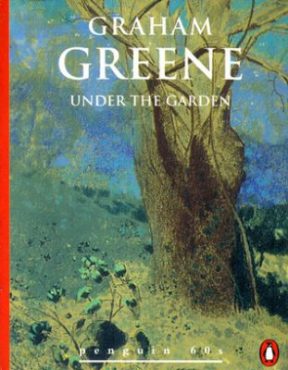
In ‘Under the Garden’, Graham Greene attempts a childhood fantasy, something much different from the adult spy and foreign adventure fiction that he is justly famous for. I must say that I had a lot of difficulty appreciating this work, as fantasy is probably my least favorite genre of fiction. A boy of seven goes underground beneath the garden at his home and discovers some strange creatures and persons living there. There is the one-legged old man Javitts and his woman Maria who “kwahk”s instead of talks. Their daughter has left them and is now in the upper world and has been crowned Miss Ramsgate. Even though Greene’s other work nearly always appeals to me, this one did not really sustain my interest.

‘Flypaper’ by Robert Musil starts with eight short good-natured essays. Some of them were dated, having been written a hundred years ago. The standout for me was the first one, ‘Flypaper’, which is about that sticky paper people used to control the number of flies before there were a lot of insecticides. It was paper with this golden yellow sticky poison on it. The flies would land on it, get stuck, and slowly die. Robert Musil exactly describes what happens to the fly. I suppose as a child watching the flies land on flypaper was my first intimation of mortality. I thought Musil’s essay was a brilliant example of close sharp observation as he captures the plight of the flies.

In another of these essays, Musil closely observes the behavior of monkeys on a monkey island at the zoo. One can learn a lot about human nature by observing the behavior of monkeys on monkey island.

Essays don’t have the same impact for me that fiction does. ‘Flypaper’ does wind up with a twenty-six page fictional story which is also good-natured and has some of the qualities of Musil’s other fiction.

I suppose that if there were any real money to be made in the reprints of these works, they would have been given a proper reprint instead of a Penguin 60 reprint. I definitely would not recommend buying a box set of all the Penguin 60s today.


‘Under the Garden’ by Graham Greene       Grade:    C+

‘Flypaper’ by Robert Musil                               Grade:   B


‘England Made Me’ by Graham Greene – Twins in Stockholm


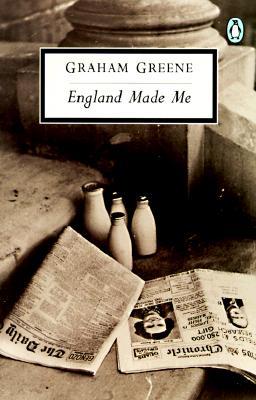
‘England Made Me’ by Graham Greene (1935) – 207 pages

My favorite story about the author Graham Greene is when the New Statesman magazine held a writing contest in 1949. The three best parodies of Greene’s unique style of writing would win prizes. Unbeknownst to the magazine editors, Greene secretly submitted his own entry under the name “N. Wilkinson” which was made up of the first two paragraphs of a novel set in Italy called ‘The Stranger’s Hand: An Entertainment’. He won second prize in the contest.

In ‘England Made Me’, Kate and Anthony are twins in their thirties. Kate, having been born first by a half hour, has always been protective of her younger brother. Anthony is a charmer with the ladies.

You’d be gone on me,” Anthony said, turning on her the same glance as he turned she knew, on every waitress, calculated interest, calculated childishness, a charm of which every ingredient has been tested and stored for future use.”

So Anthony is a charmer, but he is also a ne’er-do-well. He cannot keep a job. Each time he tells his family that he has resigned, but they all know that he has been sacked again.

Kate is the mistress of Sweden’s most successful businessman Eric Krogh, owner of Krogh Industries. After Anthony loses his last job and has no prospects, Kate puts in a good word for him with her boss and lover who gives Anthony a job at Krogh Industries as a security guard protecting Krogh himself.

As in all Graham Greene novels, there is a subtle and fascinating interplay between the characters and the plot of the story. Each character has his or her own set of traits which prove crucial to the plot.

In Greene’s stories, no one is ever too good to be true. All the characters are morally ambiguous. Certainly some are worse than others, but even the best are bad enough. To err is human. Each person has his or her own set of faults. Greene always portrays, in his words, “a world of black and gray”.

There are more sinners among the bourgeois than among peasants.” – Graham Greene, ‘Monsignor Quixote’

They did make a movie of ‘England Made Me’ starring Michael York in 1973, but they reset the location of the story from Stockholm to Germany. The movie’s producers must have felt that Nazi Germany fit the moral climate of the novel better than Sweden.


Grade:    A


Graham Greene – One of My Favorite Fiction Writers of the 20th Century

This is the second in a series.

Graham Greene

Born:   October 2, 1904    Died:   April 3, 1991

I came to reading Graham Greene relatively late in my reading career, not until the late 1990s.  Up until that time I had these misguided ideas about Greene that he was a spy genre novelist or that he was a Catholic novelist. My first Greene novel then was ‘The Heart of the Matter’ which I thought was magnificent.  I quickly started reading novel after novel by Greene.  The one novel that really took my breath away was his early ‘Brighton Rock’ about these young guys chasing through the streets and lanes of Brighton, England.  But his novels have a uniform quality, and just about any of them will be fine.  I have read about fifteen so far.

Greene’s novels range from settings in Africa (The Heart of the Matter’) to Asia (‘The Quiet American’) to Latin America (‘The Honorary Consul, ‘The Power and the Glory’, Our Man in Havana’) to England.  He was a novelist of the world.

What I like about Greene is that he is a good-natured compassionate writer who tells great stories.  Also his characters seem to have more underlying depth than most writers’ characters.  In one of his novels, Greene writes:

“Human nature is not black and white but black and grey.”

There are some individuals who are worse than others, but we all share in the guilt to some extent.  Individual people are not pure evil or pure good in Greene novels, and that makes his characters more realistic and human. Greene’s characters wrestle with their own particular guilt. No one is let off the guilt hook, but at the same time no one is eternally doomed on Earth. Also his tolerant view of humanity allows Greene to have a sense of humor about his characters.

Martin Seymour Smith does criticize Greene by saying “His most serious deficiency is his failure to portray women ‘in the round’.  I am not sure I agree with Smith.  I would recommend women to read ‘The End of the Affair’ which is a fiction supposedly based on Greene’s own extramarital affair and probably contains his deepest portrayal of a female character.

Fiction by Graham Greene that I strongly recommend:  Brighton Rock’, ‘The Heart of the Matter’, ‘The End of the Affair’, ‘Our Man in Havana’, ‘A Burnt-Out Case’, ‘The Quiet American’ and about a dozen others.

Quotes about Graham Greene

“I asked for The Heart of the Matter for Christmas in 1947. I suddenly thought, here is this man who can represent ordinary life, ordinary troubles, and make them exciting to read about.” – Shirley Hazzard

“He will be missed all over the world. Until today, he was our greatest living novelist.” – Kingsley Amis for Greene’s Obituary

“He is deepest in my head in the way he looks at the world with a mixture of, I think, kindness and honesty. I feel he’s very undiluted. And he’s really determined to look at the most difficult, dark parts of himself and the world.” – Pico Iyer

“Any writer would envy an imagination of such irresistible contrapuntal thrust – he never lacked a story, he was drowning in them. He famously said that childhood is the credit balance of the novelist, and Greene’s childhood – the misery of his public school, the power struggles with his headmaster father, the teenage seduction of his own psychiatrist’s wife, the flirtations with madness and God – well, he was never, ever going to be in the red. There are many natural storytellers in English literature, but what was rare about Greene was the control he wielded over his abundant material. Certainly one can imagine nobody who could better weave the complicated threads of war-torn Indochina into a novel as linear, as thematically compact and as enjoyable as The Quiet American.” – Zadie Smith

“His (Greene’s) obvious strengths, some of them leaving him vulnerable, are extreme fluency and professionalism, power, the ability to create clear-cut characters and sound plots. His capacity to convey atmospheres of oppression has hardly been equaled in English.” – Martin Seymour-Smith

Quotes from Graham Greene

“Our worst enemies are not the ignorant and simple, however cruel; our worst enemies are the intelligent and corrupt.”

“We praise heroes as though they are rare, and yet we are always ready to blame another man for lack of heroism.”