‘The Physics of Sorrow’ by Georgi Gospodinov (2011) 281 pages Translated from the Bulgarian by Angela Rodel
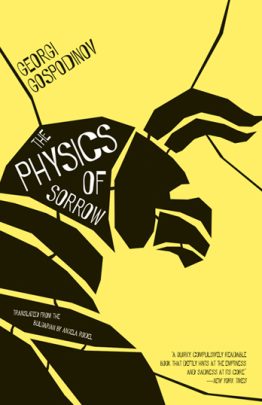 Bulgarian writer Georgi Gospodinov wrote this novel ‘The Physics of Sorrow’ in response to an article he read in The Economist in 2010 which called Bulgaria the saddest place in the world. Even the fall of Communism apparently didn’t improve the spirit of the country as the Economist article was written already twenty years after the fall of Communism in Bulgaria.
“The saddest place in the world, as The Economist called it in 2010 (I clipped out the article), as if there is truly a geography of happiness.”
Reading Georgi Gospodinov even in translation, it doesn’t take long for one to realize you are in the hands of a real master of literature. Only a few paragraphs, and you will figure it out. There is the self-assurance with which he writes, the easy relaxed humor. He just has that knack of stating important things plainly, without pretenses. I would follow his sentences everywhere he takes them. After reading his International Booker Prize winning novel ‘Time Shelter’ as well as this novel, I think it is time for those who are really interested in literature to get aboard the Gospodinov train. He is 55 years old.
“After all, the world is full of men with crooked noses and bulging Adams Apples.”
Gospodinov’s humor alone refutes the claim that Bulgaria is an endlessly sorrowful country. You will probably have as much fun reading his novels as he had writing them.
In ‘The Physics of Sorrow’, Gospodinov somewhat ties his account together using the Greek myth of the Minotaur in its labyrinth. The Minotaur was half human and half bull, and when it became ferocious and started eating humans, King Minos locked him in a labyrinth from which it could not escape. The Minotaur could only survive by eating humans; King Minos required seven Athenian boys and seven Athenian maidens to be sacrificed to the Minotaur every year. Many would-be heroes tried to slay the Minotaur without success until, finally, the hero Theseus was able to kill the Minotaur.
Gospodinov has great sympathy for the Minotaur who was locked in that labyrinth and slain just because of the sleazy circumstances of its conception and through no fault of its own. Although Gospodinov makes no direct comparisons between the Minotaur and Bulgaria, they are implied.
“… that half-human-half-bull boy was not just anybody but my “stillborn brother…”
In one chapter, Gospodinov lists all the responses he’s heard to the question “How Are You?” and explains each one. Here is one example:
“How Are You?”
“We’re fine but it’ll pass.”
“A waggish answer from the socialist era, someone clearly got fed up with the absurdity of the question and the system, in which complaining openly would only bring you grief.”
Towards the end of ‘The Physics of Sorrow’, the reader begins to notice that the parts of the novel read like high quality diary or personal journal entries that don’t necessarily refer back to anything that has gone before. Don’t go to this novel expecting a plot.
‘Time Shelter’ or the ‘Physics of Sorrow’, which Gospodinov novel should you read first? I would recommend you read ‘Time Shelter’ first, because ‘Time Shelter’ is somewhat more tightly written. ‘The Physics of Sorrow’ starts out strong but later tends to wander away from its primary subject.
Grade : A-

 Tony's Book World
Recent Comments