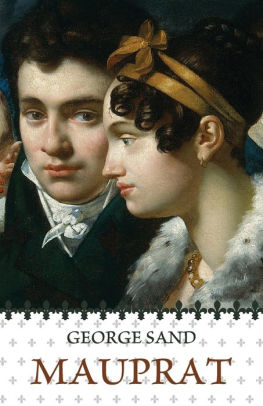
‘Mauprat’ by George Sand (1837) – 384 pages Translated from the French by Mary K. Artois
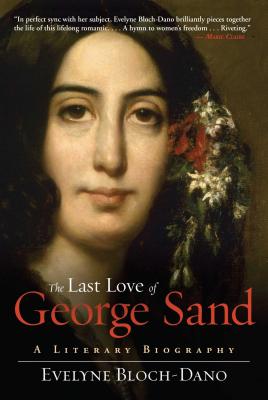
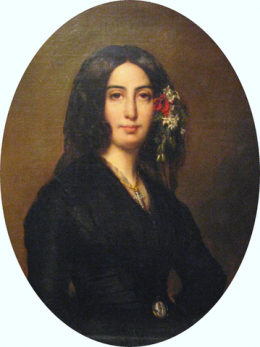
George Sand (Amantine Lucile Aurore Dupin) was a woman who was so far ahead of her time that we still haven’t caught up with her. In ‘Mauprat’, Sand gives the reader something new and different, a woman hero, not a heroine but a woman hero.
At the center of ‘Mauprat’ is the love story of Bernard and Edmee. Bernard’s life before meeting Edmee was one of banditry and drunkenness. He falls madly in love with Edmee on first meeting her, but the young lady Edmee does not allow herself to become the victim of a tyrannical and dissolute husband. Here is Bernard, still unable to control his passion:
“But I was unable to obey her. My head was turned; I locked my arms around Edmee’s waist, and it was in vain that I tried to loosen them; my lips touched her neck in spite of myself ; she turned pale with rage.”
She will not marry Bernard until he meets her requirements for being civilized. She sets the rules. Edmee transforms her brutal second cousin Bernard from an ignorant coupe-jarret (cutthroat) to a humane and tender human being. Edmee teaches Bernard to subdue his passions, to honor his fellow man, and to respect her personal freedom. In ‘Mauprat’, love leads to social justice.
As the critic Mikhail Mikhailov wrote of Edmee, she was a woman who was “sufficiently educated and idealistic to infuse life with her convictions, ideas, and actions”. Another Russian critic Vissarion Belinsky in the 1840s praised ‘Mauprat’ for “its profound and poetic idea, that of a strong, intelligent, beautiful woman raising a man above his bestial passions”.
George Sand wrote romantic novels that were full of passionate personal revolt and heartfelt feminism, attitudes that went against societal conventions and outraged her early British and American critics.
Here is George Sand in real life writing to a man she may have been having a romance with:
“Immodest creature, you do not want a woman who will accept your faults, you want the one who pretends you are faultless – one who will caress the hand that strikes her and kiss the lips that lie to her.”
This was written in 1837, the same year ‘Mauprat’ was published, and it certainly reflects the spirit of that novel.

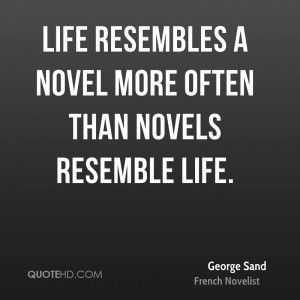
I could go on and discuss other aspects of ‘Mauprat’ such as it was one of the first novels that was written in serial installments for a magazine, but I think I will leave it with one final quote from George Sand:
“The world will know and understand me someday. But if that day does not arrive, it does not greatly matter. I shall have opened the way for other women.”
Grade: A

 Tony's Book World
Recent Comments