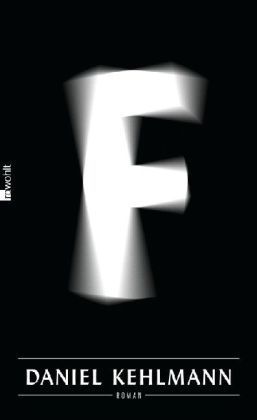
‘The Director’ by Daniel Kehlmann (2023) – 331 pages Translated from the German by Ross Benjamin
 ‘The Director’ is a novel about making movies under the worst possible circumstances, in Nazi Germany during World War II. It centers on G. W. Pabst who had already achieved world fame for the movies he directed in the 1920s and early 1930s. He was the director who discovered Greta Garbo and Louise Brooks.
Pabst and his family had already fled Germany for the United States in 1933. He hoped to continue his career. When G. W. Pabst arrives in Hollywood, he is praised profusely by nearly everyone. Then he is handed a script, “A Modern Hero” and was told this would be his first American movie. Pabst reads the script and tells them the script isn’t very good. They tell him “Yes, it is”. He films the movie, and it bombs.
In 1939 Pabst and his family go back to Austria, then called Ostmark, for what is supposed to be a short stay to visit his ailing mother. However while they are visiting, Germany invades Poland, starting World War II. The Pabst’s cannot leave.
The caretaker in the house where the Pabst family and his mother live during this time is a full-fledged Nazi who has total disdain for Pabst and his family even though Pabst is not a Jew. The caretaker insults and spies on the Pabst family and reports their activities to Berlin. Hitler’s cruelty gave all of his followers permission to be as cruel as they want to be.
“Politeness was interpreted as weakness; he had been back in Germany long enough now to know that.”
In his various vignettes, Daniel Kehlmann covers many aspects of this creative family’s forced return to an cruel authoritarian dictatorship that they both absolutely detest. Separate chapters are written from the father’s, the mother’s, and the son’s point of view.
At one point Pabst is assigned to be an assistant to the woman director Leni Riefenstahl, famous for her Nazi propaganda movies. Riefenstahl got her start as an actress in Pabst’s movies, but now the Nazis have given her complete control over him. Riefenstahl is also an actress in this movie. He is supposed to give Riefenstahl advice on saying her lines. He tries, but she is quick to take offense.
“Let it go, he thought, remember she can put you in a camp.”
The extras used in this picture are concentration camp inmates.
The author Daniel Kehlmann gives us several different vantage points from which to watch this family who are stuck in Germany during World War II. First there is the famous director himself G. W. Pabst who hates what the Germans are doing but paradoxically finds that he has more freedom to make the movies he wants in Germany than he had in the United States. Then there is his wife Ilse who has difficulties handling the fact that they are constantly being watched by the German authorities and other informers. Then there is the son Jacob who wants to fit in with the other boys his age and wears his Hitler Youth uniform to fit in as do all the boys.
In one chapter we have a sort of prisoner of war (according to the New York Times, English novelist P. G. Wodehouse) watching the grand opening of one of the movies Pabst directed in Germany during the war, ‘Paracelsus’.
‘The Director’ is another engaging novel by Daniel Kehlmann especially for those interested in the making of movies.
At one point someone questions how Pabst could make movies under these Nazi circumstances.
“But don’t you find it strange, Pabst, that we’re making a movie like this in the middle of the apocalypse? Such a…work of art?”
“You say that as if it’s a bad thing.”
“More like a strange thing.”
“Times are always strange. Art is always out of place. Always unnecessary when it’s made. And later, when you look back, it’s the only thing that mattered.”
Grade: A










 Tony's Book World
Recent Comments