Posts Tagged ‘Carys Davies’

Carys Davies


Carys Davies has just won the Ondaatje Prize for her novel ‘Clear’ for writing that “best evokes the spirit of a place”.

I am a huge fan of Carys Davies’ fiction.

Here are three links to my reviews of her work.

‘Clear’ – A novel of Scotland


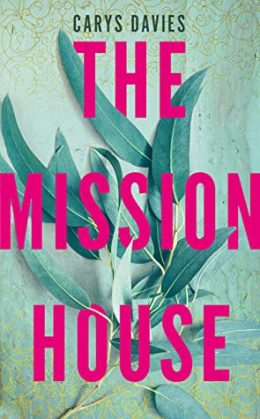
‘The Mission House’ – Traveling to India


‘West’ – Hunting for dinosaur bones out west in the United States


Happy Reading!


‘Clear’ by Carys Davies – Minimalism is Alive and Well

                                                                                                                                                                                `

‘Clear’ by Carys Davies       (2024) – 185 pages

                                                                                                                                                                               `
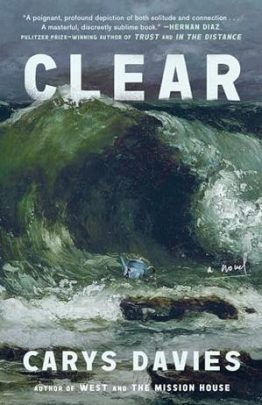
The Welsh / Scottish writer Carys Davies has written another fine novel which, like her others, is far off the well-worn path of today’s literature.

In ‘Clear’, which takes place in 1843, Scottish Reverend John Ferguson has resigned his position from the high Presbyterian Church of Scotland to cast his lot with the Free Church, a group of ministers who are protesting some of the Church’s policies. John no longer gets his living expenses paid for by the Church of Scotland, so now John and his wife Mary are poor.

John has heard of a way to make some much needed additional money. There has been a mandate from the Scottish Clearances so that “whole communities of the rural poor were forcibly removed from their homes” so that the landowners could make room for sheep which returned a much better profit than the poor farmers did. Reluctantly, needing money, John Ferguson heads to an island in the North Sea above Scotland to evict a peasant named Ivar from his property.

John arrives on the island, and, exploring on his first morning there, falls off a cliff. Ivar finds John lying senseless on the shore. Ivar takes the injured John to his cottage and nurses him back to health. Ivar has lived on this remote island for a long time and he speaks his own dialect, Norn, which John can barely understand. John sets about learning the meanings of the various words in this ancient language. The friendship that develops between these two men is handled with realism and grace.

Meanwhile John’s wife Mary is waiting for him to return.

Mary couldn’t help saying she wished there was work John could be getting on with for the estate that didn’t involve him going on an eight-hundred-mile round trip and being away for a whole month.”

This is not your typical modern novel plot. It’s a quiet, although at times harrowing and at times joyful, life-affirming story of three people trying to make a go of it in this world. Exposition and explanation are kept to a minimum, as we are drawn into the plights of these three characters, John and Mary and Ivar.

Somehow we small individuals must keep standing despite the overwhelming, often cruel, forces of society. Carys Davies has captured this dynamic. as well as the people and the land and the sea, in ‘Clear’.


Grade:    A


‘The Mission House’ by Carys Davies – An English Gentleman in India Today


The Mission House’ by Carys Davies (2021) – 258 pages


What does one read after the exceptional ‘The Promise’?

‘The Mission House’ is nothing like ‘The Promise’. That is why it is the perfect follow-up read after ‘The Promise’. After I finished reading ‘The Promise’, I started and gave up on a couple of novels. That is what usually happens after I read an extraordinary novel; the next can never measure up. ‘The Mission House’ has the distinct advantage that it is nothing like ‘The Promise’. Where ‘The Promise’ is loud and angry, ‘The Mission House’ is reticent and quiet and almost gentle. The strengths of ‘The Mission House’ are almost the complete opposite of ‘The Promise’.

Vive la différence.

‘The Mission House’ is not at all sensational; it is life-affirming. It is about redemption at the individual person-to-person level. It is at the one-to-one level that saving souls occurs. Davies’ fiction is not about religion; it is much deeper than that.

Although Carys Davies is a writer born in Wales and now living in Edinburgh, her previous excellent novel ‘West’ takes place in the United States. ‘The Mission House’ takes place in a town in the hilly thus cooler region of India.

An Auto Rickshaw

‘The Mission House is a quiet little novel about a man traveling to India seeking redemption. We gradually, gracefully find out about our main protagonist, Hilary Byrd. After leaving England, first he escaped the hot, damp, crowded southern part of India and found this high grassy plateau town. Since he doesn’t drive, his main means of travel is the auto rickshaw which are in general use throughout India. Later we find out that Hilary has lost his longtime job as a librarian in England and is at loose ends seeking something from life he has not yet found. With his shy reserve, Hilary gives off an aura of being unmoored and lost. Despite his restraint, somehow he establishes a small network of friends in this Indian town. His letters back to his sister in England reflect his new-found good spirits.

It was the combination of the strange and the familiar that suited him.”

I really liked the style of ‘The Mission House’ with its short chapters and its understated pleasures. Like I said before, it’s the near opposite of ‘The Promise’, but each of these two are excellent in their own ways.


Grade:    A


‘West’ by Carys Davies – Meanwhile Back on the Farm


‘West’ by Carys Davies (2018) – 149 pages

‘West’ is a bright little novel which is packed full of events and quite a lot of subtle humor. Author Carys Davies is from Scotland, but she has chosen to tell a story that takes place in the United States in 1815.

Pennsylvania settler and farmer John Cyrus Bellman has read articles about the giant animal bones that have been found in Kentucky. We now know that these were prehistoric dinosaur bones, but Bellman thinks that these giant creatures must still be roaming the prairies and mountains out west. He decides to leave his motherless ten year-old daughter Bess in the care of his sister Julie and head out west searching for the giant animals. He will follow the same Missouri River route which the explorers Lewis and Clark used.

At a trading post. he equips himself with trinkets to trade with the Indians he will encounter and with a stovepipe hat. Then early on in the trip, he picks up the teenaged Shawnee scout funnily named Looks Like a Woman From Afar to help him. From the scout, we get the Indians’ point of view of being cheated with trinkets and driven out of their own land by ruthless and dishonest white people.

Everyone thinks Bellman is a ridiculous fool for going on his quest, but they don’t tell him that. Bellman writes several letters to his daughter Bess, but they all get lost or waylaid somehow before reaching her.

Meanwhile back on the farm, a neighbor man named Elmer volunteers to help Aunt Julie and Bess to run the farm.

The stories of Bellman on his western adventure and of his small daughter Bess left on the farm are told side by side in separate short chapters.

What impressed me most about ‘West’ is Carys Davies’ economy of style. Davies gets more mileage out of her direct and straightforward sentences than any writer I know. Every word, every sentence has its purpose and drives the story forward. The novel is an adventure story, a domestic drama, and a wickedly ironic tale all rolled into one. ‘West’ is Davies’ first novel, and it definitely is an auspicious debut. I hope it starts a new trend of substantial 150-page novels.

The ending of ‘West’ is quite far-fetched, but Davies’ method of juxtaposing the two stories and finally bringing them together makes it seem almost credible.


Grade:   A