
Another year. Here are my favorite fiction reads of 2023, and as always, fiction is all that really counts.
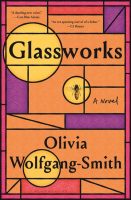 ‘Glassworks’ by Olivia Wolfgang-Smith – ‘Glassworks’ is an intriguing and endlessly fascinating quirky family saga with one family member of each of four generations involved with working with glass in one form or another. The situations that Olivia Wolfgang-Smith creates for her characters are like no other I have encountered in fiction. They are unique and wildly inventive.
 ‘The Bee Sting’ by Paul Murray – Clocking in at 643 pages, ‘The Bee Sting’ was the longest novel I read this year and the most immersive. This long story of the Irish Barnes family held my interest throughout.
“We’re all different, but we all think everybody else is the same, he said. If they taught us that in school, I feel the world would be a much happier place.”
 ‘North Woods’ by Daniel Mason – ‘North Woods’ is the captivating story of a plot of land in western Massachusetts and the people who lived there through the years from colonial times until the near present when it is now advertised as Catamount Acres. What makes ‘North Woods’ a special delight is that the author Daniel Mason’s playful enthusiasm for his material shines through. It is written with a certain esprit with warmth and intensity.
 ‘My Phantoms’ by Gwendoline Riley – Having read two books by Riley this year that were excellent, Gwendoline Riley was my Writer Discovery of the year.
‘My Phantoms’ is a daughter’s portrait of her mother, a mother she cannot love or even like very much. I found this unsentimental approach to family life entirely refreshing. The author Gwendoline Riley has a gift for getting at the root of her characters’ personalities and for noting the subtle differences between people that might cause them not to get along with each other. Mother love is not an automatic thing.
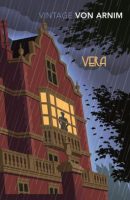 ‘Vera’ by Elizabeth von Arnim – ‘Vera’ was inspired by the author’s disastrous second marriage. Here are some words that describe the husband Everard: ruthless, domineering, merciless, cruel, without pity or compassion, malevolent, unrelenting, vindictive, demanding, trying. There is also “his extraordinary capacity for being offended”. This is a dark comedy.
 ‘Time Shelter’ by Georgi Gospdinov – ‘Time Shelter’ won the 2023 International Booker Prize. In the novel, each country in Europe must vote to decide what years of their past they want to return to, which years from the past really glowed for the people in that country.
“If Scandinavia couldn’t decide which of its happy periods to choose, Romania was also racked by doubt, but for opposite reasons.”
Time Shelter’ is a thought provoking novel that is quite playful and humorous at the same time.
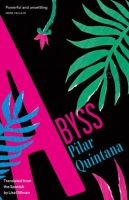 ‘Abyss’ by Pilar Quintana – The story in ‘Abyss’ is told by an 8 year-old girl which makes it easy to follow. Children as young as eight can sense the undercurrents that are roiling beneath the surface in their family. They have a front row seat for observing marital discord. What Elena Ferrante did for family and community life in Florence, Italy, Quintana does for family and community life in Cali, Colombia.
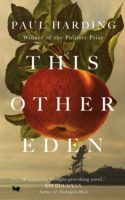 ‘This Other Eden’ by Paul Harding – This novel is based on a real incident in United States history. Malaga Island was home to a mixed-race fishing community from the mid-1800s to 1912, when the state of Maine evicted 47 residents from their homes and exhumed and relocated their buried dead. Why is the government so anxious to evict them from their island? Many of the islanders have dark features, so white racism enters into it.
 ‘The Queen of Dirt Island’ by Donal Ryan – There are four main characters in ‘The Queen of Dirt Island’, all of them female and each of them from a different generation.
“You only get one life, and no woman should spend any part of it being friends with men. That’s not what men are for.”
The short two-page chapters in this novel made for a quick comfortable read.
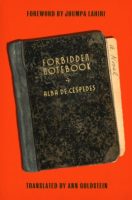 ‘Forbidden Notebook’ by Alba de Cepedes – In ‘Forbidden Notebook’, Valeria Cassati must make entries in her notebook surreptitiously. The other family members must not find out about it, which is not so easy to do with a husband and two college age children. She does not have a room of her own in their small house. Did keeping this forbidden notebook which was hidden from her family cause Valeria to seek out a life of her own, including this forbidden romance with her boss Guido?
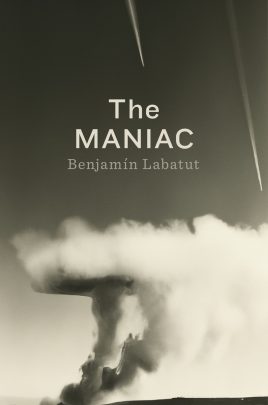
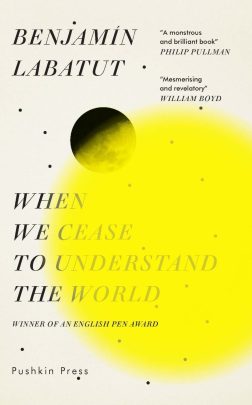
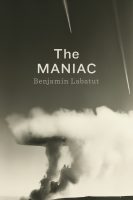 ‘The MANIAC’ by Benjamin Labatut – Here is a fictionalized biography of the real mathematician and scientist John Von Neumann. Von Neumann was one of those eccentric genius types who had difficulty tying his shoes, but came up with the stored-program concept for computers which allows them to do quite a few things these days.
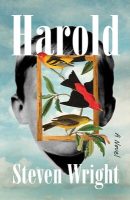 ‘Harold’ by Stephen Wright – Harold, the seven year-old boy, is in the third grade. Mrs. Yuka is his teacher. Harold’s mind wanders, a lot.
“He was in and out of paying attention like someone who was away and occasionally came by to pick up their mail.”
Of course this does present a problem for Mrs. Yuka.
The author Stephen Wright is a quite famous comedian, and ‘Harold’ is filled with the same kind of offbeat humor as Wright’s routines. Like Steven Wright, Harold looks at things from a different angle.
That’s all, folks.






 Tony's Book World
Recent Comments