‘The Juniper Tree’ by Barbara Comyns (1985) – 177 pages
‘The Juniper Tree’ is based on a gruesome fairy tale of the same name by the Brothers Grimm. Here is a short cartoon video of the Brothers Grimm ‘The Juniper Tree’ fairy tale. Lines from the fairy tale serve as the foreword to the novel.
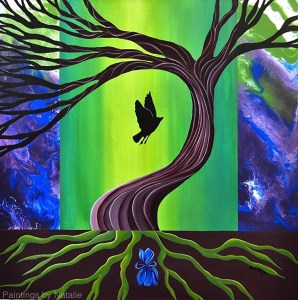
My mother she killed me
My father, he ate me
My sister little Marlinchen
Gathered together my bones
Tied them in a silken handkerchief,
Laid them beneath the juniper tree,
Kywitt, kywitt, what a beautiful bird I am.
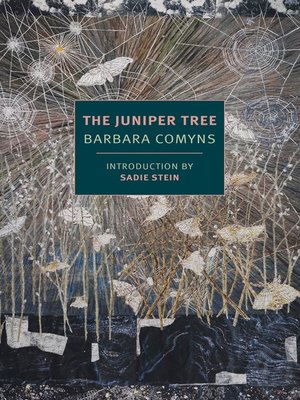
Don’t worry, although in some ways the Barbara Comyns version is faithful to the fairy tale, her novel is not at all gruesome. Instead it is subtly disquieting, plausible, and sometimes unsettling. The stepmother Bella Winter in her novel is a quite likeable English woman whose greatest pleasure is dealing in antiques. Bella has a facial scar caused by a car accident her former boyfriend had. Bella also has her own little mixed race daughter Marline resulting from a one-night stand after she broke up with her boyfriend. Through her work for an antique store she meets and befriends the upper class couple Gertrude and Bernard Forbes who live on an estate which has the juniper tree.
 That is the opening framework of the novel, and I won’t give away any further plot information so I don’t spoil it for you. I found this odd novel an enjoyable read as I have also found two other novels by Barbara Comyns. In all three novels her heroines keep up a good front and carry on despite troubling circumstances. It is our audacious heroine Bella who makes ‘The Juniper Tree’ a captivating read. Bella’s positive insight into her situation drives the novel.
One thing that seems a constant in her novels is that the men never come off as acting that well in them. They tend to be insufferable in one way or another. That is certainly true of the two main men in ‘The Juniper Tree’.
Comyns’ ‘The Juniper Tree’ was published in 1985 after an eighteen year hiatus in her writing career. Perhaps it was that Virago began to republish her earlier novels that caused this resurgence. She went on to publish two more novels before she died in 1992.
This novel is a strange mixture of fairy tale starkness and modern social realism, but Comyns pulls it off with élan. In all of her work the freshness of her approach and her simplicity in tackling bizarre or horrific events is impressive.
Grade: A
 Tony's Book World
Recent Comments