In 2013 I posted ‘Gone but not Forgotten’ in which I highlighted authors who made a strong vivid impression on me and who had recently died. Now, ten years later, it is time again to remember those who have left us recently. This is a personal list of authors who may or may not have been all that famous but who had at least one work that I found impressive.
 Günter Grass (1927 – 2015) The German writer Günter Grass wrote the Danzig Trilogy (‘The Tin Drum’, ‘Cat and Mouse’, and ‘Dog Years’) which I have read in its entirety and consider one of the great works of fiction. I would recommend anyone who loves literature read at least the first volume, ‘The Tin Drum’. Of Grass’s later work, I enjoyed ‘Crabwalk’ about the sinking of the Wilhelm Gustloff ship.
 Ruth Rendell (1930 – 2015) Whenever I wanted to take a break from heavy duty literature, Ruth Rendell / Barbara Vine was my “go to” author. She published under two names. Her murder mysteries never failed to intrigue me.
 Russell Banks (1940 – 2023) I see Russell Banks as one of the finest US realist writers, in the tradition of John Steinbeck. Banks usually wrote about working class people. Two novels of Banks that I can strongly recommend are ‘Continental Drift’ and Affliction’. There is also ‘The Sweet Hereafter’ about the aftermath of a bus crash which is probably the saddest novel I have ever read or should I say most poignant.
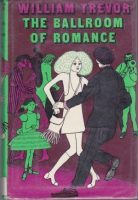 William Trevor (1928 – 2016) The Irish writer William Trevor, along with Elizabeth Taylor, were my go-to writers for a long time. If I couldn’t think of anything else to read, I would read another novel or collection of stories from either of them. Both were highly reliable for both stories and novels. For Trevor, I preferred his younger works which were always high-spirited and lively.
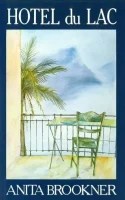 Anita Brookner (1928-2016) Anita Brookner was what I would call a writer’s writer. She never wrote less than exquisite sentences. She published her first novel at age 53, but after that she published about one novel a year which I always looked forward to. She never married and commented in one interview that she had received several proposals of marriage, but rejected all of them, concluding that men were “people with their own agenda, who think you might be fitted in if they lop off certain parts. You can see them coming a mile off.” She once joked that she should be in The Guinness Book of Records as the world’s loneliest woman – a “poor unfortunate creature who writes about poor unfortunate creatures”.
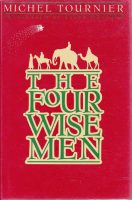 Michel Tournier (1924 – 2016) The French writer Michel Tournier was a fabulist who re-interpreted myths and legends. It was always a great pleasure for me to read his books. There is ‘Friday’ which was based on Defoe’s Robinson Crusoe. Others that I particularly liked are ‘The Ogre’, ‘Gemini’, ‘The Four Wisemen’, and ‘The Golden Droplet’.
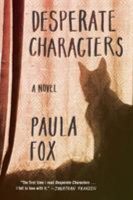 Paula Fox (1923 – 2017) The US writer Paula Fox wrote a lot of children’s fiction and not so much adult fiction, but her adult fiction will last. Two novels of Fox that I highly recommend are ‘Desperate Characters’ and ‘The Widow’s Children’. It is her lack of sentimentality that lends her writing its force.
That’s all for now. I’m sure there are a few that I’ve missed.


 Tony's Book World
Recent Comments