 Here we go again. Another year is almost over, and here again is a list of my favorite books which I read this year. This year definitely has the most fiction by woman writers of any of my end-of-year lists. This appears to be a trend. Of the 53 Notable Books in the Fiction and Poetry category for 2022 in the New York Times recently, 38 books were written by women and 15 books were written by men.
Click on either the bold-faced title or the book cover image to see my original review for each work.
 ‘Trust’ br Hernan Diaz (2022) – Of all the fiction I read in 2022, ‘Trust’ is my favorite, no question. A rich person can buy the past he or she wants even if it is counter to the facts, if we let them. One of the features which make ‘Trust’ an outstanding novel is the smooth and effective way that Hernan Diaz handles four different sources so that we readers wind up with a full picture.
 ‘The Art of Losing’ by Alice Zeniter (2017) – Here is a multi-generational saga covering about sixty years of this Algerian, now French, family. In the last section, the granddaughter returns to Algeria. This is history made poignant and vivid.
 ‘Marigold and Rose’ By Louise Gluck (2022) – This very quick novella made me want to go further into the poetry of Nobel Prize winning Louise Gluck. That is one of my goals for the upcoming year.
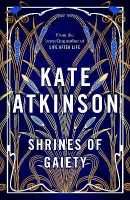 ‘Shrines of Gaiety’ by Kate Atkinson (2022) – Nightclub life in London in the 1920s is going strong. World War I is over, time to celebrate and enjoy living. ‘Shrines of Gaiety’ is a superior entertainment.
 ‘O Caledonia’ by Elspeth Barker (1991) – This deliberately humorous Gothic is a parody of the English family novel, a large family in which one girl child, Janet, just does not fit in.
 ‘Foster’ by Claire Keegan (2010) – A father drives his young daughter to the farm of her aunt and uncle whom she hardly knows. They packed a suitcase for her, so she knows she will be staying but does not know for how long. Like Anton Chekhov, Claire Keegan understands that what your characters don’t say is sometimes more important than what they do say and what the author doesn’t write is sometimes more important than what the author does write.
 ‘When We Cease to Understand the World’ by Benjamin Labatut (2020) – The stories of these strange brilliant scientists and mathematicians are intriguing. Fritz Haber, Karl Schwarzschild, Alexander Grothendieck, Werner Karl Heisenberg, Erwin Schrödinger, Albert Einstein. These are the individuals who have created our modern world.Although all of the persons in this book are real people, and their circumstances have been well-documented, there are fictional flourishes in describing some of the incidents in the lives of these physics and chemistry geniuses that go beyond what the author could possibly know and thus this is a fiction based on real events.
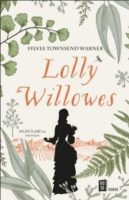 ‘Lolly Willowes’ by Sylvia Townsend Warner (1926) – Here is a serious comedy about a single woman who finds a very unusual, definitely bizarre, and highly effective way to achieve her goal. And what is Laura’s goal? To keep her other family members and anyone else from interfering in her single life.
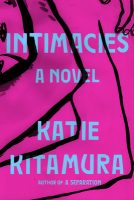 ‘Intimacies’ by Katie Kitamura (2021) – Often the best style is one that does not call attention to itself and proceeds ahead in a reliable straightforward manner. This lucid style as well as the interesting story sold me on ‘Intimacies’.
 ‘Paradais’ by Fernanda Melchor (2021) – At first, this story of the two teen boys Fatboy and Polo seems quite comical, but it takes a dark, dark turn. Both Fatboy and Polo are sixteen years old. Having been a young guy myself at one time, I know that the author has nailed it, how a young guy’s mind works or doesn’t work. The two misfit teenagers Polo and Fatboy are as memorable a team as George and Lenny from ‘Of Mice and Men’.
 ‘The Shades’ by Evgenia Citkowitz (2018) – Here is a modern English Gothic fiction with cell phones. The individual sentences are clear, meaningful and well-written, and they held my interest throughout.
 ‘Black Cloud Rising’ by David Wright Falade (2022) – This is a rousing lively novel dealing with a little-mentioned aspect of the Civil War, a troop of black soldiers marching in the South of the United States during the Civil War freeing the slaves on the farms and plantations there. This is a dramatic stirring historical novel.
And one more…
 ‘The Maid’ by Nita Prose (2022) – And one final luxury hotel murder mystery told from the point of view of Molly, one of the maids at the hotel. It is the first novel by Nita Prose. This is not heavy-duty or demanding like some of my reading. I enjoyed this lighter fare and the engaging personality of Molly the Maid for a change.
Happy Reading!

 Tony's Book World
Recent Comments