‘The Property’ by Rutu Modan (2013) – 222 pages – Translated by Jessica Cohen

.
Here is another graphic novel meant for adults, not children. The cover depicts an old Warsaw cemetery where the aged monuments are festooned with candles. Mrs. Regina Segal is returning to Warsaw, the place of her birth, from Israel where she has lived for more than 70 years. The rest of her whole family was murdered in the Holocaust, and Mrs. Segal is going to Warsaw to take back her family’s property. She is accompanied by her granddaughter Mica.
Despite its subject, this is a warm and humorous story. The drawings in this graphic novel are subdued, meant for adults, and not the wild and crazy stuff put in comics for young people. The realistic tale is also for adults with no superheroes or ultra-violence. It is a pleasant good-humored story about a grandmother and her granddaughter on their visit to Warsaw. I liked it a lot. Graphic novels should not only be for young people; the artwork can add another dimension to adults’ enjoyment of fiction as well.
Among the pleasures of this book are the characters they meet on their trip. There is the annoying family friend Avram Yagodnik, the helpful young man Tomasz from Warsaw, and the old man from the old neighborhood Mr. Gorski. The tone of ‘The Property’ is amiable and romantic. For the grandmother this is a trip back to her past, but for the granddaughter it is a new adventure.
The setting is Warsaw, Poland, a city still recovering, still dealing with events that occurred seventy years ago.
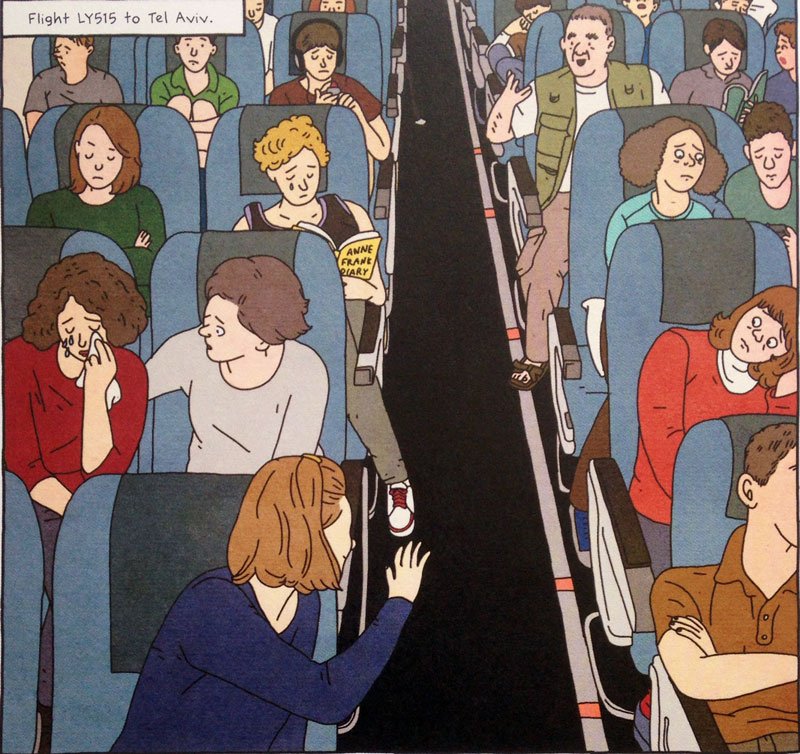 ‘The Property’ contains one attribute that is missing from most comic books, subtlety. In how many comic books is the main character a grandmother?
Being no artist myself, I hope this trend of graphic novels for adults continues. I’ve read several in the past few years including ‘Tamara Drewe’, ‘Dotter of Her Father’s Eyes’, ‘Gemma Bovary’, ‘Journalism’, ‘Blankets’, and ‘Poem Strip’ as well as ‘The Property’. Each one of these graphic novels has been an original delight for me.


















 Tony's Book World
Recent Comments