‘The Hypocrite’ by Jo Hamya – A Father Watches his Daughter’s Stage Play


‘The Hypocrite’ by Jo Hamya     (2024)  –  230 pages


In ‘The Hypocrite’, an unnamed successful novelist is in a theater to watch his daughter Sofia’s stage play. He is surprised to find out that the play is about him. The play takes place in a vacation house in Sicily where Sofia stayed with her father for a month ten years earlier when Sofia was then only 17 and had just graduated from high school. The father had been divorced from her mother for a long time.

While his daughter was in Sicily, he had dictated the novel he was writing to her, and she had to write it all down. When they weren’t working on his novel, he persuaded her to spend time with this questionable young guy Anto who was always pushing her head down. Meanwhile the father is going out every night, picking up women, and bringing them back to the house after the daughter had supposedly gone to sleep.

The play is a broad sex comedy with the father bringing several women back to the Sicilian house to have sex with them. The audience is all laughing at this guy’s antics. The father admits that the play is well written but he is offended, because the play is obviously ridiculing him.

He wonders what he’s done to have become so abysmally misunderstood by the most important person in his life. He does not know how to fix it.”

While the father is watching the play, Sofia and her mother are in a restaurant near the theater.

Later the father confronts his daughter about her play, and she answers:

You had me write that shitty book, and then instead of talking to me about it, or spending time with me, you made me listen to you having sex with different women every night – did it ever occur to you to at least try acting like a parent?”

Later Sofia discusses her play with her therapist whose reaction is:

And in this case, Marlene says carefully, you’ve constructed an arrangement where an audience can laugh with you about your father.”

I thought this scenario, a father watching his daughter’s play, finding out it is about him, and is greatly offended was a great idea for a novel. However I found the execution of it somewhat lacking in precision and sharpness. For one thing, an excellent opportunity was missed with the play he is watching. A few lines from the play are quoted, but none of these lines are connected to a scene in the play or might have offended the father. Instead we find out little about the play beyond that it is a broad physical sex comedy. Instead there could have been many witty lines in the play which the father might have found offensive and might have reacted to, but we readers hear none of them out loud. This was a missed opportunity.


Grade :   B


‘Negative Space’ by Gillian Linden – A Time of Anxiety


Negative Space’ by Gillian Linden    (2024) – 160 pages


Suddenly there seem to be quite a few novels that deal with the Time of Covid.

In ‘Negative Space’, the schools have just re-opened after the covid lock down. Everyone is required to still wear a mask, and some parents have decided not to send their children to school yet. These at-home children are supposed to attend their classes and participate using Zoom technology. There are inevitable connection problems, and the problem might be at the school or at the student’s home. Either way it turns the class into something chaotic.

Our unnamed main protagonist in ‘Negative Space’ is a part-time teacher at this expensive private school. She is also the mother of two small children herself. She has one class of sixth graders and one class of ninth graders.

One day she interrupts a meeting between one of her female ninth-grade students and a male teacher who happens to be our teacher’s advisor. They seem to be inappropriately close together, and she notices their heads touching. Was it a nudge or a nuzzle?

She reports this incident to the woman school administrator like she is supposed to do, but the administrator really doesn’t want to hear about it. Our teacher wonders if her contract for the following year will be renewed.

Along with the scenes in the novel that take place at her school, the reader also gets scattered scenes of this part-time teacher dealing with her children at home. The father seems to be away at his job most of the time, so she usually has to contend with her children by herself. Her daughter is anxious abut her baby teeth which are now coming out. The son often bruises himself falling down stairs, and his mother worries that the bruises might make it appear that someone was hurting her son.

The author Gillian Linden skillfully portrays the generalized anxiety of this teacher and mother and her family during the Time of Covid. However it did not make stimulating reading for me. The minimalist style of writing (no adjectives, short sentences) here makes the scenes seem almost colorless, and it was difficult for me to read more than a few pages at a time. Generally I like the minimalist style, but maybe not for this austere covid time. The covid time was a difficult time for most of us and unfortunately it is not much fun to read about it.


Grade :    B-


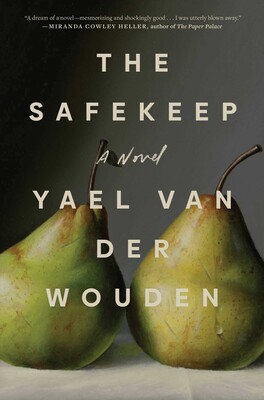
‘The Safekeep’ by Yael Van der Wouden – The Loosening of Isabel


‘The Safekeep’ by Yael Van der Wouden     (2024) – 258 pages


This outstanding novel ‘The Safekeep’ is the compelling story of a lonely Netherlands woman. It takes place in 1961.

Isabel didn’t mind it, the move to the east. She hadn’t any friends in the city, and hadn’t any friends in the country, either.”

Notice that although the woman author is from the Netherlands and has an obviously Dutch name, there is no translator. This novel was written in English.

In some novels, all of the characters are so nice, so thoughtful, that I can’t empathize or identify with them at all. Fortunately ‘The Safekeep’ does not have that problem at all. Not one of the characters here is too nice, least of all Isabel. They can all often be quite mean or nasty. The novel gets high marks for realism.

Nearly 30 years old, Isabel lives alone in her family home. Often she is rude to the point of cruelty. Isabel was “lonely and bitter and took after her mother too much”. About the only people she associates with are her two brothers, the ladies man Louis and Hendrik who lives with his boyfriend. Isabel does have a young maid who comes in nearly every day whom Isabel always suspects of stealing her mother’s heirlooms.

And then Louis asks if his current girlfriend Eva can stay with Isabel at the family home for a month or two while he is on a business trip. Isabel reluctantly agrees to this arrangement, because Louis could kick her out of the family house since it actually is his, him being the oldest child.

With the arrival of Eva, everything changes for Isabel.

Isabel had spent a lifetime alone. She had spent a whole life without this woman, without her in this house, and now an hour. And now her heart raced at the sound of tires on gravel, the sight of her: first a dot, then a person, then a known shape, coming closer.”

Some graphic love or sex scenes ensue.

‘The Safekeep’ is supremely intense. It kept my mind fully occupied while I was reading it. The story here has the most original plot of any novel I have read this year. I read it very quickly. I won’t give any hints as to the surprise turn the novel takes toward the end.

‘The Safekeep’ is a Must Read. This is one novel you will not forget.


Grade:   A


Quoting Richard Powers

Author Richard Powers has a new novel, ‘Playground’, coming out on September 24 which I am looking forward to reading. So this would be a good time to share with you some of the quotes from his previous works and interviews which I have found to be enlightening or entertaining.


Here goes:


“People, Robbie. They’re a questionable species.” – from ‘Bewilderment’


“What you make from a tree should be at least as miraculous as what you cut down.” – from ‘The Overstory’


“The search for truth is a lifelong journey, filled with twists and turns.”


“Only keep still, wait, and hear, and the world will open.”


“Maybe happiness is like a virus. Maybe it’s one of those bugs that sits for a long time, so we don’t even know that we are infected.” – from ‘Generosity: An Enhancement’


“Anyone who gets righteous…doesn’t understand.”
“Understand what?”
“How hopelessly fragile and wrong we all are. About everything.”

      • from ‘The Overstory’

“A moment of awe has the power to change the course of a lifetime.”


“Evil is the refusal to see one’s self in others.”


“Nobody’s perfect, but, man, we all fall short so beautifully.” – Richard Powers, ‘Bewilderment’


That’s all, Folks.


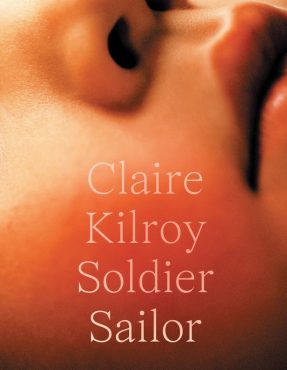
‘Soldier Sailor’ by Claire Kilroy – A Woman Talks to Her Four Year Old Son


‘Soldier Sailor’ by Claire Kilroy    (2023) – 232 pages


‘Soldier Sailor’ is not a novel about soldiers or sailors but about the many, many traumas and only rare glories of the birthing process and the later excruciating care and feeding of this helpless little creature, a new human being.

I had never even considered how fortunate I, as a male, was to never to have to go through this ordeal of having a baby.

Some people might think this is a book mainly for women, but guys can read it to find out what early human life is really like. In fact this is probably a novel for us novices, because women who have been through this know it all too well already.

This is a powerful harrowing intense personal account of what actual motherhood must be like.

The soldier is the mother, the sailor is her son. The mother is talking to her four year-old son.

Here’s my ennobling truth, Sailor: women risk death to give life to their babies. They endure excruciating pain, their inner parts torn, then they pick themselves up no matter what state they are in, no matter how much blood they’ve lost, and they tend to their infants.”

Being a male, I never really considered the grueling process that a woman goes through to bring aboard a new human, both before and after birth. The details of that process are all there in ‘Soldier Sailor’.

Her husband and the boy’s father, like most, is of little help. He stays at his office late, claiming he has important work to do. Her husband’s office job was his Get Out of Jail card, his all-purpose excuse not to help her with his son. He criticizes the mother and she answers:

Look, if the level of care I’m giving our son is unsatisfactory, feel free to step in. Feel free to do a whole ten minutes of parenting. Don’t let me stop you.”

Meanwhile the care and feeding of her son must go on.

I put the spoon on the plate and my head in my hands. I was so tired. I was so tired and you were so hungry. But you wouldn’t eat and I couldn’t sleep. Mother and child.”

The care and feeding of her toddler son is dragging her down.

All winter I had been sick. A cold, a cough, a virus, another virus. The mother of a toddler cannot take a sick day.”

Later she tells her four year old son:

You will cast off your maternal shackles, venture forth and fuck up, and that’s part of the game, the glorious game we are here on this blessed Earth to play,…”


Grade:    A


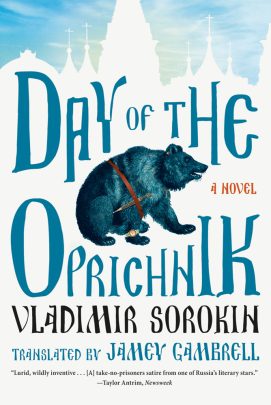
‘Day of the Oprichnik’ by Vladimir Sorokin – The Three R’s – Raucous, Ribald, and Reckless


‘Day of the Oprichnik’ by Vladimir Sorokin   (2006) – 191 pages   Translated from the Russian by Jamey Grambrell


The year is 2028. Modern Russia has now returned to leadership by an all-powerful Czar who is referred to only as “His Majesty”. The modern Russian leader is much like Russian leaders from the past like Genghis Khan and Ivan IV, also known as Ivan the Terrible.

How glorious it is to destroy Russia’s enemies, don’t you know,” he mutters, taking out a pack of unfiltered Rodina. “Genghis Khan used to say that the greatest pleasure on earth was to conquer your enemies, plunder their possessions, ride their horses, and love their wives. What a wise man he was!”

His Majesty has his own imperial police force called the Oprichnina, which was also the name of the black-clad secret police force of Ivan the Terrible. In an early chapter these Oprichniki are sent to punish a Russian noble who His Majesty has determined to be his enemy. After the nobleman is arrested and hanged, his wife is raped by four of the Oprichniki and his children are taken away. After the hanging of the nobleman and the rapes of his wife, the Oprichniki go to the cathedral to pray.

This is just another workday for His Majesty’s imperial police force.

Russia has built the Great Wall of Russia to keep everyone, except for the Chinese, out. China provides Russia with most of its material goods. All the Oprichniki drive Mercedovs, Mercedes Benz rip-offs made in China.

The Oprichniki profess to be the ultra-patriotic defenders of traditional Russian culture, but much of their work consists in burning the classics of Russian literature.

During the evening, in their leader Batya’s bath, all the Oprichniki engage in a group copulation among themselves.

Well there aren’t any unworthy among us – the Chinese have renewed our genitals, strengthened them, equipped them. We have the wherewithal to delight one another, as well as to punish Russia’s enemies.”

The outrageous ‘Day of the Oprichnik’ is a classic in its wicked humor.

In 2022 the author Vladimir Sorokin left Russia to live in exile in Berlin, probably a wise move. Sorokin has said that he had “underestimated the power of Putin’s madness”. His books are not currently banned in Russia, but they have been withdrawn by many booksellers.

Written in 2006, some readers would claim that ‘Day of the Oprichnik’ is quite prescient.


Grade:    A


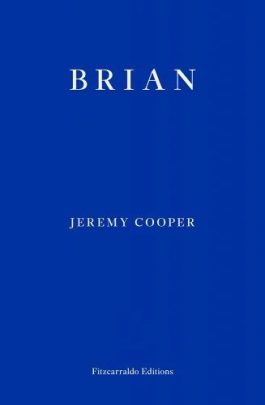
‘Brian’ by Jeremy Cooper – For the Love of Movies


‘Brian’ by Jeremy Cooper   (2023) – 180 pages


The novel ‘Brian’ is not for everyone. If you are not a quality movie aficionado, you are probably not going to enjoy this novel. I have a simple test to determine whether or not you will enjoy ‘Brian’. If you have watched and liked two or more Ingmar Bergman movies, you will probably like this novel ‘Brian’. Otherwise you might as well skip it. It is filled with movie arcana about quality movies, the kind of movies shown on the Criterion Channel. I subscribed to the Criterion Channel for several years, so ‘Brian’ was right up my arcane alley.

On a deeper level, ‘Brian’ is about saving your life by finding something outside yourself that you can get totally involved with.

Brian is a character who has somehow survived a traumatic childhood. He lives alone and keeps to himself. He works at his desk job every day, but there is something missing. One night he goes to a movie showing at the British Film Institute, and Brian’s life is totally changed. There is a group of mostly men there who are movie fanatics. They watch the movies of Werner Herzog, Mike Leigh, David Lynch, Quentin Tarantino, Ingmar Bergman, Clint Eastwood, etc. After watching the movie, they discuss it. Soon Brian is going there every night, sometimes even watching two movies.

The sense of security experienced on noting the titles and times of a whole month’s movie bookings in his diary was immeasurable. It had never occurred to Brian that he would one day find such contentment.”

Brian develops a specialty in watching Japanese movies, partly to avoid having to interact much with the other movie buffs.

Much of ‘Brian’ consists of the discussions about these movies that Brian watches, and if you are not that interested in these types of movies, you probably will be bored. However I wasn’t, as Brian’s insights are quite engaging.

We follow Brian and his movie-going for many years, up to his retirement and beyond.

Only occasionally we are given insights into Brian’s life and traumatic childhood.

Although Brian believed he was never going to have sex, with anyone, ever, he was prepared privately to admit that, if he did, it could as easily be with a man as a woman. It would never happen, the idea of being alone naked in a room with somebody else too appalling to contemplate, of any gender.

To be without his clothes with another person.

Inconceivable.”

Brian visits the grave of his mother who was “the least inadequate of his parents”. She was a Northern Ireland dissident who sheltered violent paramilitaries. Brian was born in prison and soon after was put in an orphanage. Neither Brian’s father or older brother visited him in the orphanage.

However the novel is centered on movie going. If you like discussions of quality movies, you probably will like ‘Brian’. Otherwise don’t bother.

Being a movie aficionado isn’t all that different from being a fiction aficionado.


Grade:    A


‘Held’ by Anne Michaels – Of Beauty, Love, Death, and Marie Curie


‘Held’ by Anne Michaels     (2023) – 220 pages


There are some breathtaking lines in the 2024 Booker long-listed novel ‘Held’ which create lovely images like the following:

Mara and Alan walked home through the winter streets. Past midnight, hardly any lights in the windows, the night sky deepened by the clarity of the cold. The snowfall began so gently it could only be seen under the streetlamps. Silent, lambent emanation.”

There are also scenes of deep feeling.

Tell me everything,” he said. “Where were you happiest? What was your favorite food when you were a child? What was the first book that made you cry? I want to hear everything, don’t leave out a thing.”

That will take forever,” she said.

I hope so,”

However the novel skips around erratically from place to place, from time to time, from situation to situation, and from person to person. This skipping around left this reader almost entirely confused, except for those beautiful images that are presented. Neither the times nor the places nor the characters are well-grounded in significant detail so that the occasional lovely or profound image that is presented seems to be unearned.

There are so many characters, and we skip around from time to time and from place to place so we never really get to know these people who are having such profound lovely thoughts. We can appreciate the beauty of what they are seeing or saying, but we cannot really empathize with these under-developed people.

Sometimes the prose gets too abstract, too diffuse, not tied to anything real or concrete.

Loneliness is not emptiness but negation, with all its agonizing precision, its absoluteness; exact, active; in every depth of detail, it is the inverse of love, the dark replica of love.”

What exactly does that mean?

There are many fleeting fictional characters in ‘Held’, and towards the end the real person Marie Curie makes an appearance. Madame Marie Curie, discoverer with her husband Pierre, of the radioactive element radium and the only winner of two Nobel Prizes in both the fields of Chemistry and Physics. Soon after she won her first Nobel Prize in 1911, it was revealed that Marie Curie was involved in a year-long affair with another male physicist not her husband, which was a major scandal at the time.

Do we really need our own misery to teach us to be kind?” asked Marie.

I think perhaps we might,” said Hertha.

That’s a dark thought,” said Marie. She hesitated. “I won’t believe it.”

For me, ‘Held’ was just too diffuse and abstract and not grounded sufficiently in everyday reality for me to give it a high grade. However I will end with another of the special lines from the novel.

He was fully awake now.

Sometimes I think I see her too,” Peter said, “out of the corner of my eye. If you can see a feeling.”

Yes, I think you can.”


Grade:    B-


‘Cold Victory’ by Karl Marlantes – Cold War in Finland After World War II


‘Cold Victory’ by Karl Marlantes     (2024) – 345 pages


Sometimes I want a big fiction, one that deals with a subject unfamiliar to me which I can totally immerse myself in. The novel ‘Cold Victory’ served that purpose well for me.

Arnie Koski from the United States and Mikhail Bobrov from the Soviet Union had both been officers in their respective armies during World War II. Their armies had been allies, defeating their common enemy Germany during the war. Arnie and Mikhail had become friends after a fashion. After the war, it was natural that Arnie, with his Finnish background, would become a diplomat to Finland. Mikhail became a Russian intelligence officer stationed in Finland. Arnie is accompanied by his wife Louise, and Mikhail is accompanied by his wife Natalya. Natalya and Louise become good friends despite their language differences, and much of ‘Cold Victory’ is told from the point of view of Louise. Natalya has two little children, and Louise is trying to start her own family and in the meantime is working at the local daycare center.

Arnie and Mikhail make a friendly bet, a ski race across the frozen terrain above the Arctic Circle in northern Finland, since they are both excellent cross country skiers.

The daycare where Louise works is short of funds. Louise has what she hopes is a wonderful idea for raising money for the daycare. Why not sponsor a raffle where people could guess who wins this ski race between their husbands and by how much?

Still, it was that damned impetuous go-get-’em attitude of hers. Of course, she’d come up with some scheme to bring in money for the cause.”

What could possibly go wrong?

This was about Mikhail. Of course the Kremlin would be reading about this race, who knows how high up. Stalin and Beria were not the kind of men who laughed at embarrassment. They were the kind of men who would kill you if you embarrassed them.”

Louise’s friend Natalya is grilled by an intimidating Soviet bureaucrat:

Do you really believe that “Louise Koski”, again the quotation marks, is as naive as she lets on?”

Yes, Louise Koski is that naive.

Now she knew a grim truth: naivete was not an excuse; it was a flaw. And it was a flaw that hurt people.”

Along the way, we learn much of the history of Finland before and during World War II. In the late 1930s, Finland and the Soviet Union fought each other in what is called the Winter War, and Finland had to cede some of its land to the Soviet Union. During World War II, Finland sided with Germany to get their land back. Then the Soviet Union, the victors, imposed harsh conditions on the Finns.

In ‘Cold Victory’, there is intense suspense for both the women and the men. At the beginning I was a little put off by the author’s careful workmanlike construction of this fairly complicated plot situation and its protagonists, but by the end of the novel I was won over. Karl Marlantes has crafted this story to achieve a larger story goal. And there is a breathtaking surprise at the very end. ‘Cold Victory’ is a poignant historical novel.


Grade :    A


‘The Cursed Friend’ by Beatrice Salvioni – Fascist Times in Northern Italy


‘The Cursed Friend’ by Beatrice Salvioni  (2023) – 218 pages         Translated from the Italian by Elena Pala


‘The Cursed Friend” is a novel about a young girl Francesca Strada coming of age in the city of Monza in northern Italy during Italian fascist times around 1935. At the age of 12, she develops this friendship with another girl her age, Maddalena Merlini, who is reviled by nearly everyone in town and is often referred to as the Cursed One. Instead of behaving like most of the girls in town do, Maddalena hangs out on the River Lambro with a couple of guys her age. She is caught stealing fruit from the corner grocery store. Maddalena also is not afraid to confront the ruling fascists in town. I suppose Francesca is attracted to her by the wayward freedom of her life.

If she hasn’t done anything wicked yet, she will soon enough.”

Francesca’s parents are mostly not political, but they do have to please the powerful local fascists in town in order for her father’s hat business to prosper. They are not at all happy when their daughter becomes friends with the Cursed One.

Mom. by contrast, would always doll up, caught in the solemn atmosphere around town. She’d teach me how to hold my fingers and elbow straight for the Fascist salute. “We are part of something bigger,” she explains and must look our best.”

We do get some of the local color of the town of Monza as it hosts a Grand Prix auto race in the novel.

For me, the novel ‘The Cursed Friend’ lacked depth and there was no room for ambiguity. It is too obvious in its plotting and there is no subtlety. The fascists are depicted as fascist pigs as you would expect. Everything that happens in the novel is just a little too predictable.

The author makes up for this lack of nuance by increasing the level of the violence and the outrages on the characters. I found this novel way over the top in its plotting.

Of course later, on April 28, 1945, the Italian fascist leader Benito Mussolini and his mistress were shot by his own people, and their bodies were hung upside down from the roof of an Esso service station.


Grade :   B-


‘Not a River’ by Selva Almada – Two Men and a Boy in an Argentine Fishing Boat


‘Not a River’ by Selva Almada   (2020) – 87 pages                Translated from the Spanish by Annie McDermott


Despite the shortness of this novella, ‘Not a River’ is not an easy read. I would call it an uneasy read dealing as it does with the carelessness of guys, both with the fish they catch and with the women they pursue and sometimes catch.

Three men are out on a boat fishing in northern Argentina. They are two fifty year old men, Enero and El Negro, and their dead friend’s son Tilo. While they are fishing they catch a giant ray which is a fish that sort of looks like a giant pancake. Before they haul it into the boat, one of the guys shoots it.

Christ, she’s ugly!

Says Enero slapping his thigh and laughing. The others laugh as well.

Fought us pretty hard.

Says El Negro.”

This “Says” is a poetic device that the author Selva Almada uses throughout ‘Not a River’. It is a device that emphasizes the person who is talking.

They hang the ray up on shore so the local townspeople can admire it, but the guys really don’t have any idea about what they can ultimately do with it. After a few days, the dead fish starts rotting and they throw it back in the water. This carelessness makes the locals very angry at them.

They chucked it in the river.

Says Aguirre.

Motherfuckers!

Says Cesar.

We need to teach them a lesson.

Says Aguirre.

What kind of a lesson.

Says Cesar.

Just as in Aguirre’s mind, “it wasn’t a ray” that Enero and El Negro killed, “it was that ray. A beautiful creature stretched out in the mud at the bottom, she’d have shone white like a bride in the lightless depths. … Pulled from the river to be thrown back in later. Dead.”

Unlike ”The Wind that Lays Waste’, another novella written by Selva Almada that I have read recently, ‘Not a River’ is not at all a straightforward story. It jumps around from these men and the boy fishing in a boat to a local woman Siomara and her two daughters, Mariela and Lucy. We get a view of the music and nightlife in the local town bars which the girls are excited to go to, but where the men, fueled with alcohol, don’t treat the girls any better than they treat their fish. This is a story about toxic masculinity. Although not as easy to follow as the other novella, ‘Not a River’ achieves an even greater depth.

Selva Almada gives the reader a good picture about what town life is like in this river region of northern Argentina.


Grade:    A


Some of my Favorite Fiction of the 21st Century


The New York Times currently has a feature where they asked famous people to list the fictions or poetry which they think are the best of the 21st century. I decided that I couldn’t resist and that this was something I’d want to try, but I wouldn’t go so far as saying “Best”, since there are so many books that I have missed. Who hasn’t missed reading some great novels? Instead here are some of my favorites of the 21st century so far.

Some of these novels I read before I started my site in 2009. If I do have a review on my site, you can reach it by clicking on the cover image or the title.


‘Gilead’ by Marilynne Robinson (2004) – Who would have expected a deeply religious novel to have such an impact in the 21st century? But here it is.


‘The Known World’ by Edward P. Jones (2003) – By focusing on a black slave owner, Edward P. Jones avoids turning this re-creation of the days of slavery into a morality play of good and evil. There is no one preaching in this novel. The matter-of-fact tone of this narrative only intensifies the reader’s reaction to the events in the story. I’m still waiting for Jones’ next, since he hasn’t published a fiction since 2006.


‘Fates and Furies’ by Lauren Groff (2015) – Here is a writer who manages to put Greek myth and Shakespeare into a modern marriage story. There is a manic energy and an inventiveness here that puts this novel above most.


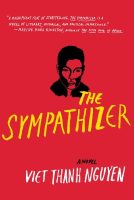
‘The Sympathizer’ by Viet Thanh Nguyen (2015) – Here is a poignant yet witty novel that observes the Vietnam War from the viewpoint of the Vietnamese, a perspective most of us people from the United States have not encountered before. ‘The Sympathizer’ is like a fine Graham Greene novel which is told from the perspective of a Vietnamese rather than that of a white colonialist.


‘The Long Take’ by Robin Robertson (2018) – This atmospheric and expressive poem of a novel that captures the crazed free spirit of Los Angeles just after World War II when the movie makers were filming the classic crime noir movies.


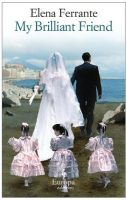
‘My Brilliant Friend’ by Elena Ferrante (2012) – Ferrante brings to life almost every member of the seven families who live in this tight little neighborhood in Naples, Italy in the 1950s.  The writing in this novel is colorful, moving, and a joy to read. After you read ‘My Brilliant Friend’, you will probably want to read all four of her Naples Quartet series.


‘The Amazing Adventures of Kavalier and Clay’ by Michael Chabon (2000) – An often humorous, always fascinating, novel, about the Golden Age of Comic Books.


‘The Old Romantic’ by Louise Dean (2010) – For those who like their comedy dark. This novel is a wicked joy with the meanest and sharpest dialogue around. I’ve been waiting 14 years for Dean to write another novel.


‘The Burning’ by Megha Majumdar (2020)– ‘A Burning’ is a vivid powerful novel which focuses on one of the major crises in our world today, racial hatred. Here is a world-changing novel about the Muslim/Hindu situation in India today.


‘Trust’ by Hernan Diaz (2022) – A rich person can buy the past he or she wants even if it is counter to the facts, if we let them. One of the features which make ‘Trust’ an outstanding novel is the smooth and effective way that Hernan Diaz handles four different sources so that we readers wind up with a full picture.


‘The Past’ by Tessa Hadley (2015) – Here is a superior family reunion novel that takes place in their old childhood home in the English countryside. The story in ‘The Past’ flows smoothly along just like the stream that flows past their old house. However at one distant point the stream goes over a rocky cliff and becomes a waterfall. The people in the novel too have their turbulences. The reader gets the strong impression that the characters here are just as subject to the laws of nature as everything else.


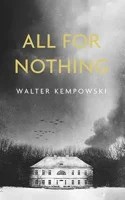
‘All for Nothing’ by Walter Kempowski (2006) – This is a powerful work of art that captures, in authentic detail and with compassion, the evacuation nightmare for the German people of the last days of World War II. There is a musical quality to the individual sentences which makes them a pleasure to read, in spite of or because of the frightfulness of the events which are occurring.


Happy Reading!


‘Beautiful Days’ by Zach Williams – “Too Scary” Explaining the Inexplicable


‘Beautiful Days’, stories, by Zach Williams    (2024) – 219 pages


Zach Williams is being promoted as “the Next Big Thing” in fiction. ‘Beautiful Days’ by Zach Williams is an ambitious writer’s first collection of fiction. Williams has already had two stories, “Neighbors” and “Wood Sorrel House”, published in the New Yorker to much acclaim. His story “Trial Run” won the Paris Review Award for Fiction. These three stories are included in the ‘Beautiful Days’ collection along with seven other stories.

It is indeed refreshing but sometimes unnerving to have a writer who will push against the limits of what a story can do. These stories go at least one or two steps beyond this reader’s expectations. That is a good thing, usually.

In “Neighbors”, Tom and his wife Anna, who was having an affair that she wanted to escape from, move to a house in San Francisco four blocks from the Pacific ocean. An old woman named Bing lives next door. One day Tom does not hear anything coming from that woman’s house. Her son calls him and asks him to check up on her. Her son had previously given him the key to the house. Tom enters the house and finds her dead body but also a man sitting across from her. The man says nothing but moves across the room.

Like “Neighbors”, several of these stories have an eerie setting. They purposely make the reader uncomfortable, but then pull back from the precipice. We are sort of in Steven King territory here, but here the stories are not so obviously horror stories. Williams’ stories have a deeper subtext. These stories affect the reader at the visceral level rather than at the intellectual level.

In “Trial Run”, an unknown entity called TruthFlex is sending out disturbing messages about their manager, Lisa.

Lisa Horowitz is a CULTURAL MARXIST – !WHITE GENOCIDE!”

On one snowy winter day, our unnamed narrator decides to go to work anyhow. Besides the security guard Manny, the only other person in the building is Shel. Our narrator is hesitant to talk to Shel but finally he must. After his disturbing conversation with Shel, he considers the following which captures the rightfully ominous paranoid spirit of our times:

I’d have to report Shel. There was no question about that. He was unstable, possibly delusional, an abuser evidently, and he lacked the basic judgment not to reveal those things to a colleague. Anyway he might well be TruthFlex. Who else, if not him? Shel needed help, that was clear, and I hope he’d get it. But what if there were guns in that gym bag?. I’d tell Lisa.”

All of these stories go beyond what we normally expect from a story which can make the story difficult to follow for an unsuspecting reader. I did not get fully into the spirit of these stories until my fifth one, until I read “Golf Cart” which is my favorite.

Zach Williams is attempting more than most writers attempt. We wish him luck.


Grade:     A-


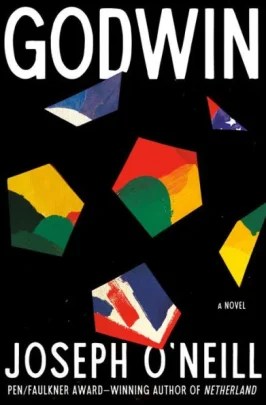
‘Godwin’ by Joseph O’Neill – United States Office Politics and European Football

                                                                                                                                                              –

‘Godwin’ by Joseph O’Neill       (2024) – 277 pages

                                                                                                                                                             –

Despite getting some rave reviews elsewhere, the novel ‘Godwin’ never quite worked for me. Neither of the two main strands of the plot – the search for the young African soccer player Godwin and a United States office politics situation – fully captured my interest. The only character holding these two strands together is the main character Mark Wolfe and he does not come alive in either part. Even after reading the entire ‘Godwin’, I hardly understood anything about and had little insight into its main character, Mark Wolfe. When the main character of the novel is not fully developed, the novel is going to have problems holding one’s interest.

The sections that take place in a technical writing consortium of which Mark Wolfe is a member are especially lacking in interest. These sections seem intentionally convoluted to reflect the sorry United States office politics.

Those sections that take place overseas involving the locating of the young African soccer player Godwin do have one fully developed character named Lefebvre who is a long-time French soccer scout and agent. He always refers to soccer as football as Europeans do. He has a video of the young African Godwin playing a full game of soccer, and he is mightily impressed. When Lefebvre speaks, he often spouts cliches about the sport.

What is this fact? It is this: football is its own religion. It has its own gods and priests, its own traditions and doctrines and churches. It has its own reality.”

Lefebvre has spent much of his adult life searching for African soccer talent, and he now bad mouths nearly everything African except these young soccer phenoms.

Italy is a paradise. Benin is a hell.”

At one point, Lefebvre makes the following comment:

Terrorists, jihadists, criminal gangs – in short backward types from the world over – would disfigure the gentle streets of Germany.”

I guess after World War I and World War II, I would never speak of “the gentle streets of Germany”.

I did read with interest Lefebvre’s detailed account of the absolute horrors of the Slave Trade in the historical Kingdom of Dahomey (which was part of the modern day country of Benin). The English, the Dutch, and the French colonialists in Africa all participated in this Slave Trade. Humans from the interior of Africa were hunted down, captured and put in chains, then auctioned off. In chains, they were then marched to the sea and put on ships headed for North or South America where they would be forced to work as slaves. At one point, Lefebvre compares this Slave Trade to the Holocaust.

However overall I did not find the situations in the novel ‘Godwin’ compelling or convincing. It might have helped if Godwin were actually a character in the novel instead of only described by others.

                                                                                                                                                              –

Grade:   C

                                                                                                                                                             –

                                                                                                                                                             –

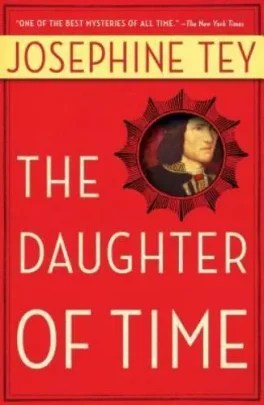
‘The Daughter of Time’ by Josephine Tey – Investigating a Murder Charge from Over 500 Years Ago


‘The Daughter of Time’ by Josephine Tey     (1951) – 206 pages


Here is a detective book like no other. Inspector Alan Grant of Scotland Yard hurt his back and leg, is laid up in the hospital, and is thoroughly bored. He needs something to occupy his mind. His friend brings some pictures of historical figures to perhaps get him interested in English history.

Inspector Grant becomes intrigued with Richard III who was King of England from 1483 to 1485 and who is considered one of the most monstrous villains of English history. Richard III was said to be a venomous hunchback who had his two child nephews locked up in the Tower of London and murdered so that he could become King himself. Even William Shakespeare mentions the child “Princes in the Tower” murder charge against Richard III in his play ‘Richard III’. Inspector Grant decides to look into this child homicide case using the detective techniques he uses on Scotland Yard cases.

Give me research. After all, the truth of anything at all doesn’t lie in someone’s account of it. It lies in all the small facts of the time. Advertisements in a paper, the sale of a house, the price of a ring.”

First Inspector Grant reads the available literature regarding the murders, most notably “History of Richard the Third” by Thomas More which Shakespeare used as his source for his plays. The Inspector quickly becomes disenchanted with More’s writing considering that More was only five years old when the murders supposedly took place and that Thomas More was an apologist for Henry VII, the first Tudor King, who took the English throne away from Richard III after Richard III was killed in battle.

As far as he was concerned there was nothing so uncritical or so damn silly as your Great Mind. As far as he, Alan Grant, was concerned, Thomas More was washed out, cancelled, deleted; and he, Alan Grant was beginning from scratch again tomorrow morning.”

Inspector Grant brings in a young assistant who has full access to the British Museum to help him with the case.

P.S., it’s an odd thing but when you tell someone the true facts of a mythical tale, they are indignant not with the teller but with you. They don’t want to have their ideas upset.”

Richard III

This is a sharp, fun story written with exuberance. ‘The Daughter of Time’ is mercifully free of anti-Semitic remarks which are known to appear in some of Josephine Tey’s crime novels written in the 1930s.

I was impressed with this combination of a detective novel and an historical novel. It is a quite unique approach to somewhat ancient history.


Grade:   A


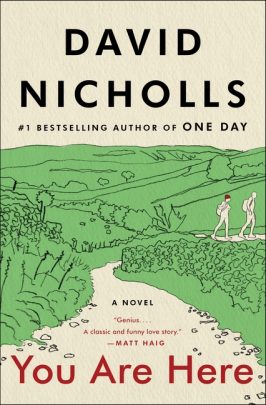
‘You Are Here’ by David Nicholls – Opposites Attract on a Hike Across Northern England


‘You Are Here’ by David Nicholls     (2024) – 349 pages


Here is a quick amusing light novel about Marnie and Michael.

Marnie is 38, recovering from a disastrous marriage, and spends nearly all her time holed up in her London apartment reading for her job as a proofreader and copy editor for publishers. For this job, she does not need to leave her apartment.

Michael is 42, and his marital problems are not so straightforward. He is still married and still thinks he loves his wife even though they are separated. Michael is the outdoorsy type and loves to climb the steep hills and mountains in Cumbria and Yorkshire in northern England around his home. Michael teaches geography in high school and often takes his students on hikes.

At home he was merely lonely. A stepping outside transformed loneliness to solitude, a far more dignified state because it was his choice.”

He plans a walk across northern England from west coast to east coast and having others join him for at least part of the hike. An older woman friend of Michael’s who also happens to know Marnie decides this would be a good opportunity for Marnie to get out of her apartment and meet some new people. Marnie reluctantly agrees to go. There will also be another young man, Conrad, on the hike who is obviously there only to pick up women.

He was neat and trim, and easy access to moisturizers had given him extraordinary skin, a smoothness untouched by time and life, as if he were his own action figure.”

I liked this bitchiness in these portrayals. Sorry. If you don’t have a bitchy sense of humor you probably won’t like this book.

Marnie does not enjoy all this mountain hiking. When the walk gets too steep she starts swearing at Michael and can’t stop swearing.

However we all know where all this is heading between the houseplant Marnie and the mountain climber Michael. There is that mysterious something in the air.

‘He is a nice man,’ said Cleo.

‘He is,’ said Marnie, ‘Very nice’, and fell silent, because niceness was something that was both rare and also hard to talk about.

‘You Are Here’ is a quick fun read on the order of works by Nick Hornby. Don’t be daunted by the page count as there are tons of white space and you will speed through this novel rapidly.

‘You Are Here’ is the kind of light “opposites attract” novel that in some ways is much deeper than many much more serious novels.

A novel like this would almost always wind up with a wedding, but it is the 2020s and we are all obviously way too cool for that.


Grade :     A


‘The Other Side of the Bridge’ by Mary Lawson – High Drama on a Canadian Farm and in a Small Canadian Town


‘The Other Side of the Bridge’ by Mary Lawson       (2006) – 294 pages


Version 1.0.0

It can happen. Two brothers with the same mother and the same father can be very different from each other. It probably happens more often than we like to think.

Two opposite brothers – Arthur and Jake Dunn – living on a farm in northern Ontario, Canada are the basis for Mary Lawson’s compelling novel ‘The Other Side of the Bridge’. Arthur, the older brother, follows in his farmer father’s footsteps. He works on the dairy farm all day long and enjoys it. His parents appreciate all the work he does for the farm. Arthur has little use for school or anything else.

His younger brother Jake had a difficult birth, and their mother had a complicated pregnancy. Jake has always been his mother’s favorite. Jake avoids farm work as much as possible, and his mother sides with him and believes his excuses. Jake is a much better student at school than Arthur ever was. Jake is also better looking, and girls are attracted to him. Whereas Arthur is very much honest, dull, and a straight shooter, Jake will tell lies when it is to his own advantage.

Jake’s lies were far more convincing than the truth.”

The arrangement of the story in ‘The Other Side of the Bridge’ is quite unique. There are two strands to the story. One strand takes place in the 1930s when the two brothers are still boys. The other strand takes place twenty years later, in the 1950s, when their father has died, and Arthur is now running the farm. This second strand to the story is told from the perspective of the town doctor’s son, Ian Christopherson, who has come to work on Arthur’s farm. Ian is also from a difficult family situation as his mother has left him and his father to be with another man.

‘The Other Side of the Bridge’ was very affecting for me. The intensity of the drama here is at a Shakespearean level. Yes, modern stories, if told the right way, can be that dramatic. Author Mary Lawson is a writer whose novels I trust to create a compelling story. The only problem is now I must read all of her novels.


Grade :   A


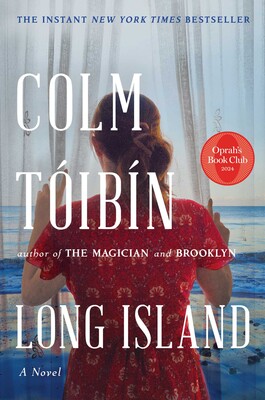
‘Long Island’ by Colm Toibin – A Midlife Love Triangle


‘Long Island’ by Colm Toibin   (2024) – 294 pages


Several Irish fiction writers of today bring a fine sense of humor into their novels and stories. Colm Toibin is not one of them. His works are dramatic and austere. Dialogues between characters tend to be short and to the point, and his characters speak in abrupt sentences. Toibin has written novels about two acclaimed authors, Henry James (‘The Master’) and Thomas Mann (‘The Magician’), neither of whom is known for their sense of humor. Here is a conversation between one of the main characters Eilis and her son Larry in ‘Long Island’.

I need you here,” she said.

Why?”

She indicated he should follow her into the living room.

What’s this about?” he asked.

It’s about your father.”

I know all that.”

What do you know?”

I was sworn to secrecy.”

By whom?”

By everyone.”

What is the secret?”

He has a girlfriend.”

Who told you that?”

The characters here speak with a certain stilted reticence where every word becomes momentous. One wishes Toibin allowed his characters to relax a little, become more unrestrained and expansive. This conversation is short and terse, but it does reveal one of the main plot points of ‘Long Island’. A man has stopped by Eilis’ Long Island house and told her that her husband Tony has gotten his wife pregnant while working on a plumbing job for them, and this man is going to drop the baby off at Eilis and Tony’s house after it is born. Although quite happily married up to this point, Eilis wants no part of this other woman’s baby. In the meanwhile, Tony and his Italian mother make secret plans for bringing up the baby.

Eilis heads back to Enniscorthy, Ireland and her own mother. Her children will come later. Most of this novel named ‘Long Island’ takes place in Ireland.

In Enniscorthy. Eilis meets up with her old flame Jim Farrell who owns one of the local bars. Their original affair was the subject of ‘Brooklyn’, so ‘Long Island’ is somewhat of a sequel, but it can stand alone. However Jim Farrell now is in a long-standing relationship with another woman, Nancy Sheridan. Good single men over forty still looking for a wife are hard to find, and Jim Farrell is one of them.

At Nancy’s daughter Miriam’s wedding Nancy sees Jim talking to Eilis.

She had seen Eilis and Jim talking to each other in a way that appeared casual, relaxed, almost familiar. It was odd because she had presumed that any encounter between them would be strained and uneasy. But then someone distracted her, someone demanded her full attention, and she did not think about that scene again.”

If an intense drama of midlife passion is what you are looking for, you will find it in ‘Long Island’.


Grade:    B+


‘How I Won a Nobel Prize’ by Julius Taranto

                                                                                                                                                                            –

‘How I Won a Nobel Prize’ by Julius Taranto       (2023) – 292 pages

                                                                                                                                                                           –

In ‘How I Won a Nobel Prize’, the young woman physicist Helen tells her saga of working on a project to find a substance which will allow high temperature superconductivity of electricity. Some substances have been found that are superconductors at extremely low temperatures near absolute zero, but it is impractical to build entire electrical systems at these extremely low temperatures. Imagine how much cheaper and beneficial it would be if there were superconductors at higher temperatures. Thus the search among physicists for high temperature conductivity.

Helen works as an assistant at Cornell University for Perry Smoot who is already a Nobel Prize winner. However Smoot gets into trouble for sexual misbehavior (with another male) and loses his position at Cornell. Smoot decides to join the faculty at Rubin Institute – Plymouth which was founded by a right-wing billionaire, the “King of all Billionaire Smucks”. The Institute “did not care at all about personal behavior, only about whether you operated in your vocation with excellence”. At the center of the Rubin Institute is The Endowment, an extremely tall building that looks down on Yale University and is shaped like a giant penis. It was built with “the robber-baron personal wealth that made the place possible”.

Helen, despite her misgivings and especially those of her woke boyfriend Hew, follows Perry Smoot to the Rubin Institute. Helen and Hew make a deal. She will follow her adviser Perry Smoot to the Rubin Institute, but she will become a vegan like Hew.

OK, this is a broad satire. One does not expect the same level of credibility one gets from more realistic novels. However I did not find the woman first-person narrator, Helen, at all convincing as a real live person. It is always difficult, an added challenge, for a writer to create a first-person narrator of the opposite sex and make him or her believable. Actually none of the characters in ‘How I Won a Nobel Prize’ were convincing to me. They all came across like one-dimensional cardboard cutouts rather than like real people. I suppose this novel is a farce rather than a human drama, but it still would have been nice if the characters seemed like real people.

But my main problem with ‘How I Won a Nobel Prize’ is that it lets these right wingers off way too easy. For most of the novel, the author through first-person narrator Helen disparages the woke characters including Helen’s boyfriend Hew at least as much as the anti-woke. Only near the end do we find out the evil that is the Rubin Institute. The right-wingers at the Rubin Institute probably never would have hired the gay Perry Smoot despite their claptrap about freedom of behavior.

Now this academic satire has been outpaced by the sordid reality here in the United States, the wicked tragic farce of this far right-wing fool running for President again who has previously been found guilty of financial fraud for $22 million dollars at his Trump University, has now been indicted for 91 other felony crimes, has been investigated and found complicit for massive tax fraud, and has been accused by over a dozen women of sexual assault and/or rape. Even the satirists could not dream up such an outrageous dangerous off-kilter situation.

                                                                                                                                                             –

Grade :    B-

                                                                                                                                                             –

‘The Wind that Lays Waste’ by Selva Almada – Two Fathers’ Opposing Views in Northern Argentina


‘The Wind that Lays Waste’ by Selva Almada      (2012) – 124 pages             Translated from the Spanish by Chris Andrews


In the novella ‘The Wind that Lays Waste’, we have a classic situation. The Reverend Pearson travels throughout northern Argentina preaching sermons, trying to convert the crowds to Christianity. His 16 year old daughter Leni travels with him.

God has given us words. Words set us apart from all of the other creatures living under this sky. But beware of words, for they are weapons that may be wielded by the Devil.”

Their car breaks down and they wind up in El Gringo Brauer’s car repair shop, having to stay in that small town for several days. Brauer’s 16 year old son Tapioca works with his father helping to repair the cars.

Brauer is a pragmatic man who works hard fixing cars and has little use for religion.

Religion, in his view, was just a way of ignoring responsibilities. Hiding behind God, waiting to be saved, or blaming the Devil for the bad things you do.”

While waiting for his car to be fixed, the Reverend Pearson hatches this plan to take the mechanic’s son Tapioca with them on his preaching tour.

While the car is in the garage, a severe thunderstorm hits the town.

The Reverend smiled.

Well, let’s just be grateful we weren’t on the road when the storm hit.”

True. That would have been tricky.”

You see what I mean. The Lord always has reasons for doing the things he does.”

We’re not going to start talking about God, Pearson,” said the Gringo, gently shaking his head. “There’s plenty of things you couldn’t explain the reason why he does them like that. I’d run out of fingers pretty quick if I started counting them up.”

Selva Almada does not tilt her novella either way, toward the religious or toward the pragmatic. The author maintains a balance between the two mindsets. Ultimately the two fathers physically fight over their differences, but each father has a back story that makes the situation more ambiguous and less clear cut.


Grade :    A