Re-Reading King Lear – The Three Daughters


‘King Lear’ by William Shakespeare            (1606) 


I had read ‘King Lear’ a long time ago. I still remembered the main plot, the old King Lear dividing up his kingdom between his daughters. He asks his three daughters which of them loves him most. His two older daughters, Goneril and Regan, flatter him with outpourings of great love for him while his youngest daughter Cordelia says nothing out of the ordinary. Lear gets angry with Cordelia and takes away the portion of the kingdom he was going to give her and splits it up between the two older daughters. Then trouble ensues.

As flies to wanton boys are we to th’ gods; they kill us for wanton sport.”
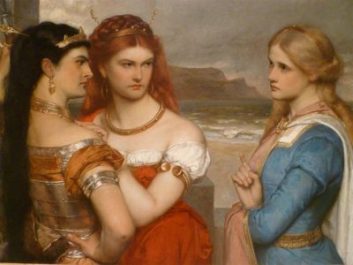
Soon after his two eldest daughters receive their inheritance, their kingdoms, they both cast King Lear out into the stormy night. King Lear’s Fool goes with him.

Fool: This stormy night will turn us all to fools and madmen.”

The method I used this time for King Lear was to first read the play using the Folger Shakespeare library version which has an explanation or elaboration accompanying nearly every line of the play. Once again I realized that I would require all of these notes to fully understand the various facets of the play. Then, after I had thoroughly read the play with all of the notes, I was able to listen to the entire play on audio and enjoy it.

Soon into my effort, I realized that the first time around I had almost totally missed the subplot involving the bastard son Edmund of Gloucester who is one of the main villains in the play along with Goneril and Regan. Thus I paid special attention to the Edmund story this time around. Somehow it almost seems that Shakespeare blames Gloucester’s fooling around and having an illegitimate son for Edmund’s misbehavior. Apparently Edmund is quite good looking, since both Goneril and Regan want to take Edmund as their lover, much to the displeasure of their husbands.

As in all of Shakespeare’s tragedies, good does not triumph in the end as both King Lear and his good daughter Cordelia wind up dead.

After closely studying both ‘Hamlet’ and ‘King Lear’, which do I prefer? Of the two plays, I prefer ‘Hamlet’. ‘Hamlet’ has the two characters, Polonius and Hamlet himself, who are capable of deep thought and thus have more insight into the terrible things that are happening around them. In ‘King Lear’ whatever wisdom there is comes from either fools or madmen. Granted that, although mixed in with both the Fool’s clever banter and the madmen’s ravings, there are deep truths; it is sometimes difficult to tell which is which.

I suppose ‘King Lear’ could be read as a cautionary tale. Don’t divide up your fortune between your heirs while you are still around.
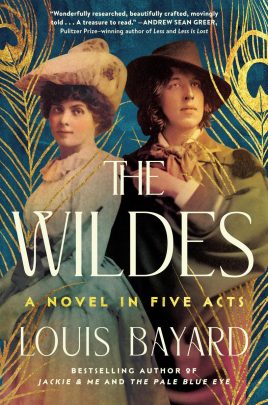


‘The Wildes’ by Louis Bayard – Born to be Wilde


‘The Wildes’ by Louis Bayard    (2024)  –  296 pages


I did not know that Oscar Wilde had a wife Constance and two sons Cyril and Vyvyan. ‘The Wildes’ begins with the Wilde family staying at a rented house called Grove Farm in Norfolk on vacation in August, 1892. Oscar’s mother Lady Wilde is also staying with them. Oscar also has invited his poet friend Lord Alfred Douglas (Oscar calls him Bosie) who is sixteen years younger than him to stay with them on vacation.

Here is Oscar as husband and father, family man. Of course, if you are going to write a book featuring Oscar Wilde, you as an author better be capable of putting witty words in his mouth. Louis Bayard does accomplish this.

What is it you always say, Oscar, about fox hunters?”

The unspeakable in full pursuit of the uneatable.”

The dialogue throughout ‘The Wildes’ is sharp.

During their stay at Grove Farm, wife Constance gradually realizes that her husband and Bosie are up to something indiscreet at night in Bosie’s room.

Later, in 1895, resulting from his feud with Lord Alfred’s father, the Marquess of Queensberry, Oscar Wilde was charged with gross indecency with other males and spent nearly two years in prison.

The second section of the Wildes takes place in 1897 in Bogliasco, Italy where Constance is now living with her two sons. She hears that Oscar Wilde has been released from prison and has gone to another part of Italy, Naples, near where Lord Alfred is now living.

The explaining part is almost childishly simple. Lord Alfred, having managed to put him in one gaol, now desires to put him in another. And in this he has the prisoner’s own consent.”

She sits there quiet. Then she leans across the table and begins hissing with such vehemence that even Arthur’s phlegmatic face begins to fissure beneath it.

The last sections of this novel are devoted to Oscar’s two sons, Cyril and Vyvyan. Cyril wanted to be nothing like his father and succeeded. He became a sniper during World War I shooting unsuspecting German soldiers. He died in battle during the war. Vyvyan, a more artistic type, returned to Soho in London where he encounters Lord Alfred Douglas in 1925.

The very last section imagines what could have happened if Constance could have somehow intervened successfully and put herself between Oscar and Bosie during that early 1892 vacation.

I was constantly entertained and enlightened by ‘The Wildes’.


Grade:     A


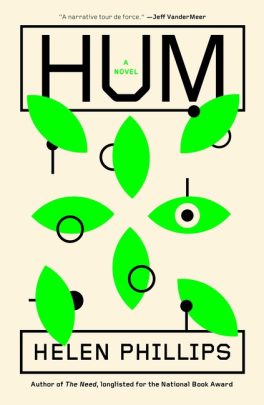
‘Hum’ by Helen Phillips – A Family in the All-Too-Likely Near Future


‘Hum’ by Helen Phillips     (2024) – 245 pages


So far computer robotics have been mostly used for repetitive menial tasks. However when robotics is combined with artificial intelligence (AI), much more sophisticated tasks will soon be done by these machines. Perhaps the best example today is that voice, usually the voice of a lady, who gives us precise directions on our cell phones to guide us to our destinations.

In ‘Hum’ the advanced robots with AI are called hums, almost humans. These hums can do complicated tasks more precisely and much more cheaply than humans can. In ‘Hum’, the woman May has just lost her job to a hum. Also her husband Jem was a professional photographer, but who needs photographers when everyone has a cell phone camera? Now Jem does gig work such as exterminating rats, mice, or insects in rich people’s houses.

May and Jem have two children, an eight year-old girl Lu and a six year-old boy Sy. The children wear devices that are called bunnies on their wrists on which they can play games, watch cartoons, etc. These bunnies can also be used by their parents to monitor their children’s exact location, heart rate, respiration, perspiration, temperature, and hormones.

When family life gets too much for them, each individual member of the family can retreat to their woom (womb?) where they can isolate themselves with their favorite music, games, shows, cartoons,etc.

The mother May is nostalgic for the wide open spaces, the forests, of her youth. Thus she arranges a three day vacation for the family at the Botanical Garden. It is mainly rich people who can afford this type of vacation, but May believes that despite their precarious economic situation, it will be good for her family to go there. In her push to get the family back to nature, she leaves her cell phone at home and takes the kids’ bunnies off. This turns out to be a big mistake. May also doesn’t realize that while they are in the Botanical Garden, her entire family is under surveillance all of the time by the ubiquitous cameras.

At one point, May takes a vee, a taxi driven by a hum. In the vee, May is bombarded with advertisements unless she pays a 3% ad-free surcharge.

Did you know that people can tell how old a woman is by the way her hands look, even if she is otherwise well preserved?”

There are new chewable daily vitamins crafted especially for women like you to promote healing from within.”

Whenever May does agree to buy something, the hum always asks, “Do you approve this transaction, May Clarke?”

The vee accidentally runs over a hum when “one of the ever-present delivery vans for the everything store” (Amazon?) runs a red light.

As she gets out of the vee, May is asked to rate her ride.

What gives ‘Hum’ its bounce is how closely their world resembles our computerized world of today.

‘Hum’ is excellent science fiction , a dystopia painting an all too plausible future. The writing is no-nonsense straightforward. At times I wished that the sentences were more lively and exciting, but ‘Hum’ does, with humor, make some excellent points about where we are headed soon.


Grade:    A-


My Favorite Fiction I Have Read in 2024

Another fine year of fiction reading is drawing to a close. Most of the fiction here is recently published, but there are a couple of old timers mixed in.


‘The Son of Man’ by Jean-Baptiste Del Amo (2021) – This novel is built around a quite simple but profound premise. The human animal has struggled to survive for two million years. That long, long struggle to survive has shaped the human animals of today, not always in good ways. This is the kind of profundity that is rarely found in literature anymore.


‘The Most’ by Jessica Anthony (2024) – From its cover, I did not expect this novella to have such depth. Thus I was most pleasantly surprised. ‘The Most’ is a straightforward honest story of a modern-day marriage.


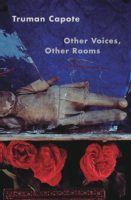
‘Other Voices, Other Rooms’ by Truman Capote (1948) – Capote put his heart and soul and himself into this, his first novel. I find that often a writer’s first work is their finest while they are still trying hard to get first published. This is a novel of a boy growing up. After all of the new people he has met and the adventures he has had, at the end Joel looks back “at the boy he had left behind”.


‘The Safekeep by Yael Van der Wouden (2024) – In some novels, all of the characters are so nice, so thoughtful, that I can’t empathize or identify with them at all. Fortunately ‘The Safekeep’ does not have that problem at all. Not one of the characters here is too nice, least of all Isabel. They can all often be quite mean or nasty. The novel gets high marks for realism.


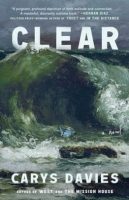
‘Clear’ by Carys Davies (2024) – This is not your typical modern novel plot. ‘Clear’ is a quiet, although at times harrowing and at times joyful, life-affirming story of three people trying to make a go of it in this world. Exposition and explanation are kept to a minimum, as we are drawn into the plights of these three characters, John and Mary and Ivar.


‘Tell’ by Jonathan Buckley (2024) – Next we have an offbeat fun story of a gardener telling in casual conversation the life of his inexcusably rich boss. The rich guy’s father “had been a sperm provider with a bad personality, and that’s all.”


‘The Wind That Lays Waste’ by Selva Almada (2012) – In this novella, we have a classic situation. Two fathers, one a reverend and the other an auto mechanic, have opposing views on parenthood. Selva Almada does not tilt her novella either way, toward the religious or toward the pragmatic. The author maintains a balance between the two mindsets.


Day of the Oprichnik’ by Vladimir Sorokin (2006) – The year is 2028. Modern Russia has now returned to leadership by an all-powerful Czar who is referred to only as “His Majesty”. The modern Russian leader is much like Russian leaders from the past like Genghis Khan and Ivan IV, also known as Ivan the Terrible. The wicked humor in this novel is quite prescient.


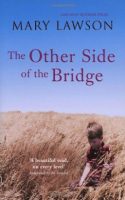
‘The Other Side of the Bridge’ by Mary Lawson (2006) – This story of two opposite brothers living on a farm in northern Ontario, Canada was very affecting for me. The intensity of the drama here is at a Shakespearean level. Yes, modern stories, if told the right way, can be that dramatic. Author Mary Lawson is a writer whose novels I trust to create a compelling story.


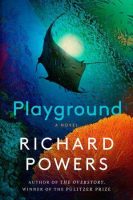
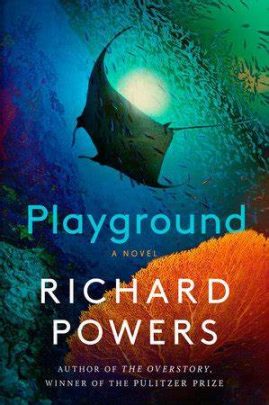
‘Playground’ by Richard Powers (2024) – Despite a few reservations, I just cannot leave this novel off of my list. The vivid descriptions of fascinating ocean life are impossible to resist.


‘James’ by Percival Everett (2024) – Here is another novel I just cannot leave off of my list. I prefer Percival Everett when he tells his own original stories rather than when he is rewriting someone else’s work, in this case Mark Twain’s Huckleberry Finn. Still it’s a strong performance.


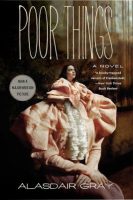
‘Poor Things’ by Alasdair Gray (1992) – Have you noticed a certain well-edited or over-edited sameness to much of today’s fiction? Then ‘Poor Things’ may be the novel for you. This preposterous novel breaks all the rules. It is a delight, in that sense. It has been a while since I have read an amusing pastiche novel like ‘Poor Things’. They don’t make novels like this anymore.


‘You Are Here’ by David Nicholls (2024) – Here is the kind of light “opposites attract” novel that in some ways is much deeper than many much more serious novels. Usually a novel like this would almost always wind up with a wedding, but it is the 2020s and we are all obviously way too cool for that.


That’s all, folks.  I hope you didn’t notice I added a thirteenth.


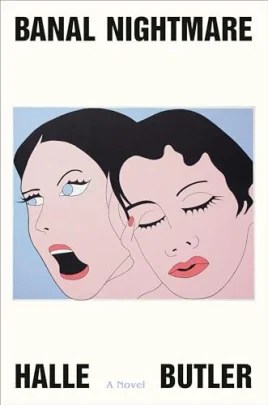
‘Banal Nightmare’ by Halle Butler – Leaving Chicago and Her Long-Time Boyfriend


‘Banal Nightmare’ by Halle Butler    (2024) – 315 pages


In ‘Banal Nightmare’, the young woman Moddie, in her early thirties, breaks up with Nick, her boyfriend of nine years, and leaves Chicago. She returns to the small mid-western town where she went to high school.

She reunites with some of her old friends from high school, most of whom are now either married or have long-term boyfriends. There’s Pam, Kimberley, Bethany, Nina, and a few others. All these 1990s birth names seem almost interchangeable. Most of these women are either married or are in a long-term relationship with a guy. Over the years familiarity and boredom have crept in to these male/female relationships.

…but of course he’d said “I want a divorce” before, what couple hadn’t?”

Moddie herself is quite at a loss after deliberately ending her long-time affair with Nick. Moddie considers “how unessential she was to the rest of the world now that she was childless, unemployed, middle-aged and single.”

She thought mostly of herself and her emotions. It felt like her brain was rotting. When she talked to her parents, it was only about herself and her feelings. The boredom was like a cheese grater run gently over her heart, constantly, and sometimes she felt she would give anything to leave her own mind for just one second.”

A lot of ‘Banal Nightmare’ is attitude, Moddie’s wise-girl attitude which is often humorous and sometimes poignant. She is hesitant to dive into the dating pool again.

For the love of god, no more losers, no more strivers, no more men with something to prove about themselves.”

In this type of novel, of course the men, especially Nick, are mostly described as losers, but Halle Butler doesn’t let the women off the hook either.

Which is all just to say that when he thought unkind things about women, it wasn’t without reason.”

unleashing her opinions in a voluble bilious way ,, and further alienating people who already had a low opinion of her”

Although ‘Banal Nightmare’ mostly follows Moddie’s sharp sarcastic thoughts, her stream of consciousness, occasionally we enter the mind of a male character, David, the one single guy in the story. This provides some balance to the account.

A novel about millennial relationship trials and tribulations has to go some distance to separate itself from and rise above all the other novels about millennial relationship trials and tribulations. ‘Banal Nightmare’ almost makes it.


Grade:   B


‘The Stepdaughter’ by Caroline Blackwood – Fiction and Real Life


‘The Stepdaughter’ by Caroline Blackwood        (1976) – 94 pages               


I have never read so hostile or negative a description of a child character in a novel as that which J uses in ‘The Stepdaughter’ to describe her 15 year old stepdaughter Renata.

It is difficult to describe how she manages to be so disturbing, this Humpty Dumpty of a girl. She gives one the feeling that somewhere in the past she took such a great fall that everything healthy in her personality was badly smashed.”

The thing that Renata lacked so painfully was the very smallest grain of either physical or personal charm.”

J even describes how Renata uses so much toilet paper that the toilet overflows and the stuff gets on the floor and she has to call the plumber.

Renata’s problems seemed so insoluble that one starts to feel such a fierce impatience with her that although I have to admit it one often has a longing to try to damage her even more.”

Perhaps it is the way she has been burdened with this stepdaughter that causes J to be so hostile toward her. Her husband Arnold went off to Paris leaving behind his daughter Renata from a previous marriage. Now Arnold has sent a letter from Paris saying that he wants to leave J. He now has a girlfriend. So J is stuck with Renata.

If Arnold imagines he can start a new and beautiful life with his new and beautiful French girl, I can think of nothing more guaranteed to soil and smash his idyll than the arrival of this ungainly and unhappy girl who has survived the debris of her father’s two former marriages.”

I won’t write anymore about the plot of ‘The Stepdaughter’. I found this epistolary novella to be very well written and quite moving. What I do want to write about is the backstory of this author, Caroline Blackwood which somehow explains this novella.

Caroline Blackwood was born into the Guinness family, owners of the Guinness Brewery, so she was fabulously rich from the beginning. As a young woman, Caroline was known as a somewhat wild socialite who hung around with that other wild socialite, Princess Margaret, younger sister of Queen Elizabeth II. Later Caroline was married to three famous husbands, the bohemian artist Lucian Freud and the pianist/composer Israel Citkowitz and the famous American poet Robert Lowell. It was during this last marriage to Lowell, that Blackwood took up writing fiction.

The poet Robert Lowell had severe manic depressive episodes for which he often had to be hospitalized or institutionalized. His previous wife Elizabeth Hardwick figured it must have been during one of these manic episodes that Lowell took up with Caroline. Ultimately Lowell did divorce Hardwick and married Blackwood. However Blackwood could not deal with his mental problems, and Lowell died of a heart attack returning to the home of Hardwick.

On her deathbed, Caroline Blackwood confessed that one of her children she had while married to her second husband Citkowitz was not his child. After you read ‘The Stepdaughter’, you will understand that when Caroline Blackwood wrote this novella ‘The Stepdaughter’, this must have been on her conscience.

Mother felt that, as it was, women, had to do all the work for children – Arnold had no right to make a big fuss about whether her child was his or not.”


Grade:    A        


‘The Drowned’ by John Banville – An Affair With a Colleague’s Daughter


‘The Drowned’ by John Banville     (2024) – 328 pages


Now that John Banville has decided to write solely crime novels for the rest of his career, I noticed there was a comparison of him with the French novelist George Simenon who wrote mostly crime novels but did write some others. This is an apt comparison, although Banville is more renowned for his non-crime novels.

‘The Drowned’ is a crime novel in Banville’s Quirke series which takes place in the 1950s with the Irish Garda, the national police force of the Republic of Ireland. Quirke (no first name given) is the consultant pathologist for the Garda, and he does appear prominently in ‘The Drowned’ along with his daughter Phoebe. However the main focus here is on detective inspector John Strafford. Stafford is dating the much younger Phoebe which does not please her father, the widowed Quirke.

Unlike some detective novelists, John Banville does not neglect but pays due attention to the utmost importance of man-woman relations, not only among the suspects but also among the detectives and police themselves. Thus we we are full informed as to the marital or unmarried situation of each of the main characters.

In ‘The Drowned’, the fraught relationship between detective Strafford and Phoebe almost overshadows the crime story. However the crime story and the romance ultimately become intertwined.

The crime story begins in an Irish village along the shore. A man named Armitage rushes to a neighboring house to tell them that his wife has either jumped or fell into the ocean. The detective Strafford is called in to investigate.

Banville looks to humorous effect at the quirks and idiosyncrasies of all of his characters, both the law men and the law breakers, as well as those of the innocent or not-so-innocent bystanders. For Banville, even the pets are fair game.

Banville also often draws comparisons between the law officers and the people they are investigating. The line between them is not that sharp.

‘The Drowned’ is not exactly a whodunit. An alert reader can figure out or at least have a good guess as to who the culprit is early on. It’s real goal is to give the reader an inside look at how the police and detectives operated in these cases back in the 1950s.

‘The Drowned’ is a crime novel. It is not heavy-duty literature, but it is a quite enjoyable read.


Grade:     A


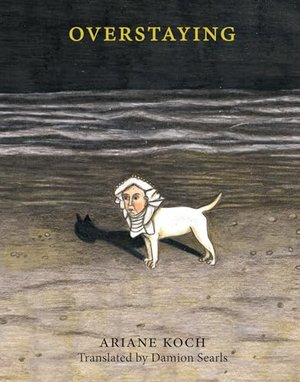
‘Overstaying’ by Ariane Koch – An Absurd Comedy


‘Overstaying’ by Ariane Koch     (2021) – 176 pages                               Translated from the German by Damon Searls


The plot of ‘Overstaying’ is exceedingly simple. A woman who lives near the mountains in Switzerland takes in a visitor to live in her house, and absurdist or surreal comedy ensues. I prefer to call what ensues an absurd comedy, because most of it did not make sense to me.

I had the same problems with this novella as I did with ‘Waiting for Godot’ by Samuel Beckett. I’ve read or tried to read ‘Waiting for Godot’ several times, and it has never made sense to me. However ‘Waiting for Godot’ is considered a classic in absurdist comedy.

In ‘Overstaying’, we never find out who or what the visitor is. The visitor is not necessarily human.

The visitor walked around like a sticky strip of flypaper with insects stuck to it. He was clearly looking for a place to stay, although he seemed not to know it yet. He traipsed around outside the Roundel Bar, down the lane, up the mountain.

Anyway I felt a little uneasy.”

That first line about walking around like a sticky strip of flypaper did not make sense to me at all. At first she is wary of the visitor.

The last thing I thought before I fell into his clutches was that I had to be careful not to fall into his clutches.”

The visitor often gets on his hostess’s nerves.

Since my visitor’s arrival, I’ve been clenching my teeth so hard that they not only grind but threaten to crack apart – according to what a dentist told me yesterday.”

There is a lot of supposed humor involving the singing of the vacuum cleaner nozzles which are stored in the visitor’s room that I didn’t get.

Is that the distant singing of the vacuum cleaner nozzles or is it the wind?”

The entire novella revolves around the woman’s and townspeople’s interactions with the visitor, and then the visitor leaves.

Even an absurd comedy must, at some point, make sense to the reader.

But don’t let me stop you from reading this novella. Mine is definitely the minority opinion. ‘Overstaying’ won the prestigious German Aspekte Prize for debut fiction. And the critics of this translated version of ‘Overstaying’ seem to be falling all over themselves in praise.


Grade:    C-


‘Rejection’ by Tony Tulathimutte – Personal Affairs in the 2020s


‘Rejection’ by Tony Tulathimutte   (2024) – 258 pages


‘Rejection’ is an over-the-top collection of linked stories about personal affairs, mostly sexual, in the 2020s. It attempts to come to terms with our new reality of the 2020s, no matter how difficult that may be. This is the era of cell phones and texting, and most of the real conversations take place via texting. Both the straight and the gay use dating apps to hook up with potential partners. Gaming is ubiquitous. These stories deal with the ironies in the way we live now.

The first story, ‘The Feminist’, is about a young guy who is ingrained with all the feminist values. He has read the feminist literature and respects women, and he has several female friends. However, when he actually tries to date these women, he gets turned down. They tell him how much they value his friendship, but they don’t want to get romantic with him. He thinks he is rejected because of his narrow shoulders. The young women still want to go out with the strong good-looking guys, no matter how misogynistic these guys’ attitudes toward women are.

The second story, “Pics”, is about a young woman, Alison, who has a first date with a guy named Neil. Alison has sex with Neil on their first date. She lets him take cell phone pictures of her doing a sexual act. But when they wake up in the morning, he tells her that “he doesn’t want to give the impression that he’s looking for anything serious”.

Neil never calls her for a second date. Here is a text between Alison and one of her friends:

So now I feel stupid for letting him take pics.

Maybe that was his goal to begin with.

Who knows! Who fucking knows.

Seems like he got everything he wanted.”

Later she hooks up with The Feminist from the first story, but that falls through too.

It furnishes him with an opportunity to demonstrate caring, which is not the same as caring.”

She is still hung up on Neil.

What hurts the most is knowing that his rejection of her was fair.”

I thought these first two stories were very well done. At that point in reading the book, my enthusiasm level was quite high.

The third story is a vivid imagining of an exaggerated graphic sadistic sex act between two men. For me, this was a bridge too far, farther than I wanted to go. A later story, 70 pages long, is devoted to a non-binary transgender who gives us a perhaps over-the-top account of what its like to spend 19 hours a day in the internet. He (She?) spends their time “fabricating online personae and experimental digital narratives”.

Oddly I’ve hit the point where I’m too depressed to scroll the internet, which is like being too hungry to eat.”

The novel winds up with a long letter of rejection for the book of ‘Rejection’ itself.

One problem I had was the use of new terminology and abbreviations. What is DARVO used as a verb? What is QPOC? I occasionally couldn’t follow these.

I do believe in live and let live, but I don’t necessarily want to spend my time reading about these alternative life styles. I suppose if I were a whole lot younger I would have appreciated these stories more.


Grade :   B


‘Other Voices, Other Rooms’ by Truman Capote – A New Orleans Boy Comes to Rural Mississippi


‘Other Voices, Other Rooms’ by Truman Capote   (1948) – 187 pages


In the Books section of The Guardian, they have a regular feature called “Where to Start With” where they discuss the books written by a well-known author. Recently they had “Where To Start With” Truman Capote. The only book I had read before by Truman Capote was ‘Breakfast at Tiffany’s’, and that was a long time ago. The article ended with a section called Capote’s “Masterpiece”, and there they pointed to ‘Other Voices, Other Rooms’. So I decided to read it.

‘Other Voices, Other Rooms’ was Truman Capote’s first novel. Quickly I discovered that Capote put his heart and soul and himself into this novel. I find that often a writer’s first work is their finest while they are still trying hard to get first published. I suppose there is professionalism in novel writing, but it is usually in their first works that authors will go for broke with their talents and imaginations. That is what Truman Capote did here.

The main character in ‘Other Voices, Other Rooms’ is the thirteen year-old boy Joel Harrison Knox.

He was too pretty, too delicate, too fair-skinned; each of his features was shaped with a sensitive accuracy, and a girlish tenderness softened his eyes, which were brown and very large.”

His mother has died, and his father who abandoned him as a baby has sent a letter saying he would welcome the boy to come live with him. So the boy Joel travels to rural Mississippi. He arrives at Skully’s Landing which is a large old decrepit mansion on a former plantation. There he meets and comes to know several unusual and strange characters. There is his sullen stepmother Amy and his colorful cousin Randolph who dabbles in art and takes a special interest in Joel. There is also the black maid and cook Missouri, also known as Zoo, who is the household maid and cook. She befriends Joel.

Shoot, boy, the country’s just fulla folks what knows everythin. And don’t understand nothin, just fullofem.”

The black characters in ‘Other Voices, Other Rooms’ are portrayed with dignity and respect and closeness.

Also Joel meets the two white neighbor sisters Idabel and Florabel who are about his age. He develops a special friendship with Idabel. She calls him “sissy britches”. Later Joel will run off to a carnival with Idabel.

She’s got willful ways, Idabel has. Ask anybody.”

Joel meets all these people, but where is his father?

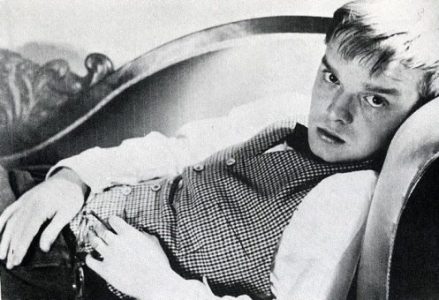
Truman Capote

As I said before, Truman Capote went all out in writing this novel. It is usually characterized as Southern Gothic, but that phrase does not begin to capture the essence of the writing.

Here is an example of Capote setting a scene:

Swarms of dragonflies quivered above a slime-covered watertrough; and a scabby hound dog padded back and forth, sniffing the bellies of tied up mules.”

This is a novel of a boy growing up. After all of the new people he has met and the adventures he has had, at the end Joel looks back “at the boy he had left behind”.


Grade:   A


‘The Most’ by Jessica Anthony – The Little Novella That Could


‘The Most’ by Jessica Anthony     (2024) – 133 pages             


‘The Most’ is a straightforward honest story of the marriage of Virgil and Kathleen Beckett .

One Sunday morning Virgil wakes up to find his wife Kathleen in the hardly ever used swimming pool of their apartment complex. Virgil can’t figure out why she is in the swimming pool since she has never gone into it before. He tries to convince her to come out. She won’t come out, so he takes their two sons to church by himself. Later in the afternoon, Virgil golfs with some men from work.

The story takes place in Delaware in 1957. The headline from that time, which is repeated often in the novella, is that the Russians have just launched their second satellite, Sputnik II, into space with a dog named Laika inside it.

Virgil is very good looking, but lazy and unambitious. His main interest is listening to jazz. Although from California, he winds up selling life insurance in Delaware. He gets married to the only average-looking Kathleen, who was a former college tennis champion. “The Most” is a tennis strategy used by Kathleen. They have two sons.

They move to Rhode Island where Virgil starts going to a nearby bar several nights a week with some of the insurance guys. There are girls, young women, at the bar, and after Virgil spends a night with one of them, Little Mo, he feels guilty enough about it to move the family back to Delaware and to start taking the family to church.

Now several months after moving back to Delaware, the family is still stuck in an apartment complex. Nobody ever uses the pool there, but one morning there is Kathleen swimming around in it. She is still in the pool near evening. Why?

Jessica Anthony’s centering this story around a swimming pool kind of reminded me of the famous story ‘The Swimmer’ by John Cheever about a guy who swims from neighbor’s pool to neighbor’s pool in the suburbs.

Although this is the story of a marriage and not an adventure story, there is real suspense here. The reader does not know what will happen, what the final conclusion will be.

The suspense between this husband and wife, which has been subtly and skillfully portrayed, continues through the last page and even beyond.

There are many fine things in Richard Powers’ novel ‘Playground’, but this steady little novella ‘The Most’ achieves more depth than the much, much longer ‘Playground’.


Grade:    A                


‘The Empusium’ by Olga Tokarczuk – A Health Resort Horror Story


‘The Empusium’ by Olga Tokarczuk    (2022) – 302 pages              Translated from the Polish by Antonia Lloyd-Jones


In ‘The Empusium’, a young man, Wojnicz, suffering from tuberculosis or consumption goes to a sanatorium in the Silesian mountains in the village of Gorbersdorf, now in Poland, hoping for a cure. The year is 1913, just before the First World War begins. The plot revolves around a group of male patients staying in a guest house in Silesia who are all being treated in the sanatorium for consumption. This happens to be the same situation as the famous German novel ‘The Magic Mountain’ by Thomas Mann. At first I thought ‘The Empusium’ was going to be a wicked parody of ‘The Magic Mountain’, but Nobel prize-winning author Olga Tokarczuk had something else in mind.

Soon after he arrives, our young man comes upon the guest house owner’s wife laid out on a table, dead. The guest house owner claims that she has committed suicide. The other male residents believe him, but the image of this dead woman haunts our young man throughout the novel.

All of the other men staying at this guest house while being treated are severely anti-woman. On the topic of women they all had something to say.

Whether we like it or not, motherhood is the one and only thing that justifies the existence of this troublesome sex.”

It’s true, the female brain is quite simply smaller, and there’s no denying it when objective research has proved it.”

Our young man has his own unresolved problems resulting from his male-dominated background. He soon realizes that “every discussion, whether about democracy, the fifth dimension, the role of religion, socialism, Europe, or modern art, eventually led to women.”

In the author’s note after the novel. Tokarczuk explains that all these misogynistic comments the men make are paraphrased from actual writings by male authors through the centuries including William Shakespeare, John Milton, Charles Darwin, and many other famous men.

Perhaps because these lines have been planted on to the men rather than the men saying their own words, these other male patients of the sanatorium do not really come alive as distinct individuals, rather as puppets repeating someone else’s lines. Whereas the other patients in the sanitarium in ‘The Magic Mountain’ were fascinating in their differing opinions, the male characters here all say pretty much the same misogynistic rhetoric.

Another problem is that the middle section of ‘The Empusium’ is stretched out to the extreme with not much happening. A reader gets impatient. I believe this novel could have been shortened by about a hundred pages with no loss of character development or story line.

But in the end, there is some resolution for our young man who comes to find out that he is quite different from most other men.

Someone like you will prompt antipathy and hatred, because you will be a clear reminder that the vision of the world as black-and-white is a false and destructive vision.”

Let’s just say that the women do get their revenge.


Grade :   B-


‘Playground’ by Richard Powers – Wondrous Life in the Ocean and on Land


‘Playground’ by Richard Powers     (2024) – 381 pages


One of the conceits in the novel ‘Playground’ is that it was written by an artificial intelligence (AI) device called Profunda. Therefore I will address my critique of ‘Playground’ to Profunda.

Profunda, I was very impressed with your knowledge of the Big Picture concerning life in the ocean and on land, as well as your insights into the individual characters who play a part in your story.

I was first impressed with the vivid descriptions of fascinating ocean life provided by that intrepid undersea explorer Evelynne from Montreal.

The ocean teemed with primordial life – monsters left behind from evolution’s back alleys – ring-shaped, tube-shaped, shapeless, impossible plant-animal mashups with no right to exist, beasts so unlikely I wondered if my beloved author invented them.”

I was particularly impressed with your “impossible plant-animal mashups” since as I look at pictures of deep sea life it is indeed often difficult to tell the animals from the plants.

Or consider the following when Evelynne sees a group of oceanic manta rays. She tells that the manta ray has flippers that could be called wings that span more than 18 feet and that it weighs more than a ton and a half.

Mantas had a brain-to-body ratio far higher than most fish, as high as many mammals. A giant oceanic manta ray brain was the largest and heaviest of any animal that breathed water.”

Left to themselves they might live for four decades or more. But life span was plummeting.”

When the humans finally destroy themselves with their nuclear and other weapons, the magnificent life in the oceans will continue to go on. I suppose that is some consolation.

I thought these vivid descriptions of strange ocean life were extremely well done. However, especially when you are describing technical processes and issues, your enthusiasm level goes too high and you provide us with too much unwarranted information. There was the danger, Profunda, that you would come across as a facile know-it-all. Also that Wow-Gee-Whiz attitude sometimes gets tiresome. Yet you deal so well with these large-scale issues, we don’t want to lose that.

Yes, there are your striking pictures of the wondrous but strange animals/plants in the ocean and your easy comfortable knowing analysis of extremely complex technical techniques and issues. But your real strength as a writer is when you get down to your individual characters and tell affecting stories about them.

There are four main characters in ‘Playground’. Evelynne, whom I have already mentioned, is an undersea explorer in a wet suit. Todd is a Silicon Valley tech wonder and a billionaire. Rafi is Todd’s Go-playing friend and often inspiration. Ina is Rafi’s wife and an artist.

You present the stories of these four individuals and their interactions in a fashion that held my interest throughout.

Profunda, I realize that you, as a computer, can read thousands of books rapidly, and you can take things from these books and use them with so much subtlety that you cannot be accused of plagiarism.

However one thing you lack is that you cannot really feel human emotions. I’m talking about not only the good ones like love and compassion and devotion which you seem to have some intellectual insight into already, but also the bad ones like jealousy, doubt, anxiety, and shame. Sure, you can read about guilt in Dostoevsky and others. However until you can actually feel guilty about your own abysmal behavior, you will not achieve that profound depth found in great literature or movies or music.


Grade:     A-


‘The Son of Man’ by Jean-Baptiste Del Amo – A Cruel Modern-Day Story with Roots in the Prehistoric Human Past


‘The Son of Man’ by Jean-Baptiste Del Amo       (2021) – 232 pages            Translated from the French by Frank Wynne


We begin in prehistoric times. A group, a pack, of humans is trudging through the cold forests of presumably northern France.

For days now, they have been marching westward into the bitter autumn wind. Thick unkempt beards erode the hard features of the men. Ruddy-faced women carry newborns in tattered pelts. Many will die along the way, from the blue bitter cold or from dysentery contracted from stagnant watering holes where the feral herds come to drink. For them the men will dig desolate hollows in the earth. ”

These were grim times for the human animals. While the women spent all their time and effort trying to keep their babies and little children alive, the men murdered animals with their spears for food and built some kind of makeshift shelters to keep them from the bitter cold.

And then ‘The Son of Man’ suddenly switches to modern times, a modern family.

What has caused humans, especially the males of the species, to be so brutal, even today? Inescapably, the answer lies in our brutal primordial past.

Humans are the only species who regularly murder members of their own kind in wars.

‘The Son of Man’ depicts modern-day domestic brutality, the father and the mother and the nine year-old son. The characters do not have names.

The father comes back to his wife and son after being gone for several years for some unexplained reason. He takes them out of the city to his childhood home, Les Roches, so they can start again as a family. But always there is this undercurrent of anger and pent-up violence.

The mother says to the father:

I just wish you could get past this rage, this shadow constantly hanging over you.”

We see this father and this mother through the eyes of their boy. The boy realizes he must protect his mother from the father’s onslaught.

The story in ‘The Son of Man’ will stay with me for a long time. Here we have modern-day family violence, but its roots are in the prehistoric past. Man’s brutality has been passed down through the ages from primordial times, and none of us are exempt.

I am also excited to soon read the previous novel, ‘Animalia’, by Jean-Baptiste Del Amo, since ‘The Son of Man’ has such depth.


Grade:    A


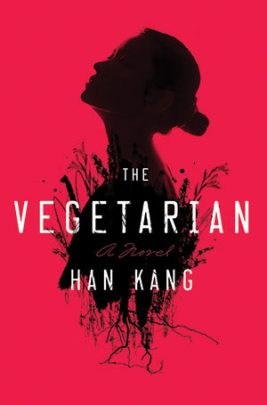
‘The Vegetarian’ by 2024 Nobel Prize Winner Han Kang


Here is a re-post of my review of ‘The Vegetarian’ by the 2024 Nobel Prize winner for Literature, Han Kang, which I first posted in 2016.


The Vegetarian’ by Han Kang   (2007) – 188 pages             Translated from the Korean by Deborah Smith


If you thought a novel by a South Korean woman writer might be too polite or decorous for you, forget about it. ‘The Vegetarian’ is lurid and violent, and it has sex scenes that would make that old purveyor of masturbatory fantasy Philip Roth blush.

I do not eat meat,” Yeong-Hye announces one day. Her husband is indifferent to what she does as long as she keeps up a respectable front with his work associates and bosses. However Yeong-Hye makes a big scene at a company dinner with her refusal to eat meat, and this embarrasses her husband no end.

Yeong-Hye’s father and mother come to visit. She refuses to eat meat. This so infuriates her father that he beats her severely and force feeds her a piece of meat. She spits it out and then brandishes a fruit knife and cuts her wrist. She is taken to the hospital in critical condition.

At this point, we realize that Yeong-Hye is mentally ill. I doubt that someone deciding to become a vegetarian would ever be considered a sign of mental illness in the United States, but Yeong-Hye has other symptoms. She not only refuses meat; she starves herself. She takes her clothes off and goes naked regardless of whoever happens to be around. In the second section of “The Vegetarian”, her artist brother-in-law is consumed with sexual desire for her. He is obsessed with sexual fantasies featuring Yeong-Hye. Because she is in her own little world, she is a helpless victim.

In the third section, Yeong-Hye’s sister confronts her sister’s sickness:

Life is such a strange thing, she thinks, once she has stopped laughing. Even after certain things have happened to them, no matter how awful the experience, people still go on eating and drinking, going to the toilet, and washing themselves – living in other words. And sometimes they even laugh out loud.”

One thing I noticed while reading the author’s notes was that Han Kang was a participant in the Iowa Writers’ Workshop. Apparently afterwards she returned to South Korea, because the novel was written in Korean. So what we have here is a hybrid, a South Korean novel infused with a western sensibility.

All of the scenes in the novel are portrayed with a vivid dramatic intensity I wasn’t expecting. That is why I will remember ‘The Vegetarian’ long after other novels have faded from my memory.


Grade:   A


‘Four Soldiers’ by Hubert Mingarelli – A Short Lull in the Fighting


‘Four Soldiers’ by Hubert Mingarelli (2003) – 155 pages        Translated from the French by Sam Taylor


‘Four Soldiers’ is another simple but moving war story from Hubert Mingarelli. This time it is set during the Russian Civil War of 1919 rather than World War II which is when the war story in ‘A Meal in Winter’ takes place.

Pavel, Kyabine, Sifra. and our narrator Benia are four soldiers in the Red Army fighting in Romania. They have all recently been involved in heavy fighting with many casualties and the Polish army has taken back the village which they had earlier held. Cold winter is approaching, and at that time in history there is still a break in the wartime fighting for winter. The four come upon a forest and Pavel, who is their informal leader, tells the rest of them that in the forest they could build a hut where they could stay for the winter. So they build the hut.

The four of them spend an idyllic peaceful time that cold winter in their hut. A quiet pond is near by where they can go to contemplate and look at the blue sky and watch the fish jumping.

The other three all like to kid Kyabine who is rather a lovable fool. Pavel calls him “you big Uzbeki idiot”.

He was incredibly strong and loyal, and he had a voice like thunder. But clever? No.”

All four of them realize that the heavy war fighting will start up again when the snow melts and it is spring. But in the meantime they can enjoy this quiet respite.

And let me tell you at that moment, I looked at the confident smile on Sifra’s face, because Kyabine was leading the horse at the right pace. And I watched Kyabine’s slow, reassuring gait, and Pavel was there too, walking next to me, and suddenly I was filled with emotion because each one of us was in his place and also because it seemed to me in that instant that each of us was far away from the winter in the forest. And that each of us was also far away from the war that was going to start again because the winter was over.”

When the snow starts to melt , the fighting resumes.

We were all full of worries and fears, but that morning it was Kyabine – the huge muscular Uzbeki – who was showing it most.”

It will be alright, Kyabine,” I told him.

You really think so?” he asked.

Sifra, who seldom talks, answered him:

Yes it’s true, Kyabine. It’ll be all right, because we’ll always stick together.”

And then the inevitable. Although the last few pages are predictable, they are still heartbreaking.


Grade:    A-


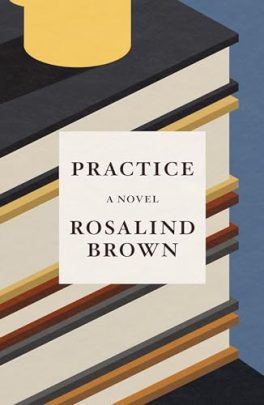
‘Practice’ by Rosalind Brown – An Oxford Student’s Day Spent Trying to Write her Essay on Shakespeare’s Sonnets


‘Practice’ by Rosalind Brown       (2024) – 202 pages


As often it seems to occur in college, our female Oxford student Annabel has put off her assignment, writing an essay about Shakespeare’s Sonnets, until the Sunday the day before it is due. ‘Practice’ is set in the winter of 2009.

Four hundred years later, she keeps on reading.”

Annabel enjoys the sonnets, both those written to the young man, the Fair Youth, and those written to the Dark Lady. She likes “spending time with these poems: which are better company than people, they take your shape willingly, but still lightly, like a duvet does”.

She starts the day with good intentions about writing her essay. She reads some of the sonnets at random. She compiles a list of words to describe the Sonnets: plaintive, domineering, splintering, exhilarating, rough, bossy, bitter.

She lets them work on her mind, entering wholeheartedly into the spirit of them, hardly writing anything down: just reading.”

But there are distractions. Sometimes, while we are reading, we think about everything except about what we are reading.

Even before lunch, she decides that “a walk might invigorate her”. During her walk around the Oxford campus, she considers the man she has been seeing. He is a friend of her mother’s; he is 36, Annabel is 20. She hasn’t told her mother that she has been seeing him yet. Should she drop him or continue going out with him?

By the time she gets back over an hour has passed on her walk, and it is time for lunch.

Later as the day lumbers on and she has yet to begin her essay, Annabel considers grabbing at straws:

Could she, she flickers a smile, could she provocatively write an essay about her own failure to write an essay. Would the tutorial eyebrows raise.”

She drops that idea, but now it is early evening and she still hasn’t written anything.

This is a novel about a college student, a young woman, spending a day trying to write an essay as an assignment. If you were expecting a detailed analysis of Shakespeare’s sonnets, you would be disappointed. However it does vividly capture this bright young woman’s somewhat humorous yet exasperating struggle to write her essay.


Grade:    A


‘Chocky’ by John Wyndham – A Voice from a Distant Planet?


‘Chocky’ by John Wyndham     (1968) – 149 pages


One day, as a father is straightening up his garden shed, he overhears his twelve year-old son Matthew talking to someone he calls Chocky. However there is no one else there. His parents at first assume that Chocky must be Matthew’s imaginary friend.

Chocky seems to Matthew to be of indeterminate sex, and Matthew often calls her “She”. In Matthew’s talks with her/him, Chocky seems to think that things are really primitive down here on Earth.

Apparently, according to Chocky, we in our civilization, are still suffering from a primitive fixation on the wheel.”

Chocky also complains about our earthly erratic weight, time, and distance measures, pound, yard, week, etc. .

Matthew’s parents become concerned about their son’s obsession with this Chocky and bring in a psychologist to observe Matthew. Afterwards the psychologist comes to this conclusion.

More than anything I have ever come across it resembles what our unscientific ancestors used to consider a case of “possession”. They would have claimed quite simply that this Chocky is a wandering, if not wanton, spirit that has invaded Matthew.”

Matthew’s mother is not reassured by the opinions of the psychologist.

I agreed to David asking you to come because I thought you would suggest some course we could take which would rid Matthew of his fantasy without harming him. Instead you seem to have spent the day encouraging him in it and to have become infected with it yourself. I am not able to feel that this is doing much good to Matthew, or to anyone.”

One day Matthew announces that Chocky has to leave. His parents are happy about this, but Matthew is sad.

Matthew’s father becomes convinced that there must be some form of telepathy, a communication of minds, between Chocky and their son. In her afterward, Margaret Atwood speculates thus:

Could it possibly be that Chocky is what Matthew says she is: a being who lives far away, in another universe, but who can join him at will and look through his eyes?”


Grade :   B+


‘Elena Knows’ by Claudia Piniero – Elena’s Affliction

‘Elena Knows’ by Claudia Piniero   (2007) – 143 pages               Translated from the Spanish by Frances Riddle

She imagined someone trying to tell her about this illness she now knows better than anyone because it’s inside her. She could describe it better than Dr. Parkinson, she thinks, and she’d call it Elena’s Affliction.”

Elena is trying to cope with both her Parkinson’s disease and her daughter Rita’s sudden death. The police found her daughter’s body hanging from the belfry of Elena’s church on a rainy night. Father Juan at the church and the investigating police quickly come to the conclusion that Rita committed suicide. However Elena knows that Rita would never go inside the church on a stormy night. Elena knows her daughter was murdered.

Elena must investigate herself. But she must also contend with her Parkinson’s.

Who would have thought that being able to get your arm in a sleeve could be such a big deal, she thinks. Now she knows how important it is.”

Besides her terrible struggle to do even the simplest tasks, another feature which gives this crime novel its authenticity are the conversations between Elena and her daughter Rita which are shown in flashbacks.

If you’re lucky enough not to shake, Rita had said, why go around telling people? They’ll just pity you. But if no one sees you shaking no one’s going to know you have Parkinson’s, and the longer it takes for them to give it a name the better, Mum.”

As both mother and daughter contend with Elena’s affliction, their conversations turn into severe clashes. These awful fights show the love between mother and daughter better than would have scenes of affection.

She loved and still loves her daughter even though she never said it, even though they fought and kept their distance, even though their words were like cracks of the whip, and even if she didn’t hug and kiss her daughter, she felt a mother’s love. Is she still a mother now that she doesn’t have a child?”

With her Parkinson’s, Elena can barely ride the bus to this lady Isabel’s house to ask Isabel to help solve the crime of her daughter’s death.

What’s left of you when your arm can’t even put on a jacket and your leg can’t even take a step and your neck can’t straighten up enough to show your face to the world, what’s left?”

Argentine author Claudia Piniero has been pigeon-holed as a crime writer, but there is much more to ‘Elena Knows’ than a crime story.


Grade :    A


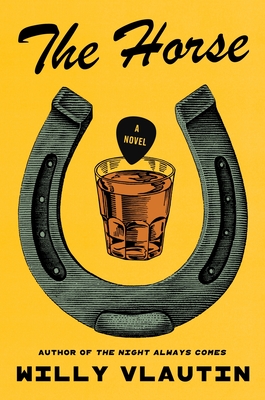
‘The Horse’ by Willy Vlautin – The Sad Life of a Guitarist-Songwriter Playing on the Casino Circuit


‘The Horse’ by Willy Vlautin      (2024) – 194 pages


Back when live music was still considered something exciting and important, the casinos in the Nevada gambling cities of Las Vegas, Reno, Lake Tahoe, and other towns would hire live bands in order to attract crowds. Al Ward, now sixty-four, has spent much of his life playing in these bands and in his spare time writing country-western songs.

Some of the songs he has written: “Halfway Between Her and You”, “The Bottle’s the Only Friend I Got Left”, “Lynette”, “A Girl on the Streets of Tucson”, “A Busted Windshield and a Broken Hand”, “Waiting on a Winnemucca Bus”.

And no matter what he did or how hard he tried, his songs were good but never great. How many notebooks had he filled with half-good songs, songs that were almost?”

When Al was just nineteen, he played in a band with the singer Mona Maverick who was “curvy and blonde like an aging Playboy bunny”.

With makeup and in the right light she looked to be in her late twenties, but in the morning with no makeup she was every day of the thirty-eight-year-old bulimic alcoholic she had become.”

Mona came to Al’s room one night. They wound up in a short marriage.

And so it goes.

For a time he plays with two brothers called the Sanchez Brothers who are on the verge of making it big singing Al’s songs with Al playing in their band and the band even moving to Nashville until one of the brothers overdoses.

Later he meets the love of his life, Maxine, but that gets messed up too.

Al is now an old man, a drunk and lazy ex-musician, and has become thoroughly disenchanted with the music scene. He has secluded himself in the Nevada desert fifty miles from the nearest town. He lives by himself on canned soup and instant coffee.

A blind horse wanders on to his property. The coyotes attack the horse, and Al shoots one of them. Al wonders if he should just shoot the blind horse and put it out of its misery, but he can’t do it.

It’s a sad life, but sometimes reading about the hard-luck life of someone else can cheer one up.


Grade:    A-