‘Lolly Willowes’ by Sylvia Townsend Warner (1926) – 222 pages
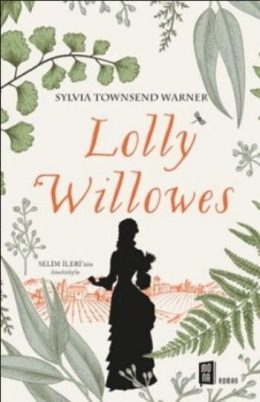 ‘Lolly Willowes’ is what I would call a serious comedy about a single woman who finds a very unusual, definitely bizarre, and highly effective way to achieve her goal. And what is Laura’s goal? To keep her other family members and anyone else from interfering in her single life.
“Her father being dead, they took it for granted that she should be absorbed into the household of one brother or the other. And Laura, feeling rather as if she were a piece of property forgotten in the will, was ready to be disposed of as they should think best.”
Laura likes to wander the hills and valleys looking for herbs, flowers, weeds, and other plants to boil into concoctions. In this, she shows herself to be the true heir of her ancestors who created a brewery where beer is distilled from various plants and grains. However she will be given no chance to operate the brewery, since her brothers were designated to run the operation.
World War I was even more brutal than World War II in terms of the large number of soldiers who were severely injured or killed. After the war, there was a large surplus of women to men in England and other places. Thus many women remained unmarried.
Instead of having a place or a life of their own, these middle-aged English single women, then called spinsters, would live with their close relatives’ families as somewhat of a fifth wheel on a four-wheel car. Her nieces and nephews do not call her Laura; they call her Aunt Lolly.
“There was no question of forgiving them. She had not, in any case, a forgiving nature, and the injury they had done her was not done by them. If she were to start forgiving she must needs forgive Society, the Law, the Church, the history of Europe, the Old Testament, great-great-aunt Salome and her prayer-book, the Bank of England, prostitution, the architect of Apsley Terrace, and half a dozen other props of civilization.”
After many years, Laura finally escapes the clutches of her extended family and goes to live in rural Great Mop which is in the Chiltern Hills. Here she has the best time of her life wandering the hills and valleys, picking flowers and herbs, and visiting with her neighbors. It was “lovely to live at your own sweet will” and she was “pleased to be left to herself”. She is just beginning to enjoy herself, when her nephew Titus shows up. Titus is the one relative who is the closest in attitude and avocation to Laura, but she still resents his intrusion into her new life.
“When she was with him she came to heel and resumed her old employment of being Aunt Lolly. There is no way out.”
However Laura does indeed find a way out, as I said before, in a highly unorthodox manner.
Towards the end of ‘Lolly Willowes’, Laura gives a long impassioned speech (to Satan) on the plight not just of single women but of all women. If you get a chance, read it carefully. It still rings true.
Grade: A











 Tony's Book World
Recent Comments