Archive for the ‘Book Reviews’ Category

‘Study for Obedience’ by Sarah Bernstein – A Young Woman Shunned


‘Study for Obedience’ by Sarah Bernstein   (2023) – 189 pages


How can one individual uproot an entire town’s prejudices which they have been nursing for hundreds of years? The young woman in ‘Study for Obedience’ attempts to overcome the townspeople’s animosity toward her by leaving dolls woven from willow on doorsteps and windowsills. This act only causes the townspeople to revile her more.

When our young woman moves to this small town in “a remote northern country”, she is not just an outsider who is at first distrusted. She visits the town cafe where all the townspeople customers shun her.

Did I not have a right to a cup of coffee, a slice of pie? What had I ever done wrong?”

She does not speak their language. When the farmers start having calamities with their animals and crops – “the madness and extermination of the cows, the demise of the ewe and her nearly born lamb, the dog’s phantom pregnancy, the containment of domestic fowl, a potato blight” – her presence in the town is blamed for them all.

The young woman’s brother who moved to this town first has not faced the prejudice or ill will that she has faced. Why not? That is a question I still have from this novel.

They are both from an ethnic group and a religion that has been reviled in the North for a long, long time.

It was the late twentieth century. What did we have left? A prayer book, some scraps of song, a history lesson beginning with devastation.”

‘Study for Obedience’ is challenging and original. It is not a comfort read. There is no dialogue in the novel, no well defined characters beyond our young narrator herself, and very little plot. The conclusion is open-ended with no resolution to the problem of this town’s hatred for her. Perhaps there is no resolution, no happy ending. This novel has the ambiance of a fable, not an upbeat fable. It has been compared to the Shirley Jackson’s story ‘The Lottery’ which also deals with the sinister side of small town life in a different way.

‘Study for Obedience’ is an authentic attempt to deal with pervasive anti-Semitism even in the years after the Holocaust.


Grade:    A


‘North Woods’ by Daniel Mason – The Bountiful, Yet Haunted, North Woods


‘North Woods’ by Daniel Mason    (2023) – 372 pages


‘North Woods’ is the captivating story of a plot of land in western Massachusetts and the people who lived there through the years from colonial times until the near present when it is now advertised as Catamount Acres.

The New England novel ‘North Woods’ begins with a horrific scene from King Philip’s War (1675 – 1676). This King Philip’s War, a war between the colonists and some of the indigenous native people of the region, was the largest calamity in seventeenth century New England and is considered to be the deadliest war in Colonial American history. More than 1,000 colonists and 3,000 natives were killed. More than half of all New England towns were attacked by native warriors, and many were completely destroyed.

With such a horrific beginning what could the future hold for this place in western Massachusetts?

The next scene in ‘North Woods’ centers on Charles Osgood and his two daughters Alice and Mary. In the 1770s Charles bought this piece of land, built a house, and started an apple orchard that produces the famous Osgood Wonder apples. Here we get word pictures of the beauty of the woods and flowers and other vegetation and the birds and animals who live there.

Everywhere the tracks of little animals, the deep steps of the deer. The snow renders their passage legible, reveals the long night’s silent maps.

Would they listen, the animals? She smiles ruefully, imagines the chipmunk scolding from his oak confessional. The gossiping chickadees. The wolf’s summary revenge.”

We get scenes of the idyllic country life as the apple orchard prospers. However given its bloody past, the place is haunted.

Later we get scenes from this site’s more recent history. These sections are written with a variety of characters and in a variety of styles which keep the goings on interesting. But we always come back to the apple trees, the chestnut trees, the squirrels, the beetles of the north woods. Yes, even the sexual exploits of a pair of beetles are described in several pages.

He mounted.

And then she threw him off, smashed him against the wall with such aggression that the peeping mites were scurrying in fear.”

Much of the later sections are devoted to uncovering the haunted ghostly happenings from the past.

What makes ‘North Woods’ a special delight is that the author Daniel Mason’s playful enthusiasm for his material shines through. It is written with a certain esprit with warmth and intensity. As I’ve shown he will interrupt the narrative with pictures, views of nature, poems and songs.

Now sing us a December song

To ease the cold of winter night.

The year, we fear, is not for long,

As is the day, as is the light.”

Not that the stories are all joyous; some are very dark as the actual history of the northeast United States really is. Some are ghostly.


Grade:    A


Gone, but not Forgotten Redux


In 2013 I posted ‘Gone but not Forgotten’ in which I highlighted authors who made a strong vivid impression on me and who had recently died. Now, ten years later, it is time again to remember those who have left us recently. This is a personal list of authors who may or may not have been all that famous but who had at least one work that I found impressive.

Günter Grass (1927 – 2015) The German writer Günter Grass wrote the Danzig Trilogy (‘The Tin Drum’, ‘Cat and Mouse’, and ‘Dog Years’) which I have read in its entirety and consider one of the great works of fiction. I would recommend anyone who loves literature read at least the first volume, ‘The Tin Drum’. Of Grass’s later work, I enjoyed ‘Crabwalk’ about the sinking of the Wilhelm Gustloff ship.

Ruth Rendell (1930 – 2015) Whenever I wanted to take a break from heavy duty literature, Ruth Rendell / Barbara Vine was my “go to” author. She published under two names. Her murder mysteries never failed to intrigue me.


Russell Banks (1940 – 2023) I see Russell Banks as one of the finest US realist writers, in the tradition of John Steinbeck. Banks usually wrote about working class people. Two novels of Banks that I can strongly recommend are ‘Continental Drift’ and Affliction’. There is also ‘The Sweet Hereafter’ about the aftermath of a bus crash which is probably the saddest novel I have ever read or should I say most poignant.

William Trevor (1928 – 2016) The Irish writer William Trevor, along with Elizabeth Taylor, were my go-to writers for a long time. If I couldn’t think of anything else to read, I would read another novel or collection of stories from either of them. Both were highly reliable for both stories and novels. For Trevor, I preferred his younger works which were always high-spirited and lively.

Anita Brookner (1928-2016) Anita Brookner was what I would call a writer’s writer. She never wrote less than exquisite sentences. She published her first novel at age 53, but after that she published about one novel a year which I always looked forward to. She never married and commented in one interview that she had received several proposals of marriage, but rejected all of them, concluding that men were “people with their own agenda, who think you might be fitted in if they lop off certain parts. You can see them coming a mile off.” She once joked that she should be in The Guinness Book of Records as the world’s loneliest woman – a “poor unfortunate creature who writes about poor unfortunate creatures”.

Michel Tournier (1924 – 2016) The French writer Michel Tournier was a fabulist who re-interpreted myths and legends. It was always a great pleasure for me to read his books. There is ‘Friday’ which was based on Defoe’s Robinson Crusoe. Others that I particularly liked are ‘The Ogre’, ‘Gemini’, ‘The Four Wisemen’, and ‘The Golden Droplet’.


Paula Fox (1923 – 2017) The US writer Paula Fox wrote a lot of children’s fiction and not so much adult fiction, but her adult fiction will last. Two novels of Fox that I highly recommend are ‘Desperate Characters’ and ‘The Widow’s Children’. It is her lack of sentimentality that lends her writing its force.


That’s all for now. I’m sure there are a few that I’ve missed.

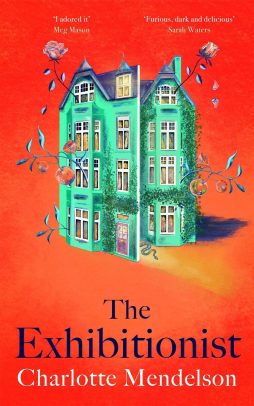
‘The Exhibitionist’ by Charlotte Mendelson – A Dysfunctional Artistic Family in London


‘The Exhibitionist’ by Charlotte Mendelson    (2022) – 294 pages


Ray and Lucia Barnes are married and are both artists in London. Ray had early success in his artistic career; now he is 65 and he hasn’t had a personal show, an exhibition, in decades, but he is having an exhibition in the weekend that is portrayed in ‘The Exhibitionist’. Lucia’s own artistic career has slowly been building. Any success she has that Ray finds out about enrages him, and Lucia tries to hide her achievements from him.

Lucia is a classic case of self-abnegation. Faced with Ray’s contempt, Lucia belittles herself constantly. Only recently has she had a little sunshine in her life as she has started an affair with Priya, a female member of Parliament. Ray Barnes is a monster. His brother David says that Ray “was always looking for someone to ruin”. He also has a doctor who provides him with illegal drugs. All three of their children have suffered from Ray’s cruel behavior. The oldest, Leah, has never left their home and spends her time defending Ray’s cruelties. The middle son, Patrick, has suffered so much abuse from Ray that he hates himself and cannot pursue his career desires. The youngest Jess is the only one who has escaped from Ray’s clutches by going to college and moving to Edinburgh. However she is still well aware of the damage Ray has done to her.

Some of the reviews of ‘The Exhibitionist’ have called the novel “bleakly comic”. I certainly agree with the “bleak” characterization, but I totally failed to see the humor in this dysfunctional family. The prose in this novel is exceptionally appropriate, but the terrible circumstances make everyone in this family overwrought in their speech and thoughts. In each section that is devoted to Patrick, the reader constantly worries that he is about to do himself in.

Will Ray’s exhibition be successful? Will Lucia be able to pursue and continue her affair with Priya despite Ray’s disapproval? Will Lucia accept the arts foundation’s offer of an apartment in Venice for a couple of months to pursue her artistic vision? It would mean leaving Ray for that time. Will Patrick take the cooking job that he’s been eyeing?These are a few of the central questions of this novel.

Despite the novel being well-written, I found it to be an overwrought, slow, and somewhat painful read.


Grade :   B+


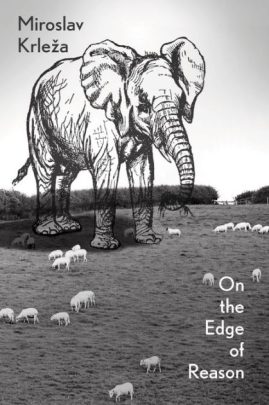
‘On the Edge of Reason’ by Miroslav Krleža – The Dangers of Speaking the Truth


‘On the Edge of Reason’ by Miroslav Krleža (1938) – 188 pages                Translated from the Croatian by Zora Depolo


The Doctor and his wife are invited to a dinner party in the vineyard on the veranda of the summer house of the great industrialist and benefactor, the Director-General. The Doctor and his wife were frequent guests of the Director-General as they were well-respected members of the community.

That night the Director-General is expansive, and regales his guests with stories from his past. He tells about how in the early days of his wine-making operation, some of the men who worked for him wanted to start a union. Then he brags about how four of them trespassed on to his property, and he shot them like dogs.

The other guests sat there not saying anything, but the Doctor says absent-mindedly, almost but not quite under his breath, that “It was all a crime, a bloody thing, moral insanity.”

The Director-General overhears the Doctor and is hugely offended. He even claims a little while later that the Doctor himself should be shot like a dog too.

The Doctor’s life collapses in the following days. No one else dares to offend the Director-General. The townspeople rush to castigate this Doctor who had the nerve to criticize their town’s great industrialist and benefactor. The doctor finds out his wife has been unhappy with him for a long time and she asks him for a divorce. He finds out that she has been carrying on with her baritone music teacher for years. However the Doctor agrees to take the blame legally for the divorce. Soon there is a newspaper article about the Doctor:

It stated that I was a promiscuous person, a slanderer, a paramour, divorced through my own fault, according to witnesses a confirmed adulterer, a problematic man, a morally sick case.”

The police start harassing him, and soon the Doctor is dismissed from his job and put on trial on trumped up charges.

Do you say what you really think, or are you like most people who keep their mouths shut and keep their opinions to themselves, especially concerning prominent people in your community?

In ‘On the Edge of Reason’, the Doctor accidentally reveals what he really thinks, and the results are disastrous for him.

Truly, you have set all the high-placed consciences of our elite against you for having dared to call attention to a common bandit and to tell him in public he is what he is: a bandit.”


Grade :    B+


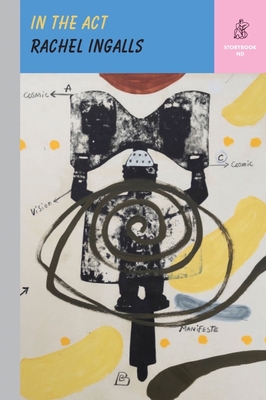
‘In the Act’ by Rachel Ingalls – Her Husband Builds a Sex Robot Named Dolly


‘In the Act’ by Rachel Ingalls   (1987) – 64 pages


The publisher New Directions has created a new series called “Storybook ND” in which they republish certain novellas, so far nine, in a hard cover readable format. Their slogan is : “The pleasure of reading a great book from cover to cover in an afternoon”. One of the novellas they chose was ‘In the Act’ by Rachel Ingalls.

I am very familiar with the work of Rachel Ingalls having read several of her novels and stories, and I have been on the lookout for more of her work for a long time. Ingalls died in 2019. She left behind a number of novellas which were hard to market in her time. Her specialty was the long story.

In ‘In the Act’, Helen and Edgar get along fairly well as husband and wife, but they do have their problems.

You’re being unreasonable.”

Of course I am. I’m a woman,” she said. “You’ve already explained that to me.”

Husband Edgar does have his good points.

He wasn’t too bad as a father. He actually wasn’t too bad anyway, except that sometimes he irritated her to distraction.”

Helen has taken many adult education classes which fill her days. When her classes end, Helen tells Edgar she’s going to stay home for awhile, and Edgar gets really angry. He tells Helen that his work requires that he have the house to himself. Why? Helen gets suspicious. Helen sneaks into his office and uncovers something that sort of looks like a woman. At that point Helen assumes it must be some kind of work project. A few days later she sneaks in again, and now it looks like a fully developed woman. She looks under her dress and then she gets angry herself. Dolly is beautiful and docile, every man’s dream. Helen stuffs Dolly into a suitcase and stashes the suitcase in a train locker near their house, unbeknownst to Edgar.

Later a professional thief named Ron steals Dolly out of the train locker and soon discovers her enticements. It’s “like having a wife, except that not being human, of course, she was nicer”.

Meanwhile Edgar finds out that Helen has taken his sex doll, and she tells him she won’t give it back until he builds her a male sex doll of her own.

That’s enough. ‘In the Act’ is a fun little novella and a fine reminder of Rachel Ingalls’ work.


Grade:   A


The Bee Sting’ by Paul Murray – The Final Review : A Family’s Skeletons in its Closet and Out of the Closet


‘The Bee Sting’ by Paul Murray   (2023) – 643 pages


Have you ever wondered about what kind of lives your parents lived before you were born? In their younger days, did your parents have the same kind of problems you have had, or were their problems completely different? How did your parents meet and later decide to get married? It is easy to forget that your parents were young once too.

Dickie Barnes owns a prosperous car dealership he inherited from his father. Dickie and his wife Imelda have two children, Cassandra and PJ. They live in a nice house in small-town Ireland. Everything is seemingly fine until the post-2008 Irish economic downturn. During the recession, the Barnes car dealership faced severe problems like many other businesses.

A fall as dizzying as the Barneses’ couldn’t come from simple economics. There had to be a moral element.”

‘The Bee Sting’ is the examination of a family tragedy from the long perspective of past family history going back thirty years. It is told from the viewpoints of each of these four family members. Daughter Cassandra is worried that she won’t be able to get into college with her best friend Elaine. Father Dickie is trying to keep the car business going. His wife Imelda doubts that Dickie has what it takes to run the business.

she and he The rich boy and the girl from the back arse of nowhere It should have been impossible It was so easy.”

Son PJ sees his family disintegrating.

From the reviews I’ve read, I get the impression that Murray’s previous novel ‘Skippy Dies’ is quite humorous, However ‘The Bee Sting’ is a heart-stopping dramatic realistic portrayal of a family in crisis. There are scenes in ‘The Bee Sting’ of terrible menace that will leave you on edge.

Despite its length. ‘The Bee Sting’ is a relatively quick read. The reader gets so immersed in this family’s situation that the pages fly by. ‘The Bee Sting’ has the depth that you would expect from a long novel. By depth I mean that the characters are more complicated and ambiguous than usual. Each of the main characters has their strengths and weaknesses, their good and not-so-good points.

We’re all different, but we all think everybody else is the same, he said. If they taught us that in school, I feel the world would be a much happier place.”

Author Paul Murray does take liberties with punctuation. When capturing a character’s thoughts or memories, he does not use commas or periods. I had no problems reading or comprehending this method. When our minds are in reverie mode, we do not have full stops or pauses, but keep rolling from subject to subject to subject.

You’ve had enough past frankly to last you a lifetime.”

The scenes from the past of father Dickie and of mother Imelda determine to a large extent the present predicament of the family. In the suspenseful conclusion, all of the family members, some of them armed, converge in a dark woods at night in a heavy torrential rain.


Grade :    A


‘Batlava Lake’ by Adam Mars-Jones – A Time in Kosovo


‘Batlava Lake’ by Adam Mars-Jones    (2021) – 97 pages


Adam Mars-Jones just recently published the third installment of his “semi-infinite novel”, ‘Caret’. I did want to read Adam Mars-Jones but I certainly wasn’t ready to commit to reading 752 pages which is the length of ‘Caret’. So instead I searched around among his previous works and came up with ‘Batlava Lake’, published in 2021 and only 97 pages.

‘Batlava Lake’ was rather a fun read. Englishman Barry Ashton is deployed to Pristina, Kosovo as a civil engineer attached to the Royal Engineers corps in the British Army. He is a civilian attached to a NATO peace-keeping mission to rebuild Kosovo in 1999 after it was destroyed by the Serbs.

The tone of this novella is light and conversational as Barry tells us about himself and his time in Kosovo. Batlava Lake is in Pristina; the English called it “Baklava Lake”. Barry is a regular English bloke, in no way enlightened. He calls the soldiers he works with “saps” He calls the Kosovo Muslims, “chogies”.

But Barry makes fun of himself too. He is getting divorced. He makes excuses for himself.

No good at playing games, no good at lying, rubbish husband material altogether.”

Recalling his time in England with his wife, Barry says stuff like :

Rather rebuild a broken country any day than face a bridesmaid who didn’t fancy the color of her dress, thinks the color doesn’t suit her complexion!”

Later there is a race across Batlava Lake between the civil engineer corps guys and the British army regulars in makeshift boats that each side built by themselves.

Reading ‘Batlava Lake’, I could imagine Adam Mars-Jones had fun writing in the voice of this wrong-headed but quite typical Englishman.

Batlava Lake

The tone is altogether lighthearted until they discover that the waters of Batlava Lake contain a terrible secret.

‘Batlava Lake’ is entertaining fare that held my interest throughout.


Grade:    A-


‘A Love Affair’ by Dino Buzzati – A Love Both Foolish and Hopeless


‘A Love Affair’ by Dino Buzzati    (1963) – 288 pages                    Translated from the Italian by Joseph Green


Women of today might not take kindly to the opening of this novel. Antonio Dorigo is a quite prosperous nearly fifty year-old stage set designer and architect in Milan, Italy. He has never been married. When Antonio wants to have sex, he calls Signora Ermelina who provides him with young women. It is a discreet operation. At the beginning of ‘A Love Affair’ Signora Ermelina sets him up with Laide who is only 19, underage. Antonio is satisfied.

What a wonderful thing, thought Dorigo, prostitution is!”

After a few times with Laide, Antonio becomes obsessed with her. Meanwhile Laide is totally indifferent to him.

Not that sex with Antonio gave her much pleasure, on the contrary, it clearly meant nothing to her at all.”

But the more she ignores him, the more obsessed with her Antonio becomes. Antonio offers to pay for her apartment and provide her with adequate spending money in the futile hope that she will like him just a little more. However Laide is always doing stuff behind his back and making lame excuses like visiting a sick mother. Antonio doubts her stories and constantly tries to catch her in a lie. There’s this guy Marcello who hangs around her apartment when Antonio is not there. Laide claims he’s a cousin, and that they do not have sex. Antonio becomes extremely jealous.

He’s never before found himself in a mess like this. He’s never found himself naked on a bed, eyes wide, watching a girl thirty years younger than himself, a cocky little whore without the least semblance of affection for him. He’s never found himself head over heels in love with a girl who doesn’t give a damn about him, who doesn’t even need him inasmuch as she could find a dozen just like him, who goes with him only because for the moment it seems convenient for her.”

With all Laide’s excuses, one assumes she is also carrying on with her prostitution sideline.

The title ‘A Love Affair’ must be ironic. The novel was published in 1963, and may be Buzzati’s answer to Nabokov’s ‘Lolita’.

For me, this overwrought affair goes on for much too long, for at least 150 pages, with Laide telling Antonio stories to cover up what she’s doing and Antonio trying to believe but doubting the stories. It felt like years and years were going by, but it all takes place within a year.

This somewhat repugnant lengthy realistic novel is much different from Dino Buzzati’s other works. I would recommend that a reader at least first read ‘The Tartar Steppes’ (which was recently republished by NYBR as ‘The Stronghold’) to get a much more positive view of Buzzati’s writing.


Grade:   B-


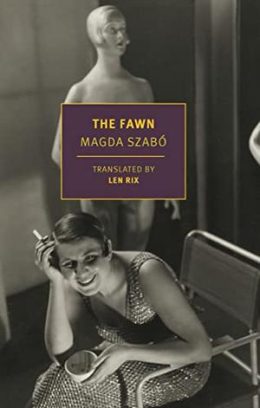
‘The Fawn’ by Magda Szabo – An Actress’s Life-Long Hatred of Angela


‘The Fawn’ by Magda Szabo       (1959) – 285 pages        Translated from the Hungarian by Len Rix


In ‘The Fawn’, our narrator Eszter descends from an aristocratic Hungarian family. However due to her sickly lawyer father’s frequent illnesses, he stays at home and does not practice law. Thus the family lives in reduced circumstances with Eszter’s mother making a little money by giving piano lessons to children in the neighborhood. Eszter as a child has to do the housework that her mother would ordinarily do, but the family remains poor.

One of the neighbor girls who takes piano lessons from Eszter’s mother is Angela. Angela’s family is well-to-do, and she is a beautiful child. Eszter hates her instantly.

I have loathed and hated Angéla from the moment I first saw her. Even when I am dead, if there is any life after death, I shall hate her still.”

The story in ‘The Fawn’ takes place in those turbulent years during and after World War II when first Germany invaded Hungary, and then the Russians attacked and defeated the Germans, and then the Russians remained in Hungary, and Hungary became a satellite state of the Soviet Union.

As ‘The Fawn’ progresses, our narrator Eszter grows up and becomes a famous Hungarian actress in Budapest.

One tool which is very helpful in ‘The Fawn’ and that I wish more novels today would do is a list of the main characters at the beginning with a short description of their place in the novel.

Despite Eszter’s success as an actress, she retains her childhood hatred of Angela. When Eszter finds out that Angela is living in Budapest with a husband and that Angela’s husband is translating a Shakespeare play into Hungarian, you might imagine what happens next.

One of the aspects of ‘The Fawn’ that stood out for me is that the narrator of the novel, Eszter, is not a good person. It seems to me that in our more recent novels, the narrator, especially a female narrator, is assumed to be and usually is a very fine person. I found it refreshing having to deal with a narrator who is morally ambiguous at best.

That is the mark of a talented writer to me, that they don’t just try to get by with the good natures of their characters. The New York Review of Books must think the same way, since ‘The Fawn’ is the fourth Magda Szabo novel they have made available to us.


Grade :   A-


‘The Bee Sting’ by Paul Murray – Part I: So I Don’t have to Kick Myself for Not Reading It


‘The Bee Sting’ by Paul Murray      (2023) – 643 pages


In 2010, Paul Murray published the novel ‘Skippy Dies’. All of the reviews that I read at that time were very positive, and it went on to win numerous awards. The novel was said to be both comic and tragic at the same time, in other words right up my alley.

Ordinarily I would have been quick to get a copy of ‘Skippy Dies’ and read it. However there was one problem. ‘Skippy Dies’ was 672 pages long. How in the world was I going to read a 672-page novel and keep my book blog site active at the same time?

I kept postponing and postponing reading ‘Skippy Dies’. And at the same time, the reputation of ‘Skippy Dies’ seemed to grow as the years went by.

I kept kicking myself for not having read ‘Skippy Dies’.

In the meantime Paul Murray published another novel, ‘The Mark and the Void’, which did not create quite as much of a stir as ‘Skippy Dies’.

Now in 2023 Paul Murray has published another novel, ‘The Bee Sting’, and again this time the reviews are uniformly superlative. It’s been longlisted for the Booker Prize and so on.

But ‘The Bee Sting’ is again over 600 pages. However this time I’m not going to make the same mistake as I did with ‘Skippy Dies’. I began reading ‘The Bee Sting’ four days ago, and I am already to page 260 which means I’m already over 40% done with the novel.

This time Paul Murray has written an Irish family drama and not in a humorous vein. There are scenes of terrible menace in this novel. The opening quote is quite acute in capturing the mood of ‘The Bee Sting’:

Those are my best days, when I shake with fear.” – John Donne

‘The Bee Sting’ is working out to be a quite immersive read for this reader who is fully engaged in the lives of these four family members.

Stay tuned for Part II of ‘The Bee Sting’, my final review of the novel, which will appear after I complete the novel. In the meantime I will be publishing a couple of reviews of other novels I’ve recently read.


Dictatorship – It’s Easier than You Think


‘Dictatorship It’s Easier than You Think’, a graphic non-fiction by Sarah Kendzior and Andrea Chalupa       Illustrated by Kasia Babis    (2023) – 270 pages


This graphic non-fiction presents itself as a mock users’ manual for would-be dictators in the future. Some of the authoritarian techniques discussed are “Attack the press”, “Make it entertaining”, “Symbols and slogans”, “Personality cult”, “Gut all institutions of accountability”, “Get the opposition to appease you”, “Turn average citizens into troops”, “Pack the courts”, and “The Big Lie”. The book discusses the various brutal methods that such infamous dictators as Josef Stalin, Adolf Hitler, Vladimir Putin, Kim Il Sung, Benito Mussolini, and Idi Amin used to suppress and murder their own people and stay in power. Two things that sustain a dictator is a love of power and an absence of shame.

What did Stalin get in return for killing millions of his people? Land, money, and power – all those things that make a dictator’s life worth living.”

Today Putin is rehabilitating Stalin’s image in Russia with statues, in school textbooks, and with other propaganda.

Our host presents all this material in a somewhat humorous manner, but the goal of this graphic non-fiction is deadly serious, to remind us of the millions of their own and other people these dictators have murdered, and of the limited suppressed lives the people under these dictators must live. The ultimate goal is to convince people to reject dictatorship in their own country while they still can.

This graphic book covers would-be dictators as well as dictators. Alongside the severe techniques of these established dictators from the recent past and present, we get the flagrant misconduct of Jair Bolsonaro of Brazil and of Donald Trump.

The right to free speech is often used by politicians as a justification for hate speech.

Your base must never see their fellow citizens as human or they’ll be much less likely to beat and kill them.”

In 2016, counties that had Trump rallies experienced a huge increase in hate crimes compared to counties that did not host Trump rallies.

If this were written as a somber history text, it would be difficult to read of all the brutal murderous activities of all these dictators and would-be dictators. The graphic novel format personalizes the sorry events for the readers, so that they realize the extent of the evil committed by these dictators.

‘Dictatorship’ is a valuable book. There are many ruthless dictators in the world right now, and so far only a few fortunate countries have been able to avoid them. It can happen here.


Grade :   A


‘Big Swiss’ by Jen Beagin – A Female Sex Comedy


‘Big Swiss’ by Jen Beagin      (2023) – 323 pages


Much of the novel ‘Big Swiss’ is taken up with recorded transcriptions of patients’ sessions with a sex therapist/relationship coach called Om. Our main character Greta makes her living by typing out these recorded transcriptions. Greta becomes fascinated with the transcriptions of one particular patient, Flavia, whom she calls Big Swiss.

Big Swiss had not only courted disaster, she’d practically bought it a boutonniere.”

Greta is 45 years old, and Big Swiss is 28. Both women are bisexual; they each have had long-term relationships with men – Big Swiss is currently married to Luke – and a few flings with women.

So through her transcribing, Greta has all the intimate details about Big Swiss. I would expect that in this day and age a sex therapist would not hire a transcriber from the same town where the therapist is practicing, but if that were true here we wouldn’t have a novel. As it is, Greta gets to do some emotional eavesdropping on neighbors she may ultimately meet.

Finally Greta and Big Swiss do meet at the local dog park, Big Swiss not knowing that Greta has listened to all her sex therapy sessions. They begin an intimate affair, and a lot of raunchy lesbian humor follows. No, this is not a reprint of a novel, a sex comedy, left over from the swinging 1970s. For one thing, it is the women who are making the jokes about sex here.

I won’t quote the raunchier lines in ‘Big Swiss’. There are quite a few of these lines. Some of them are quite funny; some of them flew past me. No, not every novel is for every person. ‘Big Swiss’ is not a novel for me to grade.

But along the way there were some non-raunchy lines which I did appreciate. I will end with one of those:

At the time, Greta was just beginning to understand that human relationships were pure folly, because nothing was ever perfectly mutual. One person always liked or loved the other person a little more than they were liked or loved, and sometimes it was a lot more, and sometimes the tables turned and you found yourself on the other side, but it was never, ever equal, and that was pretty much the only thing you could count on in life. This went for relationships between friends, siblings, lovers, spouses, even parents and their children.”

Wise, quite wise.


‘Time Shelter’ by Georgi Gospodinov – “Does the Past have an Expiration Date?”


‘Time Shelter’ by Georgi Gospodinov  (2022) – 302 pages                Translated from the Bulgarian by Angela Rodel


Are you nostalgic for typewriters? For record players? For rotary dial telephones?

Do you want to return to some Golden Era of your own? The 1960s? The 1970s? The 1980s? Or some later decade? Can our memories of the past, real or imagined, protect us from the chaos of today? Bulgarian writer Georgi Gospodinov attempts to answer those questions for us in his wry philosophical historical novel ‘Time Shelter’.

I imagined how one day whole cities would change their calendar and go back several decades. And what would happen if a whole country decided to do so? Or several countries?”

In the 2023 International Booker Prize winning novel ‘Time Shelter’, each country in Europe must vote to decide what years of their past they want to return to, which years from the past really glowed for the people in that country. No country, except perhaps Switzerland, wants to return to the World War II years. The eastern European former Communist bloc countries do not vote to return to those God-forsaken years.

If Scandinavia couldn’t decide which of its happy periods to choose, Romania was also racked by doubt, but for opposite reasons.”

Each country chooses its happy decade.

The time is coming when more and more people will want to hide in the cave of the past, to turn back. And not for happy reasons, by the way. We need to be ready with the bomb shelter of the past. Call it the time shelter if you will.”

‘Time Shelter’ is a thought provoking novel that is quite playful and humorous at the same time. Perhaps the impetus for this novel was England’s Brexit decision. Instead of moving forward with the rest of Europe, England decided to go back to some nostalgic past.

Can the past be resurrected or re-member-ed again? Should it be? And how much past can a person bear?”

Throughout Europe there are historical reenactments until an unfortunate reenactment of Franz Ferdinand’s assassination almost starts “the second First World War”.

I’m pretty sure this is the first novel from Bulgaria which I’ve read. This is an excellent start.


Grade:    A


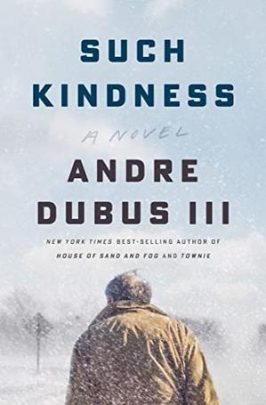
‘Such Kindness’ by Andre Dubus III – The Reclamation of a Man


‘Such Kindness’ by Andre Dubus III   (2023) – 311 pages


After a promising start, white guy Tom Lowe Jr. has become one of life’s losers. After high school, he worked hard, started his own carpentry business, got married to girlfriend Ronnie, and built houses including his own. Ronnie and he have one son Drew. But then they got sub-primed in the financial crisis of 2008 and lost the house and his own business. Shortly thereafter Tom fell three stories off the roof of a house on which he was working, and after that he started taking opioids to deal with the constant pain. He got addicted. His wife Ronnie divorced him and got remarried to a well-to-do businessman. He rarely sees his son.

Now Tom lives by himself in a cheap apartment subsidized by the government. He has been off the opioids for six years now but still cannot work due to the pain. He lives next to a tattooed single mother Trina struggling to bring up her three untamed kids. Tom is still bitter at the banker Mike Anderson who sub-primed him into taking an adjustable mortgage rate loan and thus caused Tom to lose his house to the bank. Tom is disgusted that only one banker in the U.S. was ever arrested in the Great Recession subprime scandal of 2008. Now Tom is considering committing a financial fraud himself. Tom is still the unlucky man blaming everyone else for his problems.

However a change gradually comes over Tom. He begins to realize that the people around him have their share of problems too, and maybe he can help them by listening attentively to them. He realizes that he probably will never be able to do manual work again and he begins to accept his fate. Instead of being the unlucky man blaming everyone else for his problems, Tom will empathize with others and he might even be able to help those around him.

I did not find these instances where Tom shows his new empathy toward others entirely convincing. Perhaps these encounters are a little too earnest without a trace of fun.

Tom writes to Mike Andrews, the banker of Tom’s disastrous subprime loan, forgiving him. In actual fact, this letter probably would hurt the banker more than a punch in the face would have.

In a way, this novel reminded me of ‘The Christmas Carol’ where Ebenezer Scrooge finally began to see the light and awakened Christmas morning a totally changed man. However ‘Such Kindness’ lacks Dickens’ light yet moving touch, and Tom Lowe’s redemption remains unconvincing even after over three hundred pages.


Grade:   B-


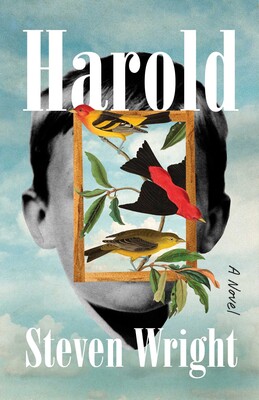
‘Harold’ by Steven Wright – A Precocious Third Grader


‘Harold’ by Steven Wright   (2023) – 241 pages


Harold, the seven year-old boy, is in the third grade. Mrs. Yuka is his teacher. Harold’s mind wanders, a lot.

He was in and out of paying attention like someone who was away and occasionally came by to pick up their mail.”

Of course this does present a problem for Mrs. Yuka. How can she get Harold to pay attention? But every so often Harold comes up with a brilliant unique remark, and Mrs. Yuka is impressed. Here is how Harold describes his wandering mind, his very active imagination:

He felt the way his mind worked was that there were thousands and thousands and thousands of tiny birds in his head and each bird represented a single thought.”

And then there is his classmate Elizabeth, the girl with the pretty eyes who sits three seats up from him.

Harold picked up a lot of his preternaturally odd way of looking at things from his grandfather Alexander who lives in Maine on a lake and whom he spent a lot of time with when Harold’s mother was put in the insane asylum for talking all the time.

Like Harold himself, the novel ‘Harold’ looks at things from an unusual slant. In other words, it is a unique one-of-a-kind treasure. The reader finds himself or herself reliving the third grade.

Sometimes sitting in Mrs. Yuka’s classroom, Harold dreams he is 238,900 miles away on the moon. Maybe he is with Tinga, a waitress on the moon. Later even Carl Sagan shows up.

Harold sat on the moon and tried not to think. He was exhausted from thinking. He tried to not think but he couldn’t do it.”

Steven Wright is a quite famous comedian and this is his first novel (Not to be confused with the widely acclaimed novelist Stephen Wright.). Some of you have probably heard this comedian’s mind-blowing routines. ‘Harold’ is filled with the same kind of offbeat humor as Wright’s routines. Like Steven Wright, Harold looks at things from a different angle.

At his first confession he had an argument with the priest over all the wars fought in the name of the church and that the idea of confessing his sins to him would be like apologizing to the devil over stealing a cupcake.”

One reviewer questioned whether or not ‘Harold’ even qualified as fiction since there is no plot or character development. I disagree, because I believe that the fiction tent is big enough to contain this unique work.

Of course the amount Harold didn’t know was way more than he would ever know. That’s why he was happy most of the time.”


Grade:   A


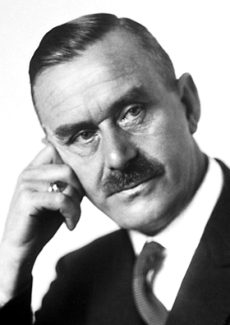
‘New Selected Stories’ by Thomas Mann – Thomas Mann for a New Generation


‘New Selected Stories’ by Thomas Mann    (2023)  –   242 pages         Translated from the German by Damon Searls


In his introduction, translator Damon Searls attempts to convince us to want to read Thomas Mann.

He is often thought to be cold, forbidding, humorless, a kind of impenetrable high-culture obelisk… I hope the new translations in this book show that he was in fact as warm, hilarious, and heartbreaking a storyteller as anyone; his wonderful humor in particular is far more than the supercilious “irony” he is generally credited with.”

‘Buddenbrooks’ remains my favorite of the work of Thomas Mann with ‘The Magic Mountain’ a close second. I needed no special convincing to read Thomas Mann.

The placement of the first story “Chaotic World and Childhood Sorrow” is meant to dispel any thoughts of Thomas Mann’s “coldness” a reader might have had, and it succeeds wonderfully. It is a family story written in 1925.

It would have been helpful for me if each short story or excerpt from a longer work were printed with the year it was written along with the title.

There are only two short stories, one complete novella (‘Death in Venice’), and two excerpts from longer novels (from ‘Buddenbrooks’ and from ‘Confessions of Felix Krull’), so the title is rather a misnomer. I do believe the book serves as a good sampler of the fiction of Thomas Mann, but it would be difficult to make any claims about Thomas Mann as a short story writer based on only two stories.

I had already read the entire ‘Buddenbrooks’ and read the novella ‘Death in Venice’ at least twice, but these are new translations by Damon Searls so I suppose they merited rereading. Still I was quite surprised there were only two short stories in this selection.

‘As for the ‘Death in Venice’ translation, the special magic that Venice has for the visitor arriving by boat is conveyed more vividly and colorfully in this translation of ‘Death in Venice’ than in the two previous translations that I have read. As always, Aschenbach’s intense interest in the young boy Tadzio remains questionable. I prefer to think of it as the innocent passion of an old man.

The last excerpt, the Felix Krull excerpt, really dragged for me. This excerpt contains reminiscences from his childhood rather than a well-formed short story. He even confesses,

I am writing down my memories first and foremost to entertain myself, and only secondarily the public.”

There surely must have been one other Thomas Mann short story with enough quality to replace it.


Grade:    B


‘My Search for Warren Harding’ by Robert Plunket – A Shaggy Dog Story


‘My Search for Warren Harding’ by Robert Plunket    (1983, 2023) – 277 pages


With his handsome looks, Warren G. Harding looked like a United States President. That’s about all he had going for him. Due to all the fraud and corruption during his administration, Harding was always considered the worst President in United States history until he got Trumped recently.

Perhaps the accomplishment Warren Harding is most famous for is fathering an illegitimate child while serving as a US Senator.

‘My Search for Warren Harding’ is a novel written way back in 1983 that was surprisingly republished this year. Apparently this novel struck a chord with enough readers including novelist Danzy Senna who wrote the introduction to the now republished novel.

It’s about this obnoxious young guy named Elliot Weiner who believes he has found his way to fame and fortune. He has tracked down Harding’s granddaughter Jonica from this mistress Harding had a long time ago. Better yet, the mistress Rebekah herself is still alive, now in her eighties. Maybe Elliot can even track down the correspondence between Harding and Rebekah. Actual letters from a former President could be very valuable.

As I mentioned before, this Elliot is very cynical and obnoxious. He is always fat-shaming Jonica, the granddaughter he is pretending to be smitten with. Elliot finds fault with everyone he comes in contact including former Hollywood stars who are friends with Rebekah and Jonica.

So here you are Elliot – on a Texas millionaire’s yacht, in the company of a big Hollywood star (snort) and a granddaughter of a President of the United States. Enjoy it while you can . . . So the yacht was tacky, so she was a washed up alcoholic – still I was thrilled.”

If you’re expecting to find out anything useful or even interesting regarding Warren Harding forget it, you are out of luck here. This is what is known as a shaggy dog story, a long rambling joke of a story that is amusing because it is so pointless.

We all want to take a Great Leap forward with our reading, but sometimes it’s fun to just stop and get the joke.

I am a fan of shaggy-dog stories, but perhaps this one went on for a little too long, by a hundred pages or so.


Grade:   B


‘First Love’ by Gwendoline Riley – “Considering one’s life requires a horrible delicate determination, doesn’t it?”


‘First Love’ by Gwendoline Riley   (2017) –  167 pages


Not many writers can write so genuinely about failure in intimate relationships across generations as Gwendoline Riley does in her novels. ‘First Love’ is an account of the sometimes affectionate, often toxic, marriage of Neve and Edwyn.

Along the way we get Neve’s background with her parents in Gwendoline Riley’s usual disjointed abrupt style. Don’t expect any time or place continuity or unnecessary filler in her novels. We are told things briefly on a need to know basis.

Neve’s mother divorced her father when Neve was six. The father was a restless bully who after their mother divorced him took out his aggressions verbally on his kids during their scheduled Saturday visits as well as on anyone else who got in his way.

Some of the same pattern later occurred in Neve’s marriage when Edwyn makes nasty comments regarding her life. Edwyn may be jealous of Neve’s success as a writer.

Meanwhile Neve’s mother, after her children left home, has gone about her divorced life by joining clubs and maintaining a frenetic social life, She did have another lover, Rodger, but he’s gone now.

You know I’ve been making this list, well, you don’t know, but I have, of things he does that I don’t like, or, you know, not very nice things, and it ran to three pages in the end so I did show him that.”

When her mother comes to visit the grown up Neve, her mother reads about another old entertainer being charged with sexual assault and says,

An archive picture showed the accused in a red jumper, grinning and doing an OK sign. Next to it was a shot of him on the court steps sour faced. My mother didn’t see the point in any of this. Back in the Seventies every girl was gripped, groped, and raped, said she lifting her chin, her accent getting coarser (you heard it on the rs).”

By the end of her mother’s visit, Neve is plainly relieved to see her go.

Gwendoline Riley certainly doesn’t sugarcoat Edwyn’s nasty interactions with Neve, and we readers wonder if Neve should get out now. The title ‘First Love’ can be considered ironic.

Now I have read two novels by Gwendoline Riley, ‘My Phantoms’ and ‘First Love’. Although I somewhat prefer ‘My Phantoms’, ‘First Love’ is also a strong exceptional read.


Grade:    A


‘The Lost Wife’ by Susanna Moore – A Woman’s Account during the Dakota Uprising of 1862


‘The Lost Wife’ by Susanna Moore     (2023)     172 pages


‘The Lost Wife’ is based closely on a real chapter in United States history, the Dakota Uprising of 1862 in Minnesota. Minnesota had become a state in 1858, and large numbers of white settlers were arriving every day. The Indians who lived there were being pushed on to reservations and were given next to nothing for the land they gave up in treaties. What little the Indians were given, they were being cheated out of by the white traders. Many of the Indians were starving to death. The Indian chief Little Crow and his men decided their only recourse was to attack the white settlements.

They said they were at war with an enemy who cheated and starved them, and would always cheat and starve them.”

In one infamous incident which is in ‘The Lost Wife’, one of the white traders was asked to give the Indians some of his own stock. The trader replied, “If the Dakota are so hungry, they can eat grass. Or their own dung, if they prefer.” Later the body of that trader was found with clumps of grass stuffed in his mouth, and on a plank laying across his legs were scrawled the words, “Feed your own women and children grass”.

During the uprising which lasted only a couple of months, more than 500 white settlers and over 100 soldiers were killed by the Indians. No one knows how many Indians were killed.

‘The Lost Wife’ is written in the form of a diary kept by a woman named Sarah which tells of her and her children’s capture by the Indians. This woman is also based on a real person, Sarah Wakefield. Thanks to the intervention of one of the Indians, Chaska, the lives of her children and herself were spared.

The first half of ‘The Lost Wife’ tells the backstory for Sarah, her harrowing life in Rhode Island before she arrived in Minnesota. I expect this is mostly fictional. After she arrives in Minnesota the story mostly adheres to the written records for Sarah Wakefield.

After the uprising, Little Crow and many of his followers fled to Canada. Of those who stayed, A US military commission sentenced 303 Indian men to death. Chaska was one of those sentenced to death. Despite damage to her own reputation, Sarah Wakefield spoke up for Chaska to be spared, and the authorities finally agreed, but by a possible administrative mistake Chaska was one of the 38 Indians hanged on December 26, 1962.

Basically ‘The Lost Wife’ is a solid retelling of this quite major event in United States history.


Grade:   B