- February 7, 1944: “Went out today for a little while. Letter today from Hemingway very cheering. Said I was his favorite living writer”.
Dawn Powell – The Diaries of Dawn Powell
The world is coming around to Ernest Hemingway’s view of Dawn Powell. After a long career as a fiction writer and barely supporting her alcoholic husband and autistic son, Dawn Powell died in 1965 and was buried anonymously in a potter’s field near New York City. At that time all her books were out of print, and they stayed out of print for over twenty years.
 The rediscovery of Dawn Powell began in 1987 when Gore Vidal wrote a long article in the New York Review of Books titled “Dawn Powell: The American Writer” in which Vidal calls Powell “our best comic novelist” and goes through in detail every book that she wrote. Note that Vidal does not qualify his remark with “our best comic novelist since Mark Twain”.
The next step in the rediscovery of Dawn Powell occurred in 1988 when Steerforth Press published three of her New York Greenwich Village novels, “Angels on Toast”, “The Wicked Pavilion”, and “The Golden Spur”. This is when I discovered Dawn Powell. These novels amazed me with their scenes from New York parties where the conversation at these parties was some of the wittiest talk I’d ever read. At that point I didn’t know that whatever room she was in, Dawn Powell was always the wittiest person in the room.
The first three books were so successful that Steerforth released more and more of her books in the 1990s including “A Time to be Born”, “The Locusts have no King”, “Turn, Magic Wheel”, “Dance Night”, and her great Ohio novel about her childhood “My Home is Far Away”.
Much of the revival of Dawn Powell is attributable to music critic Tim Page who has worked tirelessly to get this important writer back in print and in the spotlight. He prepared her diaries and letters for publishing and also wrote the biography of Powell. The diaries of Dawn Powell are a fascinating day-to-day account of Powell struggling to write these novels and plays. The diaries have achieved the status of Flannery O’Connor’s collection of letters, “The Habit of Being”.
In 2001, the Library of America chose to collect nine of Dawn Powell’s novels and publish them in two volumes. By that time, I had already read all nine of these novels. In these volumes Powell’s work is collected along side volumes of Twain, Melville, Wharton, and Hawthorne. Lisa Zeidner, wrote in The New York Times Book Review that Powell “is wittier than Dorothy Parker, dissects the rich better than F. Scott Fitzgerald, is more plaintive than Willa Cather in her evocation of the heartland, and has a more supple control of satirical voice than Evelyn Waugh.”
Here are some words from her diaries that provide some insight into Powell’s art.
-
“Wit is the cry of pain, the true word that pierces the heart. If it does not pierce, then it is not true wit. True wit should break a good man’s heart.
I find no gaiety or wit that is not based on truth. For me there is nothing delightful in blindness, in people being gay because they do not admit facts… Gaiety should be brave, it should have stout legs of truth, not a gelatine base of dreams and wishes.
The artist who really loves people loves them so well the way they are he sees no need to disguise their characteristics—he loves them whole, without retouching. Yet the word always used for this unqualifying affection is ‘cynicism’.”
One gets the sense that Dawn Powell’s wit was too sharp and honest for many in her lifetime.
Finally, I will end with Powell’s own list of her favorite books from her diaries.
-
March 29, 1953: What novels I have liked best—
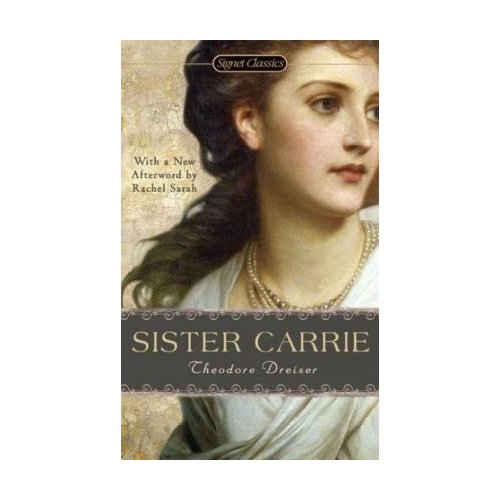
- Sister Carrie – Dreiser
Dodsworth – Lewis
Sentimental Education – Flaubert
Satyricon – Petronius
Daniel Deronda – Eliot (partly)
Dead Souls – Gogol
Lost Illusions – Balzac
Distinguished Provincial – Balzac
Our Mutual Friend – Dickens
David Copperfield – Dickens
Jenny – Undset
The Dawn Powell revival is still in an early stage.








 Tony's Book World

Recent Comments