“The Round House” by Louise Erdrich (2012) – 321 pages
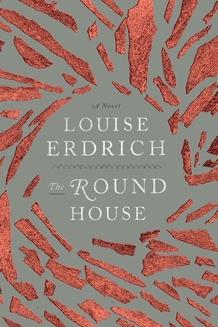
Thirteen year-old Joe is home where his mother struggles back after she is attacked. She returns from the assault in a stunned daze and retires to her room and stays there for over a week. Joe and his father, the tribal judge, must fend for themselves.
“The Round House” is the complete fictional story of the aftermath of this attack. The story takes place on an Indian reservation in North Dakota in 1988, and as always in the novels and stories of Louise Erdrich, we get a vivid picture of the lives of many of the people who live on or near the reservation. One man is in his nineties, and he can remember what life was like before being confined to the reservation. We also meet the boy’s extended family and his close friends and some of the neighbors. One gets the sense that this is a tight little community these people have and that they watch out for each other. The entire story is narrated through the eyes and ears of thirteen year-old Joe. Thirteen is a good age to tell this story in one sense, because the boy is old enough to really be out there in the neighborhood but not so old as to have other more private concerns like high schoolers would have.
Many of Erdrich’s novels have taken place on this reservation in North Dakota, and she is adept in developing the rich interactions between the people who live there. There is a lot of humor and a lot of heartbreak in “The Round House”. Louise Erdrich is often compared to William Faulkner because both writers focus on a little area and its small group of people who live there in novel after novel. Both Erdrich and Faulkner go deep into their small towns rather than wide. There are differences between the two writers. Faulkner is much more portentous and doomful in his writing, while Erdrich is more down-to-earth and sometimes more playful in her writing. There is a regrettable strain in Faulkner where he foretells the doom he sees in the mixing of the races. Erdrich makes her stand on race very clear. These Native Americans who have a strong ancestral bond and who are close-knit in their tribes and families were forced off their land and on to these small reservations. Yet they still have the tribal and family strengths today. Erdrich’s great passion is to show the dignity and at the same time the closeness and liveliness of these people living on the reservation, and in this passion she succeeds.
Having a child narrator, in this case a 13 year-old boy, does present problems especially for me. A child is more likely to have a simplistic, one-dimensional view of events and might lack the ambiguity and complexity of an adult narrator. That Erdrich uses the device of having the adult Joe tell this story of what happened when he was 13 did not completely solve this problem for me.
However “The Round House” is one of Erdrich’s stronger works, and this is because the entire novel centers on the one incident. Many novels today are collections of related stories. The collection type of fiction does have its pleasures, but sometimes the effect is more diffuse; one misses the intensity and depth of a novel which sticks to a single story. “The Round House” is one well-told story.












 Tony's Book World
Recent Comments