Archive for the ‘Book Reviews’ Category

Joyce Carol Oates – The Queen of Obsession


“I never change, I simply become more myself.”  – Joyce Carol Oates, ‘Solstice’

“In love there are two things – bodies and words.” – Joyce Carol Oates


200px-YouMustRememberThisToday I’m writing about Joyce Carol Oates.  No matter how infuriated I’ve gotten in the past over one or another of her novels or stories, I keep coming back to her.  I find her work to be annoying in the very best sense of the word.

I love Joyce Carol Oates or at least her writing.  I suppose that makes me some kind of masochist as Oates often is pretty mean in her depiction of the male characters in her fiction.  They are not all ax murderers or child molesters, but some of them are, and many of her male characters are creepy on some other level.

The fact that I love Oates’ writing does not keep me from hating her books occasionally.  “We Were the Mulvaneys” is about a perfect family until the daughter gets drunk at a party and is raped.  This terrible act is the beginning of the destruction of the Mulvaney family.  For hundreds of pages we see this perfect family unraveling as a result of this one horrible act.   I found all this sad and overwrought and obsessive, even though it probably was accurate.  Perhaps I didn’t like “We Were the Mulvaneys”, because I didn’t like what happened to this family.  Maybe this fiction was too powerful, too honest for me.
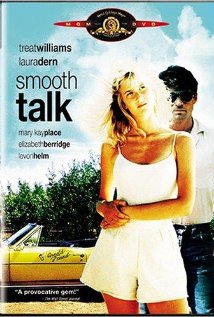
MV5BMTQwNDI2ODc2NV5BMl5BanBnXkFtZTcwMjM0MTcyMQ@@._V1_SY317_CR9,0,214,317_In 1966, Oates wrote a story called “Where Are You Going, Where Have You Been”.  It is the story of a young male drifter who drives around in his car trying to pick up girls living in remote farm houses.  It is supposedly based on the true story of a Tucson, Arizona serial killer.  Later it was made into an excellent movie, “Smooth Talk”. starring Treat Williams and Laura Dern.   This story is menacing in the extreme.  Joyce Carol Oates dedicated the story to Bob Dylan.  This is a strange story to dedicate to him. About 15 years ago, I tried to figure out why this story in particular was dedicated to Bob Dylan.  There was one obscure site on the Internet at that time which said the story was dedicated to him, because Oates disapproved of  Dylan’s several casual relationships with young women.    Today when I research that same question no mention of that previous reason can be found.  Today we find the real reason Oates dedicated the story to Bob Dylan is because she was mightily impressed and inspired by the Dylan song ‘It’s All Over Now, Baby Blue”.
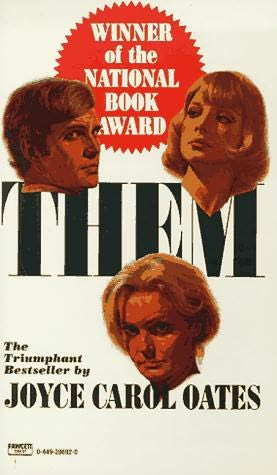
n23119My first experience with Oates was reading her early novel ‘them’.  I immediately saw that Oates was a tougher, meaner, more direct writer than other woman novelists at that time.  Over the years I’ve read many fine novels by this extremely prolific writer with whom hardly any of us readers can keep up.  Here are a few that I’ve especially liked: “Wonderland”, “Marya: A Life”, “You Must Remember This”, “I’ll Take You There”.  Joyce Carol Oates is also about the best short story writer around.  If you want a quick jolt, read one of stories.

oat0-034One thing that Oates is known for is bringing her personal obsessions into her fiction, and one of her obsessions is men’s mistreatment of women.  That gives her a lot of material to work with.  Whether  it is a man being psychologically dismissive of a woman’s personality or a man being psychotically violent toward women, you will find them in Joyce Carol Oates’ fiction.  Her obsessions bring an intensity to her writing that is missing from other authors.

I will be reviewing her new book “Evil Eye: Four Novellas of Love Gone Wrong” in the upcoming days.
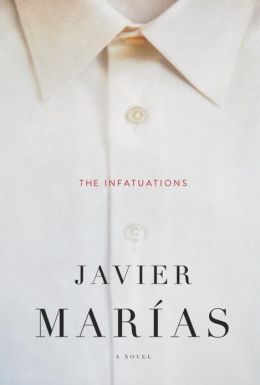
‘The Infatuations’ by Javier Marias

“The Infatuations” by Javier Marias  (2013) – 338 pages  Translated by Margaret Jull Costa

9780307960726_p0_v1_s260x420

We have all heard the rules for good fiction writing: well-defined characters, sharp dialogue, exciting plot. It is as if there is an imaginary fiction instructor inside our heads repeating these rules over and over. However Javier Marias ignores all these rules, but it does not matter at all.  Let me elaborate.

Well-defined Characters.  “The Infatuations” begins with our narrator going to a restaurant for breakfast each workday morning, and a married couple, ‘the Perfect Couple’, are also there each day.  Our narrator observes this couple carefully.  It is only on page 45 that the narrator is finally identified as a woman, ‘the Prudent Young Woman’.  Up until that point, I had assumed that the narrator was a man. The narrator is constantly expounding, explicating, or speculating in detail on some matter.   I mistakenly associated these ways of thinking with men.  But after all it is the twenty first century, and maybe women think a lot more like men than I ever thought they did.  Let’s just say that Marias gave no hints as to the sexual identity of the narrator.  On the other hand our imaginary good fiction writing instructor in order to achieve a well-defined character would have had our woman narrator adjusting her skirt on page one, even though women don’t wear skirts that much anymore.

Sharp Dialogue.  Our imaginary fiction instructor would say that there should be a lot of back-and-forth in dialogue between characters, and no one character should talk for too long.  Yet Marias totally ignores this rule in “The Infatuations.  In this novel conversations between characters tend to be a series of long monologues of up to two pages.  I hesitate to use the word ‘philosophy’ to describe these conversations, because that would make them sound a lot less interesting than they actually are.  These long conversations are entirely fascinating.

Exciting Plot.  Well, there is one murder in “The Infatuations” which takes place off-camera, so to speak.  Readers should not hold their breath waiting to find out what will happen next, because nothing much else does happen.  The rest of the novel is discussion and speculation about that murder.  Yet Marias’ writing sentence-by-sentence is so captivating that at least this reader did not feel the need for any more action.

Here are a few sentences from “The Infatuations” which are quite typical of the quality of discourse in the novel.   See if you like them as much as I did.

 “When someone is in love, or, more precisely, when a woman is in love and in the early stages of an affair, when it still has all the allure of the new and surprising, she is usually capable of taking an interest in anything the object of her love is interested in or speaks about.  She’s not just pretending as a way of pleasing him or winning him over or establishing a fragile stronghold, although there is an element of that, she really does pay attention and allow herself to be genuinely caught up in what he feels and transmits, be it enthusiasm, aversion, sympathy, fear, anxiety, or even obsession.”

 There has been some talk of Javier Marias as being a potential future Nobel prizewinner.  I’ve read several novels by Marias, and each one has been an enjoyable as well as a worthwhile experience..  He would certainly be a stronger laureate than some of the recent previous winners (Daniel Fo?).

Although Marias does not follow the rules.

‘A Tale for the Time Being’ by Ruth Ozeki

“A Tale for the Time Being” by Ruth Ozeki  (2013)  – 418 pages

A-Tale-for-the-Time-Being-by-Ruth-Ozeki-401x349

“A Tale for the Time Being” is made up of two main stories.  One story takes place in Japan and concerns 14-year old girl Nao Yasutani and her family.  The other story is about a writer named Ruth and her husband Oliver who live on an island on the Canadian coast near Vancouver.

The story of Nao and her family is captivating and held my interest throughout; the Canadian story not so much.  The Canadian story is little more than a framing device for the Japanese story. 

“The word ‘now’ always felt especially strange and unreal to me because it was me, at least the sound of it was.  Nao was now and had this whole other meaning.  In Japan, some words have kotodama, which are spirits which live inside a word and give it a special power.”

 You see Nao knows both Japanese and English.  She and her mother and father lived in Sunnyvale, California for several years.  Her father did quite well in the dot.com boom of the late 1990s until he lost his job.  Now Nao and her family have returned to Japan where Nao is persecuted mercilessly by her classmates for her American ways, and her father is contemplating suicide.

Things begin to change when Nao and her father go to see her great grandma, 104 year-old Jiko Yasutani, who  is now a  nun in a monastery.  Nao learns about her great-uncle Haruki who was one of the suicide Kamikaze pilots during World War II.   Through his diaries, we learn his full story.

Nao’s voice in the novel  is that of a typical 14 year-old girl, gratingly adolescent and all.  The great grandma Jiko is stereotypical in her ancient all knowing wisdom.  However these things don’t matter, because the Japanese story is so fascinating it sweeps other concerns aside.

If only the Canada story were so gripping.  I suppose Ruth Ozeki wanted to portray a typical Canadian couple in Ruth and Oliver, but the best way to describe this couple is ‘bland’.  As I mentioned before they frame the Japanese story, and provide a means of getting that complete story told.  However enough pages are devoted to Ruth and Oliver that their story should have added more value to the novel than it does.

There are several references to Marcel Proust and his “In Search of Lost Time” which I did not find particularly informing or interesting.

Mention is made of the Fukushima nuclear accident and the movement of radiation across the Pacific.

Overall “A Tale for the Time Being” is a strong novel that helped this reader better understand the Japanese way of facing life and better realize that this Japanese family has the same crises of conscience we all share.    My main impression is that Ruth Ozeki tried many audacious things in this novel, some which worked extremely well and some which did not.  I appreciate her fearless ingenuity and was tremendously moved by large parts of this novel.

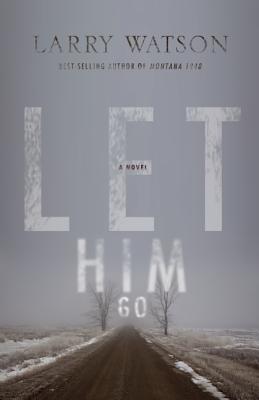
‘Let Him Go’ by Larry Watson

“Let Him Go” by Larry Watson (2013) – 269 pages

9781571311023

George and Margaret Blackledge are out to get their grandson back, and nothing will stop them.  The case here must be a fairly common situation today.  A young couple gets married, have a kid or kids, split (In this novel’s case the young husband dies).  The woman usually gets the kids, and the paternal grandparents are shut out from their grandchildren to a lesser or greater extent.  The woman takes up with another man on whom the paternal grandparents cast a particularly skeptical eye.   Then the woman and her new man take off for another town or state taking the kids with them, leaving the paternal grandparents in their dust.

Most grandparents might complain about this situation but will leave the thing alone.  Not George and Margaret.  These two grandparents are so sure of their own goodness and the new defacto step-father’s badness, they decide to attempt a ‘rescue’ of their grandson even if they have to break the law to do it.   George takes his gun with him.  They leave North Dakota and head to Montana to get their grandson back by any means possible.  At first one doubts their sense of moral superiority, but soon events unfold that reveal the essential shabbiness of their grandson’s new plight.

“Let Him Go” is an intense violent novel.  I have previously read Watson’s “American Boy” and “Montana 1948”.  Those were wistful coming-of-age nostalgic novels that take place in the northern states of Montana, North Dakota, and Minnesota.  Those novels are strong, because of their sense of complex moral ambiguity  This new novel “Let Him Go” takes place in the same locale, but has a new sharper edge to it.  It is dark and unrelenting in its violent view of the world.

I did not like George and Margaret, the main characters, because they are so sure of their own goodness.  They have no doubts in their own rightness in taking this grandson away from his new family.  Yet the novelist Watson sides totally with these aggressive grandparents. As it turns out, the family they confront, the Weboys, are about as mean as can be.  Watson seems to be painting this story as an epic battle of good versus evil.  This does not seem realistic to me.  Real life is usually more inconclusive.    Both sides in this custody dispute are quick to take out their weapons and do real damage to each other.  The results are about what one would expect.

I know some reviewers have praised this intensity in Watson’s new novel.   The writing is sharp in all of these chapters of 5 or 6 pages, and there is little chance a reader will lose interest.  My only criticism is that the story is a little too simple-minded to be entirely realistic.  Perhaps if Watson had given a little more background on how these grandparents knew their grandson was in a terrible situation, I could have accepted their aggression.  But I suppose more background would have slowed down the pace of the novel.

A Dozen of My Favorite Novellas Written by Women

6211222294_4e421aa9ab_mNovellas are short and sometimes sweet and sometimes not sweet at all.   A reader does not need to invest much time in a novella, yet the best of these short novels can affect one tremendously.  Here are some by female writers which are favorites of mine.  See also “A Dozen of My Favorite Novellas Written by Men”.

‘Ethan Frome’ by Edith Wharton (1911)   This winter novella is by one of the great United States writers. It also may have scared many off sledding for years.

“They seemed to come suddenly upon happiness as if they had surprised a butterfly in the winter woods” ― Edith Wharton, ‘Ethan Frome’

 ‘Miss Lulu Bett’ by Zona Gale (1920)   I read this book because Zona Gale was born in Portage, Wisconsin which isn’t too far from my boyhood home near Sparta, Wisconsin.  “Miss Lulu Bett” was a sensation in the 1920s, adapted into a play, and turned into a high quality silent movie in 1921.  Zona Gale was an early feminist, but “Miss Lulu Bett” is a light, playful and still enjoyable novella.

 9781558324824_p0_v1_s260x420‘Mrs. Caliban’ by Rachel Ingalls (1982)  In the 1980s, Rachel Ingalls was hailed as one of the best young writers. I’ve read most of her work. Now she has almost totally disappeared from the literary scene, certainly not due to a lack of talent but apparently on her own preference.  “Mrs. Caliban” is a bizarre story of an affair between a California housewife and a green aquatic creature named Larry.

 jeanbrodie‘The Prime of Miss Jean Brodie’ by Muriel Spark (1961)  No other novella covers as much ground as “The Prime of Miss Jean Brodie” as we follow six girls in the Brodie set from the age of 12 to the age of 18 as well as several teachers at the Marcia Blaine School in Edinburgh.  Is Miss Jean Brodie a good teacher or a bad teacher?  Interesting question.

 ‘The Visitor’ by Maeve Brennan (1940s, 2000)  “The Visitor” is a dark story of estrangement  about a young woman’s painful return from Paris to her home in Ireland.   This masterpiece was Maeve Brennan’s earliest work, written in the 1940s but not published until the year 2000.

 ‘The Bookshop’ by Penelope Fitzgerald (1978)   I could have picked any one of several strong Penelope Fitzgerald works that could have qualified as novellas.  A widowed woman opens a bookshop, and its success spurs the hostility of the other shopkeepers in the neighborhood.

13100188 ‘Loving Sabotage’ by Amelie Nothomb (1993)  A light-hearted novella about childhood.  This is a good place to start (Complete Review gives it an A+) with Belgian writer Amelia Nothomb.

‘Cranford’ by Mrs. Gaskell (1853) – In “Cranford”, Mrs Gaskell writes of an English country village, and she gently but thoroughly satirizes its inhabitants.

“But I was right. I think that must be an hereditary quality, for my father says he is scarcely ever wrong.” ― Mrs. Gaskell, Cranford

‘The Shawl’ by Cynthia Ozick (1989)  A pitch perfect story of Rosa and Stella who are locked in a German concentration camp.  The story picks up 40 years later when Rosa and Stella are refugees in the United States.

“We often take for granted the very things that most deserve our gratitude.” – Cynthia Ozick

 The_Ballad_of_the_Sad_Cafe_by_Carson_McCullers‘The Ballad of the Sad Café’ by Carson McCullers (1951)  This is a southern United States story about the mysterious nature of love, the strange personal roadblocks that stand in love’s way.

“And the curt truth is that, in a deep secret way, the state of being loved is intolerable to many.” ― Carson McCullers, ‘The Ballad of the Sad Cafe’.

        .

.

Mitsou’ by Colette  (1919)  A love affair between Mitsou who is a petite music hall singer / dancer and a nameless lieutenant mostly told in letters and dialogue.  Having worked in music halls herself, Colette wrote about what she knew, and her novellas are delightful.

‘Black Water’ by Joyce Carol Oates (1992)  This is the Ted Kennedy Chappaquiddick novella.  Oates’ obsessions can infuriate, her plot lines can be artificial and clanky, but often her fiction can be interesting and moving in the extreme.  I keep coming back to her writing.

These are all by women.  Men’s novellas will follow in a few weeks.

‘Fools’ by Joan Silber

‘Fools’ by Joan Silber  (2013) – 255 pages

201307-omag-fools-284xfall

Joan Silber is a writer who can make the people in her stories come vividly alive in just a few pages.  I discovered Silber a few years ago when I read her book “Ideas of Heaven: A Ring of Stories” and since then I’ve been on the lookout for her fiction.

“Fools” is a story cycle, a group of lightly interconnected stories.  The first story concerns six friends living in Greenwich Village in the 1920s. The other stories relate to these six friends one way or another.

Joan Silber writes about people in the United States you seldom hear about.  These are people who feel a social responsibility for the people around them, people who believe their own personal happiness is related to the well-being of those who are less fortunate.  In this time of extreme personal greed, it is refreshing to read about folks who are actually concerned about the poor and the outsiders around them.

 “I do like life-stories. The deepest ironies are in those lurching shifts people make, bit by bit.”  Joan Silber, in an interview with The Millions.

 My favorite story here is “The Hanging Fruit”.  The story is told by a young guy whose parents run a hotel in Palm Beach in the early 1960s.  His romantic life becomes complicated, and one day he steals some money out of his parents’ safe at the hotel and runs off to Paris.  He wastes all his money on women and booze, and then his only means of getting any money is playing his clarinet in public places.   Later he sobers up and moves to New York and runs a halfway house for men coming out of prison.

 “His dating life had scared him about the risks of ending up with someone shrill or cloying or shallow or stupid.  I was at the very least none of those things.” 

 All the stories in “Fools” are rapid reads that cover a lot of ground quickly.   Each story is a wide panorama of life.  One might wish that each story had fewer characters, less activity, and a shorter time frame.  This would allow Joan Silber to go deeper into the individual characters and the separate issues raised by the plot.   As it is, the stories fly by in a whirlwind of people and activities leaving little lasting impression on the reader.

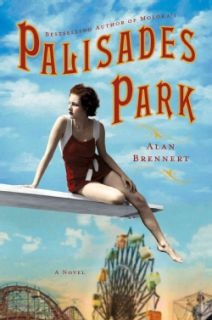
Palisades Park by Alan Brennert

“Palisades Park” by Alan Brennert  (2013) – 416 pages

Palisades

I read “Palisades Park” about two months ago but delayed writing about the book.  But now it is almost Labor Day, and the amusement park / county and state fair season is almost over.  So here goes.

First I could print some of the lyrics of the old 1962 hit song, “Palisades Park” sung by Freddy Cannon (written by ‘The Gong Show’ guy Chuck Barris) as other reviewers of the book have done.  It would perhaps set the mood, but why bother?

Then I could tell about my great fascination with the carnival midways at the county fairs, state fairs, and especially the La Crosse Interstate Fair when I was a kid.  There were the carnival rides, the gyp tents, the daredevil acts, and the freak shows, but who cares?

I could describe the broad outlines of the story in “Palisades Park”.  The parents of Eddie Stopka take him to Palisades Park when he is ten years old, and that day Eddie already develops a lasting love of the Park.   A couple of years later his dad dies, his mother remarries, and then his new stepfather burns up Eddie’s treasured baseball card collection as a wicked form of punishment, so Eddie runs away and gets jobs as a roadie in the South setting up and taking down the carnivals at county fairs there.    Later he secretly returns to New Jersey, gets a job at Palisades, meets his wife there, and opens a French fry stand at the Park.  He has two kids, Antoinette (Toni) and Jack, who also have their own adventures at the Park.   The daughter Toni becomes one of the main characters in the story.

Thus we get nearly the entire history of the Park seen through the eyes of Eddie and his family.  We are there when the protests against the Park’s policy prohibiting blacks from using the pool begin.  Eddie and his family are on the good side of history as his daughter Toni joins the protests which are successful in integrating the Palisades Pool.

The years at Palisades Park that are covered in the book were a nostalgic time when the owners of the Park had the utmost respect for the people who worked for them and made sure all their workers were treated fairly and were adequately compensated.   At the same time Eddie does all he can to make life pleasant for visitors to the Park and to make Palisades Park a success.  One time Eddie has to rescue visitors from a raging fire.  Eddie is the solid rock around which the novel “Palisades Park” is built.

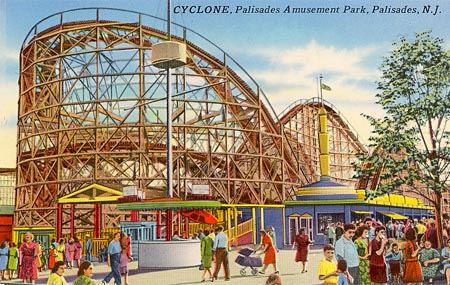
palisades_park“Palisades Park” probably won’t win any prizes for fine literature, but it is everything that a novel about life at an amusement park should be.  It held my interest throughout, and it made me care what happened to Eddie and his family.  There are some jolting surprises in the story, but they fit in with the life at Palisades Park.

‘Love, Dishonor, Marry, Die, Cherish, Perish’ A Verse Novel by David Rakoff

Love, Dishonor, Marry, Die, Cherish, Perish”  by David Rakoff   (2013) – 113 pages

The infant, named Margaret, had hair on her head

Thick and wild as a fire, and three times as red.

Love-Dishonor-Marry-Die-Cherish-Perish-201x300This entire novel is written in rhyming couplets.  The technical name for the lines in this novel is ‘anapestic tetrameter’, lines of four feet,  each of three syllables, the stress falling on the last.  This information comes from a brilliant article by Alexandra Schwartz about Rakoff’s novel in the New Yorker, an article that if you are truly interested in reading Rakoff’s book, you have got to read.  But don’t let the words ‘anapestic tetrameter’ throw you; This is the same couplet structure as the poems ‘The Night Before Christmas’ and Dr. Seuss’s ‘Yertle the Turtle’.

The effect of all this rhyme is quite sing songy, but the verse must carry some heavy weight here.  It must carry all the emotion of that long list of verbs in the title above as well as all the wild highs of gay sex in San Francisco in the Seventies.

O just like the song says, my heart’s San Francisco’s

(Suck on that dear, while I work out where this goes…)

From the very first day Clifford couldn’t conceive

Why anyone ever decided to leave.

Hills, bay, and art, ineluctably bound

To make Clifford feel, I was lost now am found.

And crowning it all was the chief among joys:

The liquid ubiquitous river of boys.

Fuckable, kissable, dateable, rentable,

Faeries and rough trade, or highly presentable,

Stupid as livestock or literate in Firbank,

All of it galaxies distant from Burbank.    

 As a hetero, these lines make me feel . . . uncomfortable, perhaps as uncomfortable as a gay might feel when reading racy sex scenes between men and women.

After my attitude in the previous sentence, am I allowed to criticize this book?

Going ahead, my main problem is that I read another novel also about San Francisco in the Seventies which was written in couplets too.  That novel in verse was “The Golden Gate” by Vikram Seth.  I suspect that book was written by a closeted gay and has none of the explicitness of Rakoff’s book.  But the main difference between the two novels is that the verse in “The Golden Gate” is a spectacular literary delight while the verse in Rakoff’s book is never more than serviceable. Additionally “The Golden Gate”, which I consider one of the finest novels of the 20th century, presents a single coherent story, while the various stories in Rakoff’s book are disconnected and disjointed and do not lead to any compelling conclusion.

The artwork by Seth is also nothing to write home about.

‘All My Sons’ and ‘Art’ – Two Plays for Listening

“All My Sons” by Arthur Miller (1947)

“Art” by Yasmina Reza (1996)

Although I have been a member of Audible for three years, it is only recently that I realized the possibility of listening to play performances.  Up until then the only plays I gave myself permission to listen to were those of Shakespeare.  Yet audio is nearly an ideal format for plays.  Plays are meant to be performed as opposed to novels, and in most cases a cast of professional actors is used to perform the play in audio.  The only part that is missing is the visual, and I find that easy to be imagined.  Also most plays last only a couple of hours whereas the novel “Skippy Dies” lasts a grueling 23 hours and 41 minutes.  In most cases plays cost about $5.00 at Audible.  It saves all the cost and bother of going out, although on occasion theatre-going is still an excellent social outing.

The possibilities of listening to the various playwrights are exciting from O’Neill to Chekhov to Moliere to Ibsen to Stoppard and Mamet and on and on.

“All My Sons” by Arthur Miller.

All2BMy2BSons (1)

“All My Sons” is Serious Drama that asks important questions about personal responsibility.  The father and one of his neighbors are partners in owning a factory that builds airplane engines.  It turns out that some of their engines were sent to the government with cracked engine heads which caused planes to crash during World War II and their crews to die.  Based on the father’s testimony, the neighbor is put in prison for knowingly delivering defective engines to the government.  Complicating things is the fact that the father’s son is a pilot who is still missing two years after the war.  Also the other son wants to marry the missing son’s fiancée who happens to be the imprisoned neighbor’s daughter.

The play is set at the family home in a friendly neighborhood where nearly everyone knows each other.  We go from scenes of neighborly joking to scenes of intense conflict.

So far, of Arthur Miller’s plays, I’ve seen “After The Fall” (the Marilyn Monroe play), “A View of the Bridge” (the McCarthyism play), “The Crucible” (the Salem witch play), and  the family drama “Death of a Salesman”.  Miller’s plays are so intense they make a lot of what passes for drama today seem supercilious and trivial.

“Art” by Yasmina Reza

art-yasmina-reza-32

Whenever people talk about modern playwrights, Yasmina Reza is the one name that comes up.  The two plays of Reza that I’m familiar with, “Art” and “God of Carnage”, have been wonderful, but I wish there were more young playwrights becoming famous.  David Mamet and Thomas Stoppard are getting old, and apparently the would-be young playwrights are writing for the movies.  By the way, I first saw “God of Carnage” at the Guthrie Theatre, a very spirited and inspiring version of the play.  However the movie “Carnage” directed by Roman Polanski was atrocious.  Don’t judge the play by the bad movie which was so bad I stopped watching after half an hour. I believe the reason for the bad movie was Polanski’s failure to understand light comedy.

“Art” has a simple premise with the only characters three male friends, Marc, Serge, and Yvan.  Serge, a successful dermatologist, buys a work of modern art.  It is a picture of two white diagonal lines on a white background.  Being white on white, it is difficult to see the diagonal lines.  When Marc discovers that Serge paid 200,000 Euros for this painting, Marc goes ballistic.  The entire play is the sharp interaction of the three friends mostly in regard to the painting, great fun.   I have not seen the movie “Art” yet.

.  . .

‘Harvest’ by Jim Crace. To Booker or not to Booker…

“Harvest” by Jim Crace (2013) – 208 pages

7bc4f2cbebbddaad9365616f1590c2e7

Like I suppose many others, I was stunned when the 2013 Man Booker longlist was announced, and “Life After Life” by Kate Atkinson was nowhere to be found.  I really can’t imagine that there have been thirteen eligible novels published this year that are better than “Life After Life”, and even if there were I would still have included this wonderful novel as number 14.  Without this solid anchor to hold on to, the longlist seemed to me quite obscure especially since many of the novels have not yet been published or released in the United States.

Up until now, I had only read one of the novels on the longlist, “The Testament of Mary” by Colm Toibin.  I did not find that novel particularly impressive, a plain re-telling of a perhaps overly familiar story.

Now I’ve completed my second novel which is on the 2013 longlist, “Harvest” by Jim Crace.  I’ve read a couple of novels by Crace before and recognize him as a fine writer.

The setting of “Harvest”, an ancient farm village in an unspecified place and time,  seemed like familiar Jim Crace territory.  By not having a specific place or time Crace achieves a kind of universality to his stories.  He makes these stories come alive by giving us all the concrete details regarding the people who live in the farming village and the events that occur.  A few of the concerns that are dealt with in “Harvest” are the villagers’ fear and hatred of outsiders, the conflict between the old village Master and the despotic new village Master, and the supposed use and irrational fear of witchcraft.

Jim Crace has a wonderful way with sentences.  Here is just one example of  writing that struck me as inspired.

“She was not beautiful, not on first encounter anyhow.  She had what we might call (behind her back) a weasel face, wide-cheeked, thin-lipped, a short receding chin, a button nose and eyes and hair as shiny dark and dangerous as belladonna berries.”

Earlier I mentioned the conflict between the old master of the village and the new master.  The old master has been in charge for a number of years, and each year the farmers plow the fields, plant the crops, harvest them, and raise the animals.  The new master figures this all is a lot of trouble and has a new plan.  The new plan is to turn the entire village into a pasture for sheep with fences to keep them in.  Of course, keeping sheep would be a lot less trouble than the farming operation and would require many less workers and their families,  so the new master and his men start terrorizing the villagers to scare them away.

Crace does an excellent job of setting up this conflict between the new master and the villagers, and we readers become emotionally involved in this battle.  However just when the tension level is the highest and the story is most exciting, it seems like Crace backs away from that story by having the new master and his men leave the village, and Crace meanders off to a less affecting story.

farmStill “Harvest” is a strong novel and well deserves its place on the longlist.  It may even be worthy of the shortlist, but I don’t think it is quite strong enough to deserve to win the Prize.

‘The Cleaner of Chartres’ by Salley Vickers

“The Cleaner of Chartres” by Salley Vickers (2012) – 297 pages

chartres2

In my continuing quest to read excellent fiction, I had a choice to make.  I could read one of the novels on the 2013 Man Booker longlist, or I could read “The Cleaner of Chartres” by Salley Vickers.  I chose to read “Cleaner”, and now after completing that novel I believe I made the correct decision.

This is the fourth Salley Vickers novel I’ve read. ‘The Cleaner of Chartres’ is ultimately a delightful read.  However ‘Miss Garnet’s Angel’, ‘The Other Side of You’ and ‘Dancing Backwards’ were smooth glides for me compared to reading ‘The Cleaner of Chartres’.  The main character in “The Cleaner of Chartres” is the quiet unassuming enigmatic Agnes Morel who works as a cleaner at the Chartres Cathedral which is 50 miles southwest of Paris.   The novel starts with alternating chapters of Agnes’ life today at Chartres and chapters of Agnes at 15 in Rouen 23 years ago.   Somehow I must have missed important directions about how these chapters were juxtaposed, and that left me somewhat disoriented.  Also the two story lines had totally separate casts of characters except for Agnes, and that was a lot of characters to deal with early on in the story.  However after a hundred pages or so, the Rouen chapters go away and we deal solely with Agnes’ life here and now at Chartres, and from then on I could focus on Vickers’ always fascinating interaction of characters.  The ending of the novel more than made up for my confusion at the beginning.

Even though “The Cleaner of Chartres” takes place in modern times, it feels almost like a medieval story.  In both sections many of the characters are abbes’ or nuns, and much of the novel takes place in that giant ancient Chartres cathedral.  Only once in a while will there be a mention of wi-fi or a car trip, and these references feel almost out of place.

16158583 Can a serious or literary novel be pleasurable too?  I would say that of course they should be pleasurable; otherwise why would we choose to read them in the first place?   One could say that “The Cleaner of Chartres” deals with a serious subject, the redemption of a person, a life, but along the way, we enjoy  the people we meet.  Some are humorous; some take a real interest in helping other people.  We even enjoy watching the villains of the story operate, and “The Cleaner of Chartres” does indeed have its villains.   Redemption is a serious subject, but why not throw in a little romance along the way also?

Somehow I get a Charles Dickens vibe while reading Salley Vickers.  The Dickens vibe is especially there in “The Cleaner of Chartres” with its foundling hero Agnes, the two neighbors Mrs. Beck and Mrs. Picot, and fellow cleaner Alain.  Vickers in her writing makes you feel that every moment is well worth living even if you are only a cleaner in a cathedral.

The Fall of Kelvin Walker – A Fable of the Sixties by Alasdair Gray

‘The Fall of Kelvin Walker’ by Alasdair Gray (1985) – 144 pages

15063 “My Lady, there are few more impressive sights in the world than a Scotsman on the make. “ – Sir James Barrie, ‘What Every Woman Knows’

 “The Fall of Kelvin Walker” is a ferociously funny novel about a young guy starting out to make his way in the world by going to London.  The novel began as a play, maybe the first thing Alasdair Gray ever wrote, and he adapted it into a novella in 1985.  It is supposedly based on Gray’s own experiences when he came down to London from Scotland to work on a film.

The young man Kelvin Walker has arrived in London from Scotland to get a job and conquer the world.  He has no money, no experience, no education, having dropped out of school at age 15.  So what qualifications does Kelvin have?  He claims “Energy, intelligence, integrity”, never mind that he lied to get the interview in the first place.  Kelvin has a high opinion of himself, a fact which he doesn’t hide.  Naturally he gets a job right off in television as an executive.   .

Some people might think that the attitude expressed in this novel is way cynical, while others like me might think it is quite reasonable and accurate as to how the world works.

   “Don’t you understand, Kelvin? Haven’t you got the point? All these chairmen and directors and governors and politicians, they’re all confidence tricksters. Nobody but a fool thinks that they’re more virtuous than the rest of us, and you’ve pointed out yourself that they don’t even know more. Then why do they get up there? Because most people are so afraid of running their own lives that they feel frightened when there’s no-one to bully them. So we get a gang of bullies and tricksters ordering us about and getting very well paid for it.

 First thing Kelvin meets a gal named Julie on a train in London and offers to take her out to the most expensive restaurant in London.  Kelvin does not have a clue as to how expensive the restaurants can get in London, and he winds up borrowing the money from Julie to pay the bill.  Then he moves in to their disheveled apartment with Julie and her boyfriend Jake, and rapidly comes between them.  I suppose that is some of the Sixties ambience of the novel, because there is not much else in this novella that reminded me of the Sixties.

I do recommend this novella because of its brazen humor,   However I do think it lost some of its energy in its later chapters, so my recommendation is rather soft.  I still have a strong desire to read “Poor Things” by Alasdair Gray, a novel that won the Guardian Fiction Prize and the Whitbread Novel Award.

‘The Watch Tower’ by Elizabeth Harrower – A Realistic Australian Marriage Horror Story

“The Watch Tower” by Elizabeth Harrower (1966) – 335 pages

chong2

How bad is Felix Shaw, the husband in “The Watch Tower”?

Felix is so wretched that he makes Edward Casaubon from “Middlemarch” seem in comparison the ideal mate.

The first tip-off on Felix, “several times he had boasted of his admiration for Hitler and the Gestapo”.

The second tipoff, his business associate jokes that a small statue of Bluebeard the famous wife murderer reminds him of Felix.

He has no love for the young woman Laura in “The Watch Tower” who works for him, but asks her to marry him anyway, apparently so she can clean his mansion as well as work in the factory.  Since she is his wife, he will no longer have to pay her a salary at the factory. He is over 20 years older than Laura, but she decides to marry him because he promises to pay for her young sister Claire’s education.  As soon as they are married, he reneges on that promise.

He absolutely needs constant attention from Laura and Claire.  The two women are nearly hostages in the dreary mansion where there are never any visitors.

Felix does have some success in business, but as soon as one of his companies does well he sells it to a young man he finds attractive.  The deal is always structured so the other guy comes out ahead, and Felix and his wife and Claire wind up in a deeper hole financially.  There is a sexual undertone between Felix and these young men, but as soon as the deal is made in their favor these young men disappear forever from Felix’s life.  When Felix comes home from these business deals, his mood swings erratically, he gets drunk and one time he even strikes Laura.  One could say that Felix is bipolar, but there is little evidence of him ever being in a good mood.

Laura, more a victim than a wife, develops a kind of Stockholm hostage syndrome where she defends her abusive husband, takes his side in arguments with her sister Claire.  Claire originally loses herself in books and later dreams only of escape.

“The Watch Tower” is a domestic horror story, a portrait of severe misogyny. One keeps reading to see how bad things will get, and if these women will somehow escape their terrible situation.  I suppose there is also a sense of relief that we are not stuck in that awful situation either as the abusive Felix or as the besieged women.

p19_Riley_1130152hThis is a horror novel but not a genre-type horror novel, since it is realistic and believable.

“The Watch Tower” is an Australian novel that was first published in 1966 and only recently has been re-discovered.  I am beginning to wonder why so many great novels in Australia get neglected in the first place.

‘The Other Typist’ by Suzanne Rindell

“The Other Typist” by Suzanne Rindell  (2013) – 368 pages

16158600

One of the big winners of the post-“Gone Girl” sweepstakes has been the debut novel by Suzanne Rindell, “The Other Typist”.  Much of the appeal of “The Other Typist” is due to the enchanting voice of the narrator Rose.  She works as a typist in a police precinct office in the 1920s.  Here she describes her job.

 They think we are the weaker sex, but I doubt the men have considered the fact that we women must hear every confession twice. That is, once I’ve taken dictation on the stenotype, I must type it all over again in plain English on the typewriter, as the men cannot read shorthand. To them, the marks on the stenotype rolls appear like hieroglyphics. I don’t mind typing and retyping these stories as much as I know I’m supposed to mind, but it is a bit off-putting to go over the details of a stabbing or bludgeoning just prior to, say, the lunch or dinner hour.

 The above is an excellent example of Rose’s delightful voice.  She is someone who is proficient at her job, totally devoted to her office and the people she works with.  She watches everything that is going on, and forms her own quick opinions as any perceptive young woman would do.  Sometimes her conclusions are wrong and she must revise her judgments.

Early in the novel the name of Jane Austen comes up; I’m not sure what the occasion was.  From that point on, I couldn’t help thinking of Rose as a Jane Austen heroine.  Even though Rose is in entirely different circumstances, she has all the resourceful observant personable qualities of an Elizabeth Bennett or an Elinor Dashwood.

Soon another typist, Odalie, shows up to work in the police office.  Odalie is also good at her job.  She is a sharp dresser quick to adopt the fashions and styles of the Twenties and very attractive to the men in the police office.  She soon has the guys wrapped around her little finger.

. When they asked her would she mind having to hear about the often extremely unsavory acts of the criminals who were brought into the precinct, she laughed her musical, jingling laugh and then dropped into that husky timbre to joke that she was not the sort of girl you might call squeamish, and that it was only her meals at Mouquin’s that she insisted on being particularly savory anyhow

Rose quickly idolizes her and soon the mysterious Odalie asks her to move in with her.  Odalie takes Rose to speakeasies, and soon Rose is in the middle of a fast crowd.

There has been much discussion on the Internet about the ending of “The Other Typist”, because it is open to questions and speculation.  It is my policy never to include any spoilers or information which might detract from a reader’s enjoyment of a book.  However only for people who have read the book, here is a post at Books Are My Favorite and Best that discusses the ending.

“The Other Typist” with its engaging young narrator and quintessential Twenties story is a fun read, not necessarily the most literary or deepest novel, but still a pleasant and entertaining way to spend some time.

Keira Knightley will be starring in the planned “The Other Typist” movie.

Why Read Patrick White ?

“The Hanging Garden” by Patrick White (1981, 2012) – 215 pages

the-hanging-garden

“Of the major twentieth-century writers in English, Patrick White stands with the best, partly because he refused to repeat himself and partly because he refuses to tell you everything, so that when you read him there is a sense of discovery, a sense that here, in your hands, is an experience that will somehow enlarge your perception of the mysteries inherent even in the most ordinary life, an encounter that gives you insight into good and evil and how they shape our individual journeys from birth to death. Reading such work engenders a kind of rapture; it is what I feel when I read James Joyce’s short stories and certain parts of Ulysses or the novels and stories of Virginia Woolf, Willa Cather, Elizabeth Bowen, and William Trevor. Or when I see a Samuel Beckett or Harold Pinter or Eugene O’Neill play.” –  Roberta Silman, ‘The Arts Fuse’

“He (Patrick White) slashes through euphemism and distraction to reach a linguistic plane on which he can say what things actually are, in an idiom at once poetic and acute.” – David Rice, ‘Flowers in the Desert, Patrick White at 100’.

When I started reading “The Hanging Garden”, I soon realized I was out of practice reading Patrick White.  Twenty years ago I devoured Patrick White’s fiction reading nearly all of his work including his many masterpieces over a period of a few years.  After that I went back to reading writers who were less perceptive, less visceral, less instinctive, less allegorical.

Patrick White is not a difficult writer once the reader gets into the rhythm of his prose,   Perhaps the most challenging feature of his writing is the constantly shifting point of view.  Thus during a dialogue he will go back and forth to and from the vantage point of each participant.  Also the various angles might not be as direct or obvious as one usually finds in novels.

So it took some pages of “The Hanging Garden” for me to adapt back to White’s style.

The two main characters of “The Hanging Garden” are two twelve year-olds, a boy and a girl.   They are two refugees – reffoes – from different families sent to Australia in the early 1940s to escape World War II.  Gilbert saw his mother and more importantly his best friend die in German bombings of England.  Eirene’s father was a Communist in Greece killed by the Germans before the war began.  Both have been brought to safe haven Australia to the home of Mrs. Bulpit.  Much of the early part of the novel deals with the interaction of Gilbert and Eirene.  White tells it slant, perhaps the surest method to deal with childhood.    This is the best depiction of the peculiarity of childhood in any of White’s novels.

The first one hundred pages of “The Hanging Garden” make up a strong start with the intensity we expect from a Patrick White novel.  The rest of the novel is more diffuse as the two children are separated and go their own ways.  This is only a fragment of a novel, the first part of an intended three part novel.

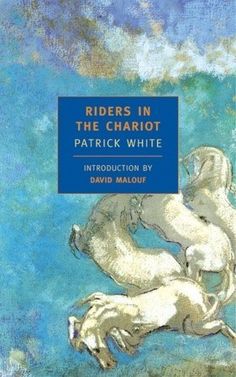
7f073dbf079afa39fb484e68d1b34a46For a reader who has not read Patrick White before, I don’t believe “The Hanging Garden” is the place to begin even if it is a short read.  My own approach to all authors is to select the book I believe is the author’s strongest novel or collection first.  Why settle for second best?   In Patrick White’s case, there are so many masterpieces: “Voss”, “Riders of the Chariot”, “The Vivisector”, “The Tree of Man”, and so on.  If you want a shorter complete novel, read “The Solid Mandala”.  If you are going to go to the trouble of getting on the wavelength of Patrick White, you might as well read a complete novel.  “The Hanging Garden” is best left for us few Patrick White obsessives.

Once you are on Patrick White’s wavelength, what a ride it is.

“Instructions for a Heatwave” by Maggie O’Farrell


“Instructions for a Heatwave” by Maggie O’Farrell (2013) – 304 pages


slide15


There actually was a huge heat wave in London in the summer of 1976, the time when this novel is set.  “Instructions for a Heatwave” is a family drama told mostly from a Catholic housewife’s point of view.  The member of the family on whom the novel focuses changes frequently, but details about meal preparation, Catholic religion, and clothing items are always at the forefront. 

Of course, living in London, it is impossible to get buttermilk; she has to make do with a mixture of half milk and half yogurt. A woman at Mass told her it worked and it does, up to a point, but it is never quite the same.

The above thoughts are those of the mother Gretta Riordan, but the same kind of prosaic details arise whoever the focus is.  For readers who care about this kind of homemaking detail this is fine, but for me, no way, get me out of here.  The novel also deals with Catholic issues from 1976 which seem today to me, a non-Catholic, ancient. 

Recently I read “Life After Life” by Kate Atkinson which also is a family novel.  That story totally won me over perhaps because it bypasses most of these mundane everyday details of family life for a more historical perspective. 

“Instructions for a Heatwave” deals with relationships within the family unit rather than what’s happening outside. Amidst the details, there are interesting stories.  The youngest daughter Aoife is the black sheep.  She flunked her classes and is considered a free spirit by the rest of the family.  We learn that due to dyslexia she cannot read which causes her a lot of problems.  Each of the family has his or her issues, and the measure is always within the family.  The story begins in London and travels to Ireland as the family searches for the missing father. 

At one point the mother thinks about her bunions.  As is nearly obligatory in modern novels, we then get a list of various toe ailments.  If I wanted to read this kind of stuff, I’d go to Facebook.

Details are a part of every novel.  If we are interested in the details, they help us appreciate the story.  If we are bored by the details, they will detract from our interest in the story.  The details do not reflect the quality of writing, but some writers can make you interested in subjects that had always bored you before.  That did not happen for me with “Instructions for a Heatwave”.

I’m still bored with homemaking and religion.

“City of Bohane” by Kevin Barry – Prepare to be Dazzled

“City of Bohane” by Kevin Barry  (2013) – 277 pages

“Many a yella moon had shone on the glorifiied pig’s mickey that is the Bohane peninsula since we had seen the likes of an eight-family mobbed descent off the Northside Rises.”

city-of-bohaneI’m sure if I ever referred to the city of Bohane as a ‘glorified pig’s mickey’,  the families of both gangs in the Bohane dispute would rise up, unite, and at least see to it I got reefed.  But that’s what I love about the story, its willingness to bad mouth its own town, its own people.  Whereas most of the people in the world are beaming with civic hometown pride, these are smart enough to figure out that there’s a lot of bad stuff going on right here, right now.

If you decide to read “City of Bohane”, and I heartily recommend you do read it, do yourself a favor. The argot of “City of Bohane” is an Irish lyrical miracle.   Once you are in the rhythmic spirit of the language, you will be entranced.  One thing I would suggest.  Once you have read the first chapter which is nine pages, go back and read it again.  The language here is so unique from anything I had encountered before, it was necessary for me to re-read to fully appreciate it.   After that I could delight in each sentence of this wonderful novel.

The year is 2053   Placing the story in the future, Kevin Barry was not limited by the constraints of realism.  He could let his imagination soar, and that it does.  Bohane is a fantastical city in western Ireland.  I’m sure the real cities there are reputable places, but Bohane is a dark decadent city subject to all out gang warfare between the families of the Northside Rises and the families of the Bohane Back Trace.  Logan Hartnett, the Long Fella from the Back Trace, rules the Hartnett Fancy who has owned Bohane for the last twenty years.  But the Northside Rises scuts are threatening to rise up.  And the Gant Broderick, the man Hartnett defeated twenty years ago and whose girlfriend Macu he stole, is back in town.  Then there are the strange tribes of Pikeys who live out in the dunes.

“No argument: it is a thin enough layer of civilization we have laid over us out in Bohane.” 

There are a lot of knifings.  Guys get ‘reefed’ or schkelped’ often in Bohane.  There are a lot of other things to disapprove of going on.  There’s a lot of talk of hoors, sluts, and tushies.  Nearly all the people of Bohane are either drunk, high on weed, or both most of the time.  One of the main characters is named Fucker Burke.  The whole story is told in such a magical way, the reader lets it all pass since it’s not real anyway.

Kevin Barry takes a special interest in the clothes his characters are wearing.  Here is one example.

Wolfie wore:

Black patent high tops, tight bleached denims, with a matcher of a waistcoat, a high dirk belt, and a navy Crombie with a black velvet collar.  Wolfie was low-sized, compact, ginger, and he thrumbed with dense energies.  He had a blackbird’s poppy–eyed stare, thyroidal, and if his brow was no more than an inch deep, it was packed with an alley rat’s cunning.  He was seventeen, also, and betrayed, sometimes by odd sentiments under moonlight.  He wanted to own entirely the city of Bohane.  His all-new all-true love: Miss Jenni Ching of the Hartnett Fancy and the Ho Pee Ching Oh-Kay Koffee Shoppe.

orange

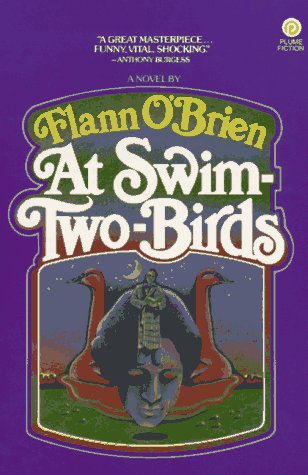
989180The last time I encountered language so musical Irish was in “At Swim Two-Birds” by Flann O’Brien.  It is this original voice that makes “City of Bohane” a special tall tale.  My best take on this novel is that it is a twisted cross between “At Swim Two-Birds” and “A Clockwork Orange” by Anthony Burgess.  These two novels are classics; “City of Bohane” makes three.  Most of the novels written during the past few years will disappear with time, but I expect “City of Bohane” will last and last.

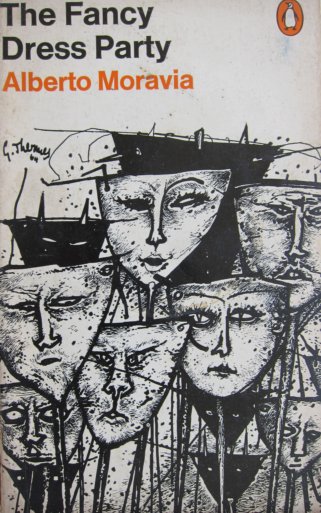
“The Fancy Dress Party” by Alberto Moravia

“The Fancy Dress Party” by Alberto Moravia   (1941)  – 185 pages

books 035

I’ve read a lot of Alberto Moravia, perhaps a dozen of his novels and story collections, and I hope to read more.  “The Fancy Dress Party” is a fun little romp of a novel.   Fun romp or not, this is the novel which had its second edition seized and banned by Benito Mussolini’s Fascist regime in Italy, because it contains an unflattering portrayal of a dictator who may or may not have been based on Mussolini himself.  After that Moravia and his novelist wife Elsa Morante had to flee Rome and hide out in the rural town of Fondi in central Italy until after the liberation of Rome.

“The Fancy Dress Story” is a farcical novel which takes place in ‘a country across the sea’. Strong-man dictator General Tereso Arango has one weakness – women.  The duchess Gorina hopes to enhance her status among the elite by getting the General to come to her party.  She knows the General has his eye on the young and beautiful widow Fausta.  The duchess invites the General telling him that Fausta will be there.  Meanwhile Fausta arrives while taking up with nearly every guy who crosses her path.  The General’s police chief wants to increase his own prestige, so he invents a fake plot against the General’s life , and the fervent hapless revolutionary Saverio is recruited to be the assassin.  Meanwhile Saverio’s brother Sebastiano joins the plot so he can get up next to Fausta.

This is a farce which is not the kind of novel Moravia usually wrote.  His works are usually much more intense and serious.  For example Moravia’s later novel ‘Contempt’ is focused on a woman’s contempt for her husband, quite serious fare.  Alberto Moravia was closely involved in the movie industry, and ‘Contempt’ was made into a really good movie which starred Brigitte Bardot.  If I were recommending an Alberto Moravia novel to someone who has not read him before, I would probably recommend ‘Contempt’ which has recently been re-published by New York Book Review (NYBR) Classics.  But several of his novels such as ‘The Woman of Rome’, ‘The Time of Indifference’, ‘Boredom’, and ‘The Conformist’ as well as “The Fancy Dress Party” are excellent.  His stories, most collected in books called ‘Roman Tales’, are fine too.  He also wrote screenplays, and several of his novels were made into movies.

729-1Alberto Moravia is at the top of my short list of my favorite novelists along with Patrick White, Elizabeth Taylor, Graham Greene, and Dawn Powell.  Whereas Patrick White may present some difficulty for some readers, the rest are very accessible to the average reader.  One thing I like about Alberto Moravia is his bluntness, because he can capture a person’s good and bad essence in just a few sentences.

Moravia handles comedy well here in “A Fancy Dress Party”.  It is one of those stories where you smile the whole while you are reading it.  Each of the characters has his or her own angle, and no one comes out looking particularly good.  It is hard to understand how the Fascists could have taken offense at this novel.  They must not have had much of a sense of humor.

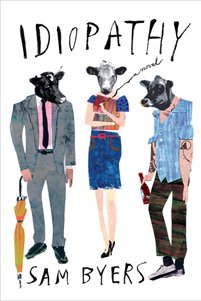
“Idiopathy” by Sam Byers

“Idiopathy” by Sam Byers  (2013) – 310 pages

1369768839793_cached

The tag line on the cover of “Idiopathy” describes it as  ‘a novel of love, narcissism, and ailing cattle’.

“Idiopathy” gets off to a strong start. The early scenes between the cruel Katherine and the thoroughly unlikable Keith are some of the best in the novel.  Sam Byers puts some of his most ironic observations about relations among the young crowd in their twenties today in the first pages.

I remember having high expectations for “Idiopathy” early on.  Byers has a sharp incisive wit, and he handles dialogue well.

Here is Daniel telling his ex-girlfriend Katherine about his new girlfriend Angelica.

 Daniel:: “She’s nice.”

Katherine: “Nice.”

Daniel:“I like nice.”

Katherine: “Of course you do.”

Daniel: “Not everyone equates difficulty with passion, you know.”

Katherine: “Of course not.”

Daniel: “Anyway, what about you?”

Katherine: “I’m off men.”

Daniel: “Were you ever on them?”

Katherine: “That’s one of those statements that initially sounds snappy and witty, but which, when you pick around at it, actually turns out not to mean anything.”

The trouble with “Idiopathy” for me is that the novel tries to accomplish two goals that are contradictory.  The first goal is to have a dark mean satirical commentary on modern dating and mating habits, the sort of thing Evelyn Waugh or Kingsley Amis might have done.  The second goal is to create a moving story involving characters that a reader can actually care about.  It’s the old quandary for a writer – how can you be mean and loveable at the same time?

A couple of the main characters, in particular Daniel and Nathan, seem to be watered down to me.    Daniel, as Katherine’s ex-lover, did not seem a worthy opponent for her.  Whereas Katherine was quite cutting and witty, Daniel seemed to be rather dull and slow.   Then there is Nathan who tried to kill himself before or at least severely harm himself, yet nothing is made of this in the novel whatsoever, and Nathan seems to only sit there or lay there throughout the novel.

The parts that dealt with environmentalism and modern eating habits seemed stale, old material.  It is about time satirists realized the real jokes are on the conservative side of things today.

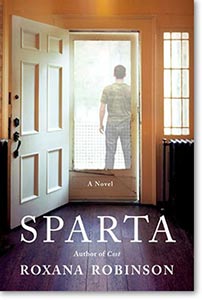
“Sparta” by Roxana Robinson – The Harrowing Consequences of the Iraq War

“Sparta” by Roxana Robinson  (2013) – 383 pages

sparta_robinson_300h

“Sparta” is a novel about the ongoing trauma a United States Marine experiences after returning from Iraq in 2006 after spending a few years there.  These were the rough years after George W. Bush’s ‘Mission Accomplished’ speech, perhaps the speech most famous for being wrong since Neville Chamberlain’s “Peace in our Time” speech on the verge of World War II.

Just two days before the ‘Mission Accomplished’ speech, a crowd of  200 Iraqis in Fallujah defied a United States curfew and gathered outside a secondary school to demand its re-opening.  United States soldiers on the roof of the school fired upon the crowd killing 17 civilians and wounding 70.  Another Iraqi protest two days later, the same day as Bush’s ‘Mission Accomplished’ speech, was fired on by United States troops resulting in two more Iraqi deaths.  On March 31, 2004, Iraqi insurgents in Fallujah ambushed a convoy containing four American private military contractors from Blackwater USA.  The four armed contractors were dragged from their cars, beaten, and set on fire.  Their charred corpses were dragged through the streets before being hung from a bridge spanning the Euphrates River.  In November 2004, US forces, in an operation to recapture Fallujah called Phantom Fury, resulted in the deaths of 1350 insurgent fighters and 95 American troops killed and 560 American troops wounded.  United States forces later admitted to using ‘white phosphorus’ as an anti-personnel weapon.

In “Sparta” our returning Marine, Conrad Farrell, was stationed in the Iraq city of Haditha which had its own massacre where 24 unarmed Iraqi men, women, and children were allegedly killed by a group of United States Marines on November 19, 2005.

In “Sparta”, we get scenes of the Iraq War in flashback as Conrad tries to resume his life in Maine like it was before his experiences in Iraq.  Although Conrad has suffered no physical injuries, he is far from the optimistic idealistic person he was before the war. He stays with his family for a time and tries to resume his relationship with his girlfriend Claire.  Conrad is constantly haunted by memories of what happened in Iraq.  Whenever any person walking or driving in the US streets makes a sudden or unexpected move, Conrad flashes back to scenes where his platoon was hit by improvised insurgent bombs.  He was the platoon leader.  He has severe difficulty sleeping at night.

Although Roxana Robinson is telling an important story, the novel is hurt by the unrelieved sad tension of Conrad.  Perhaps what “Sparta” needed is a short scene of the pre-war Conrad which we could contrast with the Conrad who has come home after the War.  Then we may not have needed so many unhappy scenes   It is difficult for the reader to contend with continuing despondency for over 300 pages.  Reading the novel becomes somewhat of a drag.  The story reads more like a case history rather than a vibrant novel.  The family is just too typical as each member shakes their head in their own way over what Conrad has become.

Roxana Robinson has been one of my favorite writers for the past few years.  However “Sparta” was somewhat a disappointment due to its relentless moroseness.

Still the story of those suffering the consequences of the Iraq War is important.  Perhaps the Iraq War can best be seen as a late continuation of the Vietnam War, another failed example of the overbearing arrogance of the United States.

“Sparta” opens with an excellent quote.

 The man who does not wear the armor of the lie cannot

Experience force without being touched by it to the very soul.

                             Simone Weil, The Iliad, or the Poem of Force