Archive for the ‘Book Reviews’ Category

‘The Pursuit of Love’ by Nancy Mitford

‘The Pursuit of Love’ by Nancy Mitford (1945) – 214 pages
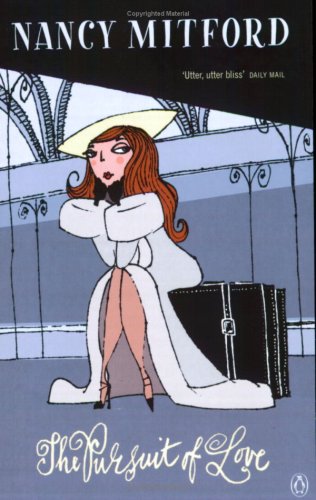
835458

Many writers have turned their early years of family life as a child into a novel, but few have succeeded so brilliantly as Nancy Mitford in ‘The Pursuit of Love’.  She seemingly without effort turned the characters of her childhood – and I do mean ‘characters’ – into frivolous eccentric figures of comedy.

Uncle Matthew Radlett has mounted over the fireplace a photograph of the entrenching tool with which he ‘whacked to death eight Germans one-by-one as they crawled out of a dugout’.  The entrenching tool is covered with blood and hairs, ‘an object of fascination to us as children’.

Meanwhile young daughter Linda cries enormous tears over the death of any animal, even a white mouse.  The story in ‘The Pursuit of Love’ is told by Fanny who is almost like an extra daughter in the Radlett household.  Her mother ‘ran away so often, and with so many different people, that she became known to her family and friends as the Bolter’:

 ‘Though she (the Bolter) was silliness personified, there was something engaging about her frankness and high spirits and endless good nature.  The children adored her…’

 Fanny was left with Aunt Emily who made sure that Fanny was rarely alone by having her stay frequently with Aunt Sadie and Uncle Matthew and their 6 children.   As Linda tells Fanny,

“You are so lucky to have wicked parents.”

 Most of the novel is about daughter Linda’s romantic escapades as she turns out to be a bit of a Bolter herself.  First a Germanic businessman named Tony who bores her to distraction, then an out-and-out Communist named Christian, then a French resistance fighter named Fabrice.

The story of the Radlett family continues in a second novel, ‘Love in a Cold Climate’.

“The Pursuit of Love” is a lively merry story about an unconventional family that will leave you smiling uncontrollably.  Men who do not believe that women can do comedy should not read this novel; otherwise their illusions will be smashed.
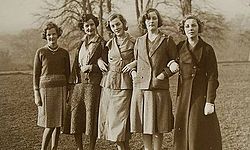
Jessica, Nancy, Diana, Unity and Pamela Mitford in 1935

Jessica, Nancy, Diana, Unity and Pamela Mitford in 1935

I have been studying on the Internet the fascinating frequently outrageous lives of the Mitford sisters.  They have been famously described by The Times journalist Ben MacIntyre as “Diana the Fascist,  Jessica the Communist,  Unity the Hitler-lover,  Nancy the Novelist,  Deborah the Duchess and Pamela the unobtrusive poultry connoisseur” .  Their stories, especially those of Unity, leave me speechless and not with admiration.

Misguided Angel

cowboy-junkies

Here are the lyrics of a song.  ‘Misguided Angel’ is about a young woman telling the other members of her family about her boyfriend.   Trouble ahead? These lyrics could be the opening of a great story or even a novel.

Here is a live performance of Misguided Angel by the Cowboy Junkies from Toronto Canada  with Margo Timmins singing her song.

            Misguided Angel

 Songwriters: Margo Timmins and Michael Edward Timmins 

I said ‘mama, he’s crazy and he scares me
But I want him by my side
Though he’s wild and he’s bad

And sometimes just plain mad
I need him to keep me satisfied’

I said ‘papa, don’t cry cause it’s alright
And I see you in some of his ways
Though he might not give me the life that you wanted
I’ll love him the rest of my days’

Misguided angel hangin’ over me
Heart like a gabriel, pure and white as ivory
Soul like a lucifer, black and cold like a piece of lead
Misguided angel, love you ’til I’m dead

I said ‘brother, you speak to me of passion
You said never to settle for nothing less
Well, it’s in the way he walks,
It’s in the way he talks
His smile, his anger and his kisses’

I said ‘sister, don’t you understand?
He’s all I ever wanted in a man
I’m tired of sittin’ around the t.v. every night
Hoping I’m finding a mr. right’

Misguided angel hangin’ over me
Heart like a gabriel, pure and white as ivory
Soul like a lucifer
Black and cold like a piece of lead
Misguided angel, love you ’til I’m dead

He says ‘baby, don’t listen to what they say
There comes a time when you have to break away’
He says ‘baby there are things we all cling to all our life
It’s time to let them go and become my wife’

Misguided angel hangin’ over me
Heart like a gabriel, pure and white as ivory
Soul like a lucifer
Black and cold like a piece of lead
Misguided angel, love you ’til I’m dead

R-5766760-1402071050-4407.jpeg

‘A Permanent Member of the Family’ by Russell Banks – Intense Realistic Stories

‘A Permanent Member of the Family’ stories by Russell Banks (2013) – 228 pages

9780061857652

As a fiction writer, Russell Banks deals with the world as it is, not with what it could or should be.  He can make us feel the agony of a town when dozens of its schoolchildren die in a horrific bus accident or the pain of the family when their dog dies.   He writes of severe misunderstandings between men and women, of divorce, of families breaking up.  Russell Banks is one of our best realists when it comes to these poignant matters. 

I went through a spell when Russell Banks was my favorite writer back in the early Nineties.  I first read, ‘The Sweet Hereafter’, his novel about a small town in the aftermath of the terrible school bus accident.  In that novel, Banks was able to capture the emotions of many of the town’s inhabitants.  ‘The Sweet Hereafter’ was made into an excellent movie by Atom Egoyan. After reading it, I quickly went on to read Banks’ ‘Continental Drift’ and ‘Affliction’ as well as his book of stories ‘Success Stories’, and my opinion of him as a writer went even higher.  But somehow I did not get back to reading Russell Banks until now when I read his latest collection of stories, ‘A Permanent Member of the Family’.

This collection has all of the qualities of his fiction I admired before.   Perhaps my favorite story in the collection is ‘Snowbirds’ about a woman helping another woman cope with the death of her husband.  The urn with the ashes of her husband sits in their Florida room, but the new widow is so cheerfully intoxicated with her new single life so that the woman her helping begins to question her own marriage. I liked this story because it wasn’t as depressing as some of the others, and it did not have a male protagonist as many of the other stories do.  A male protagonist in a Russell Banks story always comes across like Russell Banks himself rather than as a separate distinct character in the story.

Russell Banks is quite inventive in the setup of his stories, and every one of these stories was unique and satisfying to me. The stories have enough original situations and twists to keep me interested.  Each story is well-formed with a strong emotional payoff.     

However my attitude toward realism in fiction has changed since the early Nineties. I never did believe that capturing real life was the end-all and be-all goal of good fiction.  Today I am even less enamored of stark realistic portrayals in fiction or movies.   I want fiction that makes room for the playful and the ‘merely’ pleasant.   I prefer sentences that are frivolous and vivacious rather than plain and sparse. 

So where does that leave Russell Banks, our ultimate realist?  Don’t get me wrong, I still like his down-to-earth fiction.    However realism is just one little room in the mighty house of fiction.         

Requiem for the Age of Print – ‘Dublinesque’ by Enrique Vila-Matas

If all creative work is shared by everyone in our new world of streaming, who will make sure that the lone individual, perhaps not the slickest salesman on the block, will get credit and a fair monetary share for his or her creation whether it be a piece of music, art, or literature?  

dublinesque

‘Dublinesque’ is a novel for excessively literary people like me.  It is filled with quotes and stories about famous writers, and the nice thing is that the allusions are meaningful to the severe plight of the central character of ‘Dublinesque’ himself.  They are not just to feed the author’s ego. One soon realizes that Enrique Vila-Matas is an impassioned reader of other writers’ works

The first-person protagonist of ‘Dublinesque’, Samuel Riba, ran a small company that published literary novels for thirty years until it went under.  Now he spends nearly all his time in front of the computer.  He fears he has become a ‘hikikomori’ which is a Japanese word for those young people who suffer from autism in front of the computer and avoid outside pressures by withdrawing completely from society.  His wife is concerned for him.

 “Sensing that it won’t be long before her dear autistic husband goes and sits in front of the computer, she tells him that people who regularly use Google gradually lose the ability to read literary works with any kind of depth, which serves to demonstrate how digital knowledge can be linked to the recent stupidity in the world.” 

 The age of print is over; we are streaming into the new digital age.  In order to overcome his own isolation, this ex-publisher decides to hold his own funeral for the Print Age.  What better time and place to hold the funeral for the Print Age than in Dublin on Bloomsday, June 21, the day so famously depicted in James Joyce’s Ulysses?  The ex-publisher invites three of his writer friends, all of whom he previously published.

A little over two years ago, the ex-publisher, an alcoholic, had a catastrophic drinking episode almost causing his wife to leave him.  He hasn’t had a drink since.  Imagine the temptations for an ex-drinker in going to Dublin to celebrate Bloomsday.

That is the setup.  The story is told in an offhand friendly way.  A requiem for the Print Age might not be your idea of an exciting plot but it is for me.  Some of the writers who come up frequently in the story are Gustave Flaubert, Samuel Beckett, Paul Auster (even Siri Hustvedt gets a mention), Peter Handke, and Fernando Pessoa.   This book caused me to return to the poetry of Philip Larkin.  ‘Dublinesque’ is a lovely poem by Larkin about a funeral for a prostitute.  You can read it here.

The death of the age of print?  I have my own concerns about the streaming world which I suspect are shared by most people who appreciate creativity.  If every creative work is shared by everyone, who will make sure that the lone individual, perhaps not the slickest salesman or businessman on the block, will get credit or a fair monetary share for his or her creation whether it be a piece of music, art, or literature?   We have entered a new age, but that does not necessarily mean it is a good new age.  Do you have concerns?

For the appropriate kind of person, me, ‘Dublinesque’ is a wonderful book.

The Top Ten List of the Best Fiction I’ve Read in 2013

TopTen

Here are the books that made 2013 a great reading year for me.

BILLY_LYNN_BOOK_245593131. “Billy Lynn’s Long Half-Time Walk” by Ben Fountain (2012) – This over-the-top black comedy about ‘honoring our soldiers’ at a Dallas Cowboys football game is the ideal plot to capture the absurdities that exist between the comfortable upper-class supporters of the Iraq War and the dirt-poor multi-race soldiers who had little choice but to go to Iraq.

157908422. “Life After Life” by Kate Atkinson (2013) – An affectionate portrait of an English family with a twist.  If something goes wrong for this family, they get to do it over with hopefully better results the next time.


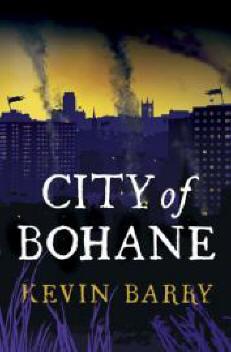
city-of-bohane3. “City of Bohane” by Kevin Barry (2012) – This is probably the novel with the most original plot and the most dazzling language.  The story is not limited by the constraints of realism.

storyofanewname4. “The Story of a New Name” by Elena Ferrante (2013) – Part 2 of the Naples trilogy.  The two girls who were the smartest students and best friends in grade school, Lila and Elena, are sixteen now and take two very different paths in growing up.

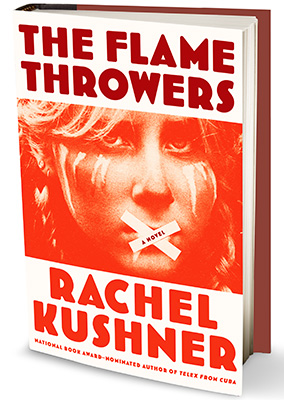
201304-omag-flamethrowers-284xfall5.“The Flamethrowers” by Rachel Kushner (2013) – Here is an edgy novel about the 1970s art world that begins with our young female protagonist trying to set the world land speed record for a motorcycle on the salt flats in Reno.

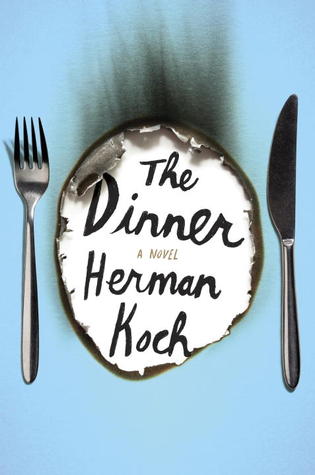
the-dinner6. “The Dinner” by Herman Koch (2012) – Here is a vivid story about a dinner in a restaurant with two brothers and their wives.  I gaurantee you it will provoke a strong reaction.

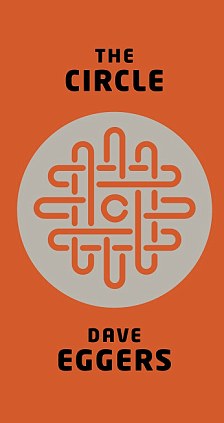
article-2442020-1878A30700000578-565_224x4237. “The Circle” by Dave Eggers (2013) – A dark story about an Internet company which believes that all that happens must be known.

1saunders01068. “Tenth of December” by George Saunders (2012) – Absurd humorous stories with an emotional payoff.


778109. “The Days of Abandonment” by Elena Ferrante (2002) – An unflinching blunt depiction of a woman dealing with abandonment.

16158600

10. “The Other Typist” by Suzanne Rindell (2013) – An enchanting 1920s story about a typist in a police precinct station.

Here are some excellent novels I read in 2013 that are older.

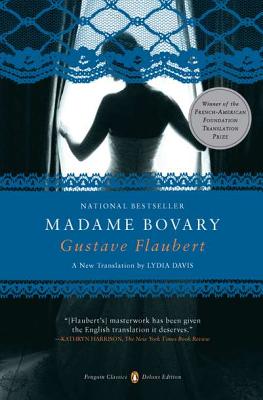
9781101195888_p0_v1_s260x420“Madame Bovary” by Gustave Flaubert (1866) – A wonderful version of this adultery classic translated by Lydia Davis.

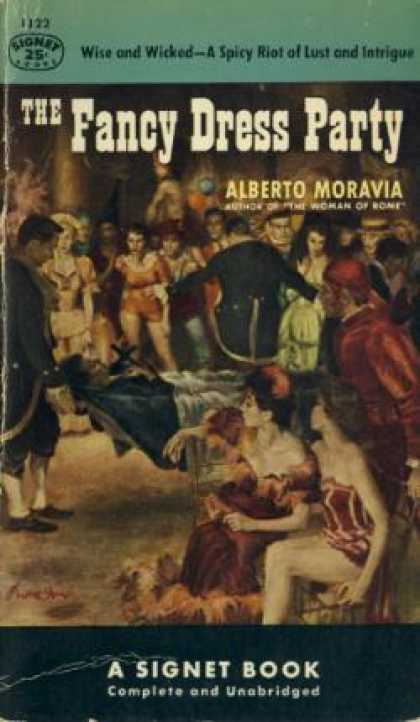
729-1“The Fancy Dress Party” by Alberto Moravia (1941) – A merry romp of a novel which makes fun of the fascists.

9780143106494“The Cocktail Party” by James M Cain (1977, 2013) – A sleazy nightclub murder mystery novel by the writer of ‘Double Indemnity’.

piatto_lucinella_72-199x300 “Lucinella”by Lore Segal (1977) – Her one night stand with the Greek God Zeus at a writing conference.

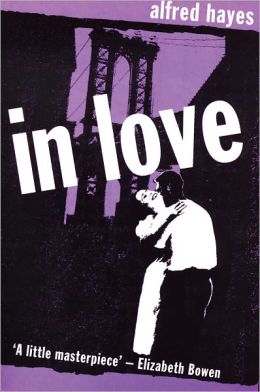
9780720612943_p0_v1_s260x420“In Love” by Alfred Hayes (1953) – The intense record of a break-up between a man and a woman told by the man.

Britain Just After the Romans Left

‘Daily Life in Arthurian Britain’ by Deborah J. Shepherd (2013) – 314 pages

coverimage

This time I am going to do something a little different from my usual chatter about fiction.  My wife, Deborah J. Shepherd, has just written and published a nonfictional book called ‘Daily Life in Arthurian Britain’, and I will take up this fascinating work today.

When the Romans left their province of Britannia around 410 AD, it was a giant step backward for that British society.  Britain lost its currency, and thus trade was severely reduced.   With no Roman soldiers to keep order, travel on the excellent Roman-built road system became dangerous. Without the Roman legions, Hadrian’s Wall alone could not stop invaders from the north. The cities which had already formed such as London and York had to contend with severely reduced business and trade.  There is very little written documentation about what happened over the next two centuries, and thus researchers have had to depend on archaeological methods such as site excavations and DNA analysis in order to determine what daily life must have been like for the Britons.

We do know that there was a large migration of people (the Anglo-Saxons) from the Angeln and Saxon provinces of what is now northern Germany and from the Jute province of what is now Denmark into the eastern and southern parts of Britain.  By the end of the 6th century the Anglo-Saxons had become dominant in most of Britain, and the Britons had mostly relocated to Wales, Cornwall, and Cumbria on the west side of the island.   Some speculate that the Anglo-Saxons were originally invited in by the Britons to fight the northern tribes of Scoti and Picts (The Picts were from Scotland, and the Scoti were from Ireland) who constantly came down from the north on raids.  Perhaps some of these Anglo-Saxons had formerly been foreign soldiers in the Roman legions.  Others speculate that the Anglo-Saxons migrated for their own reasons.  First the Anglo-Saxon men came.  Then a few brought their families while many inter-married with the Britons.   Whatever the reasons, large numbers of Anglo-Saxons permanently relocated to Britain.

The term ‘Daily Life’ includes how people made a living whether by farming or some other occupation, what types of dwellings they lived in, the social class structure, the use of slaves and serfs,  the size of their families, which objects they held in high esteem, and the patterns of interaction or non-interaction between the Britons and the Anglo-Saxons,  ‘Daily Life in Arthurian Britain’ also discusses the religions, the forms of governing, and the use of weapons by both the Britons and the Anglo-Saxons.

From site analysis, researchers attempt to piece together as much detailed information as possible about how the people actually lived.  Skeletal analysis can show injuries suffered by the body and sometimes the cause of death. Using DNA analysis, researchers can determine whether a body buried fifteen hundred years ago is male or female.

“In one study Mark G. Thomas et al. looked closely at the Anglo-Saxon Y-chromosomes in England.  Whereas the immigrants represented less than ten percent of the population by archaeological estimates, their genetic contribution affected about 50% or more of the modern English gene pool.  The authors’ computer simulation models required that an extreme situation existed in order for the Anglo-Saxons to gain such a high reproductive advantage.  They determined that an ‘apartheid-like’ situation occurred whereby Anglo-Saxon males had the ability to produce many children and demand extra-marital sexual liaisons with British women, while more impoverished British males had fewer opportunities to produce and raise children who survived to adulthood.  The Laws of Ine in the seventh century made the punishment for raping a British woman minimal.  In this way Thomas et al. estimated that the spread of Anglo-Saxon genes to 50% of the population happened in 15 generations or less.”

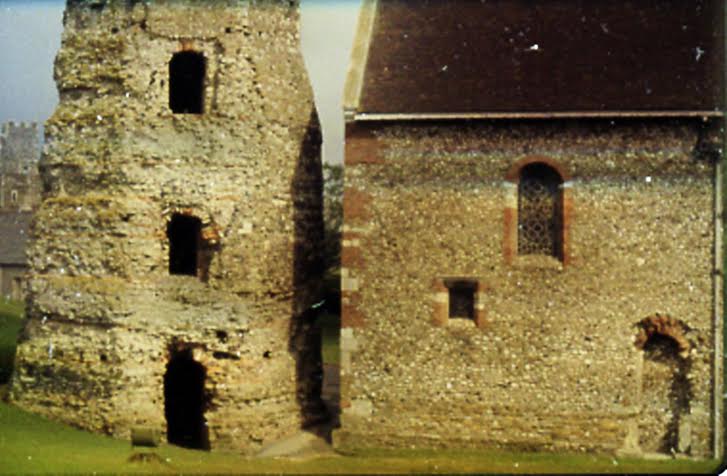
Roman Lighthouse and Early Christian Church in Britain

Roman Lighthouse and Early Christian Church in Britain

Of course another researcher, John E. Pattison, totally disagrees with Thomas et al., maintaining there have been German immigrants to Britain since prehistoric times including Belgian and Germanic conscripts into the Roman legions which would account for the extreme Anglo-Saxon presence in the gene pool.    

The burial customs of the Anglo-Saxons and the Britons also varied, Anglo-Saxons were often buried with their weapons or other esteemed possessions while the Britons were buried without adornments.  The Britons were mostly Christians while the Anglo-Saxons originally were pagan.

There are still many unanswered questions. How were the Anglo-Saxons who were only one-fifth of the population able to predominate over the much more populous Britons?  Did the Britons voluntarily leave the eastern parts of Britain or were they driven out?  Did a King Arthur really exist?

Kevin Barry – My Top New Discovery of 2013

‘Dark Lies the Island’, stories by Kevin Barry   (2013) – 185 pages

9781555976514_p0_v1_s260x420

Each year brings its new discoveries for me in the land of fiction.  Discoveries are writers whom I have never read before and really like.  A discovery is not necessarily a young writer.  This year John Milton (born in 1608), Alfred Hayes (born in 1911), Lore Segal (born in 1928), and Mahmoud Dowlatabadi (born in 1940) were all new discoveries for me.  Also some of the discoveries are the writers of today.  The new discoveries this year included Ben Fountain, Rachel Kushner, Daniel Woodrell, Herman Koch, Suzanne Rindell, Rahul Bhattacharya, Anthony Marra, Deborah Levy, and Laura Restrepo.  All in the list had books that I thoroughly enjoyed.  These are the writers I will return to in future years.

However my best new discovery for 2013 has to be Irish writer Kevin Barry.  I was dazzled by the unique language and outrageous tale in “City of Bohane” and his book of stories, “Dark Lies the Island”, is another sure winner and a great introduction to this important writer. 

Here is a writer that captivates at the sentence level.   What I mean is that there is a certain joie de vivre that comes through in every one of his sentences that makes them exciting to read.  Just reading Kevin Barry line by line provokes merriment in me.

 My want for her was intense and long-standing – three months, at least; an eternity – and I was close enough to see the opaque down of her bare arms, each strand curling like a comma at its tip, and the tiny scratched flecks of dark against the hazel of her eyes.  She was just a stretch and a clasp away. – Kevin Barry in the story ‘Across the Rooftops’

 Kevin Barry is an Irish writer.  There is a mysterious musicality in some Irish writers that I have long appreciated.  I most especially noticed this Irish melodic quality with Flann O’Brien in his novel ‘At Swim-Two-Birds’.  The writing of Kevin Barry reminds me of Flann O’Brien.

 ‘It’s end-of-the-fucking-world stuff out there,’ I said.

The chorus of locals in the hotel’s lounge bar as always ignored me.  I was a fretful blow-in, by their mark, and simply not cut out for tough, gnarly, west of Ireland living.  They were listening, instead, to John Murphy, our alcoholic funeral director.

“I’ll bury anything that fuckin’ moves,” He said.

“Bastards, suicides, tinkers,” he said.

“I couldn’t give a fuckin’ monkey’s,” he said.

Mweelrea is the most depressing mountain you’ve ever seen, and its gaunt, looming shape filled almost every view from the Water’s Edge Hotel, the lounge bar’s included.  The locals drank mostly Bushmills whiskey and Guinness stout, and they drank them to great excess.   I wiped their slops from the counter with a bar cloth I had come to hate with a passion that verged on the insane.  I said ‘But seriously one motherfucker of a high tide, no?’  –  Kevin Barry in the story ‘Fjord of Killary’ 

Kevin Barry Barry has described himself as “a raving egomaniac”, one of those “monstrous creatures who are composed 99 per cent of sheer, unadulterated ego”.  I’m tempted to say, deservedly so.

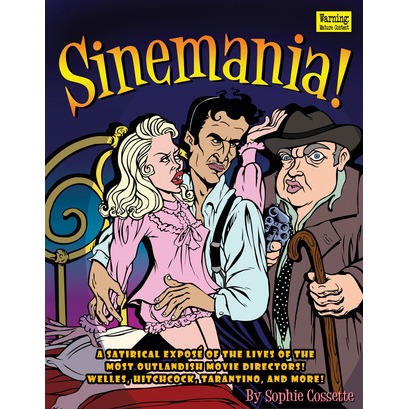
‘Sinemania’ by Sophie Cossette – A Graphic Novel about Famous Movie Directors

‘Sinemania’ by Sophie Cossette (2013) – 172 pages

“A Satirical Expose of the Lives of the Most Outlandish Movie Directors!  Welles, Hitchcock, Tarantino, and More!”

17464947

This graphic novel looked like fun.  I like good satire, and the subject of movie directors and their movies fascinates me.  Some of my favorite directors are included here, Billy Wilder, Fritz Lang, Alfred Hitchcock, Orson Welles, and Woody Allen.

Even a hurried glance at the artwork here told me it was way over-the-top risqué  with letters that scream at you and naked ladies abounding.   But maybe lurid is the best way to tell the story of these offbeat directors.

The problem here is that ‘Sinemania’ aims low and hits its target.  It trots out all the old gossip on these movie directors and illustrates the stuff with racy cartoons.   The artwork and stories here are for the usual comic book audience of over-stimulated teens and twenties.  There are graphic novels which are refined for more adult audiences but not this one.

Woody Allen is one of the more witty persons alive, but you wouldn’t know it from ‘Sinemania’.  Of course, it drags out ‘underage Asian girls’ for him.  The dialogue attributed to Woody consists of the same coarse, wooden lines they all speak.  Everyone speaks the same here, not too bright.  To call the writing here ‘satire’ is to trash the word just like the book trashes the lives of these directors.  Clearly some of the directors like Russ Meyer and others deserve trashing.  

payton-comix (1)But even a bad book can contain some good stuff.  I did not know that Otto Preminger made ‘Laura’, ‘River of No Return’, ‘Carmen Jones’, ‘Saint Joan’, and ‘The Man With a Golden Arm’.  Also the story of Barbara Payton is one of the most poignant Hollywood stories, lurid but poignant.  

To introduce a small note of respectability into the twisted proceedings, two movie reviewers, Ryan and Phil, are brought in every few pages of ‘Sinemania’ to describe some of the better movies these wild directors made.  This is probably the part of the book I found most useful.

Unless you are already an avid reader of comic books, this is probably not the movie book for you.  There are many, many other books about the movies.

‘The Circle’ by Dave Eggers – ‘ALL THAT HAPPENS MUST BE KNOWN.’

“The Circle” by Dave Eggers  (2013) – 491 pages

“Secrets are lies. Caring is sharing. Privacy is theft.”

dave_eggers_the_circle_large_verge_medium_landscape

“The Circle” is about an Internet company called the Circle which is like Facebook or Twitter or above all Google that believes everything that happens to people must be known and shared with the rest of the world.

I remember about five years ago reading that thousands of tiny cameras were being installed in all of the strategic locations of downtown Minneapolis to literally capture everything that happens there.  Since then with the ubiquity of cell phone cameras, the photographing eye has become even more all-pervasive.  Sure, this is a great deterrent to crime, since every human act is recorded.  But have we lost something important by losing any privacy we might have had before?

At first, the Circle campus seems an ideal place to work with its magnificent glass building structures, its organic gardens, its tennis courts, its singer-songwriters, and its groups for every interest  imaginable including Portuguese.    But as in so many idylls, things turn sinister quickly.

At the Circle, more and more people volunteer to be filmed 24 hours a day with a video feed to the computers so their films will never be lost.  The only time the volunteers can shut the video cameras off is when they go to the bathroom, so naturally that is where the only meaningful conversations take place.

2013-08-13-Google15The Three Wise Men founded the Circle, and these three young men are treated with reverence by all of the employees.  More than a billion people worldwide have accounts on The Circle’s social network, and they are encouraged to share the details of their daily lives.  Then the members of The Circle network can either approve these sharings with a ‘Smile’ or disapprove with a ‘Frown’.   For the employees, if they don’t join in with this frenetic sharing, they will be ostracized and maybe even lose their jobs.  The employees must keep their own  ‘Smile Percentage’ up at 98% or above, or they will be in trouble with the managers.

The symbol for the Circle is a giant ‘C’, but the visionaries of the company speak of  ‘Closing the Circle’ when everyone, everywhere “will be tracked, cradle to grave, with no possibility of escape”.

This novel by Dave Eggers is a social network dystopia for today, a ‘Brave New World’ or ‘1984’ for our time.  For all its intensity, this is a witty humorous novel.  Some ultra-hip reviewers claim it is out of date by five years , but the privacy issues presented here seem more crucial than ever today.   Although the novel is 491 pages, it is a quick read.  The novel may not be perfect, but it is the best one we have about our Internet lives of today.

‘Lucinella’ by Lore Segal – Her One Night Stand with the Greek God Zeus in the 1970s

‘Lucinella’ by Lore Segal (1976) – 177 pages

 “Forgive me all my vanities as I forgive all of you yours.”

piatto_lucinella_72-199x300“Lucinella” is a witty little novel about aspiring poet Lucinella attending writers’ conferences.  You know the sort of thing, lectures on “Why a Symposium?”, “Why Write?”, “Why Publish?”, “Why Read?”  Between lectures, there is plenty of time for the participants to party and mingle, and mingle they do in 1970s fashion.

Mostly the poets and their significant others sit around and gossip about the other poets’ breakups or breakdowns.

For me the classic literary party novel is “The Wicked Pavilion” by Dawn Powell.  “Lucinella” does not match “The Wicked Pavilion” in terms of wit, but as a playful antic sexy little novel of the Seventies it is very good.  “Lucinella” is a novel that is worthy to be salvaged and preserved from the huge pile of Seventies novels.

All of the poets, novelists, editors, and other literary big shots at the symposium do not have individual distinct personalities but are instead treated as interchangeable parts.  Winterneet, Betterwheatling, Friendling, etc.  That’s about right for this novel.

Lucinella’s boyfriend William’s poem is near greatness or at least publication if only he can fix that weakness in the second stanza.

 “Sometime,” I say, “let me see some of your stuff.”   Why am I asking to see it?  What will I do if he is terrible, which is statistically much more probable than that he’s any good? Or if he’s marvelous what will I say then?

Then the major literary couple Zeus and Hera arrives.   Yes, that Zeus, the former Greek god.  Here is Hera’s description of Zeus in the 1970s:

“Desecrated, deposed, exiled, but incapable of dying, no longer god and unwilling – or is it unable? – to be human, what can he do but turn into an intellectual, write a book, research his own descent – heaven forgive me, maybe it’s an ascent – from a bearded snake to what? A refugee college professor!”

 Knowing Hera does not really care, Lucinella winds up in bed with Zeus.  Great sex.

 “His divine cock has lost none of its potence, and his hand is omniscient.” 

  This is very much a novel of its time, the 1970s.  It is a women’s liberation novel at a time when many women were just awakening to their own sexuality.  This was before the time feminism became strident and more anti-male.  This is an era many males of a certain age remember fondly.

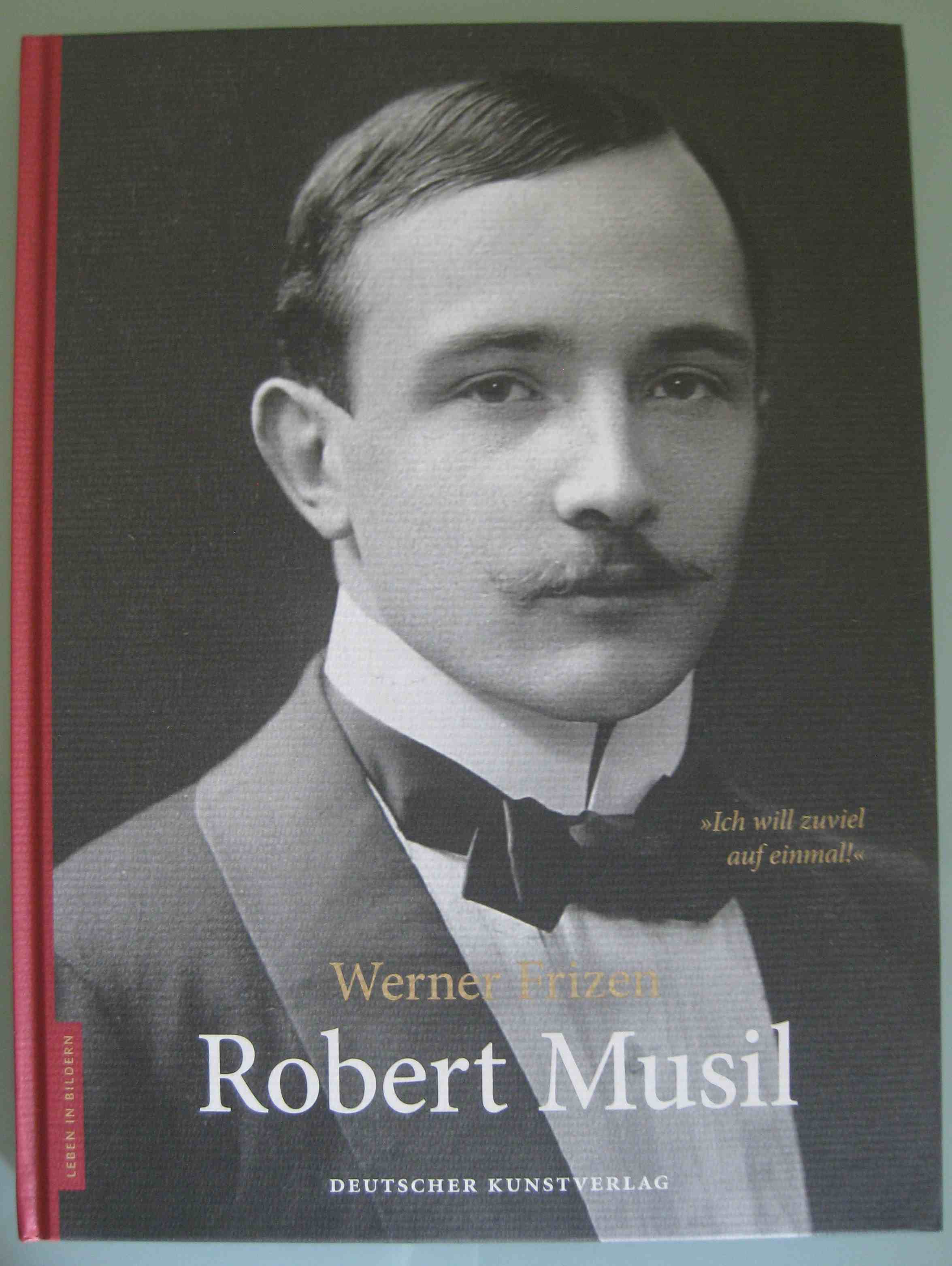
Robert Musil is NOT a Difficult Writer

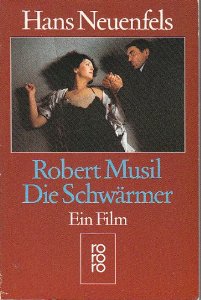
“The Enthusiasts” a play by Robert Musil (1921) – 101 pages     Translated by Martin Esslin

robert-musil-photograph

Unlike other readers, I do not consider Robert Musil a difficult writer. True, he can address complex issues between individuals and in society, but he expresses himself with direct precision and irony. What difficulties readers have with his work stem from the fact that Musil was both humorous and brilliantly perceptive at the same time, and it is sometimes tough to tell which lines are amusing and which are penetrating insights.  Sometimes they are both.

Rather than plaguing you with a lot of quotes from him, I am providing a link to the quotes of Robert Musil.  Read them for yourselves and see if you agree with me that these Musil quotes are at least as intelligent and meaningful as a comparable list of quotes from any other writer. 

imageIf you are fascinated by the Robert Musil quotes like I was, I would like to suggest a chronological order for reading his work.  I have read all of his fiction available in English.  I would recommend starting with either ‘The Confusions of Young Torless’, his first short novel, or ‘Three Women’ his book of stories.  ‘Young Torless’ is about a farm boy who leaves home to go to a military academy where there is vicious bullying and violence among the young cadets.  Many readers saw this book as prophetic in prefiguring the rise of fascism.  ‘Three Women’ was actually translated into English as ‘Five Women’ with the addition of two more of his stories, and that is the edition I read. These stories illustrate the sensual side of Musil, and they may have more appeal to women than Torless.  When I read these stories, I had already read ‘The Man Without Qualities’, and I was amazed that there was no drop off in quality with these stories.  Some reviewers call ‘Five Women’ Musil’s Dubliners, it is that good.   

If you have completed the above two books, you are ready for the masterpiece, “The Man Without Qualities’.  This is a major endeavor, not because Musil is difficult, but because it is 1000+ pages filled with insights similar to the quotes.  Indeed many of the quotes are from “The Man Without Qualities”.  In 2006, the Wall Street Journal called “The Man Without Qualities” one of the three greatest novels of the twentieth century along with “Ulysses” and “Remembrance of Things Past”. From my own reading of the novel, I am inclined to agree with the Wall Street Journal in this case. In a list prepared by LiteraturHaus Munchen in 1999, “The Man Without Qualities” was ranked number one in the Best German Novels of the Twentieth Century.

51Hf+hirReL._SY300_Finally you are ready for Musil’s play, “The Enthusiasts”.  The problem with reading plays is that you are set down among these people in the play with little explanation or elaboration.  You immediately have to figure out what these people are talking about.  In this case you are in a home in Vienna at about 1900.  “The Enthusiasts” is a bedroom farce with many of the scenes actually taking place in the bedroom.  The two sisters Regine and Maria are both married but are attracted to this guy Anseln who is on a mission to be loved by every woman.  The women’s husbands resort to hiring a private detective to spy on their wives, and from there complications arise.  As well as some of the scenes being quite funny, the play is a good evocation of fin de siècle Vienna life.  It would have been helpful for me to see the play performed.    There are some wonderful insights and lines in the play.

“Because you are a woman.  Because it is unspeakably confusing that, on top of everything else, you are also a woman.  That your skirts make a bell of invisibility wander over the floor.”   

Since I’ve read all of the fiction of Robert Musil that is available in English, next for me will necessarily be his non-fiction.  Musil had a Jewish wife and he left Berlin for Austria in 1933 with the Nazi takeover.  He left Austria in 1938 when the Nazis moved in there.  He died in 1942.  Perhaps I will next read Musil’s essay ‘On Stupidity’ that he wrote in Vienna in 1937.

‘The Story of a New Name’ by Elena Ferrante

“The Story of a New Name” by Elena Ferrante  (2013) –  471 pages       Translated by  Ann Goldstein

storyofanewname

Now we are on to Book 2 of Elena Ferrante’s Naples trilogy.  If you haven’t read Book 1, “My Brilliant Friend”, yet, I strongly recommend you read that book first.  This is a trilogy which should be read in order.

In ‘My Brilliant Friend’, we first meet the two girls as children, Lila and Elena, friends who are the two smartest students in their grade school class.  We also get to know the ten families that make up their small close neighborhood in Naples in the 1950s.

At the beginning of “The Story of a New Name”, the two girls are sixteen, and it is the early 1960s.  Elena is continuing her studies in preparation for college.  However Lila’s family sees no need for a girl to get a college education and urge her to get married to the relatively prosperous Stefano.  Early scenes in “The Story of a New Name” take place at the wedding of Lila and Stefano.  After the festivities on their wedding night, Stefano beats Lila which apparently was a fairly common practice in Naples at that time.  Lila is not the kind of person to take well to a beating, and her feelings for Stefano are deadened from that point on.  She gets pregnant but miscarries.  Later Stefano will be put through worse indignities by Lila.

 “But she (Lila) knows how to wound, it’s written in her face, it’s enough to look at her forehead and her eyes.”

 Elena, the soon-to-be college student, keeps in touch with Lila and her old neighborhood.   Elena has always considered Lila the brilliant one and herself only ‘diligent’. Lila and Elena remain fiercely competitive friends throughout the novel.

 “I began to question myself, I had made a mistake, I was deluded.  Was it possible that I – short, too full-figured, wearing glasses, I diligent but not intelligent, I who pretended to be cultured, informed, when I wasn’t – could have believed that he would like me even just for the length of a vacation?

 Much of ‘The Story of a New Name” takes place during an idyllic vacation on the island of Ischia in the Gulf of Naples .

How much do you remember about the neighborhood or neighborhoods that you grew up in as a child?  Do you remember the quirks of some of your grade school classmates in precise detail?  Do you remember your own quirks?  Elena Ferrante apparently remembers every detail of her childhood in Naples including the stories of every family and every member of each family.  She brings each of these people and the ‘tangled skein’ of her entire neighborhood to surprising and lurid life.  If this trilogy is the result of diligence rather than intelligence, give me diligence.

If she is not already on the list, it is time to add Elena Ferrante on to the list of Nobel Literature prize candidates along with other writers such as Haruki Murakami and Javier Marias and Ian MacEwan.   Of the four, Elena Ferrante has lately moved me more than the others.

I fully expect that Ferrante’s Naples trilogy will become a classic of Italian literature.  Is not that what we go to good fiction for, its ability to capture life?

‘The Unknown Masterpiece’ by Honore de Balzac

“The Unknown Masterpiece” (1831) and “Gambara” (1837) by Honore de Balzac – 135 pages    Translated by Richard Howard

 “You draw a woman, but you don’t see her!”

'The Corn Poppy' by Kees van Dongen

‘The Corn Poppy’ by Kees van Dongen

What does it mean to ‘capture life’ in a work of art, literature, or music?  Perhaps it is in the art of painting where the issue presents itself most clearly.

Before there were cameras, the rich and powerful relied on portraits to capture the images of their beloveds and families.  Great artists were commissioned to create these images.

But there were issues.  An artist could capture a perfect likeness, but still something could be missing.  That sense of the person or persons being alive might not be there.  It is a matter of light and shadows, how the light plays off the skin, the expression on a face.  This sense of aliveness is elusive even in photography today.

“Good?…Yes and no. Your lady is assembled nicely enough, but she’s not alive. You people think you’ve done it all once you’ve drawn a body correctly and put everything where it belongs, according to the laws of anatomy! You fill in your outline with flesh tones mixed in advance on your palette, carefully keeping one side darker than the other, and because you glance now and then at a naked woman standing on a table, you think you’re copying nature–you call yourselves painters and suppose you’ve stolen God’s secrets. . .

“Look at your saint, Porbus! At first glance she seems quite admirable, but look again and you can see she’s pasted on the canvas–you can never walk around her. She’s a flat silhouette, a cutout who can never turn around or change position.”

We are all familiar with the mad genius, someone whose creativity transcends the real world to the point of lunacy.  “The Unknown Masterpiece” is a story about that point where genius and madness collide.

It takes place in 1612.  Three artists meet at the home of one of them, Porbus.  Porbus was an actual artist of the time commissioned by Marie de’ Medici.  One of the artists at his door is the fictional recognized grand master painter Frenhofer.  The other artist is the real aspiring artist Nicholas Poussin. The above quoted lines are all from Frenhofer as he explains what is wrong with Porbus’ picture portraying Mary of Egypt.  With a few quick strokes Frenhofer ‘fixes’ Porbus’s picture.  Then Frenhofer talks of his masterpiece which he has never shown to anyone, his picture of Catherine Lescault.  I won’t reveal any more of the story than that.

817790Both of the artists Paul Cezanne and Pablo Picasso were profoundly affected by Balzac’s story ‘The Unknown Masterpiece’.  Picasso identified so strongly with Frenhofer, the master artist in this story, that he actually rented the house where the story takes place.

“The Unknown Masterpiece” is followed by another longer story, “Gambara”, which makes a similar point, this time in the world of musical composition.

‘Dirty Love’ by Andre Dubus III – No Joy in Mudville

Dirty Love’ by Andre Dubus III  (2013) – 292 pages

958324f888e7982e2c954fc2207eafefThe first novella in the new collection of four novellas by Andre Dubus III, titled ‘Listen Carefully as our Options have Changed’, is written from the viewpoint of a cuckolded husband in his fifties.  Fifty is the new forty, and infidelity must be the new fifties entertainment.   His wife’s affair begins at the fitness club, and I suppose many affairs begin there for it gives women an opportunity to see men at their most admirable, getting in shape.

The husband here gets a detective to film his wife’s infidelity in graphic detail, and he watches the video over and over.  At one point the husband picks up a four-foot length of steal pipe which he plans to use to confront his wife’s lover.

All four of the novellas in ‘Dirty Love’ are about sex, sex at its most hurtful and depressing.  Even the one story where the sex isn’t destructive ends in a failed relationship. In all of these novellas the sex is totally joyless and each incidence winds up hurting all the people involved as well as the people close to them.  The sex in these novellas is so uniformly dreary, I wondered if Dubus is making some moralistic point, even more puritanical than Jonathan Edwards’ famous sermon, ‘Sinners in the Hands of an Angry God’. I realize that this is supposed to be gritty realism, but the sex here is so mean and hurtful that it does not even feel real.  Even the ill-fated Emma Bovary was exhilarated by her infidelities, but there is no joy in ‘Dirty Love’.

This book is so depressing, I wouldn’t even call it realism.  I think that most people have their ups and downs during the day in the real world, yet Dubus leaves out any sense of people ever feeling good about anything. All is misery, and that is not real.

Another criticism I have with ‘Dirty Love’ is the dialogue.  Everyone, males and females, speaks in real short sentences with frequent use of the word ‘fuck’. I don’t object to ‘fuck’ on moral grounds, but I do object to its use here on aesthetic grounds.  It does not convey any real meaning, and it further contributes to the  flat, cheerless, mean atmosphere of these novellas.  One might argue that this is the way people really talk, and that may be true.  However I consider reading this type of dialogue a waste of time.  If people don’t have anything meaningful to say, I’d rather they did not talk at all.

Perhaps people will read ‘Dirty Love’ so they can feel good about their own lives as compared to the poor souls stuck in these novellas.  That’s about the only reason I can see for reading this book, and it is not enough for me.

‘In Love’ by Alfred Hayes – An End to the Affair

‘In Love’ by Alfred Hayes (1953) – 130 pages

9780720612943_p0_v1_s260x420“In Love” is an intense record of a break-up between a man and a woman told by the man. The story opens with a man sitting in a bar telling a lady at the bar the story of the end of his last affair.   This is a smoky noir story in which we never learn the names of the man or of his old girlfriend.

They were at that stage where they both realize it isn’t working. Then suddenly the girlfriend lets him know that she doesn’t want to see him anymore, and that she has a new man

“For she was, I saw now, quite capable of taking care of herself; and I, who had postponed for so long a time the decision to leave her, who had (I thought) been so careful of her feelings, so reluctant (I thought) to hurt her, so solicitous (I thought) of her welfare, had been the one to be shunted aside with so little consideration. “

 Left out in the cold, the man is devastated and finally realizes how much he has been in love the entire time.  We have emotional scenes of the man almost stalking his old girlfriend, scenes where he unsuccessfully tries to re-establish his affair with the woman, a scene where he notices the tooth marks of the new boyfriend on her neck.  Then there is the short reconciliation between them which she uses to get her new man to commit.  It is that old story, you don’t know what you had until it’s gone.

 “I was capable of dissolving at the least kind word, and self-pity, in inexhaustible doses, lay close to my outraged surface.” 

 This is a touching honest depiction of the agony of a dying relationship told from a man’s point of view.   The details ring true.

I had never heard of Alfred Hayes before even though I’ve been studying literature on my own for about forty years.  That is what draws me to the New York Review Books Classics series, their efforts to salvage good writers who would otherwise be totally forgotten.  I found out that Alfred Hayes, besides writing seven novels, had a long career as a screenwriter both in Italy and the United States.  He wrote the film noir classics ‘Clash by Night’ and ‘Human Desire’.  In the television era, he wrote 7 episodes of the Alfred Hitchcock Hour, three episodes of Mannix, and 2 episodes each of Logan’s Run and Nero Wolfe.

This is a strong ultimately sad novel which is vivid in its detailed subjective story of the break-up of an affair.   

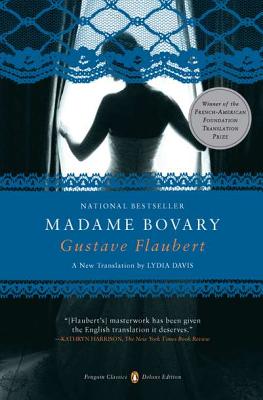
‘Madame Bovary’ by Gustave Flaubert

‘Madame Bovary’ by Gustave Flaubert (1856) –  370 pages

Translated by Lydia Davis

9780143106494

When I first read ‘Madame Bovary’ in college, I may have been too young to appreciate this story of extramarital infidelity and it did not have much impact on me.  I found out there was a recent translation of the novel by 2013 Man Booker International prize winner Lydia Davis, and it was time for a re-read  of ‘Madame Bovary’.  This time I listened to the Lydia Davis version of the novel on audio, and this version was exquisite and awesome.

One would think that Charles Bovary would be a ‘good catch’ as a husband for Emma Rouault who was a mere farmer’s daughter.  Charles was a doctor, albeit a country or small-town doctor, and I suppose general practitioners like Charles did not make a lot of money, but at least they should have been comfortably well-off. Charles was dedicated to his medical profession.  He was quite a lot older than Emma, and Emma regarded him as a bit of a stick-in-the-mud.  Her unreasonable contempt of him grows as time passes.

 “Even as they were brought closer together by the details of daily life, she was separated from him by a growing sense of inward detachment. Charles’ conversation was flat as a sidewalk, a place of passage for the ideas of everyman; they wore drab everyday clothes, and they inspired neither laughter nor dreams.”

 “Her life was as cold as an attic facing north; and boredom, like a silent spider, was weaving its web in the shadows, in every corner of her heart.”

 The doctor Charles and Emma are given an opportunity to go to Paris, and while there they attend a high society ball.  There Emma sees these aristocratic men dancing with pretty young women, and she is awestruck by the glamour of it all.

After they return from Paris, Emma in order to escape the dull life of a doctor’s wife, takes up with the decadent college student Leon.  They spend much time together, but after a time Leon leaves in frustration of never having Emma.

Then Emma takes up with Rodolphe.  France at that time had many counts and dukes and barons with much inherited land and money, who had little to do besides to engage in hunting and other sports and pastimes.  These aristocrats treated seducing young women as a sport.  Rodolphe was that kind of guy.  Not that Emma needed that much seducing.  She glamorized the romantic society life of affairs and conquests.  Emma and Rodolphe have an affair somewhat disguised by their horseback rides together which lasts four years with Charles never suspecting.

“She repeated to herself, ‘I have a lover! I have a lover!” and the thought gave her a delicious thrill, as though she were beginning a second puberty. At last she was going to possess the joys of love, that fever of happiness she had despaired of ever knowing. She was entering a marvelous realm in which everything would be passion, ecstasy and rapture.”

 Then when Emma tries to get Rodolphe to run away with her, Rodolphe breaks off the affair.

Then it is back to Leon, and Emma and Leon begin an affair disguised as out-of-town piano lessons.

I suspect that if an English or American writer had written a version of Bovary, it would have been much more moralistic and disapproving of Emma. Flaubert has much of the novel told from Emma’s point of view.  Emma is for the most part a sympathetic figure despite her numerous infidelities, and when her gruesome end comes we are all sad.

9781101195888_p0_v1_s260x420 Strictly speaking, sexual infidelity was not responsible for the fall of Emma Bovary; financial extravagance was the culprit.  Her stalwart husband Charles did not suspect a thing about her extramarital affairs until he discovers some love letters in the attic sometime after Emma was gone.

Besides the intriguing story of Emma Bovary, “Madame Bovary” offers wonderful colorful detailed set pieces, first about life in rural northern France, then about small town life including a separate piece on the small town fair, then about the glamorous high society life.  These vignettes fit in with the story, but are interesting enough to stand on their own.

A Dozen of my Favorite Novellas Written by Men

Now it is the men’s turn.  The following novellas are brilliant, and they have the added benefit of not requiring much time or effort to read them.  See also ‘A Dozen of my Favorite Novellas Written by Women’.

2839197914_7653eb0ce6

“A Clockwork Orange” by Anthony Burgess (1962) – Alex and his teen gang of droogs roam the streets inflicting ultra-violence until he undergoes an experimental behavior modification technique.

“Voices on the Moon” by Andre Dubus II (1984) – We used to go to Andre Dubus II for wrenching, intimate, intense stories or novellas about the doings between men and women.  Now we go to Andre Dubus III for the same thing.

“Writing is a sustained act of empathy” – Andre Dubus II 

A Christmas Carol Pop-Up Book “A Christmas Carol” by Charles Dickens (1843) – Everything we love about Charles Dickens compressed into one holiday novella.

 “The Long March” by William Styron (1952) – Styron wrote excellent long novels such as ‘Sophie’s Choice’ and ‘Lie Down in Darkness’, but he was never better than in this war novella about two young soldiers struggling to maintain their humanity while still being soldiers.

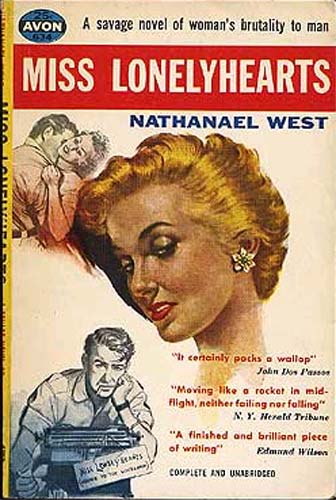
misslonelyhearts-1“Miss Lonelyhearts” by Nathanael West (1933) – A black humor novella about a male advice columnist for a newspaper.  His readers write to him seeking advice to cope with their desperate lives.  He has no meaningful advice to give as he himself is in an unbearable situation.  He can only dispense hollow feel-good drivel.
“Candide” by Voltaire (1759) – One of the funniest books ever written.  Despite everything, Candide is the eternal optimist.

“God gave us the gift of life.  It is up to us to give ourselves the gift of living well.” – Voltaire

“Common sense is not so common.” – Voltaire.

“Judge a man by his questions rather than by his answers.”  – Voltaire

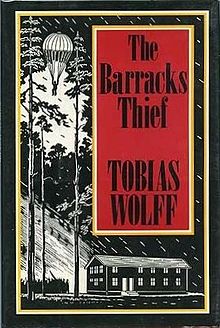
220px-TheBarracksThief “The Barracks Thief” by Tobias Wolff (1984) – Another war novella about paratroopers waiting to go to Vietnam.  This novella was a PEN/Faulkner Award winner.    “A barracks thief was the lowest thing there was.”

“Animal Farm” by George Orwell (1945) – a story of animals on a farm which is actually a severe criticism of Stalinist Communism by the democratic socialist George Orwell.

“All animals are equal, but some animals are more equal than others.” 

 Wittgenstein's Nephew“Wittgenstein’s Nephew” by Thomas Bernhard (1982) – I did not fully appreciate this somewhat difficult author until I read this short autobiographical work.  Although short enough, it is not a novella, but I’m including it, because it is more literary than most works of fiction.  It is a good way to get introduced to an important writer.
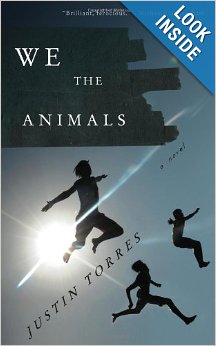
412mCZgqVUL._SY344_PJlook-inside-v2,TopRight,1,0_SH20_BO1,204,203,200_“We the Animals” by Justin Torres (2011) – Three boys dealing with their wife-beating father’s rage and their mother’s fear, but also dealing with their parents’ love.

 “We hit and we kept on hitting; we were allowed to be what we were, frightened and vengeful — little animals, clawing at what we needed.”

 mandm poster “Of Mice and Men” by John Steinbeck (1937) – a United States classic about the troubled friendship between two migrant field workers, George and Lenny.

“There ain’t no sin and there ain’t no virtue. There’s just stuff people do.” – John Steinbeck, “The Grapes of Wrath”

 “Heart of a Dog” by Mikhail Bulgakov (1925) – a surreal hilarious political allegory about a dog surgically transformed into a man who becomes a government bureaucrat in charge of ridding the city of cats.  It was banned in Russia for 62 years.

‘The Lowland’ by Jhumpa Lahiri

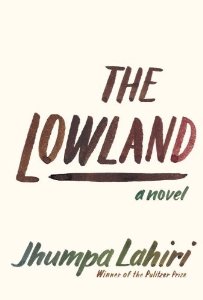
‘The Lowland’  by Jhumpa Lahiri  (2013) – 340 pages

41hnzpfifzl-_sy300_

The main character in Jhumpa Lahiri’s new novel “The Lowland”, Subhash Mitra, is a master of restraint.  His brother Udayan is appalled by the grinding poverty and the near starvation of a large number of people around their home in Calcutta, India.  When a peasants’ revolt breaks out in the town of Naxalbari, and the police open fire on an unarmed group of peasants killing nine adults and two children in 1967, college student Udayan like many others decides to become an underground revolutionary.  Subhash wants no part of this.  He heads off to the United States to attend college in Rhode Island.

While reading about Subhash in “The Lowland”, I kept thinking of the title of Graham Greene’s autobiography, “A Sort of Life”.  That is the passive kind of life Subhash Mitra leads.  He gets married without even a minimum of love between husband and wife.  There’s a baby daughter, but it is not his.  He is attracted to the natural surroundings of the Rhode Island area, and he takes long walks by himself.  He seems to do quite well on his jobs in the academic/scientific community.  He stays in the same house in Rhode Island for nearly fifty years.

I above called Subhash a master of restraint, but the true master of restraint here is Jhumpa Lahiri.  She has her readers following this seemingly dull person through 70 years while not much at all happens. 

Soon after I started “The Lowland”, I read two reviews of the novel, the somewhat negative review in the Washington Post by Ron Charles (“At times Gauri sounds like a character from a particularly dour Anita Brookner novel.”)  and the almost totally negative review by Porochista Khakpour in the Los Angeles Times (“Lines like these read like a parody of contemporary transnational literature at best.”).   Jhumpa Lahiri has truly arrived on the literary scene to get reviews this negative.   I can see their point to some extent; sometimes it felt like work plowing through these pages.  Yet her writing sustains our attention.  The effect is cumulative, and by the end of the novel you will be moved by this story of an uninteresting man.  Perhaps most of us lead a sort of life rather than a real life.  Maybe the most courageous are those who quietly continue on. 

In the novel, we check in with Subhash and his family every few years.  I probably would have preferred a more compressed timeframe, because these check-ins sometimes seemed distant and uninvolving.   

What is my overall opinion of “The Lowland”?  It is a well-written novel, and many of the scenes are intense and affecting.  I’ve read other novels before about characters who don’t quite connect in their personal lives, and this one is handled in fine fashion.  This is a novel where the sum is much greater than its parts.  However a few of these individual parts moved too slowly for me.

“The Lowland” is up for both the Man-Booker and the United States National Book Award, the first novel ever selected on the lists for both awards.  I would say it is good enough for the shortlists for both awards, but I don’t see it as a winner of either award.

The Maid’s Version by Daniel Woodrell – Country Noir is Alive and Well

The Maid’s Version’ by Daniel Woodrell  (2013) – 164 pages

photo193

At the center of “The Maid’s Version” is a terrifying explosion and fire at the Arbor Dance Hall in 1929 which claimed 42 lives and devastated the small town in Missouri where it happened.  A lot of the folks in the Ozark town near this dance hall believe this explosion was a deliberate act.  They think that only dynamite could have caused this sudden explosion.  The novel is a mystery whodunit forty years later as to who was responsible for this act.  One of the people who died in the fire is the free spirited sister, Ruby, of the maid, Alma, of the title.

 “Ruby didn’t mind breaking hearts, but she liked them to shatter coolly, with no ugly scenes of departure where an arm got twisted behind her back by a crying man, or her many failings and damp habits were made specific in words shouted out an open window.” 

 The above is a good example of Daniel Woodrell’s writing.  It does not always take a straight line to its main point, but the additional words add local color and detail to the sentiment.   For quite a few of the sentences with their dangling clauses, I wondered if they hanged together grammatically.  However the sentences contributed to the overall mood of the story which was lively and evocative, and that’s all that counts.  Many novels about small town life are written today in a style that is so spare and sparse, that it is a pleasure to read something that is more expressive

I would have liked to have seen the characters in this novel developed more fully.  What we get of the characters is good.  I suppose due to the constraints of the mystery genre, the novel stays on the surface with many characters rather than going into any depth with just a few.  Reading ‘The Maid’s Version’ was entirely a pleasant experience.  I just don’t think it will leave any lasting imprint.    I do like the idea of solving a mystery from the past like this dance hall explosion.

Daniel Woodrell calls this type of novel ‘country noir’ and this novel certainly has its noir-ish elements starting with the dark crime at its center.    It also could fall under the Southern Gothic umbrella with its assortment of rural and small-town characters trying to figure out what happened.  Woodrell is probably best known for the novel “Winter’s Bone” which was made into an award-winning movie.

“The Maid’s Version” is well worth reading, but this is one of the few times I wish there had been more to the novel.

‘Evil Eye – Four Novellas of Love Gone Wrong’ by Joyce Carol Oates

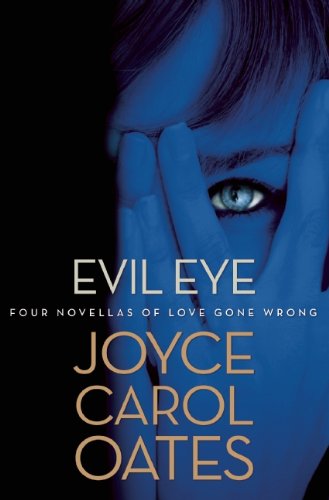
‘Evil Eye – Four Novellas of Love Gone Wrong’ by Joyce Carol Oates (2013) – 216 pages

“Love commingled with hate is more powerful than love. Or hate.” – Joyce Carol Oates

41q5kNfEIBLThe four novellas in “Evil Eye” are lurid and over the top, just what we have come to expect from Joyce Carol Oates.   But somehow these gruesome accounts worked for me because they are well-grounded in the details of realism.

Who better to write about evil in modern everyday life than Joyce Carol Oates?  Much of her writing career has been devoted to the subject of evil in some form or another.

One of the novellas has the collegiate son of an upper middle class family leaving his fraternity house and returning to his family home.  There he murders his father with an ax.  Love can not go more wrong than that.  Due to a small amount of good feeling left for his mother, the guy can only hit her on the head with the blunt end of the ax rather than splitting her head open with the sharp end.  This leaves his mother knocked out and semi-conscious but still alive.  Later, despite her disfigurement, she lies to save her son in court.

Another has a young woman with a repressed memory of her grandfather molesting her as a child.   She and her boyfriend confront this grandfather.

These are Gothic horror stories written with specifics which only make the stories more gruesome and ghastly.  This is not a book for the faint of heart.

The first story is more subtle.  A college professor has been married several times, and his new young wife learns what to expect when his first ex-wife and his daughter come to visit.

The last Joyce Carol Oates fiction I completed before ‘Evil Eye’ was “I’ll Take You There” from 2003 which is an excellent and more traditional novel.  Since then I have tried to read a couple of her more recent works without success, unable to complete them.  I told myself that I preferred the less shocking and overwrought of Oates’ work.  But now I must admit I really enjoyed all four of these evil well-written novellas. Understandably I won’t read such of her titles as ‘Rape, A Love Story’ or ‘Daddy Love’.

I listened to ‘Evil Eye’.  Somehow listening made these novellas more palatable.  As always in Joyce Carol Oates, the storytelling is first-rate.

I wish we had a writer as adept at confronting the evil in the professional and business work-a-day world as Joyce Carol Oates is in confronting evil in the personal and family world.

.