Archive for the ‘Book Reviews’ Category

‘Funny Girl’ by Nick Hornby – “There are worse things to aim at than making people happy.”

‘Funny Girl’ by Nick Hornby   (2015) – 452 pages   Grade: B+
4B56696D677C7C34353534323233317C7C434F504C

In ‘Funny Girl’ our heroine, Barbara Parker aka Sophie Straw, is a teenager in Blackpool in northern England who idolizes Lucille Ball whom our girl watches on TV in ‘I Love Lucy’ episodes.  It’s the Sixties, and she wants to become a female comedienne just like Lucy.  Our girl is very beautiful like early Lucy, and she wins a Blackpool beauty contest which doesn’t suit her at all.  She goes off to London in the hopes of someday doing comedy but meanwhile working at a cosmetics counter.

Things happen quickly, and soon she lands the lead role on a BBC situation comedy called ‘Barbara (and Jim)’.  We meet the diverse group of professionals who put on the show, and soon the show is a huge success.  Later much of the story concerns Barbara/Sophie finding a suitable mate.

The novel itself is a lot like a workplace situation comedy more like ‘The Mary Tyler Moore Show’ than ‘I Love Lucy’. The plot centers around the small group of characters who put on the show including the stars, the director/producer, and the two writers.

‘Funny Girl’ is clever and cute, perhaps a little too clever and a little too cute with few rough edges. Barbara at the center of it faces no difficulties becoming a comedy star, and she is one automatically with the first episode of her first show.  It probably would have been more realistic if she had to struggle a bit to attain stardom.  Even Lucy had her struggles in Hollywood before she became a TV star.

But the focus of the novel is on the motley crew who make the show.  The show’s leading man Clive makes love to many women but adores only himself.  The two writers Tony and Bill had previously got arrested together for a homosexual encounter (The novel begins in 1964), but later Tony gets married to a woman while Bill becomes an outspoken advocate of gay rights with a promiscuous lifestyle.  Much of the humor of the novel comes from the talk between Tony and Bill who must come up with standard TV fare for each episode.  Then there is the producer/director Dennis who is the steady glue that holds the team together.

Like any good sit-com. ‘Funny Girl’ has its strong emotionally touching moments scattered amongst the humorous scenes.

I could see ‘Funny Girl’ doing well as a romantic comedy of a movie.  Nick Hornby has a sure hand for clever dialogue and humorous situations.  However I expect even a light novel to go deeper into its characters than ‘Funny Girl’ does.  Things stay relentlessly on the surface here.  We readers glide along on the humor and cuteness of the scenes and characters, but I doubt any of us will give the novel another thought after ending it.

However I do think light humor alone is a worthy goal, and ‘Funny Girl’ was fun while it lasted.


The Tempest by William Shakespeare

The Tempest’ by William Shakespeare   (1610)  – 124 pages  Grade: A

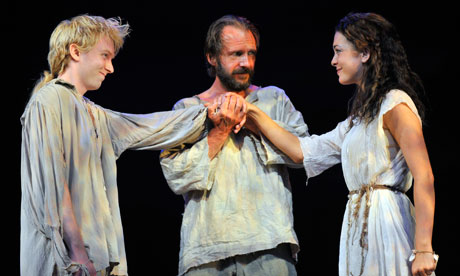
the-tempest-poster

Shakespeare wrote both tragedies and comedies.  If no one dies a violent death in a Shakespeare play, the play is considered a comedy.  In the tragedies the dead bodies pile up on the castle floors (see Hamlet, Macbeth, etc.)

No one is killed in ‘The Tempest’, so it is considered a comedy.  In fact the play is a powerful argument against violent revenge.

 “The rarer action is in virtue than in vengeance.” 

 Prospero is the main character in ‘The Tempest’, but it is the good Gonzalo who sets the pace for the play’s spirit.  When Prospero’s brother Antonio tricked Prospero out of his Milan dukedom and banished him and his three year-old daughter Miranda to this island, it is the good Gonzalo who makes sure they are well provided for.  After Gonzalo’s fine example, the spirit of ‘The Tempest’ is kind moderation.

Thus when Prospero and his helper Ariel use magic to create a tempest that shipwrecks the vessel of the King of Naples Alonso and Prospero’s brother Antonio, they make sure no one is injured or killed.   Still there are devilish plots in the works.  Antonio and Alonso’s son Sebastian want to steal Alonso’s throne by killing Sebastian’s older brother Prince Ferdinand.   Prospero’s slave Caliban plots to kill Prospero.

Meanwhile the shipwrecked Prince Ferdinand falls immediately in love with the now almost fifteen year-old Miranda and she with him.  The play does not say whether their love is part of Prospero’s magic or just strong mutual attraction.   After only about three hours, their marriage is assured.

the-tempest-billington-007‘The Tempest’ was the last play that William Shakespeare wrote by himself.  By 1610, colonialism was well under way in England’s colonies, and ‘The Tempest’ was Shakespeare’s first and only play that addresses colonialism.

Caliban is the black slave of Prospero, and Shakespeare did not portray him in a positive light.  Caliban is described as ‘hag-born’, a ‘demi-devil’, a ‘poor credulous monster’ who ‘didst seek to violate the honour of my child (Miranda)’.  Later Caliban seeks to regain the island for himself by murdering Prospero.  Yet Caliban is eloquent in his words describing the island:

Be not afeard; the isle is full of noises,

Sounds, and sweet airs, that give delight and hurt not.

Sometimes a thousand twangling instruments
Will hum about mine ears; and sometime voices
That, if I then had waked after long sleep,
Will make me sleep again; and then in dreaming,
The clouds methought would open, and show riches
Ready to drop upon me, that when I waked
I cried to dream again.

          Caliban

 In this portrayal of Caliban, the question arises if these are Shakespeare’s own opinions or the opinions of the characters he is portraying on stage.  Thus Caliban could have been seen as a monster in the eyes of Prospero but not necessarily by Shakespeare.   Of course plenty of white Christians are portrayed negatively in Shakespeare including Macbeth and Lady Macbeth, Gertrude and Claudius in Hamlet, and Antonio here in ‘The Tempest’.  Perhaps it is a form of implicit racism to never portray a black person in a negative or evil light.

‘Outline’ by Rachel Cusk

‘Outline’ by Rachel Cusk    (2014) – 249 pages   Grade: B+

rachelcuskoutline

After a certain age, each of our lives can be told as a collection of stories.  We may not know the full truth of all these stories, and our view of them may be limited or one-sided, but the stories together make up who we are.

There are two chapters in ‘Outline’ where our main character Faye is teaching a writing class in Athens, Greece.  She asks each of the students to tell her something that they had noticed on their way to class.  Each student has their own story some of which go on for several pages.  We get each student’s story until there is only one student left who has said nothing.  This woman says to the teacher as the class breaks up that she doesn’t know who the teacher is, but “I’ll tell you one thing, you’re a lousy teacher.”

The rest of ‘Outline’ is much like the students’ chapters with various people Faye meets up with in Greece relating their life experiences and lessons learned or not learned from them.  This is a philosophical novel and also an unconventional one.  Faye herself has not much of a story here.  She is constantly listening to other people.  This novel consists almost entirely of conversations in restaurants, on airplane flights, on boats, and in classrooms.

Perhaps the dialogue is not realistic in that usually when we talk, especially to strangers, there is a lot of back and forth.  In ‘Outline’ one person relating an incident may go on for several pages.  The conversations are like long monologues with short interruptions.

Rachel Cusk has expressed her dissatisfaction with the traditional forms of fiction before, calling them “fake and embarrassing”:

“Once you have suffered sufficiently, the idea of making up John and Jane and having them do things together seems utterly ridiculous.”

 In ‘Outline’ Cusk is attempting something new and different.  Instead of an omniscient all-knowing voice, she has the people in the novel tell their own stories through conversations. This new way of storytelling might have been disorienting except that Rachel Cusk is such a graceful and intelligent writer that it all seems quite natural.

Each sentence in ‘Outline’ feels like it was polished and crafted to achieve the maximum perceptivity and precision.  Here are two examples :

“He began to ask me questions, as though he had learned to remind himself to do so, and I wondered what or who had taught him that lesson, which many people never learn.”  

“I replied that I wasn’t sure it was possible, in marriage, to know what you actually were, or indeed to separate what you were from what you had become through the other person.” 

41orC4b88kL._SY344_BO1,204,203,200_Some readers may prefer a little less measured approach, but I found the sentences to be a strong positive making the novel a joy to read at the sentence level.  Rachel Cush has a distinctive style of writing, and I find that a huge plus for any novelist.

As I’ve mentioned before, ‘Outline’ was short-listed for the Goldsmiths Prize.  I believe that both the actual winner, ‘How to Be Both’ by Ali Smith, and ‘Outline’ would have been worthy winners.

.

‘The Tango Singer’ by Tomas Eloy Martinez – A Love Song to Buenos Aires

‘The Tango Singer’ by Tomas Eloy Martinez  (2004) – 243 pages    Grade: B

512wDM3C4+L._SY344_BO1,204,203,200_

The biography of Argentine writer Tomas Eloy Martinez is instructive and will help us to better understand his novel ‘The Tango Singer’.  In the 1960s and early 1970s, Martinez was a prominent Argentine journalist, film critic, and editor.  However in early 1976 a military junta led by General Jorge Rafael Videla took power in a coup d’état.  The junta was a brutal military dictatorship which plotted to eliminate all leftists from Argentina.   The Secretary of the United States at the time, Henry Kissinger, gave his tacit approval to the junta’s plan to eradicate leftists that was part of a larger plan, Operation Condor, which had already replaced the democratic government of Chile with a military dictatorship.

Estimates are from 13,000 to 30,000 as to the number of political dissidents who vanished from Argentina at that time.   The junta perpetrated widespread torture, forced disappearances, and murder as part of Operation Condor.  One common procedure they used was to take leftists up in a plane over the ocean and then throw the persons out of the plane never to be seen again.

Tomas Eloy Martinez was already in trouble with the government due to his reporting, and beginning in 1975 he moved in exile to Venezuela.  Later he moved to the United States in 1984 where he wrote novels and was a distinguished professor at Rutgers University.  He died in Buenos Aires in 2010.

ARG-Buenos-Aires-Capital‘The Tango Singer’ is a paean to that city of Buenos Aires.  People who are exiled from their native land where they were born and raised frequently have a great fondness for the place to which they cannot return.  Fortunately the military junta fell apart and lost its power in 1983 after Argentina lost the Falkland War.  Martinez could have returned there after that but opportunity in the United States beckoned.

The plot of ‘The Tango Singer’ is about a transplanted Argentine now living in New York, Bruno Cadogan, returning to Buenos Aires to search for famous tango singer, Julio Martel, who has never been recorded, but who has achieved far-flung local fame.  Martel sings the old tangos which originated in the brothels and bars of Buenos Aires early in the 1900s before the tango form was tamed and popularized.   He sings in places throughout the city, but never discloses where he will perform beforehand.   He is physically weak and has health problems, and his girlfriend Alcira Vilar takes care of him. Much of the novel is taken up with Bruno’s search for Martel.

We travel to many spots in Buenos Aires, and Bruno tells us a lot of local color stories along the way.  We get much of the history of the city.  The tone is somewhat elegiac although there is also a fair amount of humor. I found ‘The Tango Singer’ somewhat episodic and anecdotal with no urgent plot to hold the reader’s interest.  Although the charm level here is high, I found the novel somewhat scattered with no real momentum. There are many references to alephs and labyrinths which are in stories written by Jorge Borges and are quite obscure to those who have not read Borges. Previously I read Martinez’ novel ‘Santa Evita’, and I found that novel more compelling.  I believe that ‘Santa Evita’ will be considered his masterpiece.

At the national Argentinian military college there is a hall which contains portraits of all the former leaders of Argentina.  In 2004, a judge ordered that General Videla’s portrait be removed from the hall.


The Goldsmiths Prize – ‘Fiction at Its Most Novel’

TJ1zaq6L_400x400First off, let me say that I am not a paid publicity hack for the Goldsmiths Prize, far from it.  I just found out about the award two days ago, and it has already been going on for two years.  However the award is so much on my wavelength, so much right up my alley so to speak, that I must write about it.

The award is sponsored by Goldsmiths University of London in association with the magazine The New Statesman.  It is limited to Irish and United Kingdom authors, and books must be published by a United Kingdom publisher.  Why would I, way out here in Minneapolis, Minnesota, care?

The slogan of the Goldsmiths Prize is ‘Fiction at its most Novel’.

Here are some words taken directly from the Goldsmiths website that describe well the purpose of the prize:

‘All great works of literature either dissolve a genre or invent one’ (Walter Benjamin)

‘I have laid a plan for something new, quite out of the beaten track’ (Laurence Sterne)

Novel, n. Something new (OED)

The Goldsmiths Prize was established in 2013 to celebrate the qualities of creative daring associated with the University and to reward fiction that breaks the mould or opens up new possibilities for the novel form.

Good or bad, I have a restless mind. I have always liked to point out that the definition of the word ‘novel’ is ‘something new’.  I don’t want the ‘same old, same old’.   I might read ‘Gulliver’s Travels’ or Jean Rhys one day, Jane Austen or Leo Tolstoy the next, and the latest critical darling the next.  I appreciate writers who are willing to attempt something new or different.

In their announcement of this year’s winner, Goldsmiths perhaps said it best:

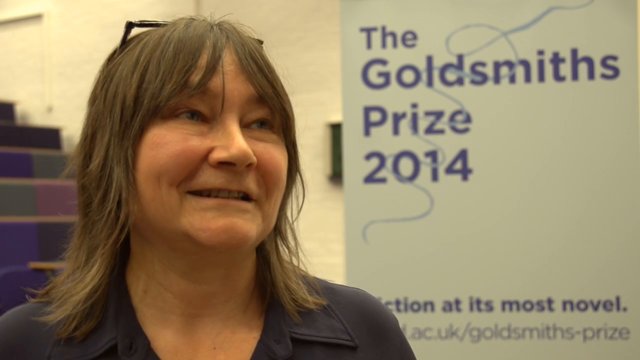
‘How to be Both’ by Ali Smith has won the Goldsmiths Prize 2014 for boldly original fiction.

That is exactly what I want from fiction, something that is bold and original.

All this is not to say that I will always agree with the Goldsmiths choices.  I gave up in disgust on the first winner of the Goldsmiths prize, ‘A Girl is a Half Formed Thing’ by Eimear McBride, after only a few pages.  It might even be said that if a person is going to be boldly original, they are also setting themselves up for intense dislike.

I had much better luck with this year’s winner.  ‘How To Be Both’ is a book I much admire.

This year’s short list for the Goldsmiths Prize consisted of ‘How to Be Both’ by Ali Smith, ‘Outline’ by Rachel Cusk, ‘The Wake’ by Paul Kingsnorth, ‘The Absent Therapist’ by Will Eaves, ‘In the Light of What We Know’ by Zia Haider Rahman, and ‘J’ by Howard Jacobson.

Ali Smith

Ali Smith

The award is not about outlandish plots or science fiction.  It is about originality in form and/or style.  I recently read another of the short list, ‘Outline’ by Rachel Cusk, which is certainly a fresh new approach to a familiar subject.  (More about ‘Outline’ in a future article.)

I will be watching the Goldsmiths Prize in the future for good leads on fiction to read.

‘The American Lover’ by Rose Tremain

‘The American Lover’ by Rose Tremain stories   (2015) – 240 pages    Grade: A-

9780701189273

‘The American Lover’ is a varied convincing group of stories by one of our world’s better novelists.  I don’t want to oversell it.  This book did not change my life. But this collection of stories did not disappoint at all, and that is a lot to say about any work of fiction. Rose Tremain is more a novelist than a story writer, and these stories are not the main point of her career.  However each of these stories is well-written and has an impact of its own.

The range of these stories is wide in time and place.  In one story the main character is Mrs. Danvers, the housekeeper in Daphne DuMaurier’s ‘Rebecca’.  In another story which takes place in a Russian village, one of the main characters is Leo Tolstoy.

The first story, the title story, is about a transgressive first love during the 1960s in which a young woman falls deeply in love with a guy who takes her to Paris where he gets her to have three-way sex with a transvestite. (These stories are not for the squeamish.)  The affair runs its course, but ten years later she is still haunted by him.

One story, one of my favorites, is about a couple who escape their hell-raising daughter and her ‘crazy never-ending carnival of woe’ by retiring to a peaceful summer cabin in Canada along the waters of Lakes Superior.

Tremain is very good at mixing lighter moments with tragedy needing only a few sentences to separate them.  That is one of the reasons I appreciate her novels as well as her stories.  Both comedy and death are a part of life, and these stories have their share of both.

Another poignant story is ‘Lucy and Gaston’ about an English woman who lost her husband who was a pilot during the Normandy invasion, and a young Frenchman who lost his father.  Somehow Tremain can conjure up a new time and place for each story using just a few words.

It is a good thing that Rose Tremain has not succumbed to the current fad of writing for a younger audience.  Her stories are by and for adults, and she does not shy away from disturbing topics.

I was very taken with Rose Tremain as a fiction writer early in her career with my interest peaking about the time she wrote ‘Restoration‘ and ‘Sacred Country’.  I thought she could do no wrong.  However after that there were a couple of novels including ‘Music and Silence’ and ‘The Colours’ that did not work for me.  I stopped following her work for awhile.  However I happened to read ‘Trespass’, and I’m happy to say I consider that novel a return to form.  ‘The American Lover’ is a continuation of her return.


‘West of Sunset’ by Stewart O’Nan – F. Scott Fitzgerald’s Last Years in Hollywood

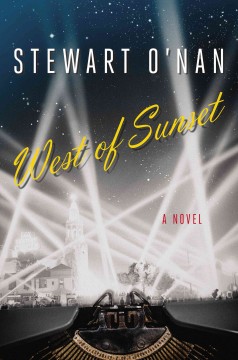
‘West of Sunset’ by Stewart O’Nan   (2015) – 289 pages   Grade: B+

Jackccxet

The author Stewart O’Nan has been called ‘the king of the quotidian’ by fellow author Elizabeth Strout.  That is certainly true of my favorite of his novels, ‘Last Night at the Red Lobster’, which follows the day-to-day running of a Red Lobster restaurant through the eyes of its manager.  That novel was an affecting look at the franchise restaurant business and the people who work in it.

At first glance one would think that the wildly flamboyant F. Scott Fitzgerald would not be the best subject for a writer of the everyday life like Stewart O’Nan.  Scott and his wife Zelda were raucous drunken hell-raisers in the Twenties, dancing on table tops, diving into public fountains, going to cocktail parties in their pajamas with Zelda likely taking even those off, getting thrown out of hotels.

However the F. Scott Fitzgerald in ‘West of Sunset’ is much more subdued.  The novel is about Fitzgerald’s final years starting with his second sojourn as a screenwriter in Hollywood in 1937.  By this time Zelda had been in and out of sanitariums and rest homes for the mentally ill for seven years.  Zelda was actually misdiagnosed with schizophrenia although today her diagnosis would most likely be bipolar disorder.

In 2013 there were three novels that told the Scott and Zelda story from Zelda’s point of view questioning whether or not Zelda was actually crazy and what or who caused her problems to begin with.  Since ‘West of Sunset’ is told from Scott’s point of view, it naturally puts him in a better light than these three other novels.  Perhaps ‘West of Sunset’ over-portrays Zelda as a poor unstable wretch.

Scott’s writing career was floundering as there was no longer much demand for his novels and stories.  He had to pay for Zelda’s expenses as well as for their daughter Scottie’s private school expenses.  Hollywood was willing to pay him $1000 a week, so he returned there.   He hated Hollywood’s team approach to writing scripts which also allowed the directors of the movie to make any script changes they wanted.  But the money was good.
Of course we meet a few famous people along the way.  Humphrey Bogart, Dorothy Parker, and Ernest Hemingway are all characters in the novel.

Scott meets up with the young gossip columnist Sheilah Graham and they develop a relationship even though he is still married to Zelda and occasionally goes back to see her.   Sheilah later becomes disgusted with Scott’s drinking binges.

Scott never could hold his liquor, and although he tries hard to keep it under control, alcohol wound up hurting his Hollywood career as well as his relationship with Sheilah.  On these drunken benders Scott had a nasty violent streak so would frequently wind up with a black eye or broken bones which would make it obvious to all that he had been drinking.

Of the four Stewart O’Nan novels that I have read, ‘West of Sunset’ is my second favorite after ‘Last Night at the Red Lobster’. ‘West of Sunset’ is a poignant and touching portrait of a man who had been on top of the world sliding inexorably downward, a mere mortal.  As the studios fire him or reduce his salary, it becomes more difficult for Scott to make financial ends meet.  The only thing that sustains Scott when he is not drinking is his strong work ethic to keep writing.

As we read along in ‘West of Sunset’, we realize we are edging closer and closer to December 21, 1940, the day F. Scott Fitzgerald died at age 44.  The only suspense is how O’Nan will handle the death scene.


Henrietta Stackpole in ‘The Portrait of a Lady’ – The New Woman, 1880s Style


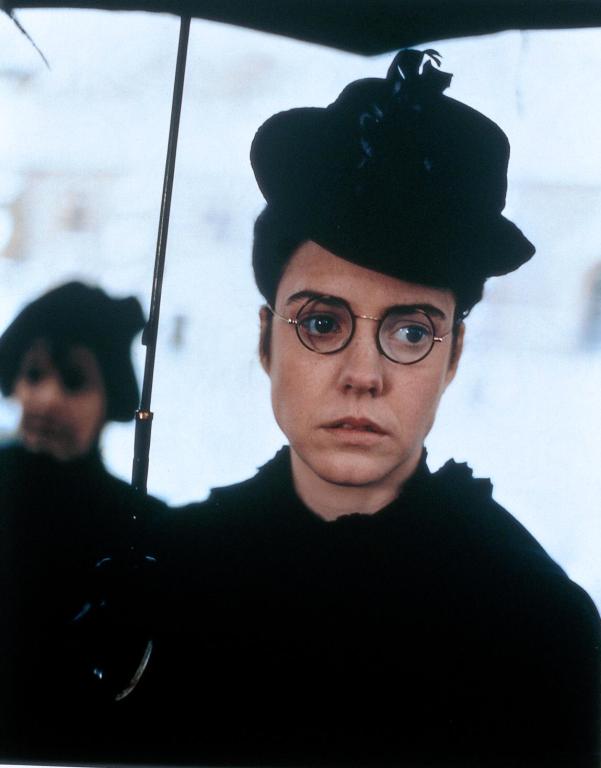
Mary Louise Parker as Henrietta Stackpole

Mary Louise Parker as Henrietta Stackpole

The quintessential American in ‘The Portrait of a Lady’ is not our main young woman Isabel Archer, but instead it is her enterprising friend Henrietta Stackpole. Henrietta, as opposed to any of the novel’s other characters, actually has a job as a reporter for the New York Interviewer. She is pushy, highly opinionated, good humored, and a great friend to Isabel Archer. Henrietta is the New Woman in 1880. She is also a breath of fresh air in a novel which may have grown stodgy without her.

Henrietta arrives in England and pushes the interests of Isabel’s former American suitor Caspar Goodwood on her. By this time Isabel has already received and turned down a proposal from Lord Warburton, and Goodwood is out of the question. Goodwood still presses on with his suit, and Isabel turns him down also.

During this time Henrietta gets to know Isabel’s cousin Ralph Touchett, and their comic arguments and teasing banter provide some light humor for the novel.

Henrietta: It’s charm that I don’t appreciate, anyway. Make yourself useful in some way, and then we’ll talk about it.

Ralph: Well, now, tell me what I shall do.

Henrietta: Go right home to begin with.

Ralph: Yes, I see. And then?

Henrietta: Take right hold of something.

Ralph: well, now what sort of thing?

Henrietta: Anything you please, so long as you take hold. Some idea, some big work.

Ralph: Is it very difficult to take hold?

Henrietta: Not if you put your heart into it.

Ralph: Ah, my heart. If it depends upon my heart—

Henrietta: Haven’t you got a heart?

Ralph: I had one a few days ago, but I’ve lost it since.

Henrietta: You’re not serious. That’s what is the matter with you.

Despite their differences, Henrietta and Ralph share an abiding perceptive interest and concern in Isabel’s future.

Henrietta sets off to tour France and Italy with a new friend she has made, Mr. Bantling. We hear that ‘they had breakfasted together, dined together, gone to the theatre together, supped together, really in a manner quite lived together,’ No mention is made of their sleeping arrangements. Later in the novel they are to be married.
In the mean time, Isabel proceeds on her own tour of Italy and winds up in the cynical clutches of Gilbert Osmond. When Henrietta finally meets Gilbert Osmond, it is natural that they mutually hate each other. Anyone who is a good friend of Isabel can see that this scheming man is crushing her spirit. Henrietta and Ralph both do everything they can to help Isabel escape.
Sometimes it almost seems that Henry James is laughing at his own character Henrietta Stackpole, making fun of her pretensions and opinions, but ultimately Henrietta’s heart is in the right place, and she is the modern glue that holds this novel together.

‘The Portrait of a Lady’ by Henry James – Less Brain and More Form than Middlemarch?

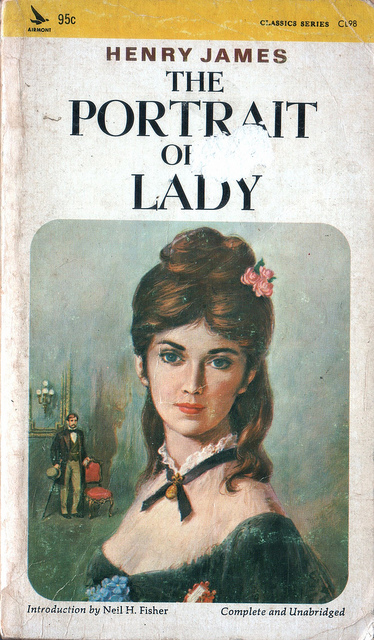
‘The Portrait of a Lady’ by Henry James   (1881) – 608 pages   Grade: A-

{92A1E96D-8DF2-4854-9DE1-A00801EBE277}Img400‘The Portrait of a Lady’ by Henry James starts out as a sunny drawing room comedy on the order of Jane Austen where the young woman visiting England from the United States, Isabel Archer, quickly turns down marriage proposals from two rich suitors because she wants to see Europe first.   The world is just opening up for Isabel, and she wants to remain independent.

The first suitor is Lord Warburton who owns several huge estates throughout England as well as mansions in France and Italy.  One wonders what kind of knucklehead would turn down an offer of marriage from Lord Warburton.  The other suitor, the American Caspar Goodwood, has the misfortune of owning only one cotton gin company.

Isabel is staying with her banker uncle Mr. Touchett who promptly dies and settles a fortune on Isabel.  In all my years I’ve never been bequeathed a large sum of money by someone I barely knew, but perhaps I’m not as pretty and spirited as Isabel Archer.

Then Isabel begins her travels to the European continent by going to the Touchett’s estate in Florence, Italy, and there she meets the villains of our story, Madame Merle and Gilbert Osmond.  Yes, things take a nasty turn and instead of being in Jane Austen’s sunny drawing room we are stuck in a terribly sad George Eliot marriage.

Isabel falls helplessly in love with the superficially charming but calculating schemer Gilbert Osmond.  Madame Merle has told him about all the money Isabel now inherited, and he wants it for himself.  Madame Merle is his partner in crime who introduces him to Isabel.  Soon Isabel and Osmond are married and living near Rome with Isabel’s new teenage stepdaughter, the unfortunately named Pansy.  After the marriage, the cynical Osmond has got the money, and he doesn’t have much use for Isabel except to crush her soul.

The story in ‘The Portrait of a Lady’ is told with passion and energy. The warm and witty repartee between the various characters is simply amazing.  It quickly became apparent that ‘The Portrait of a Lady’ would become my favorite Henry James novel.  The characters and plot are as striking and memorable as a George Eliot novel.

There is some evidence that in writing ‘The Portrait of a Lady’, Henry James was reacting to George Eliot’s novel ‘Middlemarch’ which I consider perhaps the greatest of all English language novels.  Both novels are about a bright young woman making an unfortunate marriage.  It seems to me that her first marriage is a momentous occasion in any woman’s life.  She must give up the life she was leading before for a new life, and it is so easy to make the wrong decision.  Perhaps Isabel reflects James’ thinking with her belief that “a woman ought to be able to make up her life in singleness, and that it was perfectly possible to be happy without the society of a more or less coarse-minded person of another sex.”

After reading ‘Middlemarch, James wrote that his future works are “to have less ‘brain’ than Middlemarch, but they are to have more form’.  I do believe that James succeeded in the ‘less brain’ goal, but I’m not sure about the ‘more form’ part of the equation.

8515505286_9c22d63401_zHenry James makes no apologies about solely writing about the upper class; that is one thing that I find it difficult to stomach about him.  It still annoys me that Henry James apparently considered poor people or even the middle class to be unworthy of inclusion in his novels.  Instead we get the richest of the rich traipsing from one vast estate to another.  Certainly writers must write about those they know, and I suppose James does a great job of pinning down these super rich types, However I do believe that his works are limited by him restricting his subjects strictly to the absurdly rich.

George Eliot dealt with the entirety of her society, and thus I find many of her works more meaningful to me.   So my final advice would be to definitely read ‘The Portrait of a Lady’ but read ‘Middlemarch’ first.

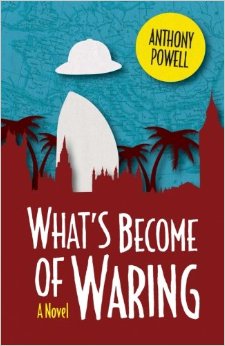
‘What’s Become of Waring’ by Anthony Powell

‘What’s Become of Waring’ by Anthony Powell   (1939)  –  236 pages   Grade: B+

51V7M+WYiOL._SY344_BO1,204,203,200_

“People think that because a novel’s invented, it isn’t true. Exactly the reverse is the case. Biography and memoirs can never be wholly true, since they cannot include every conceivable circumstance of what happened. The novel can do that.” – Anthony Powell

So far I’ve read three of the twelve novels that make up ‘A Dance to the Music of Time’ as well as the separate novels ‘O How the Wheel Becomes It’ and now ‘What’s Become of Waring’ by Anthony Powell.  What spurred my interest in ‘What’s Become of Waring’ was an old fascinating review at Kaggsy’s Bookish Ramblings which described in detail Powell’s sly technique of allowing the reader to figure out what’s coming even before the narrator figures it out.

Anthony Powell was a writer of subtle and dry wit whose sense of humor wasn’t always readily apparent.  When I was younger, I preferred writers like Evelyn Waugh or Kingsley Amis whose humor was broader and more obvious, but now I find myself returning to Powell on occasion.

“It is not what happens to people that is significant, but what they think happens to them.” – Anthony Powell  

 Here is the plot of ‘What’s Become of Waring’.  The publishing house of Judkins & Judkins has recently found out that one of its best selling travel writers, T. T. Waring, has died.  Waring “was the almost perfect exemplar of a form of wooly writing that appeals to uncritical palates”, but of whom no one with literary taste “could stomach those tinny echoes of a biblical style, much diluted with popular journalism.”  Since “there is no way of proving that writing is good or bad”, Waring’s reputation as a remarkable traveler was secure.

In order to cash in on Waring’s celebrity immediately after he died, the publishers hire our narrator to research his life and write a biography.   Soon our narrator, as well as we readers, discovers that travel writer T. T. Waring is a fraud.

Anthony Powell had written four novels before this one so he was quire familiar with the publishing business, and his ironic insights into the business are quite acute.

‘What’s Become of Waring’ is a novel of its time, written just before the outbreak of World War II.  Somehow names like Eustace and Beryl seem out of date.  Several of the scenes take place at séances which were meetings of friends who try to communicate with dead people.  These séances were a quite popular entertainment in England during the 1930s.

Perhaps someday I will again pick up ‘A Dance to the Music of Time’.  For now, this early Anthony Powell novel will sustain me.

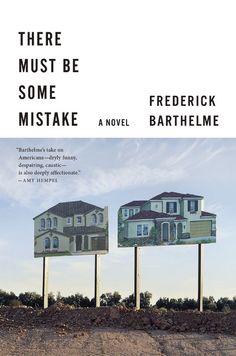
‘There Must be Some Mistake’ by Frederick Barthelme – Tacky, Wacky Texas

‘There Must be Some Mistake’ by Frederick Barthelme   (2014) – 294 pages    Grade: A-

42e16559bfa40e0e2a64330be4e57a81

Kicked out of his job as a design consultant, Wallace Webster, our trusty narrator in the new Frederick Barthelme novel ‘There Must be Some Mistake’, is in his early fifties, recently divorced, and living in a condominium on Forgetful Bay in south Texas   He stays up all night doing Google searches, watching reality TV shows, and eating saltines.

“I was already a fan of junk culture. every excess, every heartbreakingly bad idea some fool came up with, every pathetic effort we made to clean up our act and our lives, every crummy joke, every dumb gesture, every pretense to profound thought, deep spirituality, or going the other way, low self-loathing.  We were blockheads and ninnies, and I liked that about us, even the grand and miraculous, who knew not this rarefied enlightenment “

As I kept reading ‘There Must be Some Mistake’, I learned to like and trust Wallace’s deadpan view of life in his tacky corner of the world.  Here is his view of young people today:

“It struck me as odd that Rice (University) students would look like gas station attendants but then I realized everyone under thirty looked like a gas-station attendant to me.  Then I realized there weren’t any gas-station attendants anymore.” 

 Of course our restaurant franchise chains come in for their share of abuse.  Here is Wallace on dining at Olive Garden:

“Our food arrived in due course.  Mine was execrable, in the best possible way as usual.  Thick, gloppy, greasy, misshapen, lukewarm, and inedible.  We dined in silence, unless slurps and other sucking noises are to be counted.”

 Then there’s the guy who arrives at the condo in cowboy regalia. “He was cowboyed up.”

Strange things are happening in Wallace Webster’s condo.  One of his fellow condo-dwellers dies in a mysterious car accident, and then there is a possible suicide, and also what appears to be a murder.  Then Wallace must deal with woman detective Jean Darling.  Wallace already has a lot of women in his life with Jilly who was his friend from work, Diane who is his ex-wife, Morgan who is his daughter, and Chantal who is the wild woman from another condo with whom he is having an affair and who previously shot a couple of husbands.

But ‘There Must be Some Mistake’ is by no means a detective novel as that line is dropped anyway by the end.  What makes this novel fun and different is Wallace’s reliable and humorous take on our modern lives, because what Frederick Barthelme is saying does not only apply to Texas and Texans.


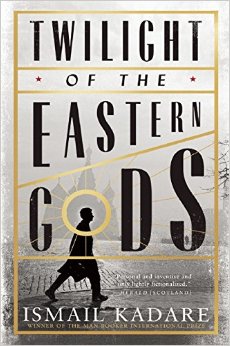
‘Twilight of the Eastern Gods’ by Ismail Kadare – Days and Nights at the Gorky Institute of World Literature

‘Twilight of the Eastern Gods’ by Ismail Kadare  (1978)   –  185 pages

Translated from the French of Jusuf Vrioni by David Bellos   Grade: B+

512XVWdOZrL._SY344_BO1,204,203,200_

The great Albanian writer Ismail Kadare acquired a national reputation for literary work at a very young age, and he was selected for the Gorky Institute of World Literature in Moscow at the age of twenty.  ‘Twilight of the Eastern Gods’ is the lightly fictionalized account of Kadare’s time at the Gorky Institute.

This was a great honor for a college age guy from the small country of Albania, and Kadare had a wonderful time in Moscow playing ping pong, chasing a number of Soviet girls, and walking along the river searching for places with a band and music.

However as for producing literature, Kadare quickly found the Gorky Institute a non-starter.  The Soviet Union was still recovering from the Joseph Stalin tyranny, and it was dangerous to be an independent creative writer there.  Of course Russia has a proud tradition of producing great writers, and the Soviet Union wanted to continue that tradition even under the severe constraints of the post-Stalin era.

In the Soviet Union the style of literature called ‘Socialist Realism’ was in heavy fashion, and Kadare has a great time making fun of it.  The main purpose of Socialist Realism was to advance the goals of socialism and Communism and usually involved proud peasants working in the fields in order to achieve these goals.

“Not only did it contain no mention of the institutions of the state, it did not admit of a single construction in brick or stone. Nothing but gurgling streams, fidelity and flowers, and a few hymns sung of an evening to the glory of the Communist Party of the USSR.”

 What annoyed Kadare most was that none of the writing being produced there contained any real description of how things actually were in Moscow.

The defining event of the time that Kadare spent at the Gorky Institute was when Russian writer Boris Pasternak was awarded the Nobel Prize for Literature in 1958.   Pasternak’s novel ‘Dr. Zhivago’ was rejected for publication in the Soviet Union and then was smuggled out of the country in order to be published.  Pasternak’s winning the Nobel Prize humiliated and enraged the Soviet Union authorities, and they denigrated Pasternak and forced him to refuse to accept the prize.  What should have been a proud moment in Soviet literary history became a huge embarrassment.

Gorky Institute of World Literature

Gorky Institute of World Literature

The entire account of the Pasternak campaign is told without any fictional embellishment in ‘Twilight of the Eastern Gods’.  Typescripts of  ‘Dr. Zhivago’ were passed from writer to writer at the Gorky Institute.

Despite Kadare’s scorn of ‘Socialist Realism’ and the Soviet literary world of the 1950s, ‘Twilight of the Eastern Gods’ is also a light-hearted novel of a young man enjoying his time in Moscow. More than one romantic escapade is fondly remembered.


‘How To Be Both’ by Ali Smith

‘How To Be Both’ by Ali Smith  (2014) – 372 pages   Grade: A

Smith-203x300

‘How To Be Both’ is a novel that is divided into two equal parts.  One part follows the Italian Renaissance painter Francesco del Cossa.  The other part is about a 16 year old girl living in modern England named George who hates the song ‘Georgy Girl’ for which she was named (How many English girls got stuck with that name?).  Somehow Ali Smith has fit their two stories into this one playful novel.

George’s 52 year old mother has died recently.

“This will be the first year her mother hasn’t been alive since the year her mother was born.  That is so obvious that it is stupid even to think it and yet so terrible that you can not think of it.”  

George’s mother is (was?) what I would call an art subversive.   She subverted the political world with art and the artistic world with politics.  But now she is gone, and George and her little brother Henry are hurting.  Their father is drinking too much, and the children are mainly left to themselves.

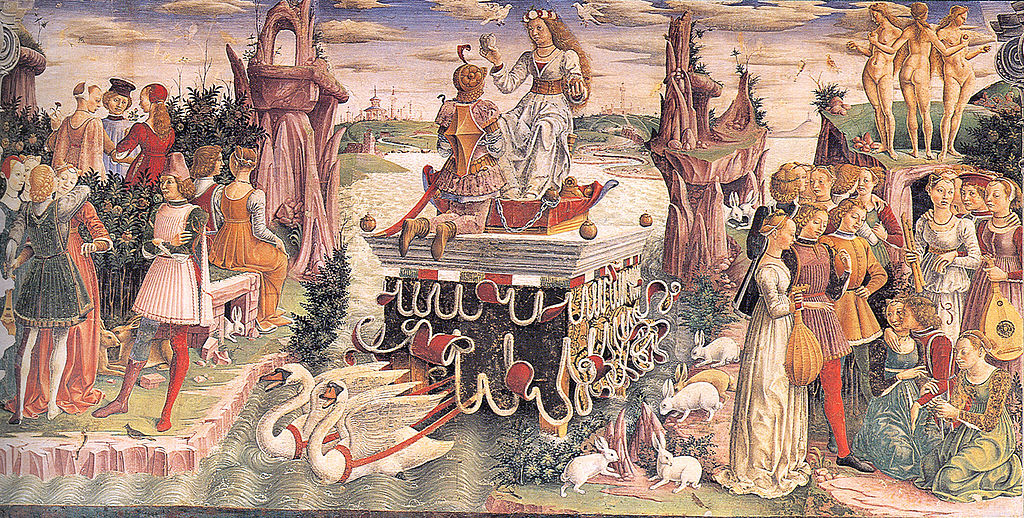
Before she died George’s mother took them on a trip to Ferarra, Italy to see the frescoes of Francesco del Cossa in the Palazzo Schifanoia.  On the walls of the palace are painted allegories for each month of the year.  Cossa painted the Allegories for March, April, and May which are considered the finest in the palace as lesser painters did the other months.

As you can see from the picture of the Allegory of April below, Cossa’s frescos are teeming with life which is something that also could be said of ‘How To Be Both’.

1024px-Aprile,_francesco_del_cossa,_11

So the ‘George’ part of the novel is about this teenage girl trying to cope with her mother’s death, but it would be a mistake to say that it is sad.  We flash back to conversations when George’s mother was still alive which are warm and funny and filled with clever word play.

So how does Renaissance painter Francesco del Cossa become a character in this modern novel?  His picture of the Saint Vincent Ferrer is in the National Gallery in London.  Remembering her trip to Ferrara, George goes to see this picture.  Cossa, still in Purgatorium, is hovering over the picture and sees this sad boy.   At first he doesn’t realize that George is a girl.  But Francesco is actually a girl herself.  Her father disguised her as a boy in order for her to pursue a painting career.  There is no mention of this in any of the history books; this is most certainly another riotous whim of Ali Smith.

Francesco del Cossa tells his (her?) life story which in Ali Smith’s hands is wicked and bawdy and filled with sexual confusions.

In this funny novel Ali Smith has pretty much undermined our preconceived ideas of what a novel is supposed to be just as she is constantly undermining our notions of sexual identity. I found reading ‘How To Be Both’ to be a joyous anarchic experience.  This is a novel for anyone who is getting kind of tired of the straightforward and traditional.


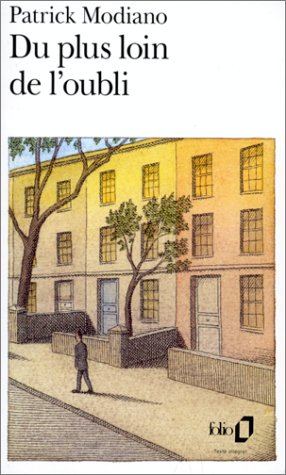
‘Out of the Dark’ by Patrick Modiano

‘Out of the Dark’ by Patrick Modiano   (1996) – 139 pages  Translated by Jordan Stump   Grade: B+

323529 (1)

What to make of the newest Nobel literary prize winner, Patrick Modiano?

Modiano writes in a clean lucid prose style that is simple for me to enjoy.  He writes with the casual easy-going spirit of a Parisian boulevardier who might be sitting at a café table in a Renoir painting.   I found ‘Out of the Dark’ a delight.

However readers who like their plots or stories big, crowded, and important will be disappointed.  The writing of Patrick Modiano is moody, dream-like, and seemingly inconsequential.  His life-long theme has been the shadowy interplay between what we remember and what actually happened.

“I think we still hear in the entrances of buildings echoes of the footsteps of those who used to cross and which have since disappeared. Something continues to vibrate after their passage, waves increasingly weak, but that is captured if one is careful. “

Here is the basic setup of ‘Out of the Dark’.  A guy meets a couple on the streets of Paris.  The young woman, Jacqueline, spends her time playing pinball at the Café Dante.   Her boyfriend Gerard is a small-time gambler.  On weekends the couple goes to London to play the roulette tables there and then return to Paris with their winnings.  Jacqueline comes up with this scheme to embezzle a suitcase of money from a gambling friend of Gerard’s and take off to the island of Majorca not with Gerard but with our narrator guy.  However in mid-trip Jacqueline disappears.  Fifteen years later our narrator sees Jacqueline on the streets of Paris.  She pretends not to recognize him, but they spend a few hours together.  The next day the narrator discovers that Jacqueline and her new husband have suddenly left for Majorca.   He doesn’t see Jacqueline again for another fifteen years, and when he does he avoids an encounter with her.

51IJtK9-JVL._SY344_BO1,204,203,200_Not much of a story.  Here is what I make of it.  When we are young most of us encounter people to whom circumstances bring us very close for a short time in our lives.  For a few months or a year these individuals are more central to us than anyone else.  But for whatever reason these people drop out of our lives just as quickly as they had arrived.  We may or may not encounter them years later, but circumstances have totally changed.  Any sense of closeness is gone, and we may just wish to avoid meeting up with them at all again.

 “We had no real qualities, except the one that youth gives to everyone for a very brief time, like a vague promise that will never be kept.”

Apparently all of the novels of Patrick Modiano are like this, French existential noir.  He has worked this same shadowy theme in short novels for his entire writing career.  I find myself quite attuned to Modiano’s writing style and will definitely be reading more of his novels in the months and years to come.


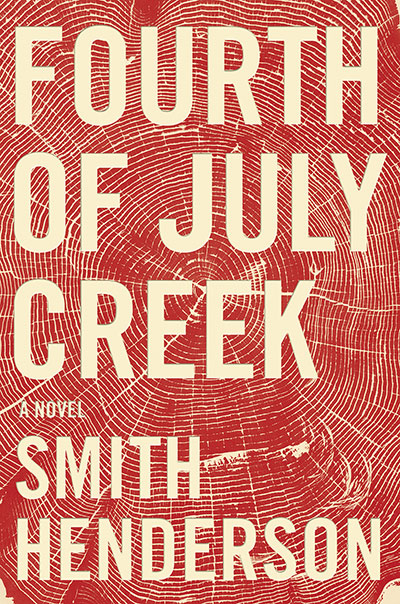
‘Fourth of July Creek’ by Smith Henderson – A Social Worker as Hero

‘Fourth of July Creek’ by Smith Henderson   (2014) –  467 pages   Grade: B


FourthJulyCreekHere is a compelling story about a white America which does not get the attention it deserves.  Here are drugged out parents with a meth lab in their house who neglect their children.  Here are paranoid lunatic survivalists living out in the wilderness who let their kids run wild and feral.  Here are broken homes where the estranged wife’s new boyfriend has his eyes and hands on her teenage daughter.   This is the United States.

The main character in ‘Fourth of July Creek’ is Pete Snow, a social worker with the Department of Family Services in backwoods Montana in the 1980s.  It is his job to rescue children from irreparably broken families.  These are the victims of abuse, neglect, and assault.  At the same time the social worker’s own family has fallen apart.  His estranged wife has left for Texas and has a new boyfriend, and then his fourteen year old daughter runs away with a young guy who pimps her.

“I am saying what you are not allowed to say: we did not love our daughter enough. God, I didn’t protect her, I didn’t protect her from us. I go into homes all the time, and I save children.  It’s what I do for a living, you see?  And I didn’t save my own daughter.”

 “Fourth of July Creek” is an overwhelmingly dark disturbing novel that I read at breakneck speed.   If we could all see the severe family problems that a social worker sees, we would all have a different take on life in these United States.

“Your caseload is brutal, and will get worse as the holidays steadily advance on the poor, deranged, and demented.  Kids waiting with cops in the living room or the front seat of the squad car to stay out of the cold until you arrive. You run the children down to the crisis center in Kalispell.  There aren’t many beds.”

 I like the idea of social worker as hero.  We don’t hear of them often enough, these people who must deal with the worst problems of modern family society and get little credit for doing so.

There is one strain in this novel that presented some difficulty for me.  It possibly couldn’t be helped while showing the underside of family life today.  Our social worker stacks the cards against his female acquaintances almost to the point that he could be accused of misogyny.  This may be the natural result of his alcoholism.  Two of the main females including his wife from whom he is separated are useless sluts haplessly dating loser men, and the third main female is engaging in part-time prostitution.  The women here are always distracting the men from their hard-won purity which is also kind of a joke.

‘Fourth of July Creek’ is a novel that is difficult for me to say how I would rate it finally.  I liked that it focused on social work and that it tried to focus honestly on the real family problems such as domestic neglect and abuse and assault and misuse of drugs and alcohol that are out there throughout white America.  There is no sense in sweeping those problems under a rug.  Certainly both sexes play a role in these difficult family problems, but still one must try to be fair to both sexes.

You will need to make your own final evaluation of ‘Fourth of July Creek’.


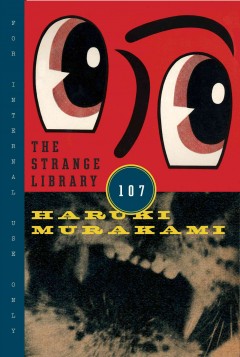
‘The Strange Library’ by Haruki Murakami

‘The Strange Library’ by Haruki Murakami  (2014) – 89 pages    Translated by Ted Goossen   Grade: B

Jacket

“The library was even more hushed than usual.

My new leather shoes clacked against the gray linoleum. Their hard, dry sound was unlike my normal footsteps. Every time I get new shoes, it takes me a while to get used to their noise.”

A school boy goes to a library to return two books, ‘How to Build a Submarine’ and ‘Memoirs of a Shepherd’.  He also wants to check out some books on collecting taxes in the Ottoman Empire (Why not?).  The librarian tells him these books must be read on the premises, and the boy gets sent to the room #107 deep in the basement of the library and is shackled with a ball and chain.  The old man who runs this section of the library likes to eat brains, so locks the boy in the library room.

“Brains packed with knowledge are yummy, that’s why. They’re nice and creamy. And sort of grainy at the same time.”

 The boy’s mother might be having a breakdown, and he must take care of his pet starling.  The boy has the help of a friendly sheep man who likes to make doughnuts as well as a mysterious beautiful ethereal girl.

Thus we have ‘The Strange Library’, the first foray into children’s fiction by Japanese novelist Haruki Murakami.  This book would be fine for boys and girls of about age 9 to 12 years old.  The story has a dreamlike quality that almost, but not quite, wanders into nightmare territory.  Of course it is all playful nonsense, but it worked for me.

The art work by Chip Kidd is surreal – pictures of eyes and mazes and sheep and shoes, etc.  The book design is unusual state-of-the-art, and a kid might be intrigued with that also.

A parent could do a lot worse than getting their kid started on Haruki Murakami at an early age.  What does ‘The Strange Library’ have in common with Murakami’s more adult novels?  There’s the playfulness, the goofy sense of humor, the creepy pristine weirdness of it all.  I doubt the story here is going to win any awards, but it is not bad.


‘The Expendable Man’ by Dorothy B. Hughes – A Wrongly Suspected Black Man

‘The Expendable Man’ by Dorothy B. Hughes  (1963) – 245 pages    Grade: B

1c66a0a6b5bbdefb933b6ad96dfd8df7

‘The Expendable Man’ tells the story of how a man who performs an act of kindness with all good intentions can wind up in severe trouble, particularly if that man is black.  It takes place in the early 1960s but could have happened even today.  If anything, the systemic racism among whites in the United States has increased in recent years.

“I’ve seen too many cases involving innocent people, our people.”

 A young doctor is travelling from Los Angeles across California on his way to a family wedding in Phoenix.  A white pregnant teenage girl is hitchhiking.  The doctor decides to pick her up.  He felt sorry for her.  He takes her to Phoenix and drops her off.  Later she shows up at his hotel room and asks him to perform an abortion, and he angrily refuses .

Later the police discover her murdered body, and our doctor becomes the prime suspect.  Even one of the detectives on the case is a jeering nasty racist.

“This guy says a nigger doc driving a big white Cadillac brought Bonnie Lee to Phoenix.”

 The novel builds up an atmosphere where this wrongly accused man must find the murderer of this teenage girl himself if he is ever to prove his own innocence.

il_340x270.634157526_dil0‘The Expendable Man’ reminded me of episodes of those progressive television shows from the early 1960s like ‘The Defenders’ or ‘East Side / West Side’ which took on social issues of the day.   In order to make their case stronger, these shows might stack the deck a bit by focusing on a black protagonist who is an upper class doctor of unimpeachable integrity, a Sidney Poitier type, a saint.  In making the person so virtuous, the shows somewhat lost their applicability to all of us less than immortal types.  Still it was good that a few shows faced up to white racism and dealt with it.

In her review of this book in the New Yorker, Christine Smallwood says the following of Dorothy B. Hughes.

“Crime was never Hughes’s interest, evil was, and to be evil, for her, is to be intolerant of others, of the very fact of the existence of something outside the self. With her poetic powers of description, she makes that evil a sickness in the mind and a landscape to be surveyed.” – Christine Smallwood

 ‘The Expendable Man’ is a well-done crime noir novel which addresses the continuing problem of white racism in the United States.


‘The Laughing Monsters’ by Denis Johnson – Just Another Genre Novel

‘The Laughing Monsters’ by Denis Johnson   (2014) – 228 pages   Grade: C

4129y995scL._SY344_BO1,204,203,200_

I have been impatient with the fiction of Denis Johnson for many years.

A long time ago after reading Denis Johnson’s brilliant first novel, ‘Angels’, and his book of stories, ‘Jesus’ Son’, I made a decision to follow Johnson’s writing career wherever it took him.  Unfortunately since then Johnson has severely tested my decision to follow him by writing a long series of competent if rather dull genre novels.

The qualities that I loved in ‘Angels’ and ‘Jesus’ Son’ were the daring originality, the disturbing luminous intensity of his vision.  I never thought Johnson would settle to be a competent if less than inspiring genre fiction writer. He has been writing cookie cutter versions of novels in various genres for a long time.  ‘Fiskadoro’ was his post-apocalyptic novel; ‘Nobody Move’ was his James Cain crime noir novel; ‘The Stars at Noon’ his Robert Stone Central American intrigue novel; and ‘Train Dreams’ was his Cormac McCarthy western minimalism novel.

‘The Laughing Monsters’ is apparently his Graham Greene spy novel with its African setting and much clap-trap about agents following one another around the continent.  Graham Greene is probably the most imitated novelist in the world, but ‘The Laughing Monsters’ has none of the joie de vivre of Greene’s novels.  Johnson goes through all the plot motions of Greene here but with little of the special good-natured energy that Greene usually brought to his stories.

Most of the scenes take place in old hotels the British left behind.  Many of the people staying in these hotels are medical workers dealing with the various African health crises.  Post 9/11, major concerns are terrorist plots.  The MacGuffin here is Highly Enriched Uranium (HEU).  The Russians, the Chinese, the Mossad from Israel, the Indians, a few Euros, the Arabs, and the Americans mostly under the auspices of NATO are all here.

“I’ve come back because I love the mess.  Anarchy. Madness.  Things falling apart.”    

 I found ‘The Laughing Monsters’ eminently forgettable and have not thought about its story once since I finished reading it a week ago.  The Guardian, while generally positive, wrote: “While Nobody Move was the equal of most crime fiction, The Laughing Monsters is inferior to the very best spy novels.”  Agreed.  I love Graham Greene novels, but usually can’t stand others’ imitations because they lack his unique spirit.

I should make one disclaimer here.  I have not read Denis Johnson’s 2007 National Book Award winner, the 614-page ‘Tree of Smoke’, which is a Vietnam War novel.  Considering the award and the praise this novel has gotten, it might change my mind about his fiction entirely, but at this point I have little enthusiasm to read it.


The Top Twelve List of the Best Fiction I’ve Read in 2014

top12

It is a Top Twelve list this year instead of a Top Ten list.  Perhaps I should use a little less exacting care in selecting the fiction I read, so it would be easier to narrow my favorites down.

Click on the book cover to see my original review.


dublinesque1.  ‘Dublinesque’ by Enrique Vila-Matas  (2010) – The age of print is over; we are streaming into a new age. A publisher and a few of his writer friends decide to hold a funeral for the Print Age.  What better time and place to hold the requiem than in Dublin, Ireland on Bloomsday, June 21 ?


2.  those-who-leave-and-those-who-stay‘Those Who Leave and Those Who Stay’ by Elena Ferrante (2014)  –  The saga of those two girls, Lenu and Lila, from Naples continues.  The girls are in their twenties in Part III.  This story from Italy in the 1970s is told with an intense angry passion.


3the-known-world.   ‘The Known World’ by Edward P. Jones (2003)  – By focusing on a black slave owner, Edward P. Jones avoids turning this novel into a morality play of good and evil.  There is no one preaching.  The matter-of-fact tone only intensifies the reader’s reaction to this story.


an-Author-20Murray-20Bail-20at-20his-20Potts-20Point-20Apartment-20120921120818547105-300x0 4.  ‘The Voyage’ by Murray Bail (2012) – Here is a novel that sails merrily on its way, stubbornly original and idiosyncratic.  A piano designer from Sydney, Australia brings his piano to Vienna, like taking coal to Newcastle.  The novel can be considered an homage to Thomas Bernhard.


sound-of-things-falling-220x3305.  ‘The Sound of Things Falling’ by Juan  Gabriel Vasquez (2013) Unlike Gabriel Garcia Marquez, Vasquez sees nothing magical in Colombia’s recent history, only violence and cruelty.  This is a moving novel of how ordinary Colombians got caught up in the vicious cocaine empire of Pablo Escobar.


218175386.  ‘The Other Language’ stories by Francesca Marciano (2014) – Here are stories that set you down in another person’s circumstances so well that you become that person and see the world through their eyes.


Euphoria-198x300 (1)7.  ‘Euphoria’ by Lily King (2014) – Inspired by the fieldwork of Margaret Mead on the island of New Guinea, ‘Euphoria’ is an exciting mix of the romantic, the erotic, and the intellectual.  The anthropologists are there to study the mating habits of the tribal people, yet it’s their own love triangle that consumes them.


cover250x3128.  ‘The Narrow Road to the Deep North’ by Richard Flanagan (2014) – The prisoners of war held by the Japanese during World War II are used as slave labor to build a railroad from Thailand to Burma.  The story is told from the perspective of doctor and officer Dorrigo Evans, an Australian prisoner.


the-hired-man9.  ‘The Hired Man’ by Aminatta Forna (2013) – Here is a novel of modern Croatia, a country which is positioned well to become a world-class tourist destination but is still haunted by troubles from its recent past.  ‘The Hired Man’ reminds me of ‘The Remains of the Day’ by Kazuo Ishiguro.


1928878810.  ‘Wittgenstein Jr.’ by Lars Iyer (2014) – Here is a humorous novel about a philosophy class at Cambridge University which is taught by an instructor whom the students call ‘Wittgenstein Jr.’ in partial derision. He is an unforgettable character.


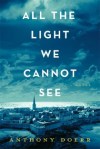
51pE1cNC-vL11.  ‘All the Light We Cannot See’ by Anthony Doerr (2014) – This is a novel of child-like wonder which captures the miracles of nature in short breathtakingly beautiful sentences.  We also get the parallel stories of  a blind girl growing up in France and a scientific boy growing up in Germany before and during World War II.


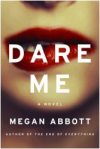
DareMe_sm12.  ‘Dare Me’ by Megan Abbott (2012) – This is brutal noir crime fiction disguised as a high school novel.  Megan Abbott nails the visceral intensity of girls’ high school cheerleading.


‘Dear Committee Members’ by Julie Schumacher – An English Professor and His Letters

‘Dear Committee Members’ by Julie Schumacher   (2014) – 180 pages

dear-committee-members

In ‘Dear Committee members’, Julie Schumacher has written a comic novel consisting entirely of a college professor’s Letters of Recommendation.

What are letters of recommendation?  They are momentous letters that can make or break your life.  They can provide personal opinions about your character, ability, and habits.  These letters could be dangerous if anybody ever read them.

Professor Jason Fitger (‘Jay the Obtuse’) of the Department of English at Payne University does so many of these letters that he writes with a forthright directness about stuff usually not found in them.  Messages to ex-wives and ex-girlfriends sneak in.  The letters are filled with complaints about the University’s abysmal treatment of his Department.

“He has worked hard, he has done what was asked of him, and – in the wake of the deliberate gutting of the liberal arts, English in particular, in favor of the technological sciences – he has held together the tattered scraps of the literature and writing programs, which the faceless gremlins in your office have condemned to indigence and ruin.”

 Our Professor is deliriously envious of all the money being spent on the adjacent Economics Department while the English Department gets next to nothing.

Although a few of his students switch to law or medicine, many English majors wind up applying for jobs in some of the most unusual places.  The Professor sends out letters to ‘Annie’s Nannies Child and Play Center’, ‘Avengers Paintball, Inc.’ and ‘Xanadu Park RVs’.

The Professor can’t stand the sole sullen ‘Tech Help Team’ member assigned to the English Department, so he writes a glowing Recommendation in order to get rid of him.

“Whatever I can do to assist in your – or any other firm’s – hiring of Mr. Napp I will accomplish with resolution and zeal.” 

 Meanwhile the Professor’s efforts on behalf of his number one fiction writing student fall on deaf ears.  It is one of his less impressive students who pens the best seller.

A series of letters, ‘Dear Committee Members’ is an epistolary novel.  Since all the letters are written by the same Professor, the novel takes on the characteristics of a comic monologue with variations of the themes mentioned above.  Usually epistolary novels contain the back-and-forth and variety of letters composed by two or more characters. However ‘Dear Committee Members’ does work quite well on its own terms with this single letter writer.

‘Dear Committee Members’ is a quick and fun read, so I am writing this Letter of Recommendation on its behalf.