Archive for the ‘Book Reviews’ Category

‘To Be a Pilgrim’ by Joyce Cary – Caution, Read at Your Own Risk

‘To Be a Pilgrim’ by Joyce Cary   (1942) – 451 pages     Grade: B-

41ZRQFFPS3L._SY344_BO1,204,203,200_You know the routine.

I am supposed to say that I picked up this old novel that was written way back in the 1940s and that no one else has read in a coon’s age. Then I am supposed to say that I started reading this musty ancient tome, and, lo and behold, I was really quite amazed.  The book was beyond wondrous, a real gem actually.  You must drop anything else you were intending to do, useful or useless, and read this book.

Sadly the truth about ‘To Be a Pilgrim’ is much more complicated. It is a very odd novel.

‘To Be a Pilgrim’ is the second volume of Cary’s first trilogy.  I read the first volume of the trilogy, ‘Herself Surprised’, a few years ago and quite enjoyed the lively high-spirited cleaning lady narrator of that story, Sara Munday.  However the narrator of ‘To Be a Pilgrim’, Tom Wilcher, is distinctly unlikeable.

Tom’s description of himself is “that life-battered gnome”.   Except for the time he spent with Sara Munday, Tom has never lived his own life. He spent his years as the lowly factotum and gofer to his brother Edward who was a big-time politician.  One of Tom’s tasks was to keep track of Edward’s mistress Julie and keep her in line. Tom is now in his mid-sixties and has returned to his family home, but he fears his young relatives will put him in an asylum.  He is waiting for Sara Munday to get out of jail for stealing items from his apartment. Although he is very devout in his religion and is given to making prim pronouncements about the younger generation, Tom himself is a dirty old man.  He has already attracted the attention of the police for his antics with young women in public parks.

“Do you think it is a good thing for girls to paint their faces like the lowest strumpets and go around in short skirts or even short trousers and drink and swear like bargees?”  
51vRli2pDQL._SY344_BO1,204,203,200_ One thing you won’t find in ‘To Be a Pilgrim’ is an exciting plot.  Here we get flashbacks to many scenes from Tom’s tedious previous life over the years as well as his staid but troublesome current existence.  The life story of a rather passive person makes for a listless read.

The time I spent reading this long novel seemed interminable.  Nothing of the faintest interest seemed to happen, but still I kept reading.  I suppose that speaks to a positive aspect of the work.  Will I read the third novel in the trilogy, ‘The Horse’s Mouth’, which is supposed to be the best of the three?  Perhaps.

But if you value your time at all, you probably should not read ‘To Be a Pilgrim’.
‘In Certain Circles’ by Elizabeth Harrower

‘In Certain Circles’ by Elizabeth Harrower     (2014)  –  252 pages      Grade:  B+

ab8ff5a1060b537416179aa87dced186

Can you even imagine a writer today whose novel has already been accepted for publication withdrawing it like Elizabeth Harrower did with ‘In Certain Circles’ in 1971?  Harrower gave as her reason that the novel “seemed wrought, manipulated, not organic”.  She was her own harsh critic. The novel was finally published last year.

Of course, Harrower had already published the brilliant devastating ‘The Watch Tower’, so just about any novel would suffer in comparison.

I believe there is a clue as to why Harrower withdrew it in one of her characters’ lines from ‘In Certain Circles’.  I want to highlight these lines, because I think they are also exceptionally good advice to both writers and bloggers.

“I was interested in the work, not who was equalling whom.  You compete with the intractable, not with your fellow toilers.  Compete with the difficulty.”    

What I take away from these lines is that Elizabeth Harrower was not concerned with the popular reception of her work; her main concern was whether or not she had solved the problems she had set for herself in writing the novel in the first place.

‘In Certain Circles’ is about two sets of a brother and sister.  One set, Russell and Zoe, have parents who are movers and shakers in Sydney, Australia and live on a large estate next to the ocean.  The other set, Stephen and Anna, are orphans, their parents killed in a level-crossing accident when they were very young.  Since then they have lived with their mentally ill aunt and over-solicitous uncle.  Russell first befriended Stephen, and since then the four of them have become close friends despite the fact that Stephen and Anna are somewhat awkward socially.  We follow these four characters for about twenty years of their lives starting when they are quite young adults.

The story deals with intense emotional issues between these four young people, perhaps at the expense of the story not being well-grounded in the real world.  Much of the novel is dialogue, and it is definitely not down-to-earth dialogue.

“What I mean is – I never pity anyone I care for, so if what someone wants is pity, I can’t care for him.”   

 One can appreciate Harrower’s efforts to go deeper with the dialogue in “In Certain Circles”, but this quest for depth does make the conversations here more abstract and esoteric than real conversations tend to be.

The climactic event in the novel is also overwrought, soap opera-ish.

Emotional depth and intensity are good things.  Still I don’t believe the characters in ‘In Certain Circles’ are sufficiently anchored to the real world.

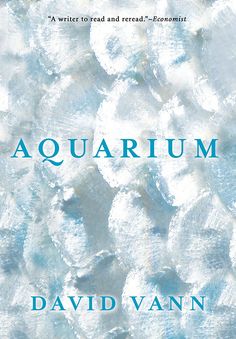
‘Aquarium’ by David Vann – A Unique Seattle Story

‘Aquarium’ by David Vann    (2015) – 266 pages      Grade: B+

7a728ede01fee81ef7819dc52f2671f4

Every afternoon twelve-year-old Kaitlin must spend several lonely hours at the Seattle Aquarium after school waiting for her mother to get out of work and take her home.

“It was a fish so ugly it didn’t seem like a fish at all.”

Kaitlin spends so much time in the Aquarium and is so fascinated, she wants to become an ichthyologist when she grows up.  There is an old man who also spends a lot of time at the aquarium, and Kaitlin begins to discuss the various fish and other sea animals they see with him.  One day the old man puts his arms around Kaitlin.  Her mother finds out about this, and brings in the Seattle police to nab this suspected pervert.

That is how the story of  ‘Aquarium’ begins.  I will not elaborate any further.  Let us just say that the ultimate story is nothing like you would expect it to be up to this point.

In the version of the novel I read, there are pictures of sea animals spread throughout the text.  However this is no graphic novel; the pictures are there to enhance the theme of the novel which I take to be that just like the fish in the aquarium, we humans are stuck in our own tanks.  Excuse me for the fish metaphor, but ‘Aquarium’ is filled with fish metaphors, and if you are going to read this novel, you better get used to them.

I admired the simple unique plot in ‘Aquarium’.  In my many years of novel reading, I have never encountered a plot that is even remotely similar to this one.  The plot is in the here and now and does not rely on nostalgia at all.  It is the girl telling this family story from 1994 looking back today after she has grown up.
There are five well-drawn characters in ‘Aquarium’.  With a few simple strokes, David Vann has invested each of the characters with his or her own personality.  But don’t expect all five of these people to be nice and pleasant, because at least one of these characters has a foul personality, perhaps with good reason.  Once again, it is not the character one would have expected to be the bad one.

There are scenes of violence and personal degradation in ‘Aquarium’, but they are not at all stereotypical and, again, not what you would expect.

So, bottom line, if you want to read a novel that defies expectations and tells a peculiar intense family story, read ‘Aquarium’.

‘Preparation for the Next Life’ by Atticus Lish – A Love Story, A Brutal Love Story

‘Preparation for the Next Life’ by Atticus Lish    (2015) – 417 pages     Grade: A-

” “

               -

‘Preparation for the Next Life’ is a love story, but it also covers the harsh changes that took place in the United States after 9/11.   The United States used to be the melting pot for people from all over the world.  Now foreigners, especially non-white foreigners, are greeted with total suspicion, distrust, and contempt.

The love story is between Zou Lei, a young woman from China, and Brad Skinner, an Iraq War veteran.

The novel begins with Zou Lei in an illegal immigrant detention center run by Homeland Security. She had tried to sneak across the Mexican border in a truck with a bunch of other illegals.

“They felt through her clothes and took her money, zip-tied her, and put her in a van with a Salvadoran prisoner.  It took all afternoon.”

Zou Lei is half-Muslim and from far western China.  According to the Guardian, there are over 23 million Muslims in China which is only a tiny percentage of the total population but still a significant number of people.  In China, the Muslims are treated like “an illegal immigrant in your own country”.  Like so many immigrants, Zou Lei is driven away from home by the grim conditions.

After three rough months in the detention center, Zou Lei is finally released with no explanation.  She decides that the best place to hide is in Queens in New York City where everyone is an illegal.  She gets a job in one of the many Chinese restaurants there.  Since her bosses know she’s an illegal, they don’t have to pay her minimum wage.  She is given “a shirt with an insignia and a visor, the smell of vaporized grease in the fabric.”

Brad Skinner was ‘stop-lossed’ (an ‘involuntary extension’) into serving three tours of duty in Iraq.  The scenes in Iraq are the usual scenes of American soldiers roaming the streets of one of Iraq’s cities shooting at everything that moves with their high-powered automatic rifles and on the watch for sniper fire or possible IEDs (Improvised Explosive Devices).

Skinner is finally out of the army after his best friend Sconyers is gruesomely killed, and now Skinner is living by himself in a basement apartment in New York City.

“The army had given him anti-anxiety medication, anti-psychotic medication, and something to help him sleep.  Whatever else these chemicals did to him, they did not stop him from having nightmares.”

Skinner and Zou Lei meet on a stairway.  They share a common interest in physical fitness and training.  Both realize that the only way out of their individual dilemmas is to stay strong and in shape.  This is a redemptive bond between them, and they become lovers.

Zou Lei must always be on the watch for Homeland Security people.

“The guards were after anyone who was Asian, Muslim, Trini, black, brown, whatever – anything like Arab, because they are so stupid and fucking racist, they think everybody with dark skin is the same.” 

 Things get particularly dreadful when the Irish landlady’s son Jimmy enters the scene. Toward the end of ‘Preparation for the Next Life’, I was almost too scared for Zou Lei and Skinner to continue reading.

‘Preparation for the Next Life’ is not an easy read, but it is a powerful moving story.   Its staccato style can quickly lead to sensory overload, and I had difficulty reading more than four pages in a sitting.  But no other novel that I have read so far has had as much insight into how the United States has changed since 9/11.  It will help you consider and understand these profound changes while still presenting an entirely captivating story.

‘Here’ by Richard McGuire – A Room through Time

‘Here’ by Richard McGuire     A Graphic Novel   (2015) – 304 pages    Grade: B+

41kUT+YgTKL._SY344_BO1,204,203,200_
The graphic novel ‘Here’ is the pictorial history of a room, or rather the physical space the room currently occupies, through time from 3,000,500,000 BCE (BC) until 22,175 CE (AD).

‘Here’ started out as a 6-page comic published in Raw magazine in 1989.

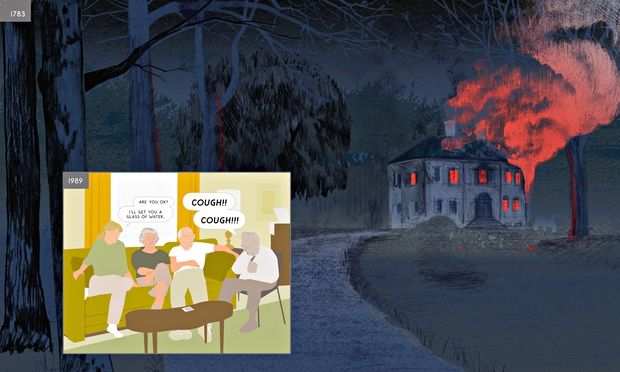
This graphic novel is famous for its use of multiple panels within the same picture to show different years in the room’s history.  For example, the following big picture shows a woman playing the piano in 1964, and within the big picture are insets of girls dancing in 1932, 2014, and 1993.  The clothes and furniture match the fashions for the years shown.

tumblr_inline_neydznXGeu1qbm6d5

Within the graphic novel, we go through all the fashions of the 1900s and 2000s  from rocking chairs to goldfish bowls to Twister.

The years represented extend way beyond the years of the current room in both directions.  Thus the room space was probably originally ocean, and that is represented through the pictures.  Other picture show dinosaurs roaming the area.  Then we move on to when native Americans inhabited the space, and then on to colonial times.  Another large house existed on this space during colonial times, but it burned down in 1783.  The following picture shows the fire as well as a little get-together of friends in 1983 where three people are laughing and one man is coughing.

here9

Not only do we see the history of this room space, we also see its future. Fashions are much different in 2213. At a later point in the future, the current room will no longer exist, and in the year 22,175, pretty birds and flowers will inhabit the space.

There are very few words in this book, so it is a very quick read of two hours or less.  It was time well spent giving a full sense of the changes that occur over time.

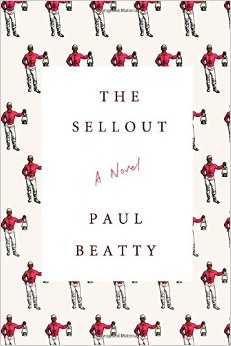
‘The Sellout’ by Paul Beatty – Black Humor in Dickens, California

‘The Sellout’ by Paul Beatty    (2015) –  289 pages    Grade: A

51gc1HCCV8L._SY344_BO1,204,203,200_

‘The Sellout’ is a wicked comic novel for the twenty-first century.  Read it slowly, because just about every sentence is a laugh riot.  The sentences take so many twists and turns you wind up in a different place than when you started them.  Here is a fine example.

“I seriously doubt that some slave ship ancestor, in those idle moments between being raped and beaten, was standing knee-deep in their own feces rationalizing that, in the end, the generations of murder, unbearable pain, and suffering, mental anguish, and rampant disease will all be worth it because someday my great-great-great-great-grandson will have Wi-Fi, no matter how slow and intermittent the signal is.”  

The guy who is telling the story lives in the former town of Dickens which is a suburb of Los Angeles.  Dickens was a town which allowed in-city farming, but now someone took the town signs down, and Dickens is no more.   Our guy wants to get his Dickensian town back.

Speaking of the people in his neighborhood, our narrator in ‘The Sellout’ says, “For these are a people for whom the phrase, ‘Well, if you put a gun to my head…’ isn’t theoretical.”

The story in ‘The Sellout’ is that our black truck farmer in Dickens wants to bring back slavery on his watermelon and marijuana farm in Dickens with his friend Hominy, one of the black boy stars of the ‘Our Gang’ comedies, as his willing slave.  He also wants to re-segregate the schools.  Ultimately he must go before the US Supreme Court to argue his case.

In ‘The Sellout’, Beatty uses the N-word (I won’t use it, being white) only quite a lot more times than the 216 times Mark Twain used the N-word in ‘Huckleberry Finn’.  Like Twain, Beatty uses the N-word to good purpose.

There is a group in Dickens called the Dum Dum Donut Intellectuals whose meetings held at the donut shop “consisted mostly of the members who showed up every other week arguing with the ones who showed up every other month about what exactly ‘bimonthly’ means.”

‘The Sellout’ is driven by a quest for the banned most racist episodes of the ‘Our Gang’ series, the ones that have never been shown on television.  When these episodes are found, they prove to be no worse than the others.

   “The racism is rampant as usual, but no more virulent than a day trip to the Arizona state legislature.”   

 I haven’t laughed this much reading a novel since ‘The Good Soldier Schweik’ by Juroslav Hasek.   Come to think of it, the townspeople of Dickens have a lot in common with the poor schlump enlisted men in ‘The Good Soldier Schweik’ who must fight and die in World War I for the inbred imbecilic Austro-Hungarian Empire.

Not everyone is going to like the humor in ‘The Sellout’.  But if you do like Sarah Silverman as a comedian, I can pretty much guarantee that you will like the novel.  Silverman said, “The Sellout is brilliant. Amazing. Like demented angels wrote it.”  I pretty much agree with her, but if your sense of humor is more refined or polite, you might not like it.

‘Dora Bruder’ by Patrick Modiano – In Search of Dora Bruder

‘Dora Bruder’ by Patrick Modiano  (1997) – 119 pages   Translated by Joanna Kilmartin   Grade: B+

B171E682-AA83-4D5A-A8F7-10636849A96C

If ‘Dora Bruder’ were a film, it would be a documentary.

In ‘Dora Bruder’, Patrick Modiano traces the life of an actual young Jewish victim of the Nazi concentration camps, a fifteen year-old girl.  By documenting as much information in detail as he could find, Modiano makes the story of what happened to Dora Bruder more real and even more horrible.

Modiano describes several photographs that were taken of Dora Bruder and her family in Paris. The version of the book I read reprinted two of the photographs, and these photographs serve to give a personality to Dora Bruder and her family.

The language in ‘Dora Bruder’ is clipped and laconic with no extraneous words of description, because it is important for Modiano not to go beyond the limited factual information he has.  Nothing here is invented.

Many key documents relating to Dora Bruder are missing, probably destroyed by officials trying to cover up their crimes.  In these cases Modiano relies on actual documents which are similar but relate to other individuals.

Most of the German officials as well as some of the French officials overseeing the deportations in Paris were shot in 1945 during the liberation of Paris.

There is one case mentioned in this book of a suspected Jew being fired at in Paris for not wearing the required Jewish insignia, a yellow star, which the Nazis had required.  This is only another brutal example of these outlaw Nazis.

As literature, there is just not enough known about Dora Bruder to write a compelling story about her life.  This Modiano does not attempt to do.  All we have left of Dora are a few documents with her name on it and a few pictures.

At one point Dora Bruder ran away from school.  There is just not enough factual information to determine why she ran away, where she lived during that time, or how she survived.  Modiano states some of his conjectures about this time.

I think Patrick Modiano is doing something of the utmost importance here, securing the documentation of these atrocities in a somewhat permanent form.  Otherwise the entire world will forget, and we will be subject to lies about those involved and about what really happened.

‘Dead Wake’ by Erik Larson – The Sinking of the Lusitania

‘Dead Wake’ by Erik Larson (2015) – 359 pages      Grade: B


        -

The sinking of the Lusitania was no accident. The giant passenger cruise ship was torpedoed by a German submarine U-boat on May 7, 1915 during World War I leaving 1198 passengers and crew dead. Germany had just issued an advisory against ship travel through the war zone, but the warning was paid little attention.

“The idea that Germany would dare attempt to sink a fully loaded civilian passenger ship seemed beyond rational consideration.”

At that point there were still rules about not killing civilians in wars, but those rules were rapidly disappearing. The United States consul in Queenstown, Ireland said, “The reference to the Lusitania was obvious enough, but personally it never entered my mind for a moment that the Germans would perpetrate an attack upon her. The culpability of such an act seemed too blatant and raw for an intelligent people to take upon themselves.”

However the German U-boat commander had no misgivings about torpedoing a liner full of civilians. His performance was measured in the amount of ship tonnage he sank.

The non-fiction ‘Dead Wake’ covers the sinking of the Lusitania in a very traditional fashion. The ship name ‘Lusitania’ was the country name that the ancient Romans had given to Portugal. We get the stories of a number of the passengers on the boat and all the details about what was on the boat, its route, and what happened on deck. After the ship was torpedoed, it listed so badly that only 6 of the 22 lifeboats could be launched, and soon the ship tipped over completely and sank. Some of the passengers mistakenly thought that they would be safer on the huge ship than on the tiny lifeboats.

A mass wail rose from all it engulfed.  “All the despair, terror and anguish of hundreds of souls passing into eternity composed that awful cry.”

There is some speculation that England did not adequately guard the huge cruise ship through dangerous waters because there were many Americans on board, and England wanted to force the United States into World War I. 128 Americans were among the dead. There were also war munitions on board the Lusitania.

The only other Erik Larson I read was ‘In the Garden of Beasts’ which was about the American ambassador to Germany and his family in the years leading up to World War II. This was new and highly compelling material, a story I did not know before about this entire American family dealing with the Nazis. I may be different from most of Larson’s audience, but this ship disaster did not hold my interest to that extent. Tragedies happen nearly every day, and each one has its compelling details which we get in the newspapers. Reading the Wikipedia article about the Lusitania probably would have been sufficient for me. I really don’t want or need all the minutia about the Lusitania’s final voyage. With his talent for exposition, Erik Larson should be finding more original striking story lines.

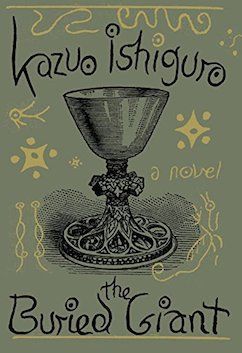
‘The Buried Giant’ by Kazuo Ishiguro – Forgetting and Remembering Our Atrocities

‘The Buried Giant’ by Kazuo Ishiguro    (2015)   –  317 pages    Grade: B+


c18419c39e1c3e8306b8c6577c3bfeec‘The Buried Giant’ has all the trappings of Old English romantic fantasy: knights in armor, dragons, Sir Gawain who was King Arthur’s nephew, ogres, and pixies.  It takes place sometime after King Arthur supposedly died which would place it early in the 6th century.  The Romans are long gone; many Saxons from Germany have moved in.  There is an uneasy tension between the native Britons and the Saxons, but currently they are at peace.

Kazuo Ishiguro has much bigger fish to fry than a knighthood idyll.  He raises the eternal questions of how two distinct groups of people, in this case the Britons and the Saxons, get along or not.  He may be writing about the post-Roman Britain, but you know he is talking directly to us modern people who have our own problems getting along with the different groups of people we encounter.

I finally found the key to Kazuo Ishiguro, and it is the late great Portuguese novelist Jose Saramago.  Both of these writers use allegory to take us deeper into understanding the human condition.

For example Jose Saramago used ‘Blindness’ as an allegory to depict the state of  people on earth.  In ‘The Buried Giant’ Kazuo Ishiguro uses forgetting and remembering as necessary skills for surviving.  Sometimes we must forget our chaotic pasts in order to continue forward.  What kind of things do we forget?  For soldiers, it may be inhumane acts committed during battles. In times of peace we forget the hatred and atrocities that caused us to murder and destroy in war. In ‘The Buried Giant’, it is the slaughter of innocent children.  For others it may be youthful flings or other indiscretions that would upset a marriage.  Forgetting things may be just as important a survival skill as remembering things.

“I know my god looks uneasily on our deeds of that day.  Yet it’s long past and the bones lie sheltered beneath a pleasant green carpet.  The young know nothing of them.”

Some reviewers have taken Ishiguro to task for not fulfilling the requirements of fantasy fiction.  Those who criticize ‘The Buried Giant’ as not being very good fantasy are totally missing the point. Fantasy fiction is an escapist form of fiction, and Ishiguro’s intention is the exact opposite of escape.  His goal is that we confront our reality more directly.   You might even say that he is subverting the fantasy genre in ‘The Buried Giant’.

Kazuo Ishiguro, in all his novels, has dealt with people repressing memories or suppressing the larger implications as we go about the details of our daily lives.  Thus the butler Stevens in ‘The Remains of the Day’ can run the manor to perfection while he knows his boss is plotting with the Nazis for a German takeover of England.   This same theme of our intentional obliviousness to the overwhelming truth suffuses all of Ishiguro’s novels.

There are many lively and exciting novels that stay on the surface of things.  However, if you want to go deeper and have a more profound experience, read Jose Saramago and Kazuo Ishiguro.

‘The Love Song of Miss Queenie Hennessey’ by Rachel Joyce

‘The Love Song of Miss Queenie Hennessey’ by Rachel Joyce   (2015) – 362 pages Grade: A


“And so I set out to write a book about dying that was full of life.” – Rachel Joyce

51AUDYYKT8L._SY344_BO1,204,203,200_

Like Rachel Joyce’s first novel ‘The Unlikely Pilgrimage of Harold Fry’, her new one ‘The Love Song of Miss Queenie Hennessy’ will make even a grown man cry.  Readers will be moved, but some may feel that they are being manipulated into strong emotion.

We begin at the hospice where Queenie is staying until she dies.  There are a varied group of patients there all in the same sad boat.  Of course there are helpful nuns there to care for the patients.  There is a lot of conversation, much of it black humor.  The nuns try to lift the patients’ spirits as much as possible, but one of the patients is a grumpy old man named Mr. Henderson who says things which are guaranteed to deflate everyone.

Queenie writes her letter to her old friend Harold Fry, and he begins his long walk from the south of England to the north of England to see Queenie.  He sends regular updates to Queenie, and soon the entire hospice is following his progress.  It is almost like that instead of waiting for death, they are now awaiting the arrival of Harold Fry.

Occasionally throughout the novel the undertaker’s van shows up, and there is one less patient in the sitting room of the hospice.  But new patients arrive.

Most of ‘Queenie’ is taken up with the back story of how Queenie met Harold Fry on the job.  They worked in the same brewery, she as an accountant, and he as a sales manager.   She is drawn to Harold, but he is married and has a son.   The attraction between Queenie and Harold is always implicit, never explicit.  That makes it a more powerful force.

“People are rarely the straightforward thing we think they are.” 

The great talent of Rachel Joyce is in framing scenes which must come from her experience as a writer of radio plays.  With a few lines of dialogue she can capture the life-affirming emotion being played out in any scene.  Just as in Charles Dickens, here you sometimes realize you are being manipulated into strong feeling but you can’t help but feel it anyway.  Reading ‘Queenie’ is a bit like reading ‘The Christmas Carol’.  You know you are being used mercilessly, but you fall for it every time.


My Favorite African-American Fiction Writers


This is by no means a comprehensive list.  This is just a list of my own personal favorites from reading over the years.

Edward-P.-Jones-199x300

Edward P. Jones – First he had the two magnificent short story collections ‘Lost in the City’ and ‘All Aunt Hagar’s Children’.  Then followed his novel about slavery from a black slaveowner’s perspective, ‘The Known World’.  Jones hasn’t missed yet.

a

a

thumbToni Morrison –  Here is our Nobel Literature Prize winner, so many wonderful novels:  ‘Song of Solomon’, ‘Beloved’, ‘Jazz’, ‘Sula’, and don’t forget ‘The Bluest Eye’.  She has a new one ‘God Bless the Child’ coming out soon.

a

a

a

RichardWightStamp61_02$_35Richard Wright – ‘Native Son’ is considered his controversial classic, but you have got to read ‘Black Boy’ as well.  He told the intense story of what was really happening in black neighborhoods.

a

a

a

nella

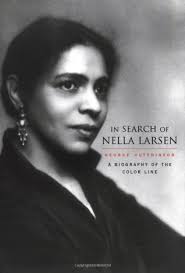
Nella Larsen – She showed up for the Harlem Renaissance, wrote the two fine short novels ‘Passing’ and ‘Quicksand’, quit writing, and went back to being a nurse.

a

a

a

download (5)

Paul Beatty – Here is the new star.  His new novel ‘The Sellout’ is an instant humor classic.  I’m in the midst of this uproarious tale now and will discuss it more in depth in a future article.  Beatty was also the inspiration for me to come up with this list.

a

a

ZORA

Zora Neale Hurston –  Alice Walker rescued Zora Neale Hurston from obscurity, and now Hurston is considered one of the greats, I think deservedly.  ‘Their Eyes Were Watching God’ is a gripping story.

a

AVT_John-Edgar-Wideman_1999

John Edgar Wideman  –  I went through a spell when I read Wideman novels continuously.  Two fine ones are ‘Philadelphia Fire’ and ‘Sent for You Yesterday’.

a

a

a

188px-Colson_Whitehead_BBF_2011_Shankbone

Colson Whitehead –  He wrote a quirky unforgettable novel about elevator inspectors called ‘The Intuitionist’, also ‘John Henry Days’.  He is one to watch going forward.

a

a

a

download (4)

Alice Walker –  She is most famous for ‘The Color Purple’ but I liked ‘Meridian’ even better.  She has been an activist for human rights her entire adult life.

a

a

a

84b95ea295c3bfd7be6bb48b6e83e269GoTellItOnTheMountain

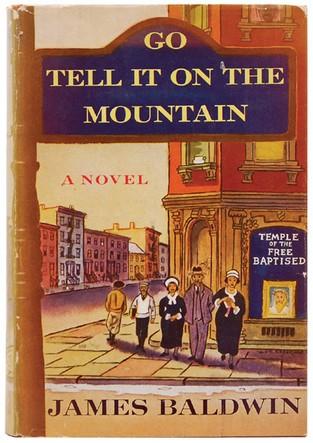
James Baldwin – I’ve only read ‘Go Tell It to the Mountain’ of Baldwin’s works, but that was enough for him to make my favorite list.

a

a

a

So many others. Ralph Ellison, Langston Hughes, newbie Heidi R. Durrow,  David Bradley who wrote the prize-winning story “You Remember the Pinmill” in 2014 which I loved, Charles Johnson.

I would like to find out about your favorites too.

‘The Door’ by Magda Szabo – The Impossible Housekeeper

‘The Door’ by Magda Szabo   (1987)   262 pages     Translated by Len Rix     Grade: A-

51fYd3QdJwL._SY344_BO1,204,203,200_

I wish we had a housekeeper for our house like Emerence in ‘The Door’.  Cleaning houses, sweeping the streets, even shoveling all the snow in the neighborhood when there’s a snowstorm, Emerence does the work of five people.

“The old woman worked like a robot.  She lifted unliftable furniture without the slightest regard for herself.  There was something superhuman, almost alarming in her physical strength and her capacity for work, all the more so because in fact she had no need to take so much on.  Emerence obviously reveled in her work.  She loved it.” 

The unnamed young woman who tells this story and who employs Emerence to clean her house is totally different from Emerence.  She is the modern woman, spends all day on her computer, and is a globe-trotting author who wins literary awards.   She and her husband who is also a writer have no time for all the details such as cleaning the house.

This modern woman and Emerence are a study in contrasts, and they get into epic fights.  However these two opposites soon develop a close relationship.  Emerence soon becomes a highly critical mother figure to this young woman.

Emerence is a peasant from rural Hungary, and she lived through World War II.  She’s had a hard life.  She is illiterate and abrasive and stubborn, prone to bitter outbursts. All of her truths have been hard won, and she wastes no time setting this spoiled modern young woman straight.  Emerence says to the young woman,

“You think there always will be someone to cook and clean for you, a plate full of food, paper to scribble on, the master to love you; and everyone will live for eternity, like a fairy tale; and the only problem you might encounter is bad things written about you in the papers, which I’m sure is a terrible disgrace, but then why did you choose such a low trade, where any bandit can pour shit over you?”

There is a dog, Viola, in this story.  The young couple buy the dog, but of course the new dog is immediately enamored with old Emerence to the point where it is almost her dog.

The ultimate hate-love relationship exists between this young modern woman and her old housekeeper.  I say ‘hate-love’ because at first these two opposites are disgusted and furious with each other, and it is only later that they recognize that there is a deep closeness between them.  It is fascinating to watch the war and the devotion between these two played out to the extremes in ‘The Door’.


‘White Dog’ by Romain Gary – A Racist Dog

‘White Dog’ by Romain Gary (1970) – 279 pages    Grade: A-


9780226284309_p0_v1_s260x420With this story about a dog, Romain Gary has found a near ideal way to express his views of which there are many. First let me tell you about the dog.

One day the Gary family’s pet dog Sandy is followed home by another stray dog, a German Shepherd. All the Garys are quickly smitten by this new dog which is friendly to the entire family. However soon they realize that the dog has a problem. This dog was originally a police dog from the South in the United States and had been trained to ferociously attack any black person in sight. This racist dog would never suit Romain Gary and his actress wife Jean Seberg since they frequently host meetings of the Black Panthers and other social and racial justice groups at their home. So they take the dog to a kennel which employs a skilled dog trainer named Keys in order to change the dog’s offensive behavior. Keys happens to be black himself.

This all occurs in 1968, and ‘White Dog’ captures all of the wildness and radicalism of that time. Romain Gary brings an intellectual’s insight to the story, but he is no ordinary intellectual. He was one of the few original World War II aviators to survive the war and is a war hero. In France in the 1960s, Gary was considered an establishment rightist due to his high position as a diplomat in the DeGaulle government and his vehement anti-Communism. However in the United States he was considered a radical leftist for his belief in black-and-white racial justice. He had the good sense to understand that there isn’t much difference between Communist authorities imprisoning millions of their own Russian citizens and those United States ‘law and order’ politicians who work to imprison millions of their own black citizens.

Gary’s wife Jean Seberg was one of the top actresses in Hollywood and heavily involved in radical politics. The Federal Bureau of Investigation (FBI) under J. Edgar Hoover did everything possible to discredit her, even getting major gossip columnists to spread the false rumor that she was impregnated by a black man. When she miscarried, she had the premature baby buried in an open casket in her hometown of Marshalltown, Iowa so everyone could see that it was white.

Both Martin Luther King and Bobby Kennedy were assassinated during the spring of 1968. In particular the murder of Dr. Martin Luther King was the murder of hope in the United States. ‘White Dog’ is an insider’s view of the radical movement in the United States at that time. Much of the book is taken up with his own skepticism and analysis about many of the radical ideas that were floating around at that time. Many of his views are sensible and quite brilliant. Here are just a few of Romain Gary’s insights in ‘White Dog’.

“If evil things were only done by evil men, the world would be an admirable place.”

“There are worse traps than trusting people.”

“I have a profound dislike for majorities. They always become crushing. A majority may sound like a democratic force, but there is usually more force than democracy.”

“Half the things that happen aren’t possible.”

Romain Gary and Jean Seberg

Romain Gary and Jean Seberg

Some of the views expressed in ‘White Dog’ were au courant at that time and now hopelessly out-of-date. Even when Romain Gary is wrong-headed in his opinions and views, he is nothing less than fascinating.

‘White Dog’ is fundamentally different from most writing today. It is filled with challenging and in some cases infuriating ideas. Today much is written to attract the most readers. It is well-written, tasteful, and guaranteed to please most everyone, but it doesn’t really hit you where it hurts. Not many books today are annoying and invigorating at the same time like ‘White Dog’.

For more, read Emma’s review of ‘White Dog’ at Books Around the Corner. She is the one who recommended I read this fine book.

Minnesota Nice – ‘There’s Something I Want You to Do’ by Charles Baxter

‘There’s Something I Want You to Do’ by Charles Baxter    (2015) – 240 pages    Grade: B


                 -

“Minnesota nice” must really exist since it has its own entry in Wikipedia. The first lines in the entry state:

“Minnesota nice is the stereotypical behavior of people born and raised in Minnesota to be courteous, reserved, and mild-mannered. The cultural characteristics of Minnesota nice include a polite friendliness, an aversion to confrontation, a tendency toward understatement, a disinclination to make a fuss or stand out, emotional restraint, and self-deprecation  It can also refer to traffic behavior, such as slowing down to allow another driver to enter a lane in front of the other person. Critics have pointed out negative qualities, such as passive aggressiveness and resistance to change.“

I have lived in Minnesota for 25 years, and I can honestly say “Minnesota nice” is real. But not to worry, I was born and raised not in Minnesota but in Wisconsin, so none of the above applies to me.  However Charles Baxter was born and raised in Minneapolis, Minnesota, and the stories in his new collection “There’s Something I Want You to Do” all take place in Minneapolis.

All of the stories are named either for a virtue (Bravery, Loyalty, Chastity, Charity, and Forbearance) or a vice (Lust, Sloth, Avarice, Gluttony, and Vanity).   In ‘Loyalty’ a man who has remarried takes in his mentally ill ex-wife, because:

 “She’s wreckage. It’s as simple as that. We have these obligations to our human ruins. What happened to her could’ve happened to me or to anybody.”

 This is only one example of ‘Minnesota nice’ behavior in these stories.  In ‘Charity’ a man flies from Las Vegas back to Minneapolis to rescue his gay lover who is now addicted to a pain-killing drug and living outside down by the Mississippi River.

quotation-charles-baxter-day-meetville-quotes-91983I have read a fair amount of the fiction of Charles Baxter, and I do admire his work, especially ‘The Feast of Love’ which is based on Shakespeare’s ‘A Midsummer Night’s Dream’.  Several of the stories in this collection depict the strangeness of everyday life, chance encounters, a doctor of pediatrics who communes with the ghost of Alfred Hitchcock at the Stone Arch Bridge, a woman who looks forward to dying.

If I have a complaint, it is that the people in these stories are just too nice.  Without villains or at least bad people, there is little real conflict, no intensity.  There is one mugging, but the mugging seems rather gentle, and the victim suffers no ugly repercussions.  Even in severe illness and death, these characters seem rather mild-mannered.

Maybe next time Baxter should bring in some wild wicked evil people from other states beside Minnesota (perhaps from Wisconsin) to stir things up a little.


My New Fiction Grading System


bI’ve decided to implement a grading system for the fiction I review at Tony’s Book World.  I’ve always admired the letter grading system that M. A. Orthofer uses at the Complete Review, so I am implementing a similar system here without the same aura of authority.  This is a system for people who think there is a huge difference between an A- and a B+.

gg57837632 I have gone back and assigned grades to all the fiction I have read since my last yearly Top 10 list which was published on about December 10 and is when my old literary year ends and the new one begins.  The grade appears near the top of the review.   I did feel rather silly grading William Shakespeare.  Giving ‘Portrait of a Lady’ only an A- made me feel as pompous as Henry James must have actually been.

ISTEP-1There will be few D or F ratings because I try to avoid reading crap, and I quit books I don’t like.  Just this morning I quit ‘Happy Are the Happy’ by Yasmina Reza because it did not suit me.

On the positive side, ‘How to be Both’ by Ali Smith and ‘Honeydew’ by Edith Perlman received A ratings and ‘There Must Be Some Mistake’ by Frederick Barthelme received an A-, the only recently published books to rate that high.  There are no A+ ratings yet, and I will try to avoid them for as long as possible.

‘The Whites’ by Harry Brandt aka Richard Price – A Cop in New York City

The Whites’ by Harry Brandt aka Richard Price   (2015) – 333 pages     Grade: B+

9780805093995

Richard Price is the great urban novelist of the United States. Police procedural novels are usually not my favorite reads, but I make an exception for Richard Price.   I have followed his work from the very beginning back in 1974 with his first book of connected stories, ‘The Wanderers’. I have read all of his fiction since then.  He has branched out into screenwriting (‘The Color of Money’, ‘Sea of Love’, ‘Clockers’) and television (‘The Wire’). He has the accuracy and honesty to portray all of his characters as individuals rather than as members of any group.

First let me explain the title, ‘The Whites’.  Price’s conceit is that every member of the police force has one case that sticks in his or her craw, a case where a vicious perpetrator, who could be any race or nationality, was never ever arrested or held responsible for their hellacious crime.

“They had all met their personal Whites, who had committed criminal obscenities on their watch and then walked away untouched by justice.”  

The white whale.  Leave it to Richard Price, in a society where the word ‘black’ is given so many negative connotations, to give the word ‘white’ a negative connotation.  Richard Price is a true believer in justice, in fair play.

In Richard Price’s fiction, the cops and the criminals live quite similar lives.  Both have husbands, wives, boyfriends, girlfriends and family; both do what they can to get a little extra money; both have lots of troubles.  It’s just that the cops are on one side of the law and the criminals the other.  The cops generally came from the same area they now work in and know some of the criminals from childhood.

Just to give you a sense of the spirit and city ambiance of ‘The Whites’ so you can decide whether or not you want to read it,  I will quote the first paragraph on New York street life.

“As Billy Graves drove down Second Avenue to work, the crowds worried him: a quarter past one in the morning and there were still far more people pulling into the bars than leaving them, everyone coming and going having to muscle their way through the clumps of half-hammered smokers standing directly outside the entrances.  He hated the no smoking laws.  They created nothing but problems – late-night noise for the neighbors, elbow room enough for the bar-cramped beefers to finally start swinging, and a plague of off-duty limos and radio cabs all tapping their horns to hustle fares.”

Police are sworn to uphold the law and impart justice for all of the people in their districts.  We hear about some police forces that are led by white racists, and there probably are some.  But racists make lousy cops, because they don’t believe in justice and they don’t believe in fair play.

Although Richard Price uses the pseudonym Harry Brandt here, he makes no attempt to hide the name Richard Price which is also printed in big letters on the cover.  I’m not sure he will accomplish much of anything with the pseudonym.

‘The Whites’, just published, is already scheduled to be made into a movie.


‘A Spool of Blue Thread’ by Anne Tyler – Furniture and Domestic Family Bliss

‘A Spool of Blue Thread’ by Anne Tyler    (2015) – 358 pages   Grade: B

tyler spool blue thread_0

In ‘A Spool of Blue Thread’, Anne Tyler has the good sense to kill off one of her major characters just when we were getting monumentally sick of their perkiness.

I feel I’ve earned the right to crack wise about Anne Tyler, because I’ve read 19 out of 20 of her novels through the years since 1977.  Somehow I missed ‘Noah’s Compass’.  Despite my having a little fun at Anne Tyler’s expense, I find her novels insanely readable and often absurdly moving.

This novel is not Tyler’s best.   It probably will not make my end-of-year Top 10 list since I’ve already read two other books this year that are superior to ‘Blue Thread’.   It is too scattershot with scenes spanning four generations and seventy years.   There does not seem to be a unifying theme to the novel beyond domestic family bliss.

The novel begins with a promising plot line about a prodigal son. The son Denny is the black sheep of the Whitshank family in this novel.  It is obvious that Anne Tyler has not a clue what a real black sheep is.  A real black sheep could do a million and one terrible destructive things, but Tyler has him do none of that.  For Tyler, a black sheep would forget to defrost the hamburger for the family dinner or be angry for no good reason.  That is about the extent of human evil in this Tyler novel.

However whatever tension or drama this black sheep brings to the novel is dissipated as other stories and other generations are pursued instead.  If you want a real prodigal son novel, read ‘Home’ by Marilynne Robinson in which the son is an actual terrible human being.

Also there’s way too much about carpentry and home furnishings in ‘A Spool of Blue Thread.  I realize that furniture is her chosen metaphor for domestic family bliss and that she uses the production and care of furniture to show her characters’ admirable qualities, but still too much furniture over-decorates a room or a novel.

spool_of_thread_3188819aIn Anne Tyler, even the intentions of a twenty-six year old man who does it with a thirteen year-old girl are honorable. This man is not the black sheep but is the patriarch of the family.  This patriarch does build fine woodwork.

But ‘A Spool of Blue Thread’ is still Anne Tyler.  Despite my criticisms above, you will be moved.  If you have never read Anne Tyler before, you will find this novel just about the greatest thing.

‘Lucky Alan’ by Jonathan Lethem

‘Lucky Alan’ by Jonathan Lethem, stories (2015) – 157 pages   Grade: B+

41UjiHnZr5L._SY344_BO1,204,203,200_

Jonathan Lethem in ‘Lucky Alan’, his latest collection of stories, proves to be the Rod Serling (Twilight Zone) of modern-day writers.  Most of these stories begin with a quite realistic setup until things take a surreal turn. But instead of being eerie, these stories take the reader on an exhilarating ride.  ‘Lucky Alan’ is a liberating collection that widens the possibilities of what short stories can be.

The first title story, ‘Lucky Alan’, captures the ambiance of Greenwich Village in New York.  Where else would you find legendary theatre director Sigismond Blondy going to watch old movies in decrepit theatres on weekday afternoons?  Then the story takes a weird and wild turn as Lethem’s stories are wont to do when we meet the director’s neighbor Alan Zwelish.

One of my favorite stories in the collection is ‘Traveler Home’  which is written in a short-hand  stream of consciousness that acknowledges the fact that we don’t think in full sentences  This is a story where our traveler finds a baby abandoned on a rural road during a snowy winter evening after first seeing seven wolves.  Lethem is good at creating a cold crystalline almost magical atmosphere.

Another fine story is the last story, ‘Pending Vegan’ about a father’s manic family trip to Sea World.

 “So here he was.  The first step, it seemed, involved flamingos.  After he had hustled his four-year-old twins through the turnstiles and past the souvenirs, the stuffed animal versions of the animals they had come to confront in fleshly actuality, his family followed the park’s contours and were met with the birds.  Their red-black cipher heads bobbed on pink, tight-feathered stalks, floating above the heads of a crowd of fresh entrants.”

 This writing captured Sea World very well for me. As you can see from the above, these stories vary immensely in locale and mood.

I was unable to fully appreciate two stories in this collection.  ‘The Back Pages’ is a frenetic slapstick story about a bunch of comic book characters stranded on a tropical island.  I suppose if I had read Marvel comics as a kid, I could have appreciated this story, but my childhood comic book interests were elsewhere.  ‘The Dreaming Jaw, The Salivating Ear’ is a story with blogging as its conceit, and probably was humorous at a certain point during the early days of blogging, but I failed to get the joke now. To another reader, these two stories may have been his or her favorites.

With such a wide-ranging group of stories there are bound to be one or two that do not appeal to a given reader.  However overall I found ‘Lucky Alan’ to be a strong vigorous imaginative group of stories.

‘Honeydew’ by Edith Pearlman – “All Cats are Gray at Night”

‘Honeydew’ by Edith Pearlman,  stories    (2015) –   275 pages   Grade: A

Honeydew_book_cover

In Edith Pearlman’s story ‘Hat Trick’ four single girls all aged nineteen sit on the porch talking about their ideal future mates.  After listening in for awhile, the mother of one of the girls interrupts.

 “Oh, my darling fools.  You dream about musical fellows, brainy guys, masterful ones, sophisticates.  Let me tell you something: all cats are gray at night.” 

 She has the girls write down the names of twelve decent fellows in town on little pieces of paper.  She puts the pieces of paper in a hat, and each girl draws one name.  That will be the guy each girl will marry, and the mother assures them they will be happy enough, because their marriage will be arranged by the best matchmaker of all, chance.

‘Hat Trick’ is one of the stories in ‘Honeydew’.  There are twenty stories in here, each as dense and warm and poignant as the next.  ‘Honeydew’ is not an easy read, but the density of these stories makes them rich and strange.  One of the qualities that give these stories a special aura is the unusual perspective that Pearlman brings to each.  One bit of advice to writers from Emily Dickinson was ‘Tell all the truth but tell it slant.”  Edith Pearlman tells it slant.

These stories have great variety and some unusual locales.  Some are quite peculiar.  “Tenderfoot” is the finest story about a pedicure and exfoliation I’ve ever read.  A quirky weirdness permeates most of these stories, all for the better.

Pearlman brings an Old World charm to the stories that saves them from ever being run-of-the-mill.

The story ‘Puck’ is my personal favorite and perhaps Pearlman’s most typical story.  Rennie is the proprietor of the Forget Me Not antique store.  She is known for her discretion and restraint; her cardinal rule number one is to never ‘tell any customer anything whatsoever about any other customer’.  Thus her customers naturally confide in her.  I expect this is just the type of person Edith Pearlman herself is.

Ophelia arrives with this large statue, Puck, that she wants to sell to the store.  She mentions that Puck ‘watched over my love and me’.  Rennie realizes that this ‘love’ was not Ophelia’s husband who had died recently.  I won’t reveal any more details of the story, only that it has an appropriate conclusion.

Every story in ‘Honeydew’ is a winner as far as I’m concerned.  In  ‘The Golden Swan’, only Edith Pearlman could write a completely involving story about two single college age girls on a Caribbean Sea cruise that contains not even one shipboard romance.

In ‘Honeydew’ we have a collection of stories that is at least as good as the quotes on the back cover say it is.

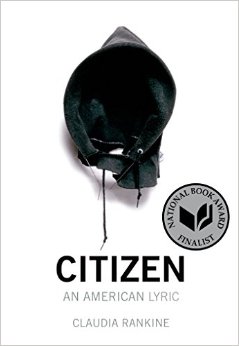
‘Citizen: An American Lyric’ by Claudia Rankine – Getting Angry

‘Citizen: An American Lyric’ by Claudia Rankine, prose poem (2014) – 159 pages    Grade: B

41cm1mFX5EL._SY344_BO1,204,203,200_

‘Citizen’ is a fierce meditation on being black in a predominantly white society like the United States.

“I feel more colored when thrown against a sharp white background.” – Zora Neale Hurston  

This prose poem is abrasive and disturbing for a white person to read.  It begins by showing examples of everyday unthinking racism perpetrated by even those enlightened white people who know better.  Good friends can cause deep hurt when it comes to race by saying the wrong thing.  There is even a medical term, “John Henryism – for people exposed to stresses stemming from racism”.

I wanted to say that some of us whites are trying to do better   Our attitudes are embedded in us from early childhood, and those cannot be easily or entirely corrected or eliminated.

And then we get women’s tennis star Serena Williams. Rankine gives us several scenes from Serena’s career.

“They (Venus and Serena Williams) win sometimes, they lose sometimes, they’ve been injured, they’ve been happy, they’ve been sad, ignored, booed mightily, they’ve been cheered, and through it all and evident to all were those people who are enraged they are there at all – graphite against a sharp white background.”

 We get re-enacted two of Serena’s most famous matches which had disputed calls.  At the 2004 US Open, Serena is defeated by Jennifer Capriati due to a series of bad line calls by the chair umpire.  Serena keeps her temper in check despite the bad calls.  Rankine is on somewhat precarious ground when equating bad line calls with racism, but in this case the chair umpire making the bad calls was excused from officiating any more matches.

In the 2009 US Women’s Open Serena is called for a foot fault at a critical moment in a match against Kim Clijsters, and she explodes.  Serena loses the match and is fined $82,500 and put on a two-year probationary period by the tennis officials for unsportsmanlike conduct.

images (6) However in 2012 Serena wins the only two gold medals that the United States would win in tennis at the Olympics and later would go on to win every match she played between the US Open and the year-end championship tournament.  Serena then is named the Women’s Tennis Association Player of the Year for 2012.

Next we get the scenarios for a number of ugly racist incidents that have occurred in recent years: James Craig Anderson (a forty-nine year old black man run over intentionally in Jackson, Mississippi by a bunch of white teenagers driving a pickup truck), Trayvon Martin, Mark Duggan in London.   The detailing of these incidents reminded me of a book I read nearly fifty years ago called ‘Rivers of Blood, Years of Darkness’ by Robert E. Conot which chronicled the deaths of all 34 people killed during the Watts riots in Los Angeles in 1965.  That book had a profound effect on my attitudes toward race over the years.

In ‘Citizen’ Rankine seems particularly pessimistic and angry about the racist attitudes of whites and their likelihood of being changed.

But when I watch the Jimmy Fallon Tonight Show, I begin to think there is hope for blacks and whites together yet.