Archive for the ‘Book Reviews’ Category

‘Conspirata’ by Robert Harris – The Republic is Threatened

‘Conspirata’ by Robert Harris   (2010) – 334 pages


9780743266116_p0_v3_s260x420At the beginning of ‘Conspirata’, Cicero has been elected as consul, the highest office in the Roman republic.  He shares the office with Gaius Antonius Hybrida who plays a minor role.

Being the most powerful man in the Roman republic, Cicero has powerful enemies.  Soon he finds out that Catilina, a Roman Senator, is attempting to overthrow the Roman republic and is leading a conspiracy to murder Cicero.  Five traitors are captured and sentenced to death.  Although Julius Caesar is involved in the conspiracy behind the scenes, he survives.

“They may not all plot together but they all see an opportunity in chaos.  Some are willing to kill to bring chaos about, and others just desire to stand back and watch chaos take hold.  They are like boys with fire, and Caesar is the worst of the lot.  It’s a kind of madness – there’s madness in the state.”   

After breaking up this conspiracy to destroy the republic, Cicero is hailed as “the savior of Rome” and “the father of his country”.

The trouble is that all this praise went to Cicero’s head.   When his consulship ended, he took up writing heroic poems about himself.  He bought an expensive mansion from the wealthy Crassus that he can’t afford, but arranges to get some of the money by defending one of the traitors.  The rest he borrows from moneylenders.  Pride goes before a fall, as Cicero’s faithful assistant Tiro points out:

“But I fear there is in all men who achieve their life’s ambition only a narrow line between dignity and vanity, confidence and delusion.  Instead of staying in his seat and disavowing such praise, Cicero rose and made a long speech agreeing with Crassus’s every word, while beside him Pompey gently cooked in a stew of jealousy and resentment.” 

Yes, the two most powerful military leaders in Rome, Pompey and Julius Caesar, are also receiving an acclaim which threatens the republic.  Whereas Cicero is willing to control his drive in order to save the republic, the ambitions of Pompey and Julius Caesar have no limits.  In order to achieve their goals, they make Cicero’s enemy Clodius, “a man of great ambition and boundless stupidity, two qualities which in politics often go together”, a tribune.

Robert Harris has written this trilogy of Cicero as an object lesson on the threats to a republic’s checks and balances which keep any one person, whether it is king or emperor or dictator, from getting too much power.  Cicero fought for the rule of law and statute against some powerful enemies.  Danger comes from all sides.  The rich aristocrats can use their money to buy a government which unfairly gives them even more power.  On the other side, unscrupulous politicians can enflame the mob by using racism and patriotism.
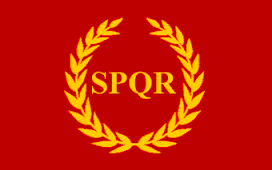
SPQRIt is a huge accomplishment for a nation to keep a rational set of legal checks and balances protecting the rights of the less rich or powerful or fortunate and not succumb to dictatorship.


Grade: A- 
‘The Sympathizer’ by Viet Thanh Nguyen – The Victors’ View of the Vietnam War

‘The Sympathizer’ by Viet Thanh Nguyen    (2015) – 371 pages


the-sympathizer-new-268x400

‘The Sympathizer’ is like a fine Graham Greene novel which is told from the perspective of the local Eurasian in Vietnam rather than that of the white colonialist.  Make no mistake; what the United States was fighting for in Vietnam was the last gasp of colonialism which officially ended with the fall of Saigon.  Remember the United States took over from the French who were trying to hold on to their colony.

Not only is our narrator in ‘The Sympathizer’ a French-Vietnamese, he is a double agent.  As well as being a Captain in the South Vietnamese army, he is an undercover operator for the Viet Cong forces.  His true loyalty is to the Communist side. Thus he has a most skeptical attitude about the General he ostensibly works for.

“Whatever people say about the General today, I can only testify that he was a sincere man who believed in everything he said, even if it was a lie, which makes him not so different from most.”   

Graham Greene would have approved of that line.  This novel has that Greene quality of being able to deal with things as they actually are.  Your own side is probably at least as wicked as the other side, and thus you can see the treachery on your side. Thus you can point out your friends’ deceptions and self-justifications as well as that of your enemies’.

“As the Congressman arose, I calmed the tremor in my gut. I was in close quarters with some representative members of the most dangerous creature in the history of the world, the white man in a suit.”

‘The Sympathizer’ will give you perspectives on the war that are vastly different from those of any other Vietnam War novel.

Early in the novel, there are vivid scenes of the fall of Saigon when the Vietnamese who worked for the Americans are desperately and hopelessly rushing for the helicopters to get out.

“The truth, in this case, was that at least a million people were working or had worked for the Americans in one capacity or another, from shining their shoes to running the army designed by the Americans in their own image to performing fellatio on them for the price, in Peoria or Poughkeepsie, of a hamburger.” 

Later the story turns devilishly humorous as our Captain becomes “a technical consultant in charge of authenticity” for an ‘Apocalypse Now’-style Hollywood movie about the Vietnam War.  This is devastating parody with an arrogant director and an insufferable egomaniac as its star.  From the silly movies which Hollywood made, you would have a difficult time realizing that the United States did indeed lose the Vietnam War.   The films “marked something new in the world, for this was the first war where the losers would write the history instead of the victors.”

‘The Sympathizer’ is as close as most of us will ever get to reading the victors’ perspective on the Vietnam War.  It is an audacious performance.


Grade: A-


A New Strategy for Reading and Writing about Current Poetry

‘Application for Release from the Dream’ poems by Tony Hoagland   (2015) – 81 pages

51-Ykjg7onL._SY344_BO1,204,203,200_

Who could not like a poet who named a previous collection ‘What Narcissism Means to Me’ ?

My old strategy for reading and reviewing poetry collections was to find a positive review of a single collection and then read that collection.  Too many times I discovered that I absolutely did not want to write about the selected collection due to my own lack of interest.  The collection wasn’t necessarily bad; it just did not captivate me.  Each person’s response to a set of poems is terribly individual.  Just because one writer’s poems do not interest me does not mean that someone else will not devour them hungrily.

I only want to review collections to which I have a positive reaction.  Therefore I don’t even mention the ones that I discarded due to my own lack of enthusiasm.

So I came up with a new strategy.

This time I started with four books of poems by different authors.  All four of these books showed up on ‘Best of Year’ lists for 2015.  Despite their being on the year-end lists, I figured that I would probably be enthused by at most only two of them enough to write about them.

I had hoped to find two books of poems that I really liked so that I could compare and contrast.  However it turns out that of the four, only one book made the grade by totally spurring my interest and enthusiasm.  Fortunately I consider that one book a mighty fine one indeed. I don’t want to overdo the praise, but ‘Application for Release from the Dream’ by Tony Hoagland is a humorous penetrating down-to-earth book of poetry.

Here are a few lines from his poem called “Misunderstanding” that I particularly like.

“All those years I kept trying and failing and trying
to find my one special talent in this life –

Why did it take me so long to figure out
that my special talent was trying?”

Clever, honest, and insightful.  What more can one ask from a poet?  That same poem has the following lines.

 “When I compared humanity to a flower growing in the shadow of a munitions factory,
it may be that I was being unfair to flowers.”

In his poem “A History of High Heels” he considers the wearing of high heels by women and their effect on him.

       “Because today is one of those days when I am starting to suspect

That sex was just a wild goose chase

In which I honk-honk-honked away

Three quarters of my sweet unconscious life.”

Nearly every poem in this collection has lines I would like to quote, but I won’t.  It is quite unusual for me to be captivated by nearly every poem in a collection like I am here, even when I’m reading masters like Philip Larkin, Robert Frost, and Emily Dickinson.   Throughout this collection, Hoagland’s outlook is quirky and original in a way that I can appreciate.

Of the countless lines I would like to quote, I will end with these from “Wasp”.

“a human being should have a warning label on the side
that says, Beware: Disorganized Narrative Inside;
prone to frequent sideways bursting

of one feeling through another”


Grade: A


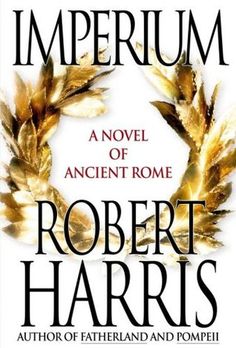
‘Imperium’ by Robert Harris – The Lawyer Cicero in Ancient Rome

‘Imperium’ by Robert Harris  (2006) – 305 pages

ba8770b162d98906b1e3cbc83e1f7b39

The Cicero trilogy by Robert Harris is the second major fiction I have read about ancient Rome.  The first was ‘I, Claudius’ by Robert Graves.  ‘I Claudius’ was wild, wacky, and preposterous, much like those early Roman emperors who were presented so unforgettably by Graves.  The Cicero trilogy, on the other hand, is solid, workmanlike, invigorating, and intelligent, befitting Cicero, the lawyer and orator and defender of the Roman republic.

The entire Cicero trilogy is told by Cicero’s slave Tiro.  We do not know if Tiro was actually white or black or some color in between, since a slave in ancient Rome could be of any nationality.  Tiro was very much a remarkable man himself.  He invented a shorthand system which allowed him to exactly transcribe Cicero’s speeches word for word while they were spoken, and thus the speeches were saved for posterity.  After Cicero was killed, Tiro worked to save as many of the words of Cicero as possible up until his own death at age 99. Tiro also wrote a book on the life of Cicero which unfortunately was lost.

The first novel of the trilogy, ‘Imperium’, covers the significant events of Cicero’s early career as a lawyer.  The first half of the book deals with the prosecution and trial of Verres, the magistrate of Sicily, who robbed temples and private houses of their works of art.  Verres had many friends in the aristocracy which allowed him to steal from other rich Sicilians with impunity.  When finally Verres was arrested and taken to court, it was Cicero who was assigned to prosecute the case against him.

Cicero is the leader of a small group of honest people fighting massive corruption among the rich aristocratic ruling classes of Rome.  His is a thankless task, and he will need all his eloquence and intelligence to defeat his powerful rotten foes.  This is the classic battle of the underdog against a relentless ruthless enemy.  I read this bracing story with always a smile as they battle the forces of evil and corruption much like Robin Hood and his Merry Men, except instead of physical prowess they use rhetoric and reason in the battle.

“If you must do something unpopular, you might as well do it wholeheartedly, for in politics there is no credit to be won by timidity.”

Cicero fought the patrician aristocracy in this trial but later he will join forces with some of the patricians in battles against the plebian masses.  Of his many gifts, a talent for friendship was not the least.

Robert Harris also has put some humor into the proceedings which makes ‘Imperium’ easy to enjoy.  He has a lot of  fun with Cicero’s wife Terentia who apparently ruled their household.

“Terentia regarded her husband – arguably the greatest orator and the cleverest Senator in Rome at that time – with the kind of look a matron might reserve for a child who has made a puddle on the drawing room floor.”

In the second half of ‘Imperium’ we meet two of the major figures of the time, Pompey and Julius Caesar.  Both are popular military heroes who have hugely increased the size of the Roman republic as well as its treasury and thus are worshipped by the masses.  Later Cicero will have to defend the republic from power grabs by these two war superstars.


Grade: A-     


Cicero of Rome, A Hero for Today

The Cicero Trilogy by Robert Harris


f7ae6ef6d6e3c9b3066352a0a5f12fdf

I have decided that my first real project for 2016 will be to read and discuss the Cicero Trilogy of novels by Robert Harris ( ’Imperium’, ‘Conspirata’, and ‘Dictator’).  I will devote an article to each of these invigorating historical novels, but first I want to discuss Cicero, the Roman leader and humanist.  No person in human history has been as profound a force for good as Cicero, and today we need his reasoned guidance more than ever.

Perhaps the toughest of all battles in law and politics involve fighting corruption within the ruling aristocracy.  This is as true today as it was in ancient Rome and throughout history. Cicero fought hard and died in defense of the Roman republic against tyrants, only to be followed by a series of wild and wacky and vicious Roman emperor / dictators.  He devoted his life to reason, humanism, and education.

Early Christian scholars studied Cicero’s writings in Latin, and he has been praised for creating the language of the civilized world.  The Italian Petrarch’s rediscovery of Cicero’s letters in the 14th century is often credited with starting the European Renaissance.  Cicero’s writings were also the guiding light of the Age of Enlightenment in the 18th century which had the goals of liberty, progress, reason, tolerance, and fraternity.  The founding fathers of the United States incorporated the principles of Cicero into the US Constitution to provide the necessary checks and balances in government to maintain the country as a republic.   Two cities in the United States named after Cicero in New York and Illinois are an indication of his influence. Thomas Jefferson called Cicero as a writer the first master of the world.

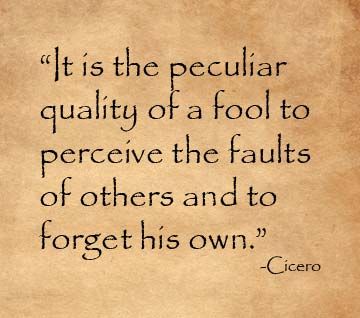
Marcus Tullius Cicero expressed principles that became the bedrock of liberty in the modern world.  He believed in natural law, that certain rights or values are inherent by virtue of human nature and human reason. He believed the purpose of positive laws is to provide for “the safety of citizens, the preservation of states, and the tranquility and happiness of human life.”  Perhaps we can best understand Cicero through a few of his quotes:

“Not for ourselves alone are we born.”

“What is morally wrong can never be advantageous, even when it enables you to make some gain that you believe to be to your advantage. The mere act of believing that some wrongful course of action constitutes an advantage is pernicious.”

“It is not by muscle, speed, or physical dexterity that great things are achieved, but by reflection, force of character, and judgment.”

“We must not say every mistake is a foolish one.”

“The wise are instructed by reason, average minds by experience, the stupid by necessity and the brute by instinct.”

Even today our republic must contend with the same enemies that Cicero fought against over two thousand years ago. Rich citizens buy politicians wholesale, and these bought politicians are little more than automatons who always do their financiers’ bidding at the expense of everyone else.  Overly ambitious politicians take wild and reckless and vicious positions to fire up the masses to vote for them.   Theirs is a naked grab for power, dressed up as patriotic necessity.  Those qualities which Cicero admired including sound reasoning, moderation, and tolerance mixed with respect for others seem to be in short supply today.   Above all, Cicero was saying ‘Be Reasonable’, yet today we appear to be living in an age of unreason.

So in the following few weeks I will be exploring this Cicero trilogy of novels by Robert Harris.  There may be other articles interspersed between these Cicero ones, but Cicero will remain on my mind.  Today we need Cicero more than ever.

cicero-on-right-action

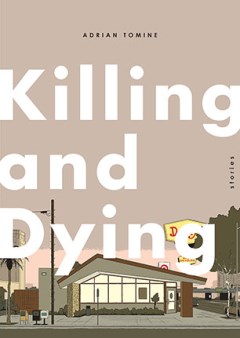
‘Killing and Dying’ by Adrian Tomine – Comic Stories for Adults

‘Killing and Dying’ by Adrian Tomine   (2015) – 121 pages

9780571325146

Looking at the lists for the best graphic novels of 2015, ‘Killing and Dying’ was far and away the one most frequently mentioned and thus presumably most gift-worthy.  But how do you give a Christmas gift to someone that is called ‘Killing and Dying’?  Am I the only one who thinks this is not exactly the festive Christmas spirit?  It would have been so easy to call the book something else.  The actual story ‘Killing and Dying’ is not at all what its title suggests.

So instead I gave this graphic novel to myself.   Rachel Cooke in the Guardian called Adrian Tomine the Alice Munro of comics, high praise indeed.  One similarity to Munro is that ‘Killing and Dying’ is actually divided into six graphic short stories rather than being a graphic novel.  The qualities that distinguish Adrian Tomine from other graphic writers are the off-beat originality of each of these stories as well as the emotional depth he achieves within each story.   This is one graphic novel I would not recommend for children under the age of sixteen, not because of any comic violence but instead because of its adult sensibilities.

Of the six stories in ‘Killing and Dying’, two of them are definitely my favorites.  The first story, ‘A Brief History of the Art Form Known as Hortisculpture’, is a humorous yet poignant take on a guy fulfilling his artistic inclination despite the skepticism of his wife and nearly everyone else.  The title story, ‘Killing and Dying’, is about a teenage girl who attempts to become a stand-up comedian much to the chagrin of especially her father.  There does seem to be a common thread between these two stories of individuals pursuing their dreams despite their dismissal by their family and perhaps the general public.

tumblr_ntlgnfuDzx1qav5oho1_250However the other four stories totally defy expectations.  I suppose it was a case of me becoming so enamored of those two above stories that I was a bit disappointed when the other stories were so completely different.  Perhaps I’m underestimating the impact of a story like ‘Amber Sweet’ about a young woman who finds herself mistaken for an internet porn star.

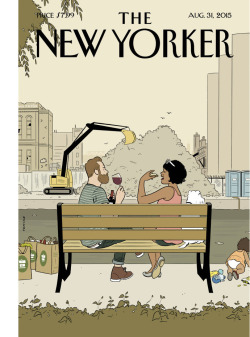
As far as the visuals go, one only needs to know that Adrian Tomine has done several covers for the New Yorker.  Enough said.

The comics in ‘Killing and Dying’ have a literary subtlety that is not usually associated with comics.    These are comics for adults.


Grade:   B+


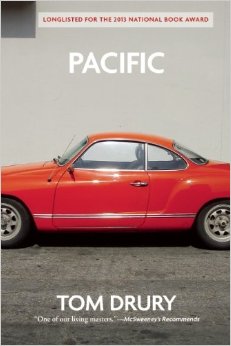
‘Pacific’ by Tom Drury – The Guardian Reviewers vs. Me

‘Pacific’ by Tom Drury   (2013) – 194 pages


41RFpu344CL._SY344_BO1,204,203,200_No, I did not rediscover Tom Drury. Jon McGregor and Mark Lawson, in two excellent articles in the Guardian, did that.  I am just the self-designated reader from the United States who decided to follow their advice and read Tom Drury.

First I will quote from the Jon McGregor article:

“These people are, in very particular ways, downright odd. As all of us are. In the stories of our own lives things happen moment by moment, and we keep getting stranger, and this is the truth Drury is leading us to here.

 But if you live in the real world, where life stalls and lurches forward with little real pattern and where the textures of our relationships accumulate moment by moment, then this is a novel you will recognize as being crammed with narrative.”

And now from the Mark Lawson article:

“In a similar way, Drury plaits together multiple plot lines that have a unifying quality of fretful oddness. 

 As the connections between these weirdnesses become clearer, the serious business is Drury’s prose. The style is slyly wry, so that a reference to “a locally famous taxidermist who had his own radio show” has gone past before you start to wonder just how the stuffing of animals would work on the wireless. This is also a writer who can go from laughter to darkness in an instant, as when, after what has seemed to be a tender sex scene, a woman reflects: “This was the best, the most bearable loneliness.”

Later Lawson compares Drury’s minimalist writing style to that of Raymond Carver’s.  Upon reading these two Guardian articles, I absolutely had to read Tom Drury.  Now after reading ‘Pacific’, I must say that my reactions to Drury’s writing style were not nearly so positive as these two Guardian writers.

The story in ‘Pacific’ alternates between two venues, the rural town of Stone City in Grouse County, Iowa and a place near Hollywood in Los Angeles.  As ‘Pacific’ begins, actress Joan Gower has returned to her original home in Stone City to take back to Hollywood her son Micah whom she had left with her ex-husband Tiny Darling seven years earlier.  Joan stars in the TV crime show ‘Forensic Mystic’, and she has been offered a lead role in a movie about Davy Crockett called ‘The Powder Horn’.

So the story goes back and forth between Stone City, Iowa and Hollywood.  There is a murder plot in Iowa and in Hollywood Micah makes some new friends as Joan’s second marriage falls apart.

The two Guardian writers are correct that Tom Drury has a unique style of minimalism, but I’m not sure that is such a good thing.  Characters in ‘Pacific’ are not introduced.  They just show up and start doing stuff.  Peripheral characters keep showing up, and Drury gives no indication as to their importance or unimportance to the plot.   Frequently there are a few lines about a specific character, but then he or she is just dropped and never re-appears in the novel.   Instead of well-developed characters, we get people who might as well be ants going aimlessly about their colonies.   I’m sure that Tom Drury is making a valid point about the haphazardness of human life, but I still found all this random behavior by characters rather tiresome in a novel.  The reader stays on the shallow end in regard to these characters and never goes any deeper no matter how many times we encounter them.

Another difficulty I had with ‘Pacific’ is the flat uniformity of the sentences.  Every sentence seemed to be short and declarative with the standard “subject, verb, object” form.   I could have used much more variety in the sentence structures.  This  sameness made me wonder what I liked so much about the minimalist style at one time

Basically it all comes down to the Pleasure Principle.  I can understand why these Guardian writers appreciate the quirkiness of the writing of Tom Drury.  However I found myself on each chapter after reading only a few pages, wishing the chapter would end so I could quit reading.  In other words, I was not getting enough pleasure from my reading to sustain my attention.

Perhaps I should have read Drury’s ‘The End of Vandalism’ instead, as by all accounts that is his best novel.


Grade: B            


‘Beatlebone’ by Kevin Barry – John Lennon in Western Ireland

‘Beatlebone’ by Kevin Barry  (2015) – 299 pages


151102_BOOKS_BEATLEBONE-cover.jpg.CROP.article250-medium‘Beatlebone’ is a novel about John Lennon of the Beatles.  Lennon had bought a small deserted island called Dorinish off the far northwestern coast of Ireland in 1967, and ‘Beatlebone’ is about his unlikely visit to the island in 1978.

John Lennon was surely the edgiest one of the Beatles and the easiest one for people to dislike.  He was the original leader and created the Beatles and was one of  the group’s main singers.  He wrote many of the great Beatles songs including ‘A Hard Day’s Night’, ‘Help’, ‘All You Need is Love’, ‘Ticket to Ride’, and all the way up to their last recorded song ‘Come Together’.  After the Beatles broke up, he wrote ‘Imagine’ and ‘Instant Karma (We All Shine On)’ among many others.  During that solo time Lennon lived in the United States, and the FBI monitored him the entire time he lived there.

Lennon was also the most emotionally fragile of the Beatles.  He frequently came across as droll and sarcastic.  In 1978 Lennon had not recorded an album for three years.  He was finally off the really hard drugs, and he believed if he could spend some time alone on his island, he could get to a place where he could write music again.

Kevin Barry understands the difficulty of writing about Lennon.

 “He is quite nasal and often defensive. There is a haughtiness that can be almost princely, but his moods are capricious – sometimes he is very charming and funny and light; at other times there is a darkness evident, and an impatience that can bleed almost into bitterness.  He can transition from fluffy to spiky very quickly, even within the course of the same sentence.  Often during these interviews he was accompanied by Yoko Ono, who very clearly, from this distance, was the tethering fix in his life; lacking her presence, you get the feeling that he might have unspooled altogether.”

One thing Barry accomplishes in ‘Beatlebone’ is that he does get Lennon’s voice right.  However ‘Beatlebone’ did not work for me well as a novel.  Whereas Barry’s ‘City of Bohane’ was an Irish lyrical imaginary tour de force and I was dazzled by his stories in ‘Dark Lies the Island’, ‘Beatlebone’ did not seem well enough grounded to earth for it to be a compelling read for me.  My interest in the novel tended to float away.

Dorinish Island in Ireland

Dorinish Island in Ireland

And what about Lennon’s island of Dorinish?

“John (Lennon): Turns out the thought of it is the thing, Charlie.  The reality is slippery rocks and freezing fucking sea and creamy fucking gull shit.  Not to mention the banshee fucking wind.”  

I read a review written before he was murdered of John Lennon’s last album ‘Double Fantasy’. In it Lennon’s songs are praised as nice tunes, but Lennon made the unfortunate mistake of alternating his songs with poor ones by Yoko Ono which dragged the whole album down.


Grade: B          


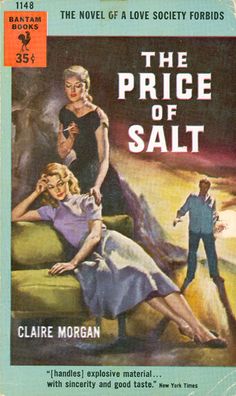
‘The Price of Salt’ (‘Carol’) by Patricia Highsmith

‘Carol’, original name ‘The Price of Salt’, by Patricia Highsmith (1952) – 292 pages

570187e0377bfbb798bfa1876d5a6efa

‘Carol’ actually is the story of Therese Belivet, a 19 year old young woman who has taken a pre-Christmas job working at the toy counter in a department store but who is most interested in designing sets for theatrical productions. Therese has a boyfriend named Richard who loves her, but she gives him practically nothing in the way of affection.  She waits in dread for the nights he will ask her to stay with him, and she usually manages a plausible excuse to turn him down.

One day at the department store, a wealthy suburban wife and mother named Carol comes in to buy a doll.  Therese waits on her, and the sparks fly at once between them.  The attraction on both sides is intense like nothing Therese has experienced before.  Soon Carol invites Therese out for drinks, and Therese eagerly accepts.

The word that best describes ‘Carol’ for me is ‘verisimilitude’.  In other words, the story here has the quality of seeming real.  Individuals probably do not have much control over the ones to which they are attracted or not attracted.  ‘Carol’ captures that overwhelming passion that can occur between two people, in this case the two women.

“With a thousand memories and moments, words, the first darling, the second time Carol had met her at the store, a thousand memories of Carol’s face, her voice, moments of anger and laughter flashed like the tail of a comet across her brain… And she did not have to ask if this was right, no one had to tell her, because this could not have been more right or perfect.”   

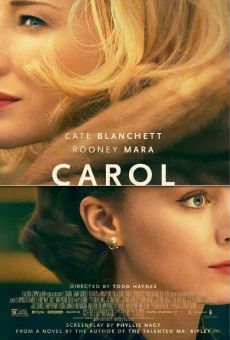
Patricia Highsmith, originally from Texas, wrote this novel soon after her first novel ‘Strangers on a Train’ achieved great success due to the movie Alfred Hitchcock made based on it.  For ‘The Price of Salt’, Highsmith used a pseudonym, and it developed a cult following as a lesbian novel.  Now, over sixty years later, it has been made into an Oscar-contending movie, ‘Carol’, by Todd Haynes starring Cate Blanchett and Rooney Mara.  Later in her writing career Patricia Highsmith, who never married, would write five psychological thrillers with Tom Ripley as the main character.

carol-2015Much of the novel is taken up with a road trip by Therese and Carol across the United States, but don’t expect much of scenery or local color as this is mainly a psychological novel of the heated attraction between these two.  There are a few scenes that take place on the road in the car, but otherwise we hardly ever leave the hotel.  At a few points in the novel the singular intensity of their relationship was not quite enough to sustain my interest.

I can see how ‘Carol’ would work well as a screenplay with the movie cameras providing the outside visuals that are missing from this novel of obsessive love.


Grade:  B+


The Top Twelve List of the Best Fiction I’ve Read in 2015


top12A

Another banner year for reading fiction comes to an end, and here again is my list of the best fiction I have read in the past twelve months.  Of course my list is subjective to the extreme, but that is half the fun of these lists anyway.

Click on the picture or title and author to see my original review.


1. ‘Fates and Furies’ by Lauren Groff Fates(2015) – Here is a writer who can comfortably put Greek myth and Shakespeare into a modern marriage story. There is a manic energy and an inventiveness here that puts this novel above the rest.


2. 42780977 ‘Honeydew’ by Edith Pearlman (2015) – Finally a collection of  stories that is at least as good as the quotes on the back cover.  Each story is dense, warm, and poignant. A quirky weirdness permeates most of these stories, all for the better.


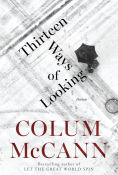
3. ‘T9780812996722_p0_v1_s118x184hirteen Ways of Looking’ by Colum McCann (2015) – The title novella here is the finest fiction I’ve read this year. The prose is lyrical and hypnotic.


14005824. ‘The Story of the Lost Child’ by Elena Ferrante (2015) – The final novel about Lenu and Lila, the two girls from a Naples neighborhood now grown up. Now that it is over, will I face Ferrante-withdrawal?
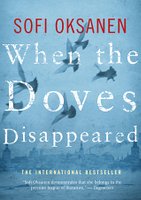


23269047._UY200_5. ‘When the Doves Disappeared’ by Sofi Oksanen (2012) – A novel about Estonia from the German occupation in World War II through the Soviet occupation which lasted 44 years after the war. The doves disappeared, because the occupying Germans liked to eat doves.


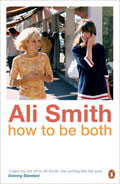
coverimg6. ‘How to be Both’ by Ali Smith (2014) – A playful novel of two parts. One part follows the Italian Renaissance painter Francesco del Cossa. The other part is about a 16 year old girl living in modern England named George who hates the song ‘Georgy Girl’ for which she was named.


7A wild Swan-web. ‘A Wild Swan’ by Michael Cunningham (2015) – Some of the oldest fairy tales including ‘Beauty and the Beast’, ‘Rumpelstiltskin’, and ‘Snow White’ are re-told from a wicked grown-up perspective.


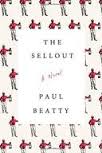
sellout8. ‘The Sellout’ by Paul Beatty (2015) – This is the comic account of the town of Dickens, a rural suburb stuck in the middle of Los Angeles. The sentences in ‘The Sellout’ take so many twists and turns you wind up in a different place than when you started them.


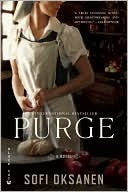
70296689. Purge’ by Sofi Oksanen
(2010) – A second entry for Sofi Oksanen who is my discovery of the year after Groff. It is the story of Zara, a young woman taken up by two violent Russian male pimps, and Aliide Truu, an old woman living in the Estonian countryside. This novel confronts deeper truths of good and evil than other novels do.


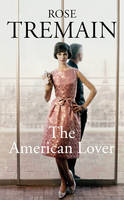
cv_americanlover10. ‘The American Lover’ by Rose Tremain (2015) – A varied group of convincing stories by one of the world’s better novelists. This collection will do until Rose Tremain writes another novel.


9780316231244_p0_v2_s118x18411. ‘There Must be Some Mistake’ by Frederick Barthelme (2014) – A humorous novel about modern junk culture where everyone under thirty looks like a gas station attendant even though there are no gas station attendants anymore. A guy who shows up in cowboy regalia is ‘cowboyed up’. Our food arrives thick, gloppy, greasy, misshapen, lukewarm, and inedible.’


978037417853612. ‘The Dog’ by Jack Livings (2015) – Perhaps the best description of China’s current government is “socialism with Chinese characteristics”.  General Motors now sells more cars in China than in the United States. These stories give us the lively inside story about what’s going on in China today.
 

Step Aside, Pops – Zany Comics for Brainy Folks

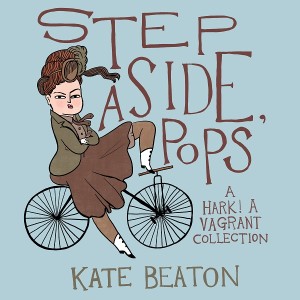
‘Step Aside, Pops – A Hark! A Vagrant Collection’ by Kate Beaton   (2015) – 166 pages


stepaside-300x300If you are looking for a light Christmas present for a brainy person or a brainy couple or a brainy family, I can’t think of anything better than ‘Step Aside, Pops’.

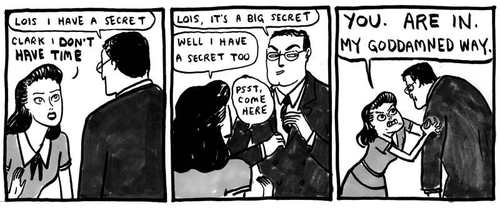
Subjects in this graphic comic collection include ‘Chopin and Liszt’, ‘Juarez and Maximilian’, and ‘Julius Caesar’ as well as less brainy subjects as Spiderman, Lois Lane, Cinderella, the Strong Female Characters, and a male extra from Janet Jackson’s video, ‘Nasty’.  Just about any offbeat topic is fair game for Kate Beaton.

A comic about Jane Austen and the Brontés has the following Kate Beaton aside:

“They say that Austenmania is dead, in which case, long live Brontémania, and may we always have a mania to sustain us.”

That is the lively playful spirit that drives this fun collection.

Not that these comic riffs by Kate Beaton are all that intelligent and uplifting.  Some are just plain stupid.   Yes, a lot of the humor here is ridiculous and sophomoric. That is intentional.  Some I did not get at all such as Kokoro, Parts 1 and 2.  But where else will you find a silly joke about Alexander Pope in a comic as well as Alexander Pushkin, Alexander the Great, and Alexander Graham Bell, all put together in ‘Famous Alexanders’?

One of Kate Beaton’s heroes is the American journalist, Ida B. Wells.  “A statue of Ida in every home, or the world isn’t fair.”  Beaton devotes several pages of comics to her.  I barely recognized the name Ida B. Wells, and thus I went to Wikipedia and Google to find out more about her.  ‘Step Aside, Pops’ left me curious to find out more about several of its subjects.

This year a few of my Christmas presents will be graphic novels.  There have been several write-ups discussing the best graphic novels for the year which I am using as guides.  Graphic novels seem to work better as presents than traditional novels.  I find it next to impossible to pick out a full novel as a present for someone.  A novel is just too much of an investment in time for the reader, and individual tastes are just too personal.  However a graphic novel does not present such a dilemma and can be enjoyed by an entire family.

‘Step Aside, Pops’ is one that I probably will be giving as a present.

tumblr_inline_n1jxffP9Lo1qbujox


Grade: A- 

‘A Wild Swan’, Fairy Tales Wildly Retold by Michael Cunningham

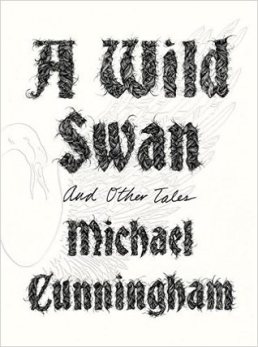
‘A Wild Swan and Other Tales’ by Michael Cunningham  (2015) – 135 pages


23848124In ‘A Wild Swan’, Michael Cunningham starts with the circumstances of some of the oldest fairy tales such as ‘Beauty and the Beast’, ‘Snow White’, and ‘Rumpelstiltskin’, and transforms them into something new and different.

Cunningham uses the declarative language of fairy tales to get us into these stories: a thatched-roofed cottage, a prince and a princess, a giant, a miller, a castle, a gnome. However then Cunningham throws us definite curve balls, language that you would never ever find in a fairy tale such lines as “you embarked on a career of harshly jovial sluttishness”.  Despite their fairy tale settings, these tales are meant for teenagers or adults, each with a wicked slant to which we big people can relate.  These stories wind up being perhaps even more strange and gruesome than the original fairy tale.

In the story simply called ‘Beasts’, which is Cunningham’s take on ‘Beauty and the Beast’, the father is going off to the city on business and asks his three daughters  what presents they’d like him to bring back.  The two younger daughters ask for silk stockings, for petticoats, for laces and ribbons.  However Beauty, the oldest daughter, asked only for a single rose, her reasoning thus:

“Do you really imagine a frock or hair ribbon will help?  Do you think it’ll improve the ten or so barely passable village men, or alter the modest hope that I will, at least, not end up marrying Claude the hog butcher, or Henri with the withered arm?  Do you believe a petticoat could be compensation for our paucity of chances?

I’d rather just have a rose.”

Does a young lady really require finery to attract Claude the hog butcher?  You won’t find such an ironic sensibility in a young maiden in the old fairy tales, and that is what makes Cunningham’s tales so devastating and fun.

Such phrases as “barely passable village men” and “compensation for our paucity of chances” won’t be found in children’s stories.  These fairy tales have a sharp sensibility.

7aff4f3a7e295164ad814f46561af048These tales remind me of the work of another writer who used folk and other stories as the raw material for his own strange and wonderful novels.   I am thinking of the French writer, Michel Tournier.  Tournier’s novel ‘Friday’ started with the story of Robinson Crusoe.  His novel ‘The Four Wise Men’ was based on the Wise Men who went to see the baby Jesus in the Bible story.  Tournier also took his turn at transforming the old fairy tales in ‘The Golden Droplet’.

I consider Michel Tournier to be a ‘do not miss’ writer.  In ‘A Wild Swan’, I see Michael Cunningham in his witty and wild retelling of these fairy tales as a worthy successor to Tournier.

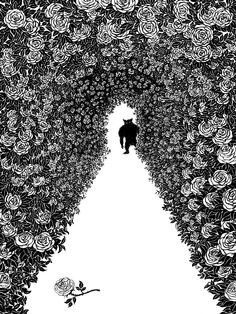
With its fine illustrations by Yuko Shimizo, ‘A Wild Swan’ would make an excellent Christmas present for any teenager or an adult, but probably not for little children.


Grade: A


Five Short Stories by D. H. Lawrence

SABRDA0000482

Here we have five short stories by D. H. Lawrence which are included in an Audible audiobook collection.  These stories should give me an opportunity to say something meaningful about the English author and poet D. H. Lawrence.

The first story, ‘The Rocking Horse Winner’, is an oedipal story about a mother and her ten year old son.  They are discussing the subject of money.  I make it a rule not to include spoilers in my reviews, but in this case I must.  The boy asks his mother if their family is rich.  The mother replies that, no, they are not rich.  The mother, who came from more prosperous circumstances as a girl, tells the boy that his father is unlucky.  In D. H. Lawrence stories, ‘unlucky’ is usually used as a euphemism for ‘weak and ineffectual’, especially when applied to husbands and fathers.

The boy promises his mother that he will always be lucky.  To prove it he starts betting on the horses with the help of the gardener and the boy’s uncle.  The boy wins every bet hr makes and soon has enough money to supplant his unlucky father as the family provider.  But on the night of his last bet, the boy catches a fever and sadly dies.

My literary guru and guide, Martin Seymour-Smith, says that “D. H. Lawrence never resolved his Oedipal feelings for his mother and it may be that her lack of intellectual quality infected his entire life-style. “  Seymour-Smith’s appraisal of D. H. Lawrence is as follows:

“Much in his (Lawrence’s) writing is lovable and irresistible on any terms but his tiresomeness as a man also intrudes damagingly into it.  He is full of insights, but as full of neurotic and unpleasant idiocies.”

He goes on to say that Lawrence “was ‘awful’ – and he was ‘marvelous’”. According to Seymour-Smith, Lawrence’s second novel, ‘Sons and Lovers’, is a masterpiece, but all of his other novels are “flawed by the sudden angry intrusion of opinion”.  Thus I, following Seymour-Smith’s advice, have not read any of the other novels besides ‘Sons and Lovers’, not even ‘Lady Chatterley’s Lover’.  Seymour-Smith says that, besides ‘Sons and Lovers’, it is in some of the poems and short stories that Lawrence’s genius can best be found.

On to the second story, ‘England, My England’.  Here is another story about a quite useless husband and father, apparently a common theme for Lawrence.  This story takes place in the Midlands coal region of England called Nottinghamshire where Lawrence was born and raised.  Since the father is prone to taking long hikes in the woods when according to his wife he should be working, there are some marvelous descriptions of scenery here.

In the third story which is one of Lawrence’s earliest stories written in 1909, ‘Odour of Chrysanthemums’, a young woman and mother waits for her husband to get home from the coal mine or the pub where he usually stops and stays after work. Again we have the lovely Midlands locale and once again there is a wretched husband and father, although he does work at the coal mine.

In the fourth story which is one of Lawrence’s last stories, ‘The Lovely Lady’, an old woman rules over the lives of her son and niece who live with her.   This story does have elements of the supernatural although it turns out to be only a water pipe which carries sound from one part of the house to another.

dhlawrenceThe final long story, ‘Glad Ghosts’, is a true ghost story.  Most of it takes place at a dinner party and it invokes the spiritualism which was so popular in the 1920s.  It contains some of Lawrence’s perhaps more crackpot ideas about sex.  Colonel Hale is visited by the ghost of his dead ex-wife.  It turns out that the Colonel never paid attention or respect to her physically while she was alive, and thus she is haunting him.  The Colonel finally figures this out and rectifies the situation.  Meanwhile one of the male guests takes care of the Colonel’s young current wife, and the Lawrence-like narrator moves in on that guest’s young wife, Carlotta. All are happy at the end of the story.

In all of these stories, D. H. Lawrence displays a willingness to confront the complex psychological issues of his characters, both male and female.  In too much of today’s fiction, we stay on the surface and do not come up against the problems that are embedded inside each of us from early childhood. Sometimes it seems we have reverted from the complexities of Freudian psychology back to the silly ‘Heroes and Villains’ mentality of Star Wars or Indiana Jones.  Thus much of current fiction is too simplistic and lacking in depth.  D. H. Lawrence, flat-out crazy as he can be, is a corrective to the simple-minded and vacuous attitudes of our times.


Grade: B+ 


‘Pétronille’ by Amélie Nothomb – A Friend to Drink Champagne With

‘Pétronille’ by Amélie Nothomb   (2014) – 122 pages

Translated from the French by Alison Anderson


9781609452902_13Since she started publishing her novels in 1993, Amélie Nothomb has produced a 100-to-200-page novel a year for a grand total of 23 novels.  That seems to me an entirely sensible way to sustain a literary career.

Her latest, ‘Pétronille’, I found to be a sparkling delight.

 “I need a drinking companion,” I thought.  I went through the list of people I knew in Paris, for I had only recently moved there.  My few connections included either people who were extremely nice, but did not drink champagne, or real champagne drinkers who did not appeal to me in the least.”  

Our narrator here is an author named Amélie who bears a strong resemblance to our author.  At one of her book signings she meets a young woman named Pétronille Fanto who is an aspiring writer, and they go out for champagne.

‘Pétronille’ is a novel which is more about becoming friends than about drinking champagne.   Each of us hits it off or doesn’t hit it off with the individual people we meet, and for most of us there are only a few special people to whom we are willing or able to become particularly close.  Much of ‘Pétronille’ consists of the sharp repartee between Pétronille and Amélie.  You begin to understand why these two are ideal drinking companions for each other.

I suspect what is going on here is that our author has set out to write and has succeeded in writing a novel that effervesces like high-quality champagne.  There is a mischievous merriment to the scenes.  ‘Pétronille’ is not a serious novel.

Amélie Nothomb is at the top of her form in this lighter-than-air novel.  If you have not read Nothomb before, ‘Pétronille’ is a good place to start.  The writing is assured and pleasant to read and contains some insights into friendship.  I put ‘Pétronille’ up there as one of her best novels along with ‘Loving Sabotage’ and ‘Fear and Trembling’.


Grade: A-         


‘The Mark and the Void’ by Paul Murray – Breaking the Bank

‘The Mark and the Void’ by Paul Murray   (2015) – 459 pages


 -

‘The Mark and the Void’ is a brilliant preposterous ragtag jumble of a comic novel.  It is about the banking industry.

“The story of the twenty-first century is the banks.  Look at the mess this country’s in because of them.”

It takes place when the Celtic Tiger, the years of phenomenal Irish prosperity, collapsed and died.  Some banks had made large outrageous investments which proved to be worthless, and they needed the Irish government to bail them out. Huge amounts of government money which were meant for the handicapped, the disabled, and the destitute instead went to failed executives at corrupt ‘too big to fail’ financial companies as multi-million dollar severance packages.  The United States had this same problem as Ireland when the investment firms Lehman Brothers and Bear Stearns went bankrupt in 2007, and the entire financial industry was shaky.  It was the onset of a severe global recession.

“The radio waves are clogged with hard-luck stories derived from the last wave of cuts: grandmothers and children and chronically ill whose pensions were cut or whose special-needs assistants were withdrawn or whose care was cancelled overnight by governmental austerity, even as yet more billions flow in decidedly unaustere fashion to the notoriously corrupt bank.” 

Despite this sorry backdrop, ‘The Mark and the Void’ is a comic novel told from the viewpoint of a banker named Claude.  After the first hundred pages, I thought this novel was the most insightful sharpest dissection of the banking industry I had ever come across.  However after I completed the novel, it seemed to me more like a hodge-podge, somewhat of a mess. ‘The Mark and the Void’ is a shaggy dog tale that keeps getting shaggier and shaggier as it progresses, but I forgive Murray because of the long stretches of humorous brilliance.

Somehow Claude’s bank, due to a policy of moderation, had avoided the collapse but now they bring in an executive from one of these failed banks.  He has the banking crew make ‘counterintuitive’ investments.

One of the most absurd characters here is a novelist named Paul. Paul approaches Claude to ostensibly write a novel about a banker as Everyman. Claude agrees, and Paul follows him around at the bank for several days and then brings in his Russian friend Igor.  Paul and Igor are casing the bank for a burglary, not realizing that this bank is an investment bank and has no vaults.

Since Paul is a novelist, we do get into a literary subplot which is so ridiculous it somewhat undermines any serious points to be made about banking.  The novel really does not contain any original or shattering insights into banking, nothing that hasn’t shown up already in the newspapers.  It is strictly for laughs.

There is a nice little subplot about Claude obsessing over a waitress in the nearby café while he is oblivious to the woman working right near him at the bank who really cares for him.

There are too few novels about the modern-day business world, so ‘The Mark and the Void’ is a welcome, if shaggy, addition.


Grade: B+      


‘The Reflection’ by Hugo Wilcken – Unmistakably Noir

‘The Reflection’ by Hugo Wilcken   (2015) – 232 pages

288855b8-7977-11e5-_998736k

‘The Reflection’ has the hard-bitten no-nonsense ambiance of a detective novel even though its main character/narrator is a psychiatrist.  The police in New York City in 1949 use our man’s psychiatric services in order to commit troublemakers to mental institutions.  The police cannot commit someone without the psychiatrist’s written authorization to do so.

We are definitely in strange disturbing noir territory here.

The novel starts out as a straightforward story as the psychiatrist finds out that his ex-wife has died.  This is devastating news to the psychiatrist even though he and she were married only a short time.  She was only in her early thirties at her death.  The psychiatrist himself is only 33.

“After the failure of my marriage, I’d waited for the moment when the pieces would fit together, when I’d know what to make of my life and how to go on.  Somehow that moment never arrived.”

It is the voice of the psychiatrist which drives this story.  He may have been married once when he was young, but now he is living the single New York life.  He lives in a small apartment, does not drive a car.  If he needs to travel, he takes the train.  He goes to the same restaurant every day, orders the same meal.

To say there are some stunning twists and turns here would be an understatement. Shady characters show up, and suspicious events occur. The psychiatrist thinks he is being followed. A bizarre assault, a corrupt policeman, a surreal mental asylum.  One lesson learned – never carry another person’s wallet unless you are willing to assume that person’s total identity.

If you like to watch film-noir crime dramas from the 1940s and early 1950s like I do, you will most likely enjoy ‘The Reflection’.  If you like Hitchcock or Robert Mitchum movies or if you like ‘Double Indemnity’, you will be bowled over by ‘The Reflection.  It’s got that noir feel to it.  I looked up the word ‘noir’ in the dictionary: ‘crime fiction featuring hard-boiled cynical characters and bleak sleazy settings’.  That is an accurate description of ‘The Reflection’.


Grade: A-

‘Slade House’ by David Mitchell – Haunted, but Humorous

‘Slade House’ by David Mitchell (2015) – 238 pages


books_sladehouse__article-prose-260x

Slade Alley is an easy-to-miss back lane off of Westwood Road.  Once on Slade Alley you will come upon a black iron door, only two-feet by two-feet, on the side of a dwelling that you must crawl through to get into Slade House.  But once you are inside, the rooms are huge and ornate despite the house having been bombed to rubble during World War II.

Here is a haunted house story.  A pair of ancient shape-shifting twins, Jonah and Norah Grayer, live in Slade House, and every nine years they must find an Engifted soul to drain from a human in order to rejuvenate themselves.   Thus all the chapters occur nine years apart (1979, 1988, 1997, 2006, 2015) as another unsuspecting soul stumbles into Slade House.

Here is another example of the many entertainments playing horror for laughs which are so prevalent today.  David Mitchell is a delight at setting up these situations, and ‘Slade House’ is great fun to read.  Only a few of us readers would expect more from David Mitchell than a mock-horror romp.

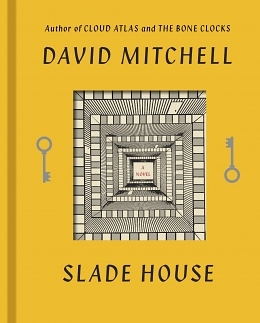
Even the cut-out window on the cover of the book tells you it was designed to move product.   This is an attempt to earn some big money by one of our best writers.  And why not?  Why should the big money in the book publishing business be restricted to hacks?

‘Slade House’ is a lark, a pastiche.  For what it is, this humorous haunted story is remarkably well done. I have little doubt you will enjoy reading it.  The question is whether or not one of our very finest writers should be spending his time writing such tried-and-true material.  Perhaps he should, in order for our literary writers to reclaim the mantle of popularity.  We certainly do not need another novel of contemporary suburban angst anyway.  But at the same time I have a vision of David Mitchell sitting at his desk writing ‘Slade House’ in his sleep.  This haunted house and its trappings were probably not much of a challenge for him.

Perhaps he can make enough money off of ‘Slade House’ so he can write something more original next time.


Grade: B+


‘Welcome to Braggsville’ by T. Geronimo Johnson – UC Berkeley vs. Small-Town Georgia

‘Welcome to Braggsville’ by T Geronimo Johnson   (2015) – 354 pages

21936648 (1)

‘Welcome to Braggsville’ sometimes reads more like a good stand-up comedy routine than a novel.  It is a clever performance, an extended riff, and with also some tragedy along the way.

First, here is the plot of ‘Welcome to Braggsville’.  A white boy Daron, valedictorian of his high school class, from the small Georgia town of Braggsville goes off to college to California in Berkeley, affectionately called Berzerkeley.  While there he befriends a Malaysian would-be stand-up comedian Louis, a black ex-athlete Charlie, and a girl student Candice who claims to be one-eighth Native American Indian.  They form a clique and call themselves the Four Little Indians.

Daron mentions in class that his home town Braggsville stages a Civil War reenactment every year during its Pride Week Patriot Days Festival which happens to coincide with Spring Break this year.  The Four Little Indians decide to travel back to Braggsville to mount a ‘performative intervention’ protest at the reenactment, a mock lynching.  What could possibly go wrong?

Politically aware cosmopolitan Berkeley meets small town Southern-fried America.  That is the conflict at the heart of ‘Welcome to Braggsville’.  So these four diverse Berkeley students go back to Braggsville, Georgia for Spring Break.  Braggsville is the kind of town where you might have a female relative named Aunt Chester. We do meet some good old white boys like Daron’s wild-ass cousin Quint, but even Quint is presented as a somewhat likable fellow.  The black people in Braggsville all must live in their own section of town across the Holler called the Gully, yet this being a small town the blacks and whites interact more than they do in a large city.   We get a more honest real picture of what Braggsville is like than how a professor at Berkeley might picture it to be.

The climactic event in the novel occurs about one-third of the way through, and perhaps the novel goes on too long afterwards especially since this main event is never resolved.

I want to end with a short quote that shows the comic spirit of ‘Welcome to Braggsville’.  Here is the Malaysian Louis talking about the Braggsville general store:

“I was at this store, Lou Davis’s, and it was like a Chinese store, you had everything: meat, bumper stickers, everything.  In Chinatown, it’s like that.  You can buy fruit and bread and get your teeth pulled in back.  Anyway at Lou Davis’s I saw some strange stuff, like headcheese and all, and thought, hmmm, headcheese.  Maybe these people are weird.  Then I had an image of my grandma eating, guess what, chicken feet!  I thought, Okay, Southerners are like Chinese.” 

Maybe you had to be there.


Grade : B+

‘Thirteen Ways of Looking’ by Colum McCann

‘Thirteen Ways of Looking’ by Colum McCann  (2015) – 242 pages

 Colum McCann’s writing style in the novella ‘Thirteen Ways of Looking’ is close to poetry, but most poetry isn’t this much fun.  This novella is probably the finest piece of writing I have read this year.  The other stories in this collection are good solid moving stories, but it is ‘Thirteen Ways of Looking’ that hits it out of the park for a grand slam home run.

So many of the lines in this novella are not complete sentences but are nonetheless evocative.  The prose here is lyrical and hypnotic, like nothing I have ever seen before. We are inside a man’s mind, and his thoughts are not usually in full sentences.

“Car horns blaring everywhere.  A terrible sound, really.  Isn’t the snow supposed to deaden the sound?  How is it that my hearing gets worse but the awful sounds get louder day after day? A cacophony.  That’s the word.  The pianist playing the contrabass.  The saxman on the violin.  The flautist on the horn so to speak.”  

In the above excerpt there are only three complete sentences and six sentence fragments, yet the language totally evokes the effect of all the car horns to this old man’s mind.

The chapters in the novella alternate between the reflections of a retired judge and the notes of a police procedural.  Thus the judge’s impressions may wax poetic, but the police statements keep us tied down to earth.  The actual story here winds up to be an intriguing murder mystery.  It says a lot about the ubiquitous cameras which are in our lives today.

The other three stories in this collection do not have this exceptional lyrical aspect, but they are well-written stories nonetheless.   In one story, “Sh’khol” a mother adopts a boy with fetal alcohol syndrome and gives him for his birthday a wetsuit to use swimming in the ocean off the coast of Ireland near their home.  In another story, ‘Treaty’, a nun confronts the man who raped her many years ago.

At the end of the collection there is a note from the author stating that the novella and these stories were “completed in 2014 on either side of an incident that occurred in New Haven, Connecticut, on June 27 where I was punched from behind and knocked unconscious, then hospitalized, after trying to help a woman who had also been assaulted on the street.”  McCann then gives us the following line:

“In the end, though, every word we write is autobiographical, perhaps most especially when we try to avoid the autobiographical.”

The novella ‘Thirteen Ways of Looking’ is a particular delight.  It will cast a spell on you like nothing you have read before.


Grade:   A 

‘Lurid & Cute’ by Adam Thirlwell – Facetious & Annoying

‘Lurid & Cute’ by Adam Thirlwell   (2015) – 358 pages

azure_f779f32d2c66ad368aa8252d70b37fa3

My short review of ‘Lurid & Cute’ is that this novel is too lurid & too cute.  However since “Lurid & Cute’ is shortlisted for the Goldsmith’s prize, I will go into more detail about my monumental problems with this somewhat comic novel.

Our hero wakes up in a seedy hotel room lying next to a woman who is bleeding severely from her eyes due to a seizure or an attack or the drug ketamine.  This woman is not his wife who is at home. The situation is classic noir, similar to countless pulp detective novels.  However the style of writing here is far from noir.  Noir stories are usually told in a clipped style, abrupt and matter-of-fact and to the point.  Here the style is expansive and flippant, and the author over-explains just about everything.  I won’t quote one of these over-explanations since they are interminably long and nearly incoherent and sure to test a reader’s patience.  Despite the author’s analyzing to death, we are never told basic things like how the woman’s injuries were sustained.  It might have been the drugs.

Although my experience with mind-altering drugs is quite limited to some marijuana and hashish, I do remember that at one point feeling that the thoughts I was having on the drugs were the most profound of my life.  Later after the drugs wore off and I tried to recapture these profound thoughts, I realized that my drug-addled thinking was just off.  That is pretty much how I feel about ‘Lurid & Cute’.

Our hero here participates in a couple of armed robberies, a trip to a brothel, and an orgy, all to little effect.

My basic problem with ‘Lurid & Cute’ is that I totally disliked the narrator.  I found him facetious, pseudo-profound, and lacking any real insight.  I suppose it is possible to empathize with an armed robber brandishing a toy gun, but I found this one’s interior voice even more annoying than his outward behavior.    Adam Thirlwell does address the question of a protagonist’s disagreeableness at length in the novel itself.  I have appreciated many novels where the main character is thoroughly unlikeable like Raskolnikov in Dostoyevsky’s ‘Crime and Punishment’, but in these other novels you can either empathize or even identify with the main protagonist despite or because of their failings.  I neither empathized nor identified with the main character in ‘Lurid and Cute’ at all.  I found his behavior and thoughts throughout the novel obnoxiously cartoonish without any redeeming qualities whatsoever.

So here we have a narrator no one could possibly care about blabbering on about his despicable behavior in a tiresome fashion.  If the author doesn’t take his or her subject seriously, it is difficult for the reader to care either.  This is true for comedy as well as tragedy.


Grade: C