Archive for the ‘Book Reviews’ Category

Constance Fenimore Woolson – A Fiction Author Recovered


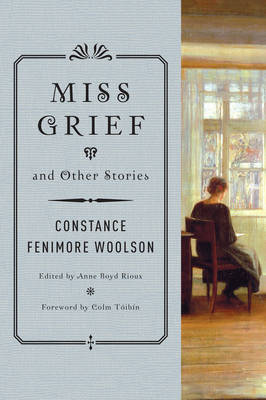
‘Miss Grief and Other Stories’ by Constance Fenimore Woolson    (1840 – 1894) – 287 pages   Edited by Anne Boyd Rioux
 

9780393352009

I am always up for the reclamation of authors, especially woman authors who have been unnecessarily trivialized or ignored.  Before Tim Page, who knew that Dawn Powell was probably the best United States fiction writer of last century, surpassing even Hemingway and Fitzgerald?  And in all of England there is no writer I would rather read than Elizabeth Taylor.  Randall Jarrell did an excellent job reclaiming the novel ‘The Man Who Loved Children’ by Christina Stead from the dustbin of history.  I did my own small part in recovering Henry Handel Richardson and her ‘The Fortunes of Richard Mahony’ trilogy‘ early on in my blogging career.

Now Anne Boyd Rioux is reclaiming the nineteenth century author Constance Fenimore Woolson by writing Woolson’s biography and editing her ‘Miss Grief and Other Stories’.

Constance Fenimore Woolson was considered one of the best writers of her time in the late 19th century.  Woolson was a quintessential American writer.  She wrote stories of Ohio and the Great Lakes and later when she moved to Florida, stories of the American South.  The characteristic scene for Woolson is on a boat or in a lighthouse along a sea shore or in a river or stream or even in a marsh.  She excels in her descriptions of nature, makes you feel that you are there in the water with her.  I don’t know how she got so much experience on boats, but it seems quite unusual for a woman of that time.

“You might call it a marsh, but there was no mud, no dark slimy water, no stagnant scum; there were no rank yellow lilies, no gormandizing frogs, no swinish mud-turtles.” 

“The lazy gulls who had no work to do, and would not have done it if they had, rode at ease on the little wavelets close in shore.”    

The style is of its time in the 1870s and 1880s, longer sentences and longer paragraphs, perhaps more description altogether.  It takes a bit of getting used to.  However as I read these stories, I got that rush I get only when I am reading fine fiction.

In her story ‘Solomon’, Woolson captures the dignity of a poor coal miner in eastern Ohio who spends all his free time painting primitive pictures of his wife until he finally dies, poisoned by the gas from the mine.   I found this to be a deeply moving story.

The words used to describe a black person in Woolson’s story  ‘Rodman The Keeper’ could easily be interpreted as racist which they are.  But at the same time one must remember that the N-word was used by Mark Twain in Huckleberry Finn 219 times, and that Henry James considered himself so aristocratic that he never even depicted black people in his novels.  Otherwise, ‘Rodman The Keeper’ is a compassionate story that takes place at a Union cemetery in North Carolina a few years after the Civil War.

In 1879, Constance Fenimore Woolson made what I consider to be the most disastrous mistake of her writing career and perhaps even of her life.  Why would a woman who was so in tune to the natural world of the United States move to Italy?  Her story ‘Miss Grief” hints that Woolson was already in thrall of Henry James even before she met him.  At this point Woolson was much the more famous writer with James still largely unknown.  Later Woolson and Henry James became close friends in Europe, with the two of them keeping separate apartments in a shared rented villa for a time.   They kept in touch until the end.

Early in Woolson’s career,  George Eliot and her empathetic realism were her role models for fiction writing.  However Woolson changed her writing style toward Henry James’ contrived brand of analytical realism.  Her later story ‘A Florentine Experiment’ reads like warmed-over Henry James about insanely rich people traipsing around Italian museums and their own Italian mansions.  This story was a severe disappointment to me after reading Woolson’s early original and forceful American stories.

The story of Constance Fenimore Woolson ends tragically.  Woolson was always prone to bouts of depression and on the night of January 24, 1894, she fell or jumped from the third floor window of the bedroom of her Venetian villa to her death.  Henry James afterwards told of how he disposed of Woolson’s old clothing in a Venetian lagoon three months later, but the dresses kept rising to the surface.


Grade:    B 
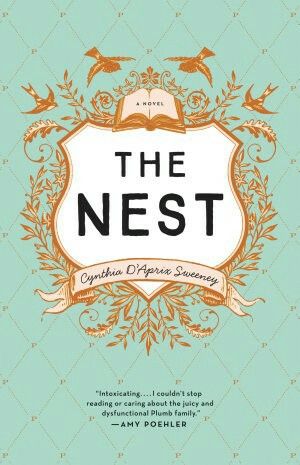
 

‘The Nest’ Phenomenon


‘The Nest’ by Cynthia D’Aprix Sweeney   (2016) – 352 pages


6a35760630b50c2f215fa4a747828dbc

Cynthia D’Aprix Sweeney has captured the secret of the ages in her new novel ‘The Nest’.  And what is that secret?  It is that a family is nothing more or less than a collection of characters.  Your family or my family may have a different set of characters, but characters we all are just the same.

In ‘The Nest’, we have the Plumb family siblings Melody, Jack, Bea, and Leo.  Melody is the wifey-wife and mommy-mom; she has husband Walter and two daughters, Nora and Louise, ready for college and all its expense.  Jack is the gay guy with his husband Walker and his antique store.  Bea is still single and still struggling to be a writer.  And Leo is the outrageous one who though pushing fifty still picks up stray young women at weddings and makes out with them in a car parked near the church.  Is this a dysfunctional family or just another typical family?

Like any family, they could all use more money.  That is where the nest or nest egg comes in.  Their father had put aside some money before he died, and now it has grown over the years to be divided equally among the children when the youngest, Melody, turns forty.

The point of view shifts from family member to family member to one or another of their acquaintances throughout the novel, so we get a varied picture of this family living in and around New York.  The time is today, nearly fifteen years after 9/11.  There is the obligatory 9/11 scene in ‘The Nest’, but life moves on.  There is room for plenty of humor in ‘The Nest’.

‘The Nest’ is one of those rarest of novels, both a remarkable literary debut and a best-seller.  The author maintains just the correct distance from her characters so that we can see them clearly but also with enough irony and humor so we can fully enjoy them.   I must say I too got caught up in the lively energy of the writing in ‘The Nest’, devouring this novel much faster than I normally read novels.  The scenes are either hilarious or poignant or both.

There is a prologue scene in ‘The Nest’, and that scene reminded me very much of a famous one in another novel that was also both a literary and best-selling sensation, ‘The World According to Garp’ by John Irving.  The scenes in both novels involve a man and a woman in a parked car and a tragic car accident.   Both ‘Garp’ and ‘The Nest’ are high-activity and sharply written novels that you just want to keep reading to find out what happens next.

Cynthia D’Aprix Sweeney received at least a million dollar advance for this novel, and Amazon Films has already purchased the movie rights for it.  The author is 55 years old, and ‘The Nest’ is her first novel.  That is kind of cool too.


Grade:    A-    

‘Slow Days, Fast Company’ by Eve Babitz – The World, The Flesh, and L.A.

‘Slow Days, Fast Company’ by Eve Babitz   (1977) – 178 pages

51X115AAxXL._SY344_BO1,204,203,200_

New York Review Books (NYRB Classics) is issuing a new version of the 1977 fiction ‘Slow Days, Fast Company’ by Eve Babitz in August of this year, so I decided to be uncharacteristically ahead of the curve this time in reading and writing about it.  This book is described as a series of fictional memoirs, which I suppose means that the events described within actually happened, but that the names have been changed to protect the guilty.  And guilty these characters would probably be considering some of their behavior.  There are threesomes, there are women going back and forth between guys and gals, and men going back and forth between gals and guys.  This is Hollywood in the 1970s, and Eve Babitz was on the front lines of it all.   But this book is not mainly about sex; it is about enjoying wild and wicked times in Los Angeles.

Eve Basbitz started out in the art world.  When she was nineteen in 1963, an iconic picture of her was taken with Eve playing chess in the nude with renowned Dada artist Marcel Duchamp.  You can easily find this picture now via any image search engine.  In the Sixties she designed album covers for such music acts as the Byrds and Buffalo Springfield.   Babitz took the picture of Linda Ronstadt that appears on the cover of the ‘’Heart Like A Wheel’ album.  As well as these music acts out in Laurel Canyon, Babitz met a lot of the set designers working on Hollywood movies.

As NYRB has discovered, Eve Babitz had a talent for writing.  She was “a frivolous young woman prone to adventure.”  Her earlier memoir ‘Eve’s Hollywood’ which I also have read was also republished by NYRB.

A lot of ‘Fast Days, Slow Company’ has to do with the quandary of male/female relationships.

“I’ve often noticed that there is a moment when a man develops enough confidence and ease in a relationship to bore you to death.  Sometimes one hardly even notices it’s happened, that moment, until some careless remark arouses one’s suspicions.  I have found that what usually brings this lethargy on is if the woman displays some special kindness.  Like making dinner.”

This is lively effervescent writing.  Since it is a series of scattered fictional memoirs, the book lacks the coherence of a single novel.  However I believe it gives a good overall picture of what life must have been like in the middle 1970s in Los Angeles for the fast crowd, for the art and movie and music types.

Grade:    B 

‘How Many Miles to Babylon?’ by Jennifer Johnston, Irish Virtuoso of the Short Intense Novel


‘How Many Miles to Babylon?’  by Jennifer Johnston   (1974) – 156 pages


 .

.

‘How Many Miles to Babylon?’ tells about an Irish family facing World War I, but it is no exercise in misty-eyed nostalgia; this novel confronts hard truths head on.    It sure would be nice if we all came from loving reasonably happy families but that simply is not the case, not even among the upper class people.  Bitter unhappiness in families and hugely murderous wars are two of the manifestations of imperfection in humans, and ‘Babylon’ deals with them both.

This novel is about two Irish boys, Alec and Jerry, who go off to fight in World War I.  Alec is upper class; Jerry is lower class.  They befriend each other while out in the fields while young, much to Alec’s mother’s distress.  Alec’s mother is one of the most spiteful characters I have ever come across in fiction.  The marriage between Alec’s mother and Alec’s father is strained somewhere between indifference and outright hatred.  Here is a couple who probably should have been divorced, but divorce was unacceptable at that time.

“Mother was always insistent in an immaculate appearance at the breakfast table.  They would be there, immaculate themselves, their heads elegantly bent towards the breakfast morning papers and the cream-drenched porridge, starched damask napkins folded neatly across their knees. They would grow old immaculately, their implacable hatred of each other hidden from the world.  Is hatred as necessary as love, I wondered, to keep the wheels driving forward?”

These lines highlight two of the special qualities in Jennifer Johnston’s writing.  There are the physical details that dramatize the scene but also advance the story, “the cream-drenched porridge, the starched damask napkins folded neatly across the knees”.  But then also there is the heavy emotional weight of the scene, the couple’s “implacable hatred of each other hidden from the world”.   There would have been so many other ways for Johnston to lighten this scene, but she instead faces up to the antagonism between this husband and wife directly.

We also get into the political situation at the time.  Irish men are fighting in the British army, but many of them during World War I are looking forward to the day when Ireland will be independent of England, and they resent having to follow the commands of their British officers.

Whenever I read a novel by Jennifer Johnston (and I have read at least six), I think this could really work well as a play or a movie.  She always has strong characters and dramatic scenes in her stories that just seem to be calling out to be portrayed by actors.  I know her father, Denis Johnston, was a playwright so it is in her genes.

All of the novels of Jennifer Johnston that I have read have been tough-minded and deal with hard truths, and ‘How Many Miles to Babylon?’ is no exception.  However her writing is also lyrical and passionate and you get a grand picture of what life was like in the Irish countryside.  She is a master of the short intense novel.

I do believe that Jennifer Johnston is one of the absolute strongest writers of recent times and that you could do yourself a favor and read her work.   But don’t only take my word for it.    Check out the Jennifer Johnston collection at Reading Matters.  Jennifer Johnston is also the favorite living author of Kim at Reading Matters.


Grade:   A 


Modern Fiction Writers Who Have Been Harassed or Banned for Political Reasons


Here are ten courageous authors who have written truth to power in their novels and stories and have gotten into trouble for doing it.


PersepolisMarjane Satrapi  – Marjane Satrapi’s marvelous graphic novels Persepolis and Persepolis 2 are not only banned in her birthplace country of Iran.  These books are also banned from Chicago Public Schools classrooms below grade 8.  In fact Persepolis is now number two on the top ten list of frequently challenged books in the United States.  The reason for banning is supposedly the one or two depictions of torture, but some have wondered if the books’ positive images of Muslims may be the actual reason.


 -

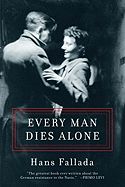
Hans Fallada – By the time the Nazis took over, Hans Fallada was already a successful author with his books translated and published in Great Britain and the United States.  However in 1935 Fallada was declared by the Nazis an “undesirable author”. Fallada continued to write, and his fortunes changed somewhat when the propaganda minister Joseph Goebbels called one of his novels, ‘Wolf Among Wolves’, “a super book”.  Goebbels repeatedly tried unsuccessfully to get Fallada to write an anti-Semitic novel.  Ultimately Fallada was incarcerated in a Nazi insane asylum for other reasons.  After the war Fallada wrote his anti-Fascist masterpiece ‘Alone in Berlin’ (‘Every Man Dies Alone’) while in a mental institution.  Fallada died shortly thereafter.


263555._UY200_ Abdul Rahman Munif –  Saudi novelist Abdul Rahman Munif had his powerful works banned in Saudi Arabia for their scathing criticism of the oil industry in the Middle East and of the elite Saudis who played along with the oil companies.  Munif was also stripped of his Saudi citizenship.  His ‘Cities of Salt’ trilogy describes how the desert oasis village of Wadi-Al-Uyoun was transformed and destroyed by the arrival of western oilmen.   I read the entire ‘Cities of Salt’ trilogy which I consider probably the strongest work of protest in modern literature.  The trilogy is difficult to find in the United States for perhaps apparent reasons.


the four booksYan Lianke – Yan Lianke is China’s most banned and censored novelist.  He is also one of China’s most popular writers. I have recently read his novel ‘The Four Books’ which is his powerful work about China’s Great Leap Forward.  I will be writing a separate whole article about this novel soon.  It was an act of courage for Lianke to write about this massive government failure and major famine that occurred between the years of 1958 and 1962.  It is a sign that China is finally opening up to some extent that this work has been published and translated.


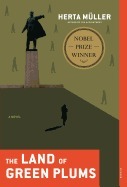
21318-MLM7474457131_122014-OHerta Muller – Early in her career, Herta Muller was fired from her job as a translator because she refused to be an informant for the secret police in Communist  Romania.  Later because of her criticism of the dictatorship of Nicolae Ceausescu, Muller was banned from publishing in her own country.  She won the Nobel Literary prize in 2009.  In 2012 she severely criticized the Nobel selection of Mo Yan as a catastrophe calling him a Chinese writer who “celebrates censorship”.    So far I have only read one novel by Herta Muller, ‘The Land of Green Plums’, but I hope to read more soon.


4cd40492131723f092e7ff060955c4cdAlberto Moravia – Alberto Moravia’s first novel “The Time of Indifference” got him in trouble with the Fascist authorities under Mussolini.  After that, he ultimately had to leave the country and write under a pseudonym.  However, unlike several others on this list, Moravia’s story had a happy ending.  With the liberation of Italy, Moravia returned and had a long and successful career as a fiction writer and screen writer.  Among his many fine works are ‘The Woman of Rome’, ‘Boredom’, ‘Contempt’, and ‘Agostino’.  He was also a great story writer.


md15648249826Abram Tertz (Andrei Sinyavsky) – Andei Sinyavsky was arrested and imprisoned by the Soviet authorities in 1966 on charges of “anti-Soviet activity” for the opinions of his fictional characters.  He was released in 1971 and allowed to emigrate to France.  One interesting sidelight, Sinyavsky was the catalyst for forming the excellent Russian-English translation team of Larissa Volokhonsky and Richard Pevear.  Perhaps Sinyavsky’s greatest work is his satirical memoir ‘Goodnight!’, but I have also read and enjoyed several other of his fine novels.


9780140061406Nadine Gordimer – Gordimer was active in the anti-apartheid movement joining the African National Congress when that organization was banned in South Africa.  She edited Nelson Mandela’s famous speech, “I am Prepared to Die”, which he gave at his trial in 1962. Gordimer’s excellent novels, among them ‘July’s People’ and ‘Burger’s Daughter’, deal with how people cope with the terrible choices forced on them by racial hatred.  Her books were banned in South Africa up until the end of apartheid in 1994.


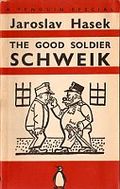
6a00e5509ea6a1883401a3fd343154970b-120wiJaroslav Hasek  – “The Good Soldier Schweik”  is at the top on the list of the funniest anti-war novels ever. It is about an unfunny subject, World War I.   Joseph Heller has said that he would never have written his anti-war novel “Catch-22” if it had not been for “The Good Soldier Schweik”.  This subversive novel was banned from the Czech army in 1925, the Polish translation was confiscated in 1928, the Bulgarian translation was suppressed in 1935, and the German translation was burned in Nazi bonfires in 1933.  It is especially common that army headquarters will ban this novel, citing necessary discipline within their units. Somehow it has survived.


_39238813_pamuk2Orhan Pamuk – The novels of Turkish novelist and Nobel Literary winner Orhan Pamuk have often been banned and burned in Turkey.  In 2005, Pamuk was arrested for an “insult to Turkishness” for the following remark: “Thirty thousand Kurds have been killed here, and a million Armenians. And almost nobody dares to mention that. So I do.”  The charges were later dropped.  He has become the most prominent advocate of a modern, liberal, cosmopolitan Turkey. Of Pamuk’s excellent novels, so far I have read ‘The Black Book’, ‘My Name is Red’, and ‘Snow’.


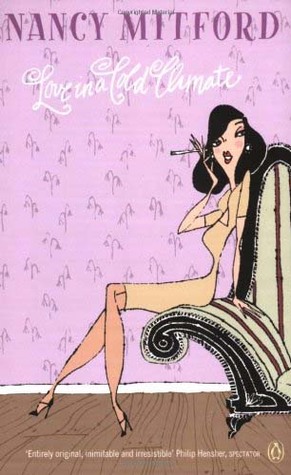
‘Love in a Cold Climate’ by Nancy Mitford -The Hilarious and Necessary Corrective to Downton Abbey


‘Love in a Cold Climate’  by Nancy Mitford   (1949) – 256 pages


372811

I watched and delighted in Downton Abbey as much as anyone else, tuning in each week to watch the adventures of the supremely aristocratic Crawley family and their household staff.  I figured that Downton Abbey was precisely calibrated to please those of today’s upper class who might still contribute money to public television, but I enjoyed it anyway.

Nancy Mitford was born into one of those aristocratic families in England but her view is entirely different from that of the writer of Downton Abbey, Julian Fellowes.    Hers is a much less humane, wickedly humorous, look at the aristocracy from the inside.  Somehow I trust Nancy Mitford in her picture of the upper class more than Julian Fellowes.  The aristocrats at Downton Abbey are portrayed as being nowhere near as obnoxious as many of them at that time actually were.

Whereas in Downtown Abbey, the family cares oh so much about all the trials and tribulations that beset members of their household staff,  in ‘Love in a Cold Climate’ Lady Montdore says “I love being so dry in here and seeing all those poor people so wet.”

Here is Mitford’s wicked description of Lady Montdore:

“Her curtsies, owing to the solid quality of her frame, did not recall the graceful movement of wheat before the wind.  She scrambled down like a camel, rising again backside foremost like a cow, a strange performance, painful it might be supposed to the performer, the expression on whose face, however, belied that thought.  Her knees cracked like revolver shots but her smile was heavenly.”

In Downton, the Maggie Smith character, the Countess of Grantham, says abrupt rascally things, but she is still lovable.  In ‘Love in a Cold Climate’ the aristocrats’ behavior is often unjustifiably hateful.

In ‘Love in a Cold Climate’, we have Boy Dougdale, the Lecherous Lecturer.  He is a rich uncle in his forties who flirts with the fourteen year old girls.

“But the fascinating thing was after the lecture he gave us a foretaste of sex, think what a thrill.  He took Linda up on to the roof and did all sorts of blissful things to her; at least, she could easily see how they would be blissful with anybody except the Lecturer.  And I got some great sexy pinches as he passed the nursery landing.  Do admit, Fanny.”

The whole family is appalled when the now eighteen year old Polly decides to marry her recently widowed uncle Boy Dougdale.

As Jassy truly observed, however, “Isn’t Sadie a scream, she simply doesn’t realize that what put Polly on the Lecturer’s side in the first place must have been all those dreadful things he did to her, like he once tried to with Linda and me, and that now what she really wants most in the world is to roll and roll and roll about with him in a double bed.”

The Mitford Manor House

The Mitford Manor House

You can be sharp and mean and wicked in fiction.  They don’t write them like ‘Love in a Cold Climate’ anymore.  I wish they did.

The idea that Downton Abbey misses is that all that money and free time gave these aristocratic families many opportunities to misbehave, and misbehave they did.  Many were unregenerate Nazis and needlessly cruel to their servants and less fortunate others.  And their misbehavior could take countless other forms.  I’m not saying that aristocrats were worse than the rest of us; they were just as bad, and considering the money and influence these people had the results were more pernicious.

I think Nancy Mitford would have agreed with that.


Grade:   A


‘The Tsar of Love and Techno’ by Anthony Marra –“Heroin on the Kitchen Table, Snow on the Window Sill”


‘The Tsar of Love and Techno’ by Anthony Marra   (2015) – 332 pages


anthony-marra-2015-the-tsar-of-love-and-techno-stories-bog-med-haard-ryg

Here is a story of modern Russia with its origins in the old Soviet state.  Life goes on, and Anthony Marra captures a lot of it.

‘The Tsar of Love and Techno’ is arranged like a homemade mixtape with a Side A, an Intermission, and a Side B.  At first the material on the mixtape seems unrelated, but a pattern develops.   It contains riffs on Kirovsk in Siberia, Chechnya, and St. Petersburg, riffs on the old Communist oligarchy and the new organized crime oligarchy who took over after Communism fell.  The crime team now rules, and not much has changed since the old Communist years.

When Communism fell, the people of Chechnya fought a war and won their independence just like many of the countries in Eastern Europe had achieved.  However the organized crime bosses ruling Russia lusted after all that oil money to be made in Chechnya and fought another vicious Chechen War to get it back.

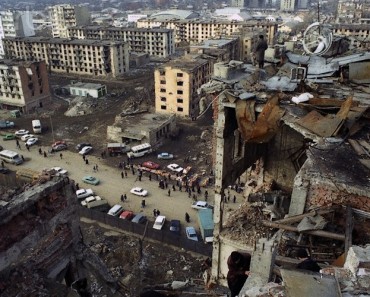
An example of Anthony Marra’s sardonic black humor is the story titled “The Grozny Tourist Bureau”. It takes place in 2003 after the first and second Chechen Wars have left Grozny the most devastated city on earth according to the United Nations.  In the 1990s, Chechnya was one of the most heavily mined regions in the world with an estimated 500,000 planted land mines. The Chechnya Museum of Regional Art had been destroyed by Russian rockets, and now the former deputy director of the museum has been named the chief of the Grozny Tourist Bureau.  He must now write a brochure explaining the glories of Chechnya for tourists.

“Upon seeing the space where an apartment block once stood, I wrote “wide and unobstructed skies”.  I watched jubilantly as a pack of feral dogs chased a man, and wrote “unexpected encounters with natural life”.

Life goes on even in miserable circumstances whether it was in the old Soviet forced labor camps in Kirovsk, Siberia or in the new war-torn Chechnya.

“Kirovsk isn’t that bad, is it?”

It’s a poisoned post-apocalyptic hellscape.  “It’s a wonderful place to raise a family.”    

‘The Tsar of Love and Techno’ is one work of fiction I do not recommend you listen to via audiobook as I originally attempted to do. Many of the sentences in ‘The Tsar of Love and Techno’ are too rich and dense with meaning and attitude to be fully appreciated by a casual listen.  Here it is best you read the words so you can easily stop, think about them, and fully appreciate them before moving on.  Here are typical sentences:

“Whatever life-preserving instincts evolution endowed him with have been war-blunted to an amused disregard for all mortality, particularly his own.”    

“But to some people ignorance is a sleeping mask they mistake for corrective lenses.”    

Besides, this fiction is so packed with marginally related characters, locations, and plot lines, it is difficult to keep the stories all together while listening.

Grozny, Chechnya After Two Wars

Grozny, Chechnya After Two Wars

The stories take place in many locales ranging from St. Petersburg to Kirovsk in Siberia to rural Chechnya to the Chechen capital city of Grozny to outer space.

If I were summarizing the plots of these interconnected stories, it would be as follows.  These stories give specific examples of the oligarchy-induced tragedies for the Russian people from the 1930s up until today.  From Stalin’s forced labor camps in Siberia to the Chechen Wars and beyond, the misfortunes for the people of Russia have continued.

This is a rich devastatingly well-written novel.  I only wish it were more tightly organized.  I just feel that a novel this complex should have more than a mixtape structure.  Anthony Marra is certainly making some strong statements about modern Russia, but the impact is somewhat blunted by the hodge-podge arrangement of the material.


Grade:   B+


Anita Brookner (1928 – 2016)


assets_LARGE_t_420_54648121_type13145I am one of those unusual dudes who reads fiction more for the sentences than for the story.  Well everybody has got a story, but few can write good sentences.  Anita Brookner had a way with a sentence that I love.

Like nearly everyone else, I discovered Anita Brookner with her novel ‘Hotel du Lac’ back in the early 1980s.  After that I went back and read her earlier novels ‘The Debut’, ‘Providence’, and ‘Look At Me’. By then, I was a hardened Anita Brookner fan, and tried to read every novel she wrote as it was published, but I could not keep up with her.

What kind of novels did Anita Brookner write?  These novels might be considered a sort of romance novel but not your typical happily-ever-after kind.  They usually center on an entirely sufficient successful young woman.  As she was brought up, this young woman had been told repeatedly to find a man to be her husband, but she did not feel much urge to do so.  Her heroines are usually reasonably content in their own company.   Then the woman meets a man who appeals to her.  The relationship appears to be idyllic until at some point the woman decides to back off. Afterward she may be somewhat rueful about ending the relationship, but she realizes she made the necessary decision.

look at meAnita Brookner never married herself, but she seemed to be entirely fascinated with relationships. She has described herself as “a poor unfortunate creature who writes about poor unfortunate creatures”.  She liked to make jokes about being “the world’s loneliest, most miserable woman”, but she was actually a highly successful career woman.  She was an authority on eighteenth century painting, the first female Slade Professor at Cambridge University.  She did not start writing novels until she was fifty-two, but then wrote almost a novel a year for twenty-five years.

I’ve read many of the tributes that have recently been written about Anita Brookner, and some use the words gloomy, melancholy, and monotonous to describe her work.  For me, these words do not fit at all.  If anything, her novels make me feel exuberant.  It is a rare treat to find someone who can express the thoughts of her characters in such a clear, objective, and eloquent fashion as Anita Brookner.

Here are some fine lines by Anita Brookner I like:

“No blame should attach to telling the truth. But it does, it does.”

“I felt at one with all those people on the sidelines of life, forced to contemplate the successful maneuvers in which others were engaged, obliged to listen politely and to refrain from comment.”   

“I have been too harsh on women, she thought, because I understand them better than I understand men.”

“For once a thing is known, it can never be unknown. It can only be forgotten.”

“Good women always think it is their fault when someone else is being offensive. Bad women never take the blame for anything.”

“I’ve never got on very well with Jane Austen.”

“It will be a pity if women in the more conventional mold are to be phased out, for there will never be anyone to go home to.”

“Like many rich men, he thought in anecdotes; like many simple women, she thought in terms of biography.” 

“Romanticism is not just a mode; it literally eats into every life. Women will never get rid of just waiting for the right man. “  

“You have no idea how promising the world begins to look once you have decided to have it all for yourself. And how much healthier your decisions are once they become entirely selfish.”   

“A man of such obvious and exemplary charm must be a liar.”  

$_35 Perhaps the most appropriate words I found about Anita Brookner are these by novelist Brian Morton in the New York Times in 2003:

“All she does is tell her stories.  With her unfashionable restraint, with the glow of unshowy intelligence on every page she writes, with the brevity and directness of her novels, and with her self-effacing willingness to put her imagination entirely at the service of the story she’s telling, Brookner is an artist of an exceptional purity.”

Brookner is for those people who are in this literature thing for real.  I expect that Anita Brookner will be one of the few modern writers whose works will continue to be read for a long time.


‘The Boy Who Stole Attila’s Horse’ by Iván Repila

‘The Boy Who Stole Attila’s Horse’ by Iván Repila      (2013)       110 pages
Translated from the Spanish by Sophie Hughes

repila

Two brothers named Big and Small are stuck down a deep well and they can’t get out. With names like Big and Small, you just know you are in allegory territory. Big is very much the big brother. He bullies his little brother Small mercilessly, but is also protective of the little fellow. Of course Small deeply resents his bossy big brother but must depend on him to stay alive. They have some food which they were going to bring home for their mother, but Big insists that they don’t eat it. Instead they eat “squashed ants, green snails, little yellow maggots, mushy roots, and larvae”.

Starvation is not the brothers’ only threat. They drink dirty water. Wolves appear above them on the edge of the well at night, sniffing for blood.

So ‘The Boy Who Stole Attila’s Horse’ is a nightmare of trying to survive in desperate circumstances. Small almost loses consciousness with fever and is subject to tortured visions. Big does what he can to keep Small alive, although the boy no longer wants to live.

This novella can be read as just an intense horrible drama of endurance, but there are hints that something else might be going on here. There is the opening quote from Margaret Thatcher of all people about how the poor are not poor because others are rich, but that the poor would be even poorer if the rich were less rich. I am no fan of this nasty misguided Thatcher remark and am unsure how it applies to this story of two brothers’ survival, but it is to the book’s credit that its political allusions are not obvious.

‘The Boy Who Stole Attila’s Horse’ is a fine example of what all can be accomplished within a short novella. I have no idea where its title came from, since there is no mention of Attila’s horse at all in the story.


Grade: B+


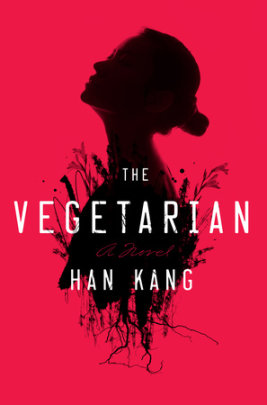
‘The Vegetarian’ by Han Kang – “I Do Not Eat Meat.”

‘The Vegetarian’ by Han Kang (2007) – 188 pages Translated from the Korean by Deborah Smith

the-vegetarian-han-kang

If you thought a novel by a South Korean woman writer might be too polite or decorous for you, forget about it. ‘The Vegetarian’ is lurid and violent, and it has sex scenes that would make that old purveyor of masturbatory fantasy Philip Roth blush.

“I do not eat meat,” Yeong-Hye announces one day. Her husband is indifferent to what she does as long as she keeps up a respectable front with his work associates and bosses. However Yeong-Hye makes a big scene at a company dinner with her refusal to eat meat, and this embarrasses her husband no end.

Yeong-Hye’s father and mother come to visit. She refuses to eat meat. This so infuriates her father that he beats her severely and force feeds her a piece of meat. She spits it out and then brandishes a fruit knife and cuts her wrist. She is taken to the hospital in critical condition.

At this point, we realize that Yeong-Hye is mentally ill. I doubt that someone deciding to become a vegetarian would ever be considered a sign of mental illness in the United States, but Yeong-Hye has other symptoms. She not only refuses meat; she starves herself. She takes her clothes off and goes naked regardless of whoever happens to be around. In the second section of “The Vegetarian”, her artist brother-in-law is consumed with sexual desire for her. He is obsessed with sexual fantasies featuring Yeong-Hye. Because she is in her own little world, she is a helpless victim.

In the third section, Yeong-Hye’s sister confronts her sister’s sickness:

“Life is such a strange thing, she thinks, once she has stopped laughing. Even after certain things have happened to them, no matter how awful the experience, people still go on eating and drinking, going to the toilet, and washing themselves – living in other words. And sometimes they even laugh out loud.”

One thing I noticed while reading the author’s notes was that Han Kang was a participant in the Iowa Writers’ Workshop. Apparently afterwards she returned to South Korea, because the novel was written in Korean. So what we have here is a hybrid, a South Korean novel infused with a western sensibility.

All of the scenes in the novel are portrayed with a vivid dramatic intensity I wasn’t expecting. That is why I will remember ‘The Vegetarian’ long after other novels have faded from my memory.


Grade: A

‘Let the Great World Spin’ by Colum McCann – Nobody Falls Halfway


‘Let the Great World Spin’ by Colum McCann (2009) – 349 pages


mccann
Of all the novels published during the past few years, ‘Let the Great World Spin’ by Colum McCann has probably gone on to achieve the highest standing among book people. Although ignored by the Booker Prize, it later went on to win the National Book Award in the United States in 2009 and the International IMPAC Dublin Literary Award in 2011.

After I was bowled over by McCann’s latest book of stories ‘Thirteen Ways of Looking’, I decided that it was way past time that I read ‘Let the Great World Spin’.

Most of the novel takes place on the days surrounding August 7, 1974 which is the day Frenchman Philippe Petit did his surreptitious but widely viewed tight rope walk between the two World Trade Center towers in New York City. Although Petit was arrested, the judge in the case dropped all charges, and in exchange Petit was required to give a free aerial show for children in Central Park which he was happy to do. Both Petit and the judge in this case are characters in ‘Let the Great World Spin’.

But most of the story takes place on the ground. In McCann’s words, these are”the ordinary people on the street, the ones who walked a tightrope just one inch off the ground.”

The theme of the novel is that all of us disparate humans down here on Earth are in this life together, and we all better do our best to help each other along. If we do help each other, wonderful things might happen. We have a selfless monk from Ireland, a black mother and daughter who work as prostitutes, and a group of upper-class mothers grieving over their sons or daughters lost in Vietnam, as well as the tightrope walker and the judge.

At first I thought these characters were somewhat shameless stereotypes. We could just as well have had a selfless black nun and two Irish male prostitutes. However by the end of the novel I came to understand why McCann wrote the novel as he did.

“The world spins. We stumble on. It is enough. “

ows_140260746155780Sometimes ‘Let the Great World Spin’ has been referred to as a 9/11 novel, perhaps because the tightrope walker is walking between the two WTC buildings. However there are no direct 9/11 scenes, and I don’t believe 9/11 is ever mentioned.

Although most of the novel takes place back in 1974, the last part occurs in 2006. This final section moved me to the point that I had tears in my eyes. To me, that is the sign that I’m reading an exceptionally fine novel.


Grade: A

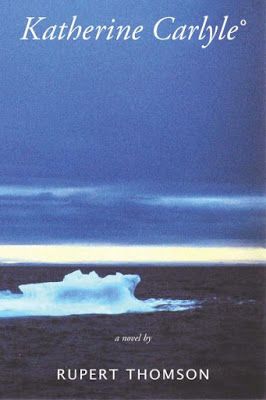
‘Katherine Carlyle’ by Rupert Thomson – From Frozen Embryo to Frozen Arctic


‘Katherine Carlyle’ by Rupert Thomson    (2014) – 293 pages


2349506629ef2923145437d6639734a4

‘Katherine Carlyle’ is a cold crystalline mysterious novel. The first sentence sets it in motion. “I was made in a small square dish.” Yes, Katherine was conceived in a dish in London, and then her embryo was frozen for eight years. We are never told how she found out about her beginnings. I suppose none of the real stories of our actual physical conceptions are all that uplifting.

Now Katherine is nineteen years old and living in Rome. Her mother has died of cancer, and her father is busy traveling to world trouble spots as a journalist. Sitting in a restaurant in Rome, Katherine overhears a conversation among strangers about a certain Klaus Frings in Berlin. She takes this talk as a sign to act and she immediately goes off to Berlin to find and meet Klaus Frings.

“Every occasion – every moment trembles with a sense of opportunity. I have no idea where the next communication will come from, but I know one will come – perhaps even from the unwholesome, insidious man who is still standing beside me.”

We accompany Katherine to Berlin and Russia where she meets a series of men and women she has never encountered before. Each person she meets presents a new possibility but also perhaps a new menace. Except for Katherine and her father and her deceased mother, all of the characters in the novel are somewhat shadowy figures having no past or future in Katherine’s life. ‘Katherine Carlyle’ is a story of enchantment rather than of emotional depth or intensity. When there is a danger of becoming too closely involved with someone, Katherine leaves.

“These days, though, when I leave a room, I often have the sense that I might not return. Steps can’t always be retraced; the path through the forest closes behind me as though it was never there.”

What makes ‘Katherine Carlyle’ special is the cleanness, the icy elegance, of the prose. I didn’t buy for one minute the unstated but implied idea that Katherine’s start as a frozen embryo shaped her life and her later Arctic travels, but still I was entranced by the physical scenes and situations.

“I’m in my mother’s Alfa Romeo, racing up the slip road that leads off the autostrada. Bright sunlight flashes through the inside of the car like something splintering. A petrol station, the grating of cicadas. My mother’s eyes behind dark glasses. Blue-gray irises, black lashes. I know what she wants me to say, so I say it. Are we there yet?

She smiles. Nearly, my darling. Nearly.

Besides, few people and fewer novels get as close to the Arctic Circle as ‘Katherine Carlyle’.


Grade: B+

‘The State We’re In’ by Ann Beattie – Maine Stories


‘The State We’re In’ by Ann Beattie (2015) – 206 pages


26386523
The bright, edgy, and stylish stories of Ann Beattie are the best antidotes to cure a severe overdose of historical fiction.

I remember reading Beattie’s first novel, ‘Chilly Scenes of Winter’, nearly forty years ago. At that point the new trend of literary minimalism best exemplified by Raymond Carver was just becoming fashionable. I had read several collections of minimalist stories by various authors but had not yet read an entire minimalist novel. ‘Chilly Scenes of Winter’ was the first, and I was totally charmed by it. Here was a writer who could deal with life as it is lived in the moment. Ann Beattie is best known for her short stories, but ‘Chilly’ is one novel not to be missed.

In her most recent story collection ‘The State We’re In’, Ann Beattie is still describing the people around her with a freshness that is devastating and entertaining. Each of these stories is a slice of life which takes place in the state of Maine. Several of the stories are told from the point of view of teenager Jocelyn who is staying with her aunt and uncle in Maine for the summer. Perhaps this is the ideal view of Maine through the eyes of a young person who is only staying for the summer.

The dialogue in these stories is mighty fine.

“But, so, I don’t get it about you and Aunt Bettina. She doesn’t seem anything like you.”

“At this age, people are nothing but their differences.”

Beattie doesn’t spell out everything and allows the readers to make their own connections. That is one thing I like about her writing.

“Etta Rae always made me laugh. It makes me sound superficial, but I don’t like to hear other people’s problems, though I’ll tolerate most anything if they take me aback and make me laugh. Etta Mae was the perfect storm in that way. “

One long-standing hallmark of Ann Beattie’s fiction is the mention of brand names and pop culture references: Advil Liqui-Gels, Louis CK, ‘The Goldfinch’, People magazine, Beyonce, Tanqueray Ten.

In the story “The Little Hutchinsons”, a couple refuses a request from their neighbors to use their backyard for a wedding party, because the prospective groom as a boy had deliberately mowed over a turtle in their yard. This is a moral question for today.

Interspersed within the stories is some commentary on fiction today. In the first story called “What Magical Realism Would Be”, Jocelyn complains that “You had to write Magical Realism in which no doubt the seagull could recite Latin proverbs while it was being philosophical about the flowers not being fish.”

Along the way the collection contains some good writerly advice.

“I almost had a first draft, and as any writer knows, once you have that, the going gets easier. There is just editing: adjusting, adding the better word here and there, finding the perfect phrase, the enlightening metaphor, taking away the drift of words that have become too plentiful on the snowy white page.”

“Everyone likes to read about peculiar actions. Especially ones that aren’t hugely significant. Ones that don’t sum everything up, I mean. Things that just happened because they happened.”

This story collection has got it all as far as I’m concerned but may be too quirky for some.


Grade: A-

‘Bad Sex’ by Clancy Martin


‘Bad Sex’ by Clancy Martin (2015) – 183 pages


9780991360802
The characters in Clancy Martin’s novel ‘Bad Sex’ travel in a fast crowd. These are the kind of rich people who think nothing of spending $88,500 on a piece of diamond jewelry for their lover while the wife or husband is away. That transaction does almost occur in this story.

The husband Paul of our first-person woman narrator Brett owns and builds resort hotels in Mexico and Central America. Some of the story takes place in Cancun, San Salvador, Panama City, and other resort locations. Brett is supposedly happily married now and in her late twenties, but earlier Brett had led the wild single life of cocaine, plenty of alcohol, and casual sex. It was only when she got married that she gave up these things to become the stepmother to Paul’s two boys from his previous marriage.

But then Brett meets Eduard, an architect hired by Paul, and her downfall begins.

I appreciate the very short chapters in ‘Bad Sex’. The chapters fly by, giving us a no nonsense view of this woman Brett’s predicament. In this era of inflated fat novels of 300 pages or more, I am grateful for a writer who is willing to get to the point quickly.

‘Bad Sex’ is written by a man from a woman’s point of view about one of the most intimate occasions of her life. Is it convincing? Not entirely. Somehow I wasn’t totally convinced that this was a woman speaking. Brett’s concern for her stepchildren was underwhelming at best, and she seemed overly impressed with the dollar value of objects.

None of the characters in ‘Bad Sex’ come across vividly or with any spirit, least of all our female narrator Brett. She seemed to be little more than sleepwalking from one short chapter scene to the next. I would have appreciated a little more drama or emotional intensity or humor. Playfulness was notably missing from this novel.

The dialogue is quite pedestrian, not really up to the intensity of how a woman would speak to her beloved. I wondered could a woman in love be so flat and affectless. Perhaps, if she started out as a party girl like Brett did…

Sometimes it seemed as though the author was trying to get even with an ex-girlfriend by putting her in as a bad a light as possible.


Grade: B-

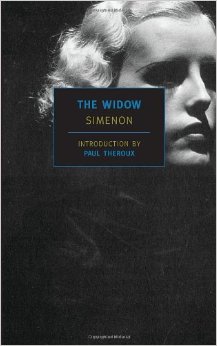
‘The Widow’ by Georges Simenon – Tacky People, Terrible Acts

‘The Widow’ by Georges Simenon (1942) – 152 pages    Translated from the French by John Petrie

.visu_01
‘The Widow’ is a tough little French psychological novella, one of which George Simenon called his “romans durs”. This is noir fiction with a hard-on, not a detective story, but rather a story about some nasty people in the French countryside.

The refrain of ‘The Widow’, a sentence that is used repeatedly in the novella, is “Every person condemned to death shall be decapitated.”

First, I will describe the opening of the story which sets the stage for the later awful events.

A young man named Jean walking in St. Armand near Paris gets on a red bus, standing room only. Since the bus is going to Montlucon, he will go there. The widow Tati Corderc, a farm lady, is also on the bus bringing home an incubator for raising young chickens on the farm. The widow is aged forty-five, “short and broad, rather plump”. She makes eye contact with Jean on the bus and sizes him up immediately. She gets off the bus, and Jean gets off at the next stop, walks back, and helps her carry the incubator.
As they return to the widow’s farm, she notices her niece Felicie walking away from the widow’s house with some ham from off the widow’s table.

“She’s a little slut. That’s what she is! Sixteen years old and got herself a baby already.”

The widow hires Jean as a farm hand. Soon she brings Jean up to her bed, but tells him she must also sleep with her old tomcat of a father-in-law in order to not get thrown off the farm.

Although now Jean is sleeping with the widow, soon he starts watching out for the slutty niece Felicie, much to the widow’s distress.

51uPOhPD+dL._SY344_BO1,204,203,200_Jean is not just any young man out of nowhere; he has his own back story. He just got out of prison after spending five years in there for murder.

So we have here a volatile situation to say the least.

From what I have read about Georges Simenon, he was pretty much a tomcat himself. He knows the territory.

If, like I do, you like to read wicked stuff about nasty people, you probably will like ‘The Widow’ a lot.

Thanks to JacquiWine for bringing this raunchy little novella to my attention.

.

Grade: B+

‘Dictator’ by Robert Harris – Fine Historical Fiction, But…


‘Dictator’ by Robert Harris (2015) – 376 pages


recommends_148_1
First, I want to explain a little about my grading of the three Cicero novels by Robert Harris. I gave a grade of A- to each of the novels. Each of the novels captured and sustained my interest throughout. They are obviously well-researched, and I learned a lot about the Roman republic in the first century BCE and about the great statesman and philosopher Cicero. It was a pleasure to read such excellent historical fiction.

However I don’t consider historical fiction to be the end-all and be-all of literature. Great literature must shatter and sparkle, and I found the Cicero trilogy a bit too prosaic. This is a quality that most conventional historical novels have. Consider the following line:

“Cicero adjusted the folds of his toga.”

A novel about ancient Rome must always contain lines like the above. Of course no one can verify whether or not Cicero did actually adjust his toga at that point. For some reason togas have never caught on for men’s fashions in recent times.

‘Dictator’ covers one of the most traumatic times in ancient Roman history. First we have the battle of Pharsalus, the epic struggle between Julius Caesar and Pompey. Then we have the assassination of Julius Caesar and the tyranny of Mark Antony, and finally the beginnings of the rise of Octavian Augustus.

“Must the existence of standing armies and the influx of inconceivable wealth inevitably destroy our democratic system?”

This is a question that is just as relevant today as it was 2100 years ago. Cicero fought with all of his intelligence and eloquence to save the republic, but he ultimately failed.

“We must be careful not to do the enemies’ work for them. To argue that to preserve our freedoms we must suspend our freedoms, that to safeguard elections we must cancel elections, that to defend ourselves from dictatorship we must appoint a dictator – what logic is this?”

The republic nearly ends when Julius Caesar becomes dictator. The assassination of Caesar gives Cicero renewed hope that the republic can be saved. Things are a bit tricky for Cicero at this point, because he secretly applauds the assassination of Julius Caesar, but he must not show publicly his support for the perpetrators. However the supporters of the republic fail to seize the moment, and an even worse tyrant Mark Antony takes over.

“I tell you something, Tiro. Between you and me – I wish the Ides of March had never happened.”

Certainly the above line conveys Cicero’s changed attitude at that time, but as I was saying at the beginning, the line is a bit too obvious.

I do want to again emphasize that the Cicero trilogy is outstanding historical fiction.


Grade: A-


Ten Novels or Short Story Collections which have the Word ‘Love’ in their Titles


Heart

The following fine works all have a form of the word ‘Love’ in their titles. But don’t expect everything to be all lovey-dovey in these fictions, because the word is often used ironically.

‘The Lives and Loves of a She-Devil’ by Fay Weldon (1983) – This is the ultimate marital vengeance tale.

‘Liars in Love’ by Richard Yates (1981) – As you discover or re-discover the fiction of Richard Yates, don’t forget his two excellent short story collections, ‘Eleven Kinds of Loneliness’ and ‘Liars in Love’.

‘Endless Love’ by Scott Spencer (1979) – Here is a story of obsessive passionate teenage love which proves quite infuriating to the girl’s father.

‘Love in the Time of Cholera’ by Gabriel Garcia-Marquez (1988) – This novel asks the question, “Is lovesickness a form of illness, comparable to cholera?” I should hope not.

‘Half in Love’ by Maile Meloy (2002) – These stories are based on the assumption that there is such a thing as one being “Half in Love”. It is probably the reasonable course compared to total obsessive love.

‘The Loved One’ by Evelyn Waugh (1948) – Here is a short humorous novel satirizing the Forest Lawn Cemetery and the funeral industry. It resulted from a trip by Evelyn Waugh to Hollywood where someone wanted to adapt one of his novels into a movie.

‘The Pursuit of Love’ by Nancy Mitford (1945) – “The Pursuit of Love” is a lively merry story about an unconventional family that will leave you smiling uncontrollably. Men who do not believe that women can do comedy should not read this novel; otherwise their illusions will be shattered.
“You are so lucky to have wicked parents.”

‘Conjugal Love’ by Alberto Moravia (1951) – This is a story of “conjugal passion, that odd mixture of violent devotion and legitimate lust”. Nobody wrote this kind of novel of sex and torment better than Alberto Moravia.

‘Enemies, A Love Story’ by Isaac Bashevis Singer (1966) – Here is a poignant but still humorous story of a Jewish survivor of World War II making a new life for himself in New York City. His life is enriched and complicated by three women.
“Herman always woke up shabby and rumpled, looking as if he had spent the night wrestling.”

Loving‘Loving’ by Henry Green (1945) – Henry Green, with his unique touching style, is a novelist who will restore your faith in fiction to delight you. ‘Loving’, an upstairs/downstairs novel, is one of his best.
“Prose is not to be read aloud but to oneself alone at night, and it is not quick as poetry but rather a gathering web of insinuations … Prose should be a long intimacy between strangers with no direct appeal to what both may have known. It should slowly appeal to feelings unexpressed, it should in the end draw tears out of the stone …”

Henry Green

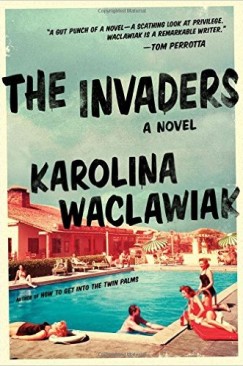
‘The Invaders’ by Karolina Waclawiak – Trouble in Paradise

‘The Invaders’ by Karolina Waclawiak (2015) – 236 pages

invaders-243x366

Country Clubs. There must be thousands of them spread throughout the United States. These are the sanctuaries of the wealthy. According to ‘The Invaders’, the members are golf-addled, shallow, and exclusionary. Some things never change.

‘The Invaders’ is a novel about the dissatisfactions of the country club life in Little Neck Cove, Connecticut off Long Island Sound. It is told in alternating chapters by former trophy wife Cheryl, now forty-four, and her Dartmouth dropout, spoiled brat stepson Teddy. Life for these wealthy residents revolves around the country club with its golf outings, fashion shows, and other social party occasions. It is a major disaster for the club when Teddy wrecks his car on the club tennis court causing it to be closed for the summer.

The ladies and gentlemen in the neighborhood are upset about outsider fishermen invading their territory, some of them possibly Mexican – hence, ‘The Invaders’ – and they build a wall to keep out undesirables. Where have we heard that before? After they build the wall, the residents are more scared than ever that someone might surmount the wall.

Cheryl is a bit of an outsider herself coming from a sales clerk background before she married her older wealthy husband Jeffrey while he was on the rebound from the death of his first wife. Now he has lost interest in her and hardly figures in the story. She is enough of an outsider so that she can look askance upon her rich neighbors. However she has been there long enough to fit in to some extent.

The stepson Teddy is a total waster. He is always going through other people’s medicine cabinets looking for opioid painkillers like Oxycontin and Vicodin to take. Apparently Teddy hasn’t found out about heroin yet which has the same effects as Oxycontin at one-fifth the price. Of course the Oxycontin is usually prescribed and thus covered by health insurance. Perhaps the character of Teddy is portrayed too broadly as a good-for-nothing so that it is impossible to empathize or identify with him.

PALUF_100413_7321

An early novel to look on the lives of the American rich with a skeptical eye was ‘The Great Gatsby’ by F. Scott Fitzgerald. The two writers John Cheever and John Updike used to cover the sleazy mores of these rich suburban communities in their fiction. Rick Moody in his excellent novel ‘The Ice Storm’ covers this same territory. It is a good thing to have a skilled writer like Karolina Waclawiak take up this subject of how the lives of the wealthy aren’t as wonderful as they are cracked up to be.

‘The Invaders’ is a decent entry in this genre. Perhaps it is a little too sincere in its complaints without the necessary irony which would have given it some perspective.

After all, I suspect the country club life still has its attractions for many.

Grade: B+

‘The Past’ by Tessa Hadley – A Family Reunion in the English Countryside

‘The Past’ by Tessa Hadley (2015) – 310 pages


The PastIn an article in the London Review, Tessa Hadley discusses a biography of Pamela Hansford Johnson, an English novelist who also was married to the scientist and writer C. P. Snow. Usually this type of an article is an occasion for over-praise of the biographical subject. However Hadley winds up her article with the following lines:

“These lives are interesting now because they are history; but I suspect there’s nothing to recover from the novels. All writers are susceptible, it goes without saying, to vanity and panic, but these things drove the Snows crazy; and in their case too much obsession with the outer forms of success looks in the long run like a failure on the inside – it reflects something hollow in the work, as if the writing has failed to be its own fulfillment, its own life.”

Such severe criticism of a novelist, especially of a female novelist, is practically unheard of. The criticism is refreshing, and besides now I don’t have to read Pamela Hansford Johnson. So instead I have read ‘The Past’.

Now with her sixth novel ‘The Past’, Tessa Hadley has arrived. ‘The Past’ is a superior family reunion novel that takes place in their old childhood home in the English countryside.

Her vivid depiction of natural phenomena is a particular strength of Tessa Hadley. In many novels, descriptions of nature seem tacked on, isolated from the plot. However in ‘The Past’ the natural details of the old family home are blended with the interactions of the human characters so smoothly that they actually enhance the story. Thus we have “the jostling of water in the stream that ran at the bottom of the garden, the tickle of tiny movements in the hedgerows and grasses.” It is an “archetypally English” old home place.

The story in ‘The Past’ flows smoothly along just like the stream that flows past their old house. However at one distant point the stream goes over a rocky cliff and becomes a waterfall. The people in the novel too have their turbulences. The reader gets the strong impression that the characters here are just as subject to the laws of nature as everything else.

In the main part of the story, ‘The Present’, there are nine main characters. The three sisters called Harriet, Alice, and Fran and their brother Roland are now all middle-aged. Harriet and Alice are single, but Alice has brought along the college-age son Kasim of one her old flames whose family was originally from Pakistan. Fran’s husband couldn’t make it, but Fran has brought her two children Ivy and Arthur, nine and six. Roland has brought his new third young wife, the Argentine Pilar, and also his daughter from a previous marriage, sixteen-year-old Molly.

1470804-verano-de-vista-de-un-arroyo-que-fluye-en-buttermere-ingl-s-en-el-lake-districtWhen a writer has nine main characters, he or she must juggle different small groups of them in the various scenes. Many of the scenes take place outdoors in the countryside or along the stream or in an old abandoned house near the stream. Hadley is quite adept in her handling of these outdoor scenes, and this reader felt like he was there. The children enliven things, and soon Kasim and Molly develop a strong attraction.

However the novel is called ‘The Past’, and one section is devoted to the backstory. We go back to 1968, when the three sisters’ and brother’s mother was still alive. Also their grandparents still lived on the old family place. The grandfather was a poet and the vicar of a small church near the home. The episode from the past helps us better understand the way things are today.

This is confident and assured story telling with a strong sense of place.


Grade: A

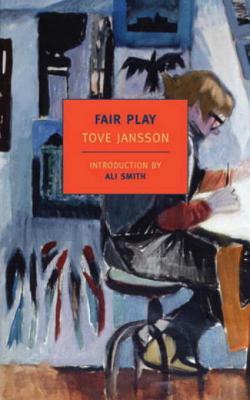
‘Fair Play’ by Tove Jansson – Humans, Not Hippos

‘Fair Play’ by Tove Jansson    (1982) – 100 pages

15849587

Sometimes the simplest ideas are the best.  ‘Fair Play’ is about the friendship between two middle-aged women, Mari and Jonno.  Mari is a writer, and Jonno is an artist.  They each live separately on opposite ends of an apartment building on an island off the southern coast of Finland.  They argue and annoy each other frequently, yet there is a quiet center between them that enhances both of their lives.  ‘Fair Play’ is ultimately a love story between these two women, told in short understated vignettes.

From the Wikipedia entry for Tove Jansson, ‘Fair Play’ seems quite autobiographical and perhaps based on her long-term friendship with Tuulikki Pietila.  Here are two female artists going about their creative work separately, each having some good productive days and other days not so worthwhile.

“They never asked, ‘Were you able to work today?’ Maybe they had, twenty or thirty years earlier, but they’d gradually learned not to. There are empty spaces that must be respected – those often long periods when a person can’t see the pictures or find the words and needs to be left alone.”

In a chapter called “Videomania” the two ladies watch films on Jonno’s video player together, Truffaut, Bergman, Visconti, Renoir, Wilder, Fassbinder, etc.  Afterwards they discuss these movies. Mari says:

“We don’t always have time to think, we just live!  Of course a filmmaker can depict what you call quirkiness, but it is still just canned.  We’re in the moment.  Maybe I haven’t thought this through…Jonno, these films are fantastic, they’re perfect.  But when we get involved in them as totally as we do, isn’t that dangerous?”

As a novel, ‘Fair Play’ does not reach the dramatic level of ‘The True Deceiver’.  The vignettes are episodic with no real coherence beyond the close relationship of these two women.  It does not have the vivid tension of ‘The True Deceiver’ which has a true villain and thus more conflict and drama.

I did have one problem with ‘Fair Play’ that may be particular to me. Previously I read one of the many Moomin children’s books written by Jansson, and in several ways it seems to me the relationship between Mari and Jonno resembles that of the hippos Moominpappa and Moominmamma. They communicate on this same quiet visceral level which is sometimes beyond words. They have their differences, but all is set right between them by the end.

I guess what I’m saying is that the Moomin shtick seems to carry over to ‘Fair Play’, and while I was reading this novel I kept being reminded of the Moomins.

Each of the chapters in ‘Fair Play’ is well-written and engaging in itself, but the whole does not go much beyond the sum of its parts.


Grade: B