Archive for the ‘Book Reviews’ Category

‘The Professor and the Siren’ by Giuseppe Tomasi di Lampedusa


‘The Professor and the Siren’ by Giuseppe Tomasi di Lampedusa   (!957) –   69 pages
 

519zrhbyzpl-_sy344_bo1204203200_

When Giuseppe Tomasi di Lampedusa died in 1957 at the age of sixty, he was an unpublished writer.  His novel ‘The Leopard’ had been rejected by two publishers.  However, after his death, a few literary friends of his continued to work to get the novel published, and it was published the following year.  Despite some divided critical opinion, the novel immediately achieved worldwide popularity.  It became the top-selling novel in Italian history.

I have read ‘The Leopard’ and consider it one of the most powerful and likeable novels of the twentieth century.  It is a good-natured view of the history of Sicily through the eyes of one former aristocrat who has lost his place in society.

In 1963 ‘The Leopard’ was made into a movie by Luciano Visconti starring Burt Lancaster and Claudia Cardinale.   The movie is one of those few rare cases where the movie actually does justice to the novel.  The movie is well worth watching and I would suggest you add it to your lists.

But most of all you really should read the brilliant masterpiece ‘The Leopard’.  It brings you back into the vivid and violent world of 19th century Sicily as only the very best historical fiction can.

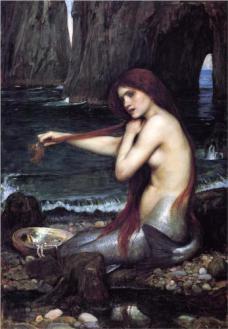
The recent NYRB collection ‘The Professor and the Siren’ contains only a few trinket leftovers from Lampedusa.  Most of the collection is taken up with the long short story ‘The Professor and the Siren’ which relates the love affair between an antiquities professor and a mermaid.

“Her body below the groin, below the buttocks, was that of a fish, covered with tiny pearly blue scales and ending in a forked tail that slapped gently against the bottom of the boat.  She was a siren.”  

It is Lampedusa’s charm and wit that makes this story fun to read.  The author does not shy away from the physical aspects of this man and siren relationship.  Because the professor is an ancient Greek studies professor, we get the full story of Calliope and the Sirens in Greek mythology.
john-william-waterhouse-a-mermaid-1900-oil-on-canvasThe second story in the collection, ‘Joy and the Law’, is a pleasant enough entry at only seven pages.

The third and last entry, ‘The Blind Kittens’, is the opening of a final novel Lampedusa was intending to write but had only completed about twenty pages when he died.  The opening is quite engaging but is only a fragment and not a complete story.

This is one case where it might be advisable to skip the introduction by Marina Warner, since it is interminable and detracts from the playful light-hearted tone of the collection.

I do believe that ‘The Leopard’ is a must-read, but this collection would be only for those who want more Lampedusa after reading ‘The Leopard’.


Grade:   B       
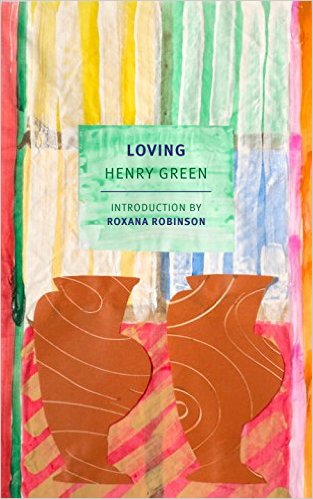
 

‘Loving’ by Henry Green – Pandemonium in the Hallways of the Mansion


‘Loving’ by Henry Green    (1945)   –   185 pages


51m6rdep7yl-_sx311_bo1204203200_

There are so many novels that I want to read that I rarely go back and re-read one.  In fact the last novel I had re-read before ‘Loving’ was ‘The Heart of the Matter’ by Graham Greene way back in 2010.

I wanted to return to the raucous high-spirited fun of Henry Green, and ‘Loving’ is considered his masterpiece.  I have read four novels by Henry Green (‘Loving’, ‘Living’, ‘Party-Going’, and ‘Back’), any of which would have been a delight to re-read.

‘Loving’ is an upstairs/downstairs novel.  However unlike most such novels, here the servants – the household staff – are Green’s main center of attention.   These servants work hard, talk all the time, and fall in love.  They tease each other and laugh or giggle while they do their work.   ‘Loving’ is a raucous warm comedy.

The head butler Charley Raunce spreads havoc everywhere he goes.  He is not above fixing the books to make a little extra money on the side, but he won’t do anything major like steal the Lady’s jewelry because that would be too obvious and spoil his small-time racket.  Charley is always flirting with the maids – Edith and Kate – trying to get one or the other to kiss him.  He is forty, and the maids are twenty, but Edith falls in love with him anyway.  ‘Loving’ takes place during World War II, and there is a shortage of available men.  The mansion where they all work is located in Ireland and is owned by an expatriate lady from England. They are all worried about their families back in England which is being heavily bombarded.

The main thing you notice while reading ‘Loving’ is the lively and vivacious talk.  Henry Green loved to write dialogue, and that is his true strength.  In fact his last two novels, ‘Nothing’ and ‘Doting’, are considered lesser works because they are both almost completely all dialogue.  Green had lost the ability to write the connective tissue that frames the story between the dialogues.  He probably would have been a great playwright.  As it is, Henry Green gave up novel writing at age forty-seven.

However Green did leave behind six excellent novels which are original and unique.   In ‘Loving’, the warmth and the comic joy shared by this small group of people who keep this mansion running is infectious and unlike anything else in English fiction.

I will end with a couple of lines from Henry Green that capture the fun spirit of his writing for me:

“D’you sometimes believe that nothing in the whole wide world matters.

Oh, Ann, but surely simply everything has supreme importance if it happens.”


Grade:    A


‘The Throwback Special’ by Chris Bachelder – The Joe Theismann Classic


‘The Throwback Special’ by Chris Bachelder    (2016) – 218 pages


throwback

One of the names occasionally mentioned as a potential United States Nobel Prize winner in Literature instead of Bob Dylan was Michael Chabon, and I would have had fewer problems with him being named rather than some of the other names mentioned.  Chabon is sort of the godfather for a bunch of young fiction writers like Ben Fountain, Lauren Groff, and Dave Eggers who are trying new techniques with the novel to make it fresh and new.  Add Chris Bachelder to this list of innovative fiction writers as ‘The Throwback Special’ is certainly original, exciting, and different.  It has been named a finalist for the National Book Award.

‘The Throwback Special’ is a group portrait of twenty-two men who get together in November every year to re-enact one pro football play. That play is a quite famous one; it is the play where Washington Redskins quarterback Joe Theismann had his leg horribly broken by New York Giants linebacker Lawrence Taylor on November 18, 1985.  I doubt a group of guys would be doing this reenactment of only one play every year for thirty years, but it does provide an colorful excuse why these men do get together.

You don’t have to be a football fan to appreciate this novel as very little of it takes place on the football field.  Most of the story takes place at the hotel where the guys are staying.  The guys have names like Jeff and Andy and George and Derek, and you never do find out enough about them to really tell them apart.  That is not a problem, since the story is more about the guys interacting rather than individual biographies.  One of the innovative features of this story is that it is a group portrait of these men rather than their detailed life stories.  As such the novel is more about what these men share and have in common rather than their differences.

Sometimes the men at the hotel discuss their problems from back at home with each other.

“The only thing marriage can give you is the sense that your life is witnessed by another person.  A kind of validation, Jeff said.”  

They try to reassure each other.

“There is nothing wrong with you except the normal stuff.”      

Look at ‘The Throwback Special’ as an experiment.  If you were to see a group of penguins from outside, the similarities between the penguins would be more apparent than their differences. Perhaps the same is true of a bunch of guys staying at a hotel.

Since ‘The Throwback Special’ sustained my interest throughout, I would say Bachelder’s experiment was successful.


Grade:     A-   


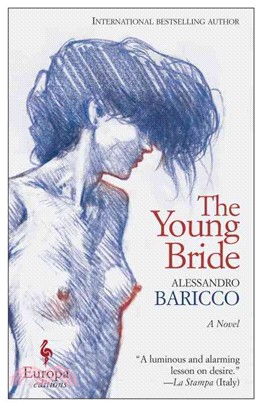
‘The Young Bride’ by Alessandro Baricco


‘The Young Bride’ by Alessandro Baricco   (2015) – 174 pages        Translated by Ann Goldstein

160945334

‘The Young Bride’ is the elegant story of an eccentric aristocratic Italian family who live all together in a mansion except for the son who is away to England on family business.  The son’s eighteen year-old fiancé who now lives in Argentina shows up at the mansion one day and stays there awaiting the son’s return.  The family members are never given names; instead they are referred to as the Father, The Mother, the Daughter, the Son, as well as the Young Bride.  Only the old man servant who runs the household has a name; he is Modesto.

For me the best part of the novel is the first third when this strange family is grandiosely described in Baricco’s rich style.   Several pages are devoted to the family’s great daily morning awakening, but I will quote only a short sample to give you a feel for Baricco’s style:

“The table for breakfasts – a term no one ever thought of using in the singular, for only a plural can conjure the richness, the abundance, and the unreasonable duration – is indeed a well-laid sea.  A pagan sense of thanksgiving is evident – the escape from the catastrophe of sleep.”

Each morning three-hour breakfasts are served as thanksgiving for the family having survived the previous night.

“For a hundred and thirteen years, it should be said, all of us have died at night, in our family. That explains everything.” 

‘The Young Bride’ is one of those novels which started out spectacularly strong for me, but wound up slowly dissipating my enthusiasm.   For me the least effective and least comprehensible parts of the book are where Baricco experiments with changing the narration from third person to first person.  These sections are near impossible to follow.  The novel’s conceit is that the Young Bride is relating the story many years later.  However at the beginning of the novel, the young bride is not in the house, so the narration necessarily becomes third person.  Later the narration goes back to first person occasionally which jars and is confusing.

‘The Young Bride’ is just one long story not divided into chapters.  If the narration changes had occurred at the chapter level, I probably could have followed them better.

The translator of ‘The Young Bride’ is Ann Goldstein, now justly famous for her Elena Ferrante translations.  It is difficult to imagine two writers more different than Elena Ferrante and Alessandro Baricco.  Ferrante is down to earth while Baricco writes in an over-the-top grand experimental style.


Grade:   B- 


‘It’s All Over Now, Baby Blue’ by Bob Dylan


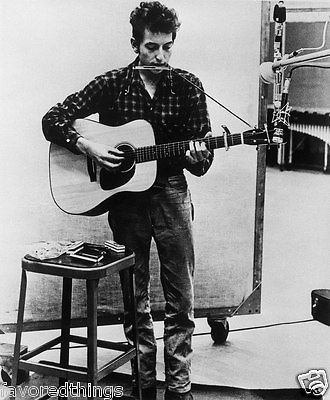
bob-daylan-8x10-photo-107There is some controversy over Bob Dylan winning the Nobel Prize for Literature,  yet it would be difficult to find anyone who has had more of an impact on more people with their words than Bob Dylan.  Many consider Bob Dylan a poet, and the tradition of a poet putting their words into music goes way back.

Another reason Dylan is a good selection is that, yes, Bob Dylan is from the United States, but he is known and admired throughout the world.

As my last argument that he deserves the prize as well as to honor Bob Dylan, I am setting down the words to one of his great lyrics.  You might want to listen to the song too.  Here are both the Bob Dylan version and the Joan Baez version.


“It’s All Over Now, Baby Blue” by Bob Dylan   (1965)


You must leave now, take what you need, you think will last
But whatever you wish to keep, you better grab it fast
Yonder stands your orphan with his gun
Crying like a fire in the sun
Look out the saints are comin’ through
And it’s all over now, Baby Blue.

The highway is for gamblers, better use your sense
Take what you have gathered from coincidence
The empty handed painter from your streets
Is drawing crazy patterns on your sheets
This sky, too, is folding under you
And it’s all over now, Baby Blue.

All your seasick sailors, they are rowing home
Your empty handed armies, are all going home
Your lover who just walked out the door
Has taken all his blankets from the floor
The carpet, too, is moving under you
And it’s all over now, Baby Blue.

Leave your stepping stones behind, something calls for you
Forget the dead you’ve left, they will not follow you
The vagabond who’s rapping at your door
Is standing in the clothes that you once wore
Strike another match, go start a new
And it’s all over now, Baby Blue.

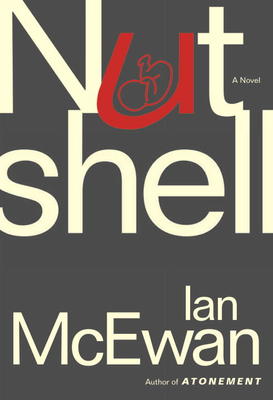
‘Nutshell’ by Ian McEwan – To Be or Not to Be


‘Nutshell’ by Ian McEwan    (2016) – 197 pages

m-php

‘Nutshell’ is an English low comedy about a nasty modern-day murder told by an eight-month fetus who is still inside his mother.

Two of the protagonists in this novel are Trudy and Claude.  Do these names ring a bell?  They might.  Remember Gertrude and Claudius in ‘Hamlet’?  Claudius is the King’s brother, Gertrude is the King’s wife, and Hamlet is the King’s son.  The same setup is here in the novel with Claude fooling around with Trudy behind the father’s back, except our Hamlet is still unborn, still in the womb.  Being inside he feels every aftershock from Claude and Trudy’s frequent sex escapades.  At one point our unborn Hamlet is so disgusted, he tries to strangle himself with the umbilical cord.  This is a scene which brings to mind McEwan’s early black humor phase.

So our Hamlet in ‘Nutshell’ is a troubled young fetus instead of a troubled young man. ‘Hamlet’ is high drama; ‘Nutshell’ is low comedy.

If you recall the play ‘Hamlet’, you probably remember that Hamlet does not have much respect or use for his uncle Claudius.  The same is true in ‘Nutshell’ with Claude being a particularly self-serving dolt who speaks in the lamest of clichés. Claude is the joke figure of the novella, especially when Claude and Trudy are plotting the murder.  However our unborn prince still loves his cheating mother.

The father here, named John Cairncross, is a poet instead of a King.

Our unborn first-person narrator speaks like a hyper-articulate English aristocratic twit since Trudy listens to self-improving podcasts.  This is all great comic fun for the reader with none of the sincerity that had crept into McEwan’s work of late.

Of course ‘Nutshell’ could not be a take on ‘Hamlet’ if the father’s ghost did not appear.  The ghost does show up.

The play ‘Hamlet’ does have that effect on writers.  The plot of the play is so vivid that writers like to do parodies of it which ‘Nutshell’ essentially is.  The American writer John Updike also did a parody of Hamlet called ‘Gertrude and Claudius’ which I consider Updike’s finest work.

‘Nutshell’ is great fun to read although it, being a pastiche, is not at all original or profound, unlike the original play ‘Hamlet’.  There is no one with the wisdom of Polonius here, and Hamlet himself being a fetus, his ideas are kind of unformed.


Grade:   B+


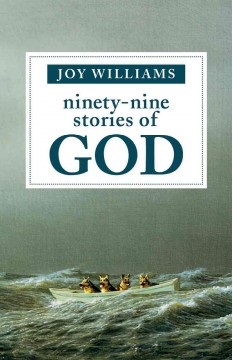
‘Ninety-Nine Stories of God’ by Joy Williams – “We Only Know What God is Not, Not What God Is”


‘Ninety-Nine Stories of God’ by Joy Williams   (2016)   – 131 pages


201607_williams_ninety-nine

First it must be said that Joy Williams finds God in unusual places, a hot dog eating contest, an aquarium in Berlin, a drive-by shooting of a child, a short-haired dog who saves a newborn baby abandoned in Kenya.

As the title indicates, here are 99 stories of God.  These are not stories about a human representation of God.  Rather the stories are subtle and not-so-subtle situations which bring the question of a God to the fore.  ‘Ninety-Nine Stories of God’ is very much a minimalist work as we have 99 stories spread over less than 150 pages.   Some of the stories are two pages, some only a page, some just a sentence.

I like the concept of the very short story but was disappointed somewhat by its execution here.  I felt the style of the writing of the sentences was just not varied or lively enough for me to get enthusiastic about these stories.  There is a droning quality to the writing style that just did not put these stories across for me.   What was missing for me was a clever and/or interesting voice telling these stories.  Instead we get unending sparseness which only makes the individual stories seem dry.  These very short stories are already sparse enough without a minimal style making them even more meager.  The style of writing is plain and workmanlike rather than sparkling and brilliant like these short little vignettes ought to have been.

Before reading  this, I have read and been favorably impressed by several of the fictions of Joy Williams including ‘State OF Grace’, ‘The Quick and the Dead’, and the short stories of ‘Taking Care’.  She originally was considered one of the literary minimalists along with Raymond Carver, Ann Beattie, Tobias Wolff, Mary Robison, and others.  As such her work was characterized by an economy of words, simplicity, and directness.   Joy Williams was known for throwing comedy into the mix.

Certainly there is irony and humor in some of these short short stories.  There is one very short story called “Museum” which contains only the following sentence: “We were not interested the way we thought we would be interested.”  I know I have had that experience in a museum, and you probably have too.  And maybe there is room for God somewhere in there too.  Joy Williams has a very broad interpretation of God which I do like.

The entire ‘Ninety-Nine Stories of God’ does not take much time to read, and rather than relying on my rather lukewarm opinion, you might just want to read it for yourself and draw your own conclusions.


Grade:   B-


‘A Gentleman in Moscow’ by Amor Towles– In Praise of the Literary Stylist


A Gentleman in Moscow’ by Amor Towles    (2016) – 462 pages


9780670026197

After now reading two novels by Amor Towles I have come to the conclusion that he is a great literary stylist on the order of Vladimir Nabokov.  A literary stylist knows that it is not our final destination that matters but the pleasures we have along the way. A stylist can go on and describe a game of Hide the Thimble for several pages, and we will not complain; in fact we will be charmed.

“For what matters in life is not whether we receive a round of applause; what matters is whether we have the courage to venture forth despite the uncertainty of acclaim.” 

The year is 1922. Count Rostov is an unrepentant aristocrat in Moscow even though now the Communists are in charge in Russia. This usually meant being “put up against a wall”, but instead the authorities restrict Count Rostov to the Metropol, a showcase hotel for foreign dignitaries visiting Moscow.  He becomes a head waiter in the hotel, a position for which he is well suited.  He cannot leave the hotel.  He is reassigned to a small room at the hotel.

‘A Gentleman in Moscow’ tracks the Count’s entire stay at the hotel from 1922 all the way up to 1952.  He is a part of a triumvirate which also includes the chef Emile and the maître d’hôtel Andrey who keep the hotel and restaurant running smoothly. One might assume that things would get claustrophobic being restricted to a hotel, but one would be wrong.  The Count’s days are filled with elegance and delight.  Famous actresses and authors and diplomats stay at the hotel.  The Count becomes friends with the young Nina, and later she drops off her daughter Sofia at the hotel for him to bring up which he somehow manages admirably.

Sometimes the bureaucrats intrude upon the hotel.  In the Metropol’s wine cellar, “was assembled a staggering collection of Cabernets and Chardonnays, Rieslings, and Syrahs, ports and Madieras – a century of vintages from across the continent of Europe. “  A complaint was filed that this fine wine list ran counter to the ideals of the Revolution.  The Commissar of Food then forced the hotel to remove all of the identifying labels from every bottle of wine, and from then on the hotel could only distinguish red wine from white wine with every bottle sold at a single price.

“Yes, a bottle of wine was the ultimate distillation of time and place; a poetic expression of individuality itself.  Yet here it was, cast back into the sea of anonymity, that realm of averages and unknowns.” 

The entire novel is written with a distinctive Old World charm.   Amor Towles is a sensuous stylist who doesn’t waste his skills on something as mundane as sex but uses them instead to describe a spectacular food dish or a unique bottle of wine.  However it is in the intriguing and warm interactions between characters where Towles excels.

‘A Gentleman in Moscow’ casts a likable alluring spell like no other novel I have ever read.


Grade:   A


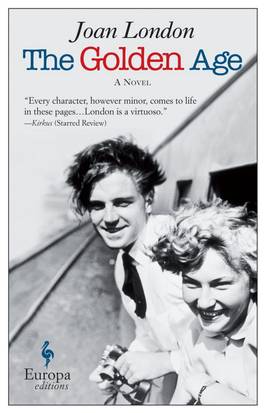
‘The Golden Age’ by Joan London – Why We Read Novels


‘The Golden Age’ by Joan London   (2014) – 221 pages

1471554121-layout-1


I have often thought about why people read novels or, more in particular, why do I read novels.  I came up with the following reason. Reading a really good novel can be transformative for me just like a few of the people that I have met during my lifetime who have changed me. ‘The Golden Age’ is one of those really good novels which had this profound effect on me. Why I feel such a need to transform myself is another question.

Joan London is a transcendent old-fashioned novelist, and that is a glorious thing.  She writes about people being heroic in desolate circumstances.  Take the following lines about the nurse Lidja who works at the children’s polio hospital called The Golden Age:

“Everyone knew that Lidja would not give up on you.  She bent their fingers and wrists, twisted their torsos, stretched their legs, brought their heads down to their ribs.  They learned not to whimper or to complain.  She presided over their momentous occasions – the first time they stood alone, the first step they took.

The reward was Lidja’s smile and the way she said their name.  She made them feel like athletes training for a race.  They must fight, they must never give up, they were going to win!” 

The novel is mainly the story of the Golden Age makeshift hospital, its staff, and the child polio patients.

Thanks to doctors Jonas Salk and Albert Sabin I missed the terrible epidemics of polio by a few years.  In ‘The Golden Age’ the Gold family somehow escaped the Holocaust in their hometown of Budapest and migrated to Australia, only to have their only child Frank come down with polio six years later.  Frank is a rather precocious 13 year-old, and soon he falls in love with 12 year-old Elsa, another polio patient.

One admirable quality I find in Joan London as well as in several other Australian fiction writers is that she does not confine her characters to little tightly defined compartments where their every word or action can be guessed ahead of time.  Instead she allows all of her characters the freedom to be eccentric or unique or different from the others as they see fit.  Thus we get a novel of several unique independent people interacting with each other with sometimes unexpected results.  This is true for the patients at the hospital as well as the staff and the parents.  I find Australian novels in general more unpredictable than others, and that is a positive trait.

‘The Golden Age’ is a fine traditional heroic novel.  The characters in the novel not only persevere despite bleak conditions, they triumph.


(However I do have a complaint about the cover.  In the cover I did not use, the boy is at least sixteen, and Frank in the book is only thirteen. The cover I’m using isn’t great, but it is not so bad.)


Grade:   A 


‘City of Secrets’ by Stewart O’Nan – Jerusalem Right After World War II


‘City of Secrets’ by Stewart O’Nan    (2016) – 190 pages


onan-city_of_secrets

A blurb on the back of this novel from fellow novelist Alan Furst said, “’City of Secrets’ will keep you up all night reading.”   Sorry, it did not work out that way for me.  Instead I would drag through a few pages, anxious to quit the whole time.  Then I would stop reading and find out I had read only four pages.  You can imagine that reading the entire novel seemed interminable.

Perhaps part of the problem for me was the ambiguity of the novel’s situation.  The year is 1946.  World War II is over.  Jewish refugees from all over Europe are rushing into Jerusalem, the capital of British Palestine.  Our hero, the Latvian Brand, is one of these Jewish refugees.  He lost his entire family in the Holocaust.  Brand survived only “because he was young and could fix an engine.”

For five years during the worst part of World War II, Great Britain allowed only 10,000 Jewish immigrants per year into Palestine. Also about 20-25,000 Jews illegally migrated to Palestine during that period, more power to them.  After the war, makeshift groups of Jews worked to undermine British rule by committing terroristic acts in Jerusalem.  Brand as a taxi driver was a member of one of these underground groups.  Ultimately by 1948, Palestine became the independent state of Israel.

“He wanted the revolution—like the world—to be innocent, when it had never been.”

So do we root for these terrorists against the British government?  Not Sure.  ‘City of Secrets’ describes the planning and execution of several of these dangerous assignments.

At its best, at times ‘City of Secrets’ reminded me of a Humphrey Bogart movie.  Here we have an exotic location in the 1940s and a shady group of people committing desperate acts.  Brand does have a girlfriend Eva who is a former actress now working as a call girl at the King David Hotel. Perhaps part of the problem for me is that Brand has experienced all of the trauma of losing his family during the war that he almost seems to be sleepwalking through his life in Jerusalem.

Why does one novel affect you deeply and another leave you cold?  I was much affected in a good way by Stewart O’Nan’s ‘Last Night at the Lobster’, the seemingly mundane story of a Red Lobster restaurant closing in Connecticut.  However ‘City of Secrets’ left me relatively unmoved, even though the story would seem to be much more dramatic and exciting.   I was more affected by the plight of a waitress losing her job in ‘Last Night at the Lobster’ than by a hotel bombing in ‘City of Secrets’.  Maybe that’s just me or maybe that’s the way reading novels goes.


Grade:   C     


‘Peacock & Vine’ by A. S. Byatt – The Designers: On William Morris and Mariano Fortuny


‘Peacock & Vine’ by A. S. Byatt   (2016)  –  182 pages


61d61p68lil-_sx258_bo1204203200_

Although my passion is fiction, I have been known to dabble in non-fiction once in a while.  However for a non-fiction book to appeal to me, it better not be mundane or prosaic, and the quality of the writing better be above average.  It helps if the book is written by a fiction writer whom I much admire like A. S. Byatt.

‘Peacock and Vine’ is a non-fiction book about two designers, William Morris and Mariano Fortuny.  William Morris was an English poet as well as a textile designer whose “green and flowery world” of Kelmscott Manor in Oxfordshire, England is still open to the public.  Mariano Fortuny who was originally from Spain but moved to Venice in 1889 was an artist but mainly a fashion designer who designed dresses for the rich and famous women of his time.  His studio, now the Fortuny Museum in Venice, is still open to the public. Both Morris and Fortuny researched the use of certain dyes all the way back to the Middle Ages, dyes which were no longer in use in their time. I imagine A. S. Byatt decided to write this book about the two designers after touring the two places.   ‘Peacock & Vine’ is a high-quality work with many fine illustrations of the two designers’ work.

William Morris Image

William Morris Image

There is some question in my mind as to why these two men’s stories are combined together in the same book.  Apparently they never met, and they were of two different generations with Morris being born in 1834 and Fortuny being born in 1871.  Morris was a gentleman of the English country manor while Fortuny had his ornate studio in the city of Venice.  The only explanation Byatt gives for combining the two stories is as follows:

“They were both men of genius and extraordinary energy.  They created their own surroundings, changed the visual world around them, studied the forms of the past and made them parts of new forms.  In many ways they were opposites.”

Yes, not much in common for the English gentleman and the Italian aristocrat.  However they were both designers working with the materials around them, and I would never have read a book about designers if it had not been written by A. S. Byatt.  With all of the beautiful pictures included in ‘Peacock & Vine’, reading it is like touring both of these museums on the same afternoon.  It does save the expense of traveling to Oxfordshire, England and Venice, Italy.

Dresses designed by Mariano Fortuny

Dresses designed by Mariano Fortuny

Byatt does give an adept background of both men’s lives.  Before reading ‘Peacock & Vine’, I probably considered art to be mainly about splashing paint on a canvas like Rembrandt or Van Gogh.  I had never considered textile or fashion design as that much related to art.


Grade:   B+


O Canada – My Ten Personal Favorite Canadian Novels or Story Collections

63071426n07_r

Here are ten works of Canadian fiction which have, over the years, particularly moved me.  This list is by no means authoritative or complete, just ten books. There are way too many Canadian fiction writers and works for any one person to be familiar with all of them. Many major works do not appear on my list.  This is only my subjective list of ten Canadian novels or story collections which have meant a lot to me. I live a few hundred miles south of Canada but often look north to find good fiction.


 fifthbusiness‘Fifth Business’ by Robertson Davies (1970) – This is the novel which more than any other got me started, for better or worse, down the road of reading literature.  I wound up devouring the entire Deptford Trilogy and thus realized that there were writers I never heard of out there writing great stuff.  Davies was a magician with words.

9780224059732‘Autobiography of Red – A Novel in Verse’ by Anne Carson (1998) – Carson brings the Greek tale of Geryon into modern life as only she can do.  This is poetry for people who generally don’t read poetry.  There is a place reserved on Mount Olympus for Anne Carson.

‘The Wars’ by Timothy Findley (1977) – This novel, more than any other, depicts trench warfare and the other nightmares of World War I as we follow a Canadian enlisted man to France.  ‘The Wars’ was one of the first war novels to bring Post Traumatic Stress Disorder to our attention.

roseflo‘The Beggar Maid – Stories of Rose and Flo’ by Alice Munro (1978) – In Canada, this collection was called ‘Who Do You Think You Are’.  This is the story collection that got me started reading Alice Munro, and I have never stopped since.   She has been called a modern-day Chekhov.

‘The Loved and the Lost’ by Morley Callaghan (1951) – This is a novel about a white woman who becomes fascinated with black music and culture and men in Montreal jazz nightclubs of the 1950s.  Morley Callaghan was probably most famous during his lifetime for knocking down Ernest Hemingway in a boxing match refereed by F. Scott Fitzgerald.

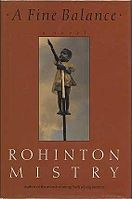
a_fine_balance‘A Fine Balance’ by Rohinton Mistry (1995) – This novel offers a vivid Dickensian view of the city of Mumbai, India (formerly Bombay).  It was picked by Oprah’s Book Club back in 1996.

‘The Handmaid’s Tale’ by Margaret Atwood (1985)  – This is science fiction, but not too far-fetched, of a totalitarian Christian fundamentalist takeover of the United States government.  The Christians are able to quickly take away all women’s rights.

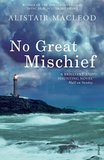
51fhrw1-72l-_ac_ul160_sr104160_‘No Great Mischief’ by Alastair MacLeod (1999) – This novel tells of a Scottish clan who settled on Cape Breton Island off Nova Scotia.  It is written in austere majestic prose.

“I like to think that I am telling a story rather than writing it.” – Alastair MacLeod

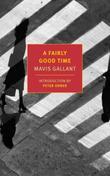
1791074‘A Fairly Good Time’ by Mavis Gallant (1970) – Mavis Gallant published 116 stories in the New Yorker, and her stories are excellent.  Here is one of her two novels which are now available at NYBR Classics.  She is a pleasurable writer you read for the well-crafted sentences.   I want to read another of her short story collections very soon.  Here is the best sentence I found regarding Mavis Gallant.

“We feel that if a story doesn’t illuminate a whole life, Gallant’s not interested in writing it.” – Francine Prose

9780771075179-s


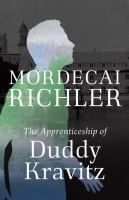
‘The Apprenticeship of Duddy Kravitz’ by Mordecai Richler  (1959)  – This is an hilarious satire of juvenile delinquents in a Jewish slum district in Montreal.  This you read with a perpetual smile on your face.


Do you have Canadian favorites? I would like to hear from you as to your favorite Canadian writers.  Surely there are many I have missed.


‘Cry, Mother Spain’ by Lydie Salvayre – The Atrocities of Fascism

‘Cry, Mother Spain’ by Lydie Salvayre (2014) – 240 pages     Translated from the French by Ben Faccini

deb929_72cf47fea38d4628961e7de5776e0671mv2

Although Lydie Salvayre’s novel ‘Cry, Mother Spain’ won the Prix Goncourt in 2014, there has been little fanfare and few reviews for the English translation which was released in June of this year.  This is unfortunate, because ‘Cry, Mother Spain’ is an excellent passionate fictional account of the events leading up to the Spanish Civil War which occurred before World War II.  At that time Lydie Salvayre’s own parents had to flee Spain and take refuge across the border in France where Lydie was born.  ‘Cry, Mother Spain’ is the account of a daughter listening to her ninety year-old mother tell of the tragic and ugly events that led to their fleeing Spain.

At the end of World War II, fascism was defeated in Europe.  Only one country retained its oppressive fascist rule, and that country was Spain.  Francisco Franco continued to rule Spain with a heavy hand up until his death in 1975.

Salvayre tells of the summer of 1936, the last summer before the civil war.  It is not at all difficult to tell where her sympathies lie.  Her mother and her father were Republicans.  In order to give her story more depth, Salvayre often quotes from an account of the events of that time (A Diary of My Time, 1938) by French author Georges Bernanos.  Although deeply Catholic and conservative by nature, Bernanos became repulsed by the atrocities committed by the Spanish nationalists under Franco.

  “Month after month, squads of killers were transported from one village to another by trucks which had been requisitioned for one purpose alone, to murder thousands of so-called suspects in cold blood.”  – Georges Bernanos

“I believe my greatest service to honest men is to warn them against the imbeciles and bastards who cynically exploit their deepest fears.” – Georges Bernanos    

Lydie Salvayre implicates the Catholic Church and its priests in the atrocities more directly than Bernanos:

“The Nationalists were carrying out a systematic purge of suspects and between killing sprees Catholic dignitaries were granting them absolution in the name of the Father and of the Son and of the Holy Ghost.  The Catholic Church had become the executioners’ whore. “ – Lydie Salvayre

Salvayre does mention some of the violent attacks against priests by the Republicans before the civil war began, but this violence seems minor compared to the wholesale execution of Spanish citizens carried out by Franco.

“The bonfire of hatred was lit, and it spiraled out of control.” – Lydie Salvayre

This systematic extermination of whole groups of liberals in Spain reminded me of the systematic murder of leftists carried out by several South American dictators in the 1970s.  The threat of fascism has not gone away.  In fact as we forget the circumstances of Hitler and World War II, fascism has become even more of a threat in the 21st century.  We are seeing fascism rear its ugly head in places like the United States and Russia that had fought most valiantly against fascism in World War II.


Grade:    A-


‘Work Like Any Other’ by Virginia Reeves – Electrifying and Not Electrifying


‘Work Like Any Other’ by Virginia Reeves   (2016) – 260 pages


9781501112492

‘Work Like Any Other’ is one of the 13 novels on the Man Booker longlist for this year. So far I have read three on the longlist:’The Sellout’ by Paul Beatty, ‘Eileen’ by Otessa Moshfegh, and, now, ‘Work Like Any Other’ by Virginia Reeves.  The shortlist for the Man Booker will be announced on September 13, and the winner will be announced on October 25.

‘Work Like Any Other’ is both an historical novel about rural Alabama in the 1920s and an Alabama prison novel. At that time only the cities and towns had electricity, and the poles ran from town to town.  The farms had to do without electricity. These major plot points are revealed in the first few pages of the novel, so I don’t believe I am giving anything away by saying that the book’s main character, Roscoe T. Martin, is arrested for stealing electricity for his farm.  Unfortunately a power company employee accidentally discovered Roscoe’s illegal feed to his farm and in the course gets electrocuted.  Roscoe receives a prison sentence of ten to twenty years for both theft and manslaughter.  All of the above is revealed in the first few pages of the novel.

“We are born with some things in our veins, coal for my father and farming for Marie’s and a deep electrical current for me.”  

Roscoe’s neighbor, Wilson, who helped him steal the electricity is also arrested.  Since Wilson is a black man, he is not sent to stay in prison but is instead leased to a mining company as cheap convict labor.

Roscoe’s wife, Marie, has no use for Roscoe after he is arrested.  She doesn’t hire him a lawyer, so he must use the state-appointed one.  She doesn’t visit him or let their son, Gerald, visit him. Roscoe never did amount to much as a farmer as he was more of a bookish sort of fellow.  Another reason his wife has such disdain for him is because of Wilson.  Marie came from a family with a tradition of fighting racism, so it makes her angry that her husband got this black man in trouble needlessly.  She doesn’t even answer his letters.

‘Work Like Any Other’ is a solid well-written novel, but it didn’t, pardon the pun, “electrify” me.  Life in the prison is brutal, and some of the prison guards and authorities are drawn as comic-book villains.   On the other hand, those black neighbors in the novel are saintly, too good to be true.  The wife Marie and the son Gerald are too sketchily drawn to be fully realized.   The resolution that occurs in the novel could never have happened in real life at that time due to the Jim Crow laws that were in place in Alabama at the time.  The only character who is fully developed is the main character, Roscoe.   He is essentially a good man who got caught up in a bad situation.

I doubt that ‘Work Like Any Other’ will make the Man Booker shortlist.  However my very favorite novel for this year has been ‘Mothering Sunday’ by Graham Swift which did not even make the longlist.  So what do I know?


Grade:    B     


‘Heroes of the Frontier’ by Dave Eggers – North to Alaska for a Mother and Her Two Kids


‘Heroes of the Frontier’ by Dave Eggers   (2016) – 385 pages


3577cc78-53dc-11e6-98ca-49b1c9e3ed10_236x

Here is an appealing novel about a woman and her two kids traveling around Alaska.  One trend I have recently noticed is that a few male fiction writers including Graham Swift, Colson Whitehead, Yuri Herrera, Rupert Thomson, and here Dave Eggers will create a female main character or narrator for their novels.  This is a healthy trend since it stretches the imagination of the male writer to see things in a different view from his usual own.  But ultimately it all depends on the execution…

In ‘Heroes of the Frontier’, things have fallen apart for mother Josie in her late thirties back in Ohio, so she took her two kids, eight year-old Paul and five year-old Ana, up to Alaska without telling anyone.

What better way to move about in the great spaces of Alaska than in a used RV called ‘The Chateau’?  So ‘Heroes of the Frontier’ is essentially a road trip with no destination, just traveling around this monster state.  Josie and her kids encounter scenic mountains and breathtaking views, eccentric people in RV parks, forest rangers, ferocious and not-so-ferocious animals, wild fires, thunderstorms, and everywhere exorbitant prices for campgrounds, groceries, and restaurants.

If you are looking for a tightly plotted adventure story, ‘Heroes of the Frontier’ is not for you.  This story meanders from RV park to RV park.  We get Josie’s backstory, why she had to leave Ohio.  There’s an insufferable ex- who is now marrying someone else and a lawsuit that destroyed her practice as a dentist.

Although not much happens in real time in this story, the writing here is likeable and engaging and held my interest throughout.  I practically coined the term “pleasantly uneventful”, but this novel takes it to extremes I never even considered.  Much of the story is about mother Josie dealing with her two kids, and the kids emerge as major characters in the story. Only the ever present dangers of uncontrollable forest fires and spine-cracking thunder and lightning storms give the story any urgency.

But the story has its diversions along the way.  Consider the following bit about leaf blowers to which I concur:

Seward3-640x400“Oh no. A leaf blower.  The easiest way to witness the stupidity and misplaced hopes of all humanity is to watch, for twenty minutes, a human using a leaf blower.  With this machine, the man was saying, I will murder all quiet.  I will destroy the aural plane.  And I will do so with a machine that performs a task far less efficiently than I could with a rake.” 

So far I have read four Dave Eggers novels.  I considered ‘A Hologram for the King’ and ‘The Circle’ spectacularly good, but ‘Your Fathers, Where Are They…’ was a disappointment.  I see ‘Heroes of the Frontier’ a solid comeback of sorts, perhaps not quite to the level of the first two novels, but a well-written engaging read.  It does capture Alaska except for some of its crazier people, and really there is nothing more heroic than being a good mother.

I will eagerly look forward to reading my next Dave Eggers novel whether it has a male or female main character.


Grade:   B+


‘The Underground Railroad’ by Colson Whitehead

‘The Underground Railroad’ by Colson Whitehead     (2016) – 306 pages

Underground

‘The Underground Railroad’ is a novel about the United States’ most brutal atrocity, human slavery.  If a slave ran away from the plantation but was caught, the white slave owner could chop off his or her foot.   The white slave owner could drag a couple of the fourteen year old girls out behind the woodshed to breed them and invite his teenage sons to join in the fun.  The white slave owner could do whatever he wanted to his slaves.  The slaves were his property.

What makes ‘The Underground Railroad’ powerful is that it is not an impassioned plea against slavery, but instead an objective enactment of the details of life for the slaves.  We see slavery through the eyes of the slave Cora whose grandmother Ajarry was captured in Africa and shipped to the Randall plantation in Georgia.  Cora’s mother Mabel ran away from the plantation when Cora was ten never to be heard from again. The plantation is now divided up between the two Randall sons, the northern half to James and the southern half to his younger brother Terrance.

“James was as ruthless and brutal as any white man, but he was the portrait of moderation compared to his younger brother.  The stories from the southern half were chilling in magnitude if not in particulars.”  

When James dies, and Terrance takes over the whole plantation, Cora and her friend Caesar decide to run away.

The Underground Railroad was a network of secret routes and safe houses of people who would help the runaway slaves to escape to free states.  The conceit of Colson Whitehead is that there really was a railroad and train running underground which will take runaway slaves to different parts of the country.  Thus the sections of the novel after Cora and Caesar run away take place in different states which are stops on this imaginary railroad: South Carolina, North Carolina, Tennessee, and finally the free state of Indiana.  Each state has its own severe brutal racists, including Indiana. Ever present is the slave catcher Ridgeway who is following just behind Cora and Caesar to catch them and bring them back to the Randall plantation.

In actual fact, very few of the slaves in the deep southern states of the United States could ever successfully run away what with all the slave catchers and night riders and other assorted vicious folk working in league with the despicable white slave owners.  The Underground Railroad did not operate that far south.

Every location that Cora stops has its own cast of characters, and the story gets somewhat diffuse as Cora and we travel from state to state.


Grade:   B+ 

“You Will Know Me” by Megan Abbott – Gymnasts at the Top of their Form


“You Will Know Me” by Megan Abbott    (2016) –   340 pages

9780316231077

“You Will Know Me” is a suspense novel set in the obsessive compulsive world of girls’ gymnastics.

Megan Abbott lays it all out quite nicely for us in a chart early on.

screen_shot_2015-11-19_at_10.10.00_am

There are 2,200 Level 10 girl gymnasts nationwide.  Of these 2,200 girls, 65 0f them will make it to Junior Elite.  Of the 65 Junior Elite gymnasts, 45 become Senior Elite.  Of the Senior Elites, 28 girls make the National Team, and of these only 5 girls make the Olympic team.  So there is a lot of pressure in the world of top-level girls’ gymnastics.  We don’t hear much about the girls who don’t make it somewhere along the line to the Olympics.

The families of the gymnasts at or near the top levels have to put up with a lot of trouble too.  Top athletes require special coaches and gyms which are expensive.  Weekends for the family are spent traveling long distances to matches.  Other family members may be neglected in the family’s single-minded pursuit of a position for their talented daughter.   Making it or not making it to the next level is only a matter of inches for the girl in any maneuver.

So Megan Abbott has found the ideal conditions for a suspense novel.  Throw in a mysterious death, and we are rolling.  It also helps that the girls and the parents who belong to these top-level gymnastics teams are a close-knit group.

Devon Knox is the girl gymnast star in “You Will Know Me”.   From an early age Devon excelled and now is at Level 10.  Even at a young age she was stronger at gymnastics than the rest of the girls.  She has precision and steely determination.  Her parents, though not rich, have always gotten the special coaches and gyms she requires. They needed a second mortgage for their house to afford the expenses. Sometimes in pursuit of their daughter’s and their own dreams, they neglect their son Drew.  The story is told from the point of view of the mother Katie who is pretty much the average housewife and mother.

“No one ever wants to believe bad things about their own family,” Katie said.   

Like all good suspense novels, ‘You Will Know Me’ barrels along, and you read it quickly.  Megan Abbott is very adept at handling the family dynamics and the gymnastics team dynamics that propel this story.   Abbott gets the details exactly right down to the “smell of damp leotards and pit foam” to the “funfetti cupcakes”. The reader totally believes this situation could happen and thus follows the story intently.

With its single-minded intensity, ‘You Will Know Me’ is a fine example of the Suspense genre.  The main criticism I can reasonably make is that I prefer novels which are more than one thing.

Read it anyway.


Grade:   A-   


‘Tropic Moon’ by Georges Simenon


‘Tropic Moon’ by Georges Simenon   (1933) – 133 pages     Translated from the French by Marc Romano


image112

‘Tropic Moon’ takes place in deepest, darkest Africa in the French colony of Gabon in the 1920s.  Gabon was a small colony along the west coast of Africa on the Equator and is now an independent country.  About 85% of Gabon is jungle rainforest. The natives who lived there in the 1920s were unembarrassed to walk around totally naked.  An estimate of the total number of white people who lived in the entire colony at that time was less than 500.  The white people made no secret of the fact that they were there to exploit the natural resources and the natives of the area.  The background of many of these white people was spurious.  Why else would they be in hot, sticky, brutal Gabon?

The two main characters in ‘Tropic Moon’ are Joseph Timar, a young Frenchman who has just arrived in Gabon, and Adele, the woman who along with her husband runs the hotel where Timar stays in Gabon.  Adele wears clinging dresses and no underwear and is a drinking and bed buddy with most of the men at the outpost.   The story is told from the point of view of the young man. On his first night in Gabon, Timar wakes up to find Adele in his bed.  Only later does Timar find out that she along with all the other French colonists in Gabon knew that Timar’s uncle was an influential politician in France.  Adele asks Timar to obtain a special permit from his uncle to conduct a business operation in the Gabon jungle.  Meanwhile Adele’s husband dies of a tropical disease, and Adele is involved in the murder of a local native.

Later there are scenes in the jungle where Timar is the only white man on a canoe propelled by twenty naked black men.  They return to their native village where Timar and a bunch of other white men he meets up with have an orgy with the native women.  Timar takes up with one of the native girls for a short time.

9781590171110Are people really as bad as they are made out to be in these romans durs (‘hard novels’) of Georges Simenon?  I am not sure.  I suppose there is some misogyny in his viewpoint as the women tend to be made out to be especially immoral and deceitful.  Part of Simenon’s autobiography is made up of stories of his mother’s cruelty.  Apparently he was unloved by his mother.   Later he made up for it, claiming he had sex with 10,000 women.  There is some controversy as to whether or not Simenon collaborated with the Nazis during World War II, and he self-exiled himself to the United States for ten years.  It appears that Georges Simenon was more interested in preserving his career as a writer during the Nazi years than in actually helping the Nazis.

I’m finding these psychological novels of Georges Simenon quite entertaining.  ‘Tropic Moon’ does give a nasty, picturesque, and possibly realistic view of a colonial outpost. This is a strong antidote to any too rosy view of colonial life.  I will continue to read more of these romans durs.  However I am still not ready for the Inspector Maigrets just yet.


Grade:   A- 

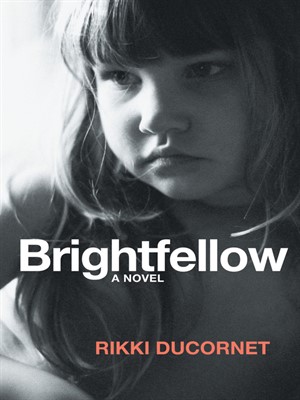
‘Brightfellow’ by Rikki Ducornet – If I Can Just Get Past the Oddness…


‘Brightfellow’ by Rikki Ducornet   (2016) – 143 pages

{606B4B65-620E-463F-BE12-F23B7A975D79}Img400

Perhaps the best word to describe ‘Brightfellow’ by Rikki Ducornet is “surreal”.  The novel has a strange dreamlike nightmarish quality.  The works of Italo Calvino such as ‘The Baron in the Trees’ and ‘The Nonexistent Knight’ are also described as surreal, but they are bright and sunny.  Perhaps darker writers such as Edgar Allen Poe and Stephen King are a better template for ‘Brightfellow’.

‘Brightfellow’ is about a boy named Stub.  In the first chapter he is four years old and living with his mother, but by the end of the chapter his mother leaves him.  He lives with his father a short time, but his father dies in a house fire, and Stub must fend for himself.  By the second chapter he is a young man living surreptitiously in a hidden room of the anthropology library on campus, stealing food as needed, and researching the spurious anthropologist Verner Vanderloon.  He assumes the name of academic Charter Chase  In the reviews, Stub is described as “feral”, but Ducornet never uses that word to describe him.  I look upon Stub as a wild child/man. ‘Brightfellow’ would probably be classified as a suspense novel, but there is an undercurrent of campus humor here.

Later an aging homosexual Professor named just Billy takes him in to live in a campus neighborhood residential home.  For a while their life seems somewhat stable, but Stub is fixated on the next-door neighbors, especially the seven year-old daughter Asthma.  The fixation is not at all sexual but somehow relates to his misbegotten upbringing.  This is all very strange.

I have read one previous novel by Rikki Ducornet, ‘Netsuke’.  That novel was a tale of relentless sexual obsession in a much more realistic mode than ‘Brightfellow’.  I was very much impressed with Ducornet’s style of writing in ‘Netsuke’, and it made my year-end Top Ten list for that year.

However ‘Brightfellow’ did not have that same impact on me.  The writing is fine and very readable and held my apt attention throughout.  However the situations were too weird and strange for me to fully comprehend, let alone empathize with.  Also the final payoff or scene of the novel seemed unearned and did not resonate with me.

I do like the fact that Ducornet went in a totally different direction with this novel than from her last, indicating her willingness to try different things.


Grade:   B
 

‘Innocents and Others’ by Dana Spiotta – Women and Their Movies

‘Innocents and Others’ by Dana Spiotta   (2016) – 275 pages

3922f798-ddd1-11e5-8eef-da488207ec77-300x450

An alternate name for ‘Innocents and Others’ would be ‘Women and Filmmaking ’ but that would be too formal.   The first thing you notice in ‘Innocents and Others’ is the creative and endearing use of words. It sizzles with energy, intelligence and wit as few novels do.   This writing is almost sensuous.  Dana Spiotta could write about nearly anything, and I would happily read it.  In this novel she writes mainly about the making of movies.

‘Innocents and Others’ jump cuts from scene to scene just like some of the indie films which are its subject.  Very little of the novel is exposition; instead it captures the moments of living for these female filmmakers.  This novel would probably be considered an experimental cutting-edge fiction, but it is not cold and analytical as some experimental novels tend to be.  It is warm and easy to like.

The novel starts with a strong 32-page tour-de-force.  This is a ‘How I Began’ installment that independent documentary filmmaker Meadow Mori has written for the ‘Women and Film’ blog.  She talks about her living arrangement with an elderly male film legend (Orson Welles?) which began just after high school.    It is written in such a way that the reader may question if the affair really occurred.  Anyway this opening is so clever and entrancing that there is no way the rest of the novel can match it.  Not that the rest of the novel isn’t winning, just not quite as captivating.

One of the side benefits of reading ‘Innocents and Others’ is that it contains a lot of tidbits on the history of filmmaking from the very first films by the Lumière Brothers to Charlie Chaplin to Ida Lupino to Orson Welles to Jean-Luc Godard to Alfred Hitchcock.  My own independent research found that many of the very first short films by the Lumière Brothers made in the 1890s can be viewed on YouTube. Here and here are examples.

There are three main characters in ‘Innocents and Others’, the aforementioned documentary filmmaker Meadow Mori, her best friend Carrie Wexler who makes silly but popular teen comedies, and a gal simply called Jelly who hacks phone calls and is the subject of one of Meadow’s documentaries.  There are also a few male friends and lovers met along the way.

In ‘Innocents and Others’, Dana Spiotta has accomplished the near impossible.  She has written an experimental novel which is still very likeable on the human level.


Grade:   A-