Archive for the ‘Book Reviews’ Category

‘Multiple Choice’ by Alejando Zambra – A Fiction Disguised as a Multiple Choice Exam


Multiple Choice’ by Alejando Zambra  (2014)  – 101 pages     Translated by Megan McDowell
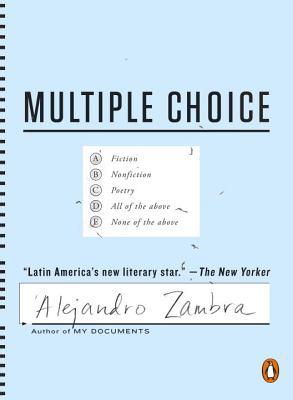
 

28588315‘Multiple Choice’ takes the form of a standardized aptitude test and consists of a series of multiple choice questions and answers.  Due to its unique format, I hesitate to call it a novel, but it definitely qualifies as a work of fiction.

The multiple choice questions that make up this work are grouped into the following five exam categories: 1) Excluded Term, 2) Sentence Order, 3) Sentence Completion, 4) Sentence Elimination, and 5) Reading Comprehension.

The exam is based on the actual Chilean academic aptitude test of 1993.  At that time right-wing dictator Augusto Pinochet was still in power in Chile, and that fact permeates these multiple choice questions.

For example, in Question 2 you are supposed to mark the word whose meaning has no relationship to the heading or the other words listed.  Here is Question 2:

      2  Choice

            A. Voice
             B. One
             C. Decision  
             D.  Preference
             E.  Alternative

The correct answers are not listed.  My answer would be B, because if you have only ‘One’, you have no choice.  One dictator?  Frequently none of the choices is a good answer.  Some of the questions are impossible to answer.

As the test progresses, the questions get longer and longer until the last Reading Comprehension section where the questions are preceded by a text which itself almost amounts to a short story.  One of these texts is about a wedding party where the fact that divorce was illegal in then Pinochet Chile is discussed and reviled.  Chile was the only country in the world where divorce was illegal, and thus marriages could only be annulled.  Even if the couple had been married for many years, they had to lie in court that they had never lived together.

It was the Nixon administration of the United States that saddled Chile with the vicious incompetent dictator Augusto Pinochet.  It must strike Chileans as poetic justice that the people of the United States have now stuck themselves with Donald Trump.

The questions and the answers are usually either pointed or playful.  One of the sub-themes of this fiction appears to be the utter ridiculousness of these standardized tests.

This multiple choice exam is a clever idea for an experimental fiction.    Several reviewers brought up the works of David Markson as a comparison, but ‘Multiple Choice’ reminded me most of ‘Nazi Literature in the Americas’ by Zambra’s fellow Chilean writer now deceased, Roberto Bolaño.  Both works are sharply humorous yet highly political.


Grade:    B


‘Idaho’ by Emily Ruskovich – An American Gothic Novel

‘Idaho’ by Emily Ruskovich    (2016) – 305 pages

61a9eppwrwl-_sy445_ql70_

The northwestern state of Idaho is not exactly a literary center in the United States although famous author Marilynne Robinson was born and grew up there before moving to Iowa.  From the novel ‘Idaho’, I get that northern Idaho is mostly rural with many rugged mountains, rivers, and wilderness areas providing a scenic backdrop.

‘Idaho’ is a strong haunting novel that will stay with you.  I do have some criticisms of the way the story is told, but these criticisms probably have most to do with the intense feelings that it provoked.

As the novel opens, Ann is a teacher in a school in northern Idaho.  The father of one of her students, Wade, stops by her classroom and is intrigued by Ann’s piano playing, and soon he is taking piano lessons from her.  One day Ann reads a newspaper account that Wade’s wife Jenny has murdered their 6 year old daughter May with an axe and the other 9 year old daughter June has run away to save herself.  Wade doesn’t show up for piano lessons for a few months, but then he comes back and Wade and Ann get married within the year.

They live on a mountain, and Wade makes knives for a living.  His ex-wife Jenny is locked up for life in prison.

The story is mostly told from the new wife Ann’s perspective.  She is of course intensely curious about this horrific event in the near past.  The story jumps around in its timeline in order to relate the full course of events.  In some of the chapters we are with Jenny in prison where she is hapless and affectless and eternally remorseful for what she has done.  She develops a friendship with fellow prisoner Elizabeth who has murdered two people.

One thing I should mention which is never explicitly stated in ‘Idaho’ is that the second wife Ann feels guilt that the beginning stages of her romance with Wade which occurred before the gruesome incident may have been a factor in setting Jenny off.  Emily Ruskovich is a much more subtle writer than I originally gave her credit for.  Later Ann must deal with Wade’s early onset dementia which begins in his early fifties.

For me, perhaps the weakest aspect of this strong novel is that we are never given a single good reason that the first wife Jenny would be capable of murdering her daughter with an axe. The novel does not answer the question, Why?  Perhaps the author Ruskovich is saying that some terrible crimes are just inexplicable.  Jenny is a seemingly fine person up to the time of the crime.  She is a fine person filled with remorse for all the years afterwards.  The murder comes out of nowhere.  There is a vagueness about the details and circumstances of the crime that I found irritating, since it is the central event of the novel.

But despite my reservation, I found ‘Idaho’ a compelling read that held my interest throughout .  I suggest you give it a chance in spite of my grade.


Grade:   B

 

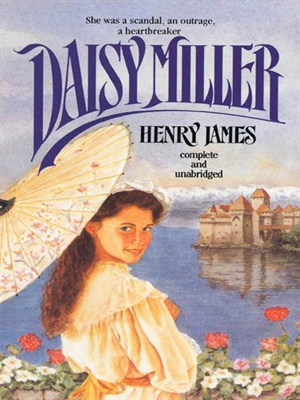
‘Daisy Miller’ by Henry James – A Severe Reading Setback

‘Daisy Miller’ by Henry James  (1878) – 80 pages

c1a691d8-c361-4ad3-a74f-34d475288fdfimg400

If you want to retain a good opinion of Henry James, don’t read ‘Daisy Miller’.   When you read this novella, you realize that it was written by a haughty snobbish upper class twit.   James’ total contempt for us common people shines through.

The story of Daisy Miller is told through the eyes of a twenty-seven year old man named only Winterbourne.  Winterbourne is an American who has plenty of real money, so he travels around with his aunt to only the finest hotels and resorts in Europe.   In the town of Vevey in Switzerland there is a hotel that is even grand enough for Winterbourne, “being distinguished from its upstart neighbors by an air both of luxury and maturity.”

There Winterbourne meets a rambunctious little American boy named Randolph who introduces him to his pretty older sister, Daisy Miller.

“They were wonderfully pretty eyes, and indeed Winterbourne had not seen for a long time anything prettier than his fair country-woman’s various features – her complexion, her hair, her nose, her ears, her teeth.  He had a great relish for feminine beauty.”    

Winterbourne is really attracted to Daisy, but first he must determine if her money and her behavior are worthy of his refined attention, so he hovers around Daisy for the rest of the novella.   By watching her, he determines that Daisy is kind of a free spirit, and of course Winterbourne severely criticizes her for that.

The Millers decide to relocate to Rome, Italy, and Winterbourne hears rumors about Daisy.

“The girl goes about alone with her foreigners.”

So Winterbourne immediately rushes to Rome where presumably he finds an even more luxurious and exclusive hotel, so that he can continue to hover around Daisy.  He finds out that the free spirit Daisy has gotten involved with an Italian guy called Giovanelli who claims to be a Count.  Winterbourne can tell just by looking at the guy that he doesn’t have any real money, so he pesters Daisy to ditch the Count.  Daisy doesn’t ditch the Italian Count, so soon she becomes a shame and an embarrassment to her entire hotel of snooty people.

Of course in a Henry James story Daisy Miller must die for her sins, and she gets a mysterious fever.  After she dies, Winterbourne moves on to an even more posh elegant hotel in Geneva.

After reading a couple of other works by Henry James, I was just getting to the point where I could stomach his pompous pretentious ways, but I must report that ‘Daisy Miller’ was a severe setback in my regard for Henry James.


Grade:    C-


‘The Winter’s Tale’ by William Shakespeare – Dark Tragedy or Light Comedy or Romance?

‘The Winter’s Tale’ by William Shakespeare   (1610) – 108 pages

9781304880710-medium

“Merry or sad shall it be? As merry as you will. A sad tale’s best for winter.”

‘The Winter’s Tale’ is really two plays that fit together uncomfortably.  The first three acts are a dark tragedy involving a Sicilian King’s insane jealousy resulting in the deaths of his son and wife and banishment of his baby daughter.  The last two acts take place sixteen years later, and we are supposed to believe that the King has redeemed himself for those deaths through penitence to the point where his wife the Queen magically comes back to life.  This is one of the most hokey preposterous scenes in all of Shakespeare.

King Leontes of Sicily is having such a good time with his visiting old friend King Polixenes of Bohemia that he asks his wife Queen Hermione to convince his friend to stay.  Hermione does as her husband asks, but Leontes gets suspicious when he sees Hermione and Polixenes together that they are fooling around behind his back.  Hermione is pregnant, and Leontes immediately suspects that Polixenes is the father of the baby.  Soon Leontes becomes deranged with jealousy, and attempts to have one of his servants kill Polixenes, but instead the servant helps Polixenes escape back to Bohemia.   Leontes puts his wife in prison where she has the baby girl Perdita.  Leontes banishes the baby, and another servant takes the baby to Bohemia whereupon the servant is immediately eaten up by a bear.  A shepherd discovers the baby and takes her home.  Soon the king’s young son dies for missing his mother.  When Hermione hears the news, she collapses and soon she dies also.  Only then is Leontes filled with remorse.

So far, ‘The Winter’s Tale’ is a dark tragedy, but act four begins in a much lighter mood sixteen years later in Bohemia.   The baby Perdita is now a beautiful young woman, and by some strange coincidence King Polixenes’ son Florizel has become enamored by her even though she is a lowly shepherd’s daughter.  Most of Act IV is taken up with the spring sheep-shearing festival where there is much singing and dancing.  A joke figure named Autolycus comes to the festival, and he plays a similar hearty comedic role as Falstaff in Shakespeare’s historical plays. At this point we are far, far away from the earlier tragedy.

0c9fe2b07a411a2db90c3317d96162adA lot of plot ensues but by Act V we are back in Sicily.  The King Leontes has been pining away with regret for sixteen years, but now his banished daughter is back with her royal boyfriend from Bohemia, and both Kings watch as the couple gets married.   After the wedding they all go to see the statue of Queen Hermione that her best friend Paulina has made, and, wonder of wonders, it comes alive, and Leontes and Hermione are reunited.

I suppose there are two ways to look at ‘The Winter’s Tale’.  One way is that the tale is out-and-out preposterous.  The other is to view it as a case study in the magnificent power of redemption for King Leontes.   However I suspect that most modern audiences would find that King Leontes’ previous crimes were too heinous for him to be redeemed.

Grade:   B+

Continue reading

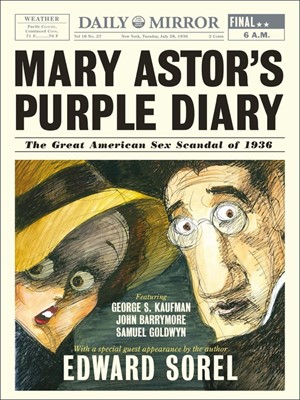
‘Mary Astor’s Purple Diary’ by Edward Sorel – The Great American Sex Scandal of 1936

‘Mary Astor’s Purple Diary’ by Edward Sorel   (2016) – 165 pages


6a9a0ebe-ee9d-45eb-b81e-a7f24e19ade7img400I love Hollywood gossip, even gossip that is over eighty years old.  Here is the true story of Mary Astor, an early Hollywood starlet, with illustrations by cartoonist Edward Sorel.

The scandal was a court fight between Mary Astor and her divorced husband Dr. Franklyn Thorpe for custody of their four year old daughter.  The court fight centered on Astor’s personal diary which she admitted documented her affair with playwright George S. Kaufman.  Her husband claimed the diary kept a tally of her many affairs, and that in it she actually rated the performances of her many lovers.  Astor claimed these additional rumors were untrue.  The trial and the diary became front page news in the newspapers and movie magazines of that time.

0b2e8b155dc410c2badea516a5ea0d38 ‘Mary Astor’s Purple Diary’ actually tells the story of Mary Astor’s entire life.  She was born in 1906 and she started in the movies as a child star at age 14.  While she earned big money as a silent film star, her father took all the money and spent it extravagantly.  When she was only 17, the famous star and roué John Barrymore wanted her to be cast in his movie ‘Beau Geste’.  She had an affair with the much older Barrymore behind her parents’ back.  Later she starred with Clark Gable and became one of the biggest stars of that era.  She had a short marriage to movie director Kenneth Hawks (brother of director Howard Hawks) which ended when he was killed in a plane crash in 1930.

During the custody court hearings of 1936, Astor continued to film the movie ‘Dodsworth’ which became one of her biggest successes.  Here most famous role was in ‘The Maltese Falcon’ which was filmed in 1941 with Humphrey Bogart.  She died in 1987 at the age of 81.

mary_astorIn his account of Mary Astor’s life, Edward Sorel is imaginative yet a straight shooter in assigning praise and blame for the various escapades in Mary’s life.  Since Astor’s career and presumably her life were unhurt by the scandal, it is treated more as a human interest story than as a tragedy.   Sorel has had a lifelong fascination with Mary Astor dating back to 1965 when he discovered some old newspapers reporting her trial while replacing the linoleum in his kitchen.  His fascination with Mary Astor fuels our own fascination.

I found that Sorel’s many pictures enhanced the story and made Astor and her life and that era in Hollywood come alive for me.


Grade:    A


‘What Narcissism Means To Me’ by Tony Hoagland

‘What Narcissism Means To Me’ poems by Tony Hoagland   (2003) – 78 pages


41yreqt8ul-2


No, this is not an autobiography by Donald Trump.  Instead it is a fourteen year-old book of poems by Tony Hoagland.  Why did I read this? There are three reasons:   1) I was tremendously impressed with Hoagland’s book of poems from 2015, ‘Application for Release from the Dream   2)  This Narcissism title is one of the cleverest book titles that I have ever encountered, 3)  When I find a poet whose poems make sense to me and which I enjoy, I want to continue with their work.

I will start with some lines from the poem “Patience” in the book which are a quote from his girlfriend at the time who is “running wild, cutting loose in an epileptic fit of telling the truth”.  She gives him “a mixture of good advice and slow-acting poison” :


“Success is the worst possible thing that could happen

                                       to a man like you,” she said,

“because the shiny shoes, and flattery

                                        and the self-

lubricating slime of affluence would mean

you’d never have to face your failure as a human being.” 

Now this is some really mean criticism this guy gets from this girlfriend, and I hope he didn’t wind up marrying her.  But these lines did win me over to the poet’s side, because I also have gotten this kind of severe criticism from an old girlfriend in the past.  I would call this irrevocable criticism.  Hoagland ends the poem with the following lines:

“I knew that if I could succeed at being demolished, I could succeed at anything.”

These lines do show two facets of the poet’s style; the poems are conversational and casual, yet they deal with strong emotions.

Now that I’ve read two books of poems by Tony Hoagland, which of the two did I like the best?  I do believe that the later collection,  ‘Application for Release from the Dream , is the stronger more direct work, but still nearly every poem in this earlier book, ‘What Narcissism’, has lines that I like.

I will finish with the first six lines from the poem “How It Adds Up”:

“There was the day we swam in a river, a lake, and an ocean.

And the day I quit the job my father got me.

And the day I stood outside the door,

And listened to my girlfriend making love

To someone obviously not me, inside,

And I felt strange because I didn’t care.” 

I wonder if it was his same girlfriend in both poems.


Grade:   A-         


‘Nicotine’ by Nell Zink – An Over-The-Top Gross-Out Novel


‘Nicotine’ by Nell Zink   (2016) – 288 pages


e7e56acf-15b3-4e0b-9263-6ffb8841489aimg400I did not like ‘Nicotine’ very much.  That is unusual because I had been on a roll lately with my reading.  It seemed every book I had recently read, I have really enjoyed.  They all got grades of B+, A-, A.  I thought maybe I had reached the point where my selection process was so well-tuned I only picked books that were just right for me.  But today I see I was only fooling myself.  After so many wonderful books, I picked one, ‘Nicotine’, which I did not appreciate very much at all after reading it.  I am actually quite happy about that, because my reading ship has finally righted itself after nearly tipping over from all the great novels.

I can tell that Nell Zink really doesn’t care whether or not I liked her novel.  Otherwise she would not have called it ‘Nicotine’.

What did I not like about ‘Nicotine’?  Let me count the ways.

  1. In the first few pages I was subjected to a quasi-incest scene that served no purpose in the plot of the novel other than to establish that this was going to be a wild and crazy ride.
  2. Then we get the deathbed scene of the father Ned. I know that there are horrible things involving blood, snot, and infection that occur on the deathbed, but I don’t need to be subjected to many pages of graphic gruesome detail.   I suppose this passes for gross-out humor in this ostensibly comic novel.  Later there is a shit storm in an apartment house.  Ha, Ha.
  3. The father Ned is a shaman who has a large group of hippie-like people who come to dance at his funeral. The career path of shaman does not interest me at all.
  4. There is a lot of sex in this novel. The sex in ‘Nicotine’ is less than interesting and more than dismal.
  5. The author Nell Zink has taken to heart the literary advice ‘Show, Not Tell’, and thus nearly everything is shown, not described or explained. Thus the characters are under-developed.
  6. ‘Nicotine’ contains some of the worst dialogue I have ever come across in the sense that it is inelegant and boring. In good dialogue the characters are so well differentiated that we can tell who is talking just by their words.  Here everyone speaks in the same clumsy manner so it is difficult to know or care who is speaking at any given time.
  7. By making them out to be weird inconsequential spoiled idiots and anarchist squatters, Zink discredits those who believe in social justice. Although it pretends not to be, ‘Nicotine’ is a very right-wing novel, a story for Trump supporters.
  8. The characters in ‘Nicotine’ are so sophisticated, so jaded, so disgusting, this farm boy could not identify with them at all. It was like they were from a different planet from the one I inhabit.  These people mostly seem to all be looking for a way to get out of their manic-depressive disorder by getting transgender surgery.

Nell Zink claims it only takes her three weeks to write a whole novel.  I am surprised it took her that long to write ‘Nicotine’.


Grade:   D+


Less Well-Known Novels from the 19th Century that are Among My Favorites

For this list, I am bypassing ‘War and Peace’, ‘Middlemarch’, ‘Pride and Prejudice’, etc. in order to highlight some of the lesser known novels and novelists of the 19th century which I have read and found to be among my favorites.


51u72qino1l-_sy264_bo1204203200_ql40_‘Don Juan’ by Lord Byron (1819) – Here is a satiric epic poem that this novel reader really likes.  Of course there is also Alexander Pushkin’s novel-in-verse ‘Eugene Onegin’ which is also a must-read.


res_t_9780285647299‘Mysteries’ by Knut Hamsun (1892) – Hamsun’s most famous work was ‘Hunger’, but he wrote several novels in the 19th century which are exceedingly good including ‘Mysteries’ and ‘Pan’ and ‘Victoria’.  You may want to avoid this Norwegian writer’s later work in the 20th century though.


gaskell‘Cousin Phillis’ by Elizabeth Gaskell (1864) – Her pen name was Mrs. Gaskell, and her real name was Elizabeth Gaskell.  Her most famous novel was probably ‘Cranford’, but I have found all of her work I’ve read uniformly good.


51yvk59xyxl-_ac_ul320_sr204320_‘The Relic’ by Jose Maria de Eca de Queiroz  (1887) – So far I have discovered three wonderful Portuguese writers:  Jose Maria de Eca de Queiroz, Fernando Pessoa,  and Jose Saramago.  Of the three, Eca de Queiroz was the earliest.  In ‘The Relic’, its anti-hero is ridiculed with comic irony.


000385253‘Marianne’ by George Sand (1876) – Her real name was Amantine-Lucile-Aurore Dupin.  She dressed like a man, smoked in public, and had affairs with a number of artists including musician Frederic Chopin.   Ivan Turgenev said of Sand, “You breathe freely when you read her.”


1054622-_uy200_‘Torrents of Spring’ by Ivan Turgenev (1872) – Of all the great Russian writers of the 19th century, Turgenev is probably the lightest.  That may be due to his connection to the French and George Sand.  ‘Fathers and Sons’ is his most famous work, but I find all his fiction uniformly good.


dom-casmurro‘Dom Casmurro’ by Joaquim Maria Machado de Assis (1899) – No question here, Machado de Assis is the greatest Brazilian writer of all time.  After reading his most famous work, ‘Epitaph of a Small Winner’, I plunged into all of his work available which was all fine.  Ultimately I plunged into a lot of Latin American fiction which I continue to find vastly rewarding.


882108-_uy200_‘Castle Rackrent’ by Maria Edgeworth (1800) – Here is the first historical novel, the first Anglo-Irish novel, and the first saga novel with an unreliable narrator.  I must warn you that the style of this novel is somewhat old-fashioned and different from the styles of today so that it might be difficult to fully appreciate.


135x190_new-grub-street‘New Grub Street’ by George Gissing (1891) – It is Gissing’s most famous novel, but I’ve read another, ‘The Odd Women’,  which was also good.  This is a doubly literary novel, because it is about writers pursuing literary careers.


51futussqcl-_sy344_bo1204203200_‘The People of Hemsö’ by August Strindberg (!887)  – Strindberg was most famous as a Swedish playwright competing with Norwegian  Henrik Ibsen for European audiences.  I have only read this one fine novel by Strindberg so far, although I have read at least a couple of his plays.


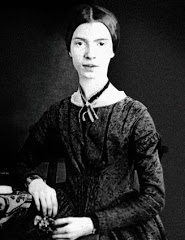
Since female writers are somewhat underrepresented in this list just as they are in 19th century literature (except at the very top with Jane Austen, the Bronte sisters, and George Eliot), I will finish with a poem from my favorite 19th century poet, Emily Dickinson.  Emily Dickinson wrote over 1700 poems, but less than a dozen were published during her lifetime.

emily-dickinsonIf I can stop one heart from breaking,
I shall not live in vain;
If I can ease one life the aching,
Or cool one pain,

Or help one fainting robin
Unto his nest again,
I shall not live in vain.

Emily Dickinson     (1864)


‘The North Water’ by Ian McGuire – A Brutal and Compelling Whaling Ordeal


‘The North Water’ by Ian McGuire     (2016) –   253 pages


e74b5277-4020-4dfa-9554-d47b7c4082e3img400“The North Water” is a tale about a 19th-century Arctic whaling expedition.  Whaling was a rough ugly business but I suppose not much more disgusting than any business where animals are slaughtered.    Not that I am a vegetarian…

We tend to think of whales as glorified huge fish, but they are actually mammals just as we are.   Whales were eaten as meat, the whale oil was used widely in lamps, and the whale bones were used in corsets.  At the time ‘The North Water’ takes place in the late 19th century, the petroleum industry was making the whale oil usage nearly obsolete.

Don’t expect ‘The North Water’ to prettify the whaling business, not at all.  If you can stomach lines like the following about an already dead decomposing whale, you will get on with this novel:

“The blocks of blubber they slice and peel away are miscolored and gelatinous – much more brown than pink. Swung up onto the deck, they drip not blood, as usual, but some foul straw-colored coagulation like the unspeakable rectal oozings of a human corpse.”

Otherwise if you can’t handle these lines, don’t even try to read this novel.  Sometimes I believe Ian McGuire is determined to gross us out.

You are not going to hire refined gentlemen as your crew on a whaling ship.  You take the men you can get.

“He is a prick and a brute, but so are half the men on this bark.”

The worst is Henry Drax.  ‘The North Water’ opens with a scene in a London tavern district where Drax smashes in the heads of another man and a 10-year-old boy during a last drunken binge before boarding the whaling ship.   Drax is a good harpooner.

The story is told from the point of view of the whaling ship’s doctor who has his own questionable past in the India colony.

What does it matter, he thinks, if he is surrounded by savages, by moral baboons? The world will continue on as it wants to anyway, as it always has, with or without his approval.”

This is a relentlessly violent tale.  There are few lulls in the action which would have allowed us readers to better appreciate the intense scenes when they do occur.  Every scene is a harrowing experience.  ‘The North Water’ definitely works as a hellacious adventure story, but some of the great sea novels of the past like ‘Moby Dick’ and ‘Lord Jim’ have had an extra dimension to them of either philosophy or social interaction that put them beyond just a brutal ordeal .  I missed that extra dimension in ‘The North Water’.


Grade:    B+


‘The Fall Guy’ by James Lasdun – A Wicked Modern-Day Suspense Thriller


‘The Fall Guy’ by James Lasdun    (2016)  –  244 pages


the-fall-guy-by-james-lasdun-300x467

About thirty years ago, I read a new collection of short stories called ‘Delirium Eclipse’ which greatly impressed me.  Here was a writer who could vividly and eloquently capture what it was like to be alive in our modern world. That book of short stories was the first fiction by James Lasdun. I thought for sure that Lasdun would soon join the ranks of young English literary stars like Ian McEwan and William Boyd whose acclaim was rising rapidly.

But widespread fame was not to be for James Lasdun.  His next literary work was ‘A Jump Start’, a book of poetry.  I bought that book and it contains some very fine poems, but we all know how poetry sells.  Throughout his career Lasdun has devoted at least as much energy to his poetry as to his fiction.  His next book of fiction was another collection of short stories called ‘Three Evenings’.  But short story writers just do not generally receive the plaudits that novelists do.  Lasdun did not write a novel until ‘The Horned Man’ in 2002   He has only written three novels including his latest ‘The Fall Guy’ in his entire thirty year career    His novels have received uniformly strong reviews, but Lasdun has never captured the public recognition of many other writers.  He has also written a lot of literary criticism and book reviews.

‘The Fall Guy’ takes place in New York which is where Lasdun relocated.  It is told from the point of view of a guy in his thirties named Matthew who has bounced around in the cooking and chef trade but has never been all that successful.  He is staying at an upscale vacation house outside New York with his rich half-brother banker Charlie who is married to the beautiful Chloe.  Matthew does the gourmet cooking for the couple during his stay.

There are a lot of bad deeds in this novel of which I will not go into detail, but all that misbehavior surely does spice up the plot.  One thing about the writer Lasdun, he has no qualms about his characters being wicked in our current times.

Along the way we get some insights into gourmet cooking and into banking.  There is a subplot regarding the Occupy movement which is probably Lasdun’s only misstep in that the movement has already been nearly forgotten today.  Matthew does criticize his banker brother Charlie:

“You’re not only allowed to rob people of their life’s savings and steal their houses.  In fact, the more you rob people of their life’s savings and steal their houses, the bigger your year-end bonus, right? And of course if it all goes pear-shaped, you and your chums in your six-thousand-dollar power suits can just get together with your other chums at the Treasury Department in their six-thousand dollar suits and arrange for an eighty-billion-dollar bailout, paid for of course by the very people you’ve spent the last decade robbing and stealing from.  Right, Charlie?” 

The quality that stood out the most for me in ‘The Fall Guy’ is that Lasdun’s writing at the sentence level is lively and adept.  I found the prose here energetic and nearly addictive, so I burned through this novel much faster than I normally do.  The suspense of the plot propels this scandalous story forward at a breakneck pace.  This shocking novel is not what you would expect from a poet


Grade:   A 

‘5,000 km per second’ by Manuele Flor – A Graphic Novel with Subtlety


‘5,000 km per second’ by Manuele Flor   (2009) – 153 pages       Translated by Jamic Richards

51h-wej9j6l-_sy344_bo1204203200_

Every year I search the lists of the best graphic novels to find one or two that might appeal to me.  This year I have come up with an exceptional one in ‘5,000 km per second’ by the Italian writer/artist Manuele Flor.

For me, the big problem with graphic novels is that they lack subtlety.  The stories in them are too simplistic, the drawings are too obvious, or the colors are too loud.  ‘5,000 km per second’ is different in all these respects.  This is a graphic novel for intelligent sensitive adults.

The story takes place in the three countries Italy, Norway, and Egypt.  The main three characters are Italian teenagers, Pierro, Lucia, and Nicola.  Nicola is a ladies man, but his friend Pierro is quite shy.  They are both interested in the neighbor girl Lucia.  Being shy herself, she falls for the shy one Pierro.

However the narrative does not hang around in Italy for very long.  In the next chapter Lucia is in Oslo, Norway living with a small family there.  In the next chapter Pierro is in Aswan, Egypt working as an archaeologist.

All of the drawings in this graphic novel are watercolors drawn by Manuele Flor himself.  He captures the bright radiance of Italy, the darkness and coldness of Norway in winter, and the hot sunniness and foreignness of Egypt to an Italian youth.  There is one scene of Pierro riding the bus to his Aswan archaeological site that fully captures the strangeness of Egypt to an Italian boy as he overhears conversations in Egyptian that he has no idea of what they are saying, and the people are dressed in types of clothes unknown to Italians.

fem-tusen-kilometer-i-sekundet3Perhaps that is what impressed me most about ‘5,000 km per second’, the capturing of the atmospherics of a situation.   There is nothing cartoonish about this graphic novel.  It communicates on a visceral level. Not all aspects of the story are easy to understand or to follow.  One must be fully involved in order to appreciate this understated story.    Much of the story is implied rather than directly described.

The title ‘5,000 km per second’ is the speed of voice communication over the phone from Norway to Egypt.

I believe this is a particularly fine graphic novel for those of us who read a lot of novels.  It has all the attributes of good fiction plus delightful artwork.


Grade:   A  


‘The Life-Writer’ by David Constantine – An Analyst of Feelings


‘The Life-Writer’ by David Constantine    (2016)   –    233 pages


30265212

Welcome to the world of feelings, where feelings matter and intense feelings matter intensely.  Never have I read such a novel as ‘The Life-Writer’ so obsessed about feelings to the exclusion of nearly everything else. ‘The Life-Writer’ is solely concerned with the higher sensibilities like grief and sadness and love and literature.

Let me first describe the situation that is the story of the novel.

Sixty-eight year-old Englishman Eric has been married to his much younger wife Katrin for about thirty years.  He suddenly is faced with a grave illness, and he does not last the year.  For Katrin left alone, Eric had been the exclusive love of her life.  After his funeral, she decides to devote her time to researching Eric’s love life from before he met her.  His first romantic entanglement was while he was still a teenager with a French girl named Monique.   Eric and Monique were together for only a few months, so I thought it was rather preposterous that Monique showed up for his funeral fifty years later.  However I guess in the esoteric world of feelings that kind of thing is possible.    All of Monique’s old letters to Eric, some of them never opened by Eric, are up in the attic, and Katrin decides to study all these old letters as well as to discuss Monique with Eric’s old friend from that time, Daniel.    Author Constantine takes us back to that time of Eric and Monique fifty years ago.

I am rather skeptical of the author as well as I am of his character Katrin attaching so much importance to this teenage romance from fifty years ago.    Actually I am skeptical of any teenage boy carrying on a relationship that is meaningful after all those years.  However ‘The Life-Writer’ is not written for romantic skeptics.

Monique is not the only woman in Eric’s past from before he met Katrin.  After his break-up with Monique, he married Edna, and that marriage was rather a disaster ending in divorce although they did have a son.  It was a rebound marriage.

OK, so I was skeptical of this novel’s premise.  However that did not keep me from enjoying this novel on its own precious terms.  It is a well-written careful analysis of feelings. I just had to get into the author’s mindset that these feelings are the most important things in this world.   David Constantine is also a poet, and ‘The Life-Writer’ does seem the kind of obsessive pristine novel that a poet might write.

David Constantine also wrote the story which is the basis of the movie ’45 Years’ which came out this year.  I watched that movie starring Charlotte Rampling and Tom Courtenay as part of this assignment.   It is similar to ‘The Life-Writer’ in that it is a story about people in their sixties re-evaluating their love of many years.  It is a movie that builds up slowly, but really grabs you at the end.   I recommend it, but I am unsure young people would like it as much.  ’45 Years’ is one of the few adult movies that have come out this year.


Grade:   B+


‘News of the World’ by Paulette Jiles – Predictable or Inevitable?

‘News of the World’ by Paulette Jiles    (2016) – 209 pages

newsoftheworld

‘News of the World’ is a simple tale that takes place in 1870, five years after the Civil War.  Captain Kidd who is in his early seventies makes a living travelling around Texas reading the current news of the world to groups of men and women in places that don’t have newspapers.  At one stop he encounters a ten year-old girl Johanna who had been kidnapped by a tribe of Kiowa Indians four years ago.  The Indians had killed the rest of her family, and she has been living with the tribe and has adopted many of their ways.  She now has been rescued, and the Captain is asked to take her along down to San Antonio so she can live with her only known living relatives, an aunt and uncle.

The story is told in dignified and stately fashion, and it reminded me of the classic cowboy movies of the 1940s and 1950s like ‘Red River’, ‘High Noon’, ‘Stagecoach’, and ‘The Searchers’.  It also brought me back to the TV westerns of the early 1960s.  We all knew the good guys were going to win by the time the TV show ended, because they would be back next week same as always.   It was all quite predictable but we didn’t care; we watched them anyway.  We took comfort in the inevitability of the conclusion.  This was manifest destiny.

The girl Johanna is used to Kiowa Indian ways and starts out wild and unfriendly and doesn’t talk, but gradually after a gunfight with some bad guys and other mishaps on the open road she slowly learns to trust the Captain, and the Captain learns to trust her.  This plot is one of the oldest and one I have run across repeatedly starting with ‘The Taming of the Shrew’, but it is still affecting when done well as it is here.

The author Paulette Jiles is also a poet, and it shows in the precision and simplicity of her language.  Unlike some other works of fiction by poets that I have read, her characters are down to earth and well-grounded in day-to-day prosaic reality.   I had no problem empathizing with her characters.

I do believe this is a fine novel for full grown adults, but I would especially recommend ‘News of the World’ to high school students or those who don’t read a lot of novels.  Its simple understated charms should win over a lot of readers.

Some of us more heavy-duty readers may believe we have encountered this novel somewhere else before.


Grade:    A-


‘Moonglow’ by Michael Chabon – A Fabricated Memoir

‘Moonglow’ by Michael Chabon   (2016) – 430 pages


559766‘Moonglow’ purports to be a memoir of Michael Chabon’s  grandfather, but from the first author’s note Chabon lets us know that this story is made up all the way.

“In preparing this memoir, I have stuck to facts except when facts refused to conform with memory, narrative purpose, or the truth as I prefer to understand it.”

In other words, don’t rely on any facts here at all.  This is fiction.

I have been much entertained by some of Chabon’s previous work, especially ‘The Wonder Boys’ and ‘The Amazing Adventures of Kavalier & Clay’.  These works showed a comic warmth that made them a pleasure to read.  ‘Moonglow’ is a more ambitious work covering the entire life of this man, Michael Chabon’s maternal grandfather.  It is a longer work and much more diffuse compared to his previous work, and therein lies the problem for me.

Perhaps a chronological organization would have helped.  As it is the book slips around to different timeframes and episodes in this man’s life from before World War II up to and including retirement and widowhood in Florida.  There are so many digressions and digressions of digressions along the way.  We get a discussion of the evolution of the Styrofoam coffee cup and its molded plastic lid which gives his grandfather an idea for his model rocket which might even be a benefit to real rockets.  Chabon can make even these offbeat subjects interesting with his prose style, but by then I had given up on any overriding force behind this novel beyond that this was one man’s life.

There is a poignant story about the grandfather’s wife and her daughter who is Chabon’s mother.  The Michael Chabon character in the book is actually not related at all to the man he calls his grandfather.

Rockets are a main interest in ‘Moonglow’ as well as of the grandfather.  During World War II the grandfather is in the US Army fighting in Germany in 1945.  He is in the Allied force that goes into the V2 rocket factory in Nordhausen directed by Wernher Von Braun.  Von Braun had worked on rockets for peaceful purposes before the war, but Hitler used the V2 rockets for bombing allied areas.  The allied troops found that mistreated slave labor was being used in the German rocket factory. From that point on the grandfather is absolutely disgusted with Von Braun, even after the United States brings Von Braun back here to build space rockets as part of Operation Paperclip.  As Von Braun becomes a hero of the American space program in the 1960s, the grandfather gets even more disgusted.

“Nobody wanted to hear that America’s ascent to the Moon had been made with a ladder of bones.”  

I was quite taken with the Von Braun story, and a well-structured 200-page novel centering around this story line would have been fine. Apparently ‘Gravity’s Rainbow’ already deals with the Von Braun situation. However there were other story lines in ‘Moonglow’ that were of much less interest to me like my least favorite which was that of the grandfather trying to capture a snake that supposedly ate a girlfriend’s cat in a Florida retirement village.

I suppose Michael Chabon is making a valid point, that one’s life is not about only one straightforward thing, but is filled with diversions and dead-ends and lots of ambiguous stuff.  However shouldn’t a novel clear up some of this confusion?


Grade:    B       


The Top Ten List of the Best Fiction I’ve Read in 2016


toptenAs always I am limiting my Top 10 list to novels published during this century. I don’t think these recent novels should have to compete against the classic old novels I choose to read or re-read.  After the Top Ten, I will list a few classic novels that I really liked this year.

Click on either the picture or the title and author to read my original review for each book.


mfyf5wg1u5c4ukuqektbakg‘Mothering Sunday’ by Graham Swift – ‘Mothering Sunday’ captures the sunny ambiance of an unseasonably warm spring day in the Twenties and the sparks of an illicit but romantic love affair. I know this is nostalgia, but it is lovely, moving nostalgia, and I would not change a word.


szalayAll That Man Is’ by David Szalay – For me it was an exploration of myself, but for you women who want to figure out or understand guys, ‘All That Man Is’ is the fiction for you.  It is not always pretty, but it is pretty accurate. Actually men come out looking slightly less atrocious here than in a lot of modern fiction.


071361a1-009e-43ee-9bf9-8b773db7275fimg150‘The Past’ by Tessa Hadley – This is the novel I read early in the year to which I compared all later reads. Most of the later novels came up short against ‘The Past’.  The pastoral family scenes here are just incredible.


‘The Sympathizer’ by Viet Thanh Nguyen – Here is a poignant yet humorous novel that observes the Vietnam War from the viewpoint of the Vietnamese, a perspective most of us people from the United States have not encountered before.


‘Application For Release From the Dream’ by Tony Hoagland – My new favorite poet.

“a human being should have a warning label on the side
that says, Beware: Disorganized Narrative Inside;
prone to frequent sideways bursting

of one feeling through another”

‘Wasp’, Tony Hoagland


the-four-booksThe Four Books’ by Yan Lianke – This is a powerful bitter political novel about the ridiculous imposing of and the disastrous results of Mao Zedong’s Great Leap Forward.


londonjoan-138x211‘The Golden Age’ by Joan London – The Golden Age is a makeshift children’s polio hospital in Australia during the height of the polio epidemic in the early 1950s.  This is an incredibly moving old-fashioned story of children in the hospital, their families, and the dedicated staff.


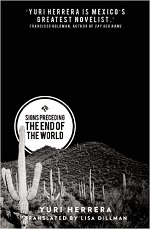
signs_preceding‘Signs Preceding the End of the World’ by Yuri Herrera – This is a tough little Western novella written in distinctive heroic prose. You don’t mess with Makina; just ask the young guy who tried to grope her on the bus.


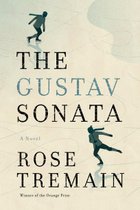
9200000056909680‘The Gustav Sonata’ by Rose Tremain – This is a fine unpredictable European novel about complex moral situations.  Rose Tremain has done it once again.


s-l225‘A Gentleman in Moscow’ by Amor Towles – Here is a Russian novel written with Old World charm by a literary stylist about the head waiter in the one fine Moscow hotel during the Communist years.


9781911214335 ‘Nutshell’ by Ian McEwan – I’m always up for a clever Hamlet parody.  In ‘Nutshell’, Hamlet isn’t even born yet.  The rutting of his mother and his father’s brother causes Hamlet both mental and physical pain.


———————————————————–


As promised, here are three novels from the previous century I really liked this year.


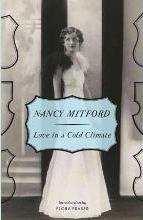
9780307740823‘Love in a Cold Climate’ by Nancy Mitford – The unforgettable Mitford family


25489203-_uy200_‘Our Spoons Came from Woolworths’ by Barbara Comyns – A wife and mother tries to keep up a good front despite grinding poverty.


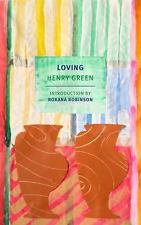
green‘Loving’ by Henry Green – It is difficult to decide who was more offbeat, Barbara Comyns or Henry Green.  In fiction, offbeat is good.


‘Our Spoons came from Woolworths’ by Barbara Comyns – Vivid, Devastating, and Honest


‘Our Spoons came from Woolworths’ by Barbara Comyns    (1950)   –   196 pages


44042856z

Perhaps the darkest thing about ‘Our Spoons Came from Woolworths’ is that it was based to some extent on the real life of Barbara Comyns.  When the novel was first published in 1950, she actually wrote a disclaimer on the copyright page: “The only things that are true in this story are the wedding and Chapters 10, 11, and 12 and the poverty.”   The listed chapters are about her horrific experience giving birth to her first child in a public hospital.  The poverty of her early marriage years was all-pervasive.

We have all read or heard romantic tales of the starving artist who lives in poverty in order to pursue his grand artistic dreams.  However we rarely get the picture of the poverty from the point of view of his starving wife with a baby.  The wife and mother must work full time so her husband can stay at home not earning a penny.  Somehow the wife keeps up a good front for the family until the baby gets sick or she gets sick and can’t earn anything.

Barbara Comyns has frequently been call a naive Primitivist, but never has a writer depicted day-to-day grinding poverty in more vivid devastating fashion.  Perhaps what makes it so devastating is that her narrator always tries to keep up a good front no matter how terrible her plight.

“I was pleased he was going to be away now I felt so unhappy, because I knew men hate women when they are unhappy.”

Comyns can leave a sentence like the above hanging, so that its effect is more desolate than if it were explained.

Barbara Comyns deals in realistic fashion with subjects in a woman’s life that were hardly mentioned at that time including our married woman having an affair and then her back-alley abortion. But there is more to Comyn’s writing than her descriptions of sad destitution.  She tells her life in simple and honest terms.

“I was quite glad to see him wearing such stupid clothes.  It made it much easier to tell him I didn’t love him anymore.” 

We have all been in situations like that, even though we usually won’t admit it.  Our narrator in this novel always, always tells the truth even if it makes herself look stupid.  But ultimately she is not so stupid; she is living her life the best she can in an extremely difficult situation.


Grade:    A   


‘Reputations’ by Juan Gabriel Vasquez – A Political Cartoonist from Columbia


‘Reputations’ by Juan Gabriel Vasquez    (2013)  –   187 pages        Translated by Anne McLean

9781594633478

The previous novel by Juan Gabriel Vasquez, ‘The Sound of Things Falling’, was spectacularly good in my opinion, and it made my Top Ten list for 2014.  That was a moving novel about the violent Pablo Escobar years in Vasquez’s home country of Columbia.

‘Reputations’ does not quite measure up to that performance for me.  ‘Reputations’ is about a renowned political cartoonist, Mallarino, who becomes powerful through his newspaper drawings.  The story is told from the perspective of the cartoonist, and he just seems a little too self-satisfied with his life for me to entirely empathize with his situation.  The cartoonist job, the house in the mountains, the beautiful ex-girlfriend Magdalena, the understanding daughter, everything seems just a little too perfect for Mallarino for him to be believable.  If our hero had been a bit more conflicted, I could have accepted him.

At the same time the writing here is crystal clear and fun to read.  The plot premise is a good one.  Early in his career Mallarino drew a cartoon about an ambiguous situation involving a politician he didn’t like and an eight year-old girl which destroyed the politician’s career and caused the said politician’s early death.  Twenty-five years later, Mallarino is confronted with the girl who was involved, grown up now.  Mallarino must relive the circumstances of his drawing the cartoon which he had pretty much forgotten.

“Forgetfulness was the only democratic thing in Columbia:  it covered them all, the good and the bad, the murderers and the heroes, like the snow in the James Joyce story, falling upon all of them alike.  Right now there were people all over Columbia working hard to have certain things forgotten – small or big crimes, or embezzlements, or tortuous lies – and Mallarino could bet that all of them, without exception, would be successful in their endeavor.”      

If Vasquez had taken his plot to its logical conclusion and once and for all given us the absolute facts of the case, I believe the novel would have been stronger for it.  However Vasquez gives us an open-ended conclusion so we don’t know whether or not the cartoonist had made a terrible mistake early in his career or not.   Mallarino does not fully confront his demons.  I felt the author had let Mallarino off the hook just like he had let Mallarino off the hook by having his ex-long-term girlfriend still be his lover.  Neither Vasquez or his protagonist Mallarino never really confront any difficulties head-on, and the novel is weaker for it.


Grade:   B  


‘The Gustav Sonata’ by Rose Tremain – A Fan’s Notes


‘The Gustav Sonata’ by Rose Tremain    (2016) –  240 pages


passport_the-gustav-sonata-a-novel-1496309-52a5f84bf52d7ac3e1f6

I have been a devotee of Rose Tremain’s fiction for over twenty-five years.  First I read ‘Restoration’ and ‘Sacred Country’, then went back and read two of her earlier works ‘Sadler’s Birthday’ and ‘The Swimming-Pool Season’, and I have continued to read her novels and stories up to today.  I even seem to recall that she used the pen name Rosemary Tremain early in her career.

Why have I been drawn to Tremain’s fiction?  Her writing has the qualities that I much appreciate in a fiction writer.  Her writing is perceptive, empathetic, methodical, unsentimental, and precise, and yet she can also be light-hearted and even humorous.  She can deal with complex moral situations and capture the poignancy of the lives of people dealing with them.   She is also quite unpredictable as to what she will write about next, so her novels come across as new and exciting.

‘The Gustav Sonata’ is another fine example of Rose Tremain’s work.  At the center of this story is the father Erich Perle who is a policeman.  However he is fired for falsifying dates on forms so that Jewish people who were escaping Austria in 1938 could stay in Switzerland.  So this man gets fired for an act of courage for which he should have received a medal.  That is life.

Erich dies soon after his firing.  He leaves a wife Emilie and a small son Gustav.   Emilie blames the Jewish people for Erich’s death, and she remains an anti-Semite long afterwards.  However her son Gustav becomes best friends with a Jewish boy Anton starting at age five, a friendship that continues throughout their long lives.  Emilie and Gustav are very poor, while Anton’s family is quite prosperous, so they take Gustav along on their family trips.  Gustav has a positive steadying influence on the more anxious, temperamental Anton.

‘The Gustav Sonata’ is divided into three major sections.  The first section takes place in the late 1940s when Gustav meets his new friend Anton.  The second section goes back in time before Gustav is born and describes how Erich and Emilie meet and wed.  The last section takes place in the 1990s when Gustav and Anton are in their late fifties, Gustav running a small hotel and Anton a music teacher.

Another quality I like about Rose Tremain’s writing is that she is adept enough to only deal with the parts which are important to her story so we don’t have to waste a lot of time covering these people’s entire lives.

I will end with what John Boyne wrote in the Irish Times:

“In fact I have long considered her (Rose Tremain) to be the finest British novelist at work today, more consistent than McEwan, more prolific than Ishiguro, and less erratic than Amis, although the title is more frequently accorded to one of those three (no surprises here) men.”

I agree.


Grade:    A


‘The Transmigration of Bodies’ by Yuri Herrera – How does Herrera Do It?


‘The Transmigration of Bodies’ by Yuri Herrera    (2013) –  101 pages    Translated by Lisa Dillman


transmigration-cmyk

Now is the time to ask.  How does Yuri Herrera do it?  How does he put us readers in the mood for his own distinctive form of noir with only a few short sentences?  Let’s look at the first few sentences of ‘The Transmigration of Bodies’.

“A scurvy thirst awoke him and he got up to get a glass of water, but the tap was dry and all that trickled out was a thin stream of dank air.”  

This definitely establishes the desolate mood for what follows.

Eying the third of mescal on the table with venom, he got the feeling it was going to be an awful day.”

Here we get a sense of grim foreboding.

“He had no way of knowing it already was, had been for hours, truly awful, much more awful than the private little inferno he’d built himself on booze.”

Here we go from individual apprehension to a general sense of dread.

“He decided to go out.”

In a short staccato sentence, our hero acts.  With these few words, Herrera has set the mood which is desolate, truly awful.  This is a time of plague when everyone must wear masks over their faces to protect themselves.  However that terrible unease does not prevent our hero from acting.  Our hero is known as The Redeemer.  He fixes things between people.  In ‘The Transmigration of Bodies’ we have two families, each of whom are holding the dead body of a member of the other family.  Herrera gives us vivid descriptions of the decaying bodies   These are people the Redeemer has known and liked. It is up to The Redeemer to perform a body swap between these families in this desolate plague zone.

Herrera wins us over to the side of the Redeemer with the following:

“What did he expect, a man like him, who ruined suits the moment he put them on: no matter how nice they looked in shop windows, hanging off his bones they wrinkled in an instant, fell down, lost their grace.” 

I can sure identify with that remark.

‘The Transmigration of Bodies’ is not quite as austere and single-minded as ‘Signs Preceding the End of the World’.  In ‘Transmigration’ there are a few too many characters to keep track of.  However, ‘Transmigration’ contains enough good things so that I am giving it the same grade as ‘Signs’.    It is another strong performance from Herrera.

Herrera gives us an insight into his own writing when he discusses the words that get written on a tombstone:

“I will love you always.  I can never forgive you.  Forget about me.  I’ll be back.  You’ll pay for this.  Words that etch deeper than a chisel.” 

The funny thing is that in my notes I kept for ‘Transmigration’, I had already written “Short sentences that stay etched in the mind, chiseled, imprinted.”


Grade:    A-   


‘All That Man Is’ by David Szalay – Fiction about Living as a Modern Man


‘All That Man Is’ by David Szalay   (2016)  –  358 pages


1476979365071

Somewhere I read that the men in ‘All That Man Is’ are a total washout.  That’s sad, because I identified real strongly with these guys.  Everything that David Szalay writes rings true from my own experience of guys up to and including “He tries a wank, but he is too drunk.”

‘All That Man Is’ is a rather pompous title for a decidedly un-pompous novel.   Let’s start with a quote:

“We all think we’re special — we’re all the fucking same.”

Many would not call this book a novel. There are nine separate stories about men scattered throughout Europe from Croatia to Geneva, from France to Cypress, from London to Cordoba, Spain, and so on. There is a lot of travelling whether by car, train, or airplane, and a frequent venue is a hotel room.  The stories are arranged from youngest to oldest by the age of the main protagonist, the youngest being seventeen and the oldest being in his seventies.  The stories do have a common theme which appears to be masculinity today, so I am willing to go along with calling ‘All That Man Is’ a novel.  Here we get many distinct angles on manhood at different times in life.

Despite having all the stories told from a male perspective, each story contains at least one woman who is central to the story.  In fact some of the women have the best lines.  In one story a young woman is reading the tarot cards for her boyfriend at a Belgian hotel stop on their drive to her home in Poland:

She said,  “I think these cards are suggesting that you should maybe stop thinking about your…thing all the time.”

He laughed, “My Thing!”

“This.”

She put her finger on it.

“What it means,” she said, looking him in the eye, “is that your skirt-chasing days are over.”   

In this story the man is in his mid-twenties, and this is a fair statement.

Some of the early stories are quite raunchy.  However as the men age in these stories, their obsessions turn from sex first to their families, then to their own mortality.

 “It still seems incredible to him that he is actually going to die. That this is just going to stop. This. Him.” 

 Szalay writes from inside each of his main male characters’ heads, and we get a full account of how they see the world.  Some of the men are very successful and some are failures.  One was very successful early on only to see all his fortune collapse like a house of cards.  Each story here is entirely convincing to me in its understanding of and insight into the male psyche.

‘All That Man Is’ a well-written, original, and entirely perceptive novel about being a man in the various stages of adult life.


Grade:   A