Archive for the ‘Book Reviews’ Category

‘Ties’ by Domenico Starnone – Feelings


‘Ties’ by Domenico Starnone   (2014)  – 150 pages            Translated by Jhumpa Lahiri
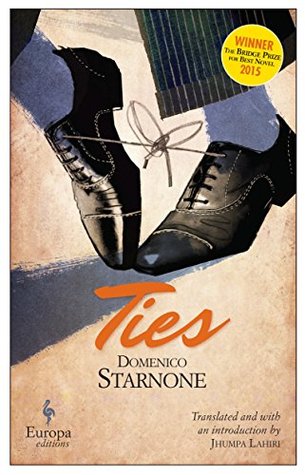
Last fall it was revealed that novelist Domenico Starnone is married to the woman who writes under the pen name Elena Ferrante.  Now his own novel ‘Ties’ has been translated into English and published.

The subject of the novel is quite similar to Ferrante’s ‘Days of Abandonment’ which I have also read and which also takes place in Naples.  (I have read a considerable amount of Ferrante’s work, but this is my first novel by Domenico Starnone.)  Both novels are about a husband who abandons his wife and two kids to go live with a 19 year old girl for a couple of years.

Book I of ‘Ties’ quotes the angry bitter letters the wife writes to her wandering husband.

“Let’s talk about it.  You can’t leave me in the lurch.  I need to know about this Lidia.  Does she have her own place? Do you sleep there?  Does she have what you were looking for, what I no longer have, or never did?  You snuck off, clearly avoiding speaking to me at all costs.  Where are you?”

These letters seemed to me to be quite standard fare for the letters written during a bitter separation, and I would have appreciated more originality. The whole first 37 pages are transcripts of these furious letters, so the reader gets no sense of place, no sense of Naples, at all.  But even in the scenes that follow which are not quoting letters, the reader gets no sense of Naples.  The story could have happened just about anywhere, because there is nothing grounding it to Naples.  It is entirely about the feelings of these people.  This is far different from the writings of Elena Ferrante which have a strong sense of place, and I mark it as a shortcoming of ‘Ties’.

After Book I, Book II is about an elderly couple whose home is broken into and ransacked.  I read twenty pages into this Book before I could figure out that this is the same husband and wife now reunited from Book I but occurring many years later.  The only hint was that the children’s names are the same.  I felt this was another flaw that we weren’t given more indication that this was the same couple.  So for twenty pages we are pretty much bereft of any point to the story.  Later we get immersed again in the marital problems of this straying but returning husband and his angry wife and their two children, but it is again all feelings without any definite ties to the real world.

Book III is about the couple’s kids who are portrayed as young wasters which I felt was somewhat unfair to them

I would call ‘Ties’ a psychological novel.  I do like psychological novels, but the ones I like most are those that are well grounded in a definite time and place.  Otherwise all the conversational back and forth about feelings sounds all too much like babble.


Grade :   C+
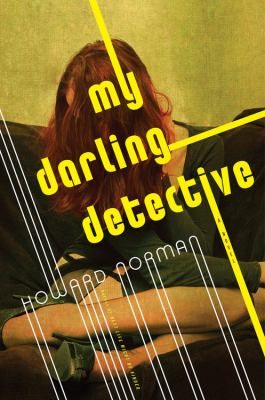
 

‘My Darling Detective’ by Howard Norman – A Light Noir


‘My Darling Detective’ by Howard Norman  (2017) – 243 pages


‘My Darling Detective’ is a cozy playful noir detective story.

“So in this book, I simply tried to create an atmosphere with some menace and some humor in equal measure.” – Howard Norman

This is a fun little novel that pays homage both to classic noir and to lending libraries.

It takes place in Halifax, Nova Scotia.  Martha, the girlfriend of Jake Rigolet, is a detective for the Halifax Regional Police until her pregnancy forces her to quit.  On the police force, Martha has two partners who play “bad cop and worse cop”. Once a week after Jake and Martha eat their dinners, they relax in bed to listen to their favorite show, Detective Levy Detects.

“In tonight’s episode,” the announcer said, “Detective Frederik Levy and the love of his life and partner in sleuthing, Leah Diamond, have been called in to investigate the murder of Fanwell Birch, who worked the newspaper stand in the lobby of the Hotel Devonshire.”

The love life of Jake and Nora shadows that of these radio detectives.

Jake’s mother Nora has worked at the Halifax Free Library for many years and in fact gave birth to Jake right inside the library.  Now Nora is in a rest home where Martha originally came to interrogate her but now comes for friendly visits.

I won’t go into the details of the detective case which is at the center of ‘My Darling Detective’ other than to say it involves Jake’s father and provides many twists and turns and scary moments along the way.  All is written in a delicious tongue-in-cheek style.  It definitely has the feel of an old-time detective fiction.

Although the novel takes place in the 1970s, the mystery at the heart of the novel dates back to 1945. There is a subplot involving a famous World War II photograph by Robert Capa, ‘Death on a Leipzig Balcony’.  In the opening scene of the novel Nora Rigolet walks up the aisle of a hotel dining room where that photograph is being auctioned and flings an open jar of black ink at it. Luckily the photograph is protected by glass so no harm is done. By the end, we discover why Nora reacts so intensely toward this photograph.

‘My Darling Detective’ is light playful fun, perfect for listening to rather than reading.  Bronson Pinchot, former star of ‘Perfect Strangers’, does a nice job of reading it aloud capturing that hard-boiled but humorous noir mood.


Grade :  B 


‘Anything is Possible’ by Elizabeth Strout – “But this was life! And it was messy!”


‘Anything is Possible’ by Elizabeth Strout   (2017)  –   254 pages

‘Anything is Possible’ is a collection of linked stories about some of the people who live in a small town in Illinois and its surrounding rural area.  The structure is similar to Strout’s previous work ‘Olive Kitteridge’, although that work took place in New England.

By now Elizabeth Strout may be considered a master of the linked story structure. In each story we hear about incidental characters through the gossip and hearsay that is going around town.  Some of these side persons that are talked about get their own story later on.

The behavior of some of the well-to-do people as well as that of some of the dirt-poor people in this town is despicable.  A man sets his neighbor’s barn on fire because the neighbor had caught him masturbating outside.  A male patron of the arts secretly films, assaults, and nearly rapes a female artist houseguest.  Strout doesn’t shy away from the terrible things that neighbors are doing under the seemingly tranquil surface of the town.  This makes for some offbeat interactions as nearly everyone here has at least a fleeting acquaintance with their neighbors’ life stories.  And in a small town, a person’s life story lives on forever, even after death.

I suppose that is why many people including perhaps myself consider life in a small town awfully stifling.  Everyone knows and judges everyone else, and the gossip flies around.  It is difficult to break free of your family’s past, your own past, without leaving.  In ‘Everything is Possible’, Lucy Barton comes from the weirdest poorest family in town, and in Elizabeth Strout’s stories that means awfully bizarre.  However somehow she has managed to escape, lives in New York, and has now improbably become a best-selling author.  One of the stories depicts her return to town to visit her brother and sister who are still stuck in the town.  Of course the anonymity of a big city neighborhood can also have its disadvantages.  I suspect that even small towns aren’t as tightly-knit as they used to be or as they are made out to be in these stories.

Strout starts each story without any preliminary introduction or explanation.  We usually are thrown right in the middle of a conversation.  Part of the pleasure of each story for the reader is figuring out what the exact details of the situation are.  Usually the circumstances in the stories wind up being strange and messy, but that is the way life is.


Grade:   A- 


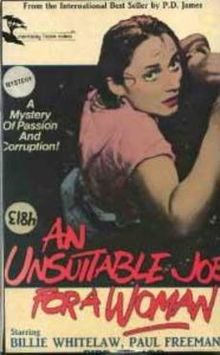
‘An Unsuitable Job for a Woman’ by P. D. James


‘An Unsuitable Job for a Woman’ by P. D. James    (1977) – 250 pages

‘An Unsuitable Job for a Woman’ is a no-nonsense novel.  By that I mean that the young woman detective at the center of this novel, twenty-two year old Cordelia Gray, has no romantic entanglements distracting her from her detective work. Unlike the heroines of Jane Austen, one of many nineteenth century writers who are mentioned in this novel, she is not actively pursuing a husband.  Instead Cordelia is entirely and determinedly devoted to solving her case.

Cordelia used to be partners in the Pryde Detective Agency – “We take a Pride in our Work” – but her partner Bernie Pryde commits suicide by slitting his wrists at the very beginning of this novel.  Her first case after Bernie’s death also involves a suicide.  Former college student Mark Callender has hanged himself in his room, and his parents want to know why he did it.  They hire Cordelia Gray to figure out their son’s mysterious death.

Instead of thinking about guys she wants to date, Cordelia uses ratiocination or the power of reasoning to solve the mystery.  This alternate use of her reasoning mind by Cordelia is tremendously refreshing for this reader and I suspect for a whole lot of other readers.  It goes a long way toward explaining the popularity of P. D. James as a writer of detective fiction.

P.D. James died a few years ago, and as a reader mainly of literary fiction I do like to read the best of detective fiction for its literary qualities. This has brought me to such writers as Ruth Rendell, Georges Simenon, Louise Penney, and now P. D. James.

Yes, young woman Cordelia is more cerebral than most detectives.  ‘An Unsuitable Job for a Woman’ takes place on or near Cambridge University, and the novel relates frequent loving descriptions of sites on campus and interesting items in Cambridge’s history as we go around the campus.  At one point we are punting on the River Cam just like any good Cambridger.  The novel is so fully immersed in the atmosphere of Cambridge University, I am tempted to call it an academic mystery.

Above all, we readers want a detective who is sharper than we are at tracking down clues and at figuring out possible scenarios, and Cordelia Gray meets those requirements.

‘An Unsuitable Job for a Woman’ is a mixture of intelligent deduction and gripping suspense.  For those interested in mayhem, there is plenty of that along the way.  Some of the predicaments Cordelia finds herself in are a little far-fetched, – Why does Cordelia move into the very house where the hanging occurred? – But it’s all in good fun.


Grade:   B+


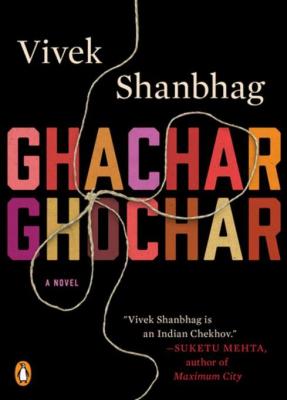
‘Ghachar Ghochar’ by Vivek Shanbhag – Tangled Up in the Family


‘Ghachar Ghochar’ by Vivek Shanbhag    (2013) – 117 pages        Translated from the Kannada by Srinath Perur

‘Ghachar Ghochar’ is a phrase of nonsense words that Vivek Shanbhag made up to describe a situation, especially inside a family, which is all tangled up.  Most of us have been there.  This is a warm amusing story about the subtleties of family dynamics and how easily they are upset.

Vivek Shanbhag is a writer from Bangalore in southern India, and ‘Ghachar Ghochar’ is his first novel to be translated into English.  He writes in Kannada which is one of the official languages in India.  Over fifty million people speak Kannada, and I have never heard of it before.

It’s an old story told in a new and pleasurable way.  A boy lives in a very poor but mostly happy close-knit family.  Five family members stay in a small four-room apartment which occasionally gets infested with ants.  Then the uncle starts up a spice company, and the family becomes rich.  That is when the problems really begin.  The family moves to a big house where each person has their own room. The boy’s older sister gets married in a love marriage, decides she doesn’t like the guy, and moves back home.  When the boy finishes school, his uncle makes him Director of the spice company.  The boy now grown up has no understanding of the spice business whatsoever or what he is supposed to do, so he hides out in his office all day doing nothing.

Then this grown-up boy gets married in an arranged marriage to a young woman named Anita who moves into his family house, and that’s when all hell breaks loose. Arranged marriages account for the overwhelming majority of marriages in India.  Strangely the commitment of a couple to each other in an arranged marriage can be even greater than that felt by a couple in a love marriage.

“Perhaps it is this instant that forms the basis of traditional marriage – a complete stranger is suddenly mine.  And then, I am hers, too; I must offer her my all.  I want her to wield her power over me as an acknowledgement of love.”

However there are the usual complications when the daughter-in-law moves in with the family.  A gal marrying into a family may not be aware of a family’s unique unwritten rules or may use them to further her own interests. Our daughter-in-law Anita here soon gets into hot water through I would say no fault of her own.

“The well-being of any household rests on selective acts of blindness and deafness.  Anita had outdone herself when it came to suicidal forthrightness.  It looked like she wanted to destroy all of us along with herself.”

Vivek Shanbhag gets these scenes of family interaction just right without hitting us over the head with his insights.  I learned to trust our author early on in ‘Ghachar Ghochar’.  Our grown-up boy who does nothing as Director of the spice company goes to his favorite restaurant, Coffee House, in order to pass the time each day.  Vincent is the regular waiter who serves him.

“By now I suspect he knows the regulars at Coffee House better than they know themselves.”  

If you frequent a particular restaurant or bar, you have probably felt the same way about the guy or gal who serves you.  I know I have.


Grade:    A


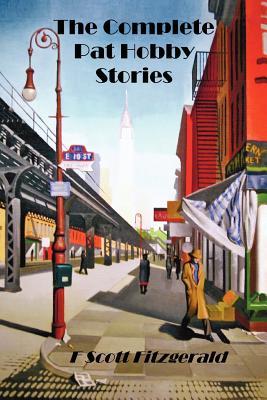
‘The Pat Hobby Stories’ by F Scott Fitzgerald – A Bitter Screenwriter


‘The Pat Hobby Stories’ by F Scott Fitzgerald  (1940) – 158 pages

“F. Scott Fitzgerald was born in 1896, famous by 1920, forgotten by 1936, and dead by the end of 1940.” – Jimmy So

The seventeen Pat Hobby Stories were the last stories F. Scott Fitzgerald wrote.  In the stories, Pat Hobby is a Hollywood screenwriter.  Pat Hobby calls himself “a scenario hack” and “a venerable script-stooge”.  A lot of readers and critics assumed that Pat Hobby was actually F. Scott Fitzgerald himself because he had worked years in Hollywood as a scriptwriter without much success, and he despised the job.   In the stories, Pat Hobby had already worked as a Hollywood screenwriter in the silent movie era.  Imagine writing a script for a silent movie.

I prefer to think of Pat Hobby as another separate character that Fitzgerald created like Jay Gatsby or Dick Diver.  Certainly a lot of Fitzgerald’s Hollywood experiences went into these stories, but his letters to Arnold Gingrich, his editor at Esquire, indicate that Fitzgerald was shaping this material to be ultimately a novel of connected stories.

In his prime in the 1920s Fitzgerald was being paid $4000 a story, but by 1940 he was paid only $150 to $250 for the Pat Hobby stories.  And Fitzgerald had expenses.  By this time wife Zelda was in a mental institution, and he was also paying to send his daughter Scottie to Vassar College.  He was living in Hollywood with movie gossip columnist Sheila Graham.

The great temptation and affliction of Fitzgerald’s life was alcohol.  He was already drinking to excess in 1916 when he graduated from Princeton at age twenty.  Between 1933 and 1937 he was put in the hospital for alcoholism eight times and also thrown in jail on multiple occasions.  Somehow MGM hired him as a well-paid scriptwriter in 1937, but let him go in 1939.  After that he went on another severe alcoholic binge.  Although there were times he went “on the wagon”, he never rid himself totally of the demon alcohol.

The stories in this Pat Hobby collection show that Fitzgerald never did lose his competence as a fiction writer either.  Like nearly all of his work the stories follow his life closely, but Fitzgerald never lost that professional distance from his material which allowed him to turn episodes from his own life into fiction.  Pat Hobby is a bitter man who has nothing but disdain for the bungling studio heads who try to tell him what he should write.

“Those few who decide things are happy in their work and sure that they are worthy of their hire – the rest live in a mist of doubt as to when their vast inadequacy will be disclosed.” 

These stories are bitter but there is an underlying humor in them as well.  On many an afternoon Pat Hobby sneaks off to the racetrack to bet on the horses because he needs the money from a big win.

Overall Fitzgerald is successful in capturing what working in Hollywood was like for a screenwriter at that time with a closer emphasis on the failures rather than on the successes.


Grade:   B


‘Huck Out West’ by Robert Coover – Huckleberry Finn is a ‘Live and Let Live’ Kind of Guy


‘Huck Out West’ by Robert Coover   (2017) – 308 pages

Just as in Mark Twain’s original story, the Huckleberry Finn in ‘Huck Out West’ is a ‘Live and Let Live’ kind of guy.  He has a generosity of spirit, an openness and basic kindness.   He is older now, in his twenties, and has moved out west.  Just as Huck befriends the black runaway slave Jim in the Mark Twain original, here he befriends a Lakota Indian named Eeteh.  Huck has a mind of his own and is not unduly influenced by the general prejudices which pervade most of the people he meets.    Whereas most of the white people he encounters have a rabid hatred of both Indians and black people, Huck sees the world from the underdog’s point of view.

He witnesses a mass hanging in Minnesota in 1862 of 38 Dakota Indians who had only resorted to violence after being systematically starved out by the white authorities.  For a short time Huck travels with General Custer and his troops and witnesses the soldiers destroy an Indian village killing all the women and children since all the Indian men had already left.  After that, Huck rides away from General Custer and his men, and subsequently Custer is always on the lookout for Huck and wants to hang Huck for desertion.  Custer is Huckleberry Finn’s nemesis.  Huck calls him General Hard Ass.

“All this killing, it’s too many for me,” Huck tells Tom.

Yes, Tom Sawyer is here too.  However Tom Sawyer’s attitudes are a different story from Huck’s.  Tom believes that the Indians are impeding the progress of the white man, and therefore all of the Indians must be killed.  This is the typical position of the white settlers and one Huck can’t accept.

Despite the violence, there is also a lot of humor in ‘Huck Out West’ as all these white settlers arrive in the Black Hills hoping to find gold and passing their time getting drunk. A lot of funny stuff happens mixed in with the regular violent outbreaks. Huck is happy to share a drink with the settlers but is just as likely to share a drink with his Lakota friends.

The story gets a little shaggy.  It could have been even better if it were about a hundred pages shorter as some of Huckleberry’s ordeals seemed a bit repetitive.   Perhaps the appeal of a shaggy dog story is in the very fact that it is shaggy.  However I would have preferred a little tighter sharper editing.

However Huckleberry Finn is one of the great characters in world literature, and I am happy to see his return.  We need Huck’s good will and open spirit and kindliness more than ever.


 Grade:    B+


‘A Separation’ by Katie Kitamura – Not Exactly a Greek Vacation


‘A Separation’ by Katie Kitamura   (2017) – 229 pages


The woman telling the story in ‘A Separation’ is the opposite of an unreliable narrator.   She is sincere, honest, and steady. Her heartfelt first-person account of a marriage gone bad is refreshingly straightforward.  Perhaps some of the appeal of ‘A Separation’ for me was that I truly did like this woman.

The novel begins with the thirtyish woman, we do not find out her name, alone in her home in London.  Her husband Christopher is gone off to Greece on one of his trips to research his next book on Greek mourning rituals. However the wife realizes that her husband is a serial philanderer which probably is the main purpose of his trip.

“It was a question of things withheld, information that he had, and that I did not. In short, it was a question of infidelities – betrayal always puts one partner in the position of knowing, and leaves the other in the dark.”

She finds out in a phone conversation that Christopher’s mother is worried about him since he hasn’t called for quite a while.   Our narrator wife agrees to go to Greece ostensibly to find her husband but her real reason is to tell him she wants a divorce.  She already has a new promising boyfriend Yvan who is a friend of her husband’s.  She remembers a line she overheard that is now quite offensive to her.

“Women are like monkeys, they don’t let go of one branch until they have got hold of another.”     

The rest of the novel takes place in a Greek village, much of it occurring in the hotel where Christopher stayed and now where she is staying.  She suspects that her husband may have had an affair with the young woman Maria who is a desk clerk at the hotel.

About half way through this novel, this story of a marriage gone bad turns into a murder mystery.  The body of her husband turns up along a sparsely travelled road.  The Greek police authorities show her the body.

“But it was more than this, he looked as if he were sleeping – it was also, I now understood, an effort to pretend the journey into death, the process of dying, was in some way peaceful which it was almost certainly not.”  

Our narrator wife is so trustworthy that the Greek authorities never once suspect her of the murder. She has her own suspicions.  She overhears a bitter argument between Maria and her fiancé Stefano.

In the end she just leaves Greece and heads back to her waiting boyfriend Yvan.  There is no clear resolution as to who actually killed Christopher, but we readers don’t object.  Our reliable and likable narrator wife has outlined all the possibilities for us in her mind.


Grade :   A-


‘A Horse Walks into a Bar’ by David Grossman – A Stand-Up Comedy Act


‘A Horse Walks into a Bar’ by David Grossman   (2014) – 194 pages                          Translated from the Hebrew by Jessica Cohen

Here is an entertaining little novel which entirely takes place on stage with edgy professional comic Dov Greenstein performing his high-wire humor act.  The comedian has invited his friend from childhood to watch the show.  Thus we watch the performance through the eyes of this somewhat impartial observer.

Greenstein is performing his act in a nightclub in the small city of Netanya, Israel.  The audience is ready for a night of light fun, and at first he gives them the jokes they want.  He is a master of insults who wears his heart on his sleeve.  This is a high-energy act with non-stop talking and jokes.  Israeli writer David Grossman deftly captures what it must be like to stand in front of a crowd and to try to make them laugh.  We also get a sense of the comedian’s self-loathing which seems to be inherent in most insult artists.

Some of the comic’s jokes delight the crowd, and some of them fall flat.  However as the night progresses, the comedian goes back to his childhood for his material, and he veers into the terrible pain of his early life.  He winds up relating one particularly horrific family event from back then in detail which makes everyone uncomfortable.  Members of the audience become annoyed that our comic is no longer telling jokes, and many of them walk out in the middle of the act.  The show goers did not come here tonight to deal with the comedian’s pain from his childhood, but that is what the comedian is compelled to give them.

“How, in such a short time, did he manage to turn the audience, even me to some extent, into household members of his soul? And into its hostages?”

I had previously read only one of the earlier novels by David Grossman, ‘See Under Love’, which was moving, but did not prepare me for the gripping experience of reading this novel.  ‘A Horse Walks Into a Bar’ is a tour de force that perfectly captures all of the color and excitement of this high-wire comedy act, the triumphs and setbacks and tears of this stand-up guy as he performs his act.  It will go on my list as one of the best show business novels.


Grade :   A 


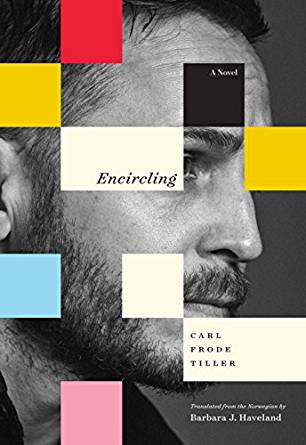
‘Encircling’ by Carl Frode Tiller – The Anti-Knausgaard ?


‘Encircling’ by Carl Frode Tiller   (2007) – 326 pages       Translated from the Norwegian by Barbara J. Haveland


Carl Frode Tiller has been called the anti-Knausgaard, so of course I had to read ‘Encircling’.   I found ‘My Struggle – Book 1’ by Karl Ove Knausgaard to be “self-centered, self-absorbed, and self-indulgent” and that was before the new US President gave new meaning to these words,  so I was all primed to read a novel that was the opposite.

The central character in ‘Encircling’, David Hugsar, never appears directly on stage.  David in his thirties has lost his memory, and can’t remember who he is. He puts an ad in the newspaper asking old friends and relatives to help him remember.  Three people answer his ad and write him long letters.  First there is Jon who was David’s best friend in high school, a perhaps over-sensitive anti-social musician. Second we get Arvid who is David’s church vicar stepfather. Third we have David’s girlfriend from high school, Silje, who is now many years later unhappily married.

As opposed to ‘My Struggle’ where the entire story is seen and told through the first-person narrator’s eyes, here we get a more fractured various picture of this guy David told through several people who knew him well. In the following two novels of the ‘Encircling’ trilogy we get six more people who come forward to write him long letters. Isn’t this multiple-viewpoints approach a more realistic and accurate and deeper appraisal of an individual?

 “Having someone to live for makes us human.” 

The entire story in ‘Encircling’ takes place in the coastal Norwegian town of Namsos which gives it a small town ambiance.  I found the story and situation in the novel quite captivating and involving, even though I did not know where the story was heading.  I never did quite figure out exactly where the story was going, but it is part of a trilogy so that question may be answered later.  Perhaps what threw me off the trail was that in both the Arvid section and the Silje section large portions of the story are not devoted to David but instead to Arvid and Silje’s current circumstances many years later.  Arvid is in a hospice fighting cancer, and Silje is in a miserable marriage.

What stands out about ‘Encircling’ is the depth and intensity of its portrayals.  I got the same sense reading ‘Encircling’ that I get when I watch an Ingmar Bergman movie, that I was moving in unknown unchartable human territory, where not every trait or action is explainable but is still true on a visceral level.   Human life is here, and it is still the great unknown.


Grade:   B+ 


City or Town Names in Excellent Fiction Titles


Fiction allows you to travel throughout the world without leaving your own house.  I realize this is about the worst of cliches, but whether the city or town in a novel is real or not, the imagination or precision of the author takes you there.  The following are ten excellent novels which have a city or town name in their title.


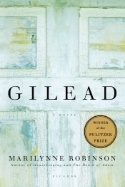
‘Gilead’ by Marilynne Robinson (2004) – Gilead, Iowa is a fictional small town.  Robinson’s novels achieve a depth that only the finest fiction writers can reach.  ‘Gilead’ is the first novel of a strong trilogy.  It is mighty difficult being the wayward son of a preacher man.


‘Our Man in Havana’ by Graham Greene (1958) – Here is a black comedy about the British Secret Service set in Havana, Cuba predating the Castro Revolution of 1959.  Discovering Graham Greene was one of the signal events in my fiction reading career, and I tore through nearly all of his novels in about ten years.


‘Petersburg’ by Andrei Bely (1913) – Here is a Russian modernist masterpiece that was actually written in the twentieth century. What ‘Ulysses’ by James Joyce does for Dublin, Ireland, ‘Petersburg’ does for St. Petersburg, Russia, though there is no indication that Joyce read Petersburg before writing ‘Ulysses’ nine years later.


 ‘The Ballad of Peckham Rye’ by Muriel Spark (1960) – This is early Muriel Spark, another writer not to be missed.  It is about what happens to the Peckham Rye neighborhood of London when a Scottish migrant wreaks havoc on its inhabitants.  Spark is one writer who was able to come up with a totally different plot for every short novel she wrote.


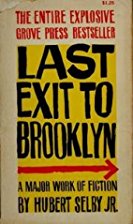
‘Last Exit to Brooklyn’  by Hubert Selby Jr. (1964) – This powerful fiction is a series of stories dealing with the seamier, rougher side of life which includes drug use, street violence, gang rape, homosexuality, transvestism, and domestic assault.  It was put on trial for obscenity in England and was banned in Italy.


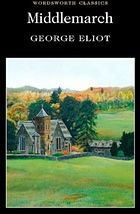
 ‘Middlemarch’ by George Eliot (1871) –  ‘Middlemarch’ is probably my favorite novel of all time.  Middlemarch is a fictional Midlands England town.  Who could possibly forget the terrible marriage between Dorothea and the older Casuabon?


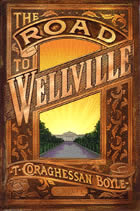
‘The Road to Wellville’ by T. Coraghessan Boyle (1993) –  ‘Wellville’ is a humorous portrait of John Harvey Kellogg, the preposterous inventor of corn flakes, and his Battle Creek, Michigan sanitarium.  It is one of the funniest things I have ever read.


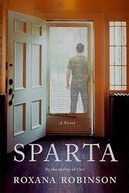
‘Sparta: A Novel’ by Roxana Robinson (2013) – I was born near the small town of Sparta, Wisconsin.  Robinson’s novel has nothing to do with my Sparta, rather it refers to the Greek city-state.  Actually what it is about is the plight of an Iraq war veteran returning to civilian life.  Robinson is one of the writers whose new novels I watch for.


 ‘Winesburg, Ohio’ by Sherwood Anderson (1919) – These are realistic stories of small-town American life in the Midwest.  Living in a small town is not so simple as it is sometimes made out to be. Oh, the loneliness and isolation.


‘London Fields’ by Martin Amis (1989) – Like his father Kingsley Amis, Martin Amis had great success early in his career, later not so much.   Kingsley Amis will always be remembered for his first novel ‘Lucky Jim’, and Martin Amis will occasionally be remembered for his early novel ‘London Fields’.


There are many, many more including ‘Amsterdam’ by Ian McEwan, ‘The Woman of Rome’ by Alberto Moravia, ‘Goodbye to Berlin’ by Christopher Isherwood. ‘Paris Stories’ and ‘Montreal Stories’ by Mavis Gallant, ‘Mansfield Park’ by Jane Austen, and ‘Alone in Berlin’ by Hans Fallada.


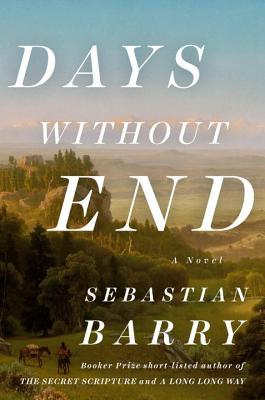
‘Days Without End’ by Sebastian Barry – The Cruel Past


‘Days Without End’ by Sebastian Barry   (2016) – 259 pages

In his newest novel, ‘Days Without End’, Sebastian Barry turns his eyes on the United States. Barry has been capturing much of Irish social history in several of his novels through the exploits and tribulations of various members of the McNulty and Dunne families.  In this new novel Thomas McNulty winds up in the United States after leaving Ireland as a young teenager after many in his family have starved to death in the Irish potato famine in the late 1840s.

His first job is as a dancer in a mining camp town in Missouri.  There is a shortage of women in the town, so the bar owner has these two young boys dress up like women and dance for the miners.  The other boy dancing, John Cole, becomes the love of Thomas McNulty’s life.

“You had to love John Cole for what he chose never to say.”    

After the boys grow too old to play passable women, they join up with the United States army to fight Indians along the Oregon trail.  Some of the soldiers in their unit have a rabid hatred for any Indians, all Indians.  There are scenes where the soldiers commit atrocities against villages of Indians, murdering the women and children when the Indian men can’t be found.  ‘Days Without End’ is not a novel to make you proud to be a United States citizen, just the opposite.  The novel is not like the heroic United States history stories I read when I was young; if anything this novel is anti-heroic.

“Everything bad gets shot in America, say John Cole, and everything good too.”

And then we move on to the Civil War, and Thomas McNulty and John Cole are fighting for the Union Army.  Many on both the Union side and Rebel side are young poor Irish immigrant guys, cannon fodder.

On and off the battlefield they witness atrocities committed against black people.  In one horrifying episode victorious Rebel troops line up all the soldiers in a black company who had already surrendered, more than a hundred, along a ditch and shoot them all.  The guys wind up in the Confederate prison in Andersonville where conditions are gruesome enough for the white soldiers, but the Rebels don’t feed the black soldiers there anything at all.

Atrocities against Indians, atrocities against black people.  It used to be that the United States was usually depicted as a shining beacon of liberty and hope.  Not anymore.

“The world got a lot of people in it, and when it comes to slaughter and famine, whether we’re to live or die, it don’t care much either way. The world got so many it don’t need to.”

I did have problems with the writing style of ‘Days Without End’.  The entire novel is written as the diary of Thomas McNulty, and it is written in a kind of diary shorthand.  Some of the paragraphs are up to three pages long.  I suppose this is not unusual for first-hand accounts, but it does make reading the novel slow going.   The other complaint I have is that there are no new or original insights into this violent cruel past of the United States, but perhaps to document it is enough.


Grade:     B  


‘Miss Jane’ by Brad Watson – An A+ Novel


‘Miss Jane’ by Brad Watson   (2016)  –  279 pages

‘Miss Jane’ is the story of a doctor and one of the babies, a girl, he delivered.  The baby isn’t perfect; she has a urological and genital birth defect.  Jane Chisholm will be incontinent and will always be incontinent unless some surgical procedure is found to fix the problem.  The time is 1916, and there will be no fix for this problem for a very long time.  She also will be unable to conceive children.

“This book is dedicated to the memory of my Great-Aunt Mary Ellis “Jane” Clay.” 

This novel is an amazing work of empathy.  It moved me greatly, and that is the most I expect from any novel.  It is true to what I have seen so far in life as only the best novels are.

Despite her defect, Jane turns out to be a strong person.  A fortune teller tells her mother the following about her then 16-year old daughter Jane:

She is strong.  Even stronger than you.” Miss Eugenia said then.  “She may even be relatively happy in life. Unlike you.”   

Some people seem to have a talent for happiness; some people don’t.  Some people learn this talent later.  It does not appear to be directly or even closely related to one’s actual life circumstances.

Her parents on their Mississippi farm are not particularly sensitive or empathetic to Jane’s situation, perhaps typical rural parents of that time.  Soon after the birth the father first notices the problem:

“Good lord,” Chisholm said.  “What trouble have we gone and brought into this world now?”

“Trouble for you and Mrs. Chisholm,” the midwife said.  “But more trouble for the child, I expect, poor thing.”   

Jane’s older sister has her own life to live. More than anyone, it is the doctor who delivered Jane who takes an interest in Jane’s plight and does what he can to help her.

As a girl, Jane does attempt to go to grade school but there are embarrassing incidents, and after a short time she decides to not go back anymore and she stays home on the family farm.  She chooses to go about her days alone for the most part.  As the doctor puts it,

 “In my opinion many I’ve known would’ve been better off following their solitary natures.”

Later though, despite her continuing condition, there is dancing and romance in her life.  These scenes in the novel are deeply touching considering what has gone before.

This is a wonderful story of a person who is quietly but persistently heroic.  Perhaps you have relatives going back over the years whose life stories are also profound and enlightening.


Grade :   A+


‘Lincoln in the Bardo’ by George Saunders – The Raucous Undead and Some Historical Tidbits


‘Lincoln in the Bardo’ by George Saunders   (2017) – 343 pages


Like many other readers I have been a great fan of the short stories of George Saunders.  His short fiction is wildly original and wickedly funny.  Now Saunders has released his first novel to universal praise.

Not quite universal praise. Keep reading.

Usually I try to avoid fiction where Abraham Lincoln is a major character, because he is always portrayed as an overly familiar depressive Gloomy Gus of a character, and ‘Lincoln in the Bardo’ is no exception in its portrayal.  This is especially true here, because the novel is about the death of his 11 year old son, Willy.  As for Mrs. Mary Lincoln, she is not really a character in the novel, because as a historical note conveniently points out, “Mary Lincoln’s mental health had never been good, and the loss of young Willie ended her life as a functional wife and mother.” – ‘A Mother’s Trial: Mary Lincoln and the Civil War’ by Jayne Coster.

As for the little boy Willy, yes, it is sad that this little boy has died, but as another historical note again conveniently points out, the casualty figures for the battle of Fort Donelson, the first really bloody battle of the Civil War with casualties in the thousands, had just been published, so a lot of families were suffering the loss of sons.  Willy is rather a stock little boy character even when he is one of the undead.

Most of ‘Lincoln in the Bardo’ takes place in the cemetery where Willy is to be buried. The “bardo” is the transitional state between life and death in the Tibetan Buddhist religion.  Throughout the novel we hear the voices of many of these undead ghosts.  They call their coffins ‘sick boxes’, because they are still transitioning between life and death.  I suppose the voices of all these undead function as a Greek chorus would function in a Greeks tragedy.

As for all these ghosts, including the two main ones Mr. Vollman and Mr. Bevins, their presence grew tiresome for this reader rather rapidly.  Saunders does not give us readers any reason to care about these ghostly figures, and this reader did not care for them.  They weren’t particularly funny.  The “disparate voices” schtick works better in a short story than in a long novel.

Throughout the novel there are short quotes from real historical accounts which ground this story that is always threatening to fly out of control off into the wind by these cemetery voices.  It is not a good thing for a novel when the most interesting parts of it are all the factual little tidbits scattered in the text.

The audiobook for ‘Lincoln in the Bardo’ advertises a cast of 166 different people doing the voices for the book.  I must point out that all these different voices are not necessarily a positive feature for the reader/listener.  There are just too many characters to care about.  With so many different voices, it is very difficult to attend to any particular character or characters.  Frequently the symphony becomes a discordant cacophony.


Grade :    C      


‘Zama’ by Antonio Di Benedetto – A Skirt Chasing Bureaucrat in Paraguay in the 1790s


‘Zama’ by Antonio Di Benedetto  (1956) – 198 pages           Translated by Esther Allen


Don Diego de Zama is an administrator working for the ruling Spanish government in Asuncion, Paraguay in the 1790s.  His job title is “Asesor Latrado” which I take to be “assessor of trade”.  He is far away from his wife Marta and their children and his mother who are at his home in Mendoza which is in western Argentina.

Being on his own with lots of time to kill, Zama gets into all sorts of mischief.  He is caught spying on some women who are swimming naked in the river, and one of the women’s husbands calls him “a predator upon honest women” and “a filthy gutless snoop”.  Zama considers his job in Paraguay beneath him and he is angling for a transfer perhaps to Buenos Aires or perhaps to Santiago, Chile where he would be closer to home.

The subjects of the novel are Zama’s love life and his battles with those around him.  Much of ‘Zama’ is taken up with his machinations to get other women including Luciana who is the wife of another administrator.  Despite its potential for his romantic intrigues being played for laughs, this novel is not a comedy

  “This same Diego de Zama, not having kissed a body other than his wife’s for years, knew himself to be alien to the purity that fidelity imposed, and urgently required that someone else participate in the bewilderment of his desires, the sharp bite of his reproaches. 

So beneath the blur of that evening sky, I knew I was not going toward a luminous or happy love.  With what certainty I knew that.”  

The above lines are a good example of Zama’s way of thinking.  Zama is no ordinary hero; if anything, he is an anti-hero.  He is constantly getting into one kind of trouble or another, usually his own damn fault.  In other words, he is your average guy.

In ‘Zama’, Antonio Di Benedetto wrote a modernist or even post-modernist novel.  Di Benedetto’s two literary heroes were Dostoyevsky and Kafka, so don’t go into ‘Zama’ expecting it to be a traditional read. Expect the rug to be pulled out from under you at any time.

Zama, the man, is aware of his own self-deceptions.

“No man, I told myself, disdains the prospect of illicit love.  It is a game, a game of dangers and satisfactions.”

In one sense, ‘Zama’ is a historical novel with the three sections taking place in 1790, 1794, and 1799 respectively.  However, don’t expect much historical perspective as the entire novel takes place in this one guy Zama’s mind.

The last section is a departure from the first two sections as Zama quits his administrator job and goes off with a legion in search of the criminal Vicuna Porto.

“A head, Vicuna Porto’s, would be my ticket to the better destiny that neither civil merit, intermediaries, nor supplication had gained me.” 

‘Zama’ is not an easy read; in fact I would call it a quite difficult read, not because the scenes and attitudes are hard to understand, but instead because the approach is so original and unexpected, especially in an historical novel. I do definitely believe that reading ‘Zama’ was worth the effort of reading. Several reviewers called ‘Zama’ a masterpiece and left it at that. However the difficulty makes ‘Zama’ next to impossible for me to grade, but, fool that I am, I will grade it anyhow.


Grade:   B+ 


‘The Refugees’ by Viet Thanh Nguyen – “For all refugees, everywhere.”


 ‘The Refugees’ by Viet Thanh Nguyen, stories   (2017)  –  207 pages


There are many good examples from the stories in ‘The Refugees’ which show that Viet Thanh Nguyen has mastered most of the lessons of writing excellent fiction and has developed into one of the United States’ finest authors.  He makes the characters in these stories and their situations come alive for his readers as only a few of the best writers can do.

I previously read his outstanding novel ‘The Sympathizer’ which told the story of the Vietnam War from the perspective of the Vietnamese, a viewpoint we here in the United States had not encountered before.    When the Americans finally evacuated Vietnam as Saigon was falling to the North Vietnamese Army in 1975, there were all the Vietnamese people who had aided the Americans and were in peril.  Ultimately over 600,000 Vietnamese people either self-evacuated or were evacuated and were processed as refugees to the United States.  ‘The Refugees’ contains some of the stories of a few of these Vietnamese refugees.

Some have flashbacks to the terrible time of leaving.

“He tried to forget the people who had clutched at the air as they fell into the river, some knocked down in the scramble, others shot in the back by desperate soldiers clearing a way for their own escape.  He tried to forget what he’d discovered, how little other lives mattered to him when his own was a stake.”

In one story, “The Other Man” a young man from Saigon is sponsored by a man from San Francisco who has a gay lover.  This is an extreme example of the cultural shock in store for some of the refuges.  His father, still in Saigon, writes him as follows:

“When you have time, send us the news from America.  It must be more sinful even than Saigon, so remember what the cadres say.  The revolutionary man must live a civil, healthy, correct life!  We all think of you often.  Your mother misses you, and sends you her love.  So do I.”

The really good writers make these combinations of words seem so easy.  Here is a daughter describing her father in poignant terms to which some of us can relate. In these lines, Nguyen captures the oddness of close family members and the embarrassment it causes.

“None was drawn more clearly than her father, whom she pitied, and, worse, did not respect.  If only he were an adulterer or playboy, then there would be cause for resentment, but he was in decline, a failure without even the glamour of decadence and bad behavior.    This was a matter of sufficient sadness and embarrassment so that when her father’s shadow appeared in the doorway, Phoung turned on her side as well.”

Remember the name Viet Thanh Nguyen.  Here is a writer I suspect you will be hearing a lot about in the future.


Grade:    A


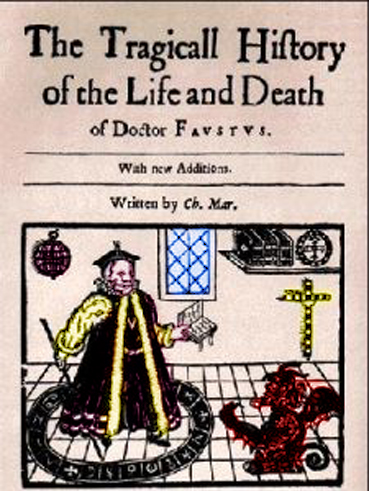
‘Doctor Faustus’ by Christopher Marlowe – “Why This is Hell, Nor Am I Out of It”


‘Doctor Faustus’ by Christopher Marlowe   (1592) – 69 pages


Christopher Marlowe is one of the great Might Have Beens in literary history.  Besides being a successful playwright, Marlowe was apparently a street brawler and a government spy and was also arrested for blasphemy in his writings just thirteen days before he was stabbed to death at the age of 29.  Had he lived, Marlowe would have been a worthy competitor to William Shakespeare as a playwright.  As it was, Marlowe’s completed plays greatly influenced Shakespeare.  Shakespeare emulated Marlowe in writing his plays also in blank verse which is a metrical pattern consisting of lines of unrhymed iambic pentameter.

‘Doctor Faustus’ was Marlowe’s last play.  The main character John Faustus is a learned doctor from Wittenburg, Germany, but like Icarus he aspires for so much more.  He takes up magic.

“So much he profits in divinity
That shortly he was graced with doctor’s name,
Excelling all, and sweetly can dispute
In th’heavenly matters of theology;
Till swoll’n with cunning, of a self-conceit,
His waxen wings did mount above his reach,
And melting, heavens conspired his overthrow.”

Along with Doctor Faustus and a few other human characters including a Pope or two, the devil’s representative Mephistopheles and the old devil Lucifer himself and the Seven Deadly Sins are all characters in the play.  I am Pride, I am Covetousness, I am Wrath, I am Envy, I am Gluttony, I am Sloth, I am Lechery.  You see, the learned Doctor Faustus sells his body and soul to the devil in exchange for having Mephistopheles as his servant and at his command for twenty-four years.  Doctor Faustus partakes of all seven of these sins; nothing can hurt him during those twenty-four years.

“Mephistopheles: Why, this is hell, nor am I out of it.
Think’st thou that I, who saw the face of God
And tasted the eternal joys of heaven,
Am not tormented with ten thousand hells
In being deprived of everlasting bliss?” 

During this entire time a Good Angel and an Evil Angel spar verbally for Doctor Faustus’ soul apparently not knowing of the agreement he has already signed in blood.  The years pass quickly, and, spoiler alert, Doctor Faustus meets a bad end.

“All beasts are happy,
For, when they die,
Their souls are soon dissolv’d in elements;
But mine must live still to be plagu’d in hell.
Curs’d be the parents that engender’d me!
No, Faustus, curse thyself, curse Lucifer
That hath depriv’d thee of the joys of heaven.”

Unfortunately Christopher Marlowe was not given twenty-four years in his adulthood.  Compared to ‘Doctor Faustus’, Shakespeare’s plays, even the wild ones like ‘A Midsummer Night’s Dream’, are realistic and down to earth. However, based on ‘Doctor Faustus’, the plays of Christopher Marlowe would have been more philosophical, more allegorical, more willing to take things to their logical or illogical extremes.  It would have been interesting if they both had at the same time been writing plays which competed for an audience on the English stage.


Grade:   A


‘Autumn’ by Ali Smith – Not the Post-Brexit Novel

‘Autumn’ by Ali Smith   (2016)  –  260 pages


‘Autumn’ has been called the first Post-Brexit novel, and there are a few bits about the anti-refugee hysteria that has taken over England, but it is not the Post-Brexit novel.

“Rule Britannia, a bunch of thugs had been sing-shouting in the street at the weekend past Elisabeth’s flat.  Britannia rules the waves.  First we’ll get the Poles.  And then we’ll get the Muslims.  Then we’ll get the gyppos, then the gays.  You lot are on the run, and we’re coming after you, a right-wing spokesman shouted at a female MP on a panel on Radio 4 earlier that same Saturday.  The chairman of the panel didn’t berate, or comment on, or even acknowledge the threat the man had just made.  Instead he gave the last word to the Tory MP on the panel, who used what was the final thirty seconds of the programme to talk about the real and disturbing cause for concern – not the blatant threat that was just made on the air by one person to another – of immigration.” 

9780241207017These lines echo the spiteful Trump phenomenon in the United States as well as apply to Brexit.  However a few good lines scattered through ‘Autumn’ do not a Post-Brexit novel make.  We must wait for a novel that more intensely deals with the Right-Wing racial hatred and viciousness sweeping across both England and the United States now.

In many ways ‘Autumn’ is similar to Smith’s previous novel ‘How to Be Both’.  Both concern a young girl/woman and an old, old man.  In ‘Autumn’ the girl/woman is Elisabeth Demand, now a 32 year-old university contract lecturer, and the old man, as opposed to a 15th century Renaissance artist, is now 101 year-old Daniel Gluck, a former neighbor who is on his death bed.  There is a profound innocence between the old man Daniel and the young Elisabeth.

For me, ‘Autumn’ is just not as sharply written as ‘How To Be Both’.  It has some of the same themes as ‘How To Be Both’, but these themes do not cohere so well.  The story is more scattered and less clever and engaging.

One particular quality which I do like a lot in the fiction of Ali Smith is how she can make a facet of art history come alive.  In ‘How To Be Both’, it was the life and times of Renaissance painter Francesco del Cossa.  In ‘Autumn’, the artist who Smith spotlights is 1960s English pop artist Pauline Boty.  Like so many stories, Boty’s story is exquisitely sad only to emerge triumphant in the end.

And I’ve got some final advice for the British people.  Don’t sound too vicious or stupid in your racist rants or you will wind up sounding like Donald Trump.


Grade:    B


‘Transit’ by Rachel Cusk – Listening to Other People’s Life Stories

‘Transit’ by Rachel Cusk    (2016)   –  260 pages

9780374278625

‘Transit’ is almost entirely made up of the life stories that other people tell our narrator, Faye.  Instead of getting Faye’s story, we mainly get those of the people around her who tell stories from their lives to her in casual conversations.

I see this as a strategic retreat on our narrator Faye’s part.  She is going through a divorce, and this might be a good time to listen to what the people around her are saying about their own situations rather than dwelling on her own plight.  Perhaps she wants to re-establish her bond with others by listening to them.

First there is old boyfriend Gerard who is now happily married with a family and still living in the old neighborhood to which Faye is returning. There are two ways that a writer can approach dialogue.  In one approach, to be entirely natural and realistic, the writer can have his or her characters speak exactly like real people speak which means they would rarely say anything clever or witty.  In the other approach, the writer has his or her characters speak in witty sparkling epigrams, constantly saying the perfect thing.  Rachel Cusk favors the second approach, and I admire her for it.  Here is a line from Gerard.

“It’s hard not to become self-satisfied,” he said, “with so much self-satisfaction around you.”

Later Faye responds to Gerard as follows:

“I said that it seemed to me that most marriages worked in the same way that stories are said to do, through the suspension of disbelief.  It wasn’t, in other words, perfection that sustained them so much as the avoidance of certain realities.” 

We do find out a few things about Faye as she interacts with the people around her.  She has two children and is going through a divorce.  Her children are staying with her ex while her apartment is being remodeled.  She has a terrible obnoxious couple living below her which is one of the novel’s sources of humor.  She teaches creative writing.  She has started dating again.

But mainly we find out other people’s stories.  The guys who are remodeling her apartment are two brothers from Poland, Pavel and Tony, who are making a go of it in England.  We accompany Faye to her hairdresser and to a literary conference where she is one of the guest speakers.  We learn quite a bit about the other two writers who are guest speakers but not so much about Faye.

Even though Faye is the central figure in ‘Transit’, most of the stories are related to her by the people she meets.  There is essentially no conventional plot and little character development.  Rachel Cusk is on the cutting edge of writers attempting to take the novel to somewhere new and different from its traditional roots. She has a talent for writing eloquent and expressive sentences that many experimental novelists do not have.  I have followed Cusk’s writing from the beginning of her career and am happy to continue to do so.


Grade:    A

‘Sudden Death’ by Alvaro Enrigue – The Sixteenth Century Viewed Through a Tennis Match


‘Sudden Death’ by Alvaro Enrigue   (2013)     261 pages       Translated by Natasha Wimmer


sudden-death

‘Sudden Death’ is an incredibly rich entertaining whirlwind trip through the 16th century presented within the framework of a tennis match in 1599 between Italian artist Caravaggio and Spanish poet Francisco de Quevedo.  Along the way, we have stops for English Queen Anne Boleyn and Spanish explorer Cortés and the church officials during the Counter Reformation as well as other excursions.

“I don’t know what this book is about.  I know that as I wrote it I was angry because the bad guys always win.  Maybe all books are written because in every game the bad guys have the advantage, and that is too much to bear.”

Instead of the usual axe, a sword was used by the special executioner from France brought in by English King Henry VIII in 1536 to behead Anne Boleyn.  There is a rumor that this executioner kept some of her hair to make four tennis balls.  Yes, this is spurious history, and I would not vouch for the accuracy of much that is in this novel.  That does not make these apocryphal stories any less fascinating.    The author Enrigue has these four Boleyn tennis balls bounce through the 16th century being passed from Pope to Cardinal to financier to favored artists.   Thus we get to the time of the Counter Reformation and its accompanying tortures.

“Never were the connections among politics, money, art, and semen so tight or so murky or so unashamedly happy, tolerant, and fluid.”   

There are also occasional side trips to Mexico where the Aztecs led by Montezuma make the fatal mistake of not executing Cortés and his men upon their arrival.  For Enrigue who is from Mexico, the history of Cortés and Montezuma has special significance.  “There are few better illustrations of how a whole host of people can manage to understand absolutely nothing, act in an impulsive and idiotic way, and still drastically change the course of history,” Enrigue says of Cortés and his men.

I did not even know that tennis went back that far, but apparently there was tennis already in the Middle Ages.  Later Caravaggio was known for his realistic paintings and also for using prostitutes as models for his religious figures including the Virgin Mary.   Caravaggio is considered the most important artist of the late sixteenth and early seventeenth century, yet he was jailed on several occasions and had a death sentence pronounced against him after he killed a young man in a brawl in 1604.

‘Sudden Death’ contains so much of history and of rumor that it can be quite an overwhelming experience to read this novel.  However Enrigue presents all of this material in such a methodical and intriguing fashion it is ultimately pleasurable.


Grade:    A