Archive for the ‘Book Reviews’ Category

More Fiction Writers Who Were Too Good to be Forgotten

Last June I wrote an article about six less well-known fiction writers who wrote some mighty fine fiction.  However there are others who I would like to mention who were just too good to be forgotten, so here is a second list.


Sybille Bedford – She is considered an English writer, but she was originally from Germany and lived for a time in France and the United States.  With the help of Aldous Huxley and his wife and a sham marriage, she was able to escape France before Hitler got there.  She wrote non-fiction travel writings as well as four novels of which I have read all of them.  Perhaps she is most famous for ‘A Legacy’ and ‘Jigsaw – An Unsentimental Education’.   I have no doubts that Bedford will still be read a hundred years from now.


Nelson Algren – He wrote of the “drunks, pimps, prostitutes, freaks, drug addicts, prize fighters, corrupt politicians, and hoodlums” mostly in his hometown of Chicago.  He still is a controversial figure. He was the first major American figure to speak out against Joe McCarthy.  Algren did have his sensitive side; he had a long relationship with famous feminist Simone de Beauvoir and is portrayed in Beauvoir’s novel ‘The Mandarins’.  He wrote of the wild gritty side of life with a tough honesty. The three novels of his that stand out for me are ‘Never Come Morning’, ‘The Man with the Golden Arm’, and ‘A Walk on the Wild Side’.
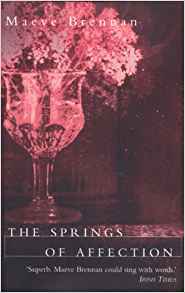


Maeve Brennan – She was the Long-Winded Lady at the New Yorker from 1954 to 1968 and made sardonic observations about New York City life.  After that she was in and out of institutions treating her for mental illness and alcoholism.  Thus she does not have a long bibliography.   Her book of short stories ‘The Springs of Affection’ and short novel ‘The Visitor’ are both fine works.

“Many men and women found Maeve charming, and she was a true friend, but there wasn’t much you could do to save her from herself.” – William Maxwell


Karin Boye –  I have only read one novel by Karin Boye, ‘Kallocain’ , but that one novel is good enough so that she still deserves to be on this list.  ‘Kallocain’  is a dystopian novel about a drug that detects individual acts and thoughts of rebellion.  A drab totalitarian state results from the wholesale use of the drug.  ‘Kallocain’ was one of the inspirations for Aldous Huxley’s ‘Brave New World’.  Karin Boye committed suicide in 1941 at the age of 40.
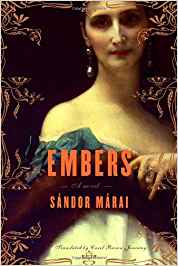


Sandor Marai – He wrote in his native Hungarian, and he was not translated into English until the 1990s after he died. During his lifetime he managed to infuriate both the Nazis and the Communists, no small feat. ‘Embers’, his novel written in 1942, is his most justly famous.

“Elegiac, sombre, musical, and gripping, Embers is a brilliant disquisition on friendship, one of the most ambitious in literature.” – Anna Shapiro


Manuel Puig – He was born in Argentina in “a little town in the Pampas” but was exiled from Argentina for most of his life due to political reasons.  He was much influenced by old Hollywood movies of the 1930s and the 1940s, and one of his novels, ‘Kiss of the Spider Woman’, was made into a successful movie as well as a play.  Other novels by Puig that I really like are ‘Betrayed by Rita Hayworth’ and ‘Heartbreak Tango’.

“I write novels because there is something I don’t understand in reality.” – Manuel Puig


‘Conversations with Friends’ by Sally Rooney – Modern Romance


‘Conversations with Friends’ by Sally Rooney   (2017) – 307 pages

In ‘Conversations With Friends’, Frances and Bobbi are two young women who perform together on the poetry recital scene in Dublin, Ireland.  Frances and Bobbi used to be hooked up romantically, but now they are just the best of friends.  Bobbi is a sharp-tongued radical while Frances is just as radical but not quite so outspoken. A writer and photographer, Melissa, attends one of their recitals and wants to take pictures of them for a local arts magazine.  Later Melissa invites the two gals for a nightcap at her house, and they meet her husband Nick who is a handsome not-so-successful actor.  Nick and Melissa are both in their thirties while Frances and Bobbi are both in their early twenties.

Melissa is more drawn toward the aggressive Bobbi of the two girls, leaving Frances with Nick.  Although her intentions may be otherwise, Frances is strongly attracted to Nick.  One night they kiss on the sly, and soon Frances is secretly sleeping with Nick. Usually today a guy like Nick would be portrayed in a novel as a hopeless and disgusting heel, but in ‘Conversations With Friends’ he comes off as quite the enlightened sensitive one.  It is Frances who is the real ardent pursuer in their affair.

“He was the first person I had met since Bobbi who made me enjoy conversation, in the same irrational and sensuous way I enjoyed coffee or loud music.”

So now we have the radical Frances playing that trite role of The Other Woman.  Nick and Frances hide their passionate trysts from everyone else as long as possible.

When I read novels now, I keep a few notes while reading which I can use later.  The first thing I wrote down for ‘Conversations With Friends’ very early was the word “methodical”.   What impressed me most about ‘Conversations With Friends’ was the systematic precision that Sally Rooney brings to this messy story of modern infidelity.   It is difficult for a writer to describe feelings and emotions with exactness, and Rooney achieves just that.

Then there is also the provocative and lively dialogue:

Frances:  “You’re really handsome, you know.”

Nick: “Is that all I get?  I thought you liked my personality.”

Frances:  “Do you have one?”

Overall I was mightily encouraged by ‘Conversations With Friends’ that this younger generation might for once be on the right track in pursuing their personal relationships.


Grade :   A-        


‘The Forensic Records Society’ by Magnus Mills – A Deadpan Delight


‘The Forensic Records Society’ by Magnus Mills  (2017) – 182 pages


First of all, I adore the deadpan style of Magnus Mills and his offbeat original tongue-in-cheek approach to novels.   The setup to ‘The Forensic Records Society’ is absurd and ridiculous, and that’s just fine.

Do young people even know what vinyl records or turntables are anymore?  Have they even heard of 45s, those records that had only two songs, an A side and a B side?  At this point, vinyl records are about as obsolete as typewriters and dial phones, although there are some experts who claim that these vinyl records capture the sound quality better than the more modern methods.

‘The Forensic Records Society’ harkens back to a time when people took their music much more seriously than today.  Of course there are plenty of us old dudes left, survivors of the 1960s and !970s, who still remember the importance that was placed on music and songs in our daily lives back then and probably even remember many of the songs Mills mentions in this novel.

The original Forensic Records Society meets in a back room of the Blue Moon pub.  Members bring three songs they wish to play for the group and they take turns playing them.  At most there are only about eight members.   The rules are strict, no comments or judgments on the records; the members are there solely to listen to the songs.

What this novel is really about is a somewhat comic analysis of the social group dynamics that spring up when any new group is formed.  Soon after the Forensic Records Society begins, a competing group, the Confessional Records Society, is formed which has a charismatic leader, a stronger appeal to women, and engenders an almost religious fervor.  Later as a reaction to the strict rules of the Forensic Records Society, the Perceptive Records Society is formed which allows long-playing records as well as singles and also allows members to quote or comment on the songs. Later the spinoff New Forensic Records Society starts.  As one might expect, there is much intrigue between the members of these various competing clubs.

What Magnus Mills does in ‘The Forensic Records Society’ is create a whole new world based on this mundane silly premise of competing record clubs.  However the reader gets so caught up in the doings and goings on of these various club members as though it were an intriguing espionage or science fiction story.  I see Magnus Mills as one of the most original, down-to-earth, and creative purveyors of fiction operating today.


Grade :   A      


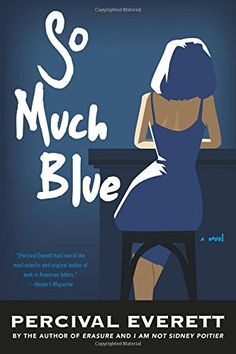
‘So Much Blue’ by Percival Everett – More Than the Words


‘So Much Blue’ by Percival Everett    (2017)  – 256 pages

Perhaps the best measure as to how much I actually like a novel is how much I look forward to returning to it when I am not reading it.  If I view returning as a necessary chore, that probably means I don’t like the novel very much.  However if I get a smile on my face just contemplating returning to a book, that probably means I like it a lot.  By this measure, ‘So Much Blue’ is a total winner.

The narrator in ‘So Much Blue’ is a fifty-six year old artist who has been working on a giant painting for several years.  He keeps the painting in a outbuilding next to his house, but he won’t let his family or friends see the painting.

There are three main plot lines in ‘So Much Blue’, and the narration switches around between the three. The first is called ‘House’ which takes place in current time and is about the artist’s family in New England.  He is faced with a quandary that it is not too uncommon for a father to face.   In order to extract a secret out of his teenage daughter, the daughter makes him promise ahead of time that he won’t tell the secret to her mother.  However when he hears the secret, he realizes it is something that her mother really ought to know.  What does he do?

Another plot line is called ‘1979’  and takes place back then.  He and his college friend are off to El Salvador to rescue his friend’s brother who is mixed up with drugs and some “bad hombres”.  This story winds up being the most hilarious of the plot lines when they meet this shady American mercenary who they call the Bummer who bosses them around.

The third plot line is called ‘Paris’ and takes place seven years before the present and is about an affair the forty-something artist has with a 22 year old Parisian young woman named Victoire.  Despite the questionable circumstances of the age difference, this affair is handled tastefully.

This is an odd mix of plots, but each is handled in an ingratiating and good-natured manner.  The entire novel does have a unifying theme of “secrets”, but this theme is handled quite indirectly, and the author does not hit you over the head with it.

Although each of the three disparate plot lines of ‘So Much Blue’ is captivating, warm, and humorous, the sum of the entire novel is still much greater than the individual parts.  The novel as a whole is so well-written and subtle, that all of the reviewers including me seem to fall all over ourselves trying to describe it.


Grade :   A   


California Dreaming’ by Penelope Bagieu – A Pictorial Biography of Mama Cass Elliot


‘California Dreaming’, a graphic novel by Penelope Bagieu  (2017) – 266 pages

‘California Dreamin’ combines two of my interests, biographies of rock or pop stars and graphic or cartoon novels that are not about superheroes, fantasy, or outer space.  Since ‘California Dreamin’ is essentially a true story it isn’t a graphic novel, but I don’t know what else to call it.  It covers the life of Ellen Cohen who became famous as Mama Cass Elliot up until the time the song California Dreamin’ was released.

She was born to a Jewish couple in Alexandria, Virginia in 1941. The family of four stayed barely afloat by the deli her father ran.  Even from an early age, her excessive weight was a problem for her.  Everybody knew she could sing wonderfully, but could she ever make it as a professional singer with her size?

At age 19 she left home for the burgeoning folk scene in New York City.  Her father who was always sickly died soon after she left home.  She kicked around with various folkie groups, but didn’t really start to make it until she met Dennis Doherty, and they started a group called the Mugwumps.  Both Cass Elliot and Dennis Doherty were phenomenal vocal talents.  Dennis was the great love of her life, but her love for him was unrequited although he was a good friend.

John Phillips asked Dennis Doherty to join him and his wife Michelle in his folk group the New Journeymen.  Dennis said he knew this great woman singer named Cass Elliot, but after Cass auditioned John turned her down because she was too fat.  Cass hung around with the group, and it was quite obvious that Cass’s voice made the group sound much better, but John still refused to have her in the group.  One time the record producer Lou Adler visited the group, and Cass happened to be singing with them their new song California Dreamin’.  Adler wanted to sign the four of them immediately to a contract, but John wanted him to sign only the three.  Adler said that without Cass there would be no contract.  So that is how the Mamas and Papas were born.

‘California Dreamin’ is a fun sometimes poignant graphic, not novel, but perhaps graphic biography?


Grade :   B  


Six Reasons Why ‘Golden Hill’ is a Superior Historical Fiction


‘Golden Hill – a Novel of Old New York’ by Francis Spufford     (2017)  –  299 pages

‘Golden Hill’ is the most delightful historical fiction that I have read for a long, long time.  Here is my attempt to enumerate reasons as to why this novel is such a pleasure.

l.  It takes place in New York City in 1746, a time and place little dealt with in historical fiction or even in history books.  England still ruled their North American colonies, and New York City had only 7000 residents but was growing fast.  At that point New York City was still a small town.  We see this small town through the eyes of young Englishman Richard Smith who is quite familiar with the real metropolis London.

2.  ‘Golden Hill’ is written in the English language of its time instead of in modern English.  This makes the characters and scenes seem more authentic.

3.  None of its characters is famous or renowned, so the characterizations aren’t stilted by impersonating a famous stick figure.  Nothing brings a novel down faster than a wooden historical personage.  All the characters in ‘Golden Hill’ can and do act as outrageously as real people.

4.  The romance in ‘Golden Hill’ is not your typical lovey-dovey affair.  Perhaps the best romances both in fiction and in real life are those where the contestants – the man and the woman – are a match in their weapons and firepower.  The romance between Richard Smith and Tabitha Lovell is that of the best of enemies on the order of Beatrice and Benedick in ‘Much Ado About Nothing’.   As Richard says to Tabitha of Shakespeare:

“I think you like him because his comedies are full of quick-tempered women with razor tongues.  I think you like to hear Beatrice and Benedick insulting upon each other.”

“Maybe,” she said, laughing.  “But you, sir, are not Benedick.”

“And you, madam, are not Beatrice.”

“True.”

5.  The guiding light for ‘Golden Hill’ is William Shakespeare.  After more than four centuries, Shakespeare is still the best model we have for comedy and drama.  I would classify ‘Golden Hill with its wicked humor as more of a comedy than a tragedy.   As in Shakespeare, there is a staged play within ‘Golden Hill’ which is great fun as it is rehearsed and performed.

6.  In ‘Golden Hill’, the reader can always expect the unexpected to occur.  Fortunes can change from hero to zero and back to hero in a matter of a few pages.   While the author keeps his story and characters true to their time, there are no other limits to what he imagines for his protagonists.  The vivid scenes range from the Popes Day bonfires to a card game of piquet.

If you are at all interested in historical fiction, ‘Golden Hill’ is one you will not want to miss.


Grade :   A+   


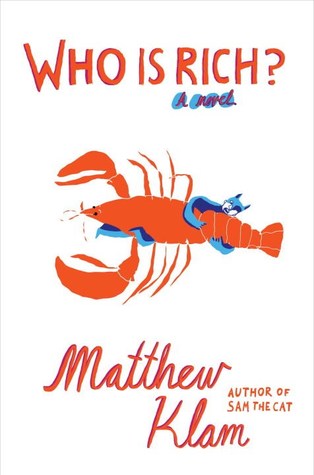
‘Who is Rich?’ by Matthew Klam – A Tiresome Long Weekend in New England


‘Who is Rich?’ by Matthew Klam   (2017) – 321 pages


‘Who is Rich?’ is fun for the first twenty pages or so when our narrator is snide and cynical describing the students and the other instructors at the New England summer arts conference where he is an instructor in cartooning.  He easily demolishes all the pretensions and excesses and inadequacies of all these would-be prospective artists and writers and their instructors who are there to make a little extra money and have some hot fun in the sun away from their families.  Having attended a few of these arts workshops myself, I can assure you that all of us naïve but gullible participants are easy targets for derision.

The instructors are also ripe for over-the-top disparagement:

“In the big hall of the main building I heard Tabitha give the same speech she gave last year, about her spiritual journey beyond incest, into alcoholism, then past that, into group sex and casino gambling, ending in healing and forgiveness.” 

However after this sneering fun, the narrator begins to talk about himself.  Then this instructor/narrator in ‘Who is Rich?’ of a sudden gets all sincere.  He talks about his early success with a graphic novel only later to have to settle for a career as a magazine illustrator.  He talks about his exhausted wife who is at home taking care of their two little kids and also about his rich mistress who is at the conference. His voice and attitude change from cynical and snide to earnest and heartfelt. Our guy is self-absorbed and whiny and unhappy. That is when he gets real tiresome.  Unfortunately he goes on in this fashion for almost 300 pages.  This novel would have been much more fun if the narrator had applied to himself the same derisive cynicism he applies to all the other conference goers and instructors.

So for ‘Who is Rich?’, the first twenty pages sparkle and the last 300 pages drag.  This is one of those novels where I got sucked in by a strong beginning only to spend the rest of the novel debating whether I should just quit reading it.

The problem with self-absorbed narrators is that they focus on themselves at the expense of everyone else.  Thus the characterization of his wife does not go much beyond “frazzled”.  His kids are an adorable nuisance. His girlfriend at the conference is “hot and rich”. This is the second year of his affair with her, that difficult stage when his mistress begins to seem just as annoying as his wife.

‘Who is Rich?’ is the kind of novel that when the narrator contemplates suicide, the reader wishes he would just go ahead and do it and cut a hundred or so pages off the reading.


Grade :   D


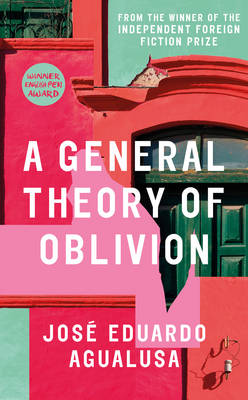
‘A General Theory of Oblivion’ by Jose Eduardo Agualusa – Life Goes On in Angola during their Civil War


‘A General Theory of Oblivion’ by Jose Eduardo Agualusa   (2013)  –  247 pages       Translated from the Portuguese by Daniel Hahn

The southern African country of Angola had just achieved independence from Portugal when it descended into a protracted civil war that lasted from 1976 to 2002. Angola was a pawn in the Cold War between the Soviet Union and the United States.  However the Angolan Civil War was a real war that raged on and off for 27 years leaving 500,000 people killed.

“This wasn’t what we made our independence for.  Not for Angolans to kill each other like rabid dogs.”

‘A General Theory of Oblivion’ consists of 37 short chapters or vignettes that tell quirky stories related to Angola at that time.  Since there is a lot of white space between the many chapters, this is a quick read.

Many of the chapters center around a lady called Ludovica Fernandez Mano or ‘Ludo’ for short.   She was born in Portugal but is staying with her sister and brother-in-law in Luanda, Angola when this story opens.   One day the married couple does not return home, and Ludo is left in the apartment by herself.  Early on an intruder tries to break in, and Ludo shoots and kills him.  After that, Ludo bricks herself in.  She stays there for 27 years.

Stuck in that house, Ludo is alone and isolated.  However the reader does not really feel her claustrophobia, because the author scatters the story and includes pieces which are unrelated to Ludo but are about some other aspect of Angola during this time.   ‘A General Theory of Oblivion’ probably would have been more effective as a novel if it were strictly about Ludo and her confined plight, but that may not have been the author’s purpose in writing this work.

Instead Agualusa opens things up. He writes discursive sketches of some of the strange things that are going on in Angola.  Some of the chapters are about the native tribes of Angola such as the Kuvale who are prosperous in their number of oxen but still suffer food poverty.

“They are unable to trade their oxen for corn.  This apparent paradox – so many oxen yet so much hunger –is yet another way in which they are unusual.  But isn’t that true of Angola too? So much oil…?”

The above lines from Ray Duarte de Carvallo are quoted in the novel.

It seemed to me that Agualusa had a wider purpose in telling different facets of the story of Angola during this time rather than just focusing on this one woman Ludo.  That wider purpose may have been a detriment to the fiction but probably served the truths of Angola more effectively.


Grade :   B


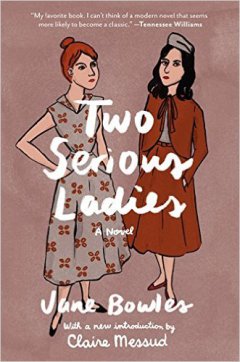
‘Two Serious Ladies’ by Jane Bowles – Two Outrageous Ladies


‘Two Serious Ladies’ by Jane Bowles  (1943) – 221 pages

Having read a ton of literary fiction, I look out for the distinctive and the unusual, fiction that no one else besides that author could possibly have written. However I fear I may have met my match in oddness and strangeness with ‘Two Serious Ladies’.

The two main characters here often act in ways that are incomprehensible to me, and they offer no justifications for their actions.  Originally this opaqueness of behavior was offputting to me but ultimately these ladies’ waywardness becomes part of the curious beauty of the story.  In ‘Two Serious Ladies’, these two women do these unexpected offbeat things all the time.  However the scenes in this novel stay etched in my mind, and I expect they will stay there a long time.

The first lady is Christina Goering.

“As a child Christina had been very much disliked by other children. “

 “As a grown woman Miss Goering was no better liked than she had been as a child.” 

Who says a main character must be likeable?  Christina has a way of hooking up with not very nice men she meets in dive bars.  Several times she goes to strange men’s houses in order to prove something (I don’t know what) to herself.  She doesn’t like any of these guys, but she has a “sickening compulsion” to go to their house and even stay there for days.  The last guy is a particularly rough sort and there is some menace for the reader fearing what he might do to her.  It is like she is on some degenerate spiritual quest.

“In order to work out my own little idea of salvation I really believe that it is necessary for me to live in some more tawdry place.”

Christina incidentally meets the other serious lady, Mrs. Frieda Copperfield, at a house party.  That is nearly the only interaction between the two women.  Otherwise their stories are totally separate.

The 33-year-old Mrs. Copperfield goes traveling in the Central American country of Panama with her businessman husband.  He finds a respectable dull hotel for them to stay in.  However as they are walking around the shady “red light” side of town, they come upon a sleazy place called the Hotel de Las Palmas, and Mrs. Copperfield is immediately captivated. The hotel is run as a place where prostitutes can rent rooms to bring their clients. Mrs. Copperfield becomes enchanted by one of the prostitutes, Pacifica, and also by the owner or Madam of the hotel, Mrs. Quill.  She decides to stay there on her own in one of the rooms near Pacifica.  Guys have these kinds of risqué adventures all the time.  Why not women?

I guess this novel is autobiographical but in a thoroughly outlandish way.

“There is nothing original about me except a little original sin.” – Jane Bowles

Jane Bowles was married to the more famous novelist Paul Bowles whose most acclaimed novel ‘The Sheltering Sky’ I have also read. Paul chose mostly men for his sex partners; Jane chose mainly women as her sexual partners.

“Men are all on the outside, not interesting. They have no mystery. Women are profound and mysterious—and obscene.”  – Jane Bowles

Paul and Jane were devoted to each other.  They threw rowdy parties to which they invited many of the literary stars of the time including Tennessee Williams, Truman Capote, and Gore Vidal.  Jane was the wild charming “life of the party” type, and she drank heavily.  That may explain why she wrote only this one novel at the age of 24, though she did write a play and some short stories later.  She viewed writer Carson McCullers as her main female fiction writing competition.  At age 40 Jane had a massive stroke, leaving her totally dependent on Paul, and she died at the age of 56 in 1973.

I have decided that I will not give a grade to ‘Two Serious Ladies’.  This is the first time that has happened since I started grading.  I just cannot make up my mind whether it is a work of genius or just outlandish, ridiculous, and baffling.  I will let you make up your own minds.


Grade :   ???


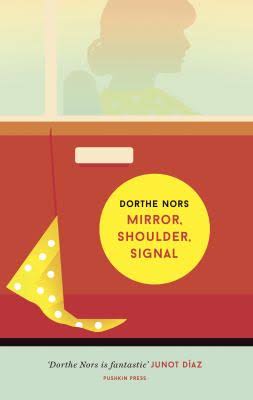
‘Mirror, Shoulder, Signal’ by Dorthe Nors – An Amusing Drive through Copenhagen


‘Mirror, Shoulder, Signal’ by Dorthe Nors  (2016) – 188 pages   Translated from the Danish  by Misha Hoekstra

Don’t expect any thrilling or suspenseful plot in ‘Mirror, Shoulder, Signal’, because there isn’t any.  The novel is pleasantly inconsequential, and that is a good thing.

It is mostly the viewpoints and reminiscences of a single Danish woman in her forties named Sonya as she goes about her daily life. She had a boyfriend who left for “a twenty-something girl who still wore French braids”, so she lives alone now and that is just fine with her.  Nothing spectacular or even very noteworthy takes place in this story. It is her deadpan way of looking at things that makes the scenes humorous. This is a novel that goes its way on its attitude.

Sonya is learning to drive a car (thus the name of the novel), and her driving instructor is a forceful woman named Jytte who tends to often get hysterical and does not trust Sonya to switch gears.  Jytte does all the gear switching with her remote device, and Sonya never will learn to switch gears from Jytte. So Sonya asks to change driving instructors behind Jytte’s back, and is assigned a man named Folke.  The only problem with Folke is that she fears this married man has wandering hands.

I just want to learn how to drive, okay? I don’t want to have my hand held, I don’t want to be massaged, hugged, or interrogated, to be hit on or coochie-cooed.  I want to learn how to drive that car so I can drive over there.”

‘Mirror, Shoulder, Signal’ contains many hilarious scenes of Sonya interacting with the people around her.

Sonya translates the crime novels of Swedish crime writer Gösta Svensson for her living, and she jokes about all his gory victims.

 “These days what she knows most about is how to cast bodies in ditches, the deep woods, lime pits, landfills.  Mutilated women and children lying and rotting everywhere on Scandinavian public land.”

 Although Sonya now lives in the metropolis of Copenhagen, she often remembers her childhood in Jutland on the farm.  She has frequent flashbacks to her rural childhood, her farm family and the whooper swans and the large herds of deer.  She writes a too-honest letter which she never does send to her sister Kate who still lives there.

‘Mirror, Shoulder, Signal’ is light and amiable and amusing, a pleasant interlude from all the more vexing problems of today.


Grade:    B+ 


‘One of the Boys’ by Daniel Magariel – The Father from Hell


‘One of the Boys’ by Daniel Magariel   (2017) – 165 pages

‘One of the Boys’ is an ultra-realistic fictional account of a monstrous family situation told from the younger twelve year-old son’s point of view.

A married couple from Kansas is divorcing, and there is the question of who gets custody of the two boys.  The mother had hit the younger boy, and the father has this idea to make the damage to the boy’s face look a lot worse than it actually was, so he would get custody.  The younger son goes along with the father’s scheme. They “enhance” the marks on the boy’s face and take some pictures so it looks like the mother has really beat up on the younger son.  Child Protective Services rules in favor of the father, and soon he and his two boys are off to Albuquerque, New Mexico where they stay in a singles apartment complex.  The father is quite well off working as an independent contractor doing accounting jobs for small businesses.

However soon after they move into the apartment, the father locks himself in his bedroom, and the boys know he’s doing drugs in there.  Sometimes the father just stays in the bedroom for a week at a time, and the boys must fend for themselves.  Occasionally the father sends the boys out to do business with his drug dealers.

When the father does come out of his bedroom, he is subject to sudden violent mood swings.  Sometimes he feels guilty and vows he will be a better father, but other times he goes into a rage. At one point he threatens his older son with a knife, and from then on the two boys plot ways to escape from their abusive situation.  They make arrangements with their mother to go back to her, but that falls through when she decides to “reconcile” with their father.

This terrible family situation is taking place in Middle America, in Kansas, among the fairly well-to-do.  The novel is a case study in how drugs can tear a family apart.  However family dysfunction is not the only hazard these boys confront living in the singles complex.  In one scene the younger son wanders into an ‘adult’ party involving a man and two women out by the swimming pool.

‘One of the Boys’ paints a vivid first-hand picture of these boys’ desperate lives.  The boys undergo a harrowing plight, and there is no redemption.  I would have perhaps preferred to have an epilogue from this boy as an adult telling us what happened later and giving us readers some perspective on their appalling predicament.


Grade :    B+


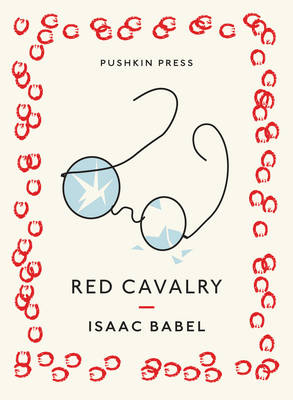
‘Red Cavalry’ by Isaac Babel – The Insanity of War


‘Red Cavalry’ by Isaac Babel   (1926) – 204 pages       Translated from the Russian by Boris Dralyuk

War is terrible. It is a long-standing fact of human life.  On frequent occasions humans go to war and murder and maim each other in large numbers. Now that there are weapons than can murder millions of people in one stroke, there have been efforts to prevent wars from happening.  However can anyone or anything change human nature which has been deeply embedded in society for thousands of years?  There is always the chance that some mad man will rise to power anywhere in the world.  Even without a deranged man in power, the chances for a war to develop are quite high.

‘Red Cavalry’, a collection of short stories, paints a vivid picture of the madness of war.  War gives individuals an opportunity to go insane. During the Russo-Polish War of 1920, a war I had never heard of before, journalist Isaac Babel was assigned to a Cossack unit on the Russian side.  He was an early embedded war reporter.  After this war ended, Babel wrote a non-fiction book about his war experiences which he later rewrote into fictional stories for ‘Red Cavalry’ in 1926.

When he is assigned to his unit, Babel is a subject of derision by the Cossack cavalry soldiers.  He wears thick glasses; they call him ‘four eyes’.  He is more an educated journalist than a soldier.

“I was alone among these people, whose friendship I had failed to win.”     

Worst of all to the Cossack soldiers, he is a Jew.  Both the Cossacks as well as their foes, the Poles, detest the Jews and treat them horribly. In one of the stories, Babel predicts the Holocaust about twenty years before it actually occurred.

The peasant made me light his cigarette from his.

“Jew’s guilty in everyone’s eyes,” he said, “yourn and ourn. There’ll be mighty few of them left after the war.  How many Jews are there in the world anyway?”

“Ten million,” I answered and began to bridle my horse.

“There’ll be two hundred thousand left,” the peasant cried out and touched my hand, afraid that I would leave.

But I climbed into the saddle and galloped off toward the staff. 

One thing that most war correspondents miss that Babel gets is the glee of soldiers when they wound, kill, or defeat the enemy soldiers.  The killing of an enemy soldier is a joyous occasion for a soldier.

In the story “Afonka Bida”, Babel captures the anguish of a Cossack cavalry soldier when his horse is shot out from under him.  The soldier expresses more grief for his dying horse than he would ever have for a dying fellow soldier.

These early days after the Russian Revolution were a time of optimism for many of the Russian people including Isaac Babel.  In many towns and villages the peasants rose up against local tyrants who had been oppressing them for decades.  However this optimism did not last long because in less than ten years the Soviet Union installed an even worse tyrant, Joseph Stalin, to rule the entire country.  Stalin and his lieutenants wound up murdering Isaac Babel in 1940 on trumped up charges.

Even though the stories are fiction, they are more like powerful journalistic vignettes rather than well-crafted stories. The stories are crude and raucous with too many characters who are underdeveloped in these very short stories.  The transformation from journalism to fiction seems incomplete to me.  I found these stories difficult to digest.   Between Isaac Babel and Anton Chekhov there is no comparison; Chekhov is much the better story writer.  However Babel does capture the intense feel of a battle and the scenes he has created are crucial.


Grade :   B


‘Based on a True Story’ by Delphine de Vigan – The Mysterious Lady L.


‘Based on a True Story’ by Delphine de Vigan   (2017) – 374 pages      Translated from the French by George Miller

In ‘Based on a True Story’, Delphine de Vigan deals with the notions of reality versus fiction.  It is brilliant, a novel for our time.  Should a writer write only memoirs about their own personal real experiences? Take these words from the mysterious woman L. who invades Delphine’s territory:

“People have had enough of well-constructed intrigue, clever plot hooks, and denouements… Take it from me, readers expect something different from literature and they’re right: they expect the Real, the authentic.  They want to be told about life, don’t you see? Literature mustn’t mistake its territory.” 

Actually ‘Based on a True Story’ is a horror story with an atmosphere of menace with a malevolent undercurrent.  The mysterious woman L. takes over Delphine’s life after Delphine has published her first successful novel.  L. makes impassioned pleas to Delphine to write a memoir instead of fiction, that nowadays people only want what’s real.  These pleas only leave Delphine with a severe case of writer’s block.  L. even takes over Delphine’s personal computer sending out an email to all of Delphine’s friends begging them not to contact or bother Delphine because she is busy writing.  She even signs Delphine’s name to the email.  This email leaves Delphine virtually isolated and unable to write.  There are certain traits of the obsessed fan in ‘Based on a True Story’ that remind me of Stephen King’s ‘Misery’.

Delphine does fight back:

“Listen carefully.  I’m going to tell you something: I have never written to please anyone and I have no intention of starting now…Because deep down writing is much more intimate and much more commanding than that.”

My best guess as to who is this mysterious woman L. is that she is a double, a doppelgänger, of Delphine.

‘Based on a True Story’ is exceptional because De Vigan has created a fiction, a clever haunting story, with herself as the main character.  Director Roman Polanski has made a movie from ‘Based on a True Story’ which also won the 2015 Prix Goncourt.

I have thought a lot about the Reality versus Fiction debate and have come out strongly on the side of Fiction (no surprise there).  I rarely read memoirs, finding them usually self-serving as is especially true of political memoirs.  Nothing on television seems so fake to me as reality TV shows. My view is that fiction gives writers the necessary distance to tell the larger truths about themselves and their characters.  I read fiction not for escape but to better understand the world and the people in it.


Grade:   A  


‘Bad Dreams and Other Stories’ by Tessa Hadley – The Rise of Tessa Hadley


‘Bad Dreams and Other Stories’ by Tessa Hadley   (2017) – 225 pages

My transformation is now complete. I am now a total Tessa Hadley fan.

It has not always been this way.  A dozen or so years ago when I was swayed by some positive reviews, I read her first novel ‘Accidents in the Home’.  While reading this novel, I felt there was just too much description of inanimate objects such as household furnishings and clothing and gardens, etc.  Sure, I felt that some of this minute detailing of items was necessary and well done, but for the most part I found it insufferably mundane.  My reasoning at the time was that I read fiction in order to study and appreciate interactions among people, not to find out about common household appliances.   I’m afraid I did not rate ‘Accidents in the Home’ very highly.

A few years later as the positive reviews of Tessa Hadley’s fiction kept mounting, I tried again with her book of stories ‘Sunstroke’ but unfortunately with the same result.  I still couldn’t get past the fact that Hadley seemed to devote so much of her writing to things rather than people.   Perhaps her writing was too subtle for me at the time.

‘The Past’ which came out in 2015 is the novel that caused an abrupt shift in my attitude toward the fiction of Tessa Hadley.  I finally figured out that Tessa Hadley was not just describing objects, but she was also developing her characters’ relationship to these objects. I suppose this all has to do with the literary device known as the “objective correlative” in which objects are used in a story or poem to evoke or convey emotion.  Hadley understands that how we relate to the things around us is a critical part of the make-up of our character.  In this story of a family reunion, ‘The Past’ contains these lush outdoors scenes in which the natural details of the old family home are blended with the interactions of the human characters.  I was tremendously moved by ‘The Past’ and consider it one of my very favorite novels of 2016.

So now I return to Tessa Hadley and her book of stories ‘Bad Dreams’.  Tessa Hadley is one of those rare writers who appears to be equally adept and comfortable with the short story as well as the novel.  These stories are moving little gems that combine the characters as well as their physical objects.  In ‘Silk Brocade’ two young women starting out in the dress designing business plan a wedding dress for a poor girl who is marrying a rich man.  In ‘Under the Sign of the Moon’ a sixtyish woman traveling by train from London to Liverpool meets a younger man across the aisle.  The story takes an outrageous twist and contains such perfect lines as this:

 “This conversation took place on the surface, while their real lives were hidden underground beneath it, crouching, listening out, mutely attentive.”

Hadley is also one of the few writers who can write stories in a contemporary setting and can still be subtle and outrageous at the same time.

So my opinion of the fiction of Tessa Hadley has transformed, and maybe even the way I view fiction has also changed.


Grade:   A


‘All Grown Up’ by Jami Attenberg – A Single Woman’s Unruly Days

‘All Grown Up’ by Jami Attenberg   (2017) – 197 pages

If novels are slices of life, and I do believe they are, then the slice of life depicted in ‘All Grown Up’ is that of a single thirty-nine year old heterosexual woman living in New York City today. Her name is Andrea.  She was born in New York City, left town to go to art school, but moved back again.  Now she has a well-paying job in advertising, where the meetings are “intensely dull, soul-deadening”.  Andrea has a view of the Empire State Building from her apartment window which she draws each morning to keep up with her interest in art.

She dates men she meets through the Internet with the usual chaotic results.  After one drunken encounter, Andrea says, “This is not a date, this is an audition for a play about a terrible date.”

When a book by a woman is published about being single, everyone she knows including her mother tries to push it on Andrea, but she has no interest in reading about the plight of a single woman because “There is nothing this book can teach me about being single that I don’t already know.”

In ‘All Grown Up’, Andrea asks such timely questions as “What if I don’t want to hold your baby?”, “Can I date you without ever hearing about your divorce?”, and “Why does everybody keep asking me why I’m not married?”

With her ironic and dry perspective on things, Andrea projects a lot of humor.  However there is also sadness.  Her one year old niece has a severe birth defect and could die at any moment.  Because we do not really get to know the baby’s parents, the baby’s plight is not as poignant as it otherwise might have been.

Andrea can be difficult and selfish; she is by no means perfect, maybe more like a real woman. I give points to ‘All Grown Up’ for its amusing sincerity, but I did not feel that it transcended the daily here-and-now of this one person. Perhaps if there were another major character that could have interacted with Andrea as equals, not just someone for her to bounce her quips off of, the novel would have been more effective.  As it is, none of the other characters besides Andrea is developed beyond the sketchy. The novel could have used more dialogue so we might have gotten to really know the others rather than only as comic foils for Andrea.


Grade :   B


‘Fen’ by Daisy Johnson – The Mating Season


‘Fen’, stories by Daisy Johnson   (2017) – 192 pages

It is all quite amazing, really.  In every town, city, and rural area throughout the world, the young people of a certain age get together, procreate, and start raising families.  However, the process is sometimes quite messy.   In many of the places especially in the West there are bars like the Fox and Hound where the young people congregate thus helping this mating process along.   But these bars can also make the whole operation even messier.

As its name implies, the stories in ‘Fen’ take place in the Fens region of eastern England which was formerly marshland, but they could have taken place anywhere.  These stories about the mating habits of young humans are crude but honest.  Daisy Johnson is not only a primitive; she is a primitive who is fixated on sex which makes her stories fascinating.  She writes from the point of view of the female.  These stories give you a strong sense of the true oddness of human mating.

“We cared only for what they (men) wanted so much it ruined them. Men could pretend they were otherwise, could enact the illusion of self-control, but we knew the running stress of their minds.”

The writing of Daisy Johnson reminded me of that of another great primitive of English literature, Barbara Comyns.  Both of these writers have a seemingly unsophisticated view of what is going on around them, but that simple mindset allows both of them to see things as they truly are.  However Johnson gets more down and dirty than Comyns.

“There is nothing much about him you can see which would do this to you.  Affection, you tell your housemates, is a sort of sickness.  They roll their eyes and tell you they can hear you at night.

That’s not affection, you say.  That’s sex.” 

These stories in ‘Fen’ go beyond simple realism into the supernatural.  In one story three woman roommates lure men to their home, kill them, and then eat them.   In another story a girl transforms herself into an eel.  In another story a dead brother returns home in the form of a fox.

The title ‘Fen’ also reminded me of an excellent novel about this region that I have read, ‘Waterland’ by Graham Swift, not that these two books have much in common otherwise.

One of the stories in ‘Fen’ is called “How to Fuck a Man You Don’t Know”, and if you can handle that title, you probably will like this collection.


Grade:   A


Some Less Well-Known Fiction Authors Who Wrote Some Mighty Fine Fiction


In order to qualify for this list, an author must be one I haven’t heard much about recently and who had at least two works of fiction I found amazing.


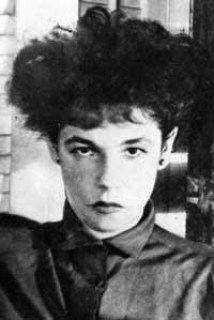
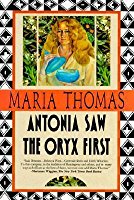
Maria Thomas – United States writer Maria Thomas went to Ethiopia as a young woman volunteering for the Peace Corps in 1971 and remained in Africa for fifteen years.  She captured the beauty and harshness and mystery of Africa in her fiction.  She was killed at age 47 along with her husband in a plane crash in 1989 while inspecting an Ethiopian refugee camp.  Two works by Maria Thomas that I can strongly recommend are the story collection ‘Come to Africa and Save Your Marriage’ and the novel ‘Antonia Saw the Oryx First’.


Elizabeth Taylor – The English writer Elizabeth Taylor had to be the most underrated writer in the world, although the world may finally be catching up with her since two of her novels have been made into movies during the last twelve years (‘Angel and ‘Mrs. Palfrey at the Claremont’).   It must be difficult building your own career when there is someone much more famous with the same name. I still have problems googling the author Elizabeth Taylor. She wrote twelve novels, and I have read them all.  She also wrote four short story collections, and I have read them all.  The stories are excellent, but I will highlight two of her novels,  ‘In a Summer Season’ and ‘The Soul of Kindness’.  Perhaps another reason Elizabeth Taylor is under-appreciated was because she made it all seem so easy.


Alberto Moravia – For Italian fiction, Alberto Moravia was the Elena Ferrante of his time at least in my estimation.  Everything he wrote is well worth reading, but two that I particularly liked are ‘The Fancy Dress Party’ which got him into trouble with Mussolini and ‘Contempt’ which is a short novel that highlights Moravia’s psychological intensity.  I have read nearly a dozen works and hope to read more.


Michel Tournier – The French writer Michel Tournier reworked classic stories in an odd and magical fashion.  In ‘Friday’ he took on the Robinson Crusoe story.  In ‘The Four Wise Men’ he retells the story of the biblical wise men.  Another favorite of mine is ‘The Ogre’.  Here is another fiction writer whose every work is well worth reading, but what makes him particularly valuable is his strange originality.  However his work is also easy to follow.  Tournier died in 2016.


Angela Huth – Here is another English fiction writer whom I discovered that the world still has not caught on to yet although many have appreciated the televised series ‘The Land Girls’.  I discovered Huth through her excellent short stories, but I will recommend here two of her novels I have read, ‘Easy Silence’ and ‘Invitation to the Married Life’ as well as ‘Land Girls’.  She can make her characters quite empathetic even while exposing their flaws.


Jorge Amado – It is easy to overlook Brazilian writer Jorge Amado among all the other fine South American writers, but I can’t think of any writer I enjoyed reading more than Amado.  He made the colorful life and people in Brazil come alive for me in his novels.  Two of his novels I will recommend here are ‘Gabriela, Clove, and Cinnamon’ and ‘Home is the Sailor’, but all of his work is quite reliable.

“I am like my characters – sometimes even the female ones.” – Jorge Amado


Here is another list of less known favorite writers.


‘The Book of Joan’ by Lidia Yuknavitch – Even Worse Than a Dystopia


‘The Book of Joan’ by Lidia Yuknavitch   (2017) – 267 pages


To call ‘The Book of Joan’ a dystopia is an understatement. Here is a dystopia to end all dystopias.

The question arises.  Why do we need to read a fictional dystopia when we’ve got the real Donald Trump?  Perhaps we just want to find a society, a world, that is even worse off than our own.

The dictionary definition for a dystopia is:

Dystopia – an imagined place or state in which everything is unpleasant or bad, typically a totalitarian or environmentally degraded one.

In ‘The Book of Joan’, Earth has suffered a devastating geocatastrophe, and the elite have deserted earth for a space station, CIEL, above the Earth.  Now they are intent on destroying whatever life remains on earth.  Joan, a modern-day Joan of Arc, and her sidekick Leone are heroically fighting the elite in order to preserve the little life on earth that remains.

“My god, what kind of brutal abomination dismisses the suffering of the majority of the world’s population as worth sustaining a tiny number of pin-headed elites?“

There are other hints that here we are in the Age of Trump.

“We are what happens when the seemingly unthinkable celebrity rises to power.  Our existence makes my eyes hurt. People are forever thinking that the unthinkable can’t happen.”

In the novel scarification is the new art.  People tell their stories by burning the skin on their bodies.  Their sex organs have become useless and dysfunctional.

“Men are among the loneliest creatures.  They lose their mothers and cannot carry children, and have nothing to comfort themselves with but their vestigial cockular appendages.  This is perhaps the reason they move ever warward when they are not moving fuckward.  Now that the penis is defunct, a curling up little insect, well, who can blame them for their behaviors?” 

‘The Book of Joan’ is a gruesome fever dream of a novel.  It maintains a constant fierce pitch of desolation. There are no quiet or calm or happy interludes.  It is all devastating upheaval after disastrous disturbance. To me the novel lacks a baseline of normalcy to contrast with all the strange events that occur. The prose is inflamed, chaotic, hectic, and overwrought.    Peaceful quiet lulls in the furious action would have made the bad times seem even more horrendous, more effective.

Maybe younger readers don’t need peaceful respites.  After all we are living in the Trump Era of total chaos.


Grade :   B-


‘The Dinner Party’ by Joshua Ferris – Some Awful Guys


‘The Dinner Party’, stories by Joshua Ferris (2017) – 246 pages

What ideally happens when I read a short story collection is that when I complete a story I am looking forward to reading the next story even when I am not reading.  That is exactly what happened to me while reading ‘The Dinner Party’.

In the first story, ‘The Dinner Party’, a guy who thinks he is so witty and sharp and clever gets his severe come-uppance so that by the end of the story both the guy and the reader is left speechless.  It took me a couple times reading this first story to tune in to Ferris’s often raucous style, but after I did I ate these stories up.

These stories are modern, mostly urban, and high energy to the point they are almost manic.  It is good to see such a talented writer tackle what it means to be alive today. Ferris not only gets the speech of these modern guys and gals down, he also gets their thought patterns, their ways of approaching things.

In the final acknowledgements, Ferris has a special word to say about the men in his stories:

“Finally a special thanks to two women, my agent, Julie Barer, and my wife, Eliza Kennedy, who never make the mistake of confusing the author for his (awful, male) characters, who in turn embolden the author to make these characters more male and awful still.” 

Yes, the men in these stories are often pretty awful.  My favorite story here is probably ‘More Abandon (or Whatever Happened to Joe Pope?)’ which is about a guy who stays late at his office after everybody else has left.  He starts visiting his fellow workers’ offices to see how they are decorated.  One woman’s office is decorated in a cute pig motif, and another woman has her office decorated as a memorial to her dead daughter.  The guy gets the brilliant idea of switching the decorations in the two offices.  He realizes he will get fired the next morning, but he can’t help himself.

Besides the comedy, and there is a lot of comedy here, these stories can get poignant and emotional.   I found the following lines from the story ‘The Breeze’ about the essential differences within a married couple both insightful and moving.

“There was an essential difference between them – what he might have called her restlessness, what she might have called his complacency – which had not surfaced before they were married, or if it had, only as a hint of things to come, hidden again as soon as it peeked out.  When they argued now, as a married couple, it was often over this essential difference.” 

Frequently in a story collection an author will put their best foot forward in the first story, and then the stories get gradually or suddenly weaker.  In ‘The Dinner Party’ the stories are all first rate with no drop off whatsoever.


Grade :    A


‘House of Names’ by Colm Toibin – How is the World Treating You, Clytemnestra?


‘House of Names’ by Colm Toibin   (2017) – 275 pages

When you are reviewing a novel based on the ancient Greek myths and legends, I suppose you needn’t worry about writing spoilers since the Greeks wrote the spoilers almost 2500 years ago.  In the case of ‘House of Names’  the shape of the narrative was taken from those three ancient Greek master playwrights  Aeschylus, Sophocles, and Euripides.  It is a novel about that famous Spartan family from the house of Atreus consisting of warrior king Agamemnon, his wife queen Clytemnestra, and their three children Iphigenia, Electra, and Orestes.

The first thing I do when I read a novel based on Greek myth is to consult Wikipedia in order to refresh myself on the original story.  For ‘House of Names’, I will relate the early part of the story which many of you will be familiar with anyway, but will not tell of any later events which constitute the last two-thirds of the novel.

Agamemnon would like to take his warriors along with his fleet of boats from Sparta to Troy to help his brother Menelaus capture back his unfaithful wife Helen who has run off to Troy with Paris.  However the fleet is stuck in Aulis due to an absence of wind.  A priest tells Agamemnon that the winds would be favorable if only he would sacrifice his daughter Iphigenia to the gods.  Agamemnon tricks his wife Clytemnestra to bring Iphigenia to Aulis by saying that he has arranged for the daughter to marry Achilles there.   Iphigenia is instead murdered, Clytemnestra is enraged, but the winds do change and Agamemnon is off to Troy with his fleet.  After ten years the Spartans led by Agamemnon are victorious in the Trojan War, and  Agamemnon returns home with his new young Trojan mistress Cassandra in tow.   By this time the enraged Clytemnestra has remarried to this slimy shady guy Aegisthus and they rule Sparta together.

I have always been impressed with this Greek story of which Clytemnestra is at the center.  What makes it so powerful for me is that it is not just a story with Evil solely on one side and Good on the other side.  The character of Clytemnestra is morally ambiguous and deep, not at all clear-cut.  We feel her righteous anger when she is tricked into bringing her daughter Iphigenia to Aulis to be sacrificed.  We are totally on her side at that point.  However when in her rage she takes up with new hubby Aegisthus and together they rule Sparta, we are less impressed with her.  Later she becomes outright villainous.

The Anger of Achilles by Jacques-Louis David, 1819

Even today in most of the stories written, the cards are still stacked with Good entirely on one side and Evil on the other.  But we know from our own experience that things are usually more unclear and confused.  The ancient Greek playwrights, especially Aeschylus, realized this pervasive inconclusiveness, and they gave the myths a depth that is missing from so many stories.  It was not until Shakespeare that someone later achieved the depth of these ancient Greek playwrights.

This is the background of the story.  However most of ‘House of Names’ is instead taken up with the story of the other two children, Electra and Orestes, after all these events have occurred.

It would be difficult for a writer to mess up this exciting plot.  I did think that Toibin’s own later story of Orestes in the wilderness dragged a little in comparison.  As always Toibin’s prose is smooth and serviceable and does not draw attention to itself which can at times be persuasive but can also be sleep inducing.

I did feel that Toibin, in telling the later story of Orestes, casts him as entirely heroic which is too simplistic compared to the stories of the ancient Greek playwrights.  The Greek playwrights would have emphasized that the sacrificial murder of his sister would also have had a deleterious effect on Orestes.   Actions have consequences.

The last three novels Colm Toibin has written have been ‘Brooklyn’, ‘The Testament of Mary’, and now ‘House of Names’.  It is difficult to imagine two novels as different as ‘Brooklyn’ and ‘House of Names’.

Overall ‘House of Names’ is a meaningful retelling of these ancient Greek myths.


Grade:   B+